
News
KACRAN Reiterates Appreciation For Establishment of NEDC, Advocates Equity and Justice for Pastoralists

KACRAN Reiterates Appreciation For Establishment of NEDC, Advocates Equity and Justice for Pastoralists
By: Michael Mike
Kulen Allah Cattle Rearers Association of Nigeria (KACRAN) has reiterated its profound joy and appreciation to the federal government for establishing the North East Development Commission (NEDC).
A press statement signed by the National President of the association, Hon. Khalil Bello read that the pastoral communities of the Northeast were initially filled with great enthusiasm and hope upon the establishment of the NEDC. They were led to believe that the commission was established with the specific purpose of reconstructing the region after the devastating impact of Boko Haram activities, providing support to vulnerable and internally displaced individuals, and revitalizing communities that have suffered tremendously from these tragic events.
The statement read that: “The pastoralists’ highest excitement was innocently based on these promises, and they celebrated the establishment of the NEDC with the anticipation of much-needed assistance.
“However, KACRAN has been disheartened to find that, despite the high regard in which they hold the members of the NEDC’s governing board, the pastoralists’interests seem to have been overlooked as the commission commenced its operations. It has become apparent that the focus of the NEDC’s efforts has been on the urban centers and refugee camps, which are more visible to the presidency and the international community, rather than on the rural areas and villages that have been severely impacted by the aforementioned calamities.
“Representing a significant number of pastoralists who have been ravaged by the Boko Haram insurgency and cattle rustling, KACRAN has voiced its grievances and concerns to the NEDC and the presidency through national media outlets, including print, electronic, and social platforms.
“KACRAN’s primary concerns include the marginalization and neglect by the Commission, the dire need for access to potable water for both people and livestock, the provision of animal feed during the dry season, inclusion in the periodic distribution of relief materials, and the integration of its members’ urgent needs into the Commission’s policies and programmes, including annual budget allocations.”
The statement added that: “It is encouraging to note that during a meeting facilitated by the NEDC Head of Operation at the Oasis Hotel in Damaturu, Yobe State, KACRAN was assured that the commission would attentively consider its valid concerns and act accordingly.This meeting, followed by the distribution of relief materials to our communities, fortified their optimism that the NEDC would indeed address their critical needs, such as the provision of potable water.
“Regrettably, till the NEDC’s first tenure drew to a close, these assurances have yet to be fully realized. KACRAN remains hopeful and prays earnestly for the fulfillment of these commitments.
“KACRAN calls upon the NEDC to uphold the principles of justice and equity and to ensure that the pastoralists of the Northeast are not forgotten but are actively included in the region’s recovery and development efforts.”
KACRAN Reiterates Appreciation For Establishment of NEDC, Advocates Equity and Justice for Pastoralists


Senate to Enact Stronger Laws to Tackle Rising Drug Abuse
By: Michael Mike
The Senate Committee on Drugs and Narcotics has thrown its weight behind the National Drug Law Enforcement Agency (NDLEA), pledging stronger legislative backing and tougher laws to support the country’s escalating battle against substance abuse and illicit drug trafficking.
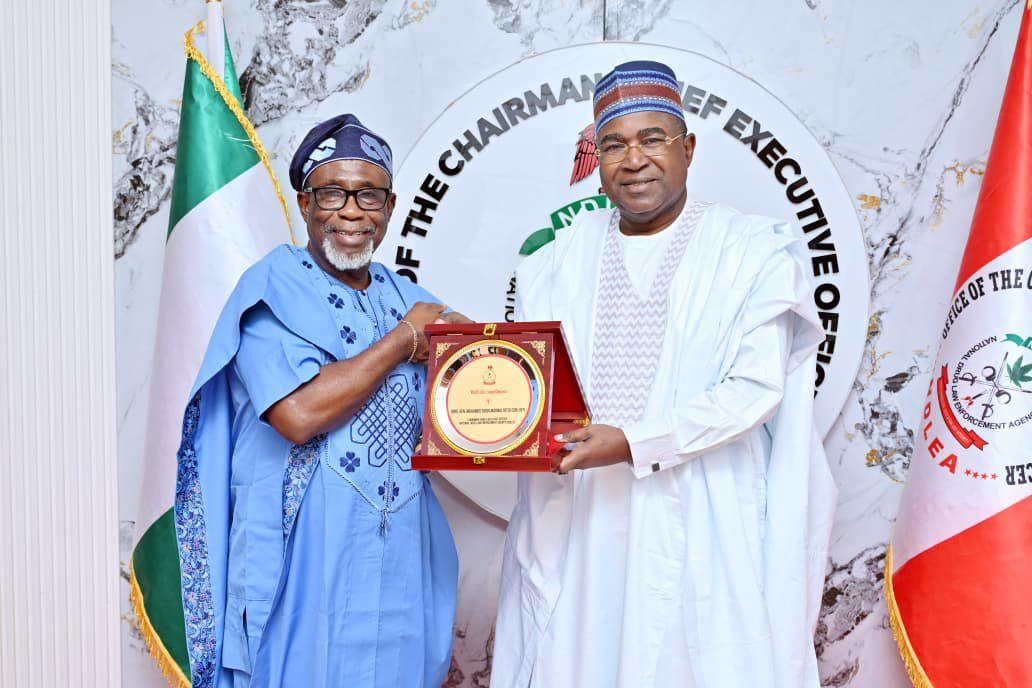
The commitment came on Monday during a courtesy visit by the newly appointed Chairman of the Senate Committee on Drugs and Narcotics, Senator Joseph Ikpea, to the Chairman/Chief Executive Officer of NDLEA, Brigadier General Mohamed Buba Marwa (rtd), at the agency’s national headquarters in Abuja.

In a move that signals renewed collaboration between the National Assembly and the anti-narcotics agency, Ikpea assured Marwa that the Senate would provide the legal and policy support needed to strengthen drug control efforts, expand rehabilitation programmes and intensify preventive campaigns among Nigerian youths.
The senator, who represents Edo Central Senatorial District, said his visit was aimed at fostering a closer partnership with NDLEA and learning from Marwa’s experience in public service.
“I am here to learn and partner with you so that our children who have gone into drug abuse can be rehabilitated, while others are prevented from falling into the drug trap through massive awareness creation and sensitisation programmes,” Ikpea said.
He praised Marwa’s record as former Military Governor of old Borno State, former Military Administrator of Lagos State and his leadership of NDLEA, describing him as a committed and result-oriented public servant.
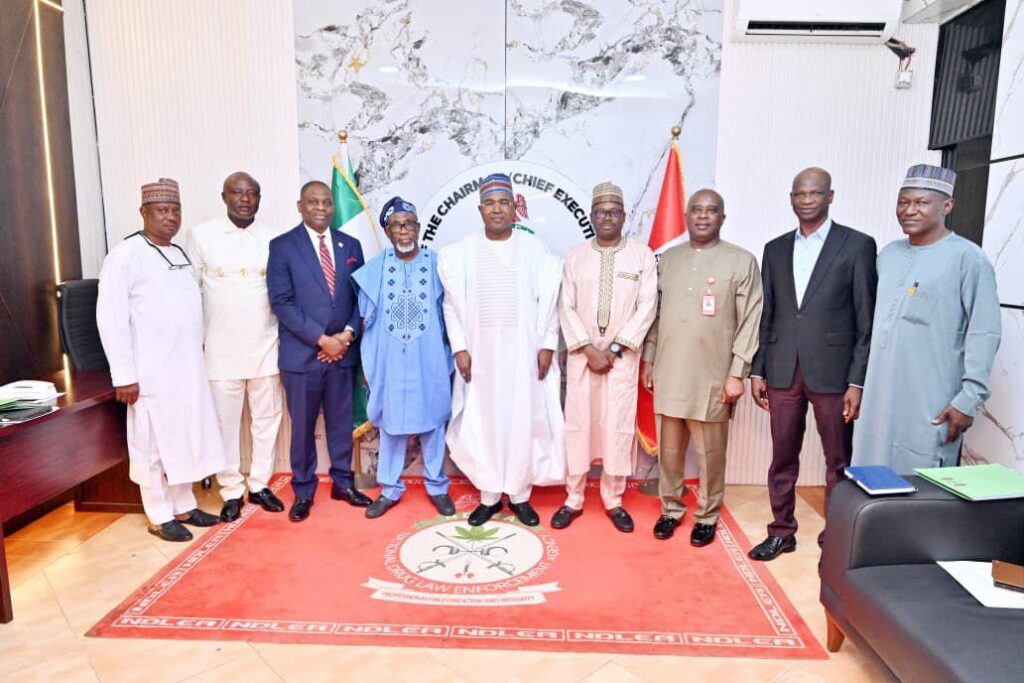
According to him, the Senate is ready to support the agency through legislative interventions and reforms capable of addressing the growing drug menace in the country.
“We are happy to work with you and support you in all of these because we know you are already doing a great job but not getting as much as you need to do the work. We will partner with you through legislative support and necessary laws to subdue the drug problem in our country,” he stated.
Responding, Marwa described drug abuse and trafficking as a major threat driving several social and security challenges in Nigeria and across the world.
He, however, said NDLEA had recorded significant successes in recent years, including dismantling major transnational drug cartels, arresting high-profile drug barons and weakening criminal networks through the seizure and forfeiture of assets linked to illicit drug operations.
Marwa attributed the agency’s achievements to the support of President Bola Tinubu, the National Assembly and the judiciary.
“The drug problem is a major challenge that is at the root of some other social issues, not only in Nigeria but globally. However, we are doing our level best to curb the scourge and we are getting impressive results,” he said.
The NDLEA boss assured the committee chairman of the agency’s readiness to deepen collaboration with the Senate in advancing both drug supply reduction and drug demand reduction strategies nationwide.
He expressed confidence that Ikpea’s leadership of the Senate committee would further strengthen the national response to drug abuse and trafficking.
The meeting comes amid growing concerns over rising substance abuse among young Nigerians and increasing efforts by authorities to dismantle organised drug trafficking networks operating within and outside the country.
Senate to Enact Stronger Laws to Tackle Rising Drug Abuse
How dialogue, military intervention prevented fresh bloodshed in Benue communities
By: Zagazola Makama
For years, communities across Guma Local Government Area of Benue lived under the constant fear of attacks, reprisals and counter-reprisals that often turned minor disputes into deadly cycles of violence.
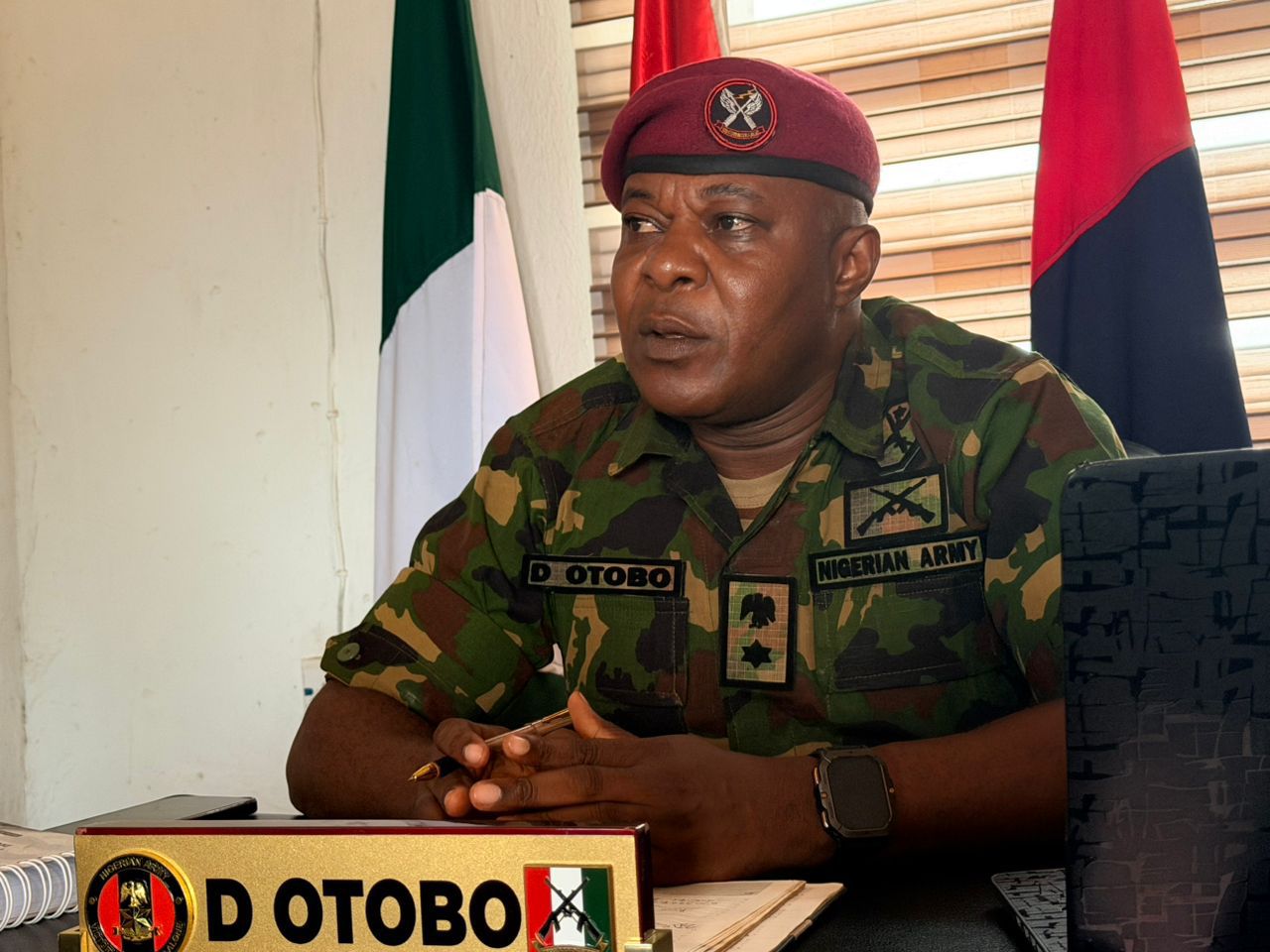
But according to the Commanding Officer of the Chief of Army Staff (COAS) Special Intervention Battalion 11, Lt.-Col. Donatus Otobo, a combination of military presence, community engagement and conflict mediation is gradually changing the narrative.
Speaking during a tour of his area of responsibility by defence correspondents on Tuesday, Otobo recounted several incidents that underscored the fragility of peace in the area and the delicate task facing troops deployed to maintain stability.
The commander described a disturbing incident involving an 11-year-old herder whose ordeal nearly triggered another round of communal violence.
According to him, the young boy was tending cattle around November when he was attacked by some locals who severed one of his hands.
“The boy was only 11 years old. We had to intervene quickly, rescue him and evacuate him to a military hospital for treatment.
“He spent about a month receiving medical care before he was reunited with his family,” Otoogu said.
However, what followed reinforced the battalion’s concerns about the dangerous cycle of revenge that has fuelled many conflicts in the area.
The commander said that barely two days after the boy returned home, another attack occurred in which two victims suffered similar injuries.
“From what we observed, it appeared to be a reprisal attack.
“That is the reality we face here. One incident triggers another, and before long, communities become trapped in a cycle of revenge,” he said.
Otobo noted that while public attention often focuses on attacks by armed groups, there are also numerous cases where unarmed herders become targets of violence.
According to him, troops have repeatedly intervened to prevent such incidents from escalating into wider communal conflicts.
“There are situations where herders who are not carrying weapons are attacked alongside their livestock.
“Sometimes their cattle are rustled, killed or butchered. We have responded to cases where dozens of cattle were either stolen or slaughtered.
“In one particular case, herders reported losing about 130 cattle. When we arrived, we could only physically account for about 60.
“The scene was disturbing. There were carcasses, blood stains, horns and evidence of widespread destruction,” he said.
The commander explained that such incidents often create fertile ground for retaliatory violence.
He said one cattle-rustling incident in particular had all the ingredients of a major crisis similar to previous large-scale attacks experienced in parts of Benue.
“That situation was a ticking time bomb.
“It could easily have degenerated into another major communal crisis if we had not intervened promptly,” he said.
Otobo said troops immediately engaged traditional rulers, community leaders, herder representatives and other stakeholders to calm tensions and prevent reprisals.
According to him, the sustained dialogue paid off, as the incident did not trigger further violence despite widespread anger among those affected.
“We brought together community leaders, elders and Fulani representatives.
“We listened to grievances from all sides and encouraged restraint.
“That incident happened more than seven months ago, and thankfully it did not escalate into a broader conflict,” he said.
The commander also offered insights into the factors that may have contributed to the deadly Yelwata attack that shocked the state.
He said findings from military investigations suggested that tensions had been building months before the incident.
“From our own investigation, the chain of events started around April when some criminals attacked herders, killed some of them and rustled about 100 cattle.
“The affected individuals apparently went away, regrouped and later returned.
“By June, the situation had escalated into the Yelwata attack,” he said.
Otobo stressed that the lesson from such incidents is that unresolved grievances, if ignored, can eventually snowball into major security crises.
He noted that Yelwata, which now falls under the battalion’s area of responsibility, has remained peaceful due to proactive security measures and constant engagement with residents.
According to him, community leaders specifically requested the deployment of troops from the COAS Special Intervention Battalion to maintain security in the area.
“Today, Yelwata is peaceful, and that is one of the achievements we are proud of.
“The people themselves requested that our troops remain there because of the confidence they have in our operations,” he said.
Otobo further disclosed that the security situation had improved significantly, particularly regarding the presence of armed herders.
He said reports of herders openly carrying assault rifles, which were once common, had virtually disappeared within the battalion’s area of responsibility.
“As I speak to you, since December last year, there has not been a single reported sighting of armed herders within our area of responsibility.
“Previously, farmers would regularly report seeing herders carrying AK-47 rifles.
“Today, those reports have stopped completely,” he said.
The commander attributed the improvement to sustained military operations and continuous engagement with both farming and herding communities.
He said troops regularly hold meetings with residents to educate them on the consequences of cattle rustling, reprisals and other actions capable of reigniting tensions.
“We constantly engage the communities and explain the dangers of taking the law into their own hands.
“We encourage them to report grievances through established channels rather than resorting to violence.
“I believe that has contributed significantly to the peace we are witnessing today,” he said.
The return of Guma and surrounding communities, the return of calm has translated into something they had almost forgotten, the ability to farm, trade and move freely without fear.
Yet Otobo believes the greatest achievement is not the absence of attacks, but the gradual rebuilding of trust among communities long divided by conflict.
“The military can provide security, but lasting peace comes when communities learn to coexist and resolve disputes peacefully.
“That is the direction we are working towards, and we will continue to support every effort that promotes peace and stability in this area,” he said.
How dialogue, military intervention prevented fresh bloodshed in Benue communities
News
Alleged Cybercrime: Court Revokes Sowore’s Bail, Issues Bench Warrant Over Failure To Appear In Court
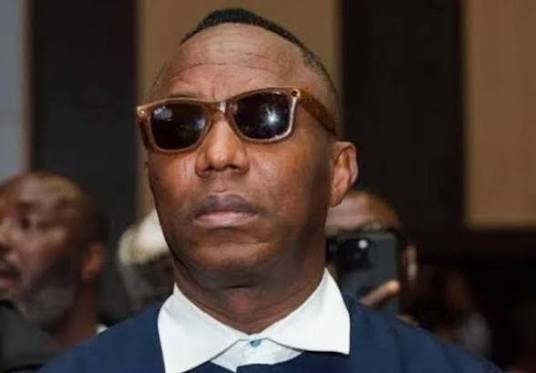
Alleged Cybercrime: Court Revokes Sowore’s Bail, Issues Bench Warrant Over Failure To Appear In Court
The Federal High Court in Abuja, on Tuesday, issued a bench warrant for the arrest of online publisher and African Action Congress (AAC) presidential candidate, Omoyele Sowore, following his failure to appear in court as a defendant in the ongoing alleged criminal defamation suit brought against him by the Department of State Services (DSS).
Justice Mohammed Garba Umar ordered that Sowore be remanded at the Kuje Correctional Centre and brought before him on the next adjourned date being June 22, 2026 for ruling on the application he filed for recusal.
The judge had last December granted the politician bail based on self-recognition. He had at the time declined a request by counsel to the DSS, Akinlolu Kehinde, SAN, to issue an arrest warrant after Sowore and his lawyer failed to appear in court for trial.
However, at the resumption of trial on Tuesday, neither Sowore nor his lawyer was present in court. This prompted counsel to the prosecution to apply to the court for a revocation of the bail and the issuance of a bench warrant. The prosecution described Sowore’s absence as “delay tactics”.
The DSS had filed a five-count charge against Sowore over social media posts in which he referred to President Bola Tinubu as a “criminal”. Efforts by the secret police to make him pull down the post were rebuffed by the politician, who insisted that it was within his fundamental human right to freedom of speech to post as he liked. This prompted the DSS to file charges of criminal defamation against him.
Last month, the trial judge rejected Sowore’s “no-case submission,” ruling that the prosecution had established a prima facie case against him. In response, Sowore and his legal team accused the judge of bias and requested that he recuse himself.
Alleged Cybercrime: Court Revokes Sowore’s Bail, Issues Bench Warrant Over Failure To Appear In Court

Terrorism: DSS Secures Another Death Sentence, As Katsina Court Convicts Female Courier Arrested With Large Arms Cache

Senate to Enact Stronger Laws to Tackle Rising Drug Abuse

How dialogue, military intervention prevented fresh bloodshed in Benue communities

Roger Federer’s Shock as DNA Results Reveal Myla and Charlene Are Not His Biological Children

THE PLIGHT OF FARIDA

FAILED COUP IN BURKINA FASO: HOW TRAORÉ NARROWLY ESCAPED ASSASSINATION PLOT AMID FOREIGN INTERFERENCE CLAIMS
-
 News2 years ago
Roger Federer’s Shock as DNA Results Reveal Myla and Charlene Are Not His Biological Children
-
Opinions4 years ago
THE PLIGHT OF FARIDA
-
 News1 year ago
FAILED COUP IN BURKINA FASO: HOW TRAORÉ NARROWLY ESCAPED ASSASSINATION PLOT AMID FOREIGN INTERFERENCE CLAIMS
-

 News2 years ago
EYN: Rev. Billi, Distortion of History, and The Living Tamarind Tree
-
 Opinions5 years ago
POLICE CHARGE ROOMS, A MINTING PRESS
-

 ACADEMICS2 years ago
A History of Biu” (2015) and The Lingering Bura-Pabir Question (1)
-

 Columns2 years ago
Army University Biu: There is certain interest, but certainly not from Borno.
-

 Politics1 year ago
2027: Why Hon. Midala Balami Must Go, as Youths in Hawul and Asikira/Uba Federal Constituency Reject ₦500,000 as Sallah Gift
