
News
Kaduna drone tragedy: Tudun Biri rises from the ashes with government, military interventions

Kaduna drone tragedy: Tudun Biri rises from the ashes with government, military interventions
By: Zagazola Makama
What was once a community lost in silence, rubble and grief is today a beacon of hope and transformation. Tudun Biri, a sleepy rural settlement in Igabi Local Government Area of Kaduna State, is gradually emerging from the shadows of devastation.
On the night of Dec. 3, 2023, more than 80 villagers many of them women and children were killed when a Nigerian military drone, deployed in an anti-banditry operation, mistakenly struck the community as residents gathered in joy to celebrate Maulud Nabiyy, the birth of Prophet Muhammad (SAW). The incident ignited a nationwide wave of grief, prompting urgent reflections on military accountability, civilian safety, and the dire consequences of misidentification in conflict zones.
Nearly one year six months later, the once-neglected Tudun Biri is being transformed from a forgotten rural settlement into a model of post-conflict recovery, through massive reconstruction and empowerment projects, thanks to far-reaching interventions by the Federal Government, Kaduna State Government and the Nigerian Army.
Before the incident, Tudun Biri had little to no presence of government. The village lacked basic infrastructure: no healthcare centre, no road network, no school, no water supply, and no form of economic empowerment facility.
For months, the village was shrouded in pain.
But amidst the despair, something remarkable began to unfold a movement of resilience and renewal. The Nigerian government, the Kaduna State authorities, and the Nigerian Army responded not with indifference but with purpose and compassion. Today, new sounds echo through Tudun Biri: the hum of solar-powered streetlights, the chants of children playing, the buzzing of machines in a skills centre, the well equipped healthcare facility and the quiet resolve of a people rebuilding with pride.
Malam Balarabe Garba, the Village Head of Tudun Biri, said that the people of the community now walks through paved streets lined with solar-powered streetlights, far removed from the dusty, neglected paths of the past.
“Before this tragedy, no one knew Tudun Biri. There was no road, no school, no hospital. But today, we are being heard,” he said, his voice thick with emotion. The government has built over 140 houses, the state constructed a modern hospital, and the Nigerian Army gave us a school. This is a new beginning for us.”
The new 25-bed hospital, fully equipped with surgical and ophthalmological units, was built by the Kaduna State Government, offering services that were once unreachable without a long, costly journey to town.
The Chief Imam of Tudun Biri, Malam Hashim Ja’afaru, stood in front of a new mosque built after the tragedy. “This mosque means a lot to us. It stands near the same ground where we buried our loved ones,” he said.
“But beyond the mosque, the government fulfilled many of its promises. They gave us water, electricity, roads, a school, and even security. The new central mosque tells a story deeper than its bricks and mortar.
“The government built us this mosque. It is a symbol of respect for the lives we lost, and a promise that we are not forgotten. When they said they would rebuild our lives, we were not sure. But now we have a hospital, houses, a school, and security. They have done what they promised. That is why we are grateful.”
He particularly praised the Pulako Initiative, introduced by President Bola Ahmed Tinubu, which is driving much of the rural transformation in the village including clinics, empowerment initiatives, solar energy, and shelter projects.
Abdullahi Danjuma, a 52-year-old farmer, recalled how his life fell apart after losing his two relatives in the blast. “I had nothing left. But the government is rebuilding 140 houses for us . They also gave compensation to those who lost other valuables and ensured more security in this area. Now I can farm and take my produce to market,” he said.
He commended the Federal Government for its “immediate and practical response,” saying the presence of authorities helped restore dignity to the grieving.
“People said politicians forget villages like ours. But here in Tudun Biri, they kept coming. And today, we are seeing real development. We feel seen, at last,” he added.
For Hajara Musa, a food vendor and mother of four, the newly constructed five-kilometre asphalt road is a blessing she never imagined.
“Before this road, I used to walk with a basin on my head to sell food. Vehicles never came here. But now, buses and bikes enter our village. I make more sales and my children now go to school easily,” she said.
She expressed appreciation to Governor Uba Sani of Kaduna State, who visited the village shortly after the incident and promised infrastructure, schools and water.
“Governor Sani promised and he delivered. Our school is ready. Our hospital is functioning. And we now have boreholes and solar water pumps,” Hajara said.
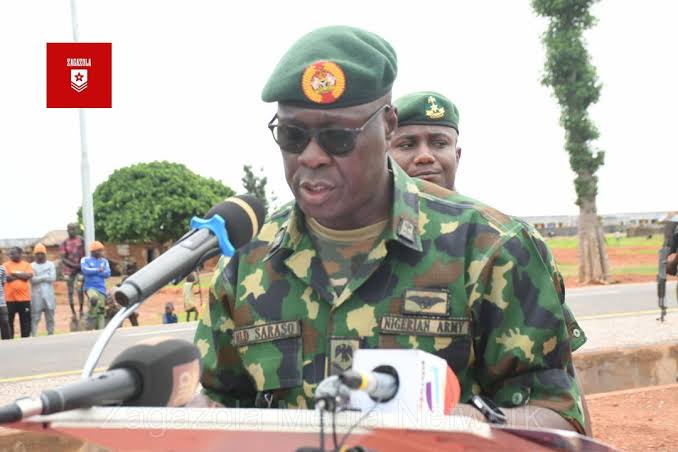
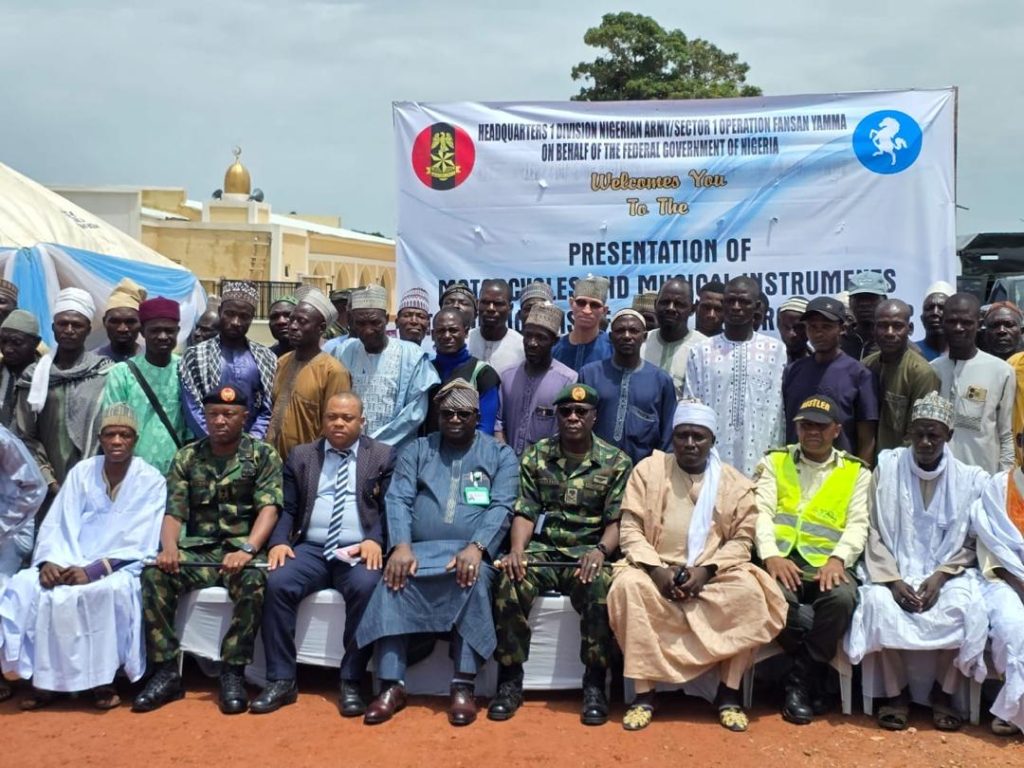
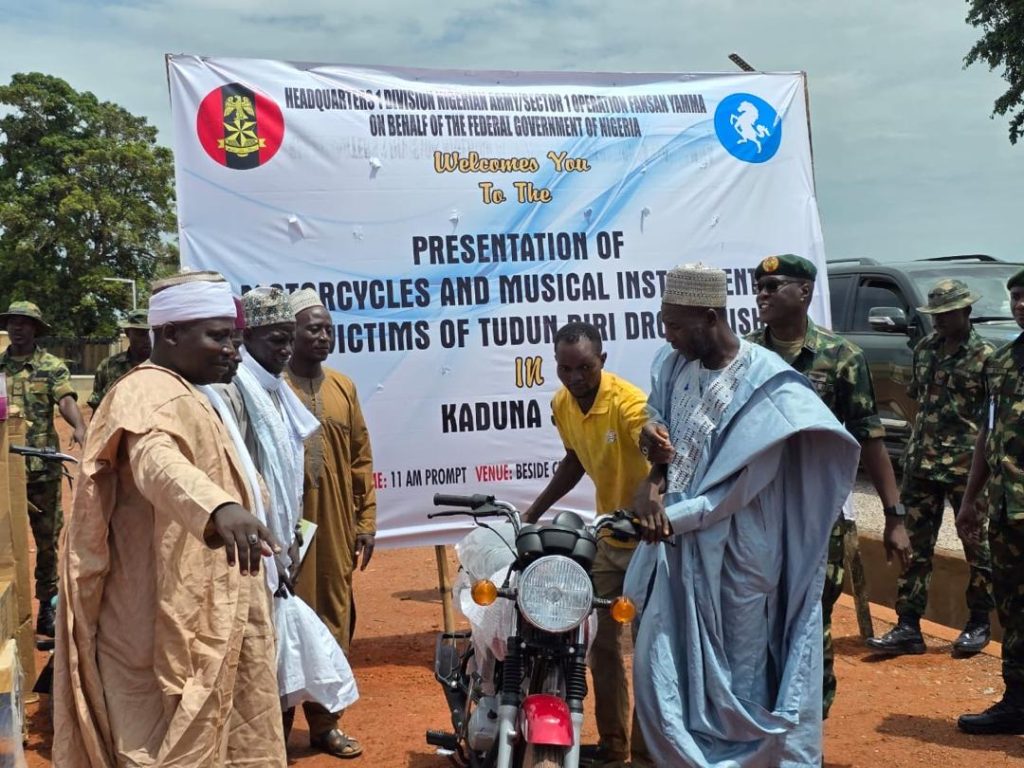
However, the latest phase of support came from the General Officer Commanding 1 Division Nigerian Army and Commander Sector 1 Operation Whirl Punch, Maj.-Gen. Lander Saraso, who on behalf of the Federal Government, distributed motorcycles, musical instruments, and other relief items to families that suffered losses.
“We are here today to support the survivors of that tragic incident and fulfil the commitment made by the Federal Government and the Nigerian Army,” Saraso said during the presentation.
Gen Saraso said the gesture was in fulfillment of the recommendation of a high-level federal government delegation, including the former Chief of Army Staff, late Gen Lagbaja, of blessed memory, that visited the community in the aftermath of the incident.
This is not just about items; it is about rebuilding trust, healing, and continuing our engagement with the good people of Tudun Biri. These motorcycles and instruments are not just items, they are tools to help families get back on their feet.”he said.
Among the items presented were 2 motorcycles, a corolla generator, 2 wireless microphones, Single power amplifier mixer and 500 watts flood lights, which were given to the beneficiaries including Isuwa Haruna, Ridwan Yakubu and Isah Ahmed.
He added that the Army’s continued presence in the community was part of its strategy to rebuild trust, enhance security, and prevent recurrence of such incidents.
According to him, the Nigerian Army under the leadership of Lt Gen Olufemi Oluyede takes the issue of community relations very seriously, as the Army recognizes the indispensability of the support and partnership with the people and the community in the success of its operations.
Saraso further noted that the Army had constructed a school, facilitated community sanitation, cleared farmlands, and rebuilt damaged residential structures as part of its contribution to the village’s healing process.
“This effort is part of the broader federal response to ensure that Tudun Biri is not only remembered for the tragedy but recognised for how it rose beyond it,” he added.
Kaduna State’s Commissioner for Internal Security, Dr. James Kanyip, underscores the importance of resilience and assured the community of the State Government’s continued support. “We stand with Tudun Biri, and we will ensure they remain safe and supported. Their recovery is our collective responsibility.”he said.
He commended the Nigerian Army for its proactive outreach and reaffirmed the government’s commitment to long-term rehabilitation and assistance for the victims.
In the heart of Tudun Biri, hope is taking root where grief once reigned. The mosque calls to prayer, children’s voices rise from the playing ground. Though the scars of December 3 may never fully heal, the village is learning to live again stronger, prouder, and with purpose.
The coordinated interventions of the Federal Government, Kaduna State Government, and the Nigerian Army have not only restored lives they have restored faith. From tragedy has emerged a template for compassionate recovery.
Zagazola Makama is a Counter Insurgency Expert and Security Analyst in the Lake Chad Region
Kaduna drone tragedy: Tudun Biri rises from the ashes with government, military interventions


Zulum Delivers Relief, Cash Support to 434 Ngoshe Residents Rescued from Boko Haram
By: Our Reporter
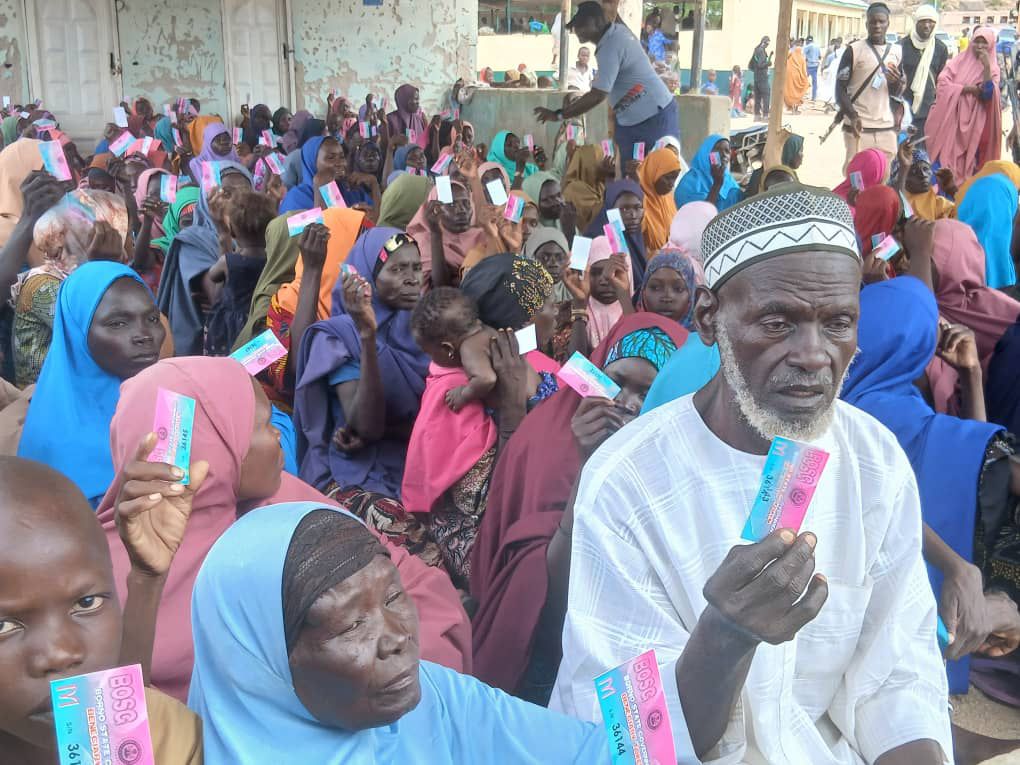
Borno State Government has distributed relief materials to 434 indigenes of Ngoshe community in Gwoza Local Government Area who were recently rescued by security agencies after spending three months in Boko Haram captivity.
Governor Babagana Umara Zulum visited the victims in Pulka on Monday and directed the immediate distribution of food and non-food items to support their recovery and reintegration.
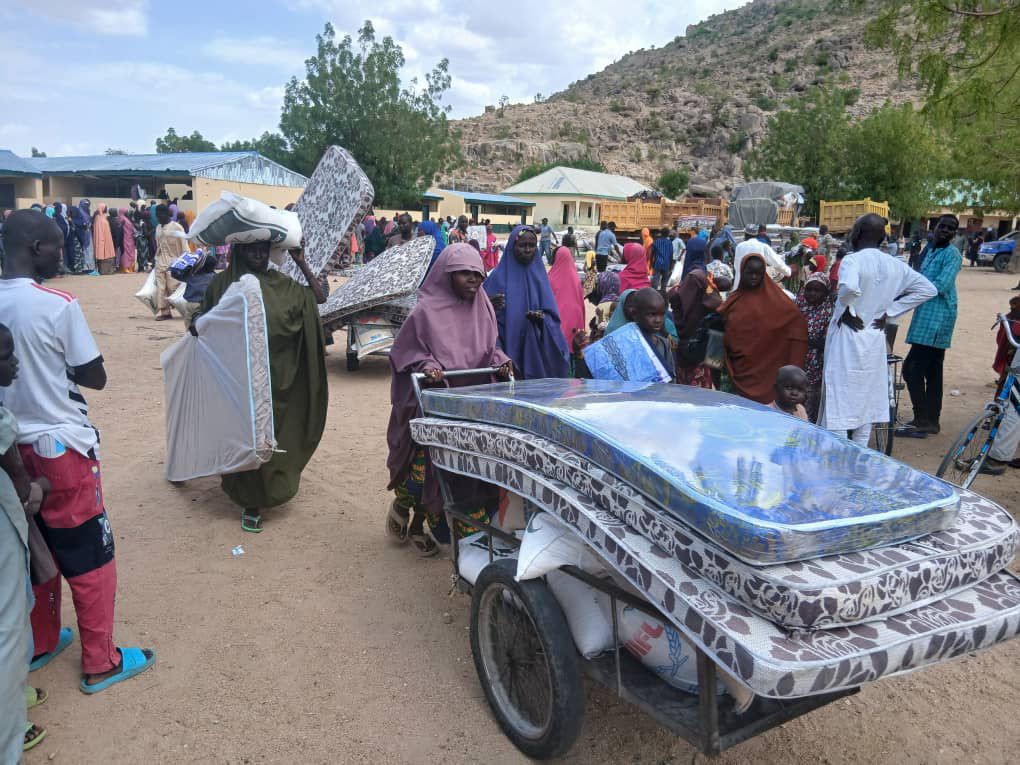
In compliance with the Governor’s directive, the Director General of the Borno State Emergency Management Agency (SEMA), Alhaji Ali Abdullahi Isa, promptly supervised the distribution exercise.
Each rescued person received a bag of rice, a bag of maize grits, a mattress, a wrapper, and a shadda, while children received two pairs of clothing.
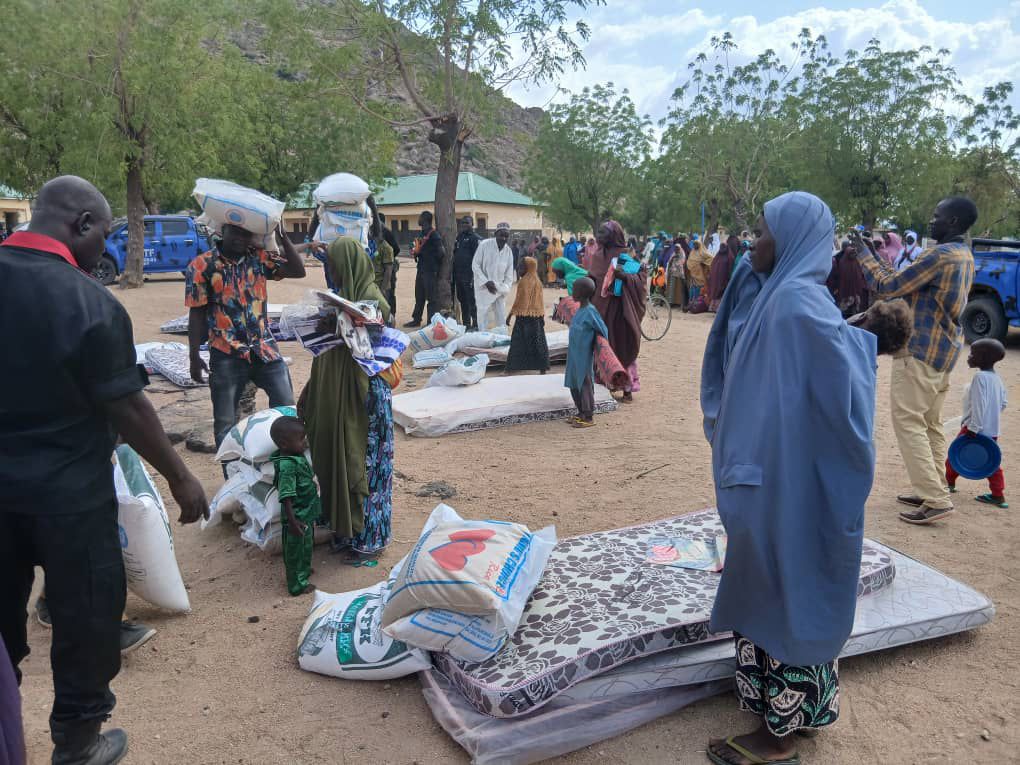
In addition, 208 heads of households received N50,000 each, fulfilling Governor Zulum’s earlier pledge of financial assistance.
Speaking during the distribution, the SEMA Director General said the intervention was part of the government’s immediate response to ease the hardship faced by the rescued victims.
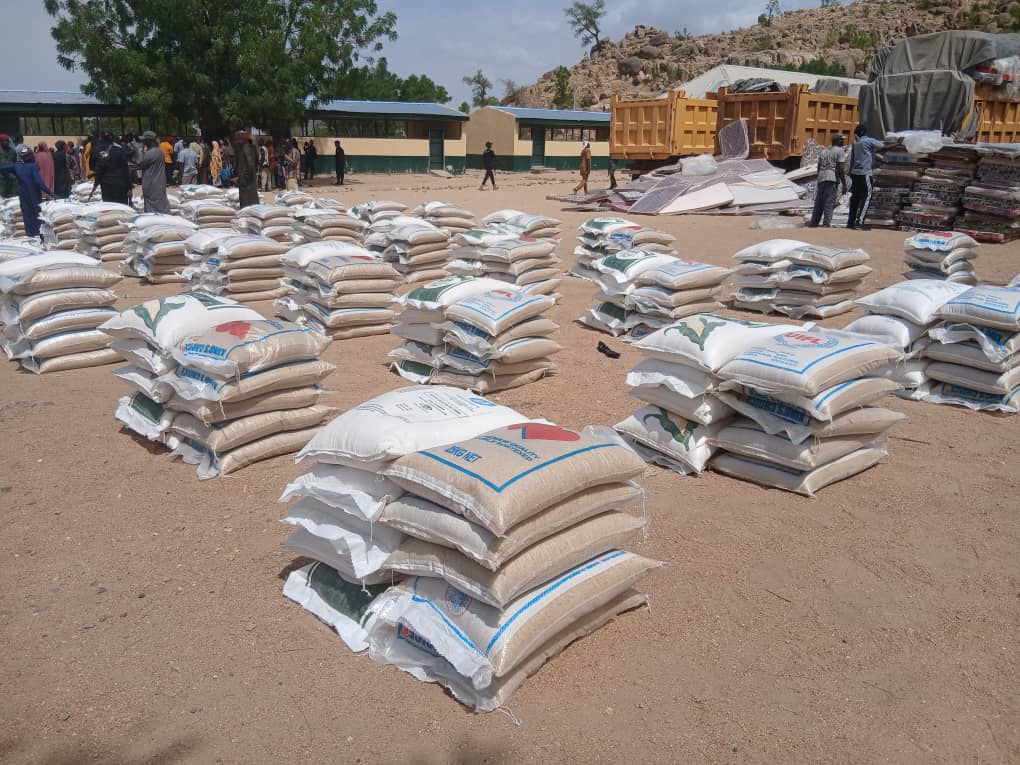
“I am here at the instance of His Excellency, Governor Babagana Umara Zulum, who was here some few days ago, and to deliver the items he directed that it should be given to you as emergency relief,” Ali stated.
The rescued individuals are currently receiving medical care and psychosocial support at a government facility. Upon completion of the rehabilitation process, they will be reintegrated into their respective communities.
The exercise was carried out alongside the Chairman of Gwoza local government, representatives of the Ngoshe community, and other officials.
Zulum Delivers Relief, Cash Support to 434 Ngoshe Residents Rescued from Boko Haram
Democracy Day: Zulum gives 2 MRAPs, other logistics to Army, celebrates with IDPs
By: Michael Mike
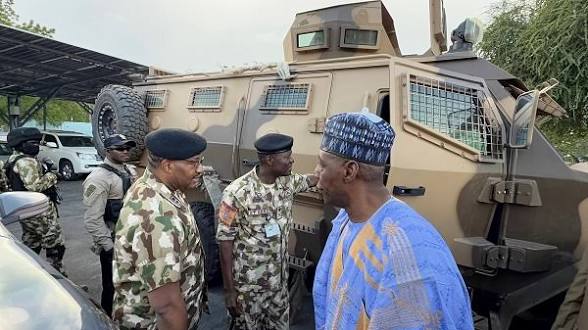
Borno State Governor, Babagana Umara Zulum, marked Democracy Day with the handover of two Mine-Resistant Ambush Protected (MRAP) vehicles and critical logistics to the Nigerian Army, after joining internally displaced persons (IDPs) for a symbolic celebration and distribution of food items to 2,500 beneficiaries.
The armoured MRAPs delivered to the Theatre Command of Operation Hadin Kai on Friday are intended to enhance troop protection against improvised explosive devices (IEDs) and ambushes which remain a persistent threat in the fight against insurgents. Additional logistics include operational Hilux vehicles and motorcycles for frontline soldiers in difficult terrains.
Zulum also marked Nigeria’s Democracy Day celebration with Internally Displaced Persons (IDPs) at the Madinatu camp where he distributed food supplies, non-food items, and cash gifts to thousands of beneficiaries.
The distribution, held at the Madinatu IDP camp, served to consolidate Zulum’s resettlement gains. Over the past seven years, Borno State Government has successfully resettled more than 2 million IDPs in their ancestral communities in a dignified and voluntary manner.
“It gladdens my heart today, the 12th of June, 2026, to celebrate June 12th, Democracy Day, here in Madinatu Camp, the only formal camp that is standing inside Maiduguri Metropolitan Council, today, to the glory of God and the benefit of mankind, for the distribution of food and non-food items. Inshallah, this camp will be closed this year. This will be our last distribution exercise in this camp, or the second to the last,” Zulum said.
However, Governor Zulum used the occasion to announce a timeline for the camp’s closure. The governor ordered that Madinatu camp be shut down within one month, vowing to similarly close most IDP camps across various Local Government Areas in the coming phase of his administration’s resettlement strategy.
“Democracy must translate into restoring the dignity of our people,” Zulum told the IDPs. “Living in camps is not a permanent solution. Our goal remains to return every displaced person to their ancestral homes with security and means of livelihood.”
In addition to the food items, Zulum approved N50,000 each for the 2,500 beneficiaries present at the event.
“Each of the 500 beneficiaries mentioned will receive a 25kg bag of rice and a 25kg bag of sorghum. Women will receive wrappers. I also promise to provide 50,000 naira to each beneficiary. This amount can be credited into their own individual accounts, inshallah,” Zulum said.
The exercise was attended by the APC’s State Deputy Chairman, Garba Mulima, APC State Vice Chairman (Central) Abdur Rahman Abdulkarim, Acting Chief of Staff, Dr Babagana Mallumbe, Member representing Jere at the State Assembly, Abba Kyari Kolo, commissioners and commissioner designates and several other senior government officials.
Democracy Day: Zulum gives 2 MRAPs, other logistics to Army, celebrates with IDPs
Gov. Yusuf Commends DSS Over Arrest of Suspected Gun Courier in Kano
By: Michael Mike
Kano State Governor, Abba Kabir Yusuf, has commended the Department of State Services (DSS) for the arrest of a suspected gun courier intercepted while allegedly transporting weapons believed to be destined for criminal elements in Katsina State.
The commendation was contained in a statement issued by the Governor’s spokesperson, Sunusi Bature Dawakin Tofa, on Thursday, June 12, 2026.
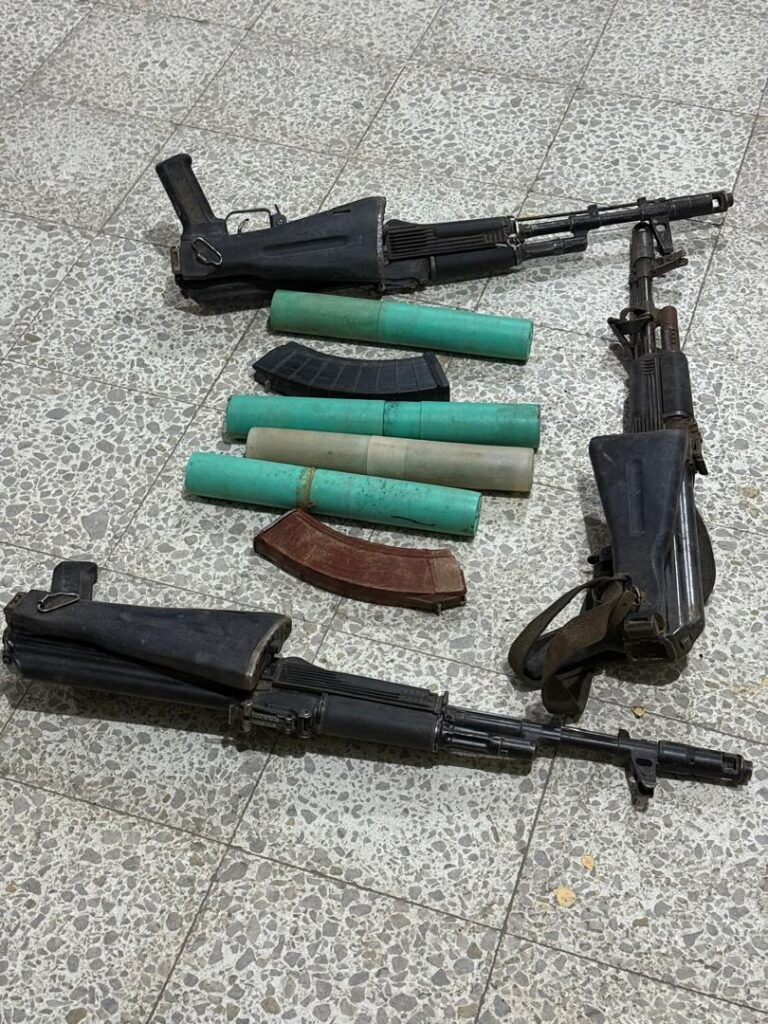
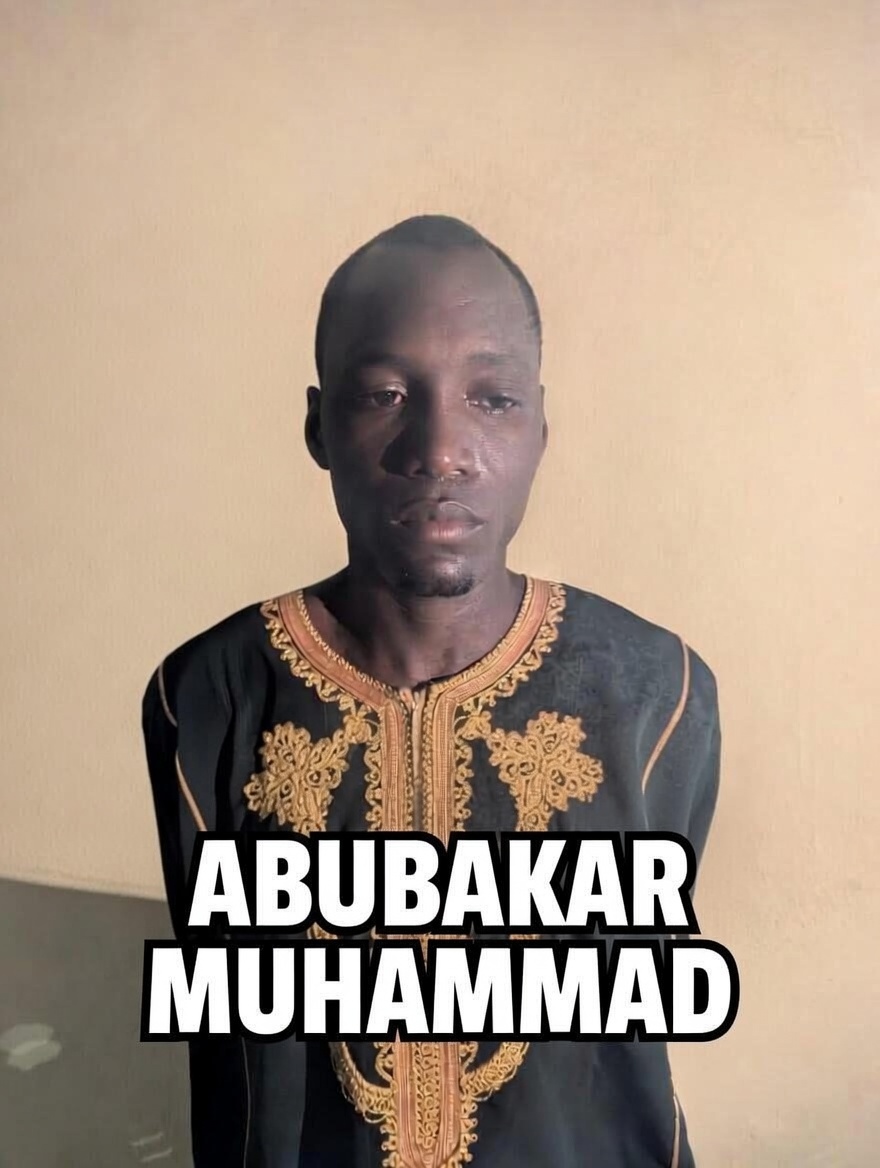
Governor Yusuf described the operation as a major breakthrough in the ongoing fight against banditry, terrorism and other violent crimes threatening communities across Northern Nigeria.
According to information provided by the DSS, the suspect, identified as Muhammad Abubakar, 30, was apprehended in Gezawa Local Government Area of Kano State while allegedly transporting four rocket-propelled grenade (RPG) tubes, three AK-47 rifles and two empty magazines to Funtua in Katsina State.
Preliminary investigations reportedly revealed that the suspect collected the weapons from an individual identified as Bello in the Maigatari border area of Jigawa State and was expected to receive N450,000 upon successful delivery of the arms.
Governor Yusuf praised the professionalism, vigilance and intelligence-driven approach of DSS operatives, noting that the timely interception prevented the weapons from falling into the hands of bandits and other criminal groups.
He said the operation underscored the critical role of intelligence gathering and effective collaboration among security agencies in tackling emerging security threats across the country.
The governor reaffirmed the commitment of the Kano State Government to supporting security agencies through sustained cooperation, logistics assistance and policies aimed at strengthening public safety throughout the state.
He also urged residents to remain vigilant and continue providing credible information to security agencies to aid efforts to combat crime and maintain peace.
Governor Yusuf expressed confidence that ongoing investigations would lead to the arrest and prosecution of all individuals connected to the alleged arms trafficking network.
The statement was signed by Sunusi Bature Dawakin Tofa, Director General, Media and Publicity, Government House, Kano.
Gov. Yusuf Commends DSS Over Arrest of Suspected Gun Courier in Kano

Zulum Delivers Relief, Cash Support to 434 Ngoshe Residents Rescued from Boko Haram

DEMOCRACY AND THE COURAGE TO BELIEVE

Army Distributes Fertiliser to Farmers in Jigawa Under Civil-Military Cooperation Programme

Roger Federer’s Shock as DNA Results Reveal Myla and Charlene Are Not His Biological Children

THE PLIGHT OF FARIDA

FAILED COUP IN BURKINA FASO: HOW TRAORÉ NARROWLY ESCAPED ASSASSINATION PLOT AMID FOREIGN INTERFERENCE CLAIMS
-
 News2 years ago
Roger Federer’s Shock as DNA Results Reveal Myla and Charlene Are Not His Biological Children
-
Opinions4 years ago
THE PLIGHT OF FARIDA
-
 News1 year ago
FAILED COUP IN BURKINA FASO: HOW TRAORÉ NARROWLY ESCAPED ASSASSINATION PLOT AMID FOREIGN INTERFERENCE CLAIMS
-

 News2 years ago
EYN: Rev. Billi, Distortion of History, and The Living Tamarind Tree
-
 Opinions4 years ago
POLICE CHARGE ROOMS, A MINTING PRESS
-

 ACADEMICS2 years ago
A History of Biu” (2015) and The Lingering Bura-Pabir Question (1)
-

 Columns2 years ago
Army University Biu: There is certain interest, but certainly not from Borno.
-

 Politics1 year ago
2027: Why Hon. Midala Balami Must Go, as Youths in Hawul and Asikira/Uba Federal Constituency Reject ₦500,000 as Sallah Gift
