Features/Analysis
Kashim Shettima: The Imperative of Agricultural Revitalization and the Case for the Niger Delta’s Agrarian Future

Kashim Shettima: The Imperative of Agricultural Revitalization and the Case for the Niger Delta’s Agrarian Future
By: Dr. James Bwala
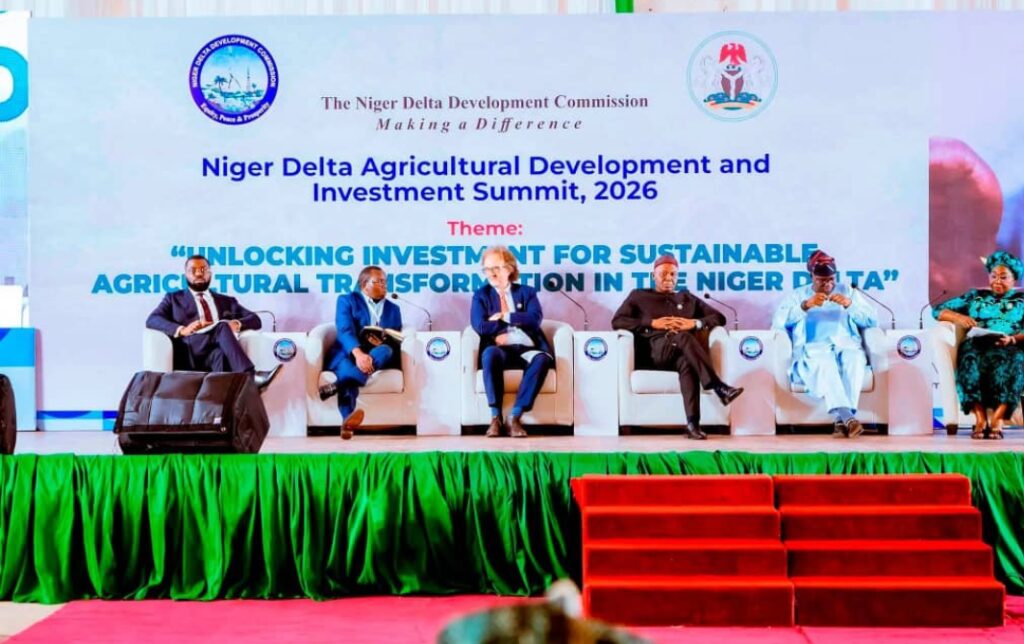
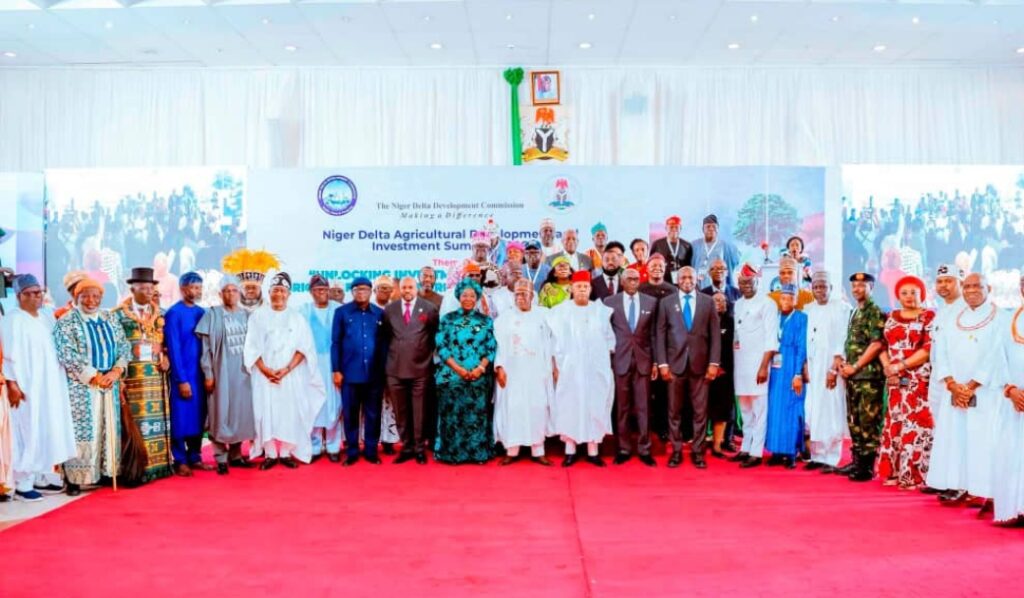
The Vice President of Nigeria, Kashim Shettima, has declared open the Niger Delta Agricultural Development and Investment Summit, co-convened by his office and the Niger Delta Development Commission (NDDC). This event marks a decisive step toward rekindling the agricultural heritage of the Niger Delta, anchored by the launch of the $500 million Niger Delta Agricultural Investment Fund.
Kashim Shettima’s eloquent remarks as they reverberated through the crowd pointed out that while nations rely on a variety of resources, their endurance hinges on their capacity to feed themselves. His assertion that agriculture serves as both the foundation of civilization and the foremost guarantor of political stability forms a compelling argument for an urgent and strategic investment in this sector.


The call for agricultural revitalization in the Niger Delta, emphasizing its critical role in national stability, economic diversification, and sustainable development, speaks volumes of the impact of the Tinubu and Kashim Shettima administrations in this sector. The VP’s message can better be appreciated through the lens of history and economic identity. Prior to the discovery of oil, Nigeria’s economy was fundamentally agrarian. The fertile soils of regions like the Niger Delta were the backbone of local livelihoods and a vital source of revenue. Agriculture provided employment for the majority and supplied food both for domestic consumption and export. Yet, decades of oil dominance have shifted national focus and investment away from agriculture to the detriment of the sector and overall economic resilience.
This shift has had profound consequences. Dependency on oil exports has rendered Nigeria vulnerable to volatile global oil prices and external shocks, leading to economic instability. Adding to this is the neglect of agriculture. This has exacerbated rural poverty, especially in the Niger Delta regions, where environmental degradation and limited economic diversification have compounded socio-economic challenges. The vice president’s emphasis on reinvigorating agriculture is therefore not only a nod to history but also an urgent strategy to reclaim sustainability and inclusive prosperity.

One of the most persuasive points made by Vice President Shettima is the intrinsic link between agriculture and political stability. Agriculture provides food security, which is foundational to societal peace. When a nation struggles to feed its population, social unrest, economic disparity, and political volatility often follow. In contrast, countries that maintain a robust agricultural base tend to enjoy greater internal peace and cohesion because their citizens’ basic needs Countries with a strong agricultural base tend to experience greater internal peace and cohesion, as they meet their citizens’ basic needs..
In the context of the Niger Delta, a region that has experienced significant unrest and militancy largely due to economic marginalization and environmental degradation, leveraging agriculture can act as a transformative stabilizing force. By creating jobs, improving incomes, and enhancing food self-sufficiency, agricultural development can reduce desperation and conflict drivers. It offers a tangible pathway for empowerment and reconciliation, fostering a positive cycle of peace and progress.


Shettima pointed out that Nigeria’s over-reliance on oil is widely recognized as a central challenge to long-term economic sustainability. The global energy transition and fluctuating oil markets make diversification imperative. Agriculture, with its extensive value chains spanning production, processing, marketing, and export, presents a promising avenue for economic diversification.
The $500 million Niger Delta Agricultural Investment Fund represents a bold commitment to capitalize on the region’s natural endowments. Strategic investment in modern farming techniques, infrastructure, agribusiness, and market access will unlock vast opportunities. It will stimulate rural economies, expand the industrial base, and create resilience against external shocks. Moreover, integrating agriculture with technology and innovation can position Nigeria as a competitive player in global agricultural markets.


The Niger Delta has suffered ecological harm from decades of oil exploration, including pollution and land degradation. These environmental issues have compromised agricultural productivity and public health. Consequently, a renewed agricultural focus must also embrace environmental restoration and climate adaptation strategies.
Investing in sustainable farming methods, soil rehabilitation, and water management will restore the land’s fertility and mitigate adverse environmental impacts. Furthermore, agriculture can play a vital role in climate change mitigation through carbon sequestration and biodiversity conservation. Thus, the agricultural revitalization agenda aligns with Nigeria’s broader commitments to environmental stewardship and sustainable development goals.
For the vision articulated by Vice President Shettima to materialize, coordinated action and steadfast commitment from all stakeholders are indispensable. The government must provide enabling policies, facilitate access to finance, improve rural infrastructure, and support farmer education and research. Equally, private sector participation and community engagement will be critical in ensuring the fund translates into meaningful ground-level outcomes.

Public-private partnerships can accelerate technology transfer and market integration, while local communities’ involvement ensures culturally sensitive and inclusive development practices. Transparency and accountability in fund management will safeguard the initiative’s efficacy and public trust.
The Niger Delta Agricultural Development and Investment Summit, and the historic launch of the $500 million Agricultural Investment Fund, represent a moment in Nigeria’s quest for sustainable development. Vice President Kashim Shettima’s insightful declaration highlights the unassailable importance of agriculture as the bedrock of civilization, political stability, and economic resilience. For a nation whose foundations were rooted in agrarian prosperity before oil, the time to rekindle that legacy is now.
The Niger Delta, endowed with rich soils and a hardworking populace, can lead Nigeria’s agricultural renaissance. Through deliberate investment, environmental restoration, and strategic partnerships, the region can emerge stronger, more stable, and more prosperous. Embracing agriculture not as a fallback but as a frontline driver of national progress is not merely an option—it is an imperative for the enduring well-being of Nigeria and its people. The Niger Delta Agricultural Development and Investment Summit symbolizes hope and determination, signaling that Nigeria will no longer take its agricultural promise for granted but will harness it fully to feed its future.
James Bwala, PhD, writes from Abuja.
Kashim Shettima: The Imperative of Agricultural Revitalization and the Case for the Niger Delta’s Agrarian Future