
Feature
KASHIM SHETTIMA: THE SOUR SIDE FOR A CONSPIRACY

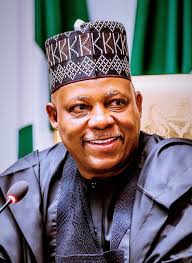
KASHIM SHETTIMA: THE SOUR SIDE FOR A CONSPIRACY
By: Inuwa Bwala.
Nobody is trying to force the Vice President Kashim Shettima on President Bola Ahmed Tinubu as a running mate in 2027.
While it remains Mr President’s prerogative to pick a working partner, it remains a fact that, he should have known the value of Kashim Shettima, having worked with him at very close quaters in the last two years.
Far beyond this, the President is so committed to his covenant with his vice and does not need the ongoing circus show to stick to it.
Those orchestrating for a change in the ticket are perhaps afraid of the evident cause for continuity, hence the desperation to create a make belief that the Vice Presidential slot is open for contest.
Several attempts have been made to drag Shettima and his supporters into needless controversies so as to make an issue out of their blind postulations.
And ever since I got the winds about plans to make an issue out of the perceived plot to substitute the Vice President Kashim Shettima as President Tinubu’s running mate in the 2027 Presidential elections, I knew it is a matter of time for backlashes, as witnessed at the APC Zonal rally in Gombe on Sunday.
Reading the body languages of the National Security Adviser, NSA, Nuhu Ribadu and his praise choristers, everyone within the hall knew that, there was a grand conspiracy to downplay Kashim Shettima’s position in the endorsement: which was the primary motive for the rally.
And while the National Chairman of the APC, Abdullahi Ganduje was quick to play safe sensing the possible consequences, Governor Inuwa Yahaya of Gombe State and the Zonal Vice Chairman Mustapha Umar were not so wise to recognize danger.
The governor escaped with jeers, but the APC vice chairman was not so lucky: he received the beating of his life from irrate delegates.
Those who try to link Borno state Governor, Babagana Umara Zulum, with the mob reaction to the failure to endorsed Shettima were just being mischievous, as it was spontaneous
Those who witnessed it told me that, both Governor Yahaya and the APC Zonal chairman had ignored calls from delegates to recognize Shettima as an inseparable part of the ticket, which resulted in the jeers for Yahaya and the beating for Mustapha.
While it is not trying to justify the attendant violence and disruption of the rally, one should not fail to point out to leaders, the wisdom in harkening to popular demands at an occasion like this.
Of course, Governor Babagana Umara Zulum and Mai Mala Buni of Yobe State could not have done anything at the particular stage, even if they did not approve of the violence.
Common sense dictates that, as the political atmosphere becomes increasingly charged in the face of perceived plans to shortchange Shettima, who has endeared himself to Nigerians, speakers at such functions should learn from theGombe experience.
KASHIM SHETTIMA: THE SOUR SIDE FOR A CONSPIRACY


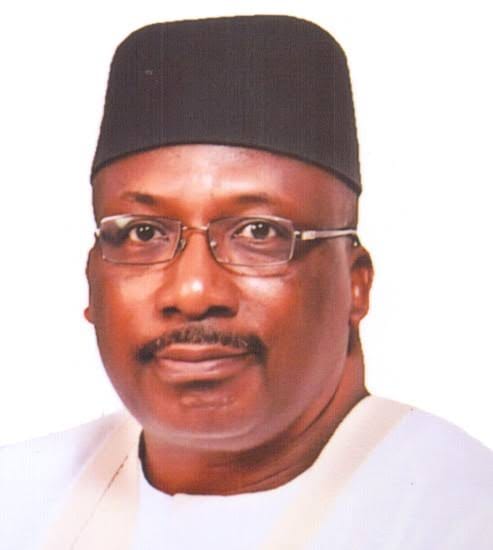
The Quiet Architect: Dambazau’s Legacy of Institutional Reform
By Mohammed Manga
Under the ancient baobab of Zazzau at dusk, where generations have weighed wisdom, the elders teach that “you do not judge a farm by the bustle of its clearing, but by the fullness of its barn at harvest.”
They also say, “A well is not praised because it was dug deep, but because it never runs dry when the people thirst.”
Such is the test of a nation. Not the elegance of its declarations or the flourish of its ceremonies, but whether its systems endure, its processes are fair, and the ordinary citizen can find dignity without knowing someone at the top. The true measure of a state is what works when no one is watching.
As Heraclitus observed, “No man ever steps in the same river twice, for it is not the same river and he is not the same man.” Institutions are those rivers. They must keep flowing even when personalities change, lest society run dry.
Nigeria, at 66, stands at a historic confluence. As the Yoruba say, “Bi omi ba ku, a fi oju ana e wo” — when water dries up, we study its former path. Our own path is instructive.
Long before amalgamation, governance in these territories had form and fidelity. In the Sokoto Caliphate, the Emir led, the Waziri administered, and the Alkali dispensed justice. In Oyo, the Alaafin ruled, but the Oyomesi checked his authority. Colonialism disrupted these indigenous systems, and independence tasked us with building modern institutions from near scratch.
Yet, as Professor Claude Ake warned, “the state in Africa has tended to become privatized.” To return it to the people, as the Igbo adage reminds us, “one finger cannot lift a load.” We need builders, not just occupants.
Global experience illuminates the path. Lee Kuan Yew transformed Singapore by insisting that “we have to re-invent ourselves continuously.” Malaysia transformed its commodity-based economy into an industrial powerhouse by disciplining its bureaucracy.
Botswana built one of Africa’s most trusted public services by insulating its institutions from patronage. Rwanda rebuilt its judiciary after conflict by enforcing case timelines. The United Arab Emirates transformed desert outposts into efficient service hubs by measuring service delivery and publishing results.
As Dag Hammarskjöld taught, “It is more noble to give yourself completely to one individual than to labour diligently for the salvation of the masses.” Institution-building demands that same level of dedication.
It is at the level of everyday encounters with the state, where dignity is either affirmed or denied, that public trust is won or lost. Citizens may applaud macroeconomic reforms, but they ultimately judge government by the courtesy they encounter at the counter and the reliability of services when no one is watching.
Viewed through this lens, the public service career of Lt.-Gen. Prof. Abdulrahman Bello Dambazau, a soldier, scholar, reformer and diplomat, offers a compelling case study.
His story began not in power, but in preparation. Born on March 14, 1954, in Zaria, he received his early education at Barewa College before proceeding to the Nigerian Defence Academy as a member of the 17 Regular Combatant Course. He was commissioned as a second lieutenant in June 1977.
He refused to let khaki limit his pursuit of knowledge. He earned a Bachelor of Science degree in Criminal Justice, a Master of Arts degree and a Master of Education degree from Kent State University in the United States, as well as a PhD in Criminology from the University of Keele in the United Kingdom. He thus became Nigeria’s first Chief of Army Staff to hold a PhD.
For 33 unbroken years, he served with distinction. His career included appointments as Aide-de-Camp to the Chief of Army Staff in 1979; commander of Military Police units; Special Investigator from 1984 to 1985; Registrar of the Nigerian Defence Academy from 1993 to 1999; Chief Instructor at the Infantry Centre and School; Directing Staff at the National War College; General Officer Commanding (GOC), 2 Division, Ibadan, from 2007 to 2008; and Chief of Army Staff from 2008 to 2010.
Along that path, he laid the foundation for the Counter-Terrorism and Counter-Insurgency Centre in Jaji and authored five seminal books, including Criminology and Criminal Justice. His academic distinctions included serving as a Senior Fellow at the University of Massachusetts, Boston, and an Associate at Harvard University’s Weatherhead Center for International Affairs. He also served as Chairman of the University Advancement Centre at the University of Ibadan.
He currently serves as Pro-Chancellor and Chairman of the Governing Council of Capital City University, Kano.
In November 2015, President Muhammadu Buhari called him to what was perhaps his most challenging assignment: Minister of Interior.
He inherited four agencies where morale was low and public cynicism was high: the Nigeria Immigration Service, the Nigeria Prisons Service (now the Nigerian Correctional Service), the Nigeria Security and Civil Defence Corps, and the Federal Fire Service.
Many regarded it as a thankless ministry. He treated it as a laboratory for reform.
What does a scholar do with such a portfolio? He chose systems over slogans.
First, he professionalised the service. He introduced comprehensive reforms aimed at creating seamless pathways for career progression, training, appointments and promotions.
Second, he digitised operations. He introduced biometric systems, digitalised the international passport process, deployed Advance Passenger Information in collaboration with INTERPOL, and advocated local passport production to reduce costs and strengthen the security of the national database.
Third, he humanised the correctional system. He pursued reforms aimed at reducing congestion involving awaiting-trial inmates, procured operational vehicles, initiated plans for model custodial centres with a capacity of 3,000 inmates, and helped midwife the new Correctional Act, shifting the emphasis from punishment to rehabilitation in line with the United Nations Standard Minimum Rules for the Treatment of Prisoners, commonly known as the Nelson Mandela Rules.
Fourth, he revived neglected institutions. At the time, the Federal Fire Service reportedly had fewer than three functional fire trucks in Abuja. He oversaw efforts to revitalise the service, increasing its fleet to more than 40 modern fire trucks and water tankers. The reforms also included the establishment of six zonal headquarters and the reactivation of its training school.
Fifth, he institutionalised coordination. He established a Situation Room for emergency coordination, led the US-Nigeria Security Sector Reform Dialogue, conceptualised the Institute of Domestic Security for the strategic training of senior officers, and instituted the Interior Games to promote collaboration among agencies under the ministry.
Beyond his work in uniform, Dambazau’s commitment to public safety and justice extended to victim advocacy. As a criminologist, he founded the Foundation for Victims of Child Abuse and the Nigerian Society of Victimology, affirming that the supreme art of governance lies in preventing harm, often without fanfare.
Today, that same depth of preparation and demonstrated capacity for institution-building has taken him to Beijing as Nigeria’s Ambassador to China, one of the country’s most strategic diplomatic postings.
What, then, is the enduring lesson?
If a scholar in uniform could transform four agencies often dismissed as moribund into institutions that now touch millions of lives with dignity — issuing passports with fewer frustrations, responding to fires with greater capacity, and securing borders through data — what prevents us from replicating that quiet architecture elsewhere?
If effective processes can replace patronage in the Ministry of Interior, they can do the same in primary healthcare centres, where medicines must be traceable; in public schools, where promotions must be merit-based; in power distribution, where metering must be transparent; and in local councils, where budgets must be published.
This article is not a eulogy. It is a mirror held up to all who serve and all who exercise oversight: political officeholders who formulate policies; legislators charged with oversight; heads of agencies who steer the machinery of the state; permanent secretaries and directors who safeguard institutional memory; and our revered members of the Bench, who serve as guarantors of justice.
The question remains: Are we leaving our institutions better than we found them?
Nigeria does not need louder government. It needs stronger institutions — systems that deliver when no one is applauding and endure long after the individuals who built them have left.
As Einstein said, “Strive not to be a success, but rather to be of value.” And as Professor Ali Mazrui reminded us, “Africa’s greatest challenge is not the absence of ideas, but the absence of institutions to carry those ideas.”
May the lesson of the quiet architect endure: build quietly, reform boldly, and leave the ladder down for others to climb.
Mohammed Manga is a public policy analyst who writes on governance and subnational reforms. He can be reached via mohammed.manga.policy@gmail.com.
The Quiet Architect: Dambazau’s Legacy of Institutional Reform
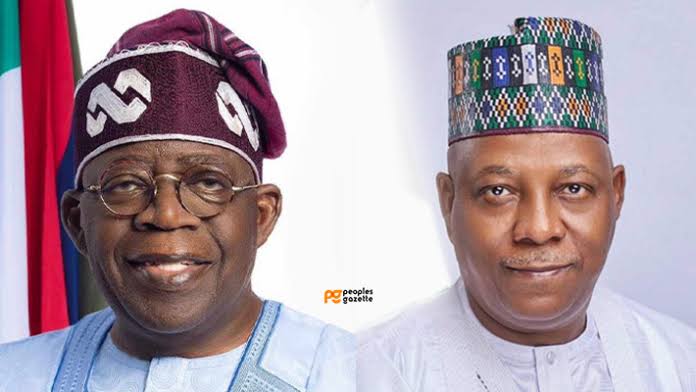
BETWEEN DESPERATION, MISCHIEF AND PROFESSOR ZULUM’S PASSION FOR TINUBU/SHETTIMA
By: Inuwa Bwala
I have refrained from lending my voice to the controversies surrounding some developments in Borno in the last few weeks, believing time will heal the wounds.
I wanted to also establish the truth or mischief, there in, so that I do not draw the wrong conclussions.
I have spent a week in Maiduguri, visiting and investigating some of the issues, and everything points to a calculated political mischief. I spoke to those I believe could give me an objective view from what I read in the social media and all were of the view that, it was a calculated distraction targeted at the governor in particular, not even the state govetnmeny.
At the end of it, it became obvious to me, that, the achievements of the Borno state governor, Professor Babagsna Umara Zulum, seem to overwhelmed event is arch rivals and have closed the doors of any meaningful opposition in Borno.
It is also apparent, that, the sustained, attempt by some social media and political hirelings, acting out the scripts of their failed paymaster politicians is a narrative that has long been envisaged.
To link Professor Babagana Umara Zulum, to the recent arrest of some individuals in Maiduguri for allegedly wearing T-shirts with the inscription “TINUBU MUST GO”, in particular, seems to give an alibi to the seeming mischievous intents of the schemers.
I obtained the full record of Zulum’s interview, in which he vowed to go after miscresnts, masquarading as interest groups, as well as criminals and drug addicts, threatening the wellbeing of citizens, with the full weight of the law.
Tried, as I did to establish any material evidence, or police atribution to him, neither official correspondence, that links the Borno State Government or Governor Zulum to, the said arrest led to a blank wall.
By now, I am sure, that, every right thinking person who carefully looks at the issues, is more likely to come to the same conclussion, as I did, to the effect that, the allegations against governor Zulum, were neither here nor there.
The Nigeria Police Force is a federal institution, that does not take instructions from Zulum, even as the chief security officer, because, it has its coomand structure, and operational schedules. To ascribe their action on every security action in Maiduguri to Governor Zulum is not only illogical, but most uncharitable.
It is mischief clothed in political activism, which seems to have been taken too far.
Professor Zulum, as perhaps everyone knows, means well for the people of Borno, and Nugeria. He has often taken risks in his efforts at checking lawlessness, thuggery and vandalism. I know, he derides any form of lawlessness, and often takes charge, in trying to calm frayed nerves.
He is on record as the only governor in Nigeria who has consistently said that he will not harass the opposition because his performance will speak for him, niw and in the future.
In Borno, opposition parties have always held their meetings, granted press interviews, and criticized government freely without any molestation.
It will seem out of place for the same man who tolerates direct criticism of his own government, to be accused of ordering an arrest over a T-shirt against the President?
There is no doubt about the fact that, govetnor Zulum has been very passionate about the Tinubu/Shettima ticket, but certainly will not extend that passion to ordering for such an action.
It may be true, that,”uneasy always lies the head that wears the crown, but Zulum does not have to carry this cross, about which he knows nothing.
I have asked him personally to tell ne how much he kniws about the incident and he confirmed that he did not know about the srrest, untill his attention was called to nedia reports about it. I have no cause to doubt him, especially when he swore to that effect.
Those peddling this narrative are are either doing so because they have no cogent message to take to the people of Borno, or are so obbessed with anything decent and progressive, to the extent of crucifying the man for an iffence he knew nothing about.
I have often said it, that no one can fault
Zulum’s achievenents in Borno, either in the quality of infrastructural development, human capacity development, resettlement, rehabilitation or recontruction.
It is evidential that he exudes a rare courageous leadership in the face of insurgency. In the absence of credible alternative to his style of leadership, it has become so fashionable for some people to atribute to him every real or imagined wrong.
Laughable snd infantile, as it serms, is the circulation of a clearly AI-generated image, purporting that the Governor said the APC will rig the 2027 elections and heavens will not fall. This is the height of desperation and political forgery. Everyone who knows Professor Zulum knows he is a professor with integrity. He has never and will never associate himself with election rigging or any illrgitmate pursuit. I will not have to defend
He won his elections in 2019 and 2023 with overwhelming, verifiable margins because the people of Borno love him, not because he rigged.
What I am witnessing is an emerging industry of calumny attempt to rubbish Zulum because his towering achievements have rendered the opposition irrelevant in Borno. They want to put him at the crnter of a national controversy, where there is those eho may have heard about him, but not prrviledged to mert him, will lump him with emerging reckless speakers.
The people of Borno and indeed Nigerians are by now aware, that, falsehoods and mischief cannot diminish the stature Governor Zulum has attained.
Such distractions, as seems to be unfolding in Borno may be normal and I advice the governor to
remain focused on governance and on delivering the Tinubu/Shettima mandate through performance, not persecution. He believes in the ballot, not in intimidation.
History will vindicate him, as always.
I come in peace.
BETWEEN DESPERATION, MISCHIEF AND PROFESSOR ZULUM’S PASSION FOR TINUBU/SHETTIMA

Twelve years on: A tribute to Braimoh, Hedima and other fallen heroes
By Edward Gabkwet
The month of September 2026 marks 12 years since two Nigerian Air Force (NAF) pilots took to the skies on a mission from which one would never return, while the other would disappear into the uncertainty of war.
Group Captain Abdulrasheed Bamidele Braimoh and Wing Commander Chimda Hedima were flying an Alpha Jet aircraft, NAF 466, on a combat mission against Boko Haram terrorists in the Northeast when their aircraft went down near Kauri in Konduga Local Government Area of Borno State on September 12, 2014.
Hedima was subsequently captured and killed by the terrorists, while Braimoh has since been declared killed in action, in line with the provisions of the Armed Forces of Nigeria.

Twelve years later, their story deserves more than a passing mention. It deserves to be remembered. More importantly, it should compel us to confront an uncomfortable question: How much do Nigerians truly appreciate the men and women who stand between the nation and those who seek to destroy it?
Many would agree that we have become too accustomed to casualty figures involving soldiers killed or maimed, aircraft lost or another funeral taking place. This is a sad reality that risks making tragedies appear ordinary.
But it must not be so.
Behind every military or para-military casualty is the story of a child who will grow up without a parent, parents who will bury their sons or daughters, spouses who suddenly become widows or widowers, and comrades who must return to the battlefield knowing that the colleague who stood beside them yesterday will not be there tomorrow.
Oftentimes, Nigerians criticise military operations, especially when there are setbacks. Such criticism is understandable, particularly in a democratic society like ours. However, in the intensity of these arguments, we sometimes forget the men and women at the centre of these operations.
The pilot who straps himself into a combat aircraft does not know with certainty whether the mission will end with a safe landing. In the same way, the soldier or sailor who moves into a forward position cannot be certain that he or she will return home to family.
Yet, they proceed.
They serve with honour and courage, accepting the enormous burden and consequences that come with their duty. The willingness to place one’s life in danger for the survival and security of others is one of the noblest obligations a citizen can undertake.
Braimoh and Hedima did precisely that on September 12, 2014.
Nigeria’s counterterrorism and counterinsurgency efforts have produced heroes whose names are well known, as well as many others whose sacrifices have barely entered the national consciousness.
Some died in heroic battles, while others paid the supreme price in ambushes, improvised explosive device attacks or assaults on isolated outposts, with their stories receiving little national attention.
Neglecting the legacies of such heroes who paid the supreme price strikes at the heart of a nation’s sense of responsibility. A nation that ignores its fallen heroes risks losing its sense of national obligation, and the consequences of such neglect can extend far beyond the immediate grief of their families.
Honouring our heroes must therefore go beyond ceremonies associated with the annual Armed Forces Remembrance Day or occasions when their coffins are draped in the national flag.
There should be a permanent and accessible national record of Nigeria’s fallen military personnel. Their names, photographs and stories should be preserved. Their families should be recognised, and their sacrifices should form part of our national history.
Perhaps most importantly, young Nigerians should be taught that citizenship is not only about what one receives from the nation, but also about what some citizens have sacrificed for its survival.
As we evoke the memories of Group Captain Abdulrasheed Bamidele Braimoh and Wing Commander Chimda Hedima, we should also remember the many other Nigerian military and para-military personnel who have made the ultimate sacrifice.
Twelve years after NAF 466 disappeared from the skies over the Northeast, the memories of Braimoh, Hedima and many others should remind us that the fight against terrorism has never been merely about recovering lost territory or counting casualties.
It has always been about those who leave home in uniform, venture into dangerous environments so that others can remain safe, and sometimes do not return.
Today, let us pause and remember the pilots, soldiers, airmen, sailors and para-military personnel who sacrificed their lives for our safety. Let us also remember their families, who continue to live with their absence.
And let us remember that behind every military casualty is a Nigerian life given in the service of our nation.
May we never become so accustomed to the sacrifices of our Armed Forces and other security agencies that we cease to be moved by them.
May we never forget Braimoh, Hedima and the many others who went before and after them.
And may Nigeria always remain worthy of the sacrifices made in her defence.
Gabkwet, an Air Vice Marshal, writes from Abuja.
Twelve years on: A tribute to Braimoh, Hedima and other fallen heroes

NCYP Seeks Probe of Viral Video Allegedly Threatening Christians in Jos, Enugu

ECOWAS: E-commerce Can Raise West African Trade to 35%, Boost Small Businesses

37 Miners Suffocated in NSCDC Custody, Panel Recommends N1.4bn Compensation

Roger Federer’s Shock as DNA Results Reveal Myla and Charlene Are Not His Biological Children

THE PLIGHT OF FARIDA

FAILED COUP IN BURKINA FASO: HOW TRAORÉ NARROWLY ESCAPED ASSASSINATION PLOT AMID FOREIGN INTERFERENCE CLAIMS
-
 News3 years ago
Roger Federer’s Shock as DNA Results Reveal Myla and Charlene Are Not His Biological Children
-
Opinions5 years ago
THE PLIGHT OF FARIDA
-
 News2 years ago
FAILED COUP IN BURKINA FASO: HOW TRAORÉ NARROWLY ESCAPED ASSASSINATION PLOT AMID FOREIGN INTERFERENCE CLAIMS
-
 Opinions5 years ago
POLICE CHARGE ROOMS, A MINTING PRESS
-

 News3 years ago
EYN: Rev. Billi, Distortion of History, and The Living Tamarind Tree
-

 ACADEMICS3 years ago
A History of Biu” (2015) and The Lingering Bura-Pabir Question (1)
-

 Columns3 years ago
Army University Biu: There is certain interest, but certainly not from Borno.
-

 Politics1 year ago
2027: Why Hon. Midala Balami Must Go, as Youths in Hawul and Asikira/Uba Federal Constituency Reject ₦500,000 as Sallah Gift
