
News
Katampe Residents Call on Wike to Intervene in Illegal Extortion


Katampe Residents Call on Wike to Intervene in Illegal Extortion
By: Michael Mike
Residents of Katampe Extension in Abuja have been sent into panic as a group of thugs, in the company of some gun-toting policemen, raided the district.
Residents alleged that the thugs and armed men went on a rampage, indiscriminately catching and bundling gatekeepers manning residential gates into their truck and driving off, for no offence, leaving the residences unsecured with some gates left wide open.
The residents sounded the alarm over what they described as the unlawful and dangerous campaign by the Bwari Area Council to extort money from them under the guise of enforcing payment for radio and television licenses, calling for the immediate intervention of the Federal Capital Territory Minister, the Inspector General of Police and the Judicial Service Commission to avert a total break down of law and order in the district.
A statement signed by the Katampe Extension Residents Association President, Mohammed Gimba, described the situation as “bizarre”, noting that supposed agents and officials of the Bwari Area Council are resorting to self-help and taking the law into their own hands.
He described a situation where law-abiding citizens performing their legitimate duties in a private residential building are summarily rounded up like common criminals and imprisoned by officials of the council, as a breach of their fundamental human rights and a flagrant disregard of law and order.
The chairman said: “What we have currently is a situation whereby bystanders, private security men and house helps are being randomly arrested and detained by council officials with the aid of the police, instead of the homeowners. This is impunity and an illegality taken too far.”
He noted that, under Nigerian law, specifically the Administration of Criminal Justice Act (ACJA) 2015, a person can only be arrested or detained if there’s reasonable suspicion of their involvement in a crime (Section 35 of the Constitution of Nigeria, 1999, and Section 7 of ACJA). The police don’t have the authority to detain someone just because they’re related to or are the employee of a suspect.
He said: “The law doesn’t allow for ‘substitutional’ detention. More worrisome is the fact that the contentious issue of radio and TV license fees being demanded by the Bwari area council is purely a civil matter for which the district is collectively seeking legal interpretation against the background that the Abuja Municipal Area Council recently suspended the imposition of the said levy. In any case, Katampe extension falls within the Abuja Municipal Area Council and not Bwari Area Council. The escalating harassment, which has led to arrests and illegal detentions, is an attack on residents’ rights.”
The chairman said Katampe Extension has no visible project by the Bwari area council, wondering why the council is on a desperate mission to extort money from residents of the district under the guise of radio and television license, which he described as “disturbing”, particularly because the levies are to be paid into the accounts of a private company not that of the Bwari area council.
He contended that, “In a community where people are simply trying to live peacefully, these actions create fear, disrupt lives, and smack of extortion rather than lawful revenue collection.”
“In view of the above, we urge the Bwari Area Council to immediately halt these aggressive actions and engage in constructive dialogue with Katampe Extension residents. Clear explanations of the legal basis for these demands, coupled with a more consultative approach, would foster trust rather than fear. Residents are willing to engage, but they will not silently endure harassment,” the statement said.
The statement also called on FCT Minister Nyesom Wike to call the chairman of Bwari Area Council to order, to forestall a situation that can lead to total breakdown of law and order in Katampe Extension district, as a result of the misguided and illegal activities of Bwari council officials.



Troops arrest suspected ISWAP informant in Gombi, Adamawa
By: Zagazola Makama
Troops of the Joint Task Force (JTF) Operation HADIN KAI, in conjunction with Civilian Hunters and the Vigilante Group of Nigeria, have arrested a suspected informant of the Islamic State West Africa Province (ISWAP) and Boko Haram Terrorists (BHT) in Gombi.
The suspect, identified as Abdullahi Umar, 25, a native of Gwoza, was apprehended on March 23 following credible intelligence on the presence of ISWAP elements within the 232 Battalion Tactical Area of Responsibility.
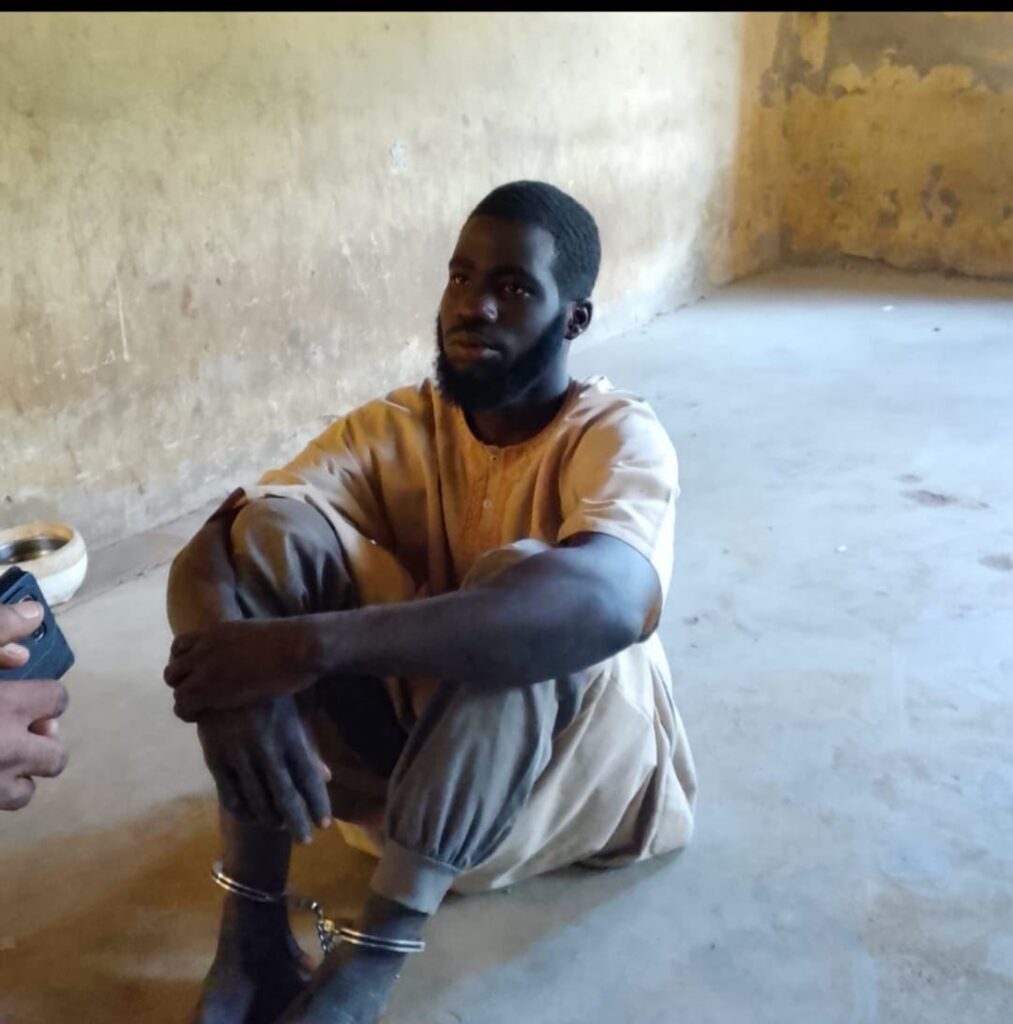
Preliminary investigations revealed that Umar was tasked with conducting reconnaissance along routes leading to the 232 Battalion general area and military structures, with the aim of identifying suitable entry points for future attacks.
The suspect also confessed to involvement in the recent attack on troops in Ngoshe.
Umar is currently in the custody of troops for further investigation and necessary action
Troops arrest suspected ISWAP informant in Gombi, Adamawa
Over 930, 000 persons benefit from ACReSAL Projects in Gombe
Mr Mohammed Fawu, the Gombe State Commissioner of Water, Environment and Forest Resources, has stated that no fewer than 930,162 persons across the state have benefitted from the implementation of the World-Bank-funded Agro-Climatic Resilience in Semi-Arid Landscapes (ACReSAL) Project in the state within the past three years
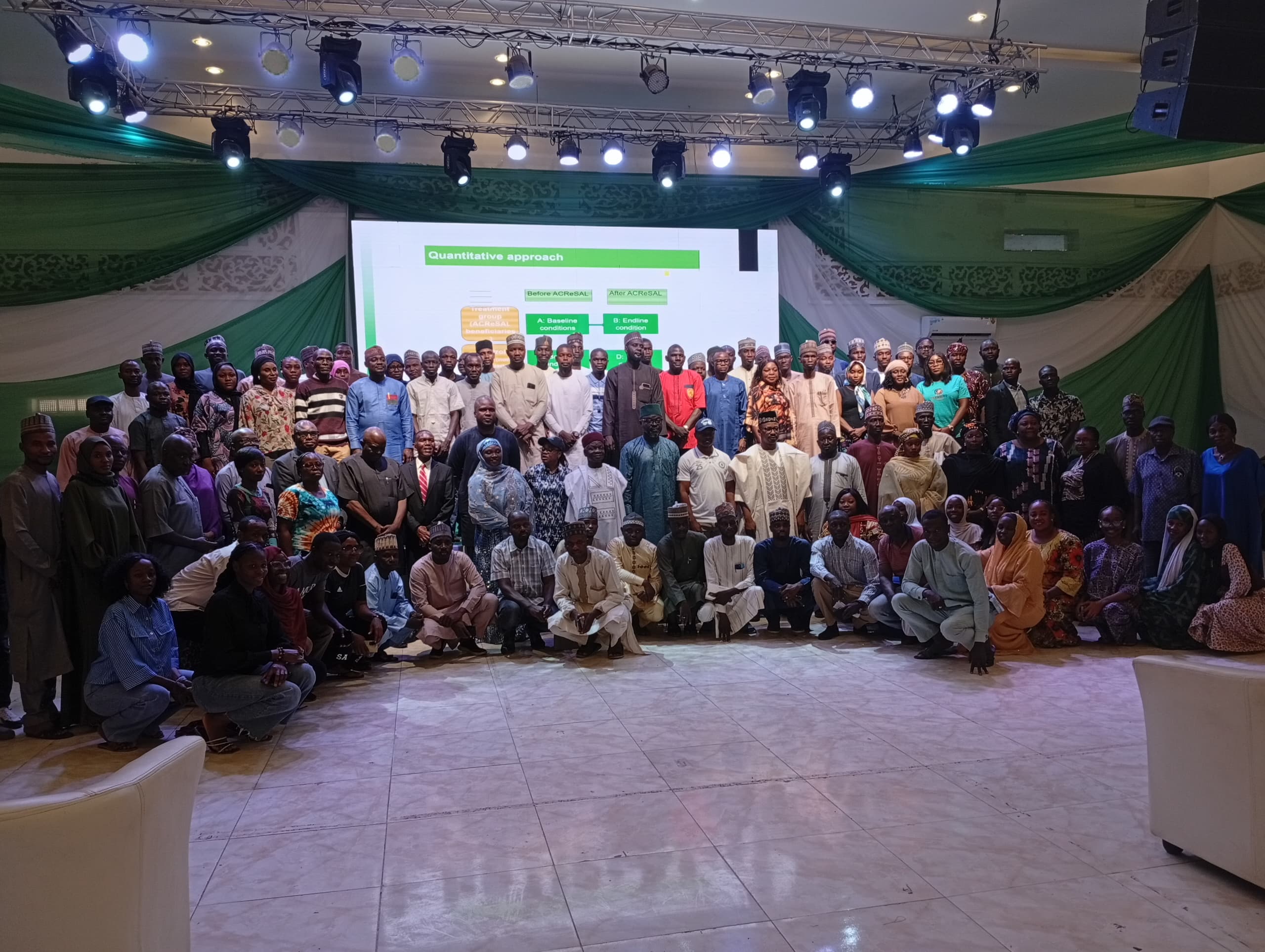
Fawu stated this in Gombe on Monday while declaring open a four-day training of enumerators for ACReSAL Third Party Assessment.
Fawu stated that Gombe State has within the three years received disbursements amounting to $27.51 million for the implementation of the project which had impacted positively on the lives of residents.
He said that the projects so far implemented have contributed to combating land degradation, erosion, and climate change while improving on the lives of persons living around communities were projects were executed.
“Gombe State has advanced a wide range of landscape and community-level interventions, including: establishment of 313 hectares of woodlot plantation.
“Upgrading of Kanawa Forest into a biosphere resort and botanical garden, indigenous tree plantations and roadside shelterbelts spanning 110 kilometres.
“Canalization of Balanga Dam irrigation channels covering 6,329 hectares provision of 250 wash boreholes to support irrigation farming.
“ At the community level, we have distributed clean cook stoves to 3,000 households, provided rainwater harvesting facilities to 1,000 households and institutions, and supplied drought-tolerant seeds to 10,000 farmers.
“Solar-powered irrigation schemes, borehole drilling, and Community Revolving Fund activities are ongoing, supporting agro-processing, livestock, and farm enterprise development,” he said.
He added that ACReSAL has strengthened smart agricultural practices through the establishment a farm centre dedicated to training and research.
Fawu commended the partnership between the Gombe State government and World Bank, which he said has impacted several sectors while improving the livelihoods of residents of Gombe State.
On his part, Dr Sani Jauro, the Gombe State ACReSAL Project coordinator said that no fewer than 220 enumerators drawn from the 19 Northern States and the Federal Capital Territory were being trained.
Jauro said that the third-party assessment would ensure unbiased review of the projects so far implemented by ACReSAL from independent party.
He said the assessment was part of the procedure of ACReSAL project implementation meant to review the progress and challenges of the projects by enumerators who are not involved in the day-to-day running of ACReSAL projects.
Jauro urged the enumerators to carry out their jobs with fairness and be just in their report, adding that “the credibility of the exercise lies on your shoulder.”
On her part, the World Bank Task Team Leader, Dr. Joy Agene who was represented by Mr Joseph Abang, Operations Officer with World Bank said the assessment would unravel what has changed since the commencement of the implementation of the project.
Agene urged the enumerators to be steadfast and report accurately in line with the essence of the exercise.
Over 930, 000 persons benefit from ACReSAL Projects in Gombe
Police repel attack during attempt to arrest suspected bandit leader, one killed in Kano
By; Zagazola Makama
The Police Command in Kano State has repelled an attack on its personnel during an operation to arrest a suspected bandit leader in Bichi Local Government Area.
Security sources told Zagazola Makama that the incident occurred at about 6:30 p.m. on March 22, following a distress call from Tudun Wulli Outpost.
According to the sources, a team of the Anti-Kidnapping Squad, led by ASP Abubakar Musa, acted on credible intelligence and trailed a suspected bandit leader identified as Muhammad, also known as “Senator” or “Kirchi,” who had reportedly visited Tudun Wulli village for Sallah celebrations.
“The suspect was sighted in possession of an AK-47 rifle, but upon attempt to apprehend him, he fled into a crowd,” the source said.
The situation escalated when a mob allegedly attacked the police team with stones and other dangerous weapons, injuring ASP Lawali Hamidu and damaging the windscreen of a patrol vehicle.
“In the process of tactical withdrawal, four persons sustained gunshot injuries and were rushed to General Hospital, Bichi, for treatment,” the source added.
One of the victims, identified as Halima Saidu, was later confirmed dead by a medical doctor, while the others are responding to treatment.
The police personnel involved in the operation were safely evacuated, and additional security deployments have been made to the area to forestall further breakdown of law and order.
The command said the situation has been brought under control, adding that investigations are ongoing, while efforts are being intensified to apprehend the fleeing suspect.
Police repel attack during attempt to arrest suspected bandit leader, one killed in Kano

That Phantom Rift Between VP Shettima And Gov. Zulum

Troops arrest suspected ISWAP informant in Gombi, Adamawa

Over 930, 000 persons benefit from ACReSAL Projects in Gombe

Roger Federer’s Shock as DNA Results Reveal Myla and Charlene Are Not His Biological Children

THE PLIGHT OF FARIDA

FAILED COUP IN BURKINA FASO: HOW TRAORÉ NARROWLY ESCAPED ASSASSINATION PLOT AMID FOREIGN INTERFERENCE CLAIMS
-
 News2 years ago
Roger Federer’s Shock as DNA Results Reveal Myla and Charlene Are Not His Biological Children
-
Opinions4 years ago
THE PLIGHT OF FARIDA
-
 News11 months ago
FAILED COUP IN BURKINA FASO: HOW TRAORÉ NARROWLY ESCAPED ASSASSINATION PLOT AMID FOREIGN INTERFERENCE CLAIMS
-

 News2 years ago
EYN: Rev. Billi, Distortion of History, and The Living Tamarind Tree
-
 Opinions4 years ago
POLICE CHARGE ROOMS, A MINTING PRESS
-

 ACADEMICS2 years ago
A History of Biu” (2015) and The Lingering Bura-Pabir Question (1)
-

 Columns2 years ago
Army University Biu: There is certain interest, but certainly not from Borno.
-

 Opinions2 years ago
Tinubu,Shettima: The epidemic of economic, insecurity in Nigeria
