
News
Kogi Central Concerned Stakeholders Ask Senator Natasha to Stop the Tirade, Provide Quality Representative


Kogi Central Concerned Stakeholders Ask Senator Natasha to Stop the Tirade, Provide Quality Representative
By: Michael Mike
Some people from Kogi Central Senatorial District have asked their Senator, Natasha Akpoti-Uduaghan to stop the ongoing tirade with the Senate President, Godswill Akpabio, and face up to providing the quality representation she was voted for.
The group, the Kogi Central Concerned Stakeholders, in a statement signed by its convener, AbdulRaheem Adeku said: “We the Kogi Central Concerned Stakeholders have observed with utmost dismay the ongoing brickbat between the Senate President, distinguished senator Godswill Akpabio and the senator representing Kogi Central, Natasha Akpoti and wish to firmly dissociate ourselves from the unfolding events that has become a national concern.
“As a revered institution of government, there is no gain saying that the National Assembly has standing rules that must be obeyed as an integral part of keeping the order but we regret to note in absolute terms that a matter that has to do with a simple compliance to rules has degenerated to a vitreous attack on the personality of the distinguished senate president, Godswill Akpabio.
“We recall the immense support the Senate President extended to Senator Natasha long before she became a member of the National Assembly by virtue of his relationship with her then fiancée now husband who has been a family friend for over twenty years.
“We shall not forget in a hurry how Kogi Central stood still when Senator Akpabio led a contingent of very important personalities and politicians to attend the wedding ceremony of now Senator Natasha to his friend and ally, Chief Emmanuel Uduaghan, a wedding ceremony that remained the talk of the town even many months later.
“This is testament to the respect shared and value of the relationship between Senator Akpabio and his friend, our in-law.
“Not to forget also that at the time hope was lost for Senator Natasha’s bid to represent her people at the senate, a glimmer of hope was restored again through the unwavering support of the senate president who at the time had nominated senator Abubakar Ohere as Chairman, Committee on Local Content to invariably hold space for Senator Natasha who was soon declared winner by the court of appeal.
“Senator Natasha, despite being a first timer, enjoyed the privilege of stepping into the reserved role, she become the Chairman, Senate committee on local content, a committee many could describe as a juicy one.
As made public by Senator Natasha, she also enjoyed the privilege of travelling to high profile international events with the Senate President where she took a number of selfies with him, additionally she enjoyed sundry privileges many of her senator colleagues dared to get due to an existing family relationship.
It is also on record that due to Senator Natasha s first line of influence and connection to the Senate President, she was able to attract meaningful empowerment programmes which she has leveraged to boost and advance her political career back home.
“It is however shocking to see that since the sexual harassment allegation against the Senate President, there has been so many allegations and counter allegations in both the social media and conventional media space, putting the peaceful people of Kogi Central on the pedestal of public scrutiny.
“Having acknowledged the overarching support, she has enjoyed over the past few months from the leadership of the Senate, we would like to categorically dissociate and distance ourselves from the uncanny and inappropriate behavior of Senator Natasha.
@We expect Senator Natasha to recognize her strength as an equal to other members of the red chamber, act as a distinguished member of the red chamber, concentrate on the mandate given to her by her people to protect our overall interest and desist from distracting everyone towards events that yield no common good.
“As a people we are known for showing gratitude, loyalty and fidelity to friendship. We therefore condemn the actions, utterances and smear campaign of our daughter against distinguished senate president, Godswill Akpabio.
“This is not in our character, hence, we the Kogi Central Concerned Stakeholders may be compelled by any further stretch of the ongoing public abuse of privilege of representation at the Senate, commence the process of recall.
While pledging total support and loyalty to the Senate President and entire members of the red chamber, we call on the Senate to proceed with the laid down disciplinary measure, take the necessary and appropriate action to serve as deterrent to other serving senators.”
Kogi Central Concerned Stakeholders Ask Senator Natasha to Stop the Tirade, Provide Quality Representative


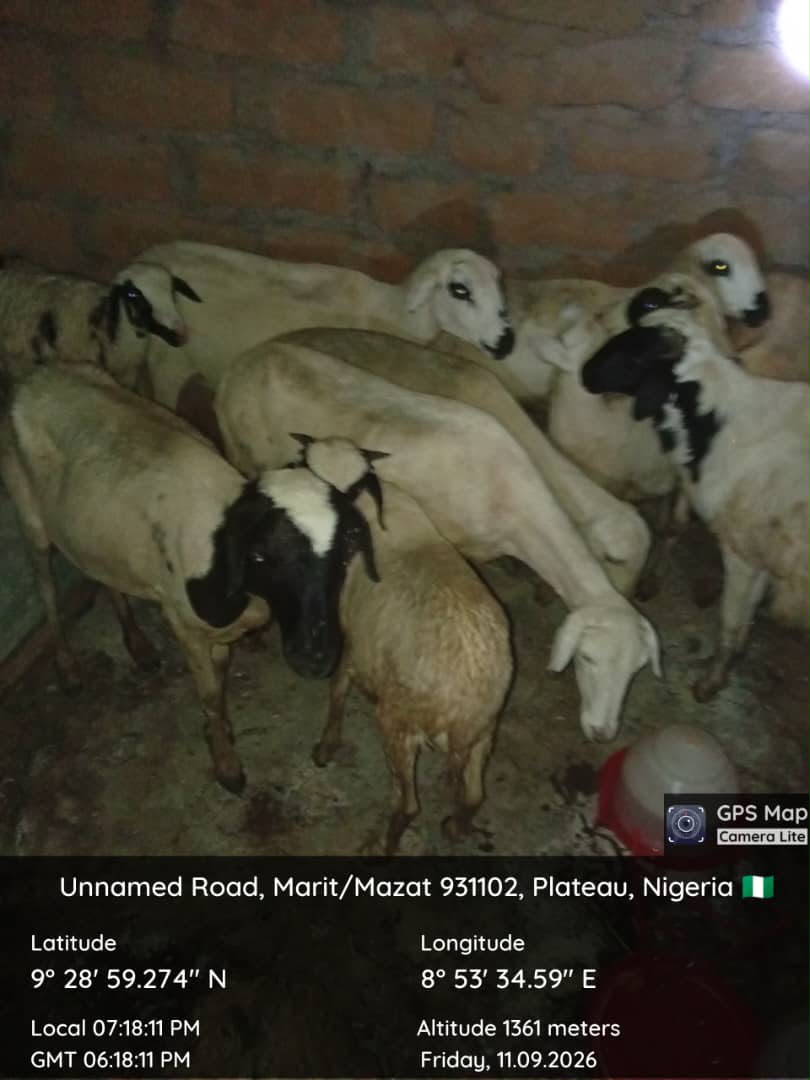
Troops intercept 10 rams after suspected herders flee in Plateau
By: Zagazola Makama
Troops of Sector 4, Sub-Sector 41, Gashish, have intercepted 10 rams abandoned by a group of suspected Fulani herders who fled upon sighting security personnel in Barkin Ladi Local Government Area of Plateau State.
The troops, deployed at Panse general area, responded at about 7:30 p.m. on Sept. 11 following a report of unidentified Fulani herders camping around Rakwok community.
Upon arrival at the location, the troops observed the herders with their livestock. The group reportedly fled into the surrounding area after sighting the approaching soldiers, leaving some of their animals behind.

The troops subsequently recovered 10 rams abandoned at the scene and moved the animals to a secure location for further necessary action.
The development forms part of ongoing security operations in the area aimed at monitoring the movement of armed groups and preventing criminal elements from exploiting remote communities to carry out attacks.
Troops remain deployed across the general area to maintain security and respond to emerging threats.
Troops intercept 10 rams after suspected herders flee in Plateau

ITF, NECA Train 30 Entrepreneurs to Turn Business Stories into Economic Value
…Eight-week programme targets weak business positioning, funding challenges
By: Michael Olugbode
The Industrial Training Fund (ITF) and the Nigeria Employers’ Consultative Association (NECA) have trained 30 entrepreneurs to overcome one of the major obstacles to business growth— the inability to communicate their value, attract customers and position their ventures for funding.
The intervention, delivered through an eight-week skills and storytelling programme, was designed to help business owners move beyond possessing technical or creative abilities to effectively presenting their products, services and economic contributions.
At the graduation ceremony in Abuja, the Executive Director of Mswitch Creative Hub and Mswitch Media, Zainab Salami, said the programme was conceived after the organisers identified storytelling and business positioning as persistent challenges among entrepreneurs.
She said many business owners had viable products and services but struggled to explain their value to customers, clients and potential investors, limiting their ability to grow and secure funding.
“When we were picking the participants, we wanted to make sure that we picked business owners. And we know that one issue they had was telling their stories and positioning themselves for customers, for clients and also for funding,” Salami said.
She explained that the training was intended to equip participants with practical tools to articulate their business journeys, demonstrate their impact and communicate the value they create for the economy.
“We wanted to make sure that they were able to position themselves, also talk about their value, talk about how they are also creating impact for the economy and make sure that they are able to tell their stories and become better storytellers that can improve Nigerian economic value basically,” she said.
The programme’s focus on storytelling reflects a growing recognition that business survival depends not only on the quality of a product or service but also on the ability of entrepreneurs to make their ventures visible, credible and attractive to the market.
Salami disclosed that the training featured mentors from Nigeria, the United Kingdom and South Africa, who provided practical frameworks on storytelling and business development.
She added that finance experts, including PhD holders in the field, also helped participants understand how businesses could combine profitability with value creation and economic impact.
“We had mentors across board. We had mentors from United Kingdom, we had from South Africa that were experts in storytelling and they were able to give them practical frameworks for them to be able to properly articulate what they were doing, their businesses,” she said.
Salami further explained that the financial component was designed to help participants appreciate the relationship between sustainable business growth, profit and wider economic contributions.
“We even had people from finance, PhD holders from finance that they were able to let them understand how your business can create impact, make profits and also provide value,” she added.
According to her, the organisers received 100 applications but selected only 30 participants to preserve the specialised nature of the programme and ensure that beneficiaries received adequate attention and practical guidance.
“We had 100 people, we had 100 applications but because we wanted to make it niche, we picked 30 participants for this cohort,” Salami said.
Representing the ITF-NECA Technical Skills Development Programme (TSDP), the Training Manager, ITF Modern Skills Training Centre, Abuja, Hayatu Abubakar Tamgol, said the initiative formed part of efforts to build a pool of skilled Nigerians capable of contributing meaningfully to the economy.
Tamgol said the ITF’s mandate was to encourage skills acquisition within Nigeria’s industrial and commercial sectors and develop indigenous manpower capable of meeting the changing needs of the economy.
“The Industrial Training Fund is a human resource development organisation that is empowered to encourage the acquisition of skills within the nation’s industry and commerce with a view to generate a pool of indigenous manpower sufficient to meet the needs of the economy,” he said.
He added that the organisation was committed to developing the competencies and capabilities of Nigerians to ensure that the country had sufficient skilled manpower to manage its economy.
“And in order to do that, the ITF needs to develop competencies and capabilities of Nigerians so as to have an adequate pool of Nigerians that are capable to manage the nation’s economy,” Tamgol said.
The ITF official said the organisation’s participation in the programme was aimed at ensuring that the skills acquired by youths and entrepreneurs could translate into employment, self-reliance and economic development.
Expressing satisfaction with the outcome of the training, Tamgol said the participants had demonstrated that the programme achieved its learning objectives.
“I’m coming in at the graduation time, and from what I have seen, and from the success stories that these trainees were able to share, I’m very satisfied that learning has taken place here,” he said.
He said both the ITF and NECA were satisfied with the results recorded during the programme, adding that skills development remained essential to tackling youth unemployment and promoting self-employment.
Tamgol also disclosed that the ITF, under the leadership of its Director-General, was implementing its flagship Skills of Artisans programme, which provides Nigerians across the country with opportunities to acquire practical skills.
He said the initiative was designed to enable beneficiaries to become self-employed, earn a livelihood and contribute to a stronger economy.
“The ITF presently, under the leadership of our Director General, is implementing her flagship programme, which is the Skills of Artisans programme. And this programme is giving Nigerians the opportunity, all over the country, for them to acquire skills, so as to be able to be self-employed, for them to be able to take care of themselves, so that Nigeria will be better off,” he said.
For one of the beneficiaries, the training offered a new understanding of the importance of deliberately communicating her personal and business journey.
She said the programme taught her that entrepreneurs risk losing control of their narratives when they fail to explain their experiences, vision and value effectively.
“Because one of the things we learn in class is, if you don’t tell your story, somebody will tell it for you and they will tell it wrongly,” she said.
The participant added that technical or creative ability alone was insufficient if customers, partners and investors remained unaware of the person behind the work or the value being created.
“One thing that I’ve learned is that no matter how good you are as a creative, if nobody knows you, it’s like a waste,” she said.
She said the training had equipped her to communicate her work more effectively, explain her vision and position her creative enterprise for greater visibility.
“For me now, learning the story now, I’m not just being a creative, I’m able to let people know what I do and my vision as a whole,” she added.
ITF, NECA Train 30 Entrepreneurs to Turn Business Stories into Economic Value
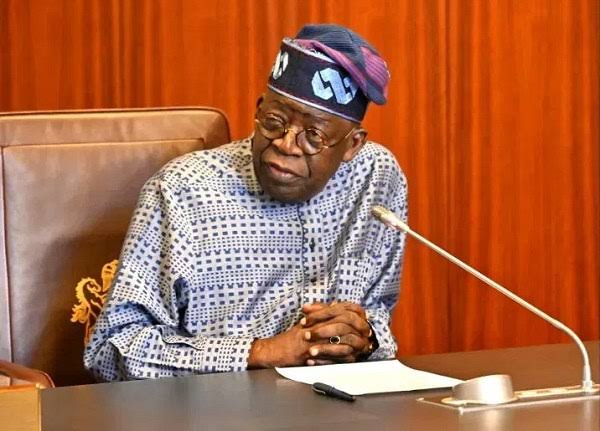
Tinubu’s Greatest-Ever Leader Claim Rests on Reform, Institution-Building — PEBEC DG
By: Michael Mike
President Bola Tinubu’s claim to a place among Nigeria’s most consequential leaders should be measured by the structural reforms he has undertaken, the institutions he is building and his willingness to confront problems successive administrations postponed, the Director-General of the Presidential Enabling Business Environment Council (PEBEC), Princess Zahrah Mustapha Audu has argued.
Audu, who is also the National Publicity Secretary of the City Boy Movement, made the case in an opinion article titled “President Bola Ahmed Tinubu Is Nigeria’s Greatest-Ever Leader,” contending that the President’s leadership should not be assessed solely by the immediate economic hardship associated with his policies.
She acknowledged that the reforms had imposed genuine difficulties on Nigerians but argued that the more important question was whether the old economic arrangements could have been sustained indefinitely without imposing greater costs on the country.
According to her, Tinubu’s decision to remove the petrol subsidy represented a break with what she described as Nigeria’s “political economy of postponement,” in which governments repeatedly deferred difficult decisions because their political costs were immediate, while the consequences of inaction were transferred to the future.
“Leadership sometimes requires choosing not between difficulty and comfort, but between the difficulty of adjustment today and the greater danger of structural failure tomorrow,” she stated.
Audu’s argument places the administration’s economic reforms within a broader assessment of state capacity, presenting the reduction of bureaucratic obstacles to businesses as an essential component of national development.
She said permits, customs procedures, company registration, commercial courts and the time required to obtain government approvals were not merely administrative matters but factors that directly affected investment, productivity and economic competitiveness.
Through PEBEC and the broader business-facilitation framework, she said, the administration was pursuing a philosophy in which government would facilitate legitimate enterprise rather than obstruct it.
“Every unnecessary procedure imposes a cost. Every unpredictable regulation introduces uncertainty. Every hour an entrepreneur spends navigating bureaucracy is an hour unavailable for production, innovation and expansion,” she said.
The PEBEC Director-General further linked the reforms to President Tinubu’s ambition of building a $1 trillion economy by 2030, arguing that the objective required more than economic declarations.
She maintained that a stronger economy would depend on institutions capable of mobilising revenue, formulating policy, executing decisions, enforcing rules predictably and creating conditions for private enterprise to flourish.
Audu also argued that Tinubu’s political significance could not be understood solely through his presidency, insisting that his record of political organisation and institution-building stretched back several decades.
She recalled his experience as a senator during the Third Republic, his association with the struggle for democratic restoration during military rule, his period in exile and his return to Nigeria, where he served as governor of Lagos State from 1999 to 2007.
She said his political influence continued after leaving office, particularly through his role in opposition politics and the coalition-building that contributed to the formation of the All Progressives Congress and the party’s victory in the 2015 presidential election.
According to her, the ability to remain politically consequential after leaving formal office distinguished Tinubu from many politicians whose influence depended largely on occupying public positions.
The article also presented Lagos as an early expression of what Audu described as Tinubu’s philosophy of the capable state.
She argued that the central challenge confronting Lagos in 1999 was not simply the absence of private economic activity, but the inability of public institutions to match the dynamism of the population and businesses operating within the state.
“States do not become effective because their leaders possess admirable intentions. They become effective when institutions can mobilise revenue, formulate policy, execute decisions, enforce rules predictably and create the conditions in which private enterprise can flourish,” she said.
Audu acknowledged that Nigeria had produced other leaders whose contributions remained significant, but argued that Tinubu’s political journey was unusual in its combination of democratic struggle, executive experience, opposition organisation, coalition-building and national economic reform.
She, however, conceded that the President’s work remained unfinished and that history’s final judgment could not yet be written.
“Giving President Tinubu his flowers does not mean suspending scrutiny,” she said, urging Nigerians to continue demanding improved living conditions, social amenities and infrastructure.
Her position is that such demands should coexist with recognition of the administration’s reform agenda, rather than automatically disqualifying it from historical consideration.
The debate over Tinubu’s legacy comes against the backdrop of Nigeria’s long-running economic challenges, including fuel-subsidy costs, foreign-exchange pressures, weak public revenues, infrastructure deficits and administrative inefficiencies. These challenges have shaped successive governments’ policy choices and continue to influence public assessments of the President’s economic programme.
Audu’s central contention is that leadership should ultimately be judged not only by the comfort it preserves in the present, but also by the institutions it strengthens and the future it makes possible.
She added that Tinubu’s place in Nigerian history was already difficult to ignore, even though the ultimate verdict on his presidency would depend on the outcomes of the reforms now underway.
Tinubu’s Greatest-Ever Leader Claim Rests on Reform, Institution-Building — PEBEC DG

Troops intercept 10 rams after suspected herders flee in Plateau

ITF, NECA Train 30 Entrepreneurs to Turn Business Stories into Economic Value

President Bola Ahmed Tinubu Is Nigeria’s Greatest-Ever Leader

Roger Federer’s Shock as DNA Results Reveal Myla and Charlene Are Not His Biological Children

THE PLIGHT OF FARIDA

FAILED COUP IN BURKINA FASO: HOW TRAORÉ NARROWLY ESCAPED ASSASSINATION PLOT AMID FOREIGN INTERFERENCE CLAIMS
-
 News3 years ago
Roger Federer’s Shock as DNA Results Reveal Myla and Charlene Are Not His Biological Children
-
Opinions5 years ago
THE PLIGHT OF FARIDA
-
 News1 year ago
FAILED COUP IN BURKINA FASO: HOW TRAORÉ NARROWLY ESCAPED ASSASSINATION PLOT AMID FOREIGN INTERFERENCE CLAIMS
-

 News2 years ago
EYN: Rev. Billi, Distortion of History, and The Living Tamarind Tree
-
 Opinions5 years ago
POLICE CHARGE ROOMS, A MINTING PRESS
-

 ACADEMICS3 years ago
A History of Biu” (2015) and The Lingering Bura-Pabir Question (1)
-

 Columns3 years ago
Army University Biu: There is certain interest, but certainly not from Borno.
-

 Politics1 year ago
2027: Why Hon. Midala Balami Must Go, as Youths in Hawul and Asikira/Uba Federal Constituency Reject ₦500,000 as Sallah Gift
