
News
Kogi troops neutralize suspected terrorist in Kabba/Bunu LGA

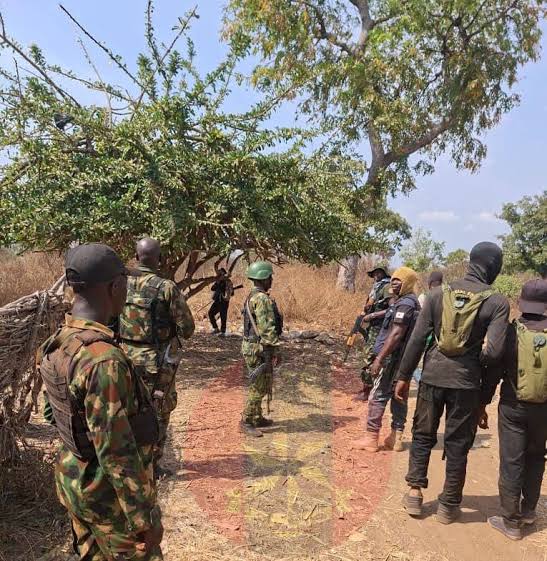
Kogi troops neutralize suspected terrorist in Kabba/Bunu LGA
By: Zagazola Makama
Troops of 12 Brigade have neutralized a suspected terrorist during a fighting patrol at Odoape–Adankolo Forest in Kabba/Bunu LGA.
The encounter occurred at about 1400hrs on March 23, 2026, when the patrol team made contact with the fleeing suspect.
Preliminary investigation identified the neutralized individual as a notorious terrorist involved in providing intelligence and targets for kidnappings, as well as participating in cattle rustling and supplying logs to terrorist groups.
The military has reaffirmed its commitment to sustaining aggressive patrols and intelligence-led operations to curb criminal activities and protect residents in the area.
Kogi troops neutralize suspected terrorist in Kabba/Bunu LGA


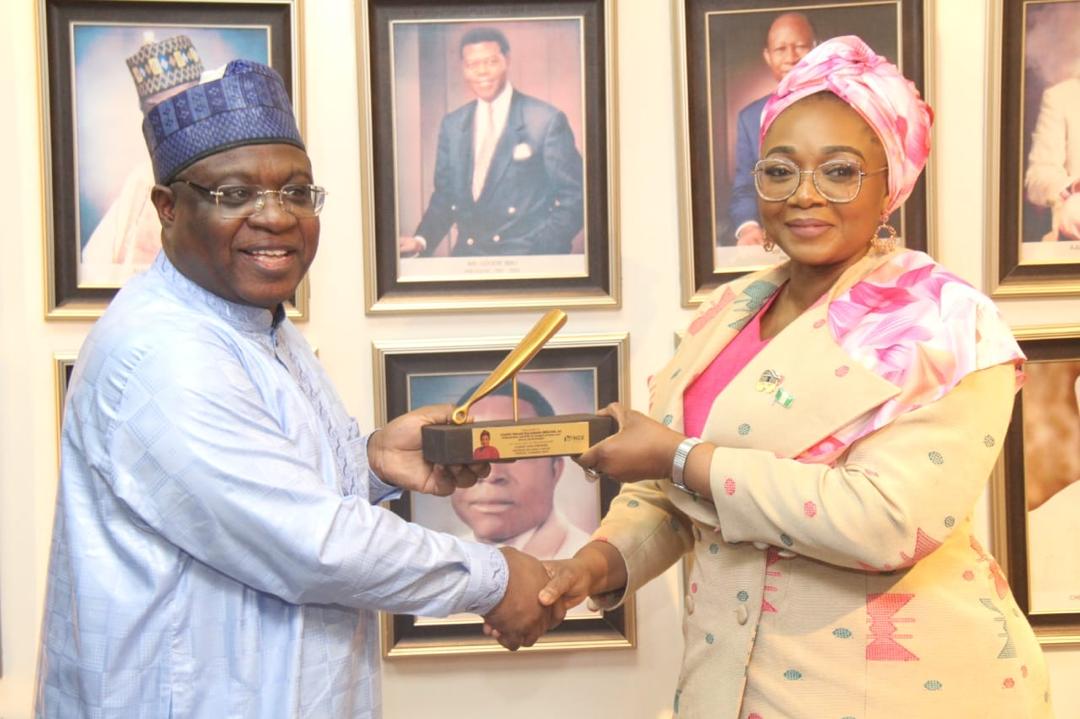
NGX boss restates commitment to gender equality
The Group Chairman Nigerian Exchange Group, Dr. Umaru Kwairanga has restated the NGX’s commitment to gender equality and diversity at all levels of the organisation.
Kwairanga stated this in Lagos on Tuesday while delivering his welcome address on the occasion of the closing ceremony in honour of the Honourable Minister of Women Affairs and Social Development, Hajiya Imaan Sulaiman-Ibrahim, who visited the floor of the Nigerian Exchange.
He stated that the Nigerian Exchange Group as an organisation remained committed to inclusiveness that drive growth and development at all levels of the NGX’s dealings.
He stated that through such inclusive representation, the NGX has achieved near parity at the board levels of the organisation and was working to improve the representation of female employees down the line.
“As an institution committed to sustainable growth and practices, we recognise the important qualities and values that women bring to the workplace and know that they perform just as well, if not better than men.
“It is a tradition in finance and investment that can be traced to the origins of the banking, finance and investment professions when most of the trade guilds that evolved into those professions were largely composed of men.
“The tradition has persisted for hundreds of years but despite that nomenclature, let me assure you that the investment and securities sector is very welcoming to and open to city gentlemen who are female.
“Women are very well represented at all levels of our industry and I can confide in you that the next President of the Chartered Institute of Stockbrokers is going to be a woman,” he said.
Kwairanga stated that the NGX would partner with the Ministry to accelerate progress for women’s rights and improve the lot of female gender across the country.
He commended Sulaiman-Ibrahim for her several bold and innovative initiatives that would have positive impact on women and the country as a whole.
NGX boss restates commitment to gender equality
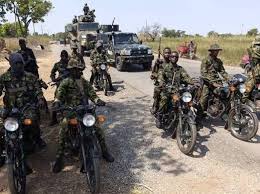
Benue troops neutralize one terrorist, arrest four suspects in Gwer West LGA
By: Zagazola Makama
Troops of Sector 1 Operation Wirld Stroke deployed at FOB Bilawa-Jor conducted a fighting patrol within Mbapa and Mbabuande general areas on March 23, 2026.
During the operation, troops made contact with terrorists, neutralizing one suspect while others fled.
Following a pursuit, four additional suspects were apprehended and are currently in the custody of security forces for further investigation and prosecution.
In a similar development the troops
recovered a vehicle carrying two cows abandoned by suspected cattle rustlers in Uhemba.
The incident occurred at about 0348hrs on March 24, 2026, when the troops responded to intelligence reports of rustling activities in the area.
Upon the arrival of troops, the suspects fled, leaving behind the vehicle and livestock.
The recovered vehicle and cows are now in the custody of the troops for further investigation and legal action.
Military continue to urge the public to provide timely information on criminal activities to support ongoing security efforts.
Benue troops neutralize one terrorist, arrest four suspects in Gwer West LGA
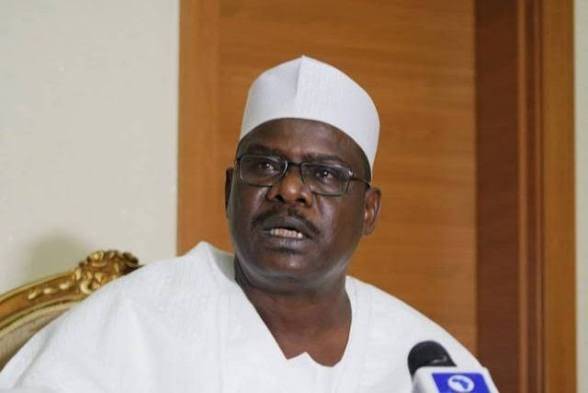
Ndume’s alarmist posture clashes with battlefield realities
… raises deeper questions on leadership accountability
By Chidi Omeje
The latest warning by former Senate Leader, Ali Ndume that Nigeria risks losing parts of Borno and the North-East to insurgents has triggered not just concern, but also criticism over what is describe as a recurring pattern of “selective outrage” disconnected from both battlefield realities and long-term governance responsibilities.
Ndume, speaking with Journalist in Maiduguri on Tuesday painted a grim picture of troops allegedly overwhelmed in Ngoshe and Pulka. But within the same operational theatre, a dramatically different reality was unfolding.
Drawing from multiple field assessments, including those documented by both mainstream and international Media, have reports sustained targeting of insurgent leadership structures is now yielding measurable operational gains.
Among the most notable breakthroughs is the neutralisation of Modu Kundiri, a top ISWAP commander and Qa’id of the Pulka axis in Gwoza LGA. Kundiri, who controlled a critical corridor linking Sambisa Forest and the Mandara mountains, was eliminated during a military operation along the Madagali–Gwoza axis, an area long regarded as a strategic insurgent supply and mobility route.
His death has reportedly triggered leadership instability within ISWAP ranks, with intelligence sources indicating confusion over succession and operational control. The Air Component of Operation Hadin Kai was also not left out, it has intensified its dominance of the battlespace in North-East theartre, executing a series of precision airstrikes that have significantly degraded the operational capacity of both Islamic State West Africa Province and Boko Haram across Borno State.
Recent intelligence-driven missions monitored indicates a clear shift toward high-impact aerial interdiction, leadership decapitation, and destruction of insurgent logistics hubs, reinforcing the growing synergy between air and ground forces.
In a separate high-value mission in the Yuwe axis of Sambisa, precision airstrikes eliminated multiple senior ISWAP commanders, including Saddam and Saleh Garin Kago. Additional fighters, Hussaini Ubaida and Ba Alayi Benbem, were also neutralised, while command structures and logistics warehouses were destroyed.
In the Ngoshe–Pulka corridor, the Air Component demonstrated rapid responsiveness, killing 50 terrorists after an initial attack on the town. In a separate operation, troops neutralised Malam Bako Gorgore (Abou Mustapha), a senior Shura Council member of ISWAP, who led fighter to the operation that led to the killing of Abubakar Shekau, during an encounter in Kukawa LG
Further compounding ISWAP’s losses, internal discord has also claimed lives within its hierarchy both in the Lake Chad and Sambisa forest. Also recently, a senior commander, Abu Kasim, was reportedly killed by an improvised explosive device planted by his own faction amid clashes with rival elements, highlighting deepening fractures within the group.
Another figure, Abu Nazir, was also reportedly eliminated during internal purges, reflecting a growing pattern of distrust and fragmentation within insurgent ranks.
Beyond targeted eliminations, Nigerian troops have inflicted heavy battlefield casualties on insurgent formations. In one of the most decisive engagements in recent months, troops of Operation Hadin Kai repelled a major assault on a military base in Malam Fatori, Abadam LGA, killing at least 80 fighters, including senior commanders.
The attackers, drawn from ISWAP reportedly deployed armed drones in a coordinated pre-dawn offensive, an indication of evolving insurgent tactics. However, the response from Nigerian forces combining ground fire with precision air strikes resulted in massive insurgent casualties, recovery of weapons, explosives, and drone components and disruption of withdrawal routes.
Though, these victory, the not come without challenges, the Nigerian troops had recorded some challenges including attacks on Konduga, Banki and Kukawa were three Commanding Officers and several soldiers paid the supreme price while defending their areas of deployment.
For many reporters of insurgency, the contrast is striking. It is almost as if there are two parallel narratives. “One of a collapsing military as purported by a supposedly informed lawmaker and another of a force steadily degrading insurgents in different operations.
But it is not surprising, dume’s interventions often follow a familiar script: spotlight failure, amplify fear, and conveniently sidestep any acknowledgement of military resilience or progress. Indeed, while it is politically convenient to sound the alarm, it is far less fashionable to recognise that troops often under extreme conditions continue to hold ground, repel attacks, and currently taking the fight deep into insurgent enclaves in Sambisa forest and Timbuktu Triangle.
If pessimism were a security strategy, perhaps the war would have been won by now. But beyond the immediate security debate lies a more uncomfortable conversation, one that touches on representation, development, and legacy.
The Gwoza axis—Pulka, Kirawa, Ashigashiya, Warabe and surrounding communities has for years struggled with basic infrastructure deficits: limited access to potable water, electricity, healthcare, and economic opportunities. These are not new problems. They predate the insurgency and, in many respects, helped create the fertile ground exploited by extremist recruiters among the teeming youths.
The road network was either very dilapidated or completely washed off, allowing the terrorists to plant IEDs, targeting troops and commuters.
This raises a blunt question: after decades of political representation, how much structural changes or development has truly occurred in these communities?
It is ok to blame the military for everything including the root causes of the insurgency to hide our failure of leadership. Yes. It is easier to criticise soldiers in the field than to explain years of underdevelopment back home.
To call for better equipping for the military are legitimate and widely supported. Nigerian troops deserve the best possible tools to prosecute a complex and evolving war.
However, caution should be observed against performative criticism statements that only generate headlines but do little to constructively engage with the realities of counter-insurgency operations.There is a thin line between advocacy and political tantrum. Crossing that line repeatedly erodes credibility.
There was already a parallel conversation gaining traction, one that shifts attention from the battlefield to the balance sheet.
There have been concerns surrounding a Sustainable Development Goal (SDG)-linked road project executed by Sen. Ali Ndume in Maiduguri, reportedly valued at about ₦1.4 billion, and claims in public discourse suggesting that the project may have been executed at a fraction of that cost.
These claims have ignited call for formal investigation, by the EFCC and ICPC because they have nonetheless triggered a wave of questions that are becoming increasingly difficult to ignore.
According to discussions in political and civic circles, the project allegedly awarded at ₦1.4 billion the federal government may have been subcontracted or executed at approximately ₦300 million by Ali Ndume and his Senator friend. And the Subcontractors also took N150 million and executed the project at N150 million.
If accurate, such a gap raises obvious and uncomfortable questions.
“Even without jumping to conclusions, the arithmetic itself demands explanation. Where there is such a wide disparity, transparency is not optional, it is necessary.” Beyond the figures lies a deeper concern: value for money. When large-scale public projects are executed at significantly reduced costs without clear justification, the likely outcome is compromised quality.
In practical terms, that could mean roads that deteriorate quickly, fail under minimal stress, or never fully meet their intended purpose. A substandard road in a fragile zone is not just bad engineering, It is a setback to recovery, security, and economic survival.”
What has drawn particular attention is the contrast between Ndume’s strong criticism of government performance especially on military resourcing and the absence of equally strong public clarity regarding projects linked to his constituency.
Critics argue that accountability cannot be selective. “It is difficult to sustain a position of constant oversight when questions about one’s own projects remain unanswered.”
For Ali Ndume, challenge is no longer just about raising concerns. It is about responding to them.
Because in the end, leadership is measured not only by the ability to question others, but by the willingness to provide clear answers when the spotlight turns inward.
Ndume’s alarmist posture clashes with battlefield realities

NGX boss restates commitment to gender equality

General Chris Musa, Hi-tech Fencing of Nigerian Porous Borders and the Foolish Pride of Sowore

Benue troops neutralize one terrorist, arrest four suspects in Gwer West LGA

Roger Federer’s Shock as DNA Results Reveal Myla and Charlene Are Not His Biological Children

THE PLIGHT OF FARIDA

FAILED COUP IN BURKINA FASO: HOW TRAORÉ NARROWLY ESCAPED ASSASSINATION PLOT AMID FOREIGN INTERFERENCE CLAIMS
-
 News2 years ago
Roger Federer’s Shock as DNA Results Reveal Myla and Charlene Are Not His Biological Children
-
Opinions4 years ago
THE PLIGHT OF FARIDA
-
 News11 months ago
FAILED COUP IN BURKINA FASO: HOW TRAORÉ NARROWLY ESCAPED ASSASSINATION PLOT AMID FOREIGN INTERFERENCE CLAIMS
-

 News2 years ago
EYN: Rev. Billi, Distortion of History, and The Living Tamarind Tree
-
 Opinions4 years ago
POLICE CHARGE ROOMS, A MINTING PRESS
-

 ACADEMICS2 years ago
A History of Biu” (2015) and The Lingering Bura-Pabir Question (1)
-

 Columns2 years ago
Army University Biu: There is certain interest, but certainly not from Borno.
-

 Opinions2 years ago
Tinubu,Shettima: The epidemic of economic, insecurity in Nigeria
