
News
Korea, Kaduna Film Festival Spotlight Girl-Child Plight, Deepen Creative Ties

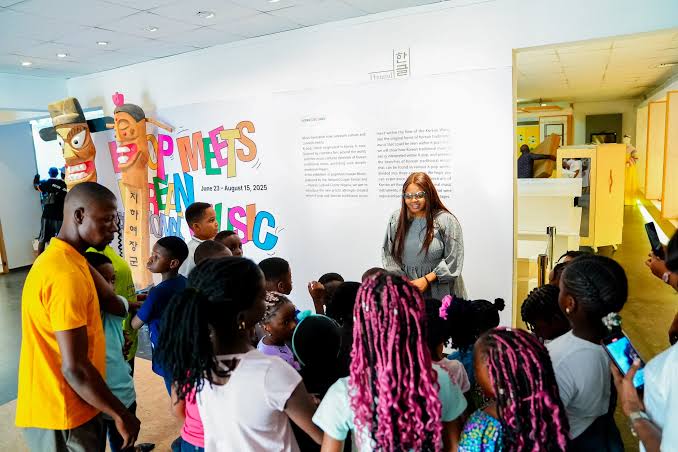
Korea, Kaduna Film Festival Spotlight Girl-Child Plight, Deepen Creative Ties
By: Michael Mike
The Kaduna International Film Festival (KADIFF), in collaboration with the Korean Cultural Centre in Nigeria (KCCN), has hosted a powerful screening of “Scars the Movie” alongside an intensive filmmaking workshop in Abuja, using cinema as a platform to confront social injustice and strengthen Nigeria–Korea cultural relations.
The event brought together filmmakers, actors, students and culture enthusiasts for a thought-provoking exploration of forced marriage, gender inequality and the transformative power of storytelling.
Scars the Movie follows the journey of Hasia, a 16-year-old girl with dreams of becoming a doctor, whose aspirations are crushed when her father forces her into marriage to settle a debt. Married off to an older wealthy man, she endures abuse, repeated miscarriages and isolation, while her education and independence are stripped away. The film lays bare the harsh intersection of poverty, patriarchy and silence that continues to affect vulnerable girls.
Speaking at the opening ceremony, Director of KCCN Abuja, Mr. Jeon Ju-ho, described the screening as deeply significant, noting that it addresses an issue that transcends borders.
“Today is of immense importance because it speaks about life — and not just life, but the life of a girl child,” he said. “A child forced into the role of a woman, and brutally so. These are conversations we must not avoid.”
He emphasized that film remains one of the most powerful tools for sparking dialogue and social reflection.
Director-General of KADIFF, Israel Audu, explained that the film was deliberately selected to spotlight challenges prevalent in parts of northern Nigeria.
“Hasia’s story represents the painful reality faced by many young girls whose dreams are sacrificed on the altar of poverty and cultural pressure,” Audu said. “This film exposes the emotional and generational scars such practices leave behind.”
Beyond the screening, participants engaged in a practical workshop covering directing, acting and cinematography, designed to strengthen technical capacity within Nigeria’s fast-growing film industry.
Audu noted that the partnership between KADIFF and KCCN reflects a broader commitment to creative collaboration between Nigeria and South Korea. He said cultural exchanges — from film festivals to K-drama, K-pop, language classes, Taekwondo and culinary programs — have helped build mutual understanding between both nations.
According to him, more than 300,000 Nigerians have participated in Korean cultural programmes, gaining new skills and global exposure.
“These collaborations are not just about entertainment,” he said. “They are about knowledge transfer, talent development and economic opportunity. By sharing filmmaking techniques and nurturing creative talent, we can develop a richer, blended cinematic identity.”
The event underscored how film can serve as both a mirror and a bridge — reflecting societal challenges while connecting cultures across continents.
As discussions continue around protecting the rights of the girl-child and expanding Nigeria’s creative economy, stakeholders say partnerships like this demonstrate how art, when supported by international cooperation, can inspire change and deepen diplomatic ties.
Korea, Kaduna Film Festival Spotlight Girl-Child Plight, Deepen Creative Ties


News
I’ve Delivered on Lawmaking, Representation, Oversight, Attracted Projects to Ethiope East — Akpowowo

I’ve Delivered on Lawmaking, Representation, Oversight, Attracted Projects to Ethiope East — Akpowowo
The Deputy Speaker of the Delta State House of Assembly, Rt. Hon. Olorogun Arthur Akpowowo, has said he has delivered on his legislative responsibilities through lawmaking, grassroots representation and oversight, while also attracting development projects to Ethiope East.
Akpowowo stated this in an exclusive interview with Oasis Magazine on Thursday in Eku, while assessing his performance after three and a half years in office and highlighting some of the interventions recorded during his tenure.
According to him, the responsibilities of a lawmaker are lawmaking, representation and oversight of Ministries, Departments and Agencies (MDAs) of government.
He said he had, to the best of his ability, discharged the three responsibilities effectively, both as an individual legislator and as part of the Delta State House of Assembly.
Lawmaking
Speaking on his legislative activities, Akpowowo said he had sponsored bills and co-sponsored bills introduced by other members of the House.
He explained that because of his position as Deputy Speaker, lawmakers who sponsor private member bills often approach him to co-sponsor their legislation, helping such bills progress through the various stages of consideration.
He stressed that lawmaking was a collective responsibility, noting that even a legislator with strong ideas could not successfully pass legislation without securing the support of other members.
Akpowowo said he had particularly developed an interest in environmental legislation because of his conviction that a better environment would contribute to healthier citizens and reduce the burden of healthcare costs.
“I’ve sponsored bills personally, especially bills that have to do with the environment,” he said.
The Deputy Speaker, who is a lawyer, said his interest in environmental issues had developed over time and that he wanted to use legislation to contribute to a healthier environment in Delta State.
Accessibility and Grassroots Representation
On representation, Akpowowo said he had fulfilled his campaign promise to remain accessible and available to his constituents.
He noted that constituents could visit him without encountering the heavily armed security presence often associated with political office holders.
According to him, he returns home every weekend, attends social events, mourns with those who are bereaved and celebrates with those marking important occasions.
He also disclosed that he operates a functional constituency office in Isiokolo, staffed with aides who attend to constituents who cannot travel to Eku.
He said concerns received through the office are transmitted to him for appropriate legislative action.
Akpowowo also identified town hall meetings as an important component of his representation strategy.
He recalled organising a town hall meeting to mark his first year in office, bringing together traditional rulers, market associations, President-Generals of various progress unions, students and civil society organisations.
Continuing, he said the meeting gave him the opportunity to brief stakeholders on what he had done and what he intended to do, while also allowing constituents to identify projects and other interventions needed in their communities.
Empowerment Programmes
The Deputy Speaker also highlighted his empowerment programmes as part of his efforts to improve the living conditions of his constituents.
He recalled that his first major empowerment programme became an example for other lawmakers after the Speaker of the House encouraged members to emulate him.
According to Akpowowo, the member representing Sapele Constituency, who is also the Chief Whip of the House, subsequently organised his own empowerment programme, which members of the Assembly attended.
Akpowowo said he later held another town hall meeting coupled with empowerment on March 7, 2026, at Baptist High School.
He maintained that representation went beyond legislative activities in the chamber, stressing that elected representatives must remain connected to the people they serve.
“I have represented my people very well. I’m available for them,” he said.
School Projects Across the Constituency
Akpowowo also highlighted his efforts to attract infrastructure development to schools within the constituency.
He disclosed that he was working on Ugono Primary School, Urhuoka Primary School 1 and Oviorie Primary School.
According to him, Ugono Primary School and Urhuoka Primary School 1 require rehabilitation, while the condition of Oviorie Primary School is so poor that the existing structure would be demolished and rebuilt.
He explained that constituency projects were intended to address identified needs in communities, with the relevant government ministries carrying out assessments and determining the appropriate intervention.
Akpowowo said his position as Deputy Speaker also gives him the opportunity to attract more constituency projects than an ordinary member of the House.
He disclosed that the projects were expected to be completed by October 2026.
Eku-Abraka Road Intervention
The Deputy Speaker also recalled his intervention in the poor condition of the road linking Eku and Abraka, describing it as one of the areas where he had worked to attract government attention to a pressing community need.
He said shortly after his inauguration in 2023, he prepared a motion of urgent public importance over the deteriorating condition of the road.
However, he said officials of the House advised him to first discuss the matter with Governor Sheriff Oborevwori.
Akpowowo said he subsequently approached the governor and explained the difficulties residents were experiencing as a result of the poor condition of the road.
According to him, the governor immediately contacted Obakpor Engineering and directed the company to scope the road.
He said the road was subsequently rehabilitated from Eku through Abraka to Obiaruku, providing an alternative route for residents at the time.
He recalled that the federal Eku-Agbor Road was also in poor condition, making the intervention particularly important to residents travelling between the communities.
Oversight of Government
On his oversight responsibilities, Akpowowo said the House had continued to monitor the activities and expenditure of government Ministries, Departments and Agencies.
He explained that the Assembly’s responsibility goes beyond appropriating funds, as lawmakers must also follow up to determine how approved allocations are being utilised.
According to him, the House examines what has been spent, the projects executed and what remains from appropriated funds.
Akpowowo said his assessment of his first term was therefore based on the three core responsibilities of a legislator and the tangible interventions he had been able to facilitate in his constituency.
He maintained that he had gone beyond the traditional functions of a lawmaker by also providing empowerment and welfare support to constituents who approached him for assistance.
“As an individual, I can say that I have carried out these three functions effectively, and as a House, I can say that the House has done very well in these regards,” he said.
The Deputy Speaker said he remained committed to using his position to attract development and improve the welfare of his constituents as his first term draws to a close.
I’ve Delivered on Lawmaking, Representation, Oversight, Attracted Projects to Ethiope East — Akpowowo
Inform EFCC, Police If You Have Proof I Stole Government Funds, Akpowowo Tells Critics
The Deputy Speaker of the Delta State House of Assembly, Olorogun Barr Arthur Akpowowo, has challenged critics accusing him of financial misconduct to produce evidence and report him to law enforcement agencies if they believe he diverted or misappropriated government funds.
Akpowowo made the statement in an exclusive interview with Oasis Magazine on Thursday in Eku, Ethiope East Local Government Area of the state, while responding to allegations and political attacks against him ahead of the 2027 State House of Assembly election.
The lawmaker said he would not be intimidated by allegations of financial misconduct, stressing that anyone with credible evidence that he diverted public funds should approach the Economic and Financial Crimes Commission (EFCC) or the Nigeria Police Force.
“Some people are already throwing mud at me, saying that I ate government money, that they have not stolen government money before, and I dare to challenge them: if you know of any government money that is missing and it’s traceable to me, please bring EFCC or bring the Nigerian Police to come and arrest me,” he said.
‘Government Money Is Traceable’
Akpowowo also sought to clarify what he described as misconceptions about how government finances are handled, particularly the belief that political office holders have direct access to government cash.
According to him, public funds are subject to official processes and must be traceable.
“Government money is traceable. That is why they don’t pay cash,” he said, explaining that funds are transferred through official channels to ensure accountability.
He said that as a former commissioner, he never handled the ministry’s cheques because the Permanent Secretary, as the accounting officer, was responsible for the financial administration of the ministry.
“I never saw the cheque of the ministry that I presided over for three years,” he said.
Akpowowo explained that his role as commissioner was primarily political and administrative leadership, while the Permanent Secretary and Director of Finance handled the ministry’s financial processes.
‘We Don’t See Government Money in the House’
The Deputy Speaker said the same principle applies to the State House of Assembly.
He explained that the Assembly exercises the constitutional power of the purse through appropriation, while the executive implements the approved budget.
According to him, the House’s oversight responsibility includes monitoring how appropriated funds are spent by Ministries, Departments and Agencies.
He cited the 2026 budget as an example, explaining that the Assembly follows approved allocations to determine how funds earmarked for various sectors are utilised.
“We have approved, for example, 2026, we approved ₦1.6 trillion for this year’s budget. So, we follow the ₦1.6 trillion. Where is the money we approved for agriculture? How have you spent it? The ministry will tell us,” he said.
He added that ministries are expected to account for their expenditure, including projects executed and funds remaining.
“That is oversight,” he said.
‘Government Money Is Spirit’
Akpowowo also dismissed claims that lawmakers routinely collect large amounts of cash from Government House.
He recalled an occasion when someone allegedly told him that lawmakers were given money at Government House on Fridays and carried it away in the boots of their official vehicles.
He said he challenged the person to open his vehicle boot and search for the alleged money.
According to him, the person found only shoes and clothes in the boot.
Akpowowo said such stories were based on misconceptions about the workings of government.
“Government money is spirit. Handless, that’s the fact,” he said jokingly.
‘My Salary Is Not a Secret’
The Deputy Speaker also rejected the perception that public office holders conceal their earnings.
He said he had never hidden his salary as a lawmaker and that people around him were aware of what he earns.
Akpowowo recalled his earlier experience as a commissioner, saying that during the COVID-19 period he disclosed to a journalist that his salary at the time was ₦404,000.
He said the other official fund available to his office was an imprest, which was shared among the commissioner, Permanent Secretary and directors in the ministry.
He maintained that the reality of public office finances was different from the assumptions held by some members of the public.
Calls for Evidence-Based Politics
Akpowowo urged political opponents to focus on issues and avoid what he described as mudslinging during the election season.
He said that if anyone genuinely believed a public officer had stolen or diverted government funds, the appropriate action was to report the matter to law enforcement agencies with evidence.
“If you know anybody that embezzled government funds or that diverted government funds, your duty as a citizen—good citizen—is to go to the law enforcement agents to complain,” he said.
The Deputy Speaker said he would continue to defend his reputation through lawful means, noting that his legal training had made him aware of his rights.
He warned that he would not hesitate to seek legal redress against individuals who deliberately defame or blackmail him.
‘Let the Campaign Be Issue-Based’
The lawmaker reiterated his commitment to an issue-based campaign ahead of the 2027 election.
He said political candidates should tell the electorate what they had achieved and what they intended to do, rather than resorting to personal attacks.
Akpowowo said the official campaign period for State House of Assembly candidates would commence on September 9, according to the timetable he referenced during the interview.
He expressed confidence in his record and urged his opponents to allow the people to judge candidates based on their performance, integrity and plans for the future.
He said he remained prepared to engage his opponents politically when the campaign officially begins, but would continue to focus on issues and his record of service to the people of Ethiope East.
Inform EFCC, Police If You Have Proof I Stole Government Funds, Akpowowo Tells Critics
NESREA Seals Four Nasarawa Facilities Over Pollution, EIA Violations
By: Michael Mike
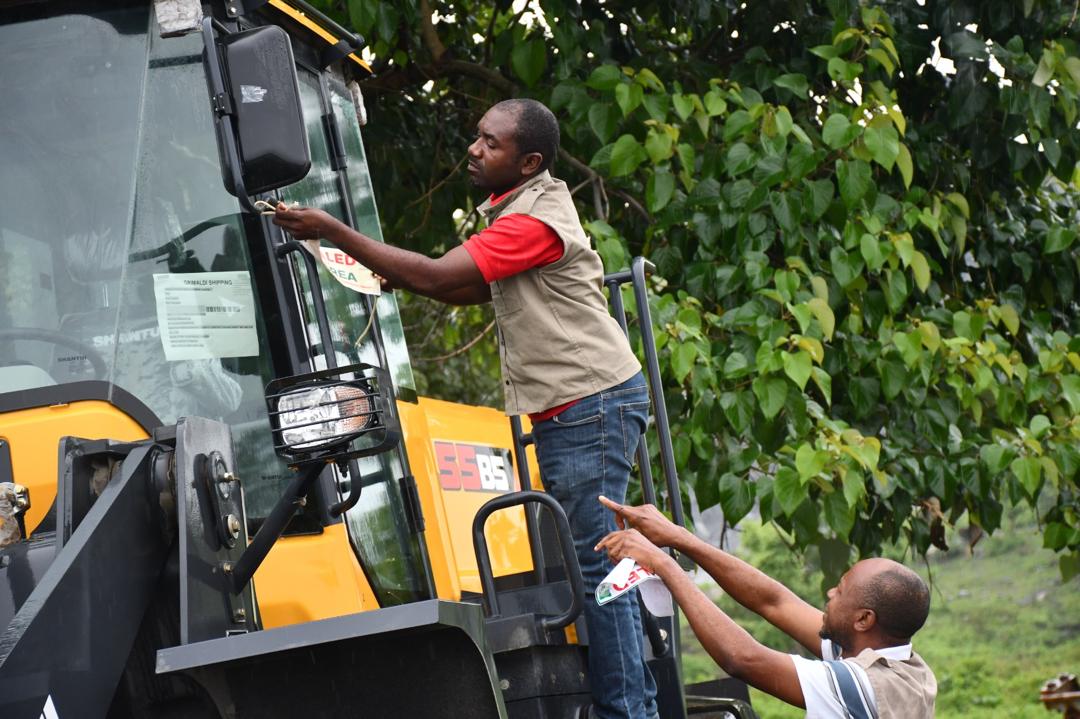
The Federal Government has intensified its crackdown on environmentally harmful industrial activities, with the National Environmental Standards and Regulations Enforcement Agency (NESREA) sealing four facilities in Nasarawa State over alleged breaches of environmental regulations.
The latest enforcement action, carried out on Thursday by the agency’s Karu Operational Office, affected ABZAT Quarry, Hoafong Mining Trading Company Ltd, Emono Venture and Mivanyi Integrated Farms.
NESREA said the facilities were shut down for offences ranging from air pollution to failure to possess required environmental management documents, including Environmental Impact Assessment (EIA).
The operation was led by the Head of Operations of the Karu Operational Office, Mr Da’am Monday.
The agency’s action is significant given the environmental risks associated with quarrying, mining and other industrial activities, particularly their potential impact on air quality, land, water resources and the health of communities hosting such operations.
Nigeria’s environmental regulatory framework specifically provides for the control of pollution from quarrying and blasting operations. NESREA’s regulations on the sector are designed to control the effects of such activities on the environment and human health while promoting responsible exploitation of natural resources.
Similarly, the agency maintains specific regulations governing air quality, with the stated objective of improving air quality and protecting human health, flora, fauna and other resources from deterioration caused by air pollutants.
The Nasarawa enforcement comes against the backdrop of growing regulatory attention to pollution and environmental degradation associated with industrial and extractive activities across the country.
NESREA, established under the 2007 Act, is empowered to enforce Nigeria’s environmental laws, standards, guidelines and regulations and to prohibit activities and processes capable of undermining environmental quality.
In recent years, the agency has increasingly resorted to sealing non-compliant facilities rather than allowing operators to continue activities while disregarding environmental requirements.
In September 2025, for instance, NESREA sealed 29 facilities across Ekiti, Osun and Ogun States, citing environmental pollution and regulatory breaches. The agency said some of the affected recycling operations posed serious health risks because of hazardous waste generated from their processes.
The agency has also taken enforcement action against quarrying operations in the Federal Capital Territory. In February 2026, NESREA shut a quarry in Abuja following a fatal blasting incident involving a 10-year-old boy, with officials stressing that the quarry had previously been sealed as part of enforcement efforts.
The pattern has underscored a central challenge for environmental regulation in Nigeria: balancing economic activities such as mining, quarrying, construction and manufacturing with the obligation to prevent pollution and protect communities.
The issue of environmental documentation is particularly important in the latest Nasarawa action.
An Environmental Impact Assessment is intended to identify and evaluate the potential environmental consequences of projects before or during their implementation and to provide a framework for mitigating harmful effects.
NESREA has repeatedly cited failure to conduct or obtain the necessary environmental assessments among violations that have led to facility closures. In an earlier enforcement operation, the agency sanctioned construction facilities for lacking required environmental documents, including Environmental Impact Statements and Environmental Audit Reports.
For quarrying operations, environmental controls also cover issues such as air pollution, noise pollution, spills and leaks, environmental management plans and emissions associated with quarry operations.
Against this background, the sealing of the four Nasarawa facilities signals that regulatory compliance is being treated as an operational requirement rather than an optional administrative formality.
NESREA reiterated its commitment to enforcing environmental laws and regulations across the country, warning facilities to adopt environmentally responsible practices and deploy the best available technology in their operations.
The agency said the enforcement exercise demonstrated its resolve to safeguard the environment, protect public health and promote sustainable development.
The latest action therefore sends a wider message to operators in Nigeria’s mining, quarrying, agricultural and industrial sectors: economic activity will not be allowed to override environmental obligations, particularly where pollution or regulatory violations could expose surrounding communities to health and environmental risks.
NESREA’s continuing enforcement drive also places renewed focus on the need for industries to obtain the necessary environmental approvals, maintain proper environmental management systems and ensure that their operations meet prescribed national standards before and during production.
NESREA Seals Four Nasarawa Facilities Over Pollution, EIA Violations

I’ve Delivered on Lawmaking, Representation, Oversight, Attracted Projects to Ethiope East — Akpowowo

Troops neutralise terrorists, recover weapons, motorcycles in Sokoto
Inform EFCC, Police If You Have Proof I Stole Government Funds, Akpowowo Tells Critics

Roger Federer’s Shock as DNA Results Reveal Myla and Charlene Are Not His Biological Children

THE PLIGHT OF FARIDA

FAILED COUP IN BURKINA FASO: HOW TRAORÉ NARROWLY ESCAPED ASSASSINATION PLOT AMID FOREIGN INTERFERENCE CLAIMS
-
 News2 years ago
Roger Federer’s Shock as DNA Results Reveal Myla and Charlene Are Not His Biological Children
-
Opinions5 years ago
THE PLIGHT OF FARIDA
-
 News1 year ago
FAILED COUP IN BURKINA FASO: HOW TRAORÉ NARROWLY ESCAPED ASSASSINATION PLOT AMID FOREIGN INTERFERENCE CLAIMS
-

 News2 years ago
EYN: Rev. Billi, Distortion of History, and The Living Tamarind Tree
-
 Opinions5 years ago
POLICE CHARGE ROOMS, A MINTING PRESS
-

 ACADEMICS3 years ago
A History of Biu” (2015) and The Lingering Bura-Pabir Question (1)
-

 Columns2 years ago
Army University Biu: There is certain interest, but certainly not from Borno.
-

 Politics1 year ago
2027: Why Hon. Midala Balami Must Go, as Youths in Hawul and Asikira/Uba Federal Constituency Reject ₦500,000 as Sallah Gift
