
News
Korea Seeks Improved Cultural Exchange with Nigeria

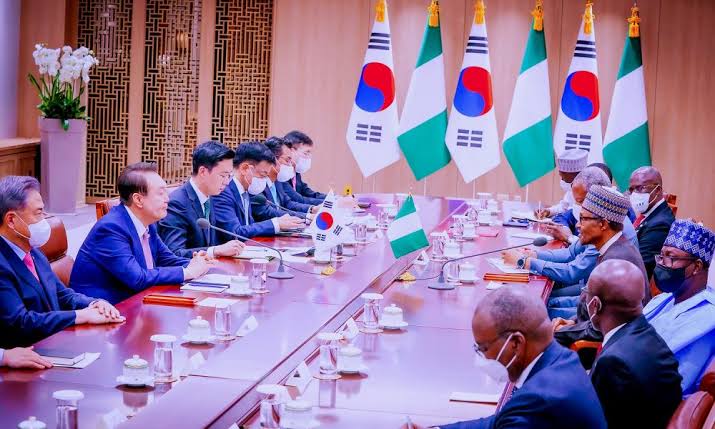
Korea Seeks Improved Cultural Exchange with Nigeria
By: Michael Mike
Republic of Korea has called for enhanced cultural exchange with Nigeria, emphasizing the importance of cross-fertilization to bolster diplomatic relations and share mutual experiences.
Making the call at the weekend in Abuja at the second edition of the Hansik Contest, the Director, Korean Cultural Centre in Nigeria, Kim Changki, said his country is willing to build on the already existing cultural relationship with Nigeria.
On the cooking competition, he said the primary goal is to foster social and cultural interaction between Nigeria and Korea.
He noted that this year’s contest was better organized and well attended than the first one held last year, disclosing that this will mark his final event as the director of the Korean Centre, which tenure conclude in May.
He said: “Nigerians have a deep appreciation for Korean Pop and Korean cuisine, and this concert serves as a celebration of culture through various artistic expressions. The winner of the contest will receive a prize of N1 million along with a trip to Korea.”
The culture and events officer, Yunijin Lee, on her part, emphasized that the contest has received sponsorship from Korean food institutions (KFPI) and is specifically designed to bring the vibrant experiences of Korean culture and cuisine to Nigerians.
She also highlighted that the selection process for the winner was both thorough and impartial, stating, “The judging panel consists of Korean individuals, including the ambassador, director, and the embassy chef, who worked alongside a Nigerian chef to ensure fairness in the selection of the winner.”
The contest attracted a diverse group of 40 participants, all eager to showcase their culinary talents and knowledge of Korean cuisine. After a series of intense competitions and eliminations, the field narrowed down to 12 finalists.
Among them, Patience Vincent secured an impressive third place, while Ruth Igbayiola Olowo took home the second prize. The top prize of N1 million and a trip to Seoul, Korea went to Deborah Olabelurin, who impressed the judges with her exceptional skills and creativity in preparing Korean dishes.
The event was well attended by a vibrant audience, including enthusiasts of Korean cuisine and fans of Korean pop culture, creating a lively atmosphere filled with excitement. Attendees were treated to a rich variety of traditional Korean foods, which were beautifully presented, showcasing the intricate flavors and techniques of Korean culinary art.
Additionally, the event featured captivating dance performances set to popular Korean pop songs, further enriching the cultural experience and demonstrating the deep connections between the two countries.
The jubilant winner of the contest Deborah Olabelurin, expressed her heartfelt gratitude to the Korean Culture Center for organizing such a transformative event.
She expressed excitement about her upcoming trip to Korea, where she looks forward to immersing herself in the local culture and cuisine and how this incredible opportunity will play a crucial role in advancing her career as a chef.
Korea Seeks Improved Cultural Exchange with Nigeria



Doma United secure NPFL promotion with win over Mighty Jets
Doma United Football Club of Gombe State have secured promotion to the Nigeria Premier Football League (NPFL) following a 2-0 victory over Mighty Jets of Jos at the Pantami Stadium on Wednesday.
The News Agency of Nigeria (NAN) reports that Doma United, who top Conference C of the Nigeria National League (NNL) with 26 points from 13 matches, are the first team to seal promotion to the NPFL.
The club, relegated from the NPFL in the 2023/2024 season, are five points clear of second-placed FC Basira in Conference C, with one match remaining.
NAN reports that the 2025/2026 NNL season is organised into four conferences (A, B, C and D), with the top team in each conference earning automatic promotion to the NPFL, replacing the previous Super 8 play-off format.
Confirming the development, Doma United Technical Adviser, Najib Mabu, told NAN in Gombe on Thursday that the team had secured promotion with a game in hand.
Mabu described the journey as smooth but challenging, noting that the return to the top flight means a lot to the club and sports stakeholders in the state.
“This is huge and we are very happy that we are back.
“We will start welcoming top clubs to Gombe State again.
“I want to commend the Chief Executive Officer of Doma United, Alhaji Suleiman Umar, for his consistent support and commitment to the club.
“I also thank our players and fans for their resilience and dedication, which have paid off,” he said.
Mabu added that the club’s ambition in the NPFL goes beyond participation, expressing confidence in competing for honours and securing a continental ticket.
“We are not just going to participate in the NPFL; we will compete for every available title.
“I am confident we can secure a continental ticket,” he said.
NAN reports that Doma United will be making their second appearance in the NPFL, after recording eight wins, two draws and three losses in the current NNL campaign.
Doma United secure NPFL promotion with win over Mighty Jets
News
Lions, United Nations Strengthen Partnership to Advance Sustainable Development and Community Service in Nigeria

Lions, United Nations Strengthen Partnership to Advance Sustainable Development and Community Service in Nigeria
By: Michael Mike
The enduring partnership between the United Nations and Lions Clubs International took centre stage in Abuja on Thursday as stakeholders gathered to celebrate Lions Day with the United Nations, reaffirming their shared commitment to advancing humanitarian service, sustainable development, and peace.
The event, held at the United Nations House, brought together Lion leaders, development partners, civil society actors, and representatives of UN agencies to reflect on decades of collaboration and explore ways to deepen partnerships in addressing global and local challenges.
Speaking at the gathering, the Multiple Council Chairperson of Lions in Nigeria, Lion (Dr.) Ibrahim Jide Bello, described the celebration as a powerful symbol of the long-standing relationship between the UN and the global service organisation.
According to him, the partnership dates back to 1945 when Lions leaders contributed to discussions around the formation of the United Nations and the framework for civil society engagement.
He noted that for more than a century, Lions worldwide have remained committed to humanitarian service guided by their motto, “We Serve,” with volunteers supporting initiatives in health, education, food security, environmental protection, disaster response, and youth development.
Bello said community-based organisations such as Lions play a vital role in translating global development commitments into tangible results at the grassroots.
“While the United Nations provides global leadership and frameworks for action, Lions translate those ideals into practical impact within communities where change truly begins,” he said.
He added that collaboration between institutions, civil society, and volunteers remains essential in tackling pressing challenges such as poverty, hunger, health inequalities, and climate change.
Also speaking, the Resident and Humanitarian Coordinator (a.i.) of the United Nations in Nigeria, Ms. Elsie Attafuah, described Lions Day with the United Nations as one of the most enduring examples of cooperation between civil society and the global multilateral body.
Attafuah, representing by the Representative of UN Women to Nigeria and the Economic Community of West African States, Beatrice Eyong, noted that Lions Clubs International has maintained consultative status with the United Nations Economic and Social Council since 1947, enabling the organisation to contribute community perspectives to global policy discussions.
Attafuah said the partnership between Lions and the United Nations reflects a shared mission to promote peace, expand educational opportunities, reduce poverty, strengthen health systems, and support vulnerable communities across the world.
She highlighted that Lions have worked closely with UN agencies including UNICEF, World Health Organization, and UNESCO in implementing humanitarian and development programmes.
According to her, the collaboration remains increasingly important at a time when the world faces complex challenges ranging from climate change and migration to public health crises and rising insecurity.
Attafuah stressed that achieving the Sustainable Development Goals by 2030 is still possible if governments, civil society organisations, and volunteers intensify cooperation and focus on key development priorities.
She explained that the United Nations has identified six major transition pathways to accelerate progress on the goals, including improvements in education, digital connectivity, food systems, energy access and affordability, job creation and social protection, as well as climate and environmental action.
The UN official also emphasised the central role of gender equality, noting that empowering women and ensuring their participation in leadership and decision-making remain critical to achieving sustainable development and building peaceful societies.
“Peace, development, and human rights cannot be fully realised without women leading and shaping solutions,” she said.
Both speakers called for stronger partnerships between international institutions and grassroots organisations, stressing that volunteer-driven initiatives can complement global frameworks and policies by delivering practical solutions in communities.
Participants at the event also highlighted the potential of countries in the Global South, including Nigeria, to drive innovation and locally driven solutions in addressing development challenges.
They noted that volunteers, community leaders, and civil society groups remain key actors in mobilising citizens, promoting social responsibility, and supporting development initiatives that directly improve lives.
The annual Lions Day with the United Nations celebration provides a platform for dialogue, collaboration, and renewed commitment to humanitarian service, while recognising the critical role of civil society organisations in supporting global development efforts.
Speakers at the event urged individuals and organisations to continue promoting compassion, service, and collective action, stressing that meaningful change often begins with small but deliberate steps taken within communities.
Meanwhile, the keynote speaker at the event, Dr. Hussaini Abdu said women must move from the margins to the centre of peacebuilding and security governance in Nigeria if the country hopes to achieve lasting stability.
He insisted that: “Empowering women to lead in peace and security processes is not only a matter of fairness but a strategic necessity for sustainable peace.”
Abdu who was former Country Director of ActionAid Nigeria and Plan International, reflecting on Nigeria’s prolonged security challenges, noted that communities across the country have endured insurgency, banditry, and communal conflicts for decades, lamenting that: “These crises have pushed many communities deeper into vulnerability and strained the resilience of institutions,” but: “Yet within these fragile contexts, women have remained central to sustaining communities and building peace.”
He highlighted that everyday the roles played by women in stabilising communities affected by conflict are often overlooked, stating that: “Across different regions, women have mediated disputes, sustained families under extreme conditions, organised grassroots humanitarian responses, and rebuilt trust within fractured communities.”
He stressed that despite their contributions, women remain underrepresented in formal peace and security structures. “Women are invited to the table, but they are rarely placed in positions where they can shape decisions,” she said, adding that meaningful peace requires women to participate not just symbolically but with real influence.
He pointed to structural barriers that continue to limit women’s participation in leadership and governance. “Women are not absent because they lack competence,” she said. “They are excluded because the system was not designed to include them.”
Calling for deeper reforms, he urged stakeholders to rethink power structures in governance and security institutions. “If we are serious about peace, we must be serious about power,” adding that: “A safer Nigeria cannot be built on exclusion or symbolic representation. It must be built on justice, inclusive leadership, and shared responsibility.”
Lions, United Nations Strengthen Partnership to Advance Sustainable Development and Community Service in Nigeria
News
Court orders arrest of Tanimu Turaki For Giving False Information To Police …fixes April 22 for arraignment
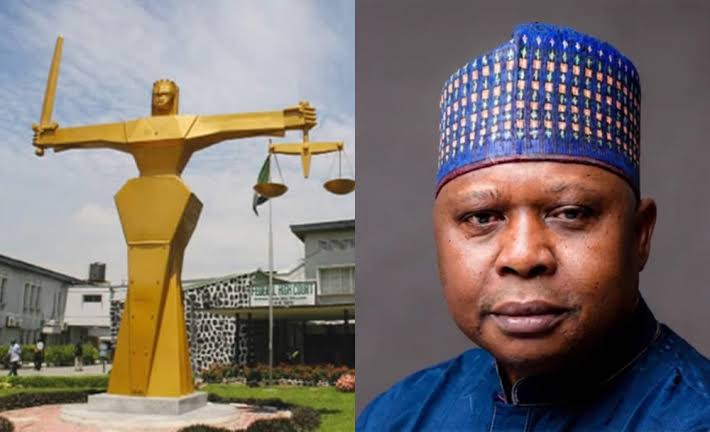
Court orders arrest of Tanimu Turaki For Giving False Information To Police …fixes April 22 for arraignment
By: Michael Mike
A High Court of the Federal Capital Territory (FCT) sitting in Maitama has issued a bench warrant for the arrest of the self-appointed factional National Chairman of the Peoples Democratic Party (PDP), Senator Kabiru Tanimu Turaki, (SAN).
Justice Peter Kekemeke issued the arrest warrant on Thursday after Turaki failed to attend court for the purpose of his being arraigned on a one count criminal charge brought against him by the Inspector General of Police (IGP) in which he is accused of, among others, giving false information to the police.
When the case was called on Thursday, lawyer to the prosecution, Usman Rabiu said the business of the court for the day was for Turaki to enter his plea to the charge.
The count in the charge, marked: CR/647/2026 reads:
That you Kabiru Tanimu Turaki, (SAN), male, No: 37 T. Y. Danjuma Street, Asokoro, Abuja on or about 5th October, 2022 at Abuja within the jurisdiction of this honourable court you gave false information to the Inspector-General of Police via petition dated 5th October, 2022 and signed by you on your letter head paper against one Saidi Mohammed Mainasara with intent to use the lawful power of Inspector-General of Police to the injury or annoyance of the said Muhammed Mainasara and you thereby committed an offence punishable under Section 140 of the Penal Code Law.
Turaki’s lawyer, Rabiu noted that the defendant was absent in court despite being served with the charge and also served with a hearing notice by the court, informing him about the day’s proceedings.
The lawyer to the prosecution then invoked the provision of Section 396(2) of the Administration of Criminal Justice Act (ACJA), 2015 to urge the court to issue an arrest warrant for the defendant to be produced before the court for the purpose of his arraignment.
Rabiu faulted the reference by the defence lawyer, Abdulaziz Ibrahim (SAN) to a motion he filed for the defendant, seeking that the charge be quashed.
He argued that the defence could only challenge the validity of the charge only after the plea of the defendant has been taken.
Ibrahim argued otherwise and urged the court to give him five more days to file written addresses to convince the court that the defendant’s presence was not required until the motion was determined.
Ruling, Justice Kekemeke held that despite being aware of the day’s proceedings having been served with hearing notice and the charge, it was wrong for Turaki to fail to attend court without providing any reason.
The judge noted that the defence lawyer did not deny that his client was served with hearing notice of Thursday’s proceedings, but failed to provide any reason why the defendant was not in court.
Justice Kekemeke held that by the provision of Section 396(2) ACJA 2015 where a defendant, who is aware that a charge is pending against him in court but chose to stay away, the proper order to be made is for bench warrant to ensure the production of the defendant to answer to the charge.
The judge held that the motion filed by the defendant seeking the quashing of the charge was not ripe for hearing, adding that such a motion could only be heard after the defendant’s plea had been taken.
He proceeded to issue a bench warrant for Turaki’s arrest to compel the defendant to attend court to answer to the pending charge and adjourned till April 22 for his arraignment.
Court orders arrest of Tanimu Turaki For Giving False Information To Police …fixes April 22 for arraignment

VP Shettima: Nigeria, Determined To Promote, Protect Human Rights

Doma United secure NPFL promotion with win over Mighty Jets

Lions, United Nations Strengthen Partnership to Advance Sustainable Development and Community Service in Nigeria

Roger Federer’s Shock as DNA Results Reveal Myla and Charlene Are Not His Biological Children

THE PLIGHT OF FARIDA

FAILED COUP IN BURKINA FASO: HOW TRAORÉ NARROWLY ESCAPED ASSASSINATION PLOT AMID FOREIGN INTERFERENCE CLAIMS
-
 News2 years ago
Roger Federer’s Shock as DNA Results Reveal Myla and Charlene Are Not His Biological Children
-
Opinions4 years ago
THE PLIGHT OF FARIDA
-
 News11 months ago
FAILED COUP IN BURKINA FASO: HOW TRAORÉ NARROWLY ESCAPED ASSASSINATION PLOT AMID FOREIGN INTERFERENCE CLAIMS
-

 News2 years ago
EYN: Rev. Billi, Distortion of History, and The Living Tamarind Tree
-
 Opinions4 years ago
POLICE CHARGE ROOMS, A MINTING PRESS
-

 ACADEMICS2 years ago
A History of Biu” (2015) and The Lingering Bura-Pabir Question (1)
-

 Columns2 years ago
Army University Biu: There is certain interest, but certainly not from Borno.
-

 Opinions2 years ago
Tinubu,Shettima: The epidemic of economic, insecurity in Nigeria
