
News
Korean Intelligence Service commends NDLEA on arrest of wanted Nigerian drug baron, seeks suspect’s extradition

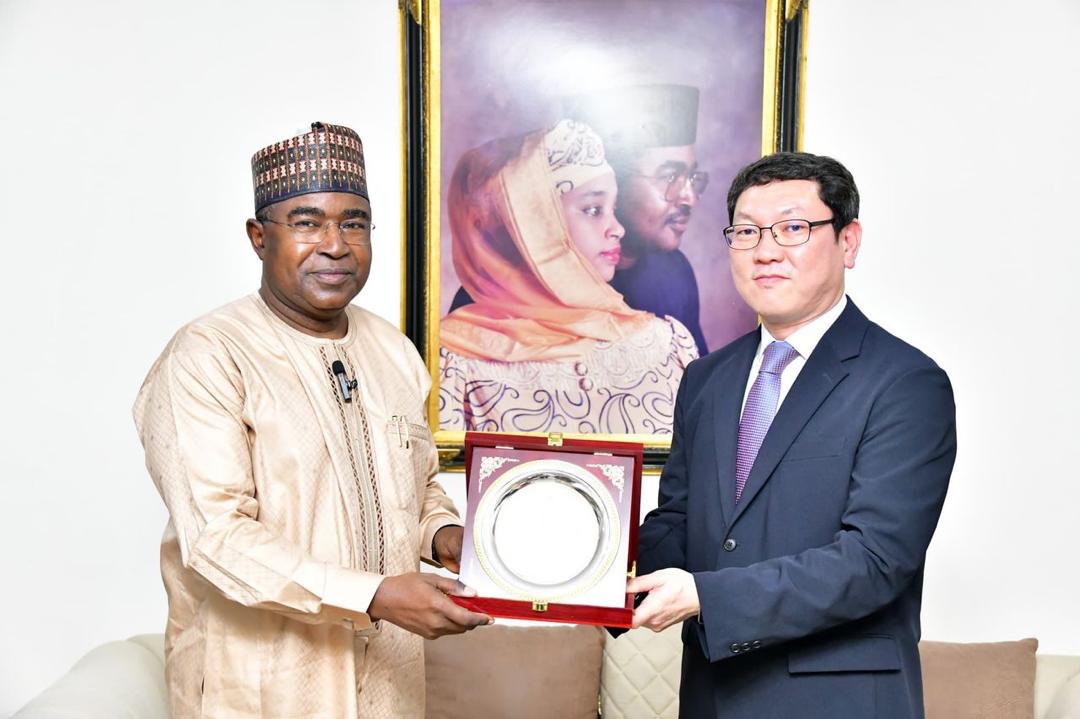
Korean Intelligence Service commends NDLEA on arrest of wanted Nigerian drug baron, seeks suspect’s extradition
By: Michael Mike
The National Intelligence Service of the Republic of Korea (NIS) has commended the National Drug Law Enforcement Agency, for its exceptional effort and professionalism in apprehending a wanted 59-year-old drug baron Ogbonnaya Kevin.
Ogbonnaya, who have been operating for 17 years underground where he shipped illicit drugs worth billions of naira across the world, was ended in February following his arrest by NDLEA operatives in Lagos.
Ogbonnaya had for years been a pain in the neck of the Korean authorities following the persistent shipment of illicit drugs linked to him to South Korea. As a result, an Interpol red notice was issued against him, while the National Intelligence Service of South Korea sought the help of NDLEA in tracking and arresting him.
He had served a one-year prison sentence in Korea in 2007 for drug offences and deported to Nigeria in 2008. After years of being on his trail, operatives of a Special Operations Unit of NDLEA eventually arrested him on 12th February 2025, at his hideout at No. 3, Ibukunoluwa Taiwo Close, off LASU Road, Lagos.
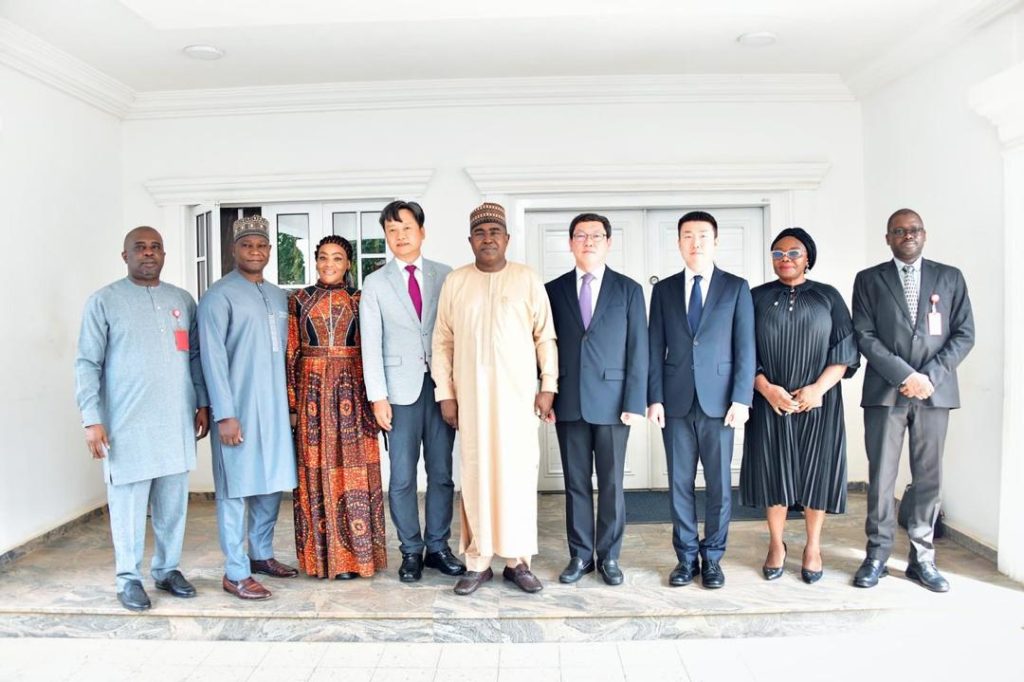
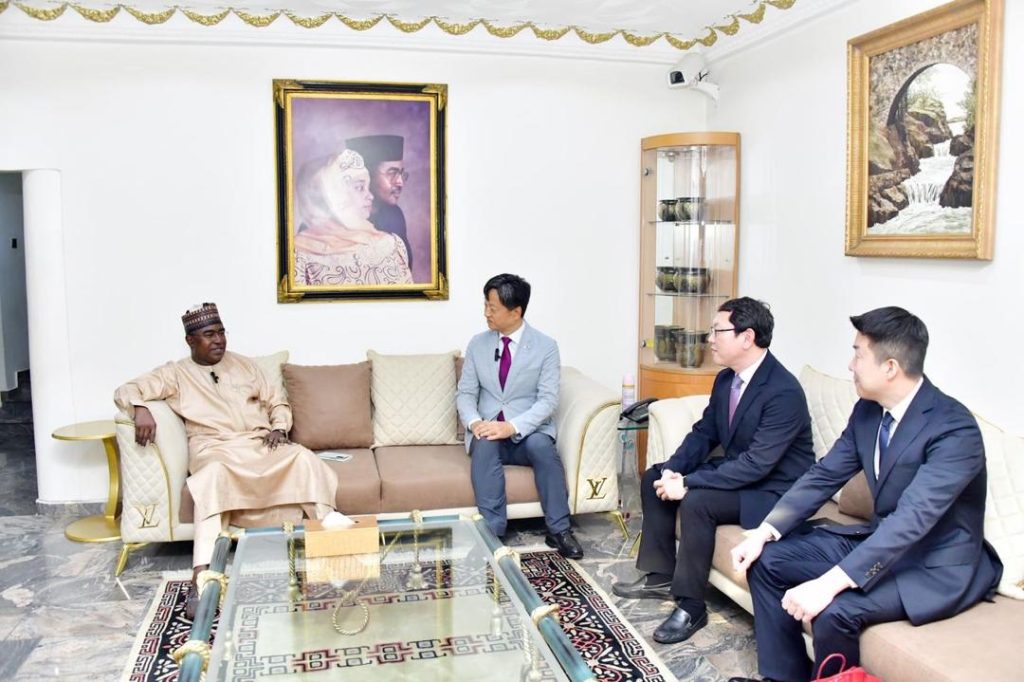
Excited with the breakthrough, a delegation from the Korean Intelligence Service on Wednesday paid the Chairman/Chief Executive Officer of NDLEA, Brig. Gen. Buba Marwa (Rtd) a courtesy visit to deliver a letter of appreciation by the Director of NIS, Taeyong Cho.
In his letter, Cho expressed gratitude for Marwa’s support and “the NDLEA’s exceptional cooperation during our recent joint operation, which led to the arrest of Ogbonnaya Kevin Jeff, a key figure in an international drug organization.”
According to the Korean Intelligence chief, “Kevin Jeff was responsible for smuggling significant quantities of narcotics into the Republic of Korea, and the NIS had been tracking him for years. I am truly pleased that our two services have successfully carried out the first special cooperation, enabling us to bring him to justice. Without the NDLEA’s invaluable cooperation, those long-standing efforts might have been in vain.
“Once again, I extend my deepest gratitude for the NDLEA’s exemplary service in this cooperation. Building on this significant achievement in our joint efforts against drug-related crimes, I look forward to further strengthening our collaboration.” The NIS delegation comprising: Messrs Choi Younkwan and Kim Juseok sought for the extradition of Ogbonnaya to South Korea to face pending drug charges.
In his response, Marwa expressed appreciation for the Koreans’ commendation and assured them that the world can always count on Nigeria in the global effort against illicit drug trafficking.
“We’re delighted to partner with you and be of service to you because your Service has a long history of professionalism. We want to give the assurance that at any time, you can count on us to work together with you towards a drug-free world”, the NDLEA boss stated.
He thanked the Korean government for the donation of some equipment to the agency, adding that they “will be of tremendous help to us as we continue to execute our job of keeping Nigeria and the world safe from drug traffickers.” He said he will study their request for extradition and work within the limits allowed by the Nigerian laws and the bilateral agreements between the two countries. He expressed hope in the possibility of getting training opportunities for NDLEA officers in Korean Intelligence training institution as part of the evolving partnership.
Korean Intelligence Service commends NDLEA on arrest of wanted Nigerian drug baron, seeks suspect’s extradition


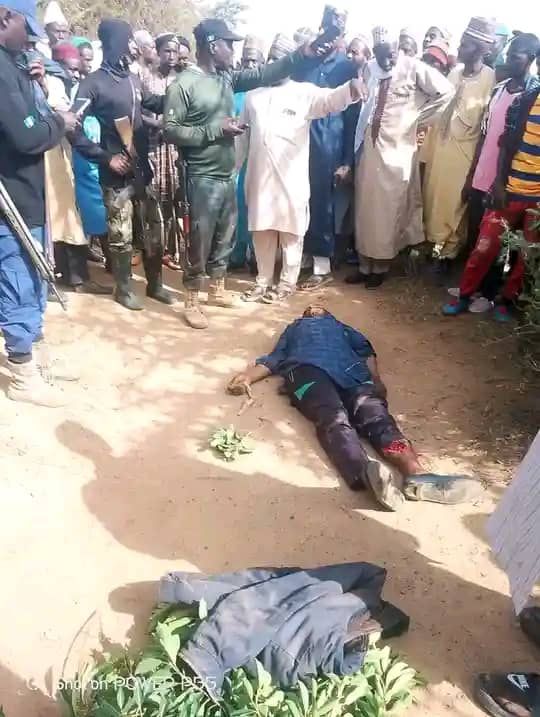
Berom militia kill Fulani herder in Riyom as tit-for-tat violence escalates in Plateau
By: Zagazola Makama
Abubakar Hababe, a 40-year-old Fulani herder, was on April 5 found dead after an attack in Riyom Local Government Area of Plateau State, in what appears to be a reprisal attack in continuation of the tit for tat across affected communities.
The latest incident occurred at about 8:30 a.m., when troops deployed at Rim village responded to a distress call of an attack between Tanjol and Rim communities. On arrival, security personnel discovered the lifeless body of one Abubakar Hababe, 40, in an open field.
Community sources alleged that the victim, a Fulani herder, was attacked in what is believed to be a reprisal by suspected Berom Militia, following earlier killings in the area.
The development is the latest in a string of violent incidents that have heightened tensions across Riyom and neighbouring local government areas.
Investigations indicate that the attack may be linked to the killing of two miners at an illegal mining site in Rim village, where armed men suspected to be Fulani bandits had earlier stormed the area, killing victims and triggering outrage within the host community.
Zagazola report that the pattern reflects a sustained cycle of retaliatory violence that has continued to escalate across Plateau.
On April 3, troops responding to a distress call in Sabongida village, Jos South Local Government Area, recovered the body of a 30-year-old herder identified as Shafiyu, who had been killed in the bush under unclear circumstances.
Later the same day, gunmen attacked an illegal mining site in Gyel village, Riyom LGA, killing three miners, including one Samuel Davou, while several others fled.
Earlier on March 25, the body of a Fulani boy, Abdullahi Mohammed, was discovered in a shallow grave in Mangu Local Government Area, sparking tension in the area.
On the same day, reports also indicated destruction of irrigation farmlands in Riyom, an incident attributed to herders, which further strained relations between farming and pastoral communities.
On March 28, a prominent Fulani leader, Alhaji Bilyaminu Julde, the Ardo of Gindiri in Barkin Ladi LGA, was assassinated at his residence by gunmen, an incident that significantly escalated tensions.
That same day, farmlands in Tahoss village, Riyom LGA, were reportedly destroyed by stray cattle, further deepening hostilities.
By April 2, violence had spread to Bokkos LGA, where troops foiled an attack by suspected armed herders following clashes with vigilantes over grazing disputes, leaving one vigilante injured.
On April 3, additional incidents were reported in Barkin Ladi, where troops recovered suspected rustled cattle, while another Fulani youth was reportedly killed in Riyom in a separate isolated attack.
Security presence has since been intensified across the affected areas, with troops conducting patrols and engaging community leaders to prevent further escalation.
Authorities have urged residents to remain calm and refrain from reprisals, warning that the persistent cycle of attacks and counter-attacks continues to threaten peace and stability in the state.
Security forces said Investigations into the latest killing are ongoing, with efforts underway to apprehend those responsible.
Berom militia kill Fulani herder in Riyom as tit-for-tat violence escalates in Plateau
News
Political Landscape Shifts as Yobe South Mobilizes for 2027 Elections Amid Marginalization Concerns

Political Landscape Shifts as Yobe South Mobilizes for 2027 Elections Amid Marginalization Concerns
By: Michael Mike
As the 2027 general elections approach, political activities in Yobe South Senatorial District—comprising Potiskum, Fika, Nangere, and Fune Local Government Areas—are gaining momentum. The developments reflect growing concerns about resilience, inclusion, and longstanding marginalization within the region.
Renowned as the food basket of Yobe State, Yobe South is home to a predominantly agrarian population known for its hard work, adaptability, and entrepreneurial spirit. Over the years, many residents have diversified beyond agriculture, pursuing business opportunities across Nigeria rather than relying solely on government employment.
A concerned citizen of the district, Musa Abdullahi Mai Biredi, noted that despite these contributions and a relatively strong educational base, Yobe South has experienced persistent political marginalization since Nigeria’s return to democratic rule in 1999. According to him, political dominance has largely remained within Yobe East Senatorial Zone, often associated with a single dominant ethnic group, thereby sidelining other communities within the state.
“This persistent imbalance raises serious concerns about equity and representation, as the interests of diverse communities continue to receive limited attention,” he stated.
Attention is now turning to Senator Ibrahim Mohammed Bomai, whose potential candidacy is being viewed by many as a symbol of hope for more inclusive representation. His emergence is seen as a challenge to the entrenched political structure, though not without reported resistance. Allegations of intimidation by certain political actors have surfaced, raising concerns about the fairness of the democratic process and the ability of candidates from Yobe South to compete on equal footing.
Meanwhile, there are indications that many constituents in Yobe South are aligning with President Bola Ahmed Tinubu and the All Progressives Congress (APC), signaling a desire for change and stronger political inclusion. Variations in voting patterns across the state further reflect underlying dissatisfaction, which could drive a significant political shift if voters organize effectively and support candidates who genuinely represent their interests.
As Yobe State moves closer to the 2027 elections, the issues of equity, justice, and inclusive governance will remain central to political discourse. Addressing the concerns of marginalization in Yobe South is critical to ensuring balanced representation and strengthening democratic values across the state.
Ultimately, the resolve of the electorate to rally behind credible and people-focused leadership will play a decisive role in shaping the future political landscape of Yobe State.
Political Landscape Shifts as Yobe South Mobilizes for 2027 Elections Amid Marginalization Concerns

FG Directs MDAs to Halt New Policies Pending Full RIA Compliance
By: Michael Mike
The Federal Government has directed all Ministries, Departments and Agencies (MDAs) to suspend the introduction and rollout of new policies, regulations, or major regulatory changes until full compliance with the Regulatory Impact Analysis (RIA) Framework is achieved.
The directive, issued by the Director General of the Presidential Enabling Business Environment Council (PEBEC), Princess Zahrah Mustapha Audu, is part of efforts to strengthen regulatory quality, ensure policy coherence, and improve the ease of doing business in Nigeria.
According to the statement, the RIA Framework, which was formally implemented in January 2025, requires that all new policies or amendments introduced after the date must undergo review and approval in line with its provisions.
She noted that the framework has already been circulated to MDAs by the Office of the Secretary to the Government of the Federation and is also accessible on the PEBEC website. MDAs are therefore expected to familiarize themselves with the framework and align their policy development processes accordingly.
Audu emphasized that while the government remains committed to working collaboratively with regulatory institutions, no new reform or policy would be allowed to proceed without being backed by clear and verifiable evidence.
She explained that the directive aims to prevent policy shocks that could negatively affect businesses, investors and citizens, eliminate inconsistencies and frequent policy reversals, and institutionalize evidence-based policymaking across government.
The directive also seeks to enhance transparency, improve predictability, and boost stakeholder confidence in public policies, while ensuring adequate engagement to minimize resistance prior to implementation.
Consequently, all MDAs have been instructed to suspend any planned policy rollouts that have not yet been implemented, ensure that new policy proposals are supported by comprehensive RIA and necessary approvals, and integrate the RIA process into their internal policy formulation procedures.
They are also required to undertake structured and inclusive stakeholder engagement as part of policy development to improve acceptance and implementation outcomes.
The PEBEC boss added that MDAs can access the RIA Framework through its website or seek technical support from the council’s secretariat.
She, however, noted that exceptions would only be granted in cases of urgent national interest, subject to appropriate approval.
Audu stressed that cooperation from all MDAs is crucial to building a stable, consistent and business-friendly regulatory environment capable of driving sustainable economic growth and boosting investor confidence.
FG Directs MDAs to Halt New Policies Pending Full RIA Compliance

Berom militia kill Fulani herder in Riyom as tit-for-tat violence escalates in Plateau

Political Landscape Shifts as Yobe South Mobilizes for 2027 Elections Amid Marginalization Concerns

FG Directs MDAs to Halt New Policies Pending Full RIA Compliance

Roger Federer’s Shock as DNA Results Reveal Myla and Charlene Are Not His Biological Children

THE PLIGHT OF FARIDA

FAILED COUP IN BURKINA FASO: HOW TRAORÉ NARROWLY ESCAPED ASSASSINATION PLOT AMID FOREIGN INTERFERENCE CLAIMS
-
 News2 years ago
Roger Federer’s Shock as DNA Results Reveal Myla and Charlene Are Not His Biological Children
-
Opinions4 years ago
THE PLIGHT OF FARIDA
-
 News12 months ago
FAILED COUP IN BURKINA FASO: HOW TRAORÉ NARROWLY ESCAPED ASSASSINATION PLOT AMID FOREIGN INTERFERENCE CLAIMS
-

 News2 years ago
EYN: Rev. Billi, Distortion of History, and The Living Tamarind Tree
-
 Opinions4 years ago
POLICE CHARGE ROOMS, A MINTING PRESS
-

 ACADEMICS2 years ago
A History of Biu” (2015) and The Lingering Bura-Pabir Question (1)
-

 Columns2 years ago
Army University Biu: There is certain interest, but certainly not from Borno.
-

 Opinions2 years ago
Tinubu,Shettima: The epidemic of economic, insecurity in Nigeria
