News
Lagos Moves to Build West Africa’s Leading International Financial Centre

Lagos Moves to Build West Africa’s Leading International Financial Centre
By: Michael Mike
Lagos State has taken a major step toward repositioning Nigeria as a global investment destination with the unveiling of a comprehensive roadmap to establish a Lagos International Financial Centre (LIFC), envisioned as the leading financial hub in West Africa.
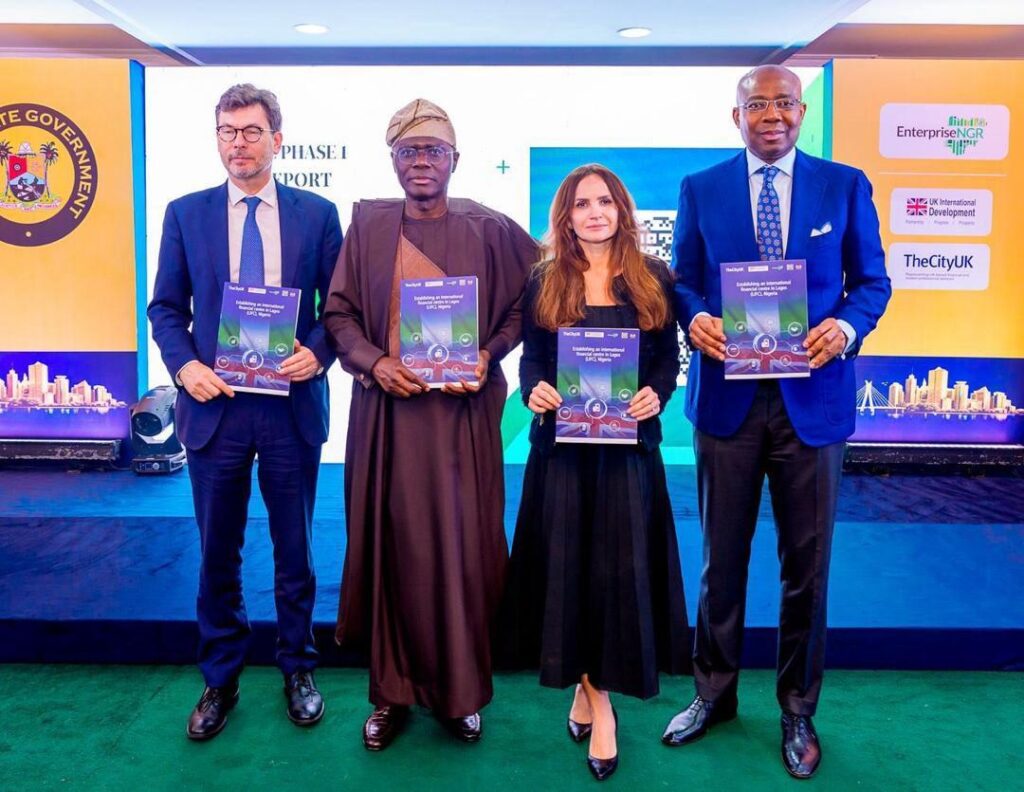
The roadmap is contained in a new report titled “Establishing an International Financial Centre in Lagos (LIFC), Nigeria”, produced by TheCityUK in collaboration with the UK Government, Lagos State Government, the Lagos International Financial Centre Council (LIFCC), and EnterpriseNGR. The report was formally launched at the State House, Marina, Lagos.

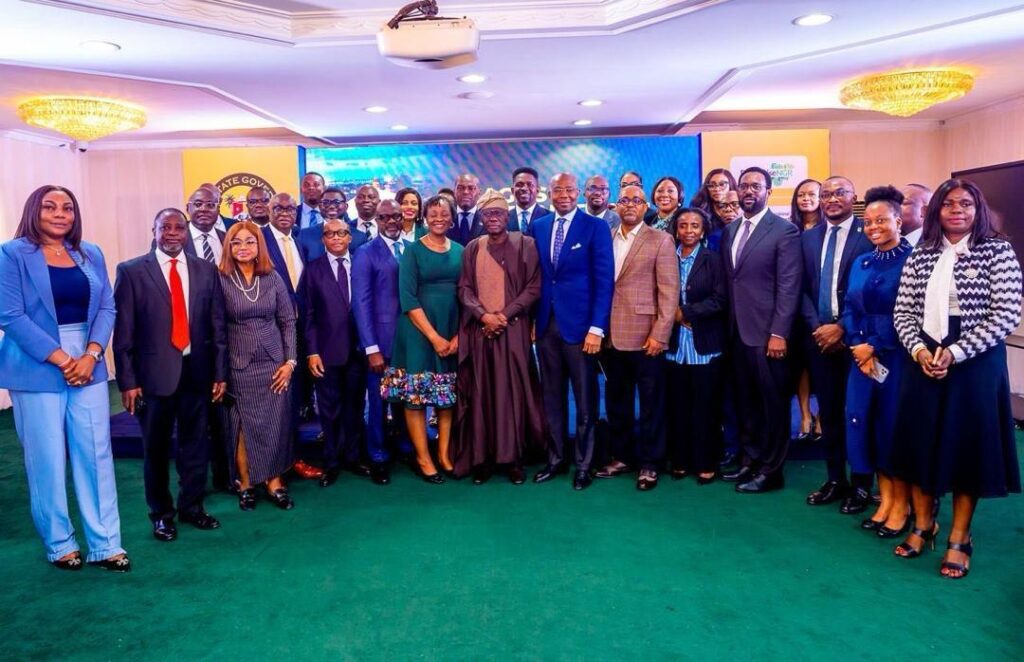
The high-level event attracted senior government officials, diplomats, and private sector leaders, including Lagos State Governor Babajide Sanwo-Olu, British Deputy High Commissioner to Nigeria Jonny Baxter, EnterpriseNGR Chairman Aigboje Aig-Imoukhuede, and EnterpriseNGR Chief Executive Officer Obi Ibekwe.
The initiative is aligned with Nigeria’s Agenda 2050 and the Lagos State Development Plan 2052, positioning the LIFC as a long-term catalyst for economic transformation. According to the report, the proposed financial centre will deepen capital markets, mobilise international investment, drive innovation, and support sustainable economic growth across Lagos, Nigeria, and the wider West African region.
The report underscores the importance of strong public-private collaboration, noting that Lagos’ demographic advantage, expanding financial ecosystem, and strategic location make it well-suited to host an international financial centre that meets global standards.
One of the report’s core recommendations is the creation of an independent IFC framework for Lagos. This model would provide regulatory certainty, simplified tax and policy regimes, and a transparent governance structure aimed at improving investor confidence and enhancing Nigeria’s competitiveness in global finance.
To differentiate Lagos from other emerging financial centres, the report identifies three priority sectors for initial focus: green and sustainable finance, fintech and financial innovation, and commodities trading and capital markets. These sectors are considered critical to Nigeria’s future economic diversification and resilience.

The report also highlights the need for robust legal and regulatory reforms, calling for close coordination between Lagos State, the Federal Government, regulators, and the private sector to ensure smooth implementation of the LIFC vision.
Human capital development is another key pillar of the strategy. Recommendations include strengthening local talent pipelines, easing visa requirements for international professionals, and creating an enabling environment that supports skills transfer and high-value job creation for Nigeria’s growing youth population.
In addition, the report proposes competitive and targeted tax incentives, streamlined business processes, and investment-friendly policies designed to attract long-term capital aligned with national development priorities.
Speaking at the launch, Governor Babajide Sanwo-Olu reaffirmed Lagos State’s commitment to the project, describing the International Financial Centre as essential to boosting market competitiveness and facilitating seamless trading.
“Lagos is Nigeria’s largest economic and financial centre, and we must create an ecosystem that attracts investment, improves liquidity, and strengthens market infrastructure,” the governor said, adding that the LIFC would unlock new opportunities for public-private partnerships in technology and capital market development.
British Deputy High Commissioner Jonny Baxter said the report reflects the deepening UK-Nigeria partnership, combining Lagos’ strengths with UK expertise to support financial sector development.
He noted that, if effectively implemented, the LIFC could unlock significant domestic and international investment, expand capital markets, create jobs, and promote sustainable growth beyond Lagos State.
Also speaking, TheCityUK’s Managing Director for International, Nicola Watkinson, described Nigeria as a high-growth market with strong long-term potential. She said the LIFC could play a vital role in attracting global capital, supporting fintech and green finance innovation, and creating high-value employment opportunities for young Nigerians.
With the launch of the report, stakeholders say the focus now shifts to implementation, as Lagos seeks to translate vision into action and establish itself as a globally competitive financial centre for West Africa.
Lagos Moves to Build West Africa’s Leading International Financial Centre