
National News
LEKKI, LAI, LIES & TALES BY MOONLIGHT (1)

LEKKI, LAI, LIES & TALES BY MOONLIGHT (1)
BY CHRIS GYANG
OPENING THOUGHTS
You say they kill something inside you? Buhari and his men – Lai and Garba and Femi? Then you should have perished a long, long time ago. But no, you are still alive and kicking. Are you not a Nigerian, an indomitable citizen? After all, lies cannot kill you.
Could the Lekki massacres of October 2020 be a sad reenactment of the jungle justice perpetrated in 1977 where Fela Anikulapo’s mother was flung out of a second-floor window to her death by an agent of the dictatorship whom a panel later described as an ‘unknown soldier’? We shall soon find out.
For now, it is worthy of note that our neighbouring country, Cameroun (which has been ruled by 88-year old President Paul Biya for 39 years who still wants to contest for another tenure in 2025), calls its national team ‘The Indomitable Lions’. They are a rugged and fearsome side not easily defeated. Perhaps we should also call ourselves ‘Indomitable Nigerians’ because, like Cameroon’s national team, nothing easily squashes our spirits, or bodies.
There was a season when even lying military despots, who remain a not-to0 distant memory, could kill nothing inside y0u, as happened with Fela following his mother’s gruesome extra-judicial killing. Likewise, the falsehoods of present day ministers, corrupt government officials, a sitting president and his aides and spokesmen, can kill nothing in you. But we don’t have to hold tight to that borrowed ‘indomitable’ adjective from the Camerounians.

We have crafted a special nomenclature for ourselves. It suits us perfectly well and says a lot about our docile and sanctimonious nature. We tell ourselves that we are “a resilient people.” We have the incredible ability to bounce back from any adversity in the shortest time possible. Also, don’t forget that in Africa, names carry omens.
FLASHBACK
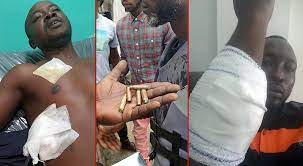
Now a little flashback would be appropriate to situate our subject in proper perspective. On October 20, 2020, soldiers confronted #EndSARS peaceful demonstrators at the Lekki tollgate, Lagos, during which some of them were killed and many others injured. This was widely reported by local mainstream and social media; and international news networks. However, the Federal Government, through the Information Minister, Alhaji Lai Mohammed, consistently maintained that no one was killed that day.
THE CABLE documented five instances in the past one year where Mr. Lai Mohammed vociferously refuted the reports of those killings, maiming and other human rights abuses. Some of these denials have been full of excoriating remarks and outright denunciations of individuals, credible sources and the organisations they represent.
According to the online publication, CABLE, in November 2020, the minister took a swipe at DJ Switch, a disc jockey, who filmed the army shooting #EndSARS protesters at Lekki tollgate, vowing that soon she would be “exposed for what she is.”
Lai further described her as a “purveyor of fake news” and questioned her motive for saying that protesters were killed by the army which, he said, was “suspicious.”
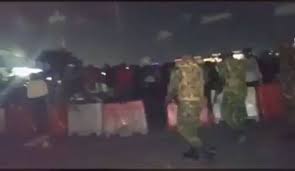
Also in November, the minister’s castigation of CNN was dripping with bile. He argued that its report on the Lekki shooting “did not just fall short of journalistic standards but reinforces the disinformation that is going around on the issue.” The minister, in a letter written to CNN, accused the international platform of deliberately leaving out video footage which could have shown that “armed hoodlums invaded the Lekki Toll Gate that night and could have hit any of the protesters as they shot sporadically…. This is clearly a ploy by the CNN reporter/presenter to manipulate viewers of its ‘investigative’ report and force them to draw the reporter’s desired conclusion.”
In its own report about the incident, Amnesty International (AI) had said that 12 people were killed by the military. But in January, 2021, Mr. Mohammed challenged AI to show proof of the 12 people killed or “shut up.” In February, 2021, he insisted that nobody had produced evidence of the people said to have been killed at the Lekki tollgate and described the allegations as “fake news and unverified social media reports.”
And Mr. Mohammed, during a press briefing marking the first anniversary of the shootings in October 2021, further claimed that there was still no proof that any protester was killed. He described it as a “phantom massacre,” stressing that it was the “first massacre in the world without blood or bodies.” He added, more sardonically: “One year later, and despite ample opportunities for the families of those allegedly killed and those alleging a massacre to present evidence, there has been none: No bodies, no families, no convincing evidence, nothing…. Where are the families of those who were reportedly killed…?”
PANEL’S REPORT, THE BACKLASH
But THE CABLE reported on Monday, November 15, that a report of the Lagos State judicial panel on police brutality, which was leaked to the press that same day, showed that protesters were indeed killed at the tollgate on October 20, 2020.
According to the NEW YORK TIMES (November 16, 2021), the report showed that the Nigerian Army shot and killed at least 11 unarmed, peaceful protesters and wounded dozens more. It added that four others were missing and now “presumed dead…. The atrocious maiming and killing of unarmed, helpless and unresisting protesters, while sitting on the floor and waving their Nigerian flags, while singing the national anthem can be equated to a ‘massacre’ in context.” The panel also listed 48 people as shooting victims.
The army had insisted that it fired blanks to disperse the demonstrators. On the contrary, the judicial panel declared that ample evidence showed that “soldiers actually shot blank and live bullets directly and pointedly into the midst of the protesters at the Lekki Toll Gate, with the deliberate intention to assault, maim, and kill.” It further maintained that the soldiers turned back ambulances that arrived to help wounded protesters.
Obviously, the information minister had not been telling the truth about what happened that day at the Lekki tollgate, Lagos. Analysts say that his acerbic outbursts that “No bodies … no convincing evidence, nothing…” had been discovered were the height of insensitivity to the dead and their living relatives.
Thus, the backlash from the Human Rights Writers Association of Nigeria (HURIWA) was harsh. In a statement issued on November 16, 2021, HURIWA National Coordinator, Comrade Emmanuel Onwubiko, urged President Buhari to sack and arrest him “for committing a grave and heartless offence that is equivalent to the denial of the Holocaust of the six million Jews by Adolf Hitler, which is punishable by nearly half a century of incarceration.”
While praising the bravery of the panel’s members and chairperson, the human rights body challenged President Buhari “not to sweep the lawlessness of the security agencies under the carpets.”
LAI STICKS TO HIS GUNS
But Mr. Lai Mohammed has hit back at the panel and rubbished its report, which he labelled as ‘tales by moonlight’ – a Nigerian folk tales children’s television show. During a press conference in Abuja on November 23, 2021, the minister insisted that the report would not change the Federal Government’s earlier declared position that there wasn’t a massacre, “adding that the report is intimidation of a silent majority by a ‘vociferous lynch mob’” (Daily Post, November 23).
Also Read: People’s Forum calls for investigation into alleged…
But many analysts say they are not surprised by the Federal Government’s position given that it has never owned up to such accusations of human rights abuses and the spike in corruption in the country from Amnesty International and Transparency International in the past. Only recently, the government lambasted The Economist for offering a very bleak assessment of the administration’s overall performance so far.
IF LAI LIED, SO WHAT?
Now, can Lai’s falsehoods and those of the other president’s men, even his (the president’s), still kill something inside of you? No they can’t, because you are ‘resilient’. You can weather all vicissitudes – hunger, poverty, hyper-inflation, stolen elections, endless strikes, Boko Haram killings, bandits’ attacks, impeachment of a speaker by 8 members of a 24-member parliament, etc – with religious equanimity and calm. Resilient people do not whine about the tissues of lies often hurled at them by leaders who must soften their consciences in order to sleep well at night. We are a people who allow our leaders to get away with all manner of atrocities and misdemeanors.
In fact, is Nigeria as presently constituted and wired not itself a big lie? Set up as a trading outpost for colonial masters, our country has so far been oiled and held together by a single primary commodity – crude oil. Our country is a true commercial enterprise, a business venture driven by the profit motive. The oily, shimmering surface belies the contradictions swirling down below. No wonder, our unity is tenuous – a sea of vaporizing mirages.
Those, especially from the core north, who endlessly mouth platitudes about national unity and patriotism are only inspired by the lucre they scoop from the oil wells that lie in the belly of this wobbly contraption and nothing else. Do you think they would have stuck to this union so tenaciously and continued singing its praises to the high heavens if the black gold was not at the bottom? Expert illusionists, they juggle lies and the beauty of national unity and patriotism before our eyes to keep us perpetually spell bound.
TO BE CONCLUDED…
LEKKI, LAI, LIES & TALES BY MOONLIGHT (1)


National News
Tinubu orders full investigation into deaths of suspected illegal miners in NSCDC custody

Tinubu orders full investigation into deaths of suspected illegal miners in NSCDC custody
By: Our Reporter
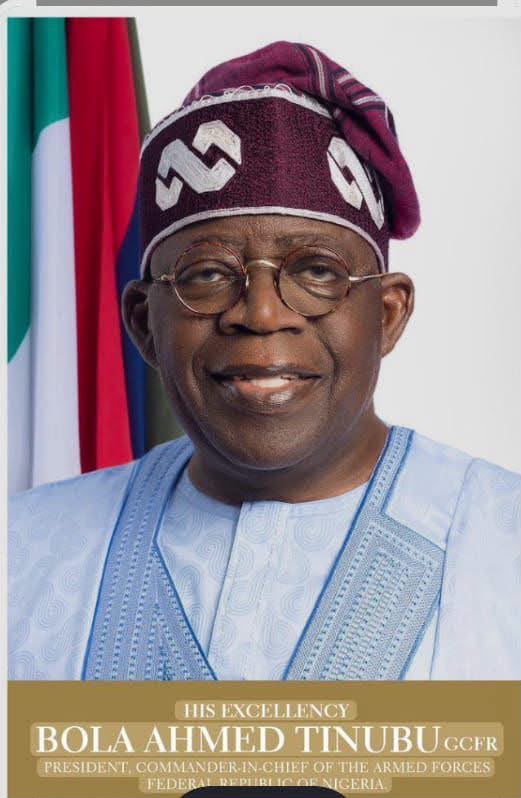
President Bola Tinubu has ordered a full, transparent and unhindered investigation into the deaths of suspected illegal miners detained by the Nigeria Security and Civil Defence Corps (NSCDC) following enforcement operations around the Lt. General Mohammed Inuwa Wushishi Estate in Minna, Niger State.
In a statement issued by the Special Adviser to the President on Information and Strategy, Bayo Onanuga, the President said the life of every Nigerian matters and that no citizen should lose their life while in government custody as a result of negligence, abuse, inhumane treatment or dereliction of duty.
Tinubu expressed deep concern over the reported deaths, describing the development as a grave matter requiring urgent investigation and accountability.
He said while the Federal Government would continue to combat illegal mining and other criminal activities across the country, enforcement operations must be conducted strictly within the law and with full respect for the dignity and fundamental rights of persons in custody.
The President stressed that the fact that the victims were suspected of illegal mining did not remove their right to life, dignity and humane treatment while in government custody.
He warned that the government would not tolerate mass deaths arising from official negligence, dereliction of duty or failure by public officials to protect people placed under their care.
“Where the investigation establishes that any official, through action, abuse or negligence, contributed to these deaths, such an officer must be arrested and prosecuted in accordance with the law. There must be accountability,” Tinubu said.
The President directed relevant authorities to ensure that the investigation is comprehensive, transparent and unhindered, covering the circumstances of the arrests, the conditions under which the detainees were held, the events leading to their deaths and the conduct of all officials involved.
The directive comes as the Niger State Government has also constituted a Committee of Inquiry to establish the circumstances surrounding the deaths, with Deputy Governor Yakubu Garba as Chairman and Commissioner for Homeland Security Maurice Magaji as Secretary.
The Niger State Government said forensic examinations and autopsies would be conducted to establish the exact cause of death, while the NSCDC Commandant General has suspended the Niger State Commandant, Suberu Siyaka Aniviye, and members of his team to allow investigations to proceed.
Tinubu orders full investigation into deaths of suspected illegal miners in NSCDC custody
National News
Breaking: NSCDC launches probe as 30 suspected illegal miners die in Commands custody in Niger
Breaking: NSCDC launches probe as 30 suspected illegal miners die in Commands custody in Niger
By Zagazola Makama
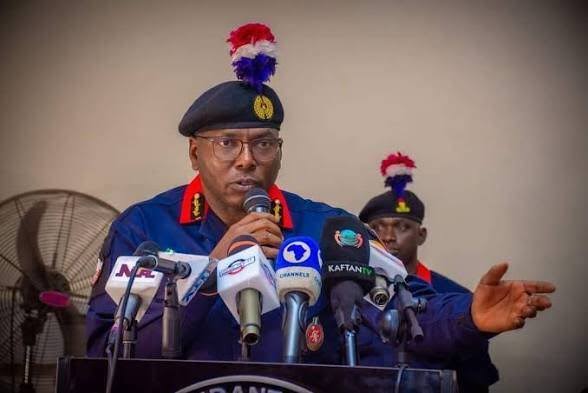
The Nigeria Security and Civil Defence Corps (NSCDC) has ordered an investigation into the deaths of several suspected illegal miners arrested during an enforcement operation in Niger State.
The suspects were apprehended on Sept. 15 and 16, 2026, during a joint operation targeting illegal mining activities around the M.I. Wushishi/Lukoto axis of the state.
The NSCDC Niger State Command initially reported that scores of detainees were found dead in the early hours of Sept. 17 following what was described as a suspected disease outbreak.
The remains have since been evacuated to the General Hospital, Minna, where medical examinations are expected to determine the actual cause of death.
The development has generated concern among relatives of some of the detainees, with family members alleging that more than 30 people died while in custody.
However, the NSCDC has cautioned against attributing the deaths to any particular disease before medical and laboratory examinations are concluded.
In a statement issued by the Corps’ National Public Relations Officer, Assistant Commandant of Corps Babawale Afolabi, the Commandant General, Prof. Ahmed Abubakar Audi, directed the immediate constitution of a high-powered investigative team.
The team, headed by the Deputy Commandant General responsible for Intelligence and Investigation, is expected to establish what happened before and after the suspects were taken into custody.
Investigators are to examine the physical condition of the detainees at the point of arrest, the duration of their detention, conditions inside the facility, medical care provided to them and other circumstances that could have contributed to the deaths.
The Corps said it was also working with health authorities and other security agencies to implement appropriate medical and public-health measures.
It further directed that the health and welfare of suspects still in custody be given immediate priority, while personnel who may have come into contact with the affected detainees are also protected.
The NSCDC said the incident would be addressed strictly on the basis of verified medical and investigative findings.
The Corps also reiterated that its campaign against illegal mining would continue, stressing that the enforcement of the law must be carried out alongside respect for the dignity and fundamental rights of persons in custody.
The Commandant General expressed condolences to the families of those who died and assured them that the circumstances surrounding the incident would be thoroughly investigated.
The Corps appealed to the public to remain calm while the medical and investigative processes are concluded, promising to release further information as verified facts become available.
The incident has meanwhile raised questions about the health status and detention conditions of the arrested miners, with the pending medical examination expected to provide critical answers on what caused the deaths.
Breaking: NSCDC launches probe as 30 suspected illegal miners die in Commands custody in Niger

VP SHETTIMA CLARIFIES REMARKS ON NORTHERN GOVERNORS’ SUPPORT FOR PRESIDENT TINUBU
By: Our Reporter
The Office of the Vice President wishes to clarify remarks by Vice President Kashim Shettima concerning the support President Bola Ahmed Tinubu received from northern governors in the build-up to his emergence as the presidential candidate of the All Progressives Congress (APC).
The Vice President’s reference to six northern governors who believed in and supported President Tinubu was specifically about political consultations and alignments preceding the APC presidential primary in June 2022.
It was not a comment on the position of northern APC governors following President Tinubu’s emergence as the party’s candidate, nor was it intended to question their support during the 2023 presidential election.
Following the presidential primary, APC governors in the North rallied around the party’s candidate and played important roles in the campaign and electoral efforts that culminated in President Tinubu’s victory in the 2023 general election. Indeed, it is worthy of note that it was after the declaration of President Tinubu as winner of the 2023 presidential primaries that all other governors across the country rallied round and followed suit. That declaration by the northern governors hence became the aligning moment across all political divides in the quest for power shift.
VP Shettima holds the northern governors and other leaders of the APC in high regard and recognises their individual and collective contributions to the success of the party and the emergence of President Tinubu.
The Vice President regrets any interpretation of his remarks that may have suggested otherwise and hopes this clarification places the comments in their proper context.
VP Shettima also appreciates the Nigerian media for its longstanding professionalism and constructive engagement with his office and urges continued accuracy and context in the reporting of public remarks as the country approaches another political season.
VP SHETTIMA CLARIFIES REMARKS ON NORTHERN GOVERNORS’ SUPPORT FOR PRESIDENT TINUBU

81st UNGA: Nigeria Will Be Guided By National Interest, Multilateralism, Tinubu’s Reform Agenda – VP Shettima

Abuja Turns into West Africa’s Deal Room as 60 Startups Chase $65,000 and $5m Jackpot

The growing role of local militias, criminal networks and possible external forces in the escalation of violence in Plateau State

Roger Federer’s Shock as DNA Results Reveal Myla and Charlene Are Not His Biological Children

THE PLIGHT OF FARIDA

FAILED COUP IN BURKINA FASO: HOW TRAORÉ NARROWLY ESCAPED ASSASSINATION PLOT AMID FOREIGN INTERFERENCE CLAIMS
-
 News3 years ago
Roger Federer’s Shock as DNA Results Reveal Myla and Charlene Are Not His Biological Children
-
Opinions5 years ago
THE PLIGHT OF FARIDA
-
 News1 year ago
FAILED COUP IN BURKINA FASO: HOW TRAORÉ NARROWLY ESCAPED ASSASSINATION PLOT AMID FOREIGN INTERFERENCE CLAIMS
-

 News3 years ago
EYN: Rev. Billi, Distortion of History, and The Living Tamarind Tree
-
 Opinions5 years ago
POLICE CHARGE ROOMS, A MINTING PRESS
-

 ACADEMICS3 years ago
A History of Biu” (2015) and The Lingering Bura-Pabir Question (1)
-

 Columns3 years ago
Army University Biu: There is certain interest, but certainly not from Borno.
-

 Politics1 year ago
2027: Why Hon. Midala Balami Must Go, as Youths in Hawul and Asikira/Uba Federal Constituency Reject ₦500,000 as Sallah Gift
