
News
Maiduguri Flooding: Zulum Calls for Support, Insists Recovery is Not Government’s Responsibility Alone


Maiduguri Flooding: Zulum Calls for Support, Insists Recovery is Not Government’s Responsibility Alone
By: Michael Mike
Borno State Governor, Prof. Babagana Zul has called for the support to overcome the recent flooding of the state capital Maiduguri and environs, insisting that recovery from such a disaster cannot be the government’s responsibility alone and that it requires the collective effort of all stakeholders.
Zulum made the appeal at the statewide broadcast on the flood disaster that struck Maiduguri and its environs, leaving over half of the ancient city of Maiduguri submerged in water.
Zulum said: “In the past few days, we have witnessed devastating floods in a way that many of us have never experienced before. Streets, homes, offices and businesses have been submerged, and unquantifiable property have been lost. Countless lives have now been turned upside down. The impact of this disaster has been profound, and is a stark reminder of the vulnerabilities that we face in our environment.
“As your Governor, I want to express my deepest empathy to everyone who has been affected in one way or another. I understand the pain, loss, and uncertainty that many of us are going through. We stand together in solidarity, and I assure you that your government is committed to doing everything possible to aid those in need.”
He added that: “The magnitude of the destruction from this devastating flood cannot yet be quantified until the water has receded and on-the-spot assessments have been conducted.
“We shall constitute a multi-stakeholder committee to undertake a sector-by-sector assessment of the losses to guide the recovery and rebuilding process.
However, recovery from such a disaster cannot be the government’s responsibility alone. It requires the collective effort of all stakeholders. Today, I am appealing to everyone – community leaders, business owners, non-governmental organisations (national and international), and our esteemed wealthy individuals, to come together in support of our brothers and sisters who are suffering.
Unity has always been our strength in Borno. In times like this, we must harness that strength and show empathy and compassion to each other.”
He revealed that: “We are working closely with various federal government agencies, civil society organisations, and the Nigerian military to ensure that relief efforts are streamlined and effective. I invite and encourage other stakeholders to collaborate with our agencies to identify the best ways of providing assistance. Together, we can create a robust response plan that would address not only immediate needs but also long-term recovery and rebuilding efforts.”
He added that: “Borno has always been known for its resilience and we need to strongly rely on this to rebound from this disaster. Our recovery process will require collective innovative thinking and commitment to rebuild lost infrastructure, and homes. Government is open to constructive ideas from everyone on how we can fortify our state against future disasters. We shall leverage on this calamity as an opportunity to invest in sustainable practices and infrastructure that can withstand the forces of nature.”
Maiduguri Flooding: Zulum Calls for Support, Insists Recovery is Not Government’s Responsibility Alone


News
Zulum Donates Multi-Million Naira JAMB Zonal Headquarters, 500-Seat CBT Centre to Boost North-east Education
Zulum Donates Multi-Million Naira JAMB Zonal Headquarters, 500-Seat CBT Centre to Boost North-east Education
By: Michael Mike
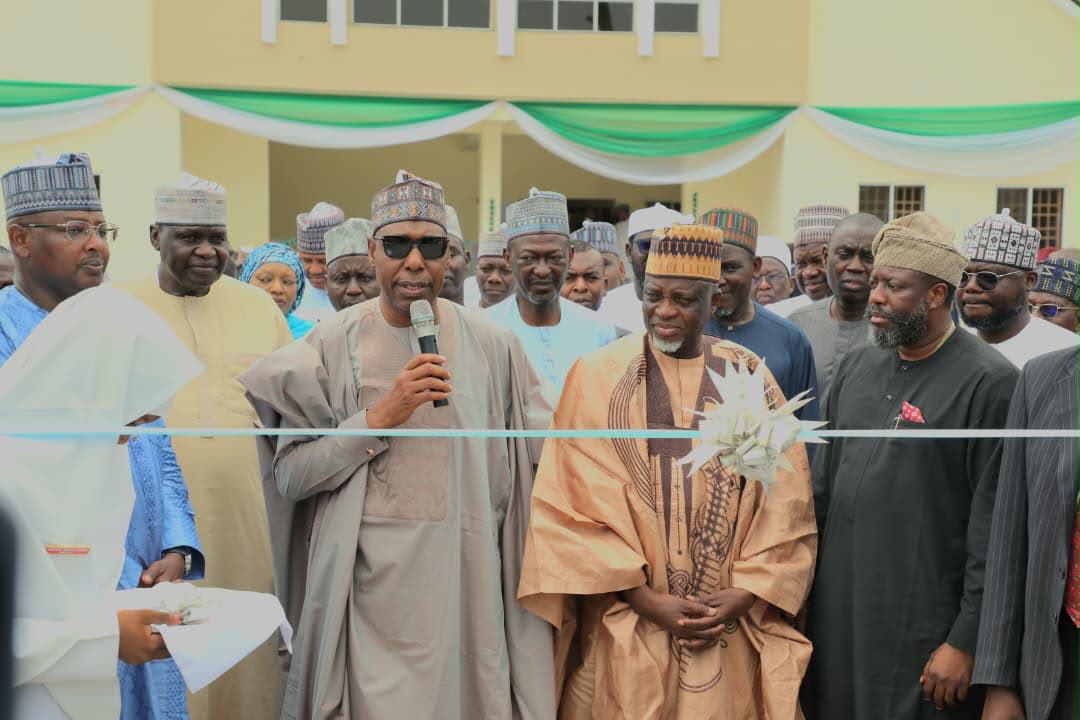
Borno State Governor, Prof. Babagana Zulum on Wednesday deepened his administration’s investment in education by handing over a multi-million naira Joint Admissions and Matriculation Board (JAMB) zonal headquarters and one of Nigeria’s largest Computer-Based Test (CBT) centres, a landmark project expected to transform tertiary admission services across the North-east.
The ultra-modern facility, strategically located along the Maiduguri-Dikwa Road, will serve as JAMB’s North-east Zonal Office, providing administrative and examination services to the region’s six states. It comprises a modern office complex and a dual CBT centre capable of accommodating 500 candidates simultaneously and processing more than 2,000 candidates daily.
The project is believed to be the first in the country to be wholly financed, constructed and donated by a state government to JAMB.
Commissioning the facility, Zulum described it as part of his administration’s broader strategy to rebuild education in a region that has suffered years of insurgency and disruption to learning.
He said the project was designed not only to improve access to JAMB services but also to strengthen educational infrastructure and reduce the burden on candidates seeking admission into tertiary institutions.
According to the governor, the facility represents Borno State’s contribution to enhancing national education service delivery while positioning the North-east as a major hub for computer-based examinations.
The significance of the project was underscored by JAMB Registrar, Prof. Ishaq Oloyede, who described it as an unprecedented intervention and one of the finest CBT facilities in Nigeria.
“This is the first time in the history of JAMB that a state governor has independently built and donated a zonal office and CBT centre to the Board,” Oloyede said.
He noted that what was initially conceived as an ambitious proposal had become a reality within just four months, describing the achievement as a reflection of Governor Zulum’s visionary leadership and commitment to education.
“Today, reality has surpassed my expectations. In just four months, what seemed humanly impossible has been accomplished,” he said.
Oloyede explained that the centre would significantly expand JAMB’s operational capacity in the North-east by allowing 500 candidates to write examinations simultaneously while handling over 2,000 candidates each day.
He added that the integrated registration facilities would enable the Board to complete registration and documentation for applicants from Borno State within a few days, drastically reducing delays and travel burdens.
“The CBT centre you have graciously provided will serve as a beacon of excellence for computer-based testing and administrative services. It will bring immense relief to candidates, educational institutions and stakeholders across this region.
“More importantly, it represents Your Excellency’s broader commitment to rebuilding educational confidence and expanding opportunities for young people despite the enormous challenges confronting this region,” he stated.
The outgoing JAMB Registrar further commended Governor Zulum’s sustained investment in education, human capital development and youth empowerment, describing education as the foundation for peace, stability and economic recovery in the North-east.
In a symbolic gesture acknowledging Oloyede’s contributions to educational development in Nigeria, Governor Zulum directed the Borno State Ministry of Education to name the newly commissioned facility after the outgoing JAMB Registrar.
The event was attended by the Secretary to the Borno State Government, Bukar Tijani; the incoming JAMB Registrar, Prof. Segun Aina; Acting Chief of Staff to the Governor, Dr. Babagana Mustapha Malumbe; Commissioner for Education, Engr. Lawan Abba Wakilbe; and other senior government officials.
The commissioning marks another milestone in Borno State’s post-insurgency recovery efforts, with the Zulum administration continuing to prioritise investments in schools, tertiary institutions and educational infrastructure as a pathway to rebuilding the state and expanding opportunities for its youth.
Zulum Donates Multi-Million Naira JAMB Zonal Headquarters, 500-Seat CBT Centre to Boost North-east Education
VP Shettima: Nigeria’s Digital Transformation Under Tinubu Unrivaled
Applauds ongoing reforms by NIMC management
By: Our Reporter
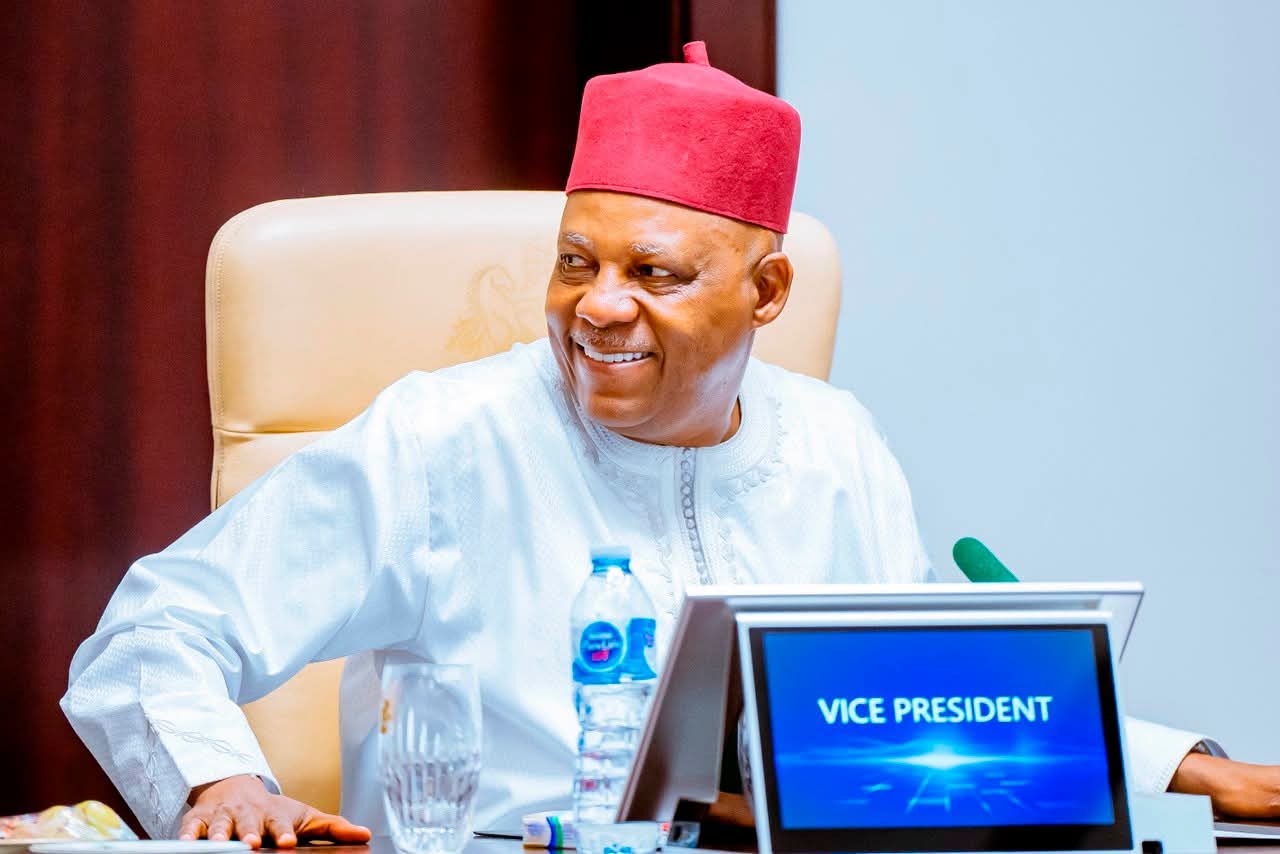
The Vice President, Senator Kashim Shettima, has applauded the ongoing transformation of Nigeria’s digital identity ecosystem under the administration of President Asiwaju Bola Ahmed Tinubu, describing the process as unrivaled.
He attributed the development to the administration’s reforms being undertaken by the current management of the National Identity Management Commission (NIMC), particularly with the enactment of the NIMC Act 2026.
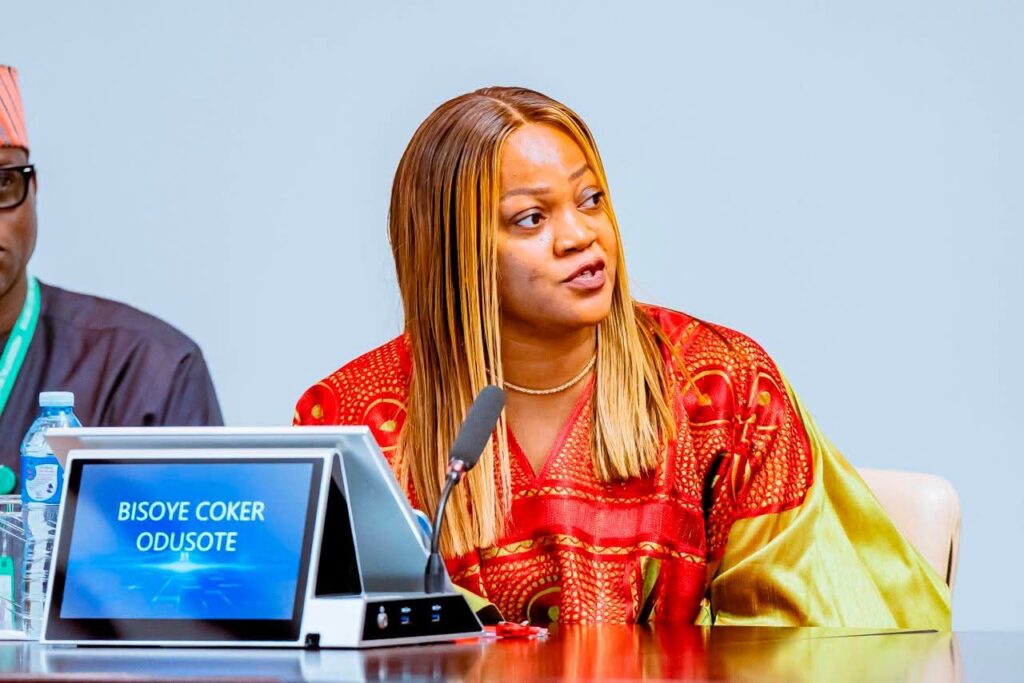
Senator Shettima, who stated this, Wednesday, when he received on a courtesy visit to the Presidential Villa, a delegation from NIMC led by its Director General, Engr. Abisoye Odusote, said the reorganisation will enable the establishment of a sovereign Digital Public Infrastructure (DPI) for Nigeria.
He noted that this is in addition to the transitioning of governments from paper-based administration to secure digital governance, using robust trust architectures.
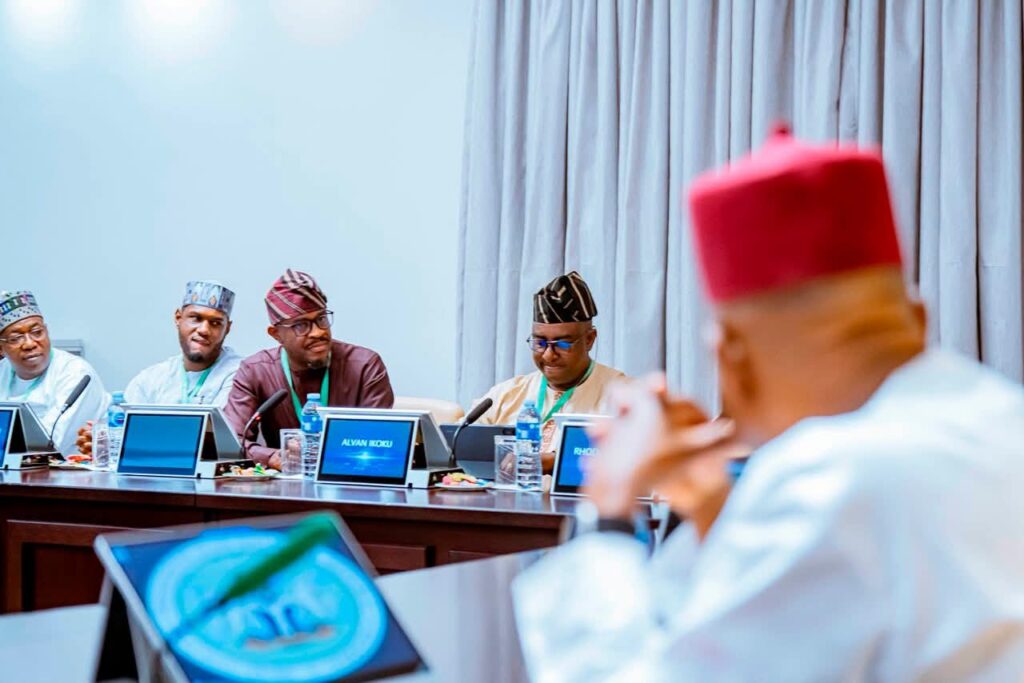
The Vice President said Engr. Odusote’s leadership and impact on NIMC’s transformation from a database custodian to Nigeria’s foundational digital authority within a short period was unprecedented, rare and worthy of commendation.
He urged the entire management to lend their support for the transformative works of the Director General and adopt more technology driven models, with a view to advancing key components of the Renewed Hope Agenda of the administration.
He said across all sectors, the Tinubu administration is taking bold steps and making courageous decisions that will impact positively on Nigerians in education, healthcare delivery, drive financial inclusion and secure digital governance, among others.
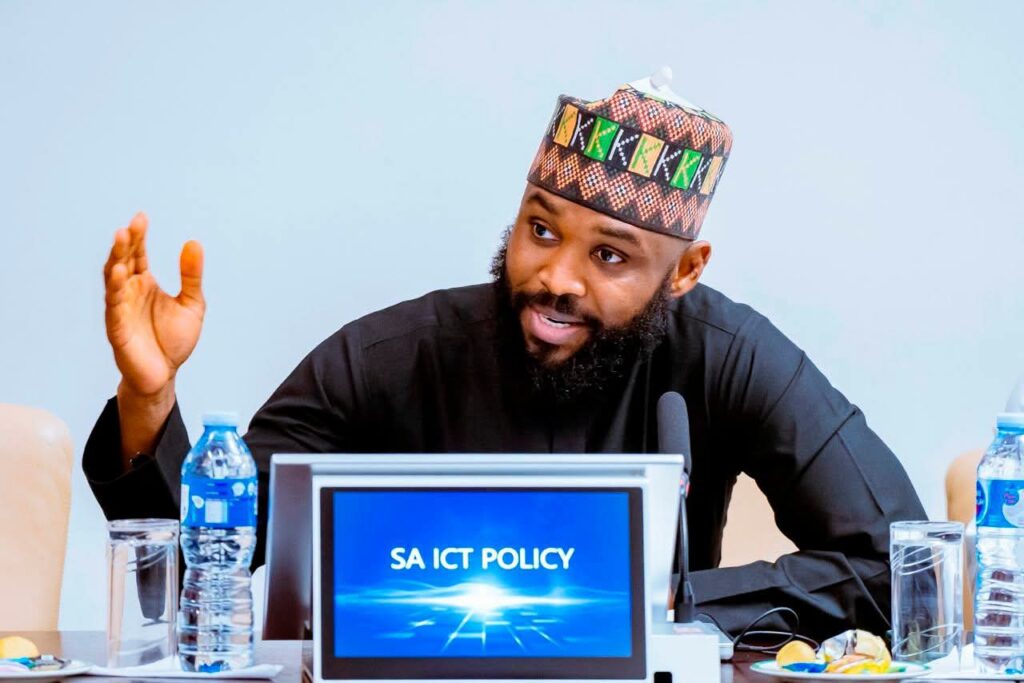
Earlier, the CEO of NIMC, Engr. Odusote, congratulated President Tinubu for signing the NIMC Bill into law, highlighting that the legislation represents a significant transformation in Nigeria’s identity ecosystem.
According to her, the development ensures that all government databases can communicate with one another while enabling citizens to interact with the government more efficiently.
Highlighting the progress made so far, the Director General stressed that the Nigerian Immigration Service now uses the National Identification Number (NIN) for the issuance and renewal of passports.
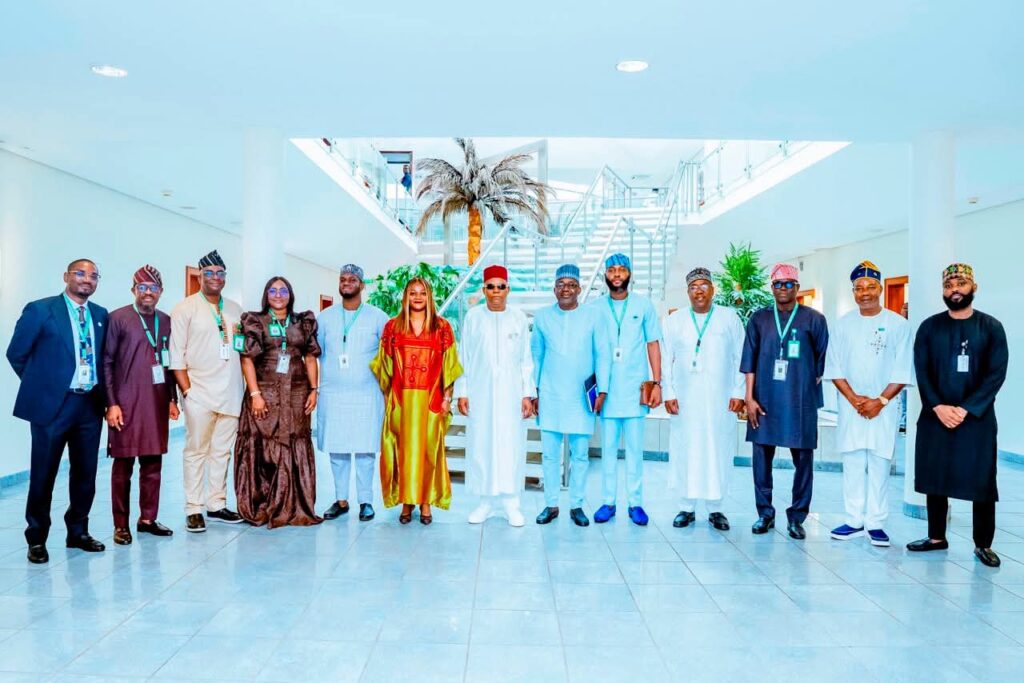
She maintained that the NIN is now the single source of truth for Nigerian identity, adding that many insurance companies, financial institutions, and public agencies are already integrated into the new national digital public infrastructure.
The NIMC Act 2026 was signed into law by President Tinubu to activate the transition of Nigeria’s identity framework from the restrictive 2007 Act to a modern, sovereign digital public infrastructure (DPI) that secures national control over digital trust infrastructure and reduces foreign reliance.
VP Shettima: Nigeria’s Digital Transformation Under Tinubu Unrivaled
News
Julius Berger Pushes Low-Carbon Construction, Calls for Stronger Collaboration at Future Cities Summit

Julius Berger Pushes Low-Carbon Construction, Calls for Stronger Collaboration at Future Cities Summit
By: Michael Mike
Julius Berger Nigeria Plc has called for stronger collaboration among government, academia, regulators and private sector players to accelerate the adoption of low-carbon construction practices, saying sustainable building remains critical to the development of greener and more resilient cities.
The construction giant made the call during the Future Cities Summit 2026, organised by the Green Building Council Nigeria (GBCN) in Lagos under the theme, “Building the Future: Scaling Sustainability for Greener Cities.”

The summit brought together stakeholders from across the built environment to examine practical strategies for promoting sustainable construction, improving urban resilience and driving Nigeria’s transition to environmentally friendly cities.
Representing Julius Berger on the second and final day of the event, the company’s Regional Manager, Engr. Thomas Christl, participated as a panellist during a plenary session titled, “Materials, Methods, and Margins: Low Carbon Construction Constraints and Opportunities.” The company’s Chief Risk Officer, Mrs. Shakira Mustapha, also attended the summit.
The panel included industry leaders from Saint-Gobain Nigeria, Alitheia Capital and Enflor, with discussions focusing on the financial, technical and policy challenges slowing the adoption of sustainable building practices.
Speaking during the session, Christl identified the high initial cost of low-carbon construction as one of the biggest obstacles facing the industry. However, he argued that evaluating projects over their entire lifespan reveals substantial economic and environmental returns.
He said although sustainable buildings may require greater upfront investment, they ultimately reduce maintenance expenses, improve operational efficiency and lower energy consumption, making them more cost-effective over the long term.
Christl also advocated the wider use of recycled concrete, describing it as an important solution for reducing carbon emissions in the construction sector. According to him, reusing concrete from demolished structures would significantly cut reliance on newly manufactured materials while contributing to a circular economy.
He urged the establishment of clear regulatory standards and stronger cooperation among universities, construction firms, manufacturers and government agencies to promote the safe and widespread use of recycled concrete in Nigeria.
The Julius Berger executive further stressed that the industry’s challenge is no longer the availability of technical expertise but ensuring that research findings and emerging innovations are effectively shared across the construction value chain.

He noted that architects, engineers, contractors, procurement professionals and project owners must remain informed about advances in greener construction materials and sustainable building technologies to improve adoption.
Participants at the summit agreed that stronger partnerships involving government institutions, academia, financial organisations and the private sector would be essential to overcoming financial, technical and regulatory barriers to low-carbon construction.
Julius Berger also commended the Green Building Council Nigeria for creating a platform that encourages dialogue, innovation and knowledge sharing on sustainable urban development, describing such engagements as vital to building environmentally responsible and resilient cities for the future.
Julius Berger Pushes Low-Carbon Construction, Calls for Stronger Collaboration at Future Cities Summit

Zulum Donates Multi-Million Naira JAMB Zonal Headquarters, 500-Seat CBT Centre to Boost North-east Education

VP Shettima: Nigeria’s Digital Transformation Under Tinubu Unrivaled

Julius Berger Pushes Low-Carbon Construction, Calls for Stronger Collaboration at Future Cities Summit

Roger Federer’s Shock as DNA Results Reveal Myla and Charlene Are Not His Biological Children

THE PLIGHT OF FARIDA

FAILED COUP IN BURKINA FASO: HOW TRAORÉ NARROWLY ESCAPED ASSASSINATION PLOT AMID FOREIGN INTERFERENCE CLAIMS
-
 News2 years ago
Roger Federer’s Shock as DNA Results Reveal Myla and Charlene Are Not His Biological Children
-
Opinions4 years ago
THE PLIGHT OF FARIDA
-
 News1 year ago
FAILED COUP IN BURKINA FASO: HOW TRAORÉ NARROWLY ESCAPED ASSASSINATION PLOT AMID FOREIGN INTERFERENCE CLAIMS
-

 News2 years ago
EYN: Rev. Billi, Distortion of History, and The Living Tamarind Tree
-
 Opinions5 years ago
POLICE CHARGE ROOMS, A MINTING PRESS
-

 ACADEMICS2 years ago
A History of Biu” (2015) and The Lingering Bura-Pabir Question (1)
-

 Columns2 years ago
Army University Biu: There is certain interest, but certainly not from Borno.
-

 Politics1 year ago
2027: Why Hon. Midala Balami Must Go, as Youths in Hawul and Asikira/Uba Federal Constituency Reject ₦500,000 as Sallah Gift
