
National News
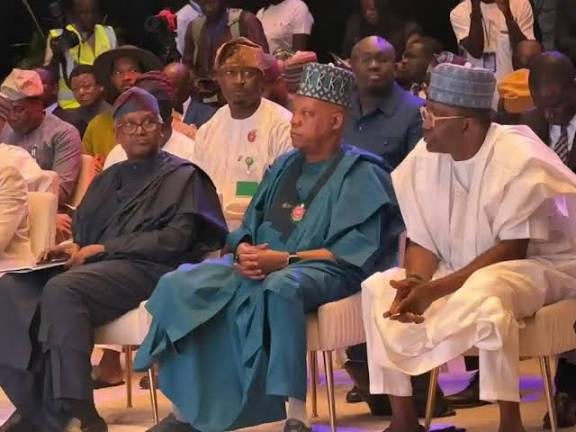
Major Boost For Education Sector As VP Shettima Launches Dangote Foundation Scholarship Initiative

Major Boost For Education Sector As VP Shettima Launches Dangote Foundation Scholarship Initiative
*Seeks more investment in education to reverse West Africa’s low human capital index
*Applauds Dangote’s ₦100bn annual education support scheme, visionary philanthropy
By: Our Reporter
The Vice President, Senator Kashim Shettima, has flagged off the Aliko Dangote Foundation Education Scholarship Initiative, with a call for stakeholders to recommit to building a future where every Nigerian child can become the best version of themselves.
This is just as the President of the Foundation, Alhaji Aliko Dangote, unveiled a ₦100 billion annual education support programme aimed at strengthening Nigeria’s educational sector and expanding access to quality learning for young people nationwide.
The programme, projected to cost ₦1 trillion over the next ten years, will support students across multiple levels through a range of targeted schemes.
Speaking on Thursday in Lagos during the launch of the education scholarship scheme, the Vice President extolled Dangote’s philanthropic stride, saying education is a burden carried by those with the knowledge of its power to transform.
“Now is the time to recommit to building a future in which every Nigerian child has a fair shot at becoming the best version of themselves. Let us live our lives so that posterity will remember us not for the offices we held or the titles we bore. Posterity must remember us for the doors we opened and the lives we transformed,” he stated.
Senator Shettima implored the private sector and corporate entities to invest in education, insisting that they must consider themselves as stakeholders in the survival of Nigeria’s education system.
Noting that there was no better time than now to confront the “consequences of demographic acceleration,” VP Shettima said, “A youthful population is a global asset only when it is educated. Without education, it becomes a threat to itself and to the nation that houses it.
“We come from a difficult history. Formal education was once treated as an intrusion. It was seen as an affliction. It was seen as a scheme to estrange children from their heritage. The residue of that suspicion, the gap that misunderstanding created, still weighs heavily upon our national progress.”
The VP pointed out that, rather than expecting a miracle or mere rhetoric to close and erase the gap created by such misunderstanding, deliberate effort must be made “to end a needless cycle of failure that has persisted for far too long.”
This, he said, inspired President Bola Ahmed Tinubu to roll out bold and far-reaching reforms, including the introduction of the Nigerian Education Loan Fund, NELFUND, to create equitable access to education for all under his watch.
“We strengthened UBEC to deepen basic education infrastructure and accountability. We expanded TETFUND’s intervention footprint to revitalise tertiary institutions. We accelerated our Technical and Vocational Education and Training programmes to reflect the needs of a new economy. We also mainstreamed digital learning as a core national priority,” he added.
The Vice President decried what he described as the “reality of West Africa as the region that now carries the burden of having the lowest Human Capital Index in the world,” stating that Nigeria must invest in education to reverse the trend.
“We must treat education as a survival strategy. This is why our administration treats the National Human Capital Development Programme as a national emergency. We are bringing states, development partners, the private sector and civil society together to reclaim our destiny,” he said
The VP described the Founder and President/CEO of the Dangote Group, Alhaji Dangote, as standing apart, saying “in a nation that has produced giants, he remains a colossus.
Applauding the 100 billion annual education support scheme, he said, “His (Dangote’s) philanthropy is not episodic. His philanthropy is structural. His philanthropy is generational. His philanthropy is visionary. He is not only the largest private employer of labour in Nigeria. He has also become the most consequential private investor in the rescue of our most critical sector, education,” he said.
Earlier, President of the Foundation, Alhaji Dangote, said the Foundation’s ₦100 billion annual education support programme will strengthen Nigeria’s educational sector and expand access to quality learning for young people nationwide, assuring that all beneficiaries will be selected through a transparent, merit-based process.
He further announced partnerships with NELFUND, NECO, WAEC, and other government agencies to ensure accountability and fairness in programme delivery, revealing that he has dedicated 25 percent of his personal wealth to the foundation, a commitment that will extend beyond his lifetime.
Also, the Minister of Education, Dr. Tunji Alausa, described the initiative as one of the most comprehensive human capital development programmes in Nigeria’s history, which aligns with the Federal Government’s education reform agenda.
Dr. Alausa also noted that 25 percent of the scholarship slots will be reserved for persons living with disabilities, calling the gesture a “humane and inclusive approach.”
In her goodwill message, United Nations Deputy Secretary-General, Amina Mohammed, commended the foundation’s investment in education, saying the expanded scholarship opportunities—particularly in Technical and Vocational Education and Training (TVET)—would create new pathways for Nigerian children.
She described investment in girls’ education as one of the most powerful tools for societal progress.
Speaking on behalf of state governors, Lagos State Governor Babajide Sanwo-Olu applauded Dangote’s commitment to the future of Nigerian youth.
He acknowledged that the Dangote Foundation has redefined philanthropy in Nigeria, just as he said state governments will work to ensure the success of the initiative, beginning with Lagos State, which has allocated 10 percent of its annual budget to education.
For his part, the Ooni of Ife, Oba Adeyeye Enitan Ogunwusi, Ojaja II, commended Dangote for the initiative, even as he encouraged him to continue championing efforts that improve the lives of Nigerians.
On his part, the Emir of Lafia and Chairman of the Steering Committee of the Aliko Dangote Foundation, Justice Sidi Bage (rtd), pledged the committee’s dedication to ensuring the initiative’s success.
He noted that the long-term multiplier effect of the foundation’s education interventions would significantly strengthen Nigeria’s human capital over the next decade and beyond.
The high point of the event was the unveiling of the vision 2030 100 billion dollar logo of the Dangote Foundation.
Major Boost For Education Sector As VP Shettima Launches Dangote Foundation Scholarship Initiative


Nigeria, IEA Solidify Partnership, Sign Pact On Energy Policy, Security
**It’s a justification of President Tinubu’s policy choices, gains of his economic reforms – VP Shettima
By: Our Reporter
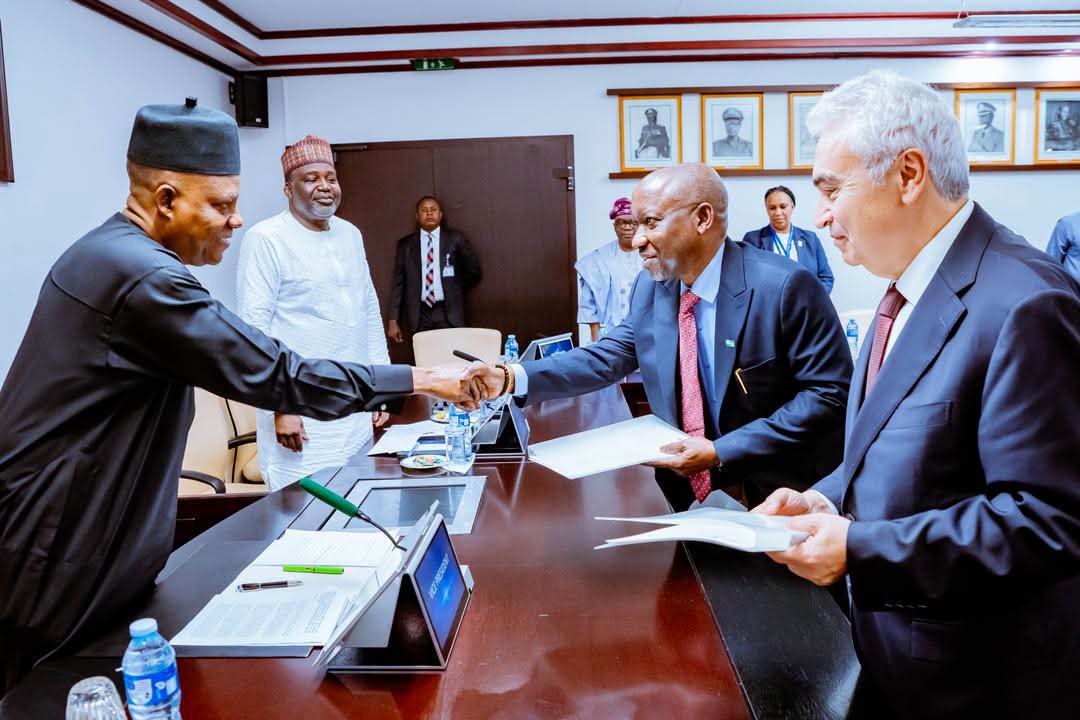
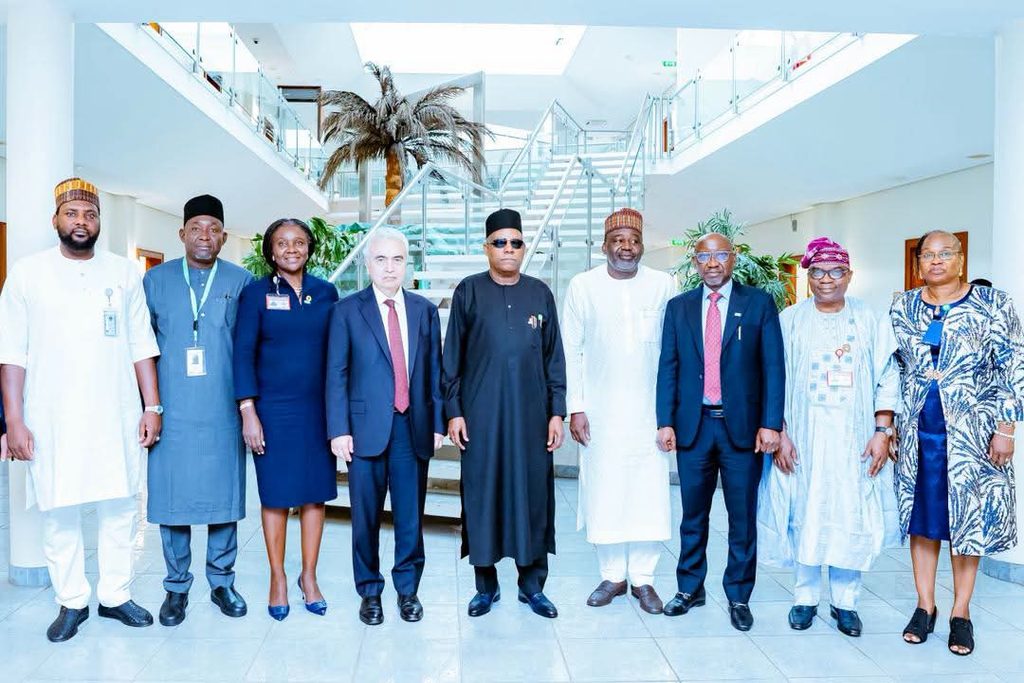
Nigeria and the International Energy Agency (IEA) have signed an agreement for a Joint Work Programme to strengthen strategic partnership in the development of data for energy policy and investment across the value chain for economic growth and energy security.
This is just as the Vice President, Senator Kashim Shettima, has said Nigeria’s formal admission into the IEA as an Association Country is a significant milestone for the country and another testament to the gains of the economic reforms of the administration of President Bola Ahmed Tinubu.
Senator Shettima stated this on Thursday during the signing of the agreement for the Joint Work Programme between Nigeria and IEA, signaling the formal commencement of the partnership.
Speaking on behalf of President Tinubu, the Vice President noted that Nigeria’s formal entry into the fold of the Paris-based non-governmental organisation justifies his administration’s policy choices and efforts aimed at leveraging the country’s abundant energy resources scattered across the nation.
Commending the IEA for the important role it is playing in shaping global energy landscape, he said the effort of the agency in the global energy conversation and in supporting countries to navigate the challenges of energy security, affordability, sustainability and economic development, cannot be overstated.
His words: “Nigeria’s admission as an association country with the IEA is a significant milestone for our country and it reflects Nigeria’s strategic importance in the global energy landscape and the confidence that IEA has placed in our commitment to constructive international energy cooperation.”
VP Shettima added that given Nigeria’s potential, “the country will benefit from IEA’s institutional knowledge, the intellectual resources, the reach and expertise to support our nation’s ambitions in this sector.”
He acknowledged Nigeria’s abundant renewable energy resources and his commitment to repositioning the economy leveraging available resources which are already manifesting across different sectors of the economy.
The Vice President assured the IEA team of his administration’s commitment to continue to partner with other stakeholders within the setting to contribute to the global energy debate on a fair and just energy transition.
Earlier, leader of the IEA delegation, Dr. Fatih Birol explained that his organisation is an organisation of governments that covers all technological fields, including oil, gas, solar, nuclear power, artificial intelligence and electric cars based in Paris.
Working with top 500 energy experts of the world in terms of giving policy advice, sharing data and expertise, he said to be a member of the IEA family is not an easy task, as it requires a lot of considerations and tests.
According to Dr. Birol, after detailed discussions with the Minister of State for Petroleum and Gas, Mr. Ekperikpe Ekpo, the Board comprising the governments of the United States, Japan, Germany, Italy, and UK voted and accepted Nigeria unanimously as a member.
“The IEA will accompany the Nigerian energy sector for the next few years to come for a much better energy future. We will provide policy advice from clean cooking to gas markets, from gas markets to training Nigerian experts at the IEA on our own,” he assured.
Earlier, Minister of State Petroleum Resources (Gas), Mr Ekperikpe Ekpo, stressed that Nigeria’s admittance into the IEA was based on the performance of the Tinubu administration reflected in the reforms undertaken in the economy.
He said the signing of the Joint Work Programme, which portends the involvement of the technical team of the IEA with Nigeria in the development of data for energy policy and investment across the value chain and targeted for economic growth and energy security.
On his part, the Minister of State for Foreign Affairs, Ambassador Sola Enikanoaiye, described IEA’s partnership with Nigeria as strategically important, noting that the Nigerian Mission in Paris played a critical role in ensuring its success.
Pledging the commitment of the Minister of Foreign Affairs, Mrs. Bianca Odumegwu-Ojukwu, towards the process, “Our role is to ensure that whatever government does at home is projected effectively in advancing and promoting the interest of Nigeria.
“We take this as a critical component of our national interest and we will not fail in ensuring that we assist, as facilitators and coordinators, in ensuring that the maximum benefit of this endeavor is derived for the benefit of the Nigerian people.”
Also, the Director General of Energy Commission of Nigeria, Dr. Mustapha Abdullahi, said the Commission’s relationship with IEA led to the joint sponsorship of Nigeria’s last National Energy Master Plan, even though there was no structure to their relationship.
He expressed optimism that Nigeria’s formal joining of the IEA and the agreement will strengthen the Commission’s relationship with the organisation.
Nigeria, IEA Solidify Partnership, Sign Pact On Energy Policy, Security

60th Birthday: VP Shettima Opts For Low-Key Celebration
By: Our Reporter
As Vice President Kashim Shettima marks his 60th birthday on September 2, 2026, he has appealed to friends, associates and well-wishers to refrain from placing congratulatory advertisements in newspapers or airing celebratory messages on radio, television and digital platforms.
VP Shettima said his decision to keep the milestone low-key reflects his conviction that public attention should remain focused on the serious work of national development rather than on personal celebrations.
“To ensure absolute propriety, I respectfully appeal that there should be no public birthday celebrations, congratulatory gatherings or goodwill advertorials across print, broadcast and digital media platforms,” the Vice President said.
Rather than celebrate him through elaborate events or paid advertisements, VP Shettima urged well-wishers to channel their goodwill into prayers for Nigeria and for the administration of President Bola Ahmed Tinubu.
He specifically called for prayers for the success of the administration’s economic reforms, lasting solutions to the nation’s security challenges, greater national unity, and the peace and prosperity of all Nigerians.
For VP Shettima, the occasion should serve less as a celebration of a personal milestone and more as an opportunity for reflection, gratitude and renewed commitment to the service of the country.
60th Birthday: VP Shettima Opts For Low-Key Celebration

NHRC Demands Arrest, Prosecution of Kuje Chairman Over ‘Leave If Not APC’ Threat
By: Michael Mike
The National Human Rights Commission (NHRC) has demanded the immediate arrest and prosecution of the Chairman of Kuje Area Council, Hon. Samuel Danjuma Shekwolo, over his alleged directive that residents who do not support the All Progressives Congress (APC) should leave the council.
The Commission described the chairman’s remarks as an unconstitutional assault on citizens’ fundamental rights and a dangerous threat to democratic participation ahead of the 2027 general elections.
The NHRC Executive Secretary, Chief Tony Ojukwu, SAN, said the statement, which has circulated in a video online, amounted to intimidation and an attempt to weaponise public office against citizens holding political views different from those of the council chairman.
In a video that is now viral, Shekwolo is heard saying that residents must either support the APC or leave the area council, adding that he would not accept opposition to the party during the election.
Reacting to the development, Ojukwu said the position was incompatible with the 1999 Constitution, which guarantees citizens’ freedom of association, movement and protection from discrimination on the basis of political opinion.
He specifically cited Sections 40, 41 and 42 of the Constitution, which respectively protect the right to freedom of association, freedom of movement and freedom from discrimination.
According to him, no council chairman, governor or even the President has the constitutional power to banish Nigerians from their communities because of their political affiliation or opinions.
The NHRC chief human rights officer further argued that the alleged remarks could have criminal implications, citing provisions of the Electoral Act 2022, the Penal Code and the Cybercrimes Act dealing with threats, intimidation, incitement and communications capable of causing public disorder.
He warned that political rhetoric that creates an “us versus them” environment could escalate into violence, particularly as the country approaches another highly contested election cycle.
“History has shown that such rhetoric often begins with words and ends in blood, and the NHRC will therefore not wait for it to escalate,” Ojukwu said.
The Commission also rejected any suggestion that federal or FCT government projects should be used as instruments for securing political loyalty.
Ojukwu maintained that Shekwolo, having sworn an oath of office, was bound to serve every resident of Kuje without discrimination, regardless of political affiliation.
The NHRC consequently called on the Nigeria Police Force to immediately arrest and prosecute the council chairman.
It also urged the Department of State Services (DSS), the police and the Independent National Electoral Commission (INEC) to investigate the matter and introduce measures to protect Kuje residents from harassment, political profiling, intimidation or possible disenfranchisement ahead of the 2027 elections.
The Commission further called on the APC leadership and the FCT Administration to publicly dissociate themselves from the alleged statement and affirm that membership or support for any political party cannot be a condition for residing in Kuje or accessing public services.
The NHRC assured residents of Kuje that their constitutional rights remain protected and stressed that Nigerians are free to belong to any political party of their choice without fear of expulsion, discrimination or denial of public services.
It urged anyone facing threats or intimidation in connection with the controversy to contact the Commission through its toll-free line, 6472, or visit its nearest FCT office.
The controversy comes at a politically sensitive period as parties and political actors intensify mobilisation ahead of the 2027 general elections, raising fresh concerns over the use of public institutions and local government structures to exert political pressure on citizens.
NHRC Demands Arrest, Prosecution of Kuje Chairman Over ‘Leave If Not APC’ Threat

Troops foil cattle rustling, recover over 500 cattle in Kaduna

Sudan war spills into Chad, Nigeria emerges as critical buffer against widening Sahel insecurity

Côte d’Ivoire authorities dismantle illegal gold mining site, arrest 16 in Toumodi

Roger Federer’s Shock as DNA Results Reveal Myla and Charlene Are Not His Biological Children

THE PLIGHT OF FARIDA

FAILED COUP IN BURKINA FASO: HOW TRAORÉ NARROWLY ESCAPED ASSASSINATION PLOT AMID FOREIGN INTERFERENCE CLAIMS
-
 News2 years ago
Roger Federer’s Shock as DNA Results Reveal Myla and Charlene Are Not His Biological Children
-
Opinions5 years ago
THE PLIGHT OF FARIDA
-
 News1 year ago
FAILED COUP IN BURKINA FASO: HOW TRAORÉ NARROWLY ESCAPED ASSASSINATION PLOT AMID FOREIGN INTERFERENCE CLAIMS
-

 News2 years ago
EYN: Rev. Billi, Distortion of History, and The Living Tamarind Tree
-
 Opinions5 years ago
POLICE CHARGE ROOMS, A MINTING PRESS
-

 ACADEMICS3 years ago
A History of Biu” (2015) and The Lingering Bura-Pabir Question (1)
-

 Columns3 years ago
Army University Biu: There is certain interest, but certainly not from Borno.
-

 Politics1 year ago
2027: Why Hon. Midala Balami Must Go, as Youths in Hawul and Asikira/Uba Federal Constituency Reject ₦500,000 as Sallah Gift
