
News
Mangu Carnage: Defense HQ Blows hot and vows to go after anyone who destroys the reputation of the Nigerian military.

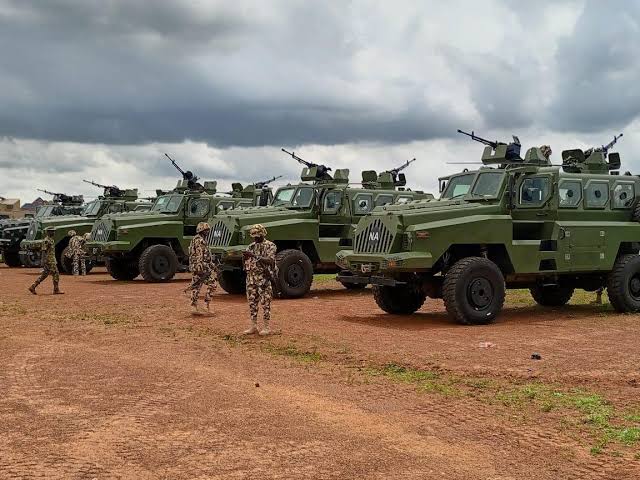
Mangu Carnage: Defense HQ Blows hot and vows to go after anyone who destroys the reputation of the Nigerian military.
By: Bodunrin Kayode
The defense headquarters have described the allegations of the CAN chair of Mangu in Plateau State as baseless and untrue.
A release signed by the spokesman of the Defense Headquarters, Brigadier General Tukur Gusau, stated that a video released by the man of God was meant to malign the image of the entire military and that it was done in bad faith.
The release stated that “the attention of the Defense Headquarters (DHQ) has been drawn to a malicious video made by the Chairman of the Christian Association of Nigeria (CAN) Mangu Chapter, Reverend Timothy Daluk.
“The video has been circulating in the media, aiming to malign military personnel deployed to address the security challenges in the Mangu general area.
“The video made baseless and untrue accusations, claiming that the military is biased and supports a particular group against others.
“We categorically state that these accusations hold no truth, are malicious, and lack any reasonable foundation.
“It is important to recall that on January 23, 2024, there was a breach of security in the Mangu municipal area, resulting in the Government of Plateau State declaring a 24-hour curfew.
“Troops of Operation SAFE HAVEN were reinforced in Mangu to enforce the curfew and bring the situation under control, thereby preventing its spread to other areas.
“The troops have carried out their duties professionally and in accordance with the rules of engagement.
“They have successfully arrested criminals involved in looting and burning properties, as well as recovered weapons.
“It is deeply disturbing that a religious leader, who is expected to demonstrate high levels of moral judgment and truthfulness, has resorted to spreading falsehoods about the military and its personnel.
“We want to reiterate that the military remains neutral, focused, professional, and committed to its constitutional role of protecting the lives and property of law-abiding citizens.”
The release made available to newsmen on Thursday in Abuja further stated that the military will deal with anybody found disobeying the law without bias or prejudice.
It called on the public to support the ongoing military operations aimed at decimating non-state actors operating in the troubled areas of the state, adding that they will not be distracted by baseless accusations but will rather remain steadfast in their commitment to restoring peace and security.
It went on: “We strongly caution individuals involved in making malicious comments against the military to cease such acts. Henceforth, any person found spreading falsehoods will face constitutional redress, regardless of their status in society.
“We sincerely appreciate the law-abiding citizens’ support and cooperation and assure the public of our unwavering dedication to preserving peace and security in the country.” the release posited
Video clip by the Mangu CAN chair
In the video making the rounds on social media, the Chairman of the Christian Association of Nigeria in the Mangu council area, Rev. Samson Daluk, has vowed to mobilize his people against the bandits on a killing spree against residents.
In the video clip made viral on Wednesday, he decried what he described as special treatment for the non-Christians who are allowed to move around while the Christians are restricted by the curfew, which he said was against human justice.
He said that the troops posted to take care of the Mangu enclave have been watching while the bandits ransack Mangu, which is the home town of the sitting governor of the state, Caleb Mutfwang.
The CAN boss alleged that the military was watching while the bandit militia burned down people’s homes around Gindiri Junction and other locations, and they protected the others.
In the video, he said, “For this reason, we do not want the military anymore. They should pack and go. They have been bought to carry out what they are doing. I am calling on the entire world to come and help us. This is a dangerous plot to destabilize and finally destroy Mangu, and we will not allow it to happen.
“We have tried all we can to stop this fracas and live peacefully in our domain, but we do not understand why this torment is lingering. If the military will not protect us, we may have to organize ourselves and stop these assailants from killing our people,” he said angrily in the video clip.
The incessant escalation of this lingering ethnic cleansing on the Plateau has actually been on since September 2001 to 2007 under Gov. Joshua Dariye; from 2008 to 2015 while Baba Jonah Jang held sway; from 2015 to 2023 with Simon Lalong as chief security officer; and from 2023 till date under Caleb Mutfwang, a former council chairman now Governor.
The peculiarity of the fracas between the residents and assailants is that when each governor takes over, the bandit militias have been recorded attacking the very ancestral territories they hail from.
Jang, a retired military officer, is Birom, so the entire Birom land and Bassa were made slightly ungovernable while he held sway.
But he weathered the storm by setting up “operation Rainbow,” which maintained vigilance against the bandit militia, whose known trademark is to kill, steal, and destroy before taking over the ancestral homes of the residents.
Now it’s Caleb Mutfwang, who is governor and from Mangu, and the theater of wickedness has been moved to the Mangu Bokkos axis, where he comes from.
The military is thoroughly overstretched, being present in 34 out of 36 states in the country, where they are fighting internal challenges created by the political class, who use religion to manipulate the people.
This reporter recalls that the people of Plateau,,however,r, have vowed that they will perpetually maintain the sanctity of their state, religion, and worship God the way they know and will resist any attempt to force them into another religion known to the bandits who have seized most of their farmlands for grazing their animals after destroying their crops.
Mangu Carnage: Defense HQ Blows hot and vows to go after anyone who destroys the reputation of the Nigerian military.


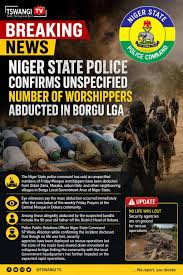
Niger Police Confirm Abduction of Friday Worshippers in Borgu
By Zagazola Makama
The Niger State Police Command has confirmed the abduction of an unspecified number of Muslim worshippers by suspected bandits in communities within Borgu Local Government Area of the state.
The incident, according to security sources and eyewitnesses, occurred on Friday shortly after the conclusion of the weekly Juma’at prayers at the Central Mosque in Dekara community.
The victims were reportedly abducted from Gidan Zana, Masaka, Sabon Gida and other neighbouring communities in the area.
Among those reportedly taken away by the armed assailants is the 90-year-old father of the District Head of Dekara, according to local sources.
Confirming the incident, the Police Public Relations Officer of the Niger State Command, SP Wasiu Abiodun, said security agencies had mobilised personnel for a rescue operation.
Abiodun said no death had been recorded in connection with the incident, while efforts were ongoing to locate the victims and apprehend the perpetrators.
He, however, disclosed that difficult terrain and poor road conditions were hampering the movement of security personnel responding to the incident.
According to him, a collapsed bridge linking the affected communities with the Borgu Local Government headquarters had further slowed down the deployment of security forces and the rescue operation.
The police spokesman said security agencies were working to overcome the logistical challenges and intensify the search for the abducted worshippers.
The latest incident has heightened concerns over the security situation in parts of Borgu, where remote communities are increasingly vulnerable to attacks and abductions by armed criminal groups.
Security sources said troops and other security personnel were expected to sustain search operations across the surrounding forests and possible escape routes used by the attackers.
The police urged residents to remain vigilant and provide security agencies with credible information that could assist in rescuing the victims and tracking down the perpetrators.
Niger Police Confirm Abduction of Friday Worshippers in Borgu
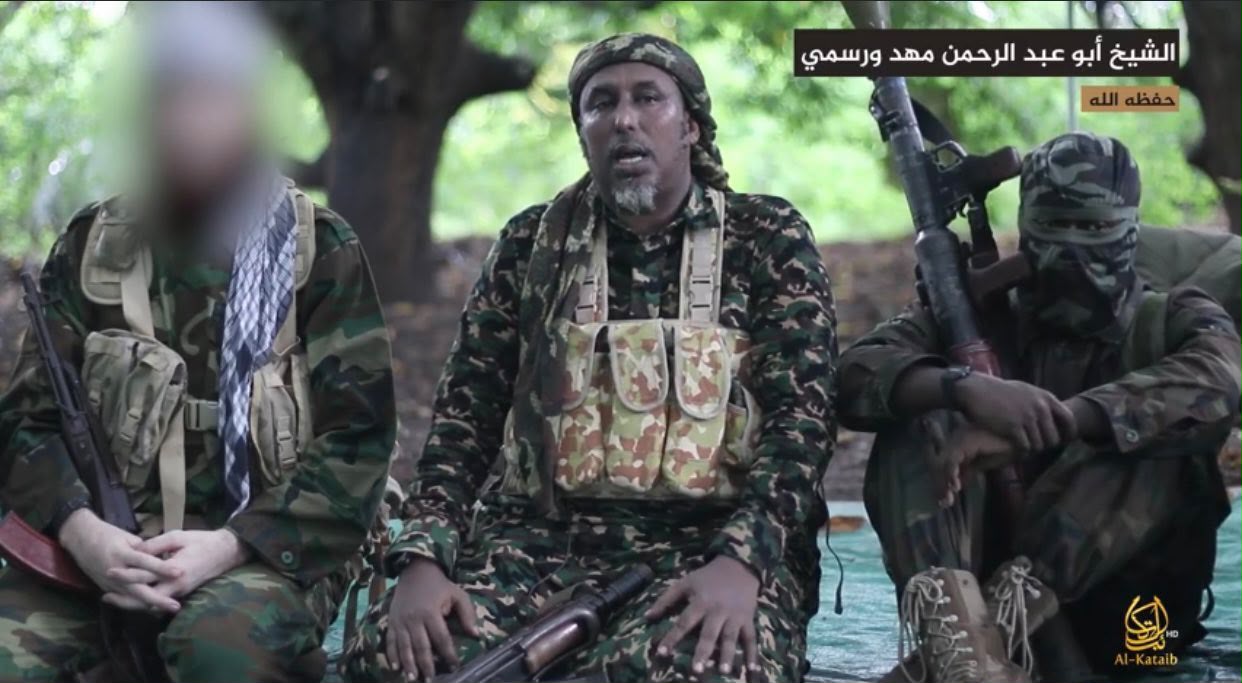
Al-Shabaab Deploys Amniyaat Operatives to Target Humanitarian Workers in Somalia
By Zagazola Makama
Intelligence sources have warned that Al-Shabaab has deployed operatives of its Amniyaat intelligence and security apparatus to parts of Somalia and neighbouring countries as part of a campaign targeting humanitarian workers and aid personnel.
According to intelligence obtained by Zagazola Makama, the terrorist group has directed its operatives to identify and target personnel working with humanitarian organisations as part of efforts to intimidate aid agencies and pressure them into complying with the group’s demands.
Sources said the development is aimed at creating fear and insecurity around humanitarian operations, particularly in areas where Al-Shabaab maintains influence or seeks to expand its control.
The group is reportedly seeking to compel humanitarian organisations to deliver assistance to communities in areas under its control, while attempting to dictate how such aid is distributed.
Intelligence indicates that Al-Shabaab wants to position itself as the de facto gatekeeper of humanitarian access, allowing the group to control the movement of aid, determine beneficiaries and potentially divert portions of humanitarian assistance for its own benefit.
Security sources said the campaign appears to be driven largely by financial considerations, with the terrorist organisation seeking to exploit humanitarian operations as another source of revenue.
By threatening aid workers and creating an atmosphere of uncertainty, the group is believed to be attempting to force humanitarian organisations to negotiate or comply with its demands in exchange for access to vulnerable populations.
The development has drawn attention over the safety of humanitarian personnel operating in Somalia and neighbouring countries, particularly in areas affected by conflict, displacement and food insecurity.
Analysts said the tactic also reflects Al-Shabaab’s broader strategy of combining coercion, taxation and control of civilian activity to sustain its insurgency and reinforce its influence over communities.
The targeting of humanitarian workers could further complicate the delivery of life-saving assistance to vulnerable populations, especially internally displaced persons and communities in areas already facing severe humanitarian challenges.
Security agencies and humanitarian organisations are therefore expected to strengthen protective measures, intelligence-sharing and risk assessment around aid operations to prevent the group from exploiting humanitarian access for financial and operational gains.
Al-Shabaab Deploys Amniyaat Operatives to Target Humanitarian Workers in Somalia
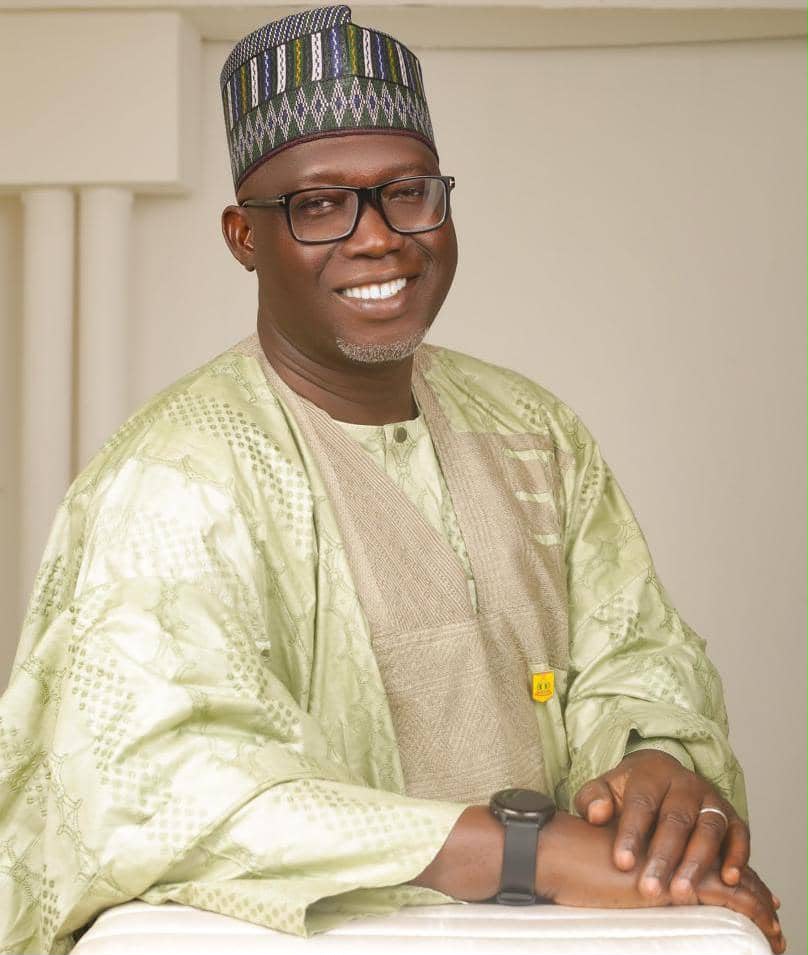
Galadima Commends Military, Security Agencies Over Rescue of 18 Kidnap Victims in Ibi
By Zagazola Makama
The Peoples Democratic Party (PDP) House of Representatives candidate for Wukari/Ibi Federal Constituency, TPL Mukhtar Usman Galadima, has commended the Nigerian military, other security agencies and the Federal Government for the successful rescue of 18 kidnapped victims in Ibi Local Government Area of Taraba State.
Galadima, reacting to reports of the rescue, described the operation as a significant demonstration of the commitment of the security forces to protecting lives and restoring peace in communities affected by criminal activities. He particularly applauded the troops of Sector 3 deployed in Ibi for responding swiftly to reports of kidnapping activities at Kwatan Bajji in the early hours of August 18, leading to the recovery of the victims.
The PDP candidate said the successful operation should reassure residents of Wukari/Ibi Federal Constituency that security forces remain committed to confronting criminal elements and protecting communities. He urged the rescued victims and their families to remain hopeful while calling on security agencies to sustain and intensify operations in vulnerable communities across the constituency and Taraba State.
Galadima, however, stressed the need for stronger inter-agency cooperation and improved intelligence-sharing among the military, police and other security and intelligence agencies. He said security operations would become more effective when relevant agencies work closely together to identify threats, track criminal networks and disrupt their activities before they are able to carry out attacks.
He also called for stronger legislation and institutional support to enhance the operational and intelligence-gathering capabilities of the Armed Forces and other security agencies. According to him, the objective should not only be to respond to kidnapping and other violent crimes after they occur, but to develop the capacity to anticipate and prevent such incidents long before they happen.
The Wukari/Ibi candidate said improved legislation, better intelligence infrastructure, modern surveillance capabilities and sustained support for security personnel would strengthen the ability of the nation’s security architecture to respond to emerging threats. He noted that protecting rural communities requires a proactive security strategy capable of detecting criminal movements and networks before they pose a danger to residents.
Galadima equally appealed to residents of Wukari/Ibi Federal Constituency to see themselves as partners in the fight against insecurity. He urged community leaders, traditional institutions, youths and residents to maintain close cooperation with security agencies and provide timely and credible information whenever they notice suspicious movements or activities.
He cautioned residents against withholding useful information out of fear or reluctance, stressing that early reporting can make the difference between preventing a crime and responding to its consequences. He also urged security agencies to protect the confidentiality of credible informants and strengthen community-based intelligence networks.
While commending the Federal Government for supporting ongoing security operations, Galadima said sustained investment in the welfare, equipment, intelligence and operational capacity of security personnel remains essential to achieving lasting peace.
He expressed optimism that with stronger collaboration between security agencies and local communities, improved legislation and greater government support, kidnapping and other forms of criminality can be significantly reduced across Wukari, Ibi and other vulnerable parts of Taraba State.
The candidate congratulated the 18 rescued victims and their families, and urged security forces not to relent until all criminal elements operating in the area are identified and brought to justice.
Galadima Commends Military, Security Agencies Over Rescue of 18 Kidnap Victims in Ibi

The Psychology of Nigerian Politicians and Voters Power, Survival, Emotion, and the Nigerian Democratic Mind

Attack on NDA Commandant: How Ruth Ogunleye’s Social Media Claims Are Colliding With the Facts

Niger Police Confirm Abduction of Friday Worshippers in Borgu

Roger Federer’s Shock as DNA Results Reveal Myla and Charlene Are Not His Biological Children

THE PLIGHT OF FARIDA

FAILED COUP IN BURKINA FASO: HOW TRAORÉ NARROWLY ESCAPED ASSASSINATION PLOT AMID FOREIGN INTERFERENCE CLAIMS
-
 News2 years ago
Roger Federer’s Shock as DNA Results Reveal Myla and Charlene Are Not His Biological Children
-
Opinions5 years ago
THE PLIGHT OF FARIDA
-
 News1 year ago
FAILED COUP IN BURKINA FASO: HOW TRAORÉ NARROWLY ESCAPED ASSASSINATION PLOT AMID FOREIGN INTERFERENCE CLAIMS
-

 News2 years ago
EYN: Rev. Billi, Distortion of History, and The Living Tamarind Tree
-
 Opinions5 years ago
POLICE CHARGE ROOMS, A MINTING PRESS
-

 ACADEMICS2 years ago
A History of Biu” (2015) and The Lingering Bura-Pabir Question (1)
-

 Columns2 years ago
Army University Biu: There is certain interest, but certainly not from Borno.
-

 Politics1 year ago
2027: Why Hon. Midala Balami Must Go, as Youths in Hawul and Asikira/Uba Federal Constituency Reject ₦500,000 as Sallah Gift
