
Politics
Mass turnout of voters, heavy security presence greet Ekiti election


Mass turnout of voters, heavy security presence greet Ekiti election
Unprecedented numbers of enthusiastic voters on Saturday thronged various polling units in different towns, villages and hamlets in Ekiti to perform their civic rights in the ongoing governorship election.
Also, there were combined security personnel on the ground to protect the lives and property in different parts of the state and as well their presence was noticed both far and near the polling centres.
At the Ekiti office of the Independent National Electoral Commission (INEC), there was a heavy presence of security agents to forestall any eventuality.
The News Agency of Nigeria (NAN), while monitoring the polling units, reported that security agents arrived at many polling units as early as 7.20 a.m.
Aside from the police, other security agencies and outfits providing security, include the Civil Defence Corps, the National Drugs Law Enforcement Agency (NDLEA) and men of the Federal Road Safety Corps (FRSC).
At some of the border towns linking Ekiti with other states, military men were strategically stationed with officers and men, keeping vigil and conducting searches on vehicle owners and occupants.
The restriction placed on human and vehicular movement during the election was strictly obeyed by residents and travellers alike, as most inter-township roads were empty.
This development compelled many voters to trek long distances to their polling units, as there were no taxi or commercial motorcycle operators to convey them.
Besides, all markets, shops and eateries were under lock and key.
Some of the places visited included Ado-Ekiti, Ikere-Ekiti, Efon-Alaaye, in Efon Local Government area Ifaki-Ekiti, the home town of Mr Segun Oni, the Governorship candidate of the Social Democratic Party (SDP).
Other areas were Ise-Ekiti, the home town of former Minister of State for Works, Dayo Adeyeye, Emure-Ekiti, Ido-Ekiti and Omuo-Ekiti, the hometown of Sen. Biodun Olujimi of the PDP and Rep. Femi Bamisile of the APC.
In many of the places visited, scores of voters were seen already in queues, waiting for the attention of the electoral officers.
Those sighted among the crowd of the enthusiastic voters include students and artisans between 18 and 20 years bracket, old people and a handful of expectant mothers.
It was observed that in most of the places, officials including ad hoc staff, deployed by INEC arrived only a few minutes after 8.00 a.m, while some of them have no chairs to sit on.
NAN reports that 16 candidates from different political parties are slugging it out in today’s election, with only a female candidate, Mrs Kemi Elebute-Halle of ADP.
Others include candidates of ACCORD, AAC, ADC, APC, APGA, APM, APO, LO, NNPP, NRM, PDP, PRP, SDP, YPP and ZLP.
According to statistics at the disposal of NAN, over 17,000 policemen were deployed for the election, with NSCDC deploying 9,747, while the army and others also deployed appreciable figures.
When contacted, Mrs Morolake Odebunmi, the Public Relations Officer of INEC, told NAN that there was nothing much to do at the INEC office this morning.


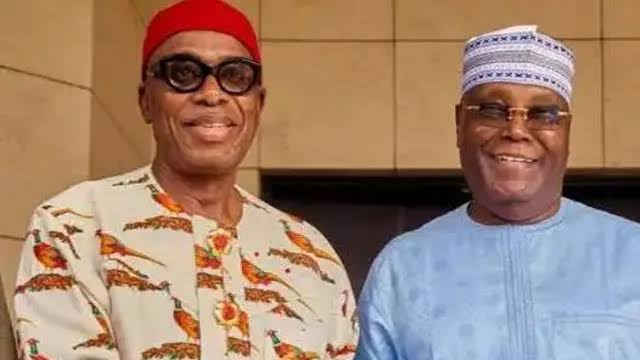
ADC PICKS RT. HON. CHIBUIKE ROTIMI AMAECHI AS ATIKU’S RUNNING MATE
By: Michael Mike
The African Democratic Congress (ADC) has picked former Rivers State Governor and former Minister of Transportation, Rt. Hon. Rotimi Amaechi, as its vice-presidential candidate for the 2027 general election, pairing him with former Vice President Atiku Abubakar on what party leaders describe as a “unity and rescue ticket.”
Announcing the decision, ADC National Publicity Secretary, Mallam Bolaji Abdullahi, said Amaechi’s emergence followed broad consultations within the party and reflected his strong performance as runner-up in the party’s presidential primaries as well as his track records of service to his State and the country.
According to the ADC, Amaechi’s extensive experience across both the legislative and executive arms of government, as former Speaker of the Rivers State House of Assembly, two-term Governor of Rivers State, and former Minister of Transportation, makes him uniquely qualified to complement Atiku’s leadership, strengthen the party’s national appeal, and bolster its campaign to offer Nigerians an experienced and credible alternative ahead of the 2027 presidential election.
The full statement read:
The National Leadership of the African Democratic Congress (ADC), after extensive consultations with party leaders, coalition partners, youth and women stakeholders, and representatives of all geopolitical zones, is proud to announce that the Rt. Hon. Chibuike Rotimi Amaechi has been selected as the Vice-Presidential Candidate of our great party for the 2027 Presidential Election.
This recommendation follows the successful conclusion of the ADC Presidential Primaries, in which Rt. Hon. Amaechi emerged as the runner-up, earning widespread support from party members across the federation and demonstrating his enduring appeal as one of Nigeria’s most experienced and respected political leaders.
The proposed partnership between His Excellency Atiku Abubakar and Rt. Hon. Rotimi Amaechi represents more than a political alliance; it is the coming together of two tested statesmen with the experience, national reach, and leadership capacity required to rescue Nigeria from its current challenges and reposition the country for a new era of prosperity, security, and inclusive development.
Rt. Hon. Amaechi brings to this ticket one of the most comprehensive public service records in contemporary Nigerian politics. His experience spans all major pillars of democratic governance. He served with distinction as Speaker of the Rivers State House of Assembly, making him one of the longest-serving legislative leaders in Nigeria’s Fourth Republic. He subsequently served two terms as Governor of Rivers State, where he oversaw significant investments in infrastructure, education, healthcare, and public sector reforms. At the national level, he served as Minister of Transportation, leading some of the most ambitious transportation and rail modernization initiatives in Nigeria’s history.
Few political leaders in Nigeria today possess such extensive and balanced experience across both the legislative and executive arms of government. This depth of experience will be invaluable in supporting the next ADC administration from day one.
Beyond his impressive credentials, Rt. Hon. Amaechi strengthens the ticket strategically. His political influence across the South-South and wider Southern Nigeria, his reputation as a reform-minded administrator, and his proven ability to build coalitions across political, ethnic, and regional lines make him uniquely positioned to complement the candidacy of Atiku Abubakar.
Together, Atiku Abubakar and Rotimi Amaechi embody a truly national ticket—one that bridges regions, generations, and political traditions. Their combined experience in governance, economic management, public administration, party organization, and nation-building offers Nigerians a credible and compelling alternative capable of restoring confidence in government and accelerating national development.
At a time when millions of Nigerians are demanding competent leadership, economic revival, job creation, security, and national unity, the Atiku-Amaechi ticket sends a clear message: the ADC is prepared to govern, prepared to unite the nation, and prepared to deliver results.
The leadership of the ADC is confident that this partnership will energize our growing coalition, inspire hope among Nigerians, and provide the leadership necessary to build a stronger, safer, and more prosperous Federal Republic of Nigeria.
The ADC therefore calls on all party members, coalition partners, civil society organizations, youth groups, women leaders, and Nigerians of goodwill to join us as we embark on this historic journey to renew our nation and secure a better future for generations to come.
Signed:
Mallam Bolaji Abdullahi
National Publicity Secretary
African Democratic Congress (ADC)
ADC PICKS RT. HON. CHIBUIKE ROTIMI AMAECHI AS ATIKU’S RUNNING MATE
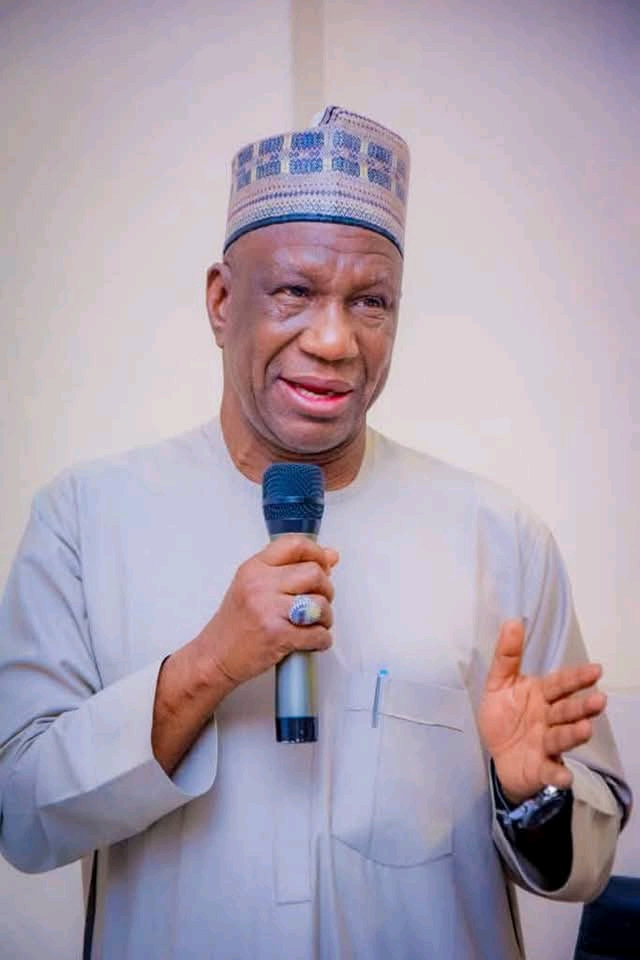
Yobe: APC guber candidate speaks on Buni’s confidence in him
By: Yahaya Wakili
The Yobe State All Progressives Congress (APC) gubernatorial candidate, Alhaji Baba Mallam Wali Fcan, mni, has revealed that His Excellency Governor Mai Mala Buni CON’s confidence in him over the years had afforded him the opportunity to serve the state as secretary to the state government for seven years.
Baba Mallam Wali mni disclosed this today when a delegation of critical stakeholders of the All Progressives Congress (APC) from the Gujba local government area paid him a congratulatory visit in Damaturu, the state capital.
He expressed profound appreciation for the visit, adding that this overwhelming visit shows solidarity and confidence in his candidacy.
According to Mallam Wali, Governor Mai Mala Buni’s confidence in him over the years had afforded him the opportunity to serve the state as secretary to the state government for seven years.
He assured the stakeholders that he would provide inclusive and participatory leadership by carrying every citizen along irrespective of political, social, or regional affiliations.
The acting secretary to the state government, who is also the son of the soil, Dr. Mohammed Goje, leading the delegation, described Alhaji Baba Mallam Wali as a seasoned administrator and accomplished public servant.
“The emergence of Mallam Wali was a well-deserved recognition of his competence, integrity, and commitment to the development of Yobe State to a greater height,” Dr. Goje said.
He assured the candidate of the continued support, loyalty, and commitment of the people of the Gujba local government area, noting that we would remain steadfast in our support for the APC and its candidate in the 2027 general elections.
Yobe: APC guber candidate speaks on Buni’s confidence in him
Politics
VP Shettima’s Invest Lagos Summit: A contest of narratives on both the Dangote and Abdulsamad empires.

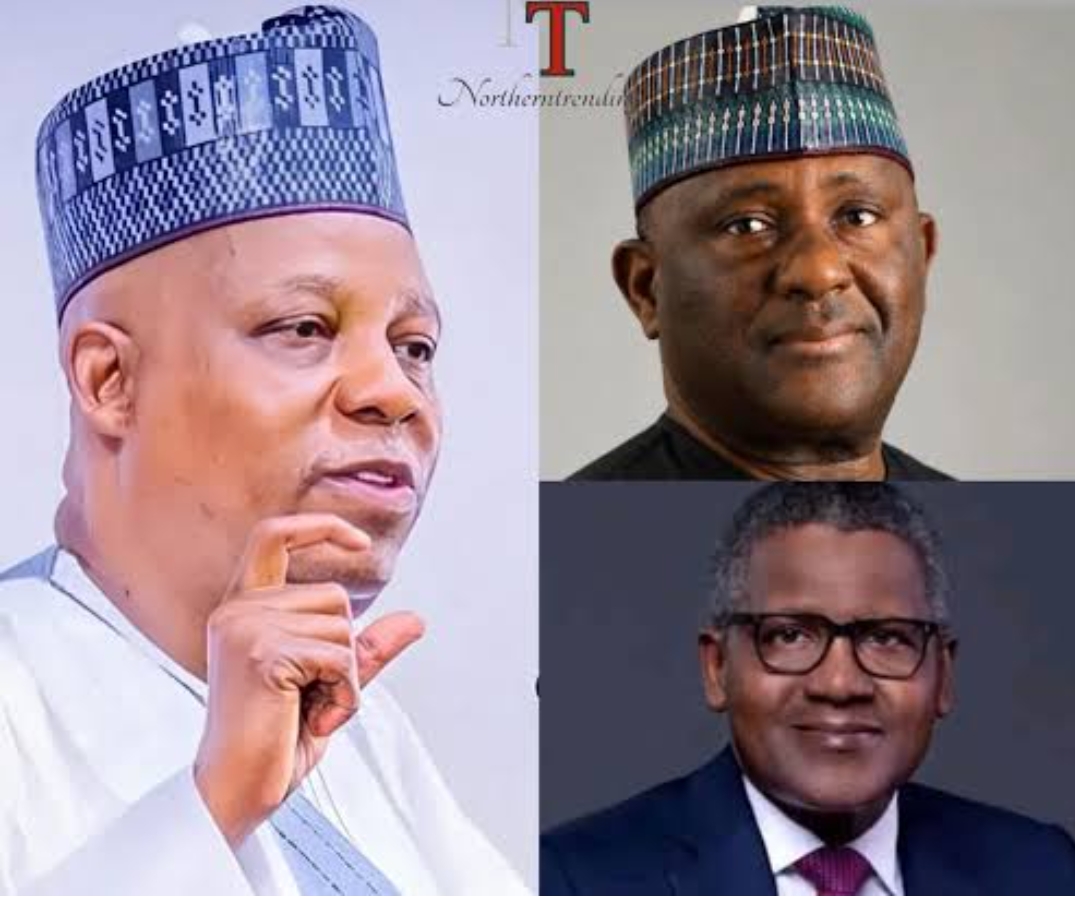
VP Shettima’s Invest Lagos Summit: A contest of narratives on both the Dangote and Abdulsamad empires.
By: Dr James Bwala
Vice President Kashim Shettima’s recent statement at the Invest Lagos Summit, which sparked significant controversy and backlash from various quarters, particularly regarding his remarks about Africa’s richest men, Aliko Dangote and Abdul Samad Rabiu. The vice president asserted that Lagos, not Kano, produced these business magnates, a comment that many interpreted as dismissive of Kano’s historical commercial significance. However, this reaction stems largely from a misinterpretation of Shettima’s words and an overlooking of the broader context in which his remarks were made. It is crucial to understand and defend the vice president’s statement, recognising the economic dynamics at play and the positive intent behind his message.
Vice President Shettima’s assertion that Lagos produced Africa’s richest men was not intended as an erasure of Kano’s rich commercial heritage or an undervaluing of the northern roots of these business icons. Instead, it was a contextual observation highlighting Lagos as the continent’s economic powerhouse and a pivotal hub where business ideas are scaled and transformed into thriving enterprises. Lagos is Africa’s largest sub-national economy, characterised by its vibrant market activities, infrastructural advantages, business-friendly policies, and an environment conducive to private sector growth. This city has historically served as a furnace where entrepreneurial ambitions find fertile ground to flourish and expand. Shettima’s point was that while the initial entrepreneurial instincts and businesses may have originated elsewhere, including Kano, it is within Lagos that these ventures matured into the colossal economic entities they are today.
READ ALSO: https://newsng.ng/radical-approach-ways-of-ending-the-menace-of-insecurity-in-nigeria/
The backlash, particularly from northern commentators and traditional leaders like Emir Muhammadu Sanusi II of Kano, reflects a common regional sensitivity towards identity and recognition. The Emir’s response centred on Kano’s longstanding reputation as a “centre of commerce”, emphasising the city’s role in shaping fundamental entrepreneurial skills and traditions inherited by figures like Dangote and Rabiu. While this perspective honours Kano’s historic significance, it inadvertently overlooks the nuance in Shettima’s statement—that the vice president did not deny Kano’s foundational influence but instead underscored Lagos’s role in providing a strategic platform for growth and scaling operations. The criticism arises from conflating birthplace or origin with the locus of economic success. Recognising Lagos as the city where these businesses “came to the limelight” is not a negation of their roots but an acknowledgement of pragmatic economic realities.
Shettima’s remarks must be viewed through the lens of economic pragmatism rather than political rivalry or regional contestation. Lagos has been, and remains, Nigeria’s commercial nerve centre and a critical node in Africa’s trade and investment networks. Its infrastructure, regulatory frameworks, access to ports, financial markets, and international connectivity create unique advantages that entrepreneurs can leverage to multiply their wealth and impact. Both Aliko Dangote and Abdul Samad Rabiu have attested to the enabling environment provided by Lagos State governments, which implemented policies fostering private-sector investments surpassing $30 billion. These acknowledgements underscore the integral role Lagos played in their skyrocketing success, validating Shettima’s emphasis on Lagos’s contributions without negating Kano’s entrepreneurial legacy.
READ ALSO: https://newsng.ng/radical-approach-ways-of-ending-the-menace-of-insecurity-in-nigeria/
It is also imperative to contextualise the timing and nature of the criticism directed at the vice president. Notably, some individuals and groups who vociferously objected to Shettima’s Lagos-centric remarks had remained conspicuously silent during other contentious moments, such as when the vice president defended the Dangote Refinery amid an industrial dispute with the Petroleum and Natural Gas Senior Staff Association of Nigeria (PENGASSAN) in late 2025. During that dispute, Shettima described Dangote as an “institution” deserving protection, a stance that drew criticism from labour unions but highlighted his consistent recognition of the vital role played by business leaders in Nigeria’s economic fabric. This selective outrage suggests that the current backlash is less about objective critique and more about entrenched regional loyalties or political manoeuvring as learnt in political communications.
The misrepresentation of Kashim Shettima’s position reveals a broader challenge in Nigerian public discourse—a tendency to pre-emptively judge and politicise statements without engaging with their substance or intent. The eagerness to attack the vice president before fully understanding the context exemplifies a mindset that undermines balanced evaluation and constructive debate. Instead of appreciating the VP’s highlighting of Lagos as an epicentre of enterprise and resilience, detractors have chosen to ignite divisive sentiments that distract from economic cooperation and national unity. This pattern of reaction fuels unnecessary regional tensions, which ultimately hinder the country’s collective progress.
READ ALSO: https://newsng.ng/radical-approach-ways-of-ending-the-menace-of-insecurity-in-nigeria/
From a professional standpoint, it is essential to champion nuanced communication and responsible leadership. Vice President Shettima’s remarks align with an economic truth that transcends parochial interests: that success in business often requires not just ingenuity and grit but access to supportive environments where ideas can scale. Nurturing such hubs—like Lagos—is vital for Nigeria’s sustained development and global competitiveness. Recognising and celebrating Lagos’s role, therefore, should not be viewed as an affront to other regions but as a call to replicate such enabling conditions nationwide. Every region, including Kano, must strive to provide similar platforms to nurture and propel their homegrown talents and enterprises.
Vice President Kashim Shettima’s comments at the Invest Lagos Summit were a factual, context-driven affirmation of Lagos’s status as Africa’s premier economic hub, where entrepreneurial ventures achieve their full potential. His statement was neither dismissive of Kano’s historic commercial contributions nor an attempt to diminish the foundational roles played by northern business traditions. Instead, it was a candid recognition of Lagos’s unique capacity to nurture and elevate business successes on an unprecedented scale. The vehement backlash—fueled by misinterpretation and regional sensitivities—serves as a reminder of the need for careful listening, thoughtful analysis, and avoidance of partisan attacks in national conversations. As Nigerians, we can foster unity and propel the country towards inclusive prosperity by embracing diverse pathways to success and acknowledging the layered realities of economic growth. Future critiques should engage constructively with leaders’ insights, considering both intent and context before passing judgements. Only through such mature discourse can Nigeria harness its full economic potential and build a harmonious, thriving society.
* James Bwala, PhD, writes from Abuja.
VP Shettima’s Invest Lagos Summit: A contest of narratives on both the Dangote and Abdulsamad empires.

AMF Celebrate the African Child: Building Foundations for Dreams, Learning, and Leadership

Is Zagazola Makama now siding with Plateau people?

A New Dawn for Nigeria’s Power Sector: Minister Tegbe’s Brilliant Start

Roger Federer’s Shock as DNA Results Reveal Myla and Charlene Are Not His Biological Children

THE PLIGHT OF FARIDA

FAILED COUP IN BURKINA FASO: HOW TRAORÉ NARROWLY ESCAPED ASSASSINATION PLOT AMID FOREIGN INTERFERENCE CLAIMS
-
 News2 years ago
Roger Federer’s Shock as DNA Results Reveal Myla and Charlene Are Not His Biological Children
-
Opinions4 years ago
THE PLIGHT OF FARIDA
-
 News1 year ago
FAILED COUP IN BURKINA FASO: HOW TRAORÉ NARROWLY ESCAPED ASSASSINATION PLOT AMID FOREIGN INTERFERENCE CLAIMS
-

 News2 years ago
EYN: Rev. Billi, Distortion of History, and The Living Tamarind Tree
-
 Opinions5 years ago
POLICE CHARGE ROOMS, A MINTING PRESS
-

 ACADEMICS2 years ago
A History of Biu” (2015) and The Lingering Bura-Pabir Question (1)
-

 Columns2 years ago
Army University Biu: There is certain interest, but certainly not from Borno.
-

 Politics1 year ago
2027: Why Hon. Midala Balami Must Go, as Youths in Hawul and Asikira/Uba Federal Constituency Reject ₦500,000 as Sallah Gift
