
News
MASSIVE BREAKTHROUGH: TROOPS DEACTIVATE ILLEGAL BUNKERING SANCTUARIES, RECOVER OVER 1.2 MILLION LITRES OF STOLEN PRODUCTS

MASSIVE BREAKTHROUGH: TROOPS DEACTIVATE ILLEGAL BUNKERING SANCTUARIES, RECOVER OVER 1.2 MILLION LITRES OF STOLEN PRODUCTS
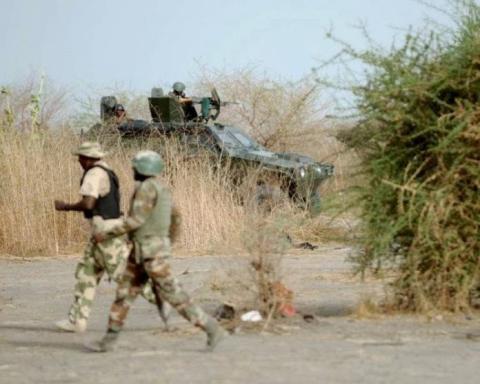
Troops of 6 Division, Nigerian Army in conjunction with other security agencies have increased the rhythm of the ongoing anti illegal bunkering operations across the Niger Delta Region, with visible operational footprints. The operations which were conducted from 25 November – 1 December 2024 led to the deactivation of over 56 illegal oil bunkering sanctuaries, 88 cooking drums, 20 boats as well as the recovery of over 1.2 Million litres of stolen crude. Others included the arrest of 17 suspected oil thieves, interception of seven vehicles, discovery of six illegal connection points and destruction of five motorcycles used for perpetrating economic sabotage across the region.
In Bayelsa State, at an abandoned Oando wellhead situated in Okordia Forest, Yenagoa Local Government Area (LGA), 15 illegal refining sites were deactivated with over 755,000 litres of stolen crude as well as over 53,000 litres of illegally refined Automotive Gas Oil (AGO) recovered. Similarly, around Biseni Forest also in Yenagoa LGA, 12 illegal refining sites with over 34,000 litres of stolen crude as well 5,500 litres of illegally refined AGO were confiscated.
In a related development in Rivers State, around Kula I, general area in Akuku-Toru LGA, troops discovered one illegal connection on 36 inches Government pipeline, with three inches hose connected on it, used as a loading point by oil thieves. This was in addition to a ground reservoir of 80 by 80 tarpaulin stocked with over 100,000 litres of stolen products recovered during the operations. The operation was also extended to Omoku, Ogba/Egbema/Ndoni LGA, where an abandoned truck ladened with 35,000 litres of stolen crude stocked in a fabricated tank and concealed with bags of sawdust was uncovered. Relatedly, around Bakana and Buguma general area in Degema LGA, eight illegal refining sites with over 27,000 litres of stolen crude were confiscated. Three wooden boats, one fibre speed boat, several pots of different sizes, two receiver containing AGO and a local boat with over 12,000 litres of stolen were intercepted. The operation also led to the arrest of three suspected oil thieves in connection to the economic sabotage.
Also in Bukuma community in Degema LGA, one illegal refining site, a reservoir with over 5,000 litres of stolen crude was dismantled. While, at Imo River, eleven illegal refining sites, 88 cooking drums, 26 metal container receivers, 14 plastic tanks, eleven boats, four pumping machines with over 42, 500 litres of stolen crude were recovered with three suspects arrested. Around Obiafu Oil Field, several vehicles were intercepted with over 5500 litres of stolen products recovered.
Similarly, in Delta State, troops pursued economic saboteurs to Ugo Community in Orhionwon LGA of Edo State, where one suspected oil thief was arrested. He subsequently led troops to a bunkering site. Enroute the site, troops discovered a stationary Toyota Sequoia Jeep with Reg No Edo WWR 896 JU, loaded with sacks meant for stealing products. Further combing of the area, led to the discovery of a storage filled with stolen crude as well as over 200 sacks filled with over 40,000 litres of stolen products. At Yeye general area in Warri South LGA, one active illegal refining site, two ovens containing substance suspected to be over 2,000 liters illegally refined AGO were confiscated. Additionally, one Yamaha outboard engine with four suspected oil thieves arrested. While in Akwa Ibom, troops acting on credible intelligence, intercepted several drums of estimated to be over 5,580 litres of petroleum motor spirit at Enwang Bridge in Mbo LGA. The products were being prepared for onwa TVrd smuggling to a neighbouring country.
The General Officer Commanding, 6 Division, Nigerian Army, Major General Jamal Abdussalam, while commending troops for the huge operational successes recorded, reassured that the ongoing onslaught against illegal oil bunkering would be sustained. This, he averred is aimed at securing all critical national infrastructures within the Division’s Area of Responsibility.
DANJUMA JONAH DANJUMA
Lieutenant Colonel
Acting Deputy Director
6 Division Army Public Relations
1 December 2024


Troops Arrest Suspected Military Impostor in Katsina
By Zagazola Makama
Troops of 17 Brigade have arrested a suspected military impostor during a fighting patrol in Malumfashi Local Government Area.
Security sources told Zagazola Makama that the suspect was apprehended at about 1:30 p.m. on July 4 by troops deployed at the Forward Operating Base (FOB) Malumfashi while conducting routine patrols within Malumfashi town.

According to the sources, the suspect was intercepted while wearing a woodland camouflage three-quarter short, raising suspicion among the troops.
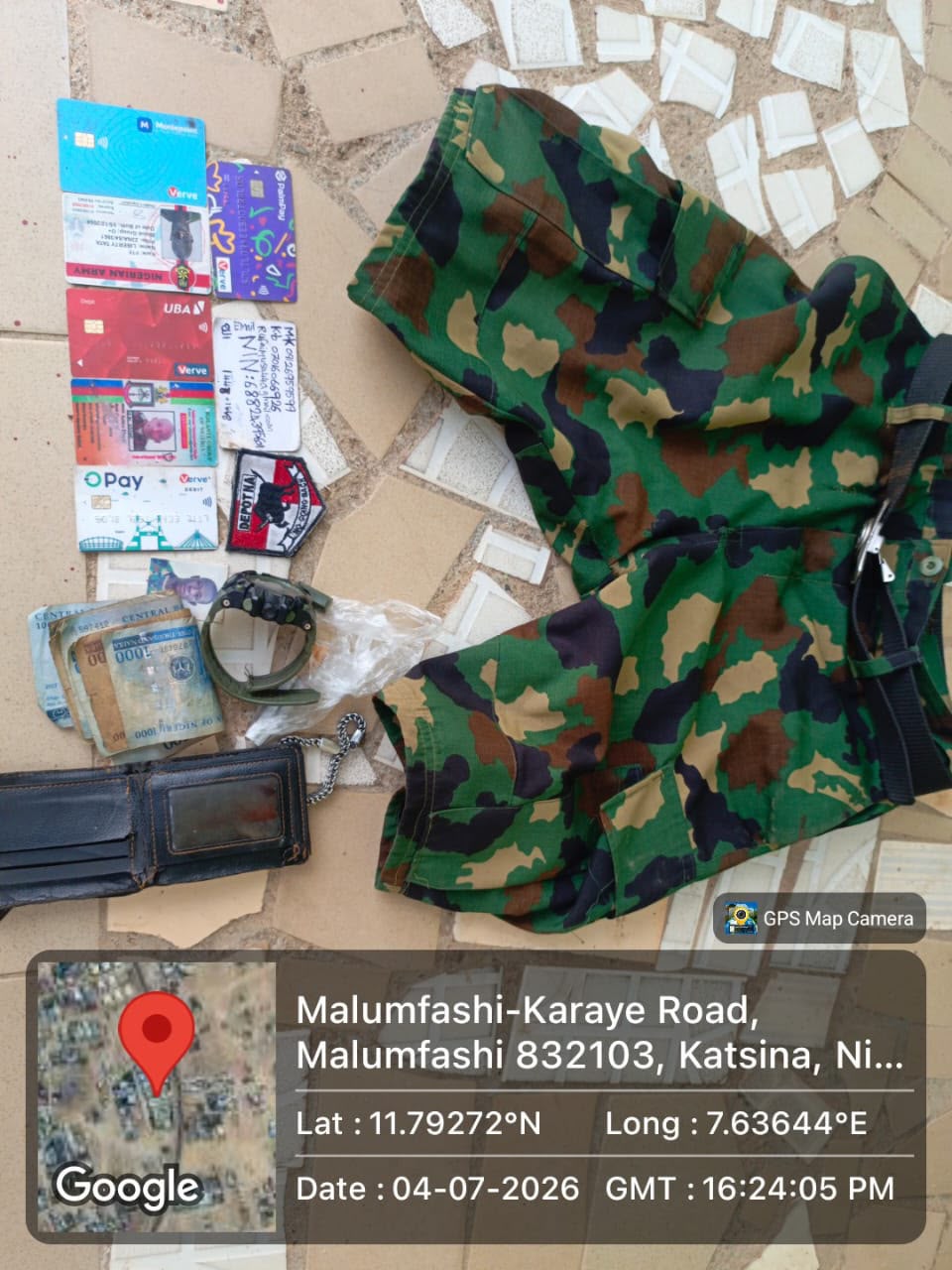
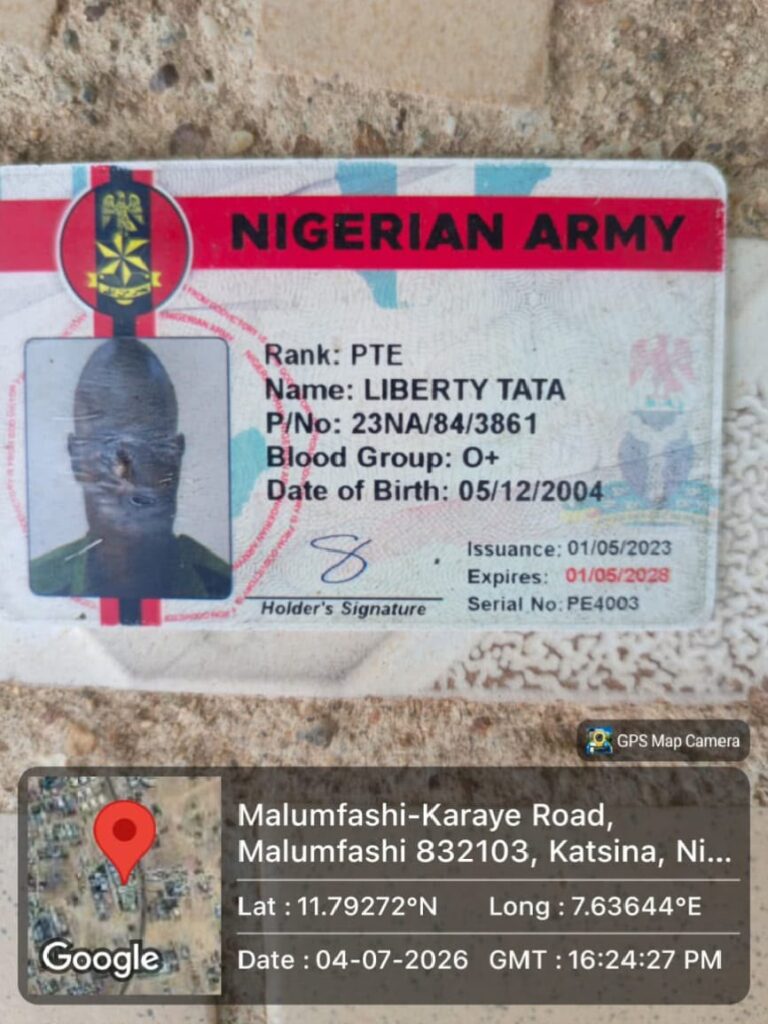
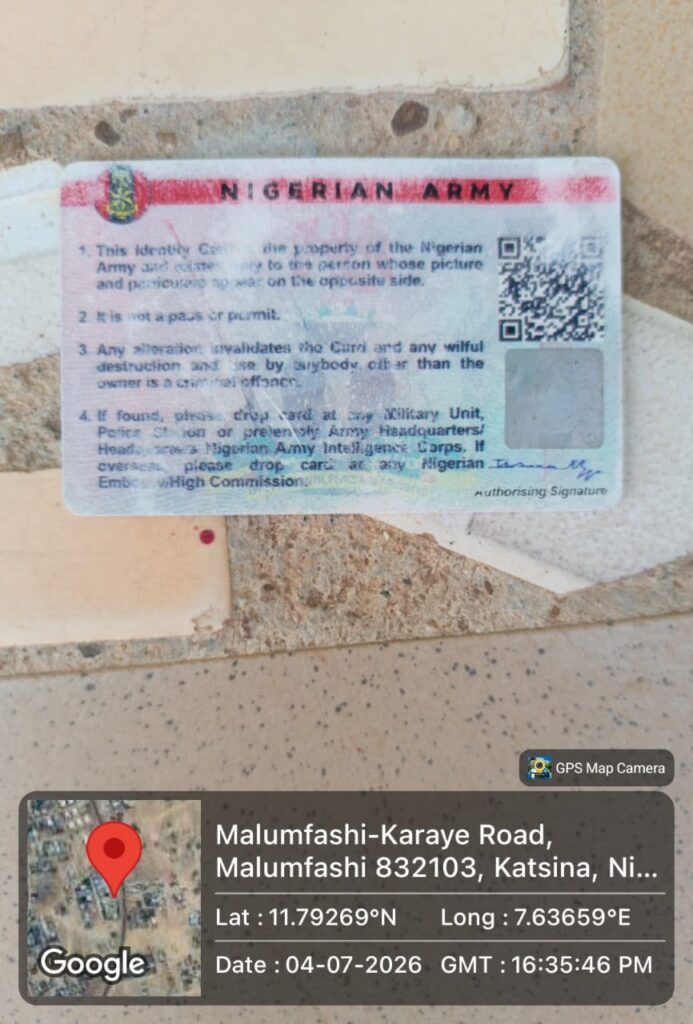
A search conducted on the suspect led to the recovery of a fake Nigerian Army identity card, four Automated Teller Machine (ATM) cards, one woodland camouflage three-quarter short, a wristwatch and the sum of ₦17,000.
The suspect and the recovered exhibits are currently in military custody pending further investigation.
Military sources said the arrest forms part of ongoing efforts to curb impersonation of security personnel and other criminal activities within the area.
Troops Arrest Suspected Military Impostor in Katsina
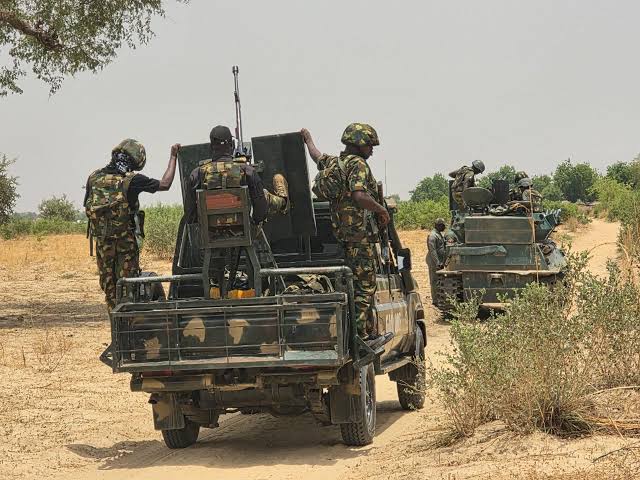
Troops Recover 50 Rustled Cattle, Repel Suspected Rustlers in Kaduna
By Zagazola Makama
Troops deployed at the Forward Operating Base (FOB) Kankomi have recovered 50 rustled cattle after repelling suspected cattle rustlers during an ambush operation in Chikun Local Government Area.
Security sources told Zagazola Makama that the troops responded to a distress call at about 9:55 a.m. on July 4 over the activities of suspected rustlers at Ungwan Gontu community.
According to the sources, the troops swiftly laid an ambush and made contact with the fleeing suspects, forcing them to abandon the stolen livestock and escape into the surrounding area.
During the operation, the troops recovered 50 rustled cattle, which were subsequently identified and handed over to their rightful owner.
Military sources said efforts are ongoing to track down the fleeing suspects as security operations continue to combat cattle rustling and other criminal activities across Kaduna State.
Troops Recover 50 Rustled Cattle, Repel Suspected Rustlers in Kaduna
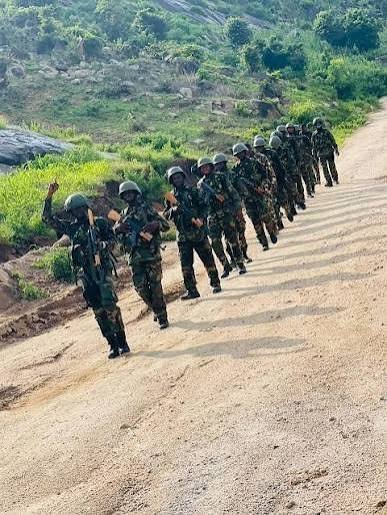
Troops Arrest Suspected Terrorist in Kogi, Suspect Confesses to Group Membership
By Zagazola Makama
Troops of 12 Brigade, in collaboration with Office of the National Security Adviser (ONSA) Hybrid Forces, have arrested a suspected terrorist during an operation in Lokoja Local Government Area.
Security sources told Zagazola Makama that the troops responded at about 1:00 p.m. on July 4 to reports of a confrontation between local residents and a suspected terrorist at a Ruga settlement behind Obajana community.
According to the sources, the troops swiftly intervened and arrested one suspect at the scene.
During preliminary interrogation, the suspect reportedly confessed to being a member of a terrorist group led by an individual identified as Haruna, which allegedly operates within the Okene general area.
The suspect is currently in military custody and is undergoing further investigation to establish the extent of his involvement and identify other members of the group.
Military sources said the arrest forms part of ongoing security operations aimed at dismantling terrorist and criminal networks across Kogi State.
Troops Arrest Suspected Terrorist in Kogi, Suspect Confesses to Group Membership

Troops Arrest Suspected Military Impostor in Katsina

Troops Recover 50 Rustled Cattle, Repel Suspected Rustlers in Kaduna

Troops Arrest Suspected Terrorist in Kogi, Suspect Confesses to Group Membership

Roger Federer’s Shock as DNA Results Reveal Myla and Charlene Are Not His Biological Children

THE PLIGHT OF FARIDA

FAILED COUP IN BURKINA FASO: HOW TRAORÉ NARROWLY ESCAPED ASSASSINATION PLOT AMID FOREIGN INTERFERENCE CLAIMS
-
 News2 years ago
Roger Federer’s Shock as DNA Results Reveal Myla and Charlene Are Not His Biological Children
-
Opinions4 years ago
THE PLIGHT OF FARIDA
-
 News1 year ago
FAILED COUP IN BURKINA FASO: HOW TRAORÉ NARROWLY ESCAPED ASSASSINATION PLOT AMID FOREIGN INTERFERENCE CLAIMS
-

 News2 years ago
EYN: Rev. Billi, Distortion of History, and The Living Tamarind Tree
-
 Opinions5 years ago
POLICE CHARGE ROOMS, A MINTING PRESS
-

 ACADEMICS2 years ago
A History of Biu” (2015) and The Lingering Bura-Pabir Question (1)
-

 Columns2 years ago
Army University Biu: There is certain interest, but certainly not from Borno.
-

 Politics1 year ago
2027: Why Hon. Midala Balami Must Go, as Youths in Hawul and Asikira/Uba Federal Constituency Reject ₦500,000 as Sallah Gift
