
News
MIKTA Nations Push Climate Finance Reforms as Nigeria Faces $337bn Funding Gap

MIKTA Nations Push Climate Finance Reforms as Nigeria Faces $337bn Funding Gap
By: Michael Mike
Nigeria will require an estimated $337 billion between 2026 and 2035 to implement its climate commitments, highlighting the enormous financing challenge confronting the country as international partners intensify calls for a more accessible and effective global climate finance system.
The funding requirement came into focus at a climate finance engagement in Abuja, where representatives of five countries under the MIKTA partnership—Mexico, Indonesia, South Korea, Türkiye and Australia—joined Nigeria’s National Council on Climate Change (NCCC) in advocating practical solutions to the gap between climate ambitions and the resources available to implement them.
The discussions centred on improving access to climate finance, mobilising private investment, expanding technology transfer, strengthening sustainable finance mechanisms and ensuring that international commitments translate into projects capable of delivering measurable results.
With countries preparing for the 31st United Nations Climate Change Conference, COP31, the speakers argued that the effectiveness of global climate action would depend not only on the amount of money pledged but also on whether vulnerable countries could access the funds without excessive bureaucratic, financial and institutional barriers.
Nigeria’s position was presented by Jummai Vandu, who represented the Director-General of the NCCC, Tenioye Majekodunmi. She highlighted the country’s substantial financing needs under its Nationally Determined Contribution 3.0 (NDC 3.0), which sets out its climate commitments for the coming years.
The $337 billion requirement underscores the scale of investment needed to advance mitigation and adaptation, strengthen resilience and support Nigeria’s transition towards a lower-carbon economy.
For Nigeria, the challenge extends beyond securing commitments from international partners to developing investment-ready projects, improving coordination among institutions and ensuring that available resources reach the sectors and communities that need them most.
The discussions also pointed to the importance of aligning climate action with national development priorities, including energy access, economic diversification, job creation and social inclusion.
Türkiye’s Ambassador to Nigeria, Mehmet Poroy, emphasised the need to close the gap between climate commitments and projects capable of attracting financing.
His intervention focused on the proposed Climate Implementation Bridge, an approach intended to help countries translate their climate plans into bankable projects and connect those projects with potential sources of funding.
The proposal reflects a persistent challenge in developing countries, where ambitious climate strategies often struggle to progress because of inadequate project preparation, limited technical capacity and difficulties attracting private capital.
The approach places emphasis on moving beyond declarations of intent towards practical implementation in areas such as renewable energy, climate-resilient agriculture, green industrialisation, food security and the circular economy.
For Nigeria and other developing economies, this would require stronger collaboration between governments, development institutions, investors and technical partners to identify viable projects, prepare them to meet financing requirements and improve the prospects of implementation.
Poroy’s intervention reinforced the broader message of the meeting: climate finance must be connected to a credible pipeline of projects if it is to produce tangible economic and environmental benefits.
Australia’s High Commissioner to Nigeria, Leilani Bin-Juda, called for reforms to make climate finance more accessible, particularly for developing countries and communities most exposed to the effects of climate change.
She highlighted an action plan on access to climate finance for small island developing states and least developed countries, a Pacific-led initiative developed through consultations involving vulnerable countries, development banks and multilateral climate funds.
The plan, launched at a pre-COP meeting in Fiji on October 8, seeks to address barriers that prevent countries from obtaining climate funding, including complicated applications, fragmented financing arrangements, demanding reporting requirements and lengthy approval processes.
Debt pressures, limited fiscal space and high borrowing costs further complicate access, making it difficult for countries already facing significant climate risks to finance adaptation and resilience measures.
Bin-Juda said the initiative had a global ambition and called for wider support beyond the Pacific, including from Nigeria and other African countries.
She stressed that the priority should be to ensure that climate finance responds more effectively to countries’ needs, with simpler application and disbursement processes, stronger national capacity to develop investment-ready projects and greater mobilisation of private capital alongside public and grant financing.
The plan also provides for annual high-level forums to assess progress and share lessons between 2027 and 2030.
For Australia, success would ultimately be measured by whether vulnerable countries could obtain the resources they need when they need them and convert those resources into stronger, more resilient communities.
Indonesia’s Ambassador to Nigeria, Bambang Suharto, highlighted the importance of sustainable financing mechanisms and international cooperation in supporting climate action.
His intervention drew attention to instruments such as green sukuk, sustainable finance taxonomies and other mechanisms capable of directing investment towards environmentally beneficial projects.
Green sukuk can help mobilise funds for eligible projects while broadening the pool of investors participating in climate-related financing. Sustainable finance taxonomies, meanwhile, provide criteria for identifying economic activities that qualify as environmentally sustainable, helping investors assess projects and allocate capital.
Indonesia’s experience also illustrates the importance of aligning climate finance with national development priorities and long-term emissions goals. The country has set a net-zero emissions target for 2060 or earlier.
The broader challenge, as reflected in the discussions, is to ensure that innovative financial instruments are supported by credible standards, transparent reporting and projects that can demonstrate measurable environmental and economic benefits.
International cooperation and the exchange of experience would be essential in helping developing countries adapt these instruments to their own financial systems and investment needs.
South Korea’s representative, Jeong Yo-an, emphasised the importance of technology, knowledge-sharing and cooperation in translating climate commitments into practical outcomes.
The intervention highlighted the value of partnerships that enable countries to share technical expertise, strengthen institutional capacity and deploy solutions suited to their development circumstances.
Technology transfer is particularly important for countries seeking to expand clean energy, improve industrial efficiency and strengthen resilience without undermining economic growth.
For Nigeria, cooperation in these areas could help address technical and institutional gaps that often prevent climate strategies from progressing from policy documents to implementation.
The discussion also reinforced the need for partnerships that combine financing with technical support, ensuring that countries have both the resources and the capacity to execute climate projects effectively.
Mexico’s Chargé d’Affaires, José Manuel Briseño Flores, highlighted the role of sustainable finance frameworks in directing investment towards climate action and other development priorities.
His intervention focused on mechanisms including sustainable finance taxonomies and green, social and sustainability bonds, which can help channel capital into projects with defined environmental or social objectives.
Such instruments can provide governments and businesses with additional avenues for raising funds for renewable energy, climate resilience and other sustainable development initiatives.
However, their effectiveness depends on clear standards, transparency and credible systems for demonstrating how funds are used and what results they achieve.
Developing bankable projects and establishing reliable frameworks for sustainable investment would therefore be crucial to attracting more capital, particularly from private investors.
The Mexican position complemented the wider call for financing systems that do more than announce funding commitments and instead provide a clear pathway from investment decisions to measurable outcomes.
Taken together, the interventions pointed to a common concern: the growing distance between the scale of climate action required and the ability of vulnerable and developing countries to finance it.
The global climate finance debate has increasingly focused on mobilising larger sums, but the Abuja discussions highlighted the equally important questions of accessibility, affordability, project preparation and accountability.
For Nigeria, the $337 billion estimated requirement under NDC 3.0 makes these issues particularly urgent.
Securing financing would need to go hand in hand with stronger institutions, credible project pipelines, improved coordination and investment frameworks capable of attracting both domestic and international capital.
The country would also need to ensure that climate investments support its wider development objectives, including improved energy access, economic opportunities and protection for communities vulnerable to climate impacts.
The MIKTA countries’ interventions offered different approaches to the same challenge: Türkiye’s emphasis on connecting commitments with bankable projects; Australia’s push for simpler access to climate finance; Indonesia’s focus on innovative financial instruments; South Korea’s advocacy of technology and knowledge-sharing; and Mexico’s support for sustainable investment frameworks.
Nigeria’s NCCC, meanwhile, underscored the scale of the domestic financing challenge and the importance of mobilising resources to implement the country’s climate commitments.
As preparations for COP31 gather momentum, the central question remains whether international cooperation can deliver a financing system that developing countries can access in practice, rather than one whose promises remain difficult to convert into action.
For Nigeria, the stakes extend beyond meeting international climate targets. They include the country’s ability to finance a more resilient economy, attract green investment and ensure that climate action delivers practical benefits for its people.
MIKTA Nations Push Climate Finance Reforms as Nigeria Faces $337bn Funding Gap


News
Fiscal Responsibility Commission Seeks Stronger Enforcement Powers, More Funding, Act Amendment
Fiscal Responsibility Commission Seeks Stronger Enforcement Powers, More Funding, Act Amendment
By: Michael Mike
The Fiscal Responsibility Commission (FRC) has called on the Federal Government to strengthen its enforcement powers, increase its funding and amend the Fiscal Responsibility Act (FRA), 2007, to enhance accountability and transparency in the management of public resources.
The Acting Chairman of the Commission, Charles Abana, made the appeal in Abuja on Monday at the public presentation of the 2026 Fiscal Responsibility Index (FRI) Report, covering the 2023–2025 financial years.
Abana said the Commission had continued to discharge its statutory responsibilities despite challenges, including limited enforcement powers, inadequate funding, staff shortages and insufficient office accommodation, more than 16 years after its establishment.
He stressed that strengthening the Commission was necessary to improve fiscal discipline, ensure accountability in government institutions and promote the prudent management of public funds.
According to him, the Commission’s internally generated revenue has grown significantly through the monitoring and payment of operating surpluses and other independent revenue sources, rising from about N300 million in 2010 to more than N2 trillion annually.
He urged the government to deliberately address the institutional challenges confronting the Commission, particularly by strengthening its enforcement capacity and providing adequate financial and operational support.
The Acting Chairman described the Fiscal Responsibility Index as an evidence-based instrument for measuring and ranking the compliance of Federal Ministries, Departments and Agencies (MDAs) with statutory public financial management obligations.
He said the Index goes beyond administrative assessments and rankings, providing a mechanism for identifying compliance gaps, encouraging institutional competition and promoting transparency and accountability in the utilisation of public resources.
Specifically, the assessment examines MDAs’ compliance with requirements relating to public financial management practices, budgeting thresholds, procurement transparency and revenue remittance under the Fiscal Responsibility Act and other applicable public financial management frameworks.
Abana said the fundamental objective was to establish a credible basis for measuring institutional performance, identifying areas requiring improvement and strengthening accountability across the Federal Government.
He noted that the 2026 edition, the second of its kind, assessed the performance of Federal MDAs over three consecutive financial years — 2023, 2024 and 2025 — offering a broader picture of their compliance and institutional performance.
He explained that the assessment was conducted through a rigorous and participatory process designed to ensure transparency, fairness and the credibility of the final findings.
According to him, the Commission organised technical peer-review and methodology validation sessions on June 2 and 11, 2026, involving more than 80 representatives of Federal MDAs.
The sessions provided stakeholders with opportunities to examine the assessment methodology, review questionnaires and make technical contributions to ensure that the indicators were clear, measurable and consistent with the statutory responsibilities of the institutions.
He further disclosed that the Commission held two-day score reconciliation and evidence review meetings at its headquarters in Abuja on September 1 and 2, 2026.
During the meetings, participating MDAs were engaged in two batches and given opportunities to review their preliminary scores, clarify issues and reconcile discrepancies between submitted information and available documentary evidence.
Abana said the process was important in ensuring that the final assessment was based on verifiable evidence rather than assumptions or subjective judgments.
He added that the Commission subsequently received and verified outstanding physical and electronic documents submitted by participating MDAs up to the September 4, 2026 deadline.
The Acting Chairman commended the participating institutions, the Commission’s technical team and development partners for their contributions to the successful completion of the exercise.
He particularly acknowledged the support of International IDEA, the European Union and the Centre for Social Justice, describing their contributions as instrumental to the development of the initiative.
Also speaking at the event, the Executive Director of the Centre for Social Justice (CSJ), Eze Onyekpere, said the organisation collaborated with the Fiscal Responsibility Commission in the design, research, preparation and validation of the 2023–2025 Fiscal Responsibility Index.
Onyekpere explained that the project was implemented under CSJ’s programme, Improving the Effectiveness of Anti-Corruption Processes and Reforms in Nigeria, with support from the European Union, International IDEA and the Rule of Law and Anti-Corruption Project (RoLAC 2).
He said the broader programme was designed to improve the effectiveness of anti-corruption laws, policies, interventions and strategies at national and subnational levels, ultimately strengthening compliance with existing anti-corruption frameworks.
According to him, anti-corruption laws and policies should go beyond their mere existence to produce systemic changes, institutional compliance and behavioural transformation in society.
He noted that effective implementation of such frameworks should promote corruption prevention, facilitate corrective action, improve the detection and prosecution of offenders and discourage future violations.
Onyekpere emphasised that fiscal policies, particularly government budgets, played a central role in the security and welfare of citizens, as well as the consolidation of democracy.
He argued that democracy and development were closely connected, noting that the collection, management, expenditure, reporting, monitoring and evaluation of public resources remained among the principal ways governments affected citizens’ lives.
He said the implementation of the Fiscal Responsibility Act, 2007, was therefore central to Nigeria’s development aspirations and required continuous monitoring, reporting and evaluation to identify shortcomings and facilitate necessary reforms.
The CSJ Executive Director recalled that the first Fiscal Responsibility Index was developed through a collaboration between the Centre for Social Justice and the Fiscal Responsibility Commission in 2015 and used to benchmark 16 Federal MDAs.
He said the revised Index was designed to advance fiscal responsibility by promoting prudent public financial management practices among government institutions.
Onyekpere explained that the findings were expected to encourage MDAs to abandon practices capable of undermining their institutional integrity and performance.
He added that the report would also provide civil society organisations, the media, the private sector and other stakeholders with evidence-based tools to advocate reforms and demand greater accountability in public financial management.
Of particular significance, he disclosed that evidence emerging from the Index was being deployed in the preparation of the Fiscal Responsibility Rules, a proposed binding subsidiary legislation intended to strengthen the implementation and enforcement of the Fiscal Responsibility Act.
According to him, the proposed rules are expected to establish timelines, enforcement procedures, a code of conduct, offences and penalties for violations of the Act.
He said the Index was also designed to establish a context-specific framework of indicators for monitoring and assessing the fiscal prudence of Federal MDAs, collect relevant data, benchmark institutional performance and establish baseline information for measuring future progress or setbacks.
Other objectives include preparing comprehensive fiscal responsibility reports, facilitating their use for advocacy and stakeholder engagement, and encouraging the Federal Government to adopt appropriate reforms based on the findings.
Meanwhile, Abana said the Index had become particularly important given Nigeria’s growing development needs and the increasing demand for infrastructure, social services, economic opportunities and improved citizens’ welfare.
He maintained that the country’s ability to meet its development obligations depended not only on revenue generation but also on the quality of expenditure management, transparency in procurement, discipline in budget implementation and effective institutional accountability.
He therefore urged MDAs to see the findings of the Index as an opportunity for institutional learning and improvement rather than merely a competition for positions on the ranking table.
“Institutions that have demonstrated strong compliance should sustain and deepen their performance, while those with identified gaps should develop clear and measurable action plans to address them,” he said.
He assured that the Commission would continue to engage relevant institutions, provide guidance within its mandate and strengthen its monitoring and enforcement mechanisms to promote compliance with the Fiscal Responsibility Act.
The Acting Chairman also called for a shift from the practice of merely preparing reports and submitting returns to a system in which fiscal compliance is reflected in actual institutional practices and measurable public value.
He urged the media and civil society organisations to support the dissemination of the Index’s findings and sustain public engagement on fiscal transparency and accountability.
According to him, public awareness and constructive scrutiny remain essential components of an effective accountability framework.
Abana said the Commission remained committed to building a public financial management system in which government budgets are credible, procurement processes transparent, revenues properly accounted for and expenditures disciplined.
He added that the ultimate objective of fiscal responsibility should be to ensure that public resources translate into tangible improvements in the lives of Nigerians.
He called on government institutions, oversight agencies and citizens to collectively support the institutionalisation of fiscal responsibility principles across the public service.
The Fiscal Responsibility Commission is responsible for monitoring and enforcing compliance with the provisions of the Fiscal Responsibility Act, 2007, which establishes a framework for promoting fiscal discipline, transparency and accountability in the management of public finances.
Fiscal Responsibility Commission Seeks Stronger Enforcement Powers, More Funding, Act Amendment
News
NHRC Seeks Stronger Dutch Partnership to Protect Civic, Political Spaces Ahead of 2027 Elections
NHRC Seeks Stronger Dutch Partnership to Protect Civic, Political Spaces Ahead of 2027 Elections
By: Michael Mike
The Executive Secretary of the National Human Rights Commission (NHRC), Dr Tony Ojukwu, has called for renewed and stronger cooperation between Nigeria and the Kingdom of the Netherlands to strengthen human rights protection, safeguard democratic institutions and protect civic and political spaces ahead of the 2027 general elections.
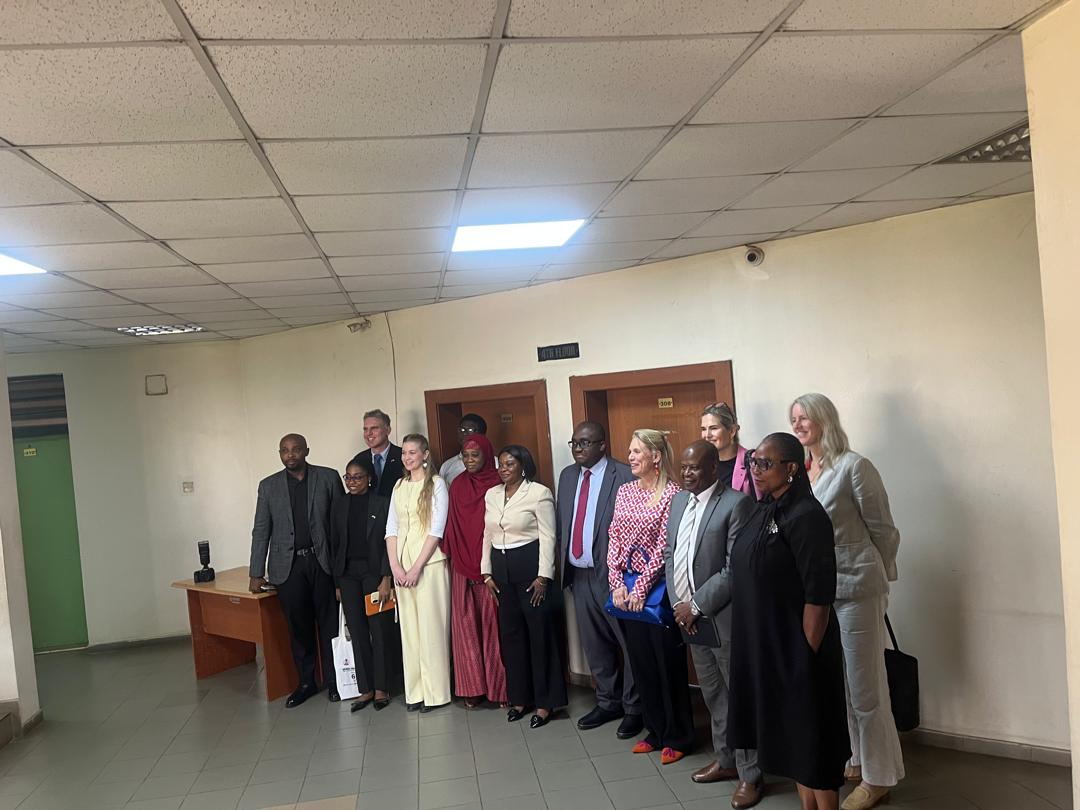
Ojukwu made the call during a high-level engagement between the commission and a visiting delegation from the Dutch Ministry of Foreign Affairs, led by Ms Guusje Korthals, Deputy Director-General for Political Affairs.
The meeting, which focused on understanding the mandate of the commission and assessing the human rights situation in Nigeria, also provided an opportunity for the NHRC to seek stronger institutional collaboration with the Netherlands in addressing emerging human rights challenges.
Ojukwu was represented at the meeting by the Senior Human Rights Adviser to the commission, Dr. Hillary Ogbonna, who said the engagement was particularly significant as Nigeria prepares to commence its membership of the United Nations Human Rights Council in January 2027.
He described the development as an important opportunity for Nigeria to strengthen its human rights commitments, deepen international relations and consolidate its position in global human rights advocacy.
According to him, the commission deliberately used the engagement to present areas requiring international cooperation and support, stressing that the partnership between the NHRC and the Netherlands had become long overdue.
The meeting was attended by heads of departments and directors of the commission, who provided the visiting delegation with an overview of the NHRC’s mandate, institutional capacity and ongoing interventions across various human rights sectors.
Ogbonna expressed optimism that the discussions would translate into concrete programmes and sustained collaboration, disclosing that a return visit by the Dutch Ambassador to Nigeria was expected to further consolidate the proposed partnership.
He described the anticipated visit as an opportunity to revive and strengthen bilateral cooperation, expressing hope that the latest engagement would provide a fresh beginning for relations between the commission and the Netherlands.
A major issue discussed was the protection of the right to freedom of religion, which Ogbonna acknowledged had become an issue of considerable concern to Nigeria’s international partners.
He, however, emphasised the need to approach religious freedom from a comprehensive human rights perspective, noting that the commission had continued to document developments and violations relating to the exercise of this fundamental right.
He disclosed that the NHRC would launch a capacity-building programme on the right to freedom of religion in 2027, expressing the hope that the Netherlands would support the initiative through technical assistance and institutional cooperation.
The commission also sought Dutch support for strengthening human rights monitoring, documentation and reporting, particularly through its monthly human rights dashboard, which has attracted commendation for providing regular updates on the human rights situation in Nigeria.
Another critical area identified for collaboration was the protection of vulnerable populations, particularly women and children, whose rights require sustained institutional attention and effective protection mechanisms.
Beyond these areas, the commission placed particular emphasis on the need to protect and expand Nigeria’s civic and political spaces as the country approaches the 2027 general elections.
Ogbonna stressed that the commission was not waiting for international partners to identify the challenges, explaining that it had deliberately brought the issues to the attention of the Dutch delegation as part of its current priorities and ongoing interventions.
He said the protection of civic space must guarantee an enabling environment for civil society organisations, media practitioners and human rights defenders to operate without intimidation, harassment or undue restrictions.
He also expressed concern over the disruption of political campaigns and activities, noting that such incidents raised questions about the protection of constitutionally guaranteed freedoms, particularly freedom of peaceful assembly and freedom of association.
On political space, he emphasised the need to guarantee candidates the freedom to campaign and participate in the electoral process without political, security or judicial interference.
He further stressed that citizens must be allowed to exercise their voting rights freely and have the opportunity to defend their votes without intimidation or obstruction.
According to him, the commission considers the protection of these rights fundamental to ensuring credible elections and strengthening democratic accountability.
Ogbonna disclosed that the NHRC would launch an advisory on political space in the coming weeks ahead of the elections, following a recent stakeholder engagement supported by the European Union.
He said the initiative would form part of the commission’s broader efforts to identify threats to democratic participation, promote respect for fundamental freedoms and ensure that political activities are conducted within the framework of human rights and the Constitution.
The commission also called for sustained protection of the media and civil society beyond election periods, emphasising that their roles in promoting accountability, transparency and democratic governance must not be undermined.
“The media and civil society are at the heart of every democracy, and it is the job of the commission to continue to protect them,” he said.
The Dutch delegation’s visit was led by Korthals, Deputy Director-General for Political Affairs at the Ministry of Foreign Affairs of the Netherlands.
Other members included Ms Frederieke Quispel, Director of the Sub-Saharan Africa Department; Ms Nienke Raap, Senior Policy Officer for Nigeria; Mr Ronald Sonnemans, Deputy Ambassador of the Netherlands to Nigeria; Ms Belle de Yaama Jonge, Second Secretary for Political Affairs and Human Rights; and Ms Jessica Odudu, Senior Policy Adviser on Human Rights and Public Diplomacy.
During the engagement, Korthals acknowledged the longstanding relationship between Nigeria and the Netherlands, noting the importance of human rights to national development, democracy and the rule of law.
She also highlighted existing cooperation between both countries on multilateral platforms, including the United Nations and the European Union.
The NHRC described the visit as part of broader diplomatic engagements through which international partners seek to strengthen relations with Nigeria and demonstrate support for its democratic and human rights development.
With Nigeria preparing to assume membership of the UN Human Rights Council in January 2027, the commission expressed hope that the renewed engagement with the Netherlands would move beyond diplomatic discussions to practical cooperation in strengthening human rights institutions, protecting vulnerable populations and safeguarding democratic freedoms.
The anticipated return visit by the Dutch Ambassador is expected to provide another opportunity to advance discussions and translate the proposed areas of cooperation into concrete institutional partnerships.
NHRC Seeks Stronger Dutch Partnership to Protect Civic, Political Spaces Ahead of 2027 Elections

DSS Urges Appeal Court to Uphold N100m Fine Against SERAP Over Defamation
By: Zagazola Makama
The Department of State Services (DSS) has urged the Court of Appeal in Abuja to dismiss an appeal filed by the Socio-Economic Rights and Accountability Project (SERAP) and uphold the N100 million damages awarded against the organisation for defaming two DSS operatives.
The DSS made the request on Monday during proceedings before a three-member panel of the Court of Appeal, led by Justice Danlami Senchi, where parties adopted their final briefs of argument.
Represented by a legal team led by A.T. Kehinde, SAN, and Oluwaleke Samuel Kehinde, the DSS argued that the judgment of the High Court of the Federal Capital Territory (FCT) delivered substantial justice to the complaints of the two operatives.
The service urged the appellate court to affirm the findings of Justice Halilu Yusuf and dismiss the appeals for lacking merit.
However, SERAP, through its counsel, Oluwatosin Adesioye, urged the court to set aside the judgment and the N100 million damages awarded against the organisation.
The appeals, marked CA/ABJ/CV/1114/2026 and CA/ABJ/CV/1105/2026, were filed separately by SERAP and its Deputy Director, Kolawole Oluwadare.
After listening to arguments from both parties, the Justice Senchi-led panel reserved judgment to a date to be communicated to the parties.
The dispute arose from a publication made by SERAP on Sept. 9, 2024, alleging that two DSS operatives, identified as Sarah John and Gabriel Ogundele, had invaded its Abuja office and harassed a staff member.
The two operatives subsequently instituted Suit No. CV/4547/2024 before the FCT High Court, challenging the publication, which they said damaged their personal reputations and the corporate image of the DSS.
In a judgment delivered on May 5, Justice Yusuf Halilu held that the publication was defamatory and awarded N100 million in damages against SERAP and Oluwadare.
The court also ordered the defendants to tender a public apology to the two operatives in two national newspapers, on two television stations and on SERAP’s website.
Additionally, the court directed them to pay N1 million as litigation costs and 10 per cent annual interest on the judgment sum until full payment.
The Court of Appeal is expected to determine whether the trial court’s findings and consequential orders should stand.
DSS Urges Appeal Court to Uphold N100m Fine Against SERAP Over Defamation

Fiscal Responsibility Commission Seeks Stronger Enforcement Powers, More Funding, Act Amendment

NHRC Seeks Stronger Dutch Partnership to Protect Civic, Political Spaces Ahead of 2027 Elections

Berom Militia Kill Three Fulani in Riyom injured One Other

Roger Federer’s Shock as DNA Results Reveal Myla and Charlene Are Not His Biological Children

THE PLIGHT OF FARIDA

FAILED COUP IN BURKINA FASO: HOW TRAORÉ NARROWLY ESCAPED ASSASSINATION PLOT AMID FOREIGN INTERFERENCE CLAIMS
-
 News3 years ago
Roger Federer’s Shock as DNA Results Reveal Myla and Charlene Are Not His Biological Children
-
Opinions5 years ago
THE PLIGHT OF FARIDA
-
 News2 years ago
FAILED COUP IN BURKINA FASO: HOW TRAORÉ NARROWLY ESCAPED ASSASSINATION PLOT AMID FOREIGN INTERFERENCE CLAIMS
-
 Opinions5 years ago
POLICE CHARGE ROOMS, A MINTING PRESS
-

 News3 years ago
EYN: Rev. Billi, Distortion of History, and The Living Tamarind Tree
-

 ACADEMICS3 years ago
A History of Biu” (2015) and The Lingering Bura-Pabir Question (1)
-

 Columns3 years ago
Army University Biu: There is certain interest, but certainly not from Borno.
-

 Politics1 year ago
2027: Why Hon. Midala Balami Must Go, as Youths in Hawul and Asikira/Uba Federal Constituency Reject ₦500,000 as Sallah Gift
