
News
Minister Alkali to deliver address at the 18th edition of council on transportation in Ogun


Minister Alkali to deliver address at the 18th edition of council on transportation in Ogun
By: Our Reporter
The 18th Edition of the National Council on Transportation with the Theme ” Embracing Innovations and Technologies for Sustainable Transportation” kick starts in Abeokuta, the Ogun State Capital, Tuesday 13th February, 2024.
Transportation Minister, Senator Said Ahmed Alkali is expected to deliver a keynote Address tomorrow Friday, where Commissioners and Permanent Secretaries from the transportation sector in the 36 States of the Federation are in attendance.
On arrival to the ancient City of Abeokuta, the Minister’s first pot of call was the Palace of Alake of Egbaland, Oba Michael Adedotun Aremu, CFR to seek for his Royal blessings.

The royal father who thanks the federal government for overhauling the rail transport system, called for the sustenance of the project for the overall growth of the Country.
Oba Aremu described transportation as the major link that binds Nigerians no matter where they come from, maintained that railway services began in the ancient City since 1906.
Earlier Speaking, the Minister of Transportation, Senator Saidu Ahmed Alkali said they were at the palace of the Octogenarian Monarch to seek for his blessings before heading to the business of the day.
Senator Alkali commended the Monarch for preserving the rich cultural heritage of his people, pointing out that his support to the policies and Programmes of the Tinubu led administration would not go in vein.

He however assured that in the end of the National Council on Transportation meeting, far reaching decisions would be worked out for the betterment of Nigeria and Nigerians.
Minister Alkali to deliver address at the 18th edition of council on transportation in Ogun


African Speakers Move to Break Trade Barriers, Harmonise Laws at Liberia Summit
By: Michael Mike
African parliamentary leaders are set to push for the harmonisation of national laws, removal of trade barriers and expansion of cross-border infrastructure when they converge on Monrovia, Liberia, for the fourth General Assembly of the Conference of Speakers and Presidents of African Legislatures (CoSPAL) from December 9 to 11, 2026.
The summit is expected to intensify pressure on African governments to translate their commitments to continental economic integration into enforceable national laws, amid concerns that conflicting regulations, non-tariff barriers and inadequate infrastructure continue to undermine the ambition of the African Continental Free Trade Area (AfCFTA).
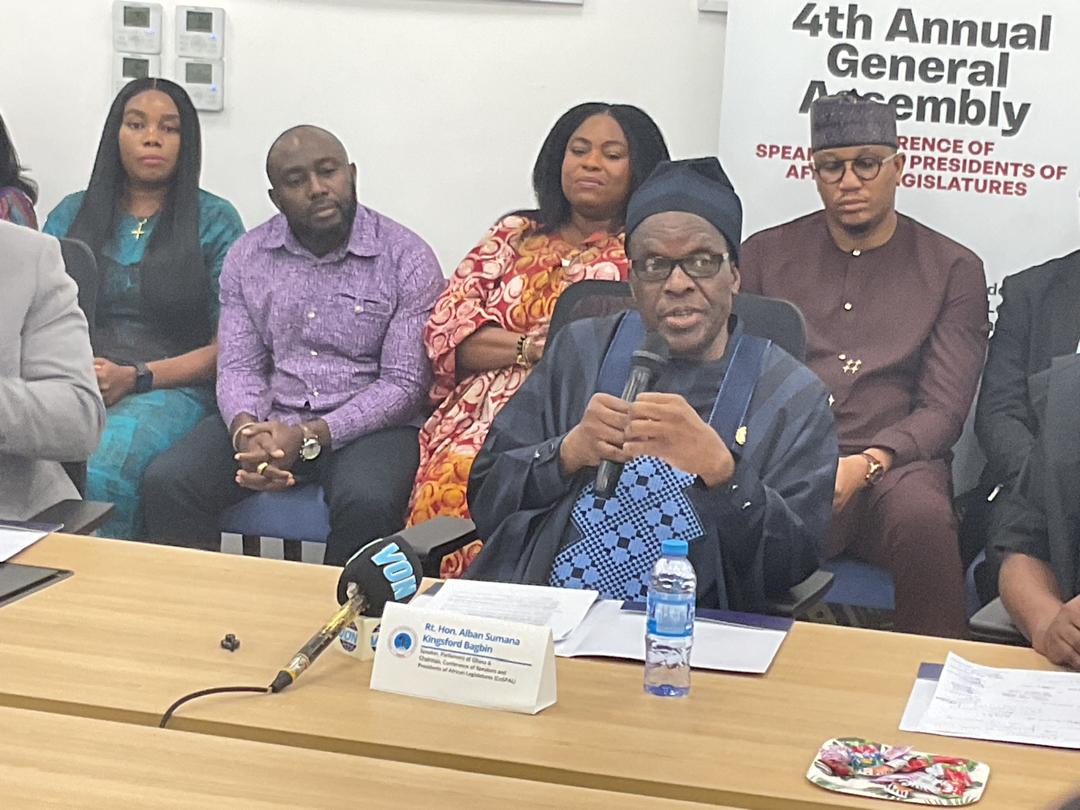
Chairman of CoSPAL and Speaker of Ghana’s Parliament, Alban Bagbin, said Africa’s economic integration remained constrained by decades of political and economic fragmentation, which had left countries operating under different legal frameworks that obstruct trade, investment and the movement of people across borders.
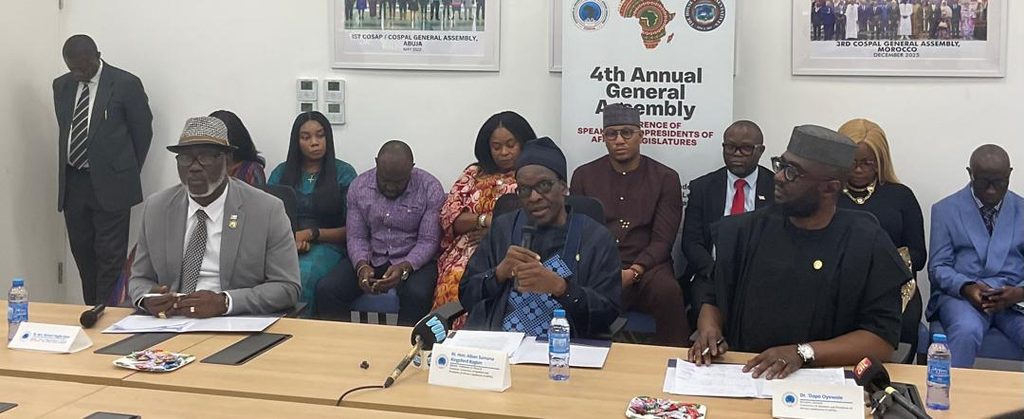
Speaking at a media briefing at the CoSPAL Secretariat in Abuja, Bagbin argued that the continent could not achieve a functional single market while national laws continued to create obstacles to the movement of goods, services and capital.
He said the AfCFTA required more than political commitments and executive declarations, stressing that national parliaments must take the lead in harmonising legislation, removing conflicting regulations and establishing common standards to facilitate continental trade.
“The African Continental Free Trade Area cannot be delivered by executive declarations alone,” Bagbin said, advocating the adoption of shared model laws by African legislatures to eliminate legal inconsistencies and ease cross-border economic activities.
The AfCFTA, which became operational in 2021, is designed to progressively remove tariffs on most goods traded among participating African countries, reduce non-tariff barriers and create a continental market capable of stimulating investment, industrialisation and regional value chains. However, differences in national regulations, customs procedures and trade standards remain major obstacles to its full implementation.
Bagbin said African parliaments must therefore move beyond their traditional domestic lawmaking responsibilities and become active participants in the continent’s integration process.
He also identified infrastructure connectivity as critical to the success of the single market, warning that trade integration would remain difficult without reliable regional energy, transport and other cross-border networks.
Citing the West African Gas Pipeline and proposed gas and solar energy networks, he said such projects required coordinated legislative action among participating countries.
According to him, parliaments must enact the necessary enabling laws, scrutinise public expenditure and ensure that investments in regional infrastructure are properly implemented and deliver tangible benefits.
Bagbin also highlighted CoSPAL’s role in parliamentary diplomacy, citing its intervention in Liberia during a legislative leadership impasse involving political parties and former Presidents Ellen Johnson Sirleaf and George Weah.
He said the organisation’s mediation demonstrated how parliamentary engagement could help resolve political disagreements and strengthen democratic institutions. He also disclosed that CoSPAL was engaging on issues concerning parliamentary participation in Uganda.
Secretary-General of CoSPAL, Ambassador ‘Dapo Oyewole, said the Monrovia assembly would address issues beyond trade and investment, including security, transportation, aviation and connectivity, as part of efforts to strengthen Africa’s economic capacity and protect its sovereignty.
He said the continent must build stronger regional partnerships and develop the capacity to harness its own resources and markets rather than remain constrained by fragmented economies and dependence on external actors.
Oyewole disclosed that the assembly would produce the Monrovia Declaration, following previous declarations adopted at CoSPAL assemblies in Abuja, Rabat and Accra.
He said the declaration would set out further commitments towards strengthening legislative leadership and advancing Africa’s political, economic and institutional integration.
The Secretary-General also underscored the importance of parliamentary diplomacy in resolving disputes between African countries, recalling the 2020 trade disagreement between Nigeria and Ghana.
He said a three-day parliamentary mission to Accra, led by Femi Gbajabiamila, then Speaker of Nigeria’s House of Representatives, helped resolve the dispute after efforts at the executive level had stalled.
Oyewole said the intervention demonstrated the capacity of parliamentary leaders to provide alternative channels of dialogue and confidence-building when disagreements threaten trade and bilateral relations.
On CoSPAL’s institutional development, he said the organisation was implementing programmes to strengthen women’s representation, legislative capacity and leadership development across African parliaments.
He listed the Women’s Representation in African Parliaments (WRAP) initiative and the African Gender Legislative Agenda among its programmes aimed at promoting greater participation of women in legislative institutions.
Oyewole said the Legislative Mentorship Initiative, founded by Gbajabiamila, had evolved into a continental programme, with 50 fellows expected to graduate on Friday, bringing the total number of alumni to 268.
He said the programme was designed to develop a new generation of legislative professionals and leaders equipped to contribute to effective lawmaking, parliamentary administration and democratic governance.
The Secretariat, he added, had established a legislative research and knowledge management network to promote the exchange of expertise and strengthen evidence-based lawmaking among African parliaments.
He further disclosed that CoSPAL had begun work on artificial intelligence governance in legislatures, an emerging area with implications for parliamentary administration, legislative research, accountability and the regulation of new technologies.
Speaker of Liberia’s House of Representatives and host Speaker of the fourth CoSPAL General Assembly, Rt. Hon. Richard Nagbe Koon, said hosting the meeting would provide an opportunity for Liberia to showcase its investment potential, hospitality and commitment to continental cooperation.
Koon said Liberia wanted African countries to regard one another as strategic partners in trade, investment, innovation and development, rather than merely as neighbouring states.
He said the gathering would provide a platform for strengthening relationships among African legislatures and creating opportunities for wider economic and institutional cooperation.
CoSPAL was founded by the Speakers of the parliaments of Nigeria, Senegal, Ethiopia, Kenya and Rwanda to provide a common platform for legislative leaders to exchange experiences, coordinate action and strengthen the contribution of parliaments to Africa’s development.
Its emergence reflects growing recognition that continental integration cannot be driven by the executive arm of government alone. National legislatures are central to translating regional agreements into domestic laws, providing oversight, monitoring implementation and holding governments accountable for their commitments.
The Monrovia assembly will therefore be an important test of the willingness of African parliamentary leaders to turn years of integration pledges into practical legislative action. Its success will ultimately depend not only on the declaration adopted at the meeting but on whether participating parliaments can drive reforms that make cross-border trade easier, strengthen infrastructure connectivity and deepen cooperation among African countries.
African Speakers Move to Break Trade Barriers, Harmonise Laws at Liberia Summit
Nigeria Begins $70m Passport Factory, Targets May 2027 for Local Production
By: Michael Mike
Nigeria has begun construction of a $70 million passport manufacturing facility in Abuja, in a major push to end its dependence on foreign suppliers for passport booklets and strengthen national security, with the Federal Government targeting May 2027 for the commencement of local production.
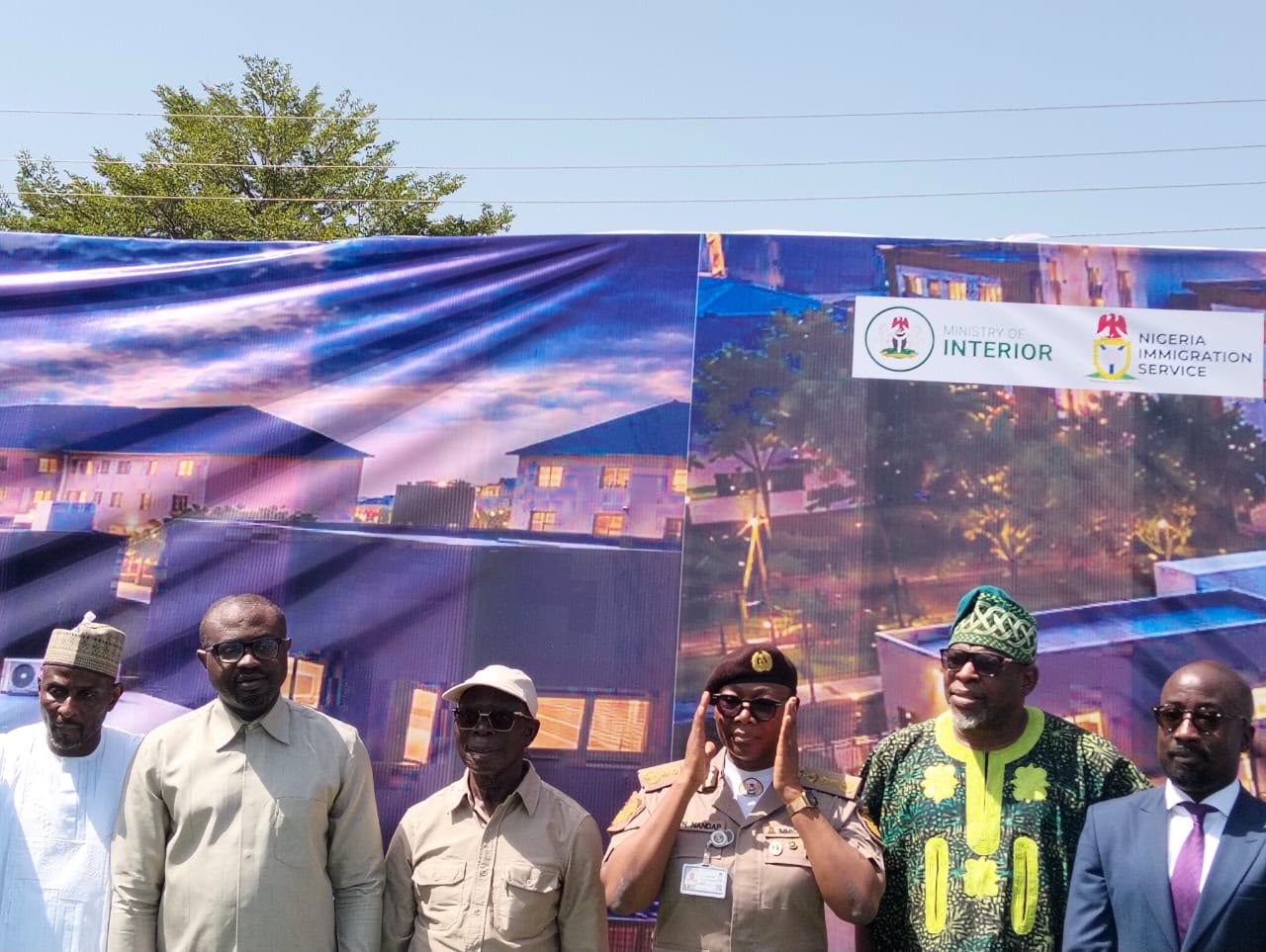
The Minister of Interior, Olubunmi Tunji-Ojo, disclosed this at the groundbreaking ceremony for the facility at the headquarters of the Nigeria Immigration Service (NIS), describing the project as a landmark step towards domesticating the country’s passport production value chain.
The facility, being developed through a partnership with IRIS Smart Technologies, is expected to produce an initial six million electronic passport booklets annually, with the capacity to expand to 10 million. The minister said President Bola Tinubu would be invited to commission the project upon completion in May 2027.
Tunji-Ojo said the investment would be financed through a private-sector partnership without direct funding from the Federal Government, adding that the facility would occupy 1.1 hectares within the NIS headquarters in Abuja and operate with an off-grid, solar-powered energy system and artificial intelligence-driven technology.
He said the project was designed not only to meet Nigeria’s passport requirements but also to position the country as a potential supplier of secure travel documents to other African countries, particularly within the Economic Community of West African States (ECOWAS).
According to the minister, Nigeria has for years depended on overseas manufacturers for passport booklets despite having established arrangements for passport processing and personalisation. He said the new facility would close that gap by bringing the manufacturing stage into the country.
“We cannot continue to import what we have the capacity to produce,” he said, stressing that the Tinubu administration was determined to move beyond passport processing to full domestic production.
Tunji-Ojo explained that the government’s reform programme was aimed at establishing an integrated passport system covering application, biometric capture, processing, approval, personalisation, booklet manufacturing and issuance.
He recalled that the administration had introduced automated passport application and approval processes, established a modern data centre in 2024 and completed a centralised passport personalisation centre in September 2025. The proposed manufacturing facility, he said, represented the next phase of the reform.
The minister said IRIS Smart Technologies had previously invested more than $5 million in the passport personalisation centre and was committing about $70 million to the manufacturing project, describing the partnership as evidence that private capital could support critical national infrastructure without placing the entire financial burden on government.
He said the factory’s initial annual capacity of six million booklets would significantly exceed Nigeria’s estimated yearly requirement, which he put at between 800,000 and two million, leaving room for the country to serve other markets.
The project, he added, would reduce exposure to international supply-chain disruptions, improve the availability of passport booklets, shorten waiting periods and strengthen Nigeria’s control over a sensitive national security document.
The Comptroller-General of the NIS, Kemi Nandap, described the project as more than the construction of a factory, saying it represented an investment in national sovereignty, security, resilience and the dignity of Nigerian citizens.
She said shortages of passport booklets and delays in their availability had affected citizens, including students, families and Nigerians seeking opportunities abroad, making local production an important intervention in improving service delivery.
Nandap said the Immigration Service had continued to digitise its operations since January 2024, with the introduction of more efficient application and vetting processes, expansion of contactless passport renewal for eligible Nigerians abroad and the completion of the centralised personalisation centre.
She said domestic booklet manufacturing would strengthen the entire system by ensuring that Nigeria had greater control over the supply of the documents its citizens require for international travel.
The NIS boss, however, emphasised that local production must meet internationally recognised security and quality standards, noting that domestic capacity should complement, rather than undermine, international partnerships and cooperation.
She urged all parties involved in the project to maintain transparency, integrity and strict adherence to agreed milestones, saying the success of the facility would ultimately be measured by its ability to deliver reliable services to Nigerians.
Former Edo State Governor and Senator representing Edo North, Adams Oshiomhole, who performed the groundbreaking, described the project as a significant step towards industrial development and job creation.
Oshiomhole said the economic benefits of government reforms would become meaningful to ordinary Nigerians when they translated into employment, productive investments and opportunities for local businesses.
He said the construction and eventual operation of the factory would create jobs for Nigerian professionals and artisans, including engineers, electricians, bricklayers, technicians, drivers and suppliers, while stimulating economic activities around the project.
The senator urged the government and project partners to ensure that Nigerians were given opportunities to participate in the construction and operation of the facility, adding that local content should be reflected not only in the decision to manufacture passports at home but also in the employment and skills development opportunities generated by the investment.
He commended Tunji-Ojo for what he described as his energy and commitment to reforming the Interior Ministry, while also praising Nandap for providing leadership at the Immigration Service.
Beyond passport manufacturing, Tunji-Ojo said the administration was implementing broader technology-driven reforms to improve border management and migration control.
He disclosed that the government had introduced the Advance Passenger Information and Passenger Name Record system to enable security agencies to profile passengers before their arrival in the country, describing it as a major improvement in the management of Nigeria’s borders.
The minister said the system was being implemented in collaboration with relevant security and intelligence agencies, while investments in border surveillance and an Integrated Operations Centre were intended to strengthen monitoring across Nigeria’s 4,024-kilometre land borders.
He also cited the development of an 8.3-petabyte data centre, the introduction of electronic visa services and the deployment of e-gates at major international airports, including Abuja, Lagos, Kano, Port Harcourt and Enugu, as part of efforts to modernise immigration operations.
Tunji-Ojo further said the government had cleared an inherited backlog of 204,332 passport applications within two weeks of assuming office, adding that digital processes had helped improve efficiency and reduce the burden on applicants.
He said the reforms were intended to transform the Immigration Service from a largely manual system into a technology-driven institution capable of responding more effectively to the demands of international mobility and national security.
The minister maintained that the passport factory would be a defining part of that transformation, arguing that a country that issues passports to its citizens should have the capacity to manufacture the secure booklets on which those travel documents depend.
He said the project would also strengthen Nigeria’s industrial base, retain more value within the domestic economy and create opportunities for technology transfer and the development of skilled Nigerian personnel.
The groundbreaking ceremony was attended by senior government officials, security chiefs and representatives of regional institutions and private-sector partners, underscoring the strategic importance attached to the project.
For the Federal Government, the challenge now is to translate the groundbreaking into a functioning facility by the May 2027 target. If delivered as planned, the factory could mark a major shift in Nigeria’s passport administration, replacing dependence on imported booklets with domestic manufacturing while improving the reliability and security of a document central to the country’s international identity.
Nigeria Begins $70m Passport Factory, Targets May 2027 for Local Production
News
Suspected Boko Haram Terrorists Bomb Two High-Tension Electricity Poles Linking Kainji Dam to Jebba in Niger
Suspected Boko Haram Terrorists Bomb Two High-Tension Electricity Poles Linking Kainji Dam to Jebba in Niger
By: Zagazola Makama
Suspected Boko Haram terrorists have bombed two high-tension electricity transmission poles linking the Kainji Dam power plant to Jebba in Niger State, triggering panic among residents of nearby communities.
Security sources said the incident occurred at about 2 p.m. on Nov. 17, 2026, between Kanti community in Mashegu Local Government Area and Kanya community in Mokwa Local Government Area.
The suspected members of Boko Haram were responsible for the explosions.
The explosions reportedly caused serious panic in the affected communities, amid concerns that the attackers might be targeting critical electricity infrastructure connected to the Kainji Dam power plant.
Although the alleged motive was to destroy the electricity transmission infrastructure and potentially target the Kainji Dam power facility, no life was lost in the incident.
Security monitoring has been sustained in the affected area to track developments and prevent further attacks on critical national infrastructure.
Suspected Boko Haram Terrorists Bomb Two High-Tension Electricity Poles Linking Kainji Dam to Jebba in Niger

African Speakers Move to Break Trade Barriers, Harmonise Laws at Liberia Summit

Nigeria Begins $70m Passport Factory, Targets May 2027 for Local Production

Suspected Boko Haram Terrorists Bomb Two High-Tension Electricity Poles Linking Kainji Dam to Jebba in Niger

Roger Federer’s Shock as DNA Results Reveal Myla and Charlene Are Not His Biological Children

THE PLIGHT OF FARIDA

FAILED COUP IN BURKINA FASO: HOW TRAORÉ NARROWLY ESCAPED ASSASSINATION PLOT AMID FOREIGN INTERFERENCE CLAIMS
-
 News3 years ago
Roger Federer’s Shock as DNA Results Reveal Myla and Charlene Are Not His Biological Children
-
Opinions5 years ago
THE PLIGHT OF FARIDA
-
 News2 years ago
FAILED COUP IN BURKINA FASO: HOW TRAORÉ NARROWLY ESCAPED ASSASSINATION PLOT AMID FOREIGN INTERFERENCE CLAIMS
-
 Opinions5 years ago
POLICE CHARGE ROOMS, A MINTING PRESS
-

 News3 years ago
EYN: Rev. Billi, Distortion of History, and The Living Tamarind Tree
-

 ACADEMICS3 years ago
A History of Biu” (2015) and The Lingering Bura-Pabir Question (1)
-

 Columns3 years ago
Army University Biu: There is certain interest, but certainly not from Borno.
-

 Politics1 year ago
2027: Why Hon. Midala Balami Must Go, as Youths in Hawul and Asikira/Uba Federal Constituency Reject ₦500,000 as Sallah Gift
