
News
Missing herder, four livestock killed by suspected militia elements in Mangu, Plateau

Missing herder, four livestock killed by suspected militia elements in Mangu, Plateau
By: Zagazola Makama
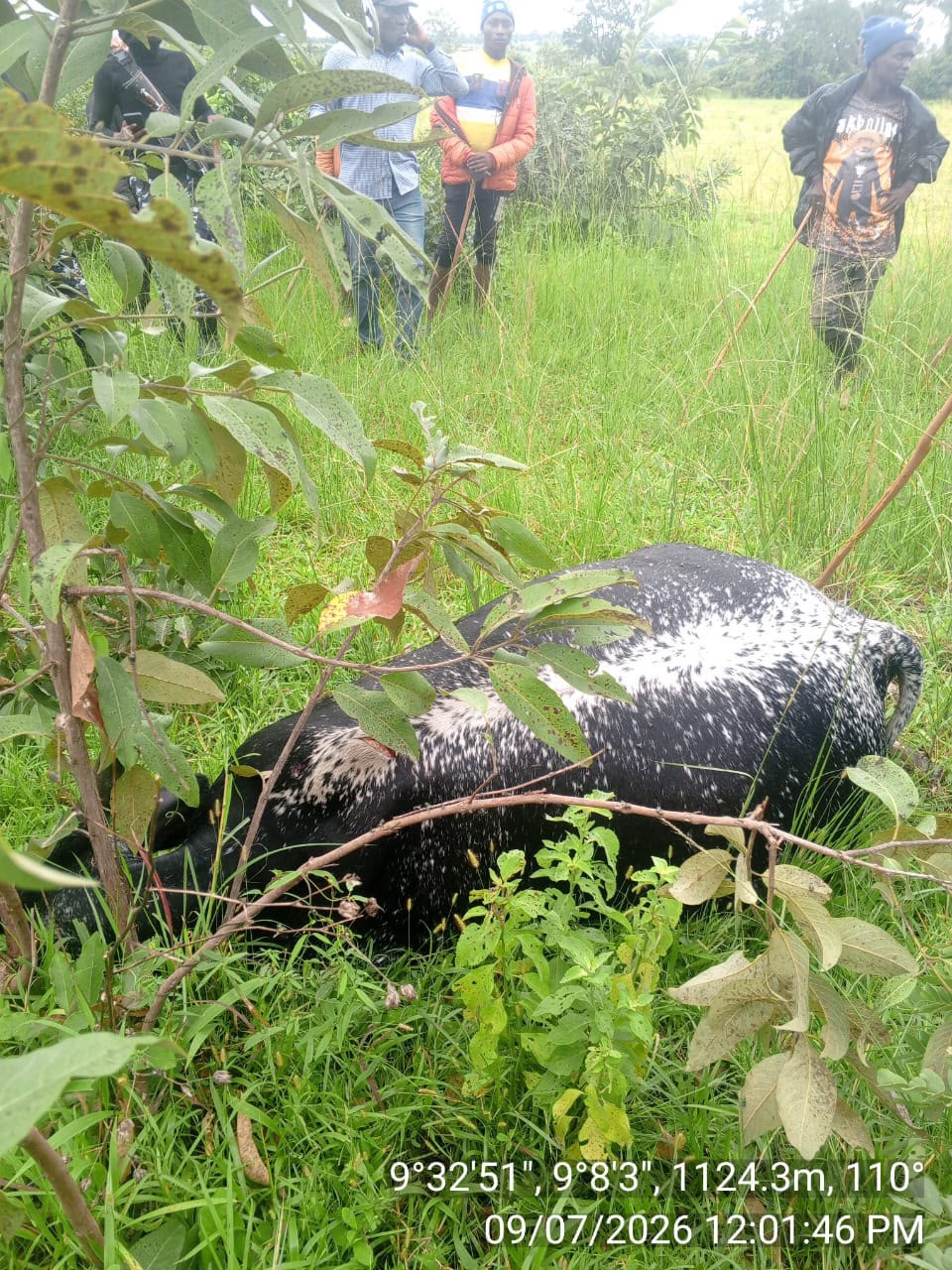
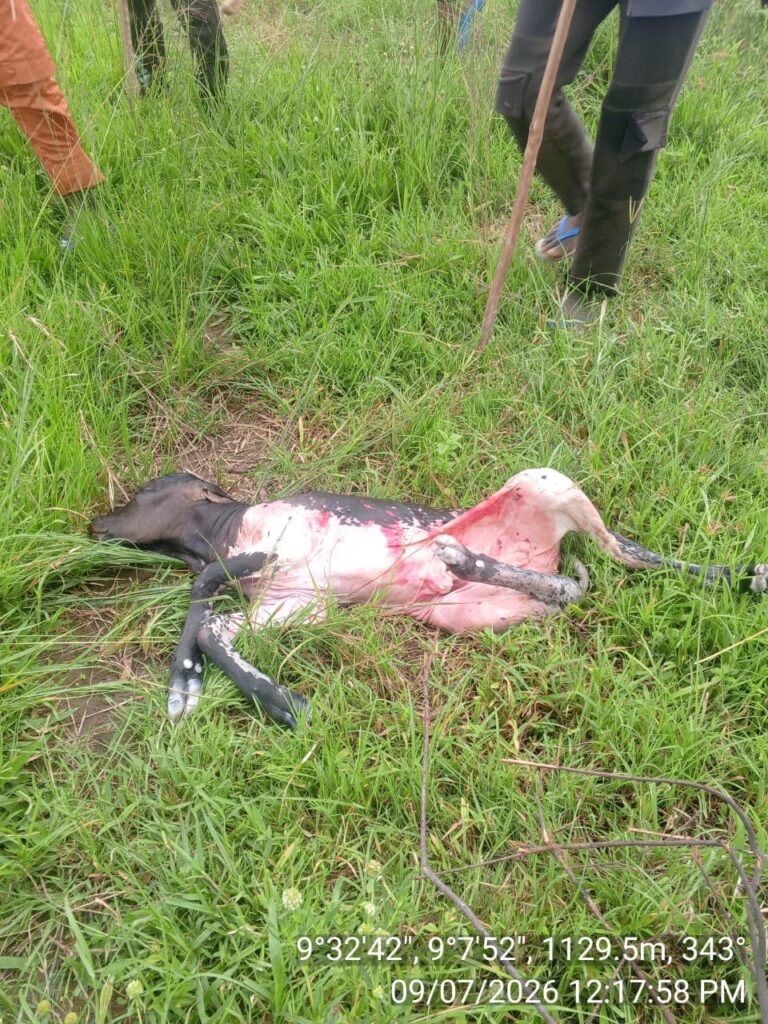
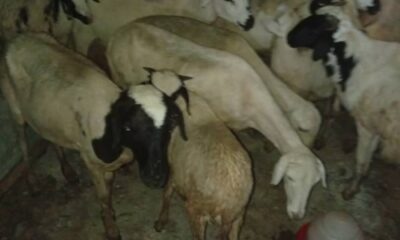
Troops of Operation Enduring Peace have recovered the body of a 13-year-old herder who was declared missing after he went out to graze cattle in Mangu Local Government Area of Plateau State, with four livestock also found dead in what military authorities suspect was an attack by armed militia.
Sources said the victim, identified as Mustapha Abdul Kadir, left home on July 8 to graze cattle around the bushes near Gauge Village but failed to return, prompting concern among family members and the community.
According to the sources, troops of Sector 8, Sub-Sector 81, in conjunction with local security personnel and community members, launched a search-and-rescue operation in the area.
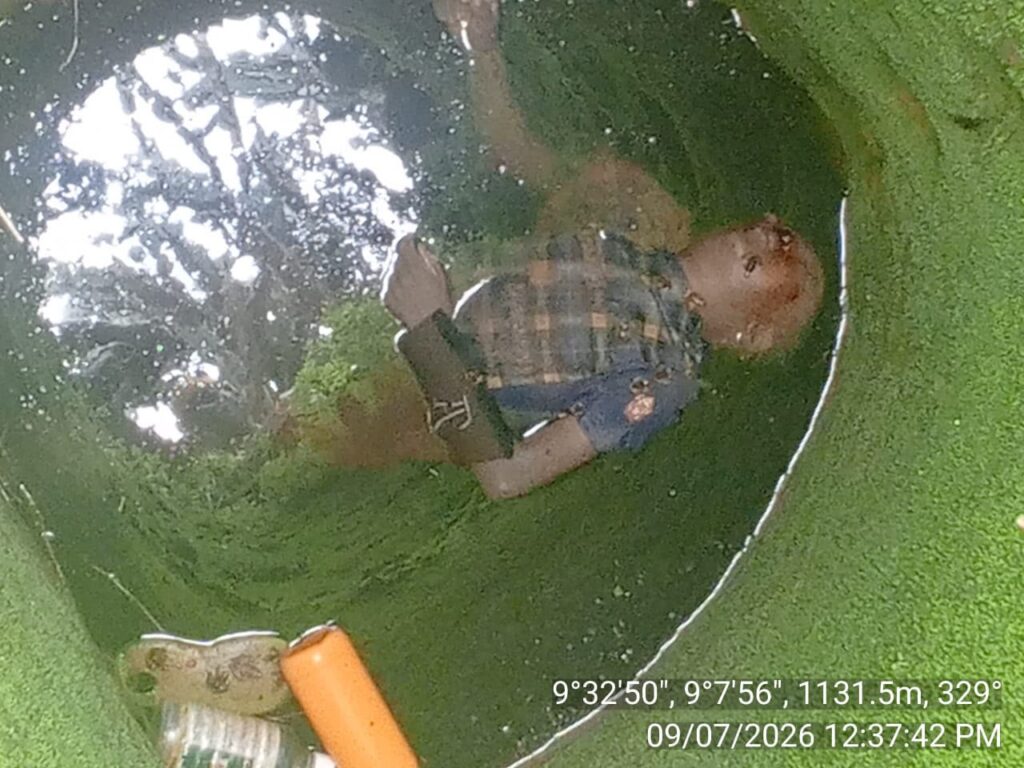
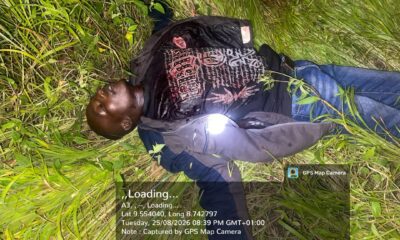
The operation led to the discovery of the teenager’s body on Thursday in a shallow well, alongside four dead cattle believed to have been killed during the attack.
The military said preliminary findings indicated that the victim was attacked by suspected militia while grazing the livestock before his body was dumped in the well.
The remains of the deceased were handed over to his family for burial in accordance with local customs.
The military said stakeholders in the community had been engaged to prevent any breakdown of law and order and to avert possible reprisal attacks.
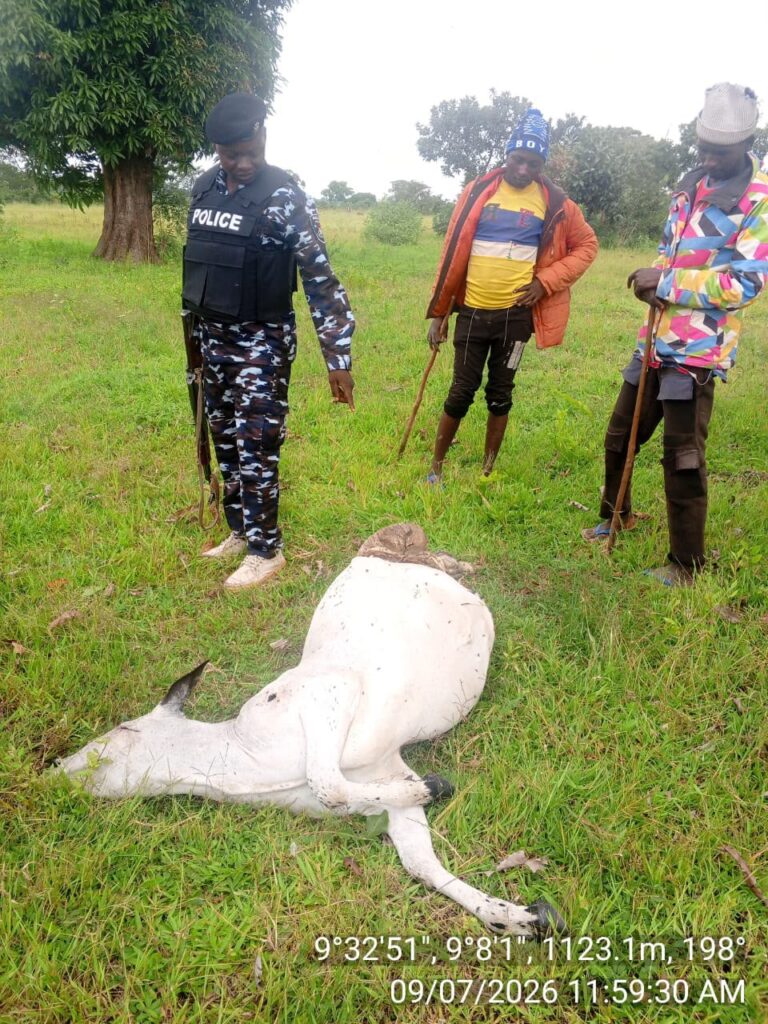
It added that efforts were ongoing to track down and arrest the perpetrators, while troops had intensified patrols across the Operation Enduring Peace Joint Operations Area to protect communities, schools and other critical national infrastructure.
The incident is the latest in a series of security challenges affecting parts of Mangu LGA, where attacks linked to armed groups have continued to threaten lives and livelihoods.
Security sources said community leaders and other stakeholders had been engaged to calm tensions and prevent reprisals, while efforts were underway to identify and arrest those responsible for the attack.
The killing comes amid persistent violence in parts of Plateau State, where recurring clashes involving farming and herding communities have claimed scores of lives and destroyed property over the years.
Attacks targeting either farmers or herders often trigger immediate retaliatory violence, reinforcing a cycle of reprisals that has remained one of the major drivers of insecurity in the state.
Missing herder, four livestock killed by suspected militia elements in Mangu, Plateau








News
The growing role of local militias, criminal networks and possible external forces in the escalation of violence in Plateau State
The growing role of local militias, criminal networks and possible external forces in the escalation of violence in Plateau State
By: Zagazola Makama
The security crisis in Plateau State is increasingly moving beyond the traditional description of a farmer-herder dispute. What is emerging is a multi-layered armed conflict in which communal grievances, local militia mobilisation, criminality, retaliatory violence and information manipulation are reinforcing one another.
The most important distinction for the Federal Government is this: ordinary Berom, Mwaghavul and Fulani citizens are not the enemy. The security threat is posed by identifiable individuals and armed group networks operating within or around these communities.
Available evidence shows that armed groups associated with both farming and pastoralist communities have been involved in violence. BBC, ACLED and Zagazola Media Network have documented attacks involving both farmer and pastoralist communities in Plateau and warned that attacks frequently trigger reprisal violence, producing a cycle of retaliation. The present danger is that this cycle is becoming institutionalised.
There are now repeated reports of armed groups dressed in black moving between communities, conducting mass attacks and withdrawing to hide in the same communities before security forces arrive.
On August 11, troops reportedly engaged an armed group identified by security sources as Berom militia after intelligence indicated that the group was moving from Barkin Ladi towards communities in Mangu. The same reporting also recorded an encounter with suspected Fulani militia in another part of Mangu.
The following day, three people one local resident and two Fulani herders were killed in a clash involving Mwaghavul youths and herders in Jwak Maitumbi, Mangu. Troops intervened and used surveillance to clear the area.
More recently, troops reportedly foiled an attempted attack by suspected local militias moving towards Manja in Mangu on September 17. The attackers reportedly exchanged fire with troops and, while withdrawing, set houses on the outskirts of the community ablaze.
These incidents demonstrate a serious reality that armed communal networks exist, possess firearms and are capable of moving offensively across community boundaries and should be treated as a national security problem. The same cycle is consuming both sides. The danger is particularly visible in the sequence of attacks recorded in September.
On September 12, three young Fulani herders were reportedly killed in Alohom, Mangu, while dozens of cattle were also shot. Community leaders alleged that the attackers were Mwaghavul militia members dressed in black. Some bullets were recovered at the scene.
Less than 24 hours later, six commuters were reportedly killed when the same gunmen dressed in black attacked a commercial vehicle at Dungus Kuru in Jos South, killing both Muslims and Christians. Suspicion is not evidence. But suspicion itself can become a weapon. Both groups traded blames on who was responsible for the attacks.
Once communities believe that one attack must have been retaliation for another, young men will just mobilise before investigators establish what actually happened and carry out a deadly attack on the other community. That is how a single criminal attack becomes a communal war.
Berom and Mwaghavul armed groups require the same scrutiny as armed Fulani groups. They are all criminals and have perpetrated terror. It would be dangerous and analytically dishonest to discuss Plateau insecurity while examining only one side, as many mediums domiciled in Plateau state are doing. There have been hundreds of documented reports of armed Berom militias, including the most recent August incident in which troops reportedly intercepted a group moving towards communities in Mangu.
There have also been clashes involving Mwaghavul youths and herders, as recorded in Jwak Maitumbi.
At the same time, there are repeated reports of attacks attributed by community members to armed Fulani bandits. For example, the Mwaghavul Youth Movement recently alleged that armed Fulani elements were responsible for attacks in Kikyau, Larkas, Ntul and Kinat in Mangu. While some of the reports were true, some of them were rejected by MACBAN.
The security principle should therefore be that if an armed Berom group attacks civilians, pursue it. If an armed Mwaghavul group attacks civilians, pursue it. If an armed Fulani group attacks civilians, pursue it. If a criminal gang exploits the conflict, pursue it. Use the same energy used to go after Fulani bandits to go after Berom and Mwaghavul militias. Their actions show that they are all part of the same security problem when they engage in organised violence against civilians.
The most dangerous development may be the emergence of conflict entrepreneurs, which deserves much greater attention.
Youth groups in Plateau are already turning communal fear into an economic and social enterprise. There is no gainsaying that some individuals are financially benefiting from inflammatory content, mobilisation or conflict-related activities. The underlying phenomenon is real enough to warrant investigation. An attack committed by criminals can be transformed into evidence of a national religious conspiracy. And once such a narrative takes hold, facts become almost irrelevant.
The algorithm rewards anger. The conflict entrepreneur monetises it. The community pays the price. Emotional mobilisation can become another weapon This is perhaps one of the most uncomfortable truths recently revealed by the BBC investigation in Plateau.
A 2026 Premium Times investigation documented how misinformation, old photographs and videos, inflammatory narratives and unverified claims circulated on social media during Plateau violence and helped intensify perceptions of impending reprisals. The investigation found that online narratives could move faster than official clarification and contribute to real-world tension.
This creates a new type of warfare: the person who does not carry a rifle but helps create the environment in which someone else picks one up. The people must begin to ask: Who benefits financially, politically or socially from keeping Plateau permanently in crises? That question deserves the same seriousness as the question of who pulled the trigger.
This is how communities become militarised:
Attack → fear → mobilisation → revenge → counter-revenge → displacement → arming of youths → media propaganda → another attack.
Eventually, young people who previously had no interest in violence begin to believe that joining an armed group is necessary for survival. At that point, the conflict develops its own recruitment mechanism. The state is then fighting not merely armed men, but an entire ecosystem of fear.
Perhaps the most disturbing allegation emerging from affected communities is that some of the worst attacks may involve non-local gunmen or hired fighters who enter a community, conduct mass attacks and disappear into areas where they are difficult to identify. If evidence confirms that mercenaries are being formed in Plateau to conduct attacks and then sheltered by local networks, the character of the conflict changes substantially.
It would mean that some attacks are not merely spontaneous communal reprisals. They could represent organised armed operations using local knowledge, local logistics and external manpower. That claim cannot be simply accepted, but neither should it be ignored.
One of the most persistent claims in Plateau is that local residents, youths groups and traditional authorities know the individuals responsible for carrying out attacks. While these individuals carry out terror, their host communities view them as heroes or defenders of the land. The communities always protect the criminals even when they genuinely possess information about perpetrators, making peace efforts difficult for security agencies.
The greatest obstacle is often fear and, in many cases, complicity from within. A resident who identifies an armed perpetrator may fear retaliation from that person’s relatives or associates, likewise, a traditional ruler may fear that publicly naming suspects could trigger another attack. A youth leader may possess information but fear being branded a traitor.
The Federal Ministry of Defence and the Armed Forces already recognise the need for a combination of military pressure, intelligence and peace-building. The Chief of Army Staff, Lt.-Gen. Waidi Shaibu, had during his visit to Plateau State directed troops to sustain pressure on criminal groups while supporting peace-building, stronger intelligence gathering and cooperation with traditional and community leaders.
The next step should be to turn that principle into a specific Plateau armed-group strategy, while a dedicated multi-agency cell should map:
armed Fulani networks, armed Berom networks, armed Mwaghavul networks, criminal or kidnapping gangs, weapons suppliers and gun runners,financiers, informants and logistics networks. suspected external actors; and online actors demonstrably linked to mobilisation or threats.The purpose should be individual identification and prosecution.
Develop an attack attribution system.Every major attack should generate a formal case file containing: location + time + victims + weapons + ammunition + direction of attack + escape route + witnesses + communications intelligence + previous incidents + suspects + evidence. This would make it harder for perpetrators to sometimes disappear behind the phrase “unknown gunmen.”
Treat weapons as evidence, not just recovered items.The recovery of an AK-47, locally fabricated rifle or ammunition should trigger ballistic and intelligence exploitation. The question should be: Where has this weapon appeared before? A weapon used in three attacks across different LGAs could provide a direct link between incidents that communities currently regard as separate.
The person who fires the weapon is only one part of an organised attack. Establish a rapid-reaction architecture around known flashpoints. Mangu, Barkin Ladi, Riyom, Bokkos and vulnerable approaches to Jos South require sustained intelligence-led patrols.
The message to Plateau’s communities must also change. The Federal Government should make one point unmistakable: No community has a licence to kill another community in the name of self-defence. A Fulani civilian must not be treated as a militia member or a terrorist simply because he is Fulani. The same goes for Berom and Mwaghavul.The state must pursue armed individuals based on evidence of conduct, not identity.
The greatest threat to Plateau is not simply the number of people killed in individual attacks.
The problem is that people are gradually normalising killings as if they were nothing. Once that continues to happen, every road becomes a potential frontline, every market becomes a potential target, every cattle route becomes a security corridor, and every social-media post can become an early-warning signal for revenge.
Identify the armed networks. Identify their financiers. Identify their weapons. Identify their logistics. Identify those who shelter them. Identify those who incite attacks. Build admissible evidence. Arrest suspects. Protect witnesses. Prosecute cases. And do this regardless of whether the perpetrator is associated with a Berom, Mwaghavul, Fulani or any other community.
Plateau’s conflict is no longer adequately understood as two communities simply fighting over land. It is increasingly a security ecosystem involving communal grievances, armed local networks, criminal opportunists, retaliatory mobilisation and information warfare.
The Federal Government therefore has an opportunity to change the trajectory of the crisis: move from responding to communities after they are attacked to dismantling the armed networks that repeatedly produce the attacks.
Zagazola Makama is a Counter Insurgency Expert and Security Analyst in the Lake Chad Region.
The growing role of local militias, criminal networks and possible external forces in the escalation of violence in Plateau State
News
NSCDC Arrests, Detains 24 Personnel in Conn election with Death of 37 Alleged Miners in Custody
NSCDC Arrests, Detains 24 Personnel in Conn election with Death of 37 Alleged Miners in Custody
By: Michael Mike
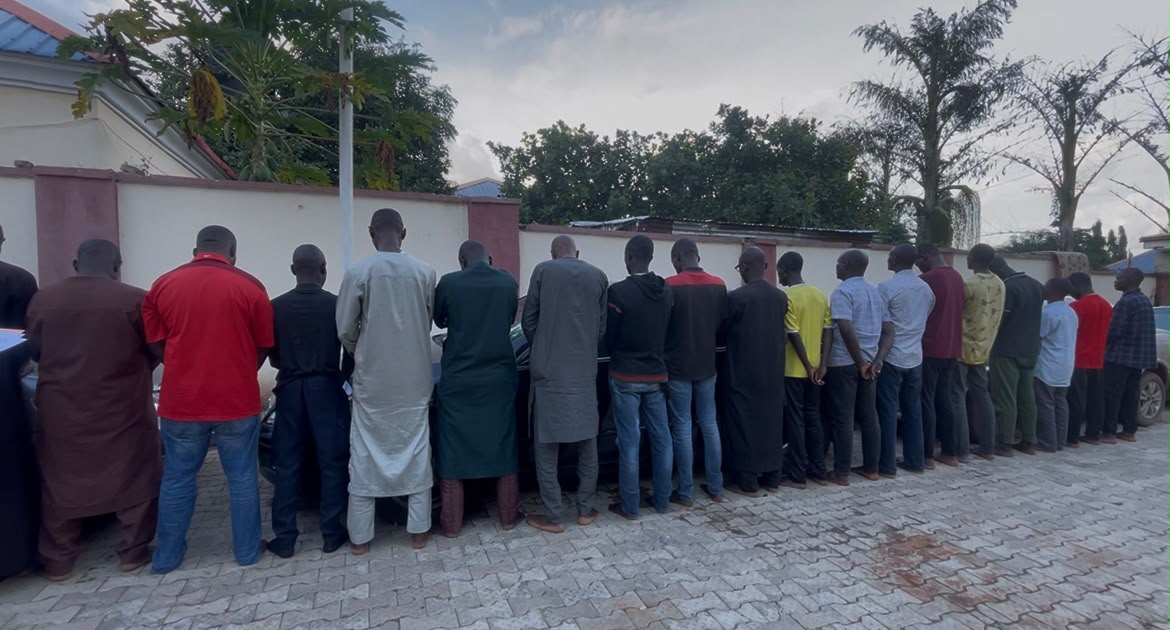
As Nigeria mourns the unfortunate death of 33 suspected illegal miners in Niger State, Commandant General of the Nigeria Security and Civil Defence Corps (NSCDC), Professor Ahmed Audi has given assurance that due process, transparency and accountability will be strictly followed in the investigation of 24 personnel of the Corps currently held in custody of the NSCDC, adding that every single personnel found culpable will face the full weight of internal disciplinary measures and the law.
As against the initial figure of 21 personnel, the Corps Public Relations Officer, Babawale Afolabi, while parading the officers and men at the Corps Headquarters disclosed that three more personnel identified have also been placed on suspension thereby bringing the number of personnel detained in relations to the death to 24 personnel.
The Spokesman explained,
“in a swift and decisive joint operation conducted in conjunction with the Commandant General’s Special Investigation Squad (SIS) all officers and men of the Niger State Command linked to the gross misconduct have since on the 17th September 2026 been taken into protective custody at the National Headquarters, Abuja, where they are undergoing rigorous interrogation and administrative disciplinary action, so as to make them available for the Presidential Independent Investigation Committee and other investigation panels for further investigation and possible prosecution.”
According to him, in solemn demonstration of our grief, institutional remorse, and absolute disapproval of this incident, the Commandant General has ordered that the NSCDC flag be flown at half-mast across all formations for three days, starting from Sunday , 20th September, 2926 to signal our collective mourning and our unwavering resolve to purge the system of bad eggs.
The PRO quoted the Commandant General who said, “as a Corps built on integrity, professionalism, discipline, and absolute respect for the rule of law, we do not condone unprofessional conduct, high-handedness, or any action that undermines the fundamental rights of citizens or the sacred trust reposed in us.”
He pledged on behalf of the service to continue to keep the public abreast on the outcome of the investigation, adding that the leadership of the NSCDC remains unwavering in its commitment to transparency, human rights protection, and professional ethics.
In furtherance, he appreciated the patience and understanding of Nigerians during the internal re-evaluation.
Names of the officers held in the custody in connection with the event as:
1. Commandant Subaru Siyaka Aniviye (SN: 3465) – suspended NSCDC Niger State Commandant
2.DCC. Ajayi Philips (SN: 19546) – HOD Intelligence and Investigation *(Remark: Lack of supervision)
3. DCC. John Agrahau Chagwa (SN: 1571) HOD Operations Remark: lack of supervision
4. DCC. Obafemi Elvis (SN: 26234)
5. ACC. Stephen Tsado (SN: 19057) – O/C Legal
6. CSC. Oluwadare Sunday (SN: 12648)
7. CSC. Annas Shittu Lamino (SN: 28882)
8. SC. Usman Isah Ndamaka (SN: 70016)
9. DSC. Aminu Sule Garba (SN: 66281)
10. DSC. Musa Marafa (SN: 66580)
11. DSC. Isah Sulaiman (SN: 44377)
12. ASCI. Hassan Muhammad (SN: 56218)
13. ASCI. Alhassan Muhammad (SN: 14232)
14. Aliyu Sallah (SN: 67130) – Guard Duty
15. IC. Abdullahi Sale (SN: 41683) –
16. IC. Mohammed N. Sonfada (SN: 74351)
17. Mohammed Jiya
18. Sale Adamu (SN: 46400) –
19. Haruna Muhammed (SN: 52659)
20. CCA. Baba Muhamma (SN:44273)
21. CAI. Isah Sanusi (SN: 78586)
22. CAI. Liman Abubakar (SN: 72017)
23. CAI. Bala Usman (SN: 76178)
24. CAI. Ahmed Wushishi (SN: 70502)
NSCDC Arrests, Detains 24 Personnel in Conn election with Death of 37 Alleged Miners in Custody

Group Demands Probe into Death of Nigerian Academic in South Africa
By: Michael Mike
Speak Out for Justice Advocacy Ltd/Gte (SOJA) has called for a full, independent and transparent investigation into the death of a 51-year-old Nigerian academic, Dr Ayodele Temidayo Odularu, who was reportedly found dead at her residence in South Africa’s Eastern Cape Province on August 16.
The rights advocacy organisation made the demand in a statement issued on Sunday by its Founder and Executive Director, Hameed Ajibola Jimoh, amid concerns raised by Odularu’s family over the circumstances surrounding her death.
Odularu, a Nigerian academic and researcher associated with the University of Fort Hare, was reportedly found dead at her residence, with the university subsequently holding a memorial service in her honour.
While SOJA stressed that no competent authority had publicly established the cause or manner of her death, it said the uncertainty surrounding the circumstances made a credible investigation imperative.
The organisation cautioned against prematurely describing the death as murder, an attack or an act of xenophobic violence, insisting that such conclusions must be based on evidence.
However, SOJA argued that the absence of an established cause of death should not become a reason for the case to be closed without exhaustive investigation.
“An investigation must therefore neither manufacture a crime where none occurred nor dismiss a possible crime as a natural death without proper evidence,” the organisation said.
SOJA urged the South African Police Service, prosecutorial authorities, medico-legal officials and other relevant institutions to establish the precise medical cause of death and reconstruct the circumstances leading to Odularu’s death.
It specifically called for scrutiny of events at her residence before she was found dead, the circumstances in which she was last seen alive, and any evidence of forced entry, struggle, injury, poisoning, assault or other suspicious circumstances.
The organisation also demanded the preservation and examination of potentially crucial evidence, including CCTV footage, telephone records and electronic communications, as well as a proper post-mortem examination and toxicological or other forensic analyses where necessary.
It further urged investigators to establish whether anyone who had access to Odularu, communicated with her or visited her shortly before her death could provide information relevant to the investigation.
SOJA’s intervention comes against the backdrop of recurring concerns over the safety of Nigerians and other African nationals in South Africa, but the organisation said the broader context should not be used to predetermine the cause of Odularu’s death.
According to the group, investigators must examine all reasonable possibilities, including criminality, discrimination, xenophobic hostility, interpersonal conflict, accident and medical causes.
“Dr Odularu was a Nigerian citizen, but she was also a human being living and working within the jurisdiction of South Africa. Her nationality could never lawfully reduce the protection owed to her life, dignity and physical security,” SOJA said.
The organisation cited South Africa’s constitutional protection of the right to life and human dignity, as well as its obligations under international human-rights instruments, including the African Charter on Human and Peoples’ Rights and the International Covenant on Civil and Political Rights.
It also referred to South Africa’s Inquests Act 58 of 1959, which provides for inquests into deaths apparently resulting from causes other than natural causes.
SOJA maintained that the legal framework should be allowed to operate without interference where questions arise over whether a death was natural, accidental, suicidal, homicidal or otherwise unlawfully caused.
The organisation also turned its attention to the Nigerian government, urging the Federal Ministry of Foreign Affairs and Nigeria’s diplomatic mission in South Africa to engage directly with Odularu’s family and establish the status of the investigation.
It called for appropriate consular assistance, regular communication with the family and diplomatic engagement where credible evidence eventually establishes that the death was connected to a crime, discrimination, xenophobic violence or other unlawful conduct.
“The Nigerian Government should not wait until public outrage subsides before seeking answers concerning the death of a Nigerian citizen abroad,” SOJA said.
The group also demanded that Odularu’s remains be treated with dignity and that her family be provided with appropriate information on the investigation, subject to lawful investigative restrictions.
It said any person found criminally responsible should face prosecution, while evidence of negligence or institutional failure should trigger appropriate accountability and corrective measures.
Conversely, SOJA said, if credible medical and investigative evidence establishes that the death was natural or accidental, that conclusion should be communicated on the basis of those findings.
The organisation stressed that the objective should not be to satisfy public curiosity but to establish the truth and ensure justice and accountability.
“Dr Ayodele Temidayo Odularu was not merely a statistic in an international news report. She was a daughter, sister, aunt, colleague, mentor, researcher and member of the Nigerian community whose life had value and whose death deserves a truthful account,” SOJA said.
It urged authorities to ensure that the circumstances surrounding her death do not remain unresolved, demanding “truth for the family, justice for Dr Ayodele Temidayo Odularu and accountability where wrongdoing is established.”
SOJA also called for stronger protection for Nigerians and other African nationals living and working in South Africa, stressing that nationality should never diminish the protection accorded to human life.
Group Demands Probe into Death of Nigerian Academic in South Africa

The growing role of local militias, criminal networks and possible external forces in the escalation of violence in Plateau State

NSCDC Arrests, Detains 24 Personnel in Conn election with Death of 37 Alleged Miners in Custody

Group Demands Probe into Death of Nigerian Academic in South Africa

Roger Federer’s Shock as DNA Results Reveal Myla and Charlene Are Not His Biological Children

THE PLIGHT OF FARIDA

FAILED COUP IN BURKINA FASO: HOW TRAORÉ NARROWLY ESCAPED ASSASSINATION PLOT AMID FOREIGN INTERFERENCE CLAIMS
-
 News3 years ago
Roger Federer’s Shock as DNA Results Reveal Myla and Charlene Are Not His Biological Children
-
Opinions5 years ago
THE PLIGHT OF FARIDA
-
 News1 year ago
FAILED COUP IN BURKINA FASO: HOW TRAORÉ NARROWLY ESCAPED ASSASSINATION PLOT AMID FOREIGN INTERFERENCE CLAIMS
-

 News3 years ago
EYN: Rev. Billi, Distortion of History, and The Living Tamarind Tree
-
 Opinions5 years ago
POLICE CHARGE ROOMS, A MINTING PRESS
-

 ACADEMICS3 years ago
A History of Biu” (2015) and The Lingering Bura-Pabir Question (1)
-

 Columns3 years ago
Army University Biu: There is certain interest, but certainly not from Borno.
-

 Politics1 year ago
2027: Why Hon. Midala Balami Must Go, as Youths in Hawul and Asikira/Uba Federal Constituency Reject ₦500,000 as Sallah Gift
