
News
Murder of Fulani herder triggers reprisal attack, leaves three villagers dead in Anwule, Benue

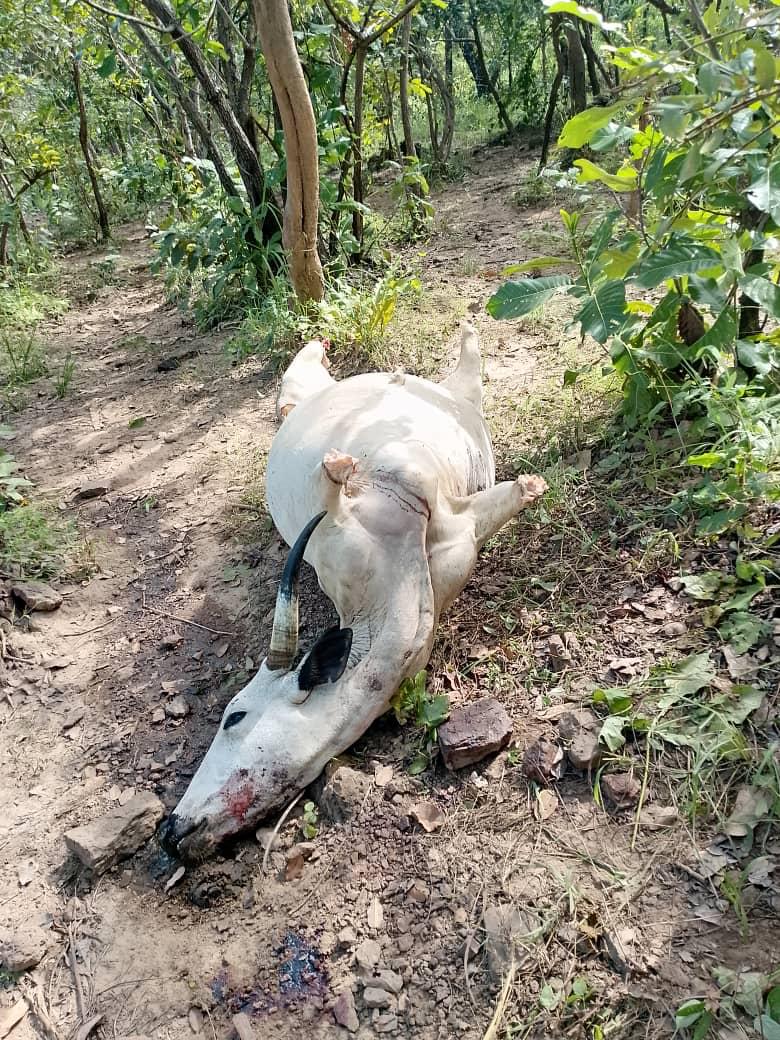
Murder of Fulani herder triggers reprisal attack, leaves three villagers dead in Anwule, Benue
By: Zagazola Makama
Three persons have been killed and one declared missing following a reprisal attack by suspected herders on Anwule community in Ohimini Local Government Area of Benue State.
The attack, which occurred on Tuesday, was triggered by the alleged murder of a Fulani herder by some suspected villagers in late August
The tragedy traces back to late August, when a young Fulani herder was reportedly assaulted and killed by some villagers who accused him of grazing cattle on their farmland. His death, security sources say, was the spark that ignited the deadly cycle.
“They attacked the cattle, and in the process, the young boy herding them was killed,” a security source told Zagazola.
“Up till now, his body has not been found. That incident changed everything.”
After the killing, tension became the village’s new normal. Security sources said the herders launched a desperate search for the boy’s body, while villagers, anxious over possible retaliation, kept night vigils around the community.
Instead of de-escalation, the situation worsened. On Monday, some villagers reportedly launched another attack on herders in a separate encounter, killing more cattle and a Fulani herder.
“That second attack was the tipping point,” another source disclosed. Once a human life was involved again, everyone knew a reprisal was almost certain.”
By Tuesday morning, the herders struck back.
Before troops from the Army Forward Operating Base, Otukpo, could respond to distress calls from villagers, the attackers invaded Anwule, shooting sporadically and torching homes. When the gunfire stopped, three villagers – Simon Nbach, Adoya Ejigai and Ejeh Loko – lay dead. One resident is still missing, and community members fear he may also have been killed.
One Simon Nbach, who was later identified as a pastor of the Flaming Fire Ministry, was among those caught in the attack.
Troops later assisted locals in recovering the bodies. The villagers who survived now live in fear; many have fled to neighbouring communities, abandoning their farmlands and homes.
In the aftermath, senior government officials, including the Special Adviser to the Governor on Security, Mr. Joseph Har, and the Chairman of Ohimini LGA, Mr. Gabriel Adole, visited the community. They appealed for calm and promised reinforced security surveillance.
“We understand the grief and fear, but peace must be maintained. Security agencies are already on the trail of the perpetrators,” Har told the community leaders.
Murder of Fulani herder triggers reprisal attack, leaves three villagers dead in Anwule, Benue


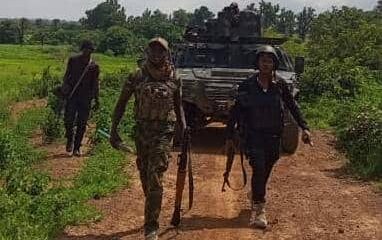

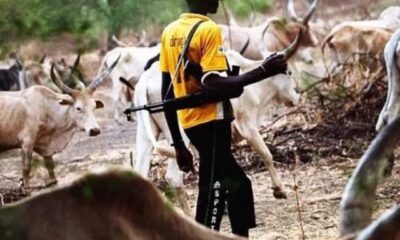

Troops Intercept Arms Courier, Recover Weapons and Ammunition
By: Zagazola Makama
Troops of 12 Brigade, in collaboration with operatives of the Office of the National Security Adviser (ONSA) and Hybrid Forces, have intercepted a suspected arms courier vehicle and recovered weapons, ammunition and communication equipment along the Sokoto-Zaria-Kaduna highway.
Security sources disclosed that the operation, conducted on June 21 based on credible intelligence, targeted a vehicle suspected to be conveying arms to Kogi State.
The sources said the suspect abandoned the vehicle and fled upon sighting the security operatives.
A search of the vehicle led to the recovery of two AK-47 rifles, nine magazines, 67 rounds of 7.62mm special ammunition, two Beretta pistols with 9mm ammunition, two Baofeng handheld radios and three camouflage jackets.
According to the sources, the recovered items are currently in the custody of the troops for further investigation and exploitation.
The sources added that efforts were ongoing to identify and apprehend the fleeing suspect as well as uncover the network behind the arms movement.
They noted that the operation underscored the effectiveness of intelligence-led security efforts aimed at disrupting the movement of illegal arms and ammunition across the country.
Troops Intercept Arms Courier, Recover Weapons and Ammunition
COAS Joins Security Chiefs at Nigeria-UK Defence, Security Dialogue
By: Zagazola Makama
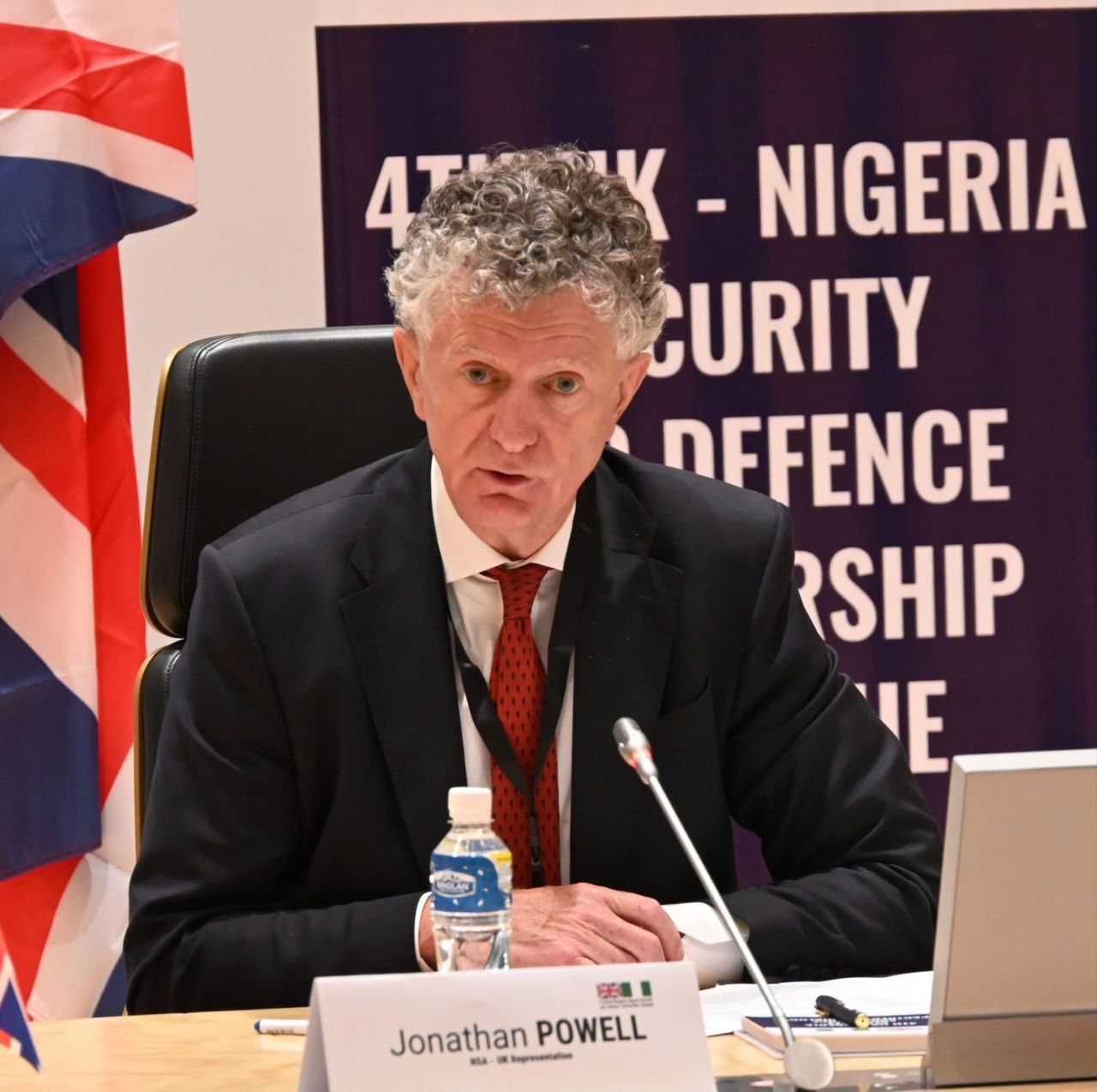
The Chief of Army Staff (COAS), Lt.-Gen. Waidi Shaibu, on Tuesday joined top Nigerian security leaders at the Fourth Nigeria-United Kingdom Security and Defence Partnership Dialogue in Abuja.
The high-level meeting brought together the National Security Adviser, Nuhu Ribadu, the Chief of Defence Staff, service chiefs, the Inspector-General of Police and other senior security stakeholders.
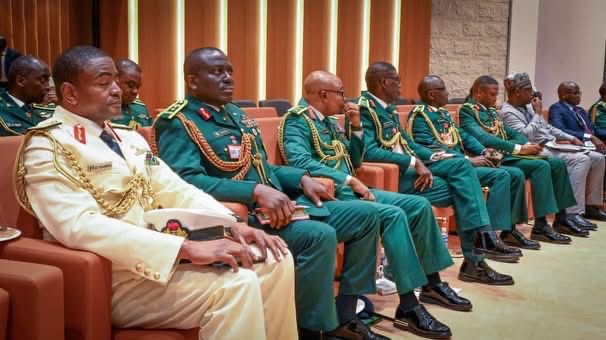
The dialogue was co-chaired by Ribadu and Jonathan Powell, and focused on strengthening bilateral cooperation in addressing emerging security challenges and advancing shared strategic interests between both countries.
Participants discussed ways of enhancing collaboration in areas such as defence cooperation, intelligence sharing, capacity building and regional security.
Security officials noted that the longstanding partnership between Nigeria and the United Kingdom remained vital to efforts aimed at tackling security threats and promoting stability.
They added that the partnership had continued to support the development of military and security capabilities through training, technical assistance and strategic engagements.
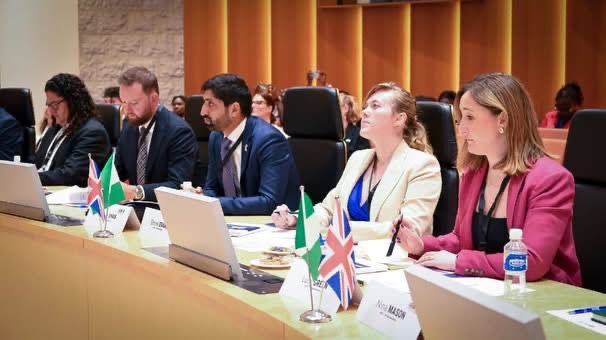
The Nigerian Army reaffirmed its commitment to working with national and international partners to strengthen security, safeguard the country’s sovereignty and contribute to regional peace and stability in line with the Federal Government’s security objectives.
COAS Joins Security Chiefs at Nigeria-UK Defence, Security Dialogue
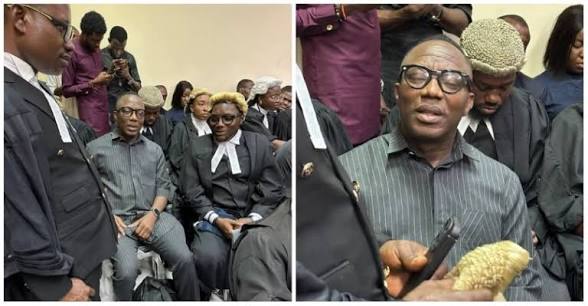
Alleged Cybercrime: Sowore Sent Back to Kuje Correctional Centre
By: Zagazola Makama
- Court Fixes June 30 To Hear Appeal on Bench Warrant
The Federal High Court in Abuja on Wednesday ordered that politician and online publisher, Omoyele Sowore, be sent back to the Kuje Correctional Centre until June 30 when his application for the setting aside the order of bench warrant and revocation of bail application would be considered.
On Monday, Justice Mohammed Umar, revoked the December 2025 bail he granted Sowore “based on self-recognition”, and ordered that the politician be remanded in Kuje Correctional Centre.
Before the revocation of the bail, Justice Umar had ordered Sowore to open his defence in a matter of alleged cybercrime brought against him by the Department of State Services (DSS).
At the resumed hearing of the matter, on Wednesday, Sowore’s lawyer, R. O. Adakonye, who stood in for Adeyinka Olumide-Fusika, SAN, informed the court that the matter was adjourned for hearing of their application to set aside the order of bench warrant and revocation of the bail of the defendant on account of his absence in court on 16th June, 2026.
The prosecution lawyer, A. T. Kehinde ,SAN, however, opposed the application filed by the defence. He told the court have he had filed a counter-affidavit urging the Court to refuse the application to set aside the order of bench warrant and revocation of bail against Sowore.
The judge, thereafter, adjourned the matter to June 30, 2026 for ruling on the application to set aside the order of bench warrant and revocation of bail application.
The defence lawyer begged the court to release Sowore to him, with a promise to bring the politician to court hon June 30. The judge declined the defence lawyer’s request and insisted that Sowore be taken back to Kuje Correctional Centre.
The DSS resorted to prosecuting Sowore for alleged cyber-bullying after several unsuccessful appeals to make him pull down posts he made on his “X” and Facebook accounts in August 2025, calling President Bola Tinubu a “criminal.”
Alleged Cybercrime: Sowore Sent Back to Kuje Correctional Centre

Troops Recover Over 2,400 Rustled Livestock After Clash with Terrorists in Zamfara

Troops Intercept Arms Courier, Recover Weapons and Ammunition

COAS Joins Security Chiefs at Nigeria-UK Defence, Security Dialogue

Roger Federer’s Shock as DNA Results Reveal Myla and Charlene Are Not His Biological Children

THE PLIGHT OF FARIDA

FAILED COUP IN BURKINA FASO: HOW TRAORÉ NARROWLY ESCAPED ASSASSINATION PLOT AMID FOREIGN INTERFERENCE CLAIMS
-
 News2 years ago
Roger Federer’s Shock as DNA Results Reveal Myla and Charlene Are Not His Biological Children
-
Opinions4 years ago
THE PLIGHT OF FARIDA
-
 News1 year ago
FAILED COUP IN BURKINA FASO: HOW TRAORÉ NARROWLY ESCAPED ASSASSINATION PLOT AMID FOREIGN INTERFERENCE CLAIMS
-

 News2 years ago
EYN: Rev. Billi, Distortion of History, and The Living Tamarind Tree
-
 Opinions5 years ago
POLICE CHARGE ROOMS, A MINTING PRESS
-

 ACADEMICS2 years ago
A History of Biu” (2015) and The Lingering Bura-Pabir Question (1)
-

 Columns2 years ago
Army University Biu: There is certain interest, but certainly not from Borno.
-

 Politics1 year ago
2027: Why Hon. Midala Balami Must Go, as Youths in Hawul and Asikira/Uba Federal Constituency Reject ₦500,000 as Sallah Gift
