
News
Mutiny in Niger: Russia, AES and the Limits of Propaganda

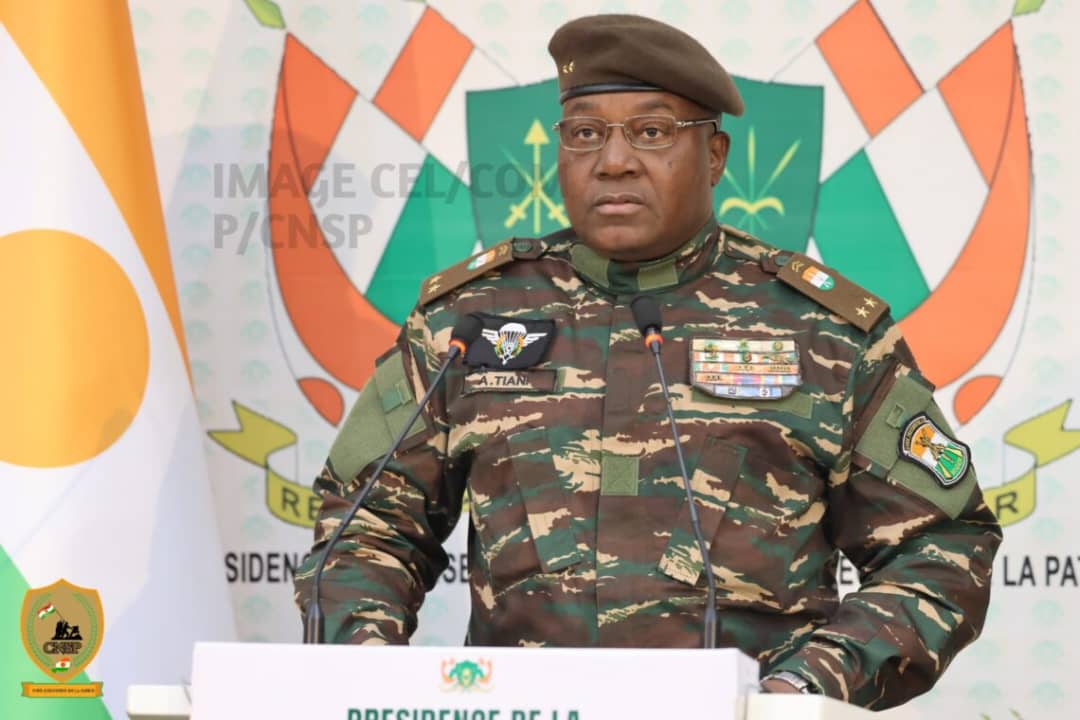
Mutiny in Niger: Russia, AES and the Limits of Propaganda
By Oumarou Sanou
The attempted mutiny in Niger has exposed something more consequential than a challenge to General Abdourahamane Tiani’s three-year-old military regime. It has revealed the widening gap between the junta’s rhetoric of sovereignty and its dependence on foreign security partners, while raising uncomfortable questions about the Alliance of Sahel States (AES) and Russia’s growing role in protecting the regime rather than the state.
On the night of 28-29 August 2026, Niamey was plunged into turmoil as mutinous soldiers, reportedly including young officers from units associated with Ouallam, Téra and Dosso, attacked strategic positions around the capital. Their targets included Air Base 101 within the Diori Hamani International Airport complex, the presidential palace and the headquarters of the state broadcaster. The mutineers briefly took control of the airbase, and television transmissions were disrupted. By the end of the confrontation, loyalist forces had regained control. Dozens of soldiers were reportedly killed or arrested, though precise circumstances and figures remain difficult to establish independently. More significant was the reported role of Russia’s Africa Corps in helping Nigerien forces retake Base 101, with Russian personnel said to have provided ground and aerial support after the authorities requested assistance.
This deserves more scrutiny than triumphant declarations that the mutiny was defeated. The question is not simply who won the confrontation. It is what the circumstances of that victory reveal about Niger’s political and security order.
For three years, Tiani’s government has presented sovereignty as the foundation of its legitimacy. Western forces were expelled, France was rejected as a security partner, and the junta insisted that Niger would determine its own strategic choices. Yet when Nigerien soldiers turned against their leadership, the regime reportedly relied on foreign forces already stationed on Nigerien soil.
This does not, by itself, prove that Niger has surrendered its sovereignty to Moscow, nor should every Russian-Nigerien security arrangement be read as Russian control of the state. But it exposes a striking contradiction. If a foreign military presence is unacceptable interference when it comes from one geopolitical camp, but indispensable assistance the moment the regime itself is threatened, what does sovereignty actually mean? This was not an external invasion or a conventional jihadist assault. It was an internal military revolt, and the reported Russian intervention was directed not at an al-Qaeda or Islamic State-linked formation, but at Nigerien soldiers challenging the authorities.
The symbolism is hard to ignore: a foreign partner reportedly became decisive in protecting a government from elements of its own armed forces. This is where the distinction between regime security and national security matters. A state can survive while a regime grows more fragile, and protecting the government of the day is not the same as strengthening its institutions.
Indeed, the mutiny raises serious questions about the condition of Niger’s armed forces. Some of the soldiers involved were reportedly linked to areas heavily affected by jihadist violence. Niger continues to face attacks from groups linked to al-Qaeda and Islamic State, and its military has suffered significant casualties. The unrest has exposed growing pressure and dissatisfaction within the ranks, creating a dangerous paradox: the junta took power in July 2023 partly by promising that military rule would restore security, yet three years later insecurity remains severe enough to threaten the cohesion of the very forces meant to defeat the insurgency. A government cannot indefinitely explain away battlefield failures as foreign conspiracy, nor can propaganda compensate for institutional weakness.
That is perhaps the wider lesson from this crisis. The information battle has become almost as important as the physical one, with governments, opposition groups and foreign actors using social media to shape competing narratives around legitimacy and sovereignty. Following the mutiny, accusations circulated linking Nigeria and ECOWAS to the attempted overthrow. Nigeria’s Ministry of Foreign Affairs categorically rejected this. In its 3 September 2026 statement, the ministry insisted Nigeria “did not and will never support any military coup or unconstitutional change of government,” describing the claims as false, and reaffirmed its commitment to the ECOWAS Protocol on Democracy and Good Governance and to regional peace and stability.
That clarification matters as an attempt to stop misinformation from further straining relations between Niger and its neighbours. But it also illustrates the limits of propaganda more broadly. Narratives can shape public opinion, mobilise supporters and reinforce a government’s legitimacy. What they cannot do is change the realities experienced by soldiers and civilians. A soldier facing repeated attacks does not become safer because a government describes the security situation as improving. A citizen does not become more secure because the state blames every problem on France, Nigeria or ECOWAS. An army divided by distrust does not regain cohesion through slogans about sovereignty.
The same principle applies to the AES. The grievances that drove Niger, Mali and Burkina Faso away from ECOWAS and their former Western partners should not be trivialised; Western interventions failed to produce lasting security, and public frustration with foreign influence was genuine. But strategic autonomy cannot simply mean swapping one external security dependency for another. The AES must eventually demonstrate that it can deliver what its members promised: stronger security, greater sovereignty and better governance. The Niger mutiny casts real doubt on that proposition, and exposes the cost of regional isolation. Niger’s withdrawal from ECOWAS has narrowed avenues for institutional cooperation precisely as insecurity spreads across borders that jihadist groups do not recognise. The threat facing Niger also threatens Nigeria, Benin, Chad, Mali and Burkina Faso.
This is why Nigeria’s restraint, rather than triumphalism, is commendable. Abuja should neither celebrate instability in a neighbouring country nor be drawn into a propaganda contest with Niamey. Its interests lie in a stable Niger, effective regional security cooperation and a return to credible constitutional governance.
Ultimately, the mutiny should force Niger’s rulers to confront a question propaganda cannot answer: can a regime that came to power through a coup build lasting legitimacy without addressing the political, institutional and security conditions that made military intervention possible in the first place? Russia may help protect the regime, the AES may offer political solidarity, and propaganda may shape the narrative. None can permanently substitute for legitimacy, institutional cohesion, democracy and security.
The real test of Niger’s sovereignty is therefore not how loudly it is proclaimed, nor how successfully foreign partners can defend the government. It is whether Niger can build a state capable of defending its territory, protecting its citizens, maintaining the cohesion of its armed forces, and resolving political disagreements without repeatedly resorting to force. The mutiny has not ended Tiani’s rule, but it has exposed its vulnerability. Perhaps that is the most important lesson from Niamey: propaganda can defend a narrative, and foreign partners can defend a regime, but only legitimate institutions can sustainably defend a state.
Oumarou Sanou is a social critic, Pan-African observer and researcher focusing on governance, security and political transitions in the Sahel. He writes on geopolitics, regional stability and African leadership dynamics.
Contact: sanououmarou386@gmail.com
Mutiny in Niger: Russia, AES and the Limits of Propaganda



NCYP Backs Tinubu’s 2027 Bid, Says Economic Reforms Must Translate Into Jobs
By: Michael Mike
The Northern Christian Youth Professionals (NCYP) has thrown its weight behind President Bola Ahmed Tinubu’s re-election bid in 2027, arguing that continuity in economic policy is necessary to consolidate ongoing reforms and translate Nigeria’s improving macroeconomic performance into jobs, investment and higher living standards.
The group’s position came as the World Bank reported that economic growth in sub-Saharan Africa is gaining momentum, with Nigeria among the countries whose growth forecasts have been upgraded, while warning that the next challenge is to convert growth into more jobs and better opportunities.
In a statement signed by its National Chairman, Isaac Abrak, on Tuesday, NCYP said Nigeria had reached a critical stage in its economic reform journey where the emphasis should shift from stabilisation to inclusive prosperity.
The group was reacting to President Tinubu’s Independence Day address on October 1, in which the President declared: “The emergency treatment is over. The foundation has been repaired,” and said the government’s economic priority had moved from correcting the country’s economic course to achieving “shared and widespread prosperity.”
According to NCYP, the latest World Bank assessment reinforces the argument that Nigeria must sustain the reforms rather than reverse course.
The World Bank said on October 6 that growth in sub-Saharan Africa was being supported by improved macroeconomic resilience, stronger domestic demand and investment, while noting that years of reforms and improved economic management had contributed to improved forecasts for countries including Nigeria. It nevertheless warned that growth remained insufficient to substantially reduce extreme poverty or create enough jobs for the region’s rapidly expanding labour force.
The World Bank’s latest country assessment similarly said Nigeria’s macroeconomic performance had improved further in 2026, with real GDP growth of 4.2 per cent in the first half of the year, compared with 3.9 per cent a year earlier.
It, however, cautioned that growth was still insufficient to generate enough productive jobs and materially reduce poverty, stressing the need for greater private investment, productivity, human capital development and job creation.
NCYP said this was precisely the challenge facing the Tinubu administration in the next phase of its economic programme.
“Nigeria must now move from reform to prosperity, from growth to jobs, and from jobs to poverty reduction,” the group said.
It noted that the country’s real GDP grew by 4.43 per cent in the second quarter of 2026, compared with 3.89 per cent in the first quarter, citing the National Bureau of Statistics’ latest GDP report. The NBS has published its Q2 2026 GDP report dated August 31, 2026.
While describing the improving growth trajectory as encouraging, NCYP maintained that headline economic figures would only become meaningful when ordinary Nigerians experienced improvements in employment, income and living conditions.
The group said youth development should therefore remain central to the next phase of the economic programme, particularly given Nigeria’s large young population.
It cited the Nigeria Education Loan Fund (NELFUND), saying more than 1.1 million students had gained access to tertiary education financing.
NELFUND’s current data shows that more than 1.08 million students have been supported across 37 states, with over ₦191 billion in loans disbursed, while its broader student-loan platform records more than 1.4 million registered students.
NCYP also backed proposed reforms to the National Youth Service Corps, saying a more productive national service scheme could equip graduates with specialised skills in agriculture, medicine, education, technology, digital innovation, infrastructure, the green economy, enterprise and the creative sector.
The organisation argued that Nigeria’s youthful population should be treated as an economic asset rather than merely a demographic challenge.
“With education, skills, financing and the right economic environment, our young people can become entrepreneurs, skilled professionals, job creators and drivers of industrialisation,” it said.
The group outlined what it described as the economic pathway to prosperity: reforms should create stability; stability should encourage investment; education and skills should create opportunities; enterprise should create businesses and jobs; while industrialisation should deliver sustainable prosperity.
It said the agenda was particularly important for Northern Nigeria, where it called for an economy capable of converting skills into enterprise, enterprise into jobs and jobs into sustainable livelihoods.
The World Bank has similarly identified the creation of more and better private-sector jobs as central to Nigeria’s long-term prosperity, with its 2026–2032 Country Partnership Framework focusing on competitiveness, private capital, human capital and resilience.
The Bank has also acknowledged that Nigeria’s recent reforms have strengthened macroeconomic stability, but warned that household incomes have not fully recovered and poverty remains high. It has called for the stabilisation gains to be consolidated while accelerating inclusive growth.
Against this backdrop, NCYP said it had decided to support President Tinubu’s re-election in 2027, framing the decision around continuity of economic policy.
“It is against this background that NCYP supports the re-election of President Bola Ahmed Tinubu in 2027, with our position anchored on policy continuity and the need to consolidate the economic reforms while moving decisively into the next phase of job creation, human-capital development and industrialisation,” Abrak said.
NCYP Backs Tinubu’s 2027 Bid, Says Economic Reforms Must Translate Into Jobs
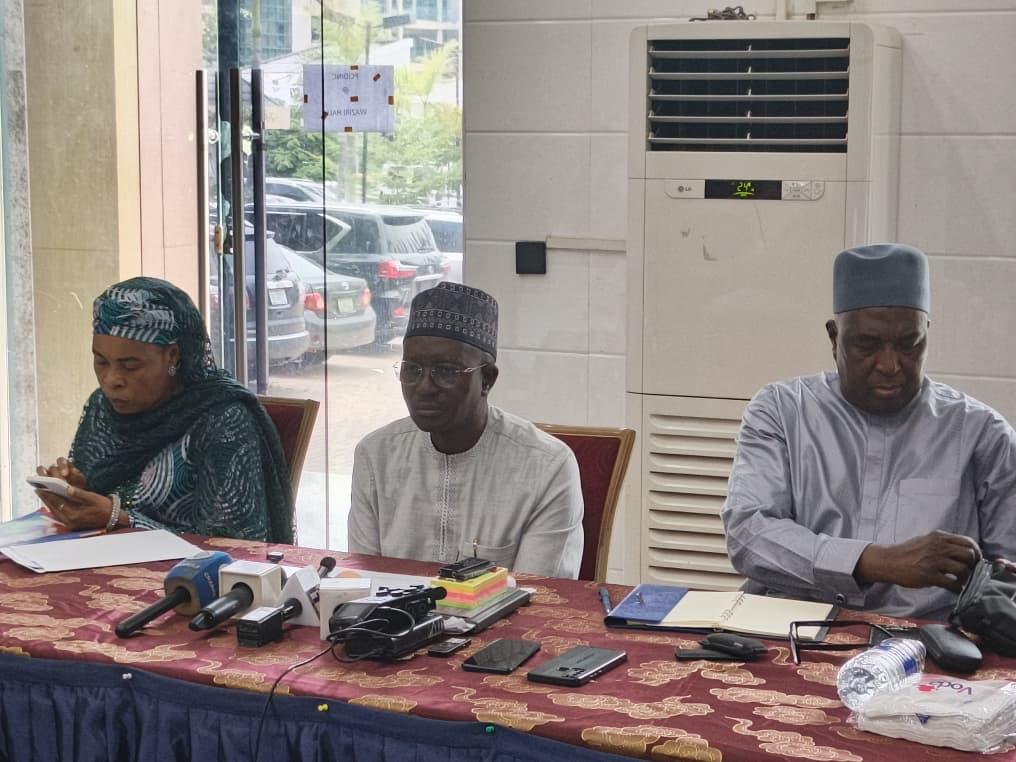
37 Minna Deaths: Panel Flags Institutional Breakdown, Overzealousness in NSCDC Operation
…Committee seeks two-week extension, awaits forensic, pathology reports
By: Michael Mike
The Federal Government’s investigative committee probing the reported deaths of 37 persons in the custody of the Nigeria Security and Civil Defence Corps (NSCDC) in Minna, Niger State, has uncovered indications of possible institutional breakdown, overzealousness and inadequate training among personnel involved in the incident.
The committee, however, said it would not rush to a final conclusion, announcing that it had sought a two-week extension to complete its investigation and submit a “thorough and credible” report.
Chairman of the Independent Investigative Committee, Jonathan Kure (retd.), disclosed this on Tuesday during a press briefing in Abuja, saying the committee was yet to conclude its assignment because of the volume of evidence gathered and the need to obtain forensic and pathology reports.
The committee was originally expected to submit its report on October 7, but has requested an extension until October 21, 2026.
Kure said the committee had made appreciable progress since its inauguration, including inspection of the custody facility, conduct of autopsies, interviews with survivors and bereaved families, and the taking of statements from NSCDC personnel and other witnesses.
He said the panel had also visited the mining site and the Niger State Command headquarters of the NSCDC, where members examined the scene connected with the incident.
According to him, the committee had interacted with officers and men of the Civil Defence Corps who were involved either directly or indirectly, but was still engaging some of them as part of the investigation.
“Because of the peculiar nature of this investigation, it involves a large volume of testimonies and evidence which require our meticulous review and collation,” Kure said.
He added that the committee was still awaiting forensic and pathology reports considered critical to determining the causes of death.
The chairman stressed that the panel was determined to ensure that its eventual findings would withstand scrutiny and command public confidence.
He said persons implicated in the incident, including officers who had already been suspended, must be given an opportunity to respond before the committee reaches its final conclusions.
Beyond the immediate circumstances surrounding the deaths, Kure said the investigation had begun to point to broader institutional issues that would require attention.
“There are elements of institutional breakdown. There are elements of overzealousness. Some elements that will require more training for personnel,” he said.
The disclosure potentially broadens the scope of the investigation from establishing how the 37 persons died to examining whether weaknesses within the security and civil defence system contributed to the incident.
The reported deaths had triggered public concern and prompted the Federal Government to constitute the independent committee to investigate the circumstances surrounding the incident.
Kure said the committee had visited the affected communities, met the families of all the deceased and interacted with survivors in an effort to reconstruct what happened.
He said the panel was conscious of the grief suffered by the affected families and would ensure that its findings were based on evidence rather than speculation.
“We promised Nigerians a thorough job,” he said, adding that members of the committee would work throughout the additional two-week period to ensure that the final report did justice to the matter.
Kure said the extension would enable the committee to complete the review of documentary and forensic evidence, receive outstanding medical reports and hear from all persons whose conduct or actions might be relevant to the investigation.
He assured Nigerians that the panel would return with its report at the end of the extended period.
The committee’s request for additional time comes amid heightened scrutiny of security agencies and growing demands for accountability whenever deaths occur in official custody.
The final report is expected to determine the circumstances surrounding the deaths, establish responsibility where applicable and make recommendations aimed at preventing a recurrence.
37 Minna Deaths: Panel Flags Institutional Breakdown, Overzealousness in NSCDC Operation

Ikpeazu Courts Spanish Investment in Nigeria’s Blue Economy at CONXEMAR 2026
By: Michael Mike
Nigeria has stepped up efforts to attract Spanish investment into its blue economy, with the country’s Ambassador to Spain, Dr. Okezie Victor Ikpeazu, engaging investors and industry stakeholders at the 27th International Frozen Seafood Exhibition, CONXEMAR 2026, in Vigo, Galicia, Spain.
Ambassador Ikpeazu participated in the opening ceremony of the international trade fair held on Tuesday at the IFEVI Exhibition Centre, alongside the President of the Xunta de Galicia, senior Spanish Government officials, the President of CONXEMAR, the Mayor of Vigo, members of the diplomatic corps, business leaders and major stakeholders in fisheries and aquaculture.
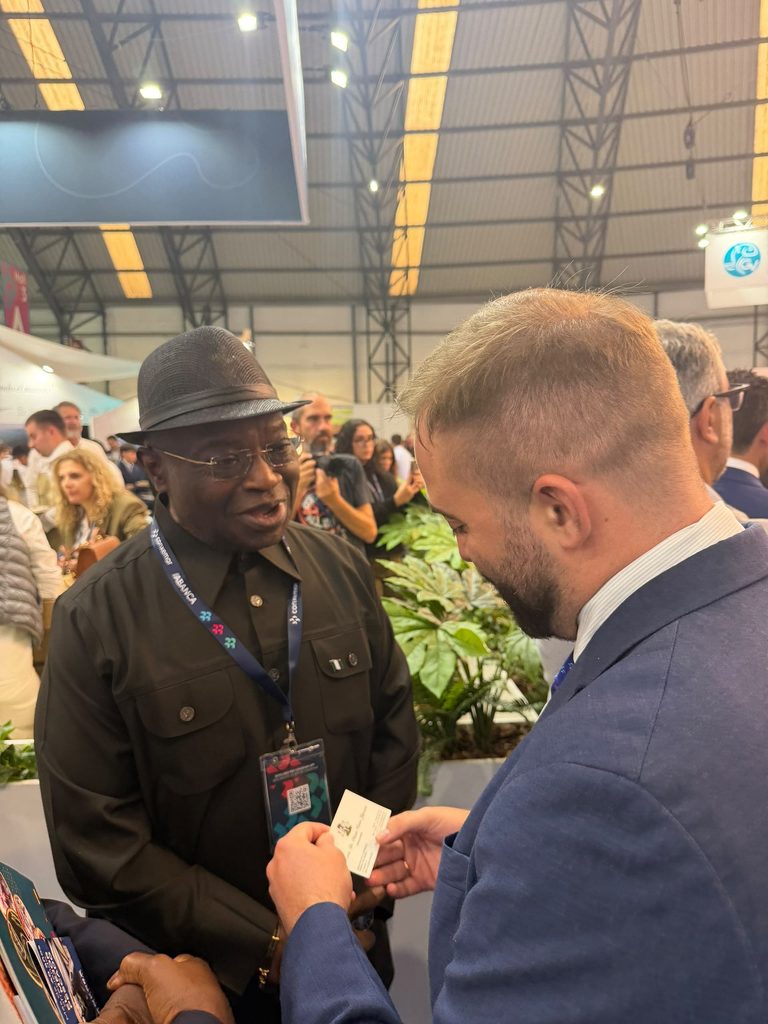
CONXEMAR is regarded as one of the world’s major trade fairs dedicated to the frozen seafood industry, bringing together businesses and stakeholders across the global seafood value chain.
The Nigerian Embassy said Ikpeazu’s participation was part of ongoing efforts to position Nigeria as an attractive destination for investment in the blue economy, particularly as the country seeks to expand opportunities in fisheries, aquaculture, marine industries and related value chains.
On the sidelines of the exhibition, the ambassador held engagements with CONXEMAR officials and representatives of several companies operating in areas including packaging, marine services and fisheries-related industries.
The discussions focused on opportunities for collaboration and investment, with the embassy seeking to leverage Spain’s expertise and business interests in the maritime and seafood sectors to support the development of Nigeria’s blue economy.
The engagements also underscored the potential for stronger Nigeria-Spain commercial relations through private-sector partnerships, technology transfer and investment in industries connected to fisheries and marine resources.

Nigeria’s blue economy encompasses a broad range of economic activities linked to the country’s marine and aquatic resources, including fisheries, aquaculture, maritime transport, marine tourism and other ocean-based industries.
The ambassador’s participation at CONXEMAR therefore provides an avenue for Nigeria to showcase investment opportunities in these sectors while engaging directly with international companies and potential investors.
The embassy said it would continue to pursue initiatives aimed at deepening economic relations between Nigeria and Spain and attracting investments capable of contributing to the growth and diversification of Nigeria’s blue economy.
Ikpeazu Courts Spanish Investment in Nigeria’s Blue Economy at CONXEMAR 2026

Suspected cattle rustlers injure youth in isolated attack in Plateau

Troops arrest three suspected kidnappers in Kaduna

NCYP Backs Tinubu’s 2027 Bid, Says Economic Reforms Must Translate Into Jobs

Roger Federer’s Shock as DNA Results Reveal Myla and Charlene Are Not His Biological Children

THE PLIGHT OF FARIDA

FAILED COUP IN BURKINA FASO: HOW TRAORÉ NARROWLY ESCAPED ASSASSINATION PLOT AMID FOREIGN INTERFERENCE CLAIMS
-
 News3 years ago
Roger Federer’s Shock as DNA Results Reveal Myla and Charlene Are Not His Biological Children
-
Opinions5 years ago
THE PLIGHT OF FARIDA
-
 News1 year ago
FAILED COUP IN BURKINA FASO: HOW TRAORÉ NARROWLY ESCAPED ASSASSINATION PLOT AMID FOREIGN INTERFERENCE CLAIMS
-

 News3 years ago
EYN: Rev. Billi, Distortion of History, and The Living Tamarind Tree
-
 Opinions5 years ago
POLICE CHARGE ROOMS, A MINTING PRESS
-

 ACADEMICS3 years ago
A History of Biu” (2015) and The Lingering Bura-Pabir Question (1)
-

 Columns3 years ago
Army University Biu: There is certain interest, but certainly not from Borno.
-

 Politics1 year ago
2027: Why Hon. Midala Balami Must Go, as Youths in Hawul and Asikira/Uba Federal Constituency Reject ₦500,000 as Sallah Gift
