
Uncategorized
My binoculars : How sudden death stole my friend at the twilight of his service to humanity

My binoculars : How sudden death stole my friend at the twilight of his service to humanity
By: Sam Kayode
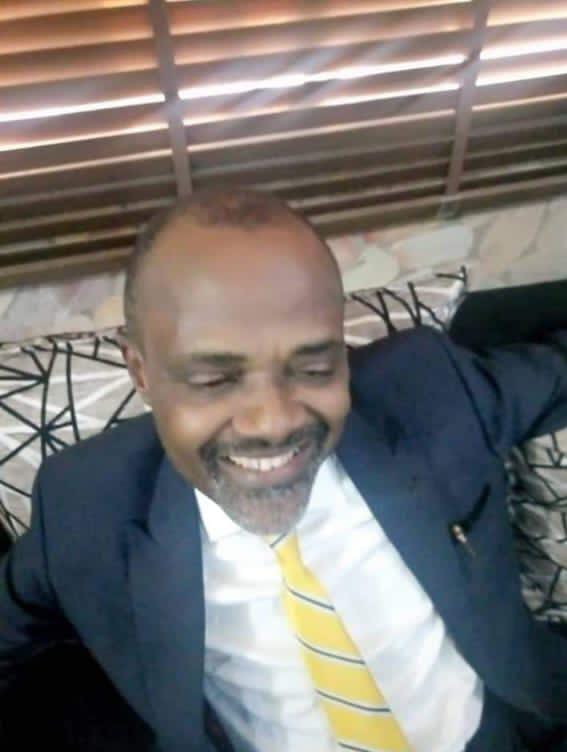
Of a truth, i have peeped and recorded a lot through my curious binoculars for over a decade now. But very few of the images I see have been as solemn as when I am reminiscing about buddies I met along life’s path of destiny fulfilment. This one of David Ibukun is unique because we grew up partially together as teenagers in the 80’s and he knew my parents in the secondary school house where my late father held sway as the Vice Principal. I observed, he had a special reverence for my father and was one of those students who the old man was well pleased with because of his stable nature.
David’s sudden death last year reminded us his classmates of the Muslim Progressive High School (MPHS) Oke Odan of the enormous power of God Almighty over all of us. This is because death according to the Bible is a transitional phenomenon all mortals must taste to enjoy or regret eternity based on our deeds after His final judgement.
It is always painful when someone you knew or sat in the same class with leaves you without saying goodbye. And why it hurts so much was that we rediscovered each other in 2023 after about 40 years of not crossing paths since leaving secondary school in the 80’s.
And that did happen in jos when he was driving to somewhere and I had parked to buy somethings to assist my trip back to Maiduguri. Incidentally, he worked in jos for about six years for Total Nigeria PLC without us crossing paths because I was on and off from the cold city. On this particular day, he was driving off to round up some of his transfer details and he spotted me on the long dual carriage way that runs from mararaba jama to terminus area in jos. He was the first to see me and stopped along the road at ‘building materials’ where I was buying fresh veggies. From behind I had Sammy. Only for me to turn to see David. I was so happy to see him after a long time. We exchanged pleasantries and spent sometimes catching up with each other. He hinted that he had been transferred to Lagos island and I told him I will check on him anytime I find myself down that path.
The David I knew at the Muslim Progressive High School Oke Odan
Dave was a confidant with whom we had a good chemistry. I will never forget his consistent smiles even when classmates annoyed him. He was a calm lanky fellow like myself who could never be provoked into extreme tendencies common with the teenage generation of that era. A very dependable, unassuming and approachable fellow who was very considerate since I joined the class in form 4 from a foreign school. In our secondary school days, he was a good student of economics and was studious in all his ways in spite of the air of affluence he enjoyed with a big brother who made sure he never lacked anything. His senior brother, a custom official who took care of him like his son was a good friend of my father who was the Vice Principal of the school then. He would always branch when passing on official duties since the school was along the trunk A road coming from Sango Ota. Whenever he was passing by he would branch to see David and we often shared in the goodies he used to bring for his kid brother after seeing “Baba” as they used to call my father.
We kept faith with each other even after form five as he described his brother’s home for me around iyana ipaja area where I used to branch while visiting my uncles in Lagos. We actually lost touch after I completed my training as a journalist and got my first job with the daily times news paper with posting to Taraba state in November 1992. He too got a career with total Nigeria PLC after his professional training. Life went on in our separate worlds as expected only for us to meet on that fateful day in jos where we both had worked without knowing he was there. Dave carried the same smiles I used to know him for only to sign off suddenly into eternity last year 2024.
Fellow progressives, its been about 40 years we left secondary school and quite painful to loose “Baskay” at the twilight of our respective callings. He was still the Baskay I knew and I was the “omo Baba” with whom we had a special bond with. Being class mates at the MPHS in a community called Oke odan in Ogun State was a unique opportunity to meet as young gentlemen and I will never forget those days. Oke odan then in the 80’s was a tiny linear settlement on the way to the border town of idi iroko which was a major gateway to Nigeria. And MPHS founded by the community and taken over by government was a breeding ground for future leaders and great sportsmen in the then Egbado division of Ogun state. It became a strategic point for young minds to be reprocessed into productive humanists to contribute to our country. Sadly, like his senior brother, Dave died suddenly last year on Tuesday 12th of November after a protracted illness in a Lagos hospital.He was a humanist to the core and a peaceful and practicing disciple of Christ who showed love to all till the end.
Final rites of David
His service of Songs was held at – KT&T Hall, Plot 61, Scheme 1, Warewa Bus Stop, Lagos/Ibadan Expressway on the 16th January 2025. And this was followed by the funeral service the next day at the RCCG Gate of Heaven Parish, Redemption City of God. He was
Interred at the Memorial Gardens, within Redemption Camp.
Do have a nice rest Ogbeni David Ibukun and extend our regards to Tajudeen Shittu (Tilly) who was also one of us. But had since gone before you after a tragic car crash along the Abeokuta Sango Ota road of Ogun State.
My binoculars : How sudden death stole my friend at the twilight of his service to humanity


Uncategorized
West Africa’s Child Protection Laws Under Scrutiny as ECOWAS Lawmakers Confront “Implementation Failure”
West Africa’s Child Protection Laws Under Scrutiny as ECOWAS Lawmakers Confront “Implementation Failure”
By: Michael Mike
A growing disconnect between policy promises and real-life protection for vulnerable children has come under sharp scrutiny as lawmakers across West Africa begin high-level deliberations in Freetown.
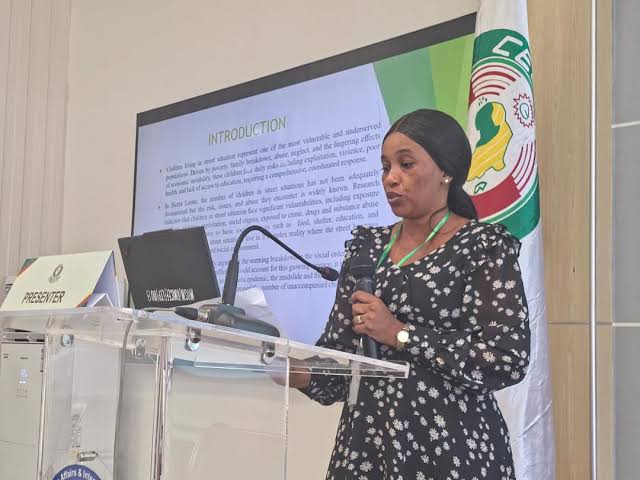
The ECOWAS Parliament on Wednesday opened a five-day Joint Committee Meeting aimed at tackling what officials increasingly describe as an “implementation crisis” in child protection systems across the region.
While West African governments have, over the years, adopted multiple frameworks to safeguard children—including the ECOWAS Child Policy and Strategic Plan of Action (2019–2030)—parliamentarians say the reality on the ground tells a different story.
Across major cities and border communities, the number of children forced into street life continues to rise, driven by poverty, displacement, family breakdown, and weak social safety nets.
In many cases, these children operate in legal blind spots—exposed to exploitation, trafficking networks, forced labour, and abuse—despite the existence of laws meant to protect them.
“The issue is no longer about absence of frameworks, but the failure to make them work,” a delegate at the session noted, underscoring the urgency of shifting focus from policy adoption to enforcement.
The meeting, hosted in Freetown, brings together multiple parliamentary committees to examine how gaps in legislation, enforcement, and cross-border coordination continue to undermine child protection efforts.
Particular attention is being paid to the challenges posed by regional mobility. With children frequently moving across borders—either independently or through informal networks—differences in national laws and weak data-sharing systems have created loopholes that traffickers and exploiters readily exploit.
Officials say this has made child protection not just a national concern, but a regional security and human rights issue.
The choice of Sierra Leone as host country reflects its recent legislative reforms, including the revised Child Rights Act (2025), which is being positioned as a benchmark for aligning domestic laws with international standards.
Delegates are expected to closely examine Sierra Leone’s approach, particularly its efforts to strengthen coordination between institutions, expand rehabilitation services, and improve data systems for tracking vulnerable children.
Beyond conference rooms, lawmakers will engage directly with affected communities through field visits to areas where children in street situations congregate, as well as centres providing care and reintegration services.
The aim, according to organisers, is to ground policy discussions in lived realities and ensure that future legislation reflects the complexity of challenges on the ground.
Civil society organisations and frontline practitioners are also playing a central role, using a public hearing platform to highlight persistent gaps in service delivery, including shortages in shelter, limited access to education, and weak family reunification systems.
The ECOWAS Commission is expected to provide regional policy briefings, offering data and insights to guide legislative reforms and strengthen coordination among Member States.
By the end of the session, parliamentarians are expected to adopt a set of actionable recommendations focused on tightening legal frameworks, improving oversight of child protection institutions, and enhancing cross-border collaboration.
These outcomes will be forwarded to the plenary of the ECOWAS Parliament and subsequently to the Council of Ministers for policy action.
For many observers, however, the stakes go beyond policy alignment.
With West Africa facing mounting socio-economic pressures, the ability—or failure—of governments to protect their most vulnerable citizens is increasingly seen as a test of governance itself.
“If these systems cannot protect children,” one stakeholder warned, “then the credibility of the entire framework is in question.”
West Africa’s Child Protection Laws Under Scrutiny as ECOWAS Lawmakers Confront “Implementation Failure”
Michael Olugbode in Abuja
A growing disconnect between policy promises and real-life protection for vulnerable children has come under sharp scrutiny as lawmakers across West Africa begin high-level deliberations in Freetown.
The ECOWAS Parliament on Wednesday opened a five-day Joint Committee Meeting aimed at tackling what officials increasingly describe as an “implementation crisis” in child protection systems across the region.
While West African governments have, over the years, adopted multiple frameworks to safeguard children—including the ECOWAS Child Policy and Strategic Plan of Action (2019–2030)—parliamentarians say the reality on the ground tells a different story.
Across major cities and border communities, the number of children forced into street life continues to rise, driven by poverty, displacement, family breakdown, and weak social safety nets.
In many cases, these children operate in legal blind spots—exposed to exploitation, trafficking networks, forced labour, and abuse—despite the existence of laws meant to protect them.
“The issue is no longer about absence of frameworks, but the failure to make them work,” a delegate at the session noted, underscoring the urgency of shifting focus from policy adoption to enforcement.
The meeting, hosted in Freetown, brings together multiple parliamentary committees to examine how gaps in legislation, enforcement, and cross-border coordination continue to undermine child protection efforts.
Particular attention is being paid to the challenges posed by regional mobility. With children frequently moving across borders—either independently or through informal networks—differences in national laws and weak data-sharing systems have created loopholes that traffickers and exploiters readily exploit.
Officials say this has made child protection not just a national concern, but a regional security and human rights issue.
The choice of Sierra Leone as host country reflects its recent legislative reforms, including the revised Child Rights Act (2025), which is being positioned as a benchmark for aligning domestic laws with international standards.
Delegates are expected to closely examine Sierra Leone’s approach, particularly its efforts to strengthen coordination between institutions, expand rehabilitation services, and improve data systems for tracking vulnerable children.
Beyond conference rooms, lawmakers will engage directly with affected communities through field visits to areas where children in street situations congregate, as well as centres providing care and reintegration services.
The aim, according to organisers, is to ground policy discussions in lived realities and ensure that future legislation reflects the complexity of challenges on the ground.
Civil society organisations and frontline practitioners are also playing a central role, using a public hearing platform to highlight persistent gaps in service delivery, including shortages in shelter, limited access to education, and weak family reunification systems.
The ECOWAS Commission is expected to provide regional policy briefings, offering data and insights to guide legislative reforms and strengthen coordination among Member States.
By the end of the session, parliamentarians are expected to adopt a set of actionable recommendations focused on tightening legal frameworks, improving oversight of child protection institutions, and enhancing cross-border collaboration.
These outcomes will be forwarded to the plenary of the ECOWAS Parliament and subsequently to the Council of Ministers for policy action.
For many observers, however, the stakes go beyond policy alignment.
With West Africa facing mounting socio-economic pressures, the ability—or failure—of governments to protect their most vulnerable citizens is increasingly seen as a test of governance itself.
“If these systems cannot protect children,” one stakeholder warned, “then the credibility of the entire framework is in question.”
West Africa’s Child Protection Laws Under Scrutiny as ECOWAS Lawmakers Confront “Implementation Failure”
Uncategorized
AT NATIONAL POLICE DAY: President Tinubu Unveils Investment In Modern Law Enforcement Systems
AT NATIONAL POLICE DAY: President Tinubu Unveils Investment In Modern Law Enforcement Systems
Says, to make meaningful progress, Nigeria must strengthen those protecting the nation
By: Our Reporter
President Asiwaju Bola Ahmed Tinubu has disclosed plans to deepen investment in police training, intelligence gathering, and modern law enforcement systems, as part of a broader plan to transform the Nigeria Police Force (NPF) into a world-class institution.
He said the Nigerian state owes a permanent moral duty to empower its security agencies, as the nation’s peace is only as secure as the men and women who keep vigil over its citizens.
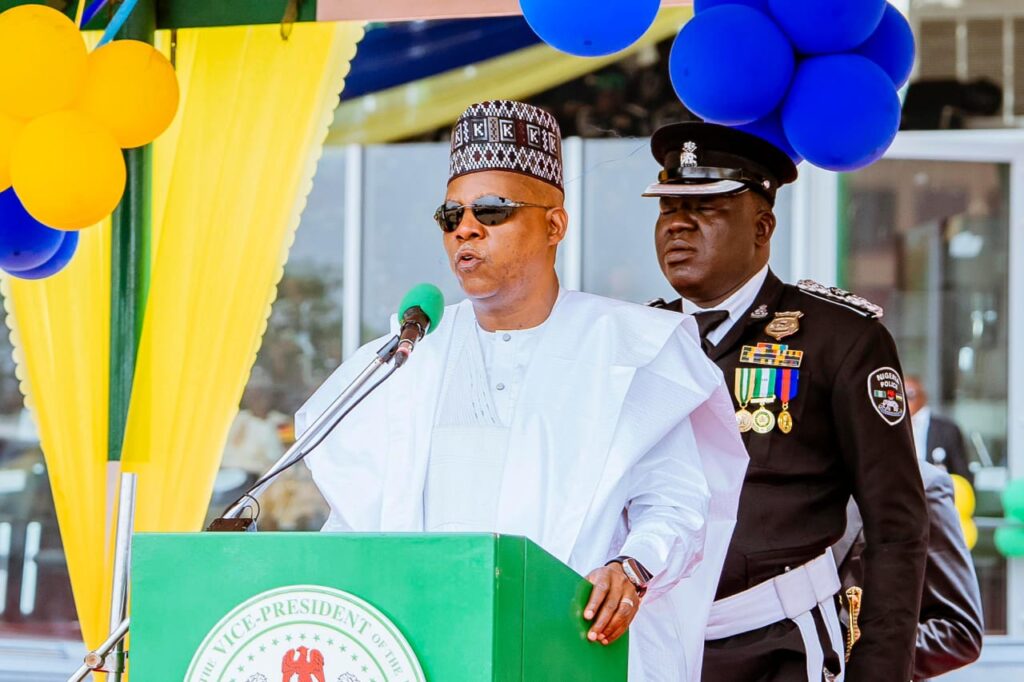
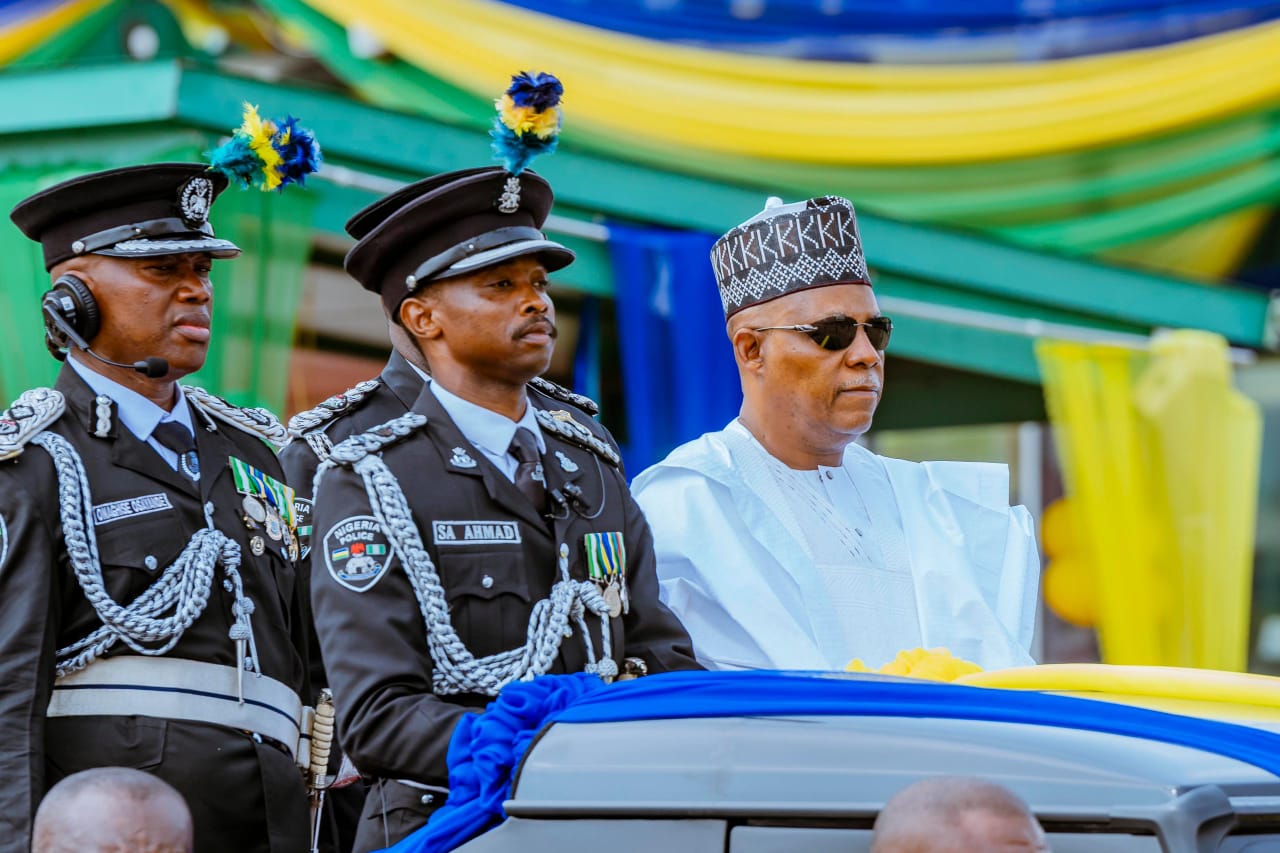
Speaking on Tuesday at the National Police Day Grand Parade and Procession in Abuja, President Tinubu, who was represented by his deputy, Vice President Kashim Shettima , maintained that no nation can make meaningful progress without a secure social environment.
Accordingly, he declared that the Federal Government would deepen investments in training, intelligence gathering and modern policing infrastructure as part of his administration’s ongoing reform agenda.
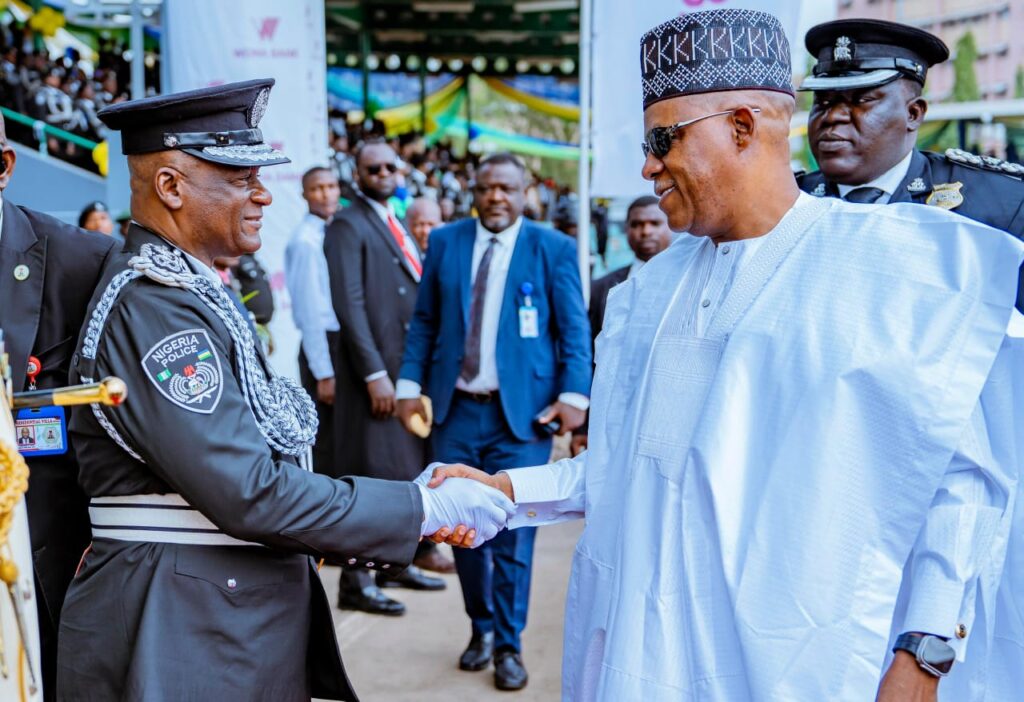
“We will continue to support these reforms through sustained investment in training and capacity development, modern equipment and technology, improved intelligence and investigative capabilities, and better welfare and working conditions for police personnel.
“We are determined to build a Police Force that is well equipped, well trained, and well-motivated to confront the complex security challenges of our time,” the President stated
The Nigerian leader observed that while history chooses to reward certain professions with applause, there are others which civilisation depend on to survive, “even when their labour is too often repaid with silence.”
He acknowledged the burden of sacrifice being shouldered by the police force, stressing that the country cannot afford to take such a sacrifice for granted because “every nation is only as safe as those who keep vigil while others sleep.”
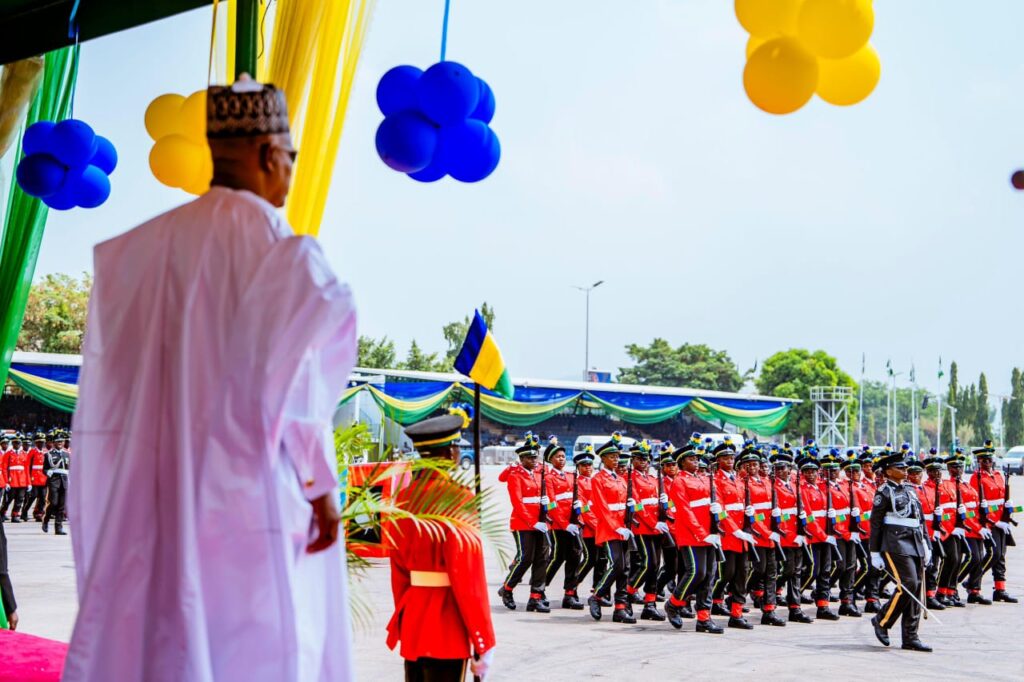
Underscoring the need to empower the force, President Tinubu said, “Nigeria must strengthen those who protect the nation. Security is not simply the defence of territory or the prevention of crime. It is the first currency of progress.”
He noted that the observance of National Police Day, institutionalised last year, reflects the Federal Government’s deliberate recognition of the sacrifices made by police officers, adding that the administration remains resolute in strengthening the Police through concrete policy actions and sustained investment.
The President paid tribute to officers who lost their lives in the line of duty, describing their sacrifice as part of the nation’s enduring moral inheritance.
His words: “Their sacrifice is written into the conscience of our country. Their memory must remain a lamp to those who wear this uniform today and to those who will wear it tomorrow. To their families, I extend the profound gratitude of a grateful nation.”
The Nigerian leader commended serving officers for their resilience and dedication in maintaining law and order across the country, often under difficult and dangerous conditions.
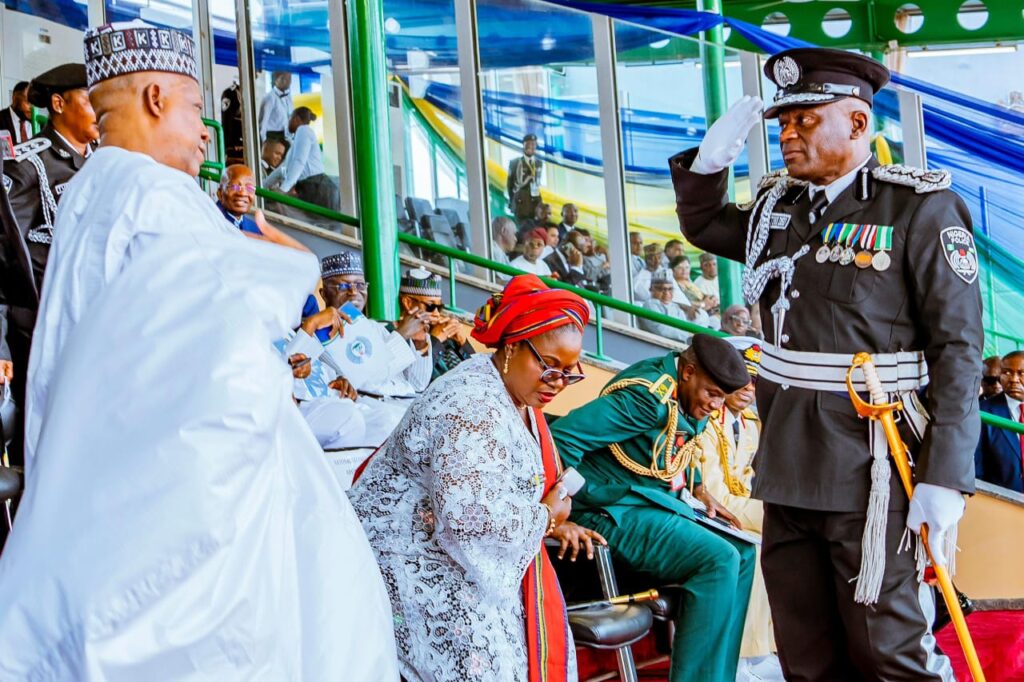
He further charged officers to uphold the highest standards of professionalism, fairness and fidelity to the rule of law.
“The uniform you wear is not a licence for arbitrariness; it is a covenant of service. The badge on your chest is not an ornament of power; it is a reminder of duty,” President Tinubu declared, even as he demanded stronger collaboration between citizens and law enforcement agencies
Observing that effective policing must be rooted in trust and community partnership, he said, “When citizens and law enforcement stand on opposite sides of suspicion, insecurity thrives. This is why community-centred policing is a democratic necessity.”
The President reaffirmed the administration’s vision of building a police institution that embodies excellence, accountability, courage and service, while restoring public confidence in law enforcement.
In his address, the Inspector General of Police (IGP), Olatunji Disu, said the police force, under his command, is deeply aware of expectations and concerns by the Nigerian people, stating that the approval of President Tinubu’s for the commemoration of the National Police Day is a commitment to the service of fallen and serving officers.
He acknowledged the risks, sacrifices and commitment of police officers nationwide, urging the NPF to rise above indiscipline, misconduct and every action that tarnishes the image and reputation of the force.
IGP Disu pledged that the leadership of the force, under him, will stand firmly with every officer that follows the rules, serving with dignity, just as he assured the public of a more disciplined, accountable and professional police force, standing with the Nigerian people.
The IGP noted that the current management of the police force is building an institution that is not only intelligence led but committed to professionalism in all ramifications.
In seperate goodwill messages, the representatives of Wema Bank and Premium Trust Bank, paid glowing tributes to the police force for its contributions to safety and security, pledging their support for the delivery of professional policing services across the country, through their platforms and services.
The grand finale of the 2026 National Police Day celebration featured march past, procession and tactical displays by various police units and cadets of the Police Academy.
Also present at the event were the Deputy Governors of Nasarawa and Ebonyi States; representatives of the Senate President and Speaker of the House of Representatives; service chiefs; former IGPs, Ogbonnaya Onovo, Mohammed Abubakar, Kayode Egbetokun, Suleiman Abba, Usman Alkali Baba; President of the Police Officers Wives Association (POWA) and members of the association; senior government officials, and members of the diplomatic corps, among others.
AT NATIONAL POLICE DAY: President Tinubu Unveils Investment In Modern Law Enforcement Systems
Troops arrest suspect with 75 live cartridges in Awka, Anambra
By: Zagazola Makama
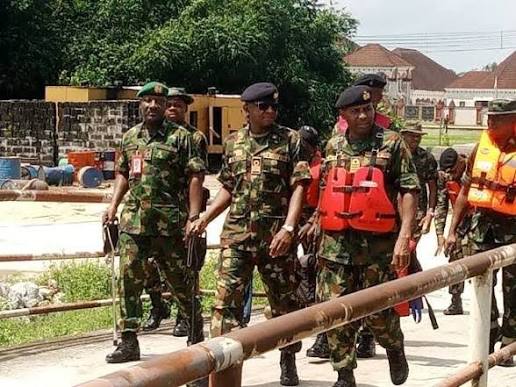
Troops of Sector 5 Operation UDO KA have arrested a suspected criminal in Awka, Anambra State, and recovered 75 live cartridges in his possession.
Security sources said the arrest was made at about 7:00 a.m. on April 5, 2026, during a routine operation in the state capital.
The suspect was allegedly found with the ammunition concealed in his bag at the time of arrest.
During preliminary questioning, the suspect claimed he received the cartridges from a friend, while efforts are ongoing to identify and track the source of the consignment.
Authorities said the suspect is currently in custody as investigations continue.
Troops arrest suspect with 75 live cartridges in Awka, Anambra

Youth Exclusion Could Derail Development Goals, UN Issues Urgent Warning

West Africa’s Child Protection Laws Under Scrutiny as ECOWAS Lawmakers Confront “Implementation Failure”

Nigeria’s Skills Crisis Deepens as Government, Experts Push Urgent Overhaul of Technical Education

Roger Federer’s Shock as DNA Results Reveal Myla and Charlene Are Not His Biological Children

THE PLIGHT OF FARIDA

FAILED COUP IN BURKINA FASO: HOW TRAORÉ NARROWLY ESCAPED ASSASSINATION PLOT AMID FOREIGN INTERFERENCE CLAIMS
-
 News2 years ago
Roger Federer’s Shock as DNA Results Reveal Myla and Charlene Are Not His Biological Children
-
Opinions4 years ago
THE PLIGHT OF FARIDA
-
 News12 months ago
FAILED COUP IN BURKINA FASO: HOW TRAORÉ NARROWLY ESCAPED ASSASSINATION PLOT AMID FOREIGN INTERFERENCE CLAIMS
-

 News2 years ago
EYN: Rev. Billi, Distortion of History, and The Living Tamarind Tree
-
 Opinions4 years ago
POLICE CHARGE ROOMS, A MINTING PRESS
-

 ACADEMICS2 years ago
A History of Biu” (2015) and The Lingering Bura-Pabir Question (1)
-

 Columns2 years ago
Army University Biu: There is certain interest, but certainly not from Borno.
-

 Opinions2 years ago
Tinubu,Shettima: The epidemic of economic, insecurity in Nigeria
