
News
NAPTIP Asks Alleged Parents of Eight Trafficked Children to Come Out of the Shadow to Lay Claim to Parentage

NAPTIP Asks Alleged Parents of Eight Trafficked Children to Come Out of the Shadow to Lay Claim to Parentage
By: Michael Mike
The Director-General of the National Agency for the Prohibition of Trafficking in Persons (NAPTIP), Dr. Binta Bello has called on individuals claiming parentage of eight children recently rescued from a cartel of human traffickers in Asaba, Delta State capital to present themselves for investigation rather than resorting to social media campaigns and misinformation.
Speaking during a press briefing in Abuja on Friday, Bello who addressed the growing controversy surrounding a June 2025 operation conducted in Asaba, Delta State, where NAPTIP operatives rescued eight children allegedly trafficked from the northern part of the country, said: “This briefing is necessary to clarify several misleading narratives circulating online and in some media spaces, especially on social media.
“We owe it to the public and the government to set the record straight, especially in cases involving the welfare and safety of children.”
She explained that the rescue followed a petition submitted in December 2022 by Protection Against Abduction and Missing Children (PATAMOC), which triggered investigations by NAPTIP’s Kano Zonal Command. These investigations eventually led to the arrest of Hauwa Abubakar in Gombe State, who confessed to trafficking children and selling at least 21 of them to an individual identified as Nkechi Odlyne.
Bello said further investigations revealed that Odlyne had resold seven of these children to the proprietor of Happy Home Orphanage in Asaba, Mr. Christopher Nwoye for N450,000 each.
She explained that: “Upon his arrest, Christopher Nwoye admitted his role in the matter and returned the four children,” adding that: “He, along with Hauwa Abubakar and Nkechi Odlyne, is currently facing prosecution in Gombe State High Court.”
Bello noted that while three of the children were reunited with their biological parents from Gombe, a fourth child identified by a Kano-based mother as her missing daughter, Aisha Buhari had already been returned to the orphanage prior to identification.
The DG confirmed that the case is already at the Kano State Commission of Inquiry on Missing Children, and that NAPTIP had dispatched a joint team from its Abuja headquarters and Kano Zonal Command to rescue Aisha and conduct further assessments at the orphanage in Delta.
She noted that: “This was a lawful rescue operation conducted with full support from the Delta State Police Command. It was not an abduction as has been falsely claimed by some online commentators.”
She said the team, accompanied by members of PATAMOC and armed police officers, visited Happy Home Orphanage on June 15, 2025. Although the proprietor was absent, his wife was present, and over 70 children were profiled during the visit. Eight were identified based on photographs provided by the PATAMOC chairman.
She decried that despite the transparency of the process, Nwoye has since refused to make himself available for further questioning, instead launching an online smear campaign against NAPTIP and mobilizing women to lay conflicting claims to the rescued children.
Bello said: “We have made several attempts to reach Mr. Nwoye for questioning, both directly and through his lawyers. Rather than respond, he has chosen to attack the integrity of the agency.
“Let it be clear we are not against anyone making a claim over the children, but they must subject themselves to lawful investigation.”
She revealed that in the light of multiple claims from women in both Kano and Delta states, NAPTIP relocated the children from a Kano State shelter to a secure agency-run facility to ensure their protection during the investigation.
She insisted that: “We will not release any child to any claimant until investigations, including DNA tests, are fully concluded.”
The DG also called on the Delta State Government to open an independent investigation into the activities of Happy Home Orphanage, citing concerns about “unwholesome practices” reported at the facility.
“We echo the concerns already raised by the Delta State Commissioner for Women Affairs. The state must take decisive steps to unravel what is going on in that orphanage,” she added.
She however reiterated NAPTIP’s commitment to due process, emphasizing that agency’s legal mandate under the Trafficking in Persons (Prohibition) Enforcement and Administration Act, 2015, empowers it to carry out rescues, investigate trafficking networks, and prosecute offenders.
She said: “NAPTIP is a law-abiding agency. However, we will not spare anyone found culpable in this matter,” adding that: “Those genuinely laying claim to the children should engage with us lawfully, not through blackmail or online theatrics.”
Bello therefore assured the public of the agency’s resolve to conclude the investigation swiftly, prosecute offenders, and ensure that the rescued children are safely reunited with their lawful families.
She promised that: “We remain focused on the children’s welfare and will continue to act in their best interests. The law will take its full course.”
NAPTIP Asks Alleged Parents of Eight Trafficked Children to Come Out of the Shadow to Lay Claim to Parentage



Troops intercept 11 youths with donkeys during patrol in Borno
By: Zagazola Makama
Troops of 68 Battalion have intercepted 11 youths during a routine patrol in Mallam Fatori area of Abadam Local Government Area of Borno State.
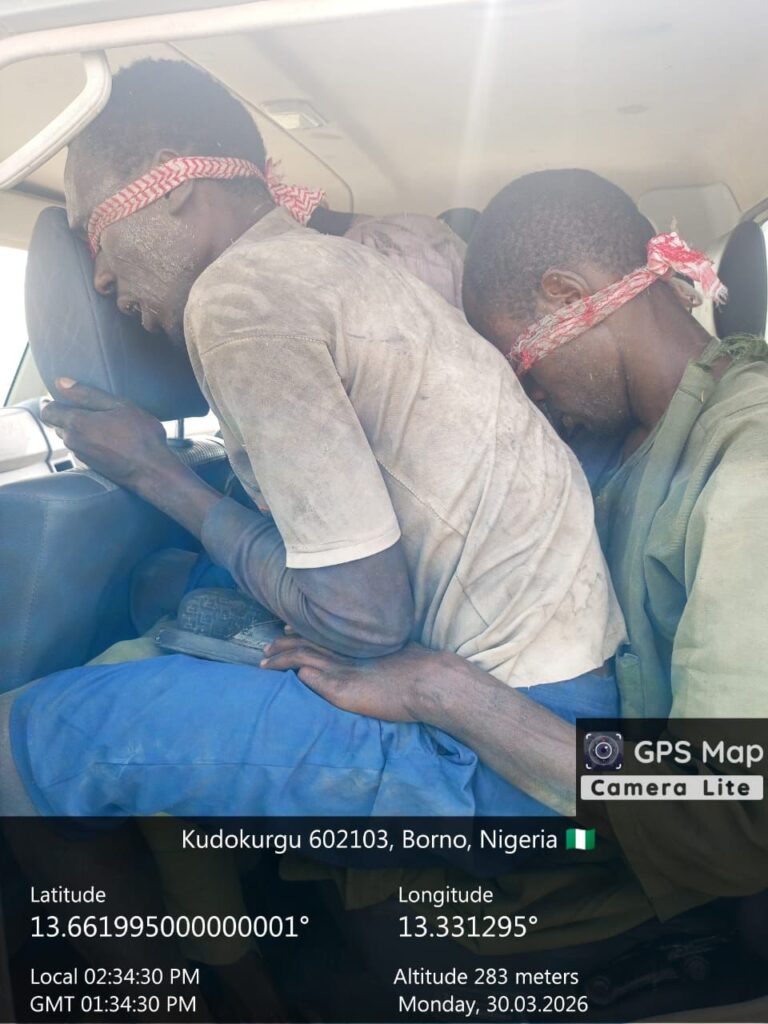
Security sources said the interception occurred along the Bulagana–Cheisa axis on April 2 during ongoing clearance operations in the area.
According to the sources, the individuals were found moving in the area with 12 donkeys when they were stopped and briefly interrogated by troops.
The sources added that the youths were later handed over, alongside the animals, to relevant authorities in a neighbouring country for further necessary action.
The military said the patrol was part of sustained efforts to maintain security dominance and prevent exploitation of border communities by criminal elements.
Troops intercept 11 youths with donkeys during patrol in Borno
Troops recover ammunition, logistics items in Kwara patrol operation
By: Zagazola Makama
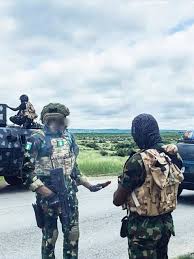
Troops of the Nigerian Army under the 22 Brigade have recovered ammunition and other logistics items during a fighting patrol in Ifelodun Local Government Area of Kwara State.
A security source disclosed that the operation was conducted at about 4:00 p.m. on April 2 at Daban Lema, where troops of the brigade, operating from the Patrol Base, encountered signs of suspected terrorist activities in a deserted location.
According to the source, the troops immediately carried out exploitation of the area, leading to the recovery of four rounds of 7.62mm special ammunition and one empty PKT ammunition belt link.
Other items recovered include four mobile phones, two head warmers, two small solar panels, and assorted repair tools believed to have been used by the suspected terrorists.
The source added that the recovery indicates the presence and movement of suspected criminal elements within the area, noting that troops have intensified surveillance and patrols to deny them freedom of action.
Troops recover ammunition, logistics items in Kwara patrol operation
Troops foil attack by Criminal Youths, rescue victims, arrest suspects in plateau
By: Zagazola Makama
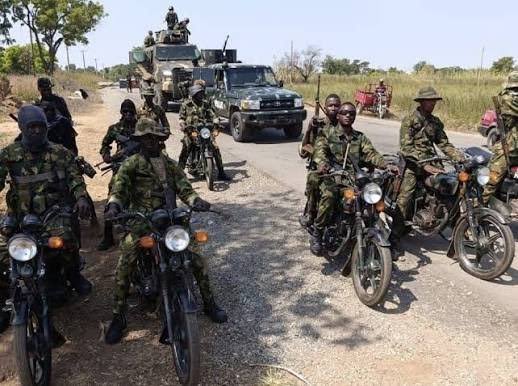
Troops of Sector 1, Operation Enduring Peace (OPEP), have foiled an attack on residents at Dutse Uku in Jos North Local Government Area of Plateau State.
A security source said the troops responded swiftly to a report of sporadic gunshots in the area at about 11:50 p.m. on April 2.
According to the source, upon arrival at the scene, the suspected criminals fled, abandoning their operation due to the prompt intervention of the troops.
He said the troops rescued two victims who sustained gunshot wounds during the incident and immediately evacuated them to a hospital for medical attention.
The source further disclosed that two suspects, dressed in black attire, were arrested at the scene.
Items recovered from the suspects include a cutlass and a knife.
He added that the suspects are currently in military custody and undergoing preliminary investigation, while efforts are ongoing to track down other fleeing members of the group.
Zagazola report that despite heightened security, there has been report of pocket of attacks in some communities.
The source reassured residents of the military’s commitment to protecting lives and property and urged the public to continue providing timely information to security agencies.
Troops foil attack by Criminal Youths, rescue victims, arrest suspects in plateau

Troops intercept suspected Boko Haram logistics convoy conveying 13 persons in Borno

Troops intercept 11 youths with donkeys during patrol in Borno

Troops, CJTF arrest three suspected Boko Haram logistics suppliers in Borno

Roger Federer’s Shock as DNA Results Reveal Myla and Charlene Are Not His Biological Children

THE PLIGHT OF FARIDA

FAILED COUP IN BURKINA FASO: HOW TRAORÉ NARROWLY ESCAPED ASSASSINATION PLOT AMID FOREIGN INTERFERENCE CLAIMS
-
 News2 years ago
Roger Federer’s Shock as DNA Results Reveal Myla and Charlene Are Not His Biological Children
-
Opinions4 years ago
THE PLIGHT OF FARIDA
-
 News12 months ago
FAILED COUP IN BURKINA FASO: HOW TRAORÉ NARROWLY ESCAPED ASSASSINATION PLOT AMID FOREIGN INTERFERENCE CLAIMS
-

 News2 years ago
EYN: Rev. Billi, Distortion of History, and The Living Tamarind Tree
-
 Opinions4 years ago
POLICE CHARGE ROOMS, A MINTING PRESS
-

 ACADEMICS2 years ago
A History of Biu” (2015) and The Lingering Bura-Pabir Question (1)
-

 Columns2 years ago
Army University Biu: There is certain interest, but certainly not from Borno.
-

 Opinions2 years ago
Tinubu,Shettima: The epidemic of economic, insecurity in Nigeria
