
News
Germany Donates Newly Built Sniffer Dog Facility to NDLEA


Germany Donates Newly Built Sniffer Dog Facility to NDLEA
By: Michael Mike
The fight against trafficking in drug in the country has received a major boost as Germany has donated a newly built canine facility to the National Drug Law Enforcement Agency (NDLEA).
Speaking on the donation, the Chairman/Chief Executive Officer of the National Drug Law Enforcement Agency (NDLEA), Brig. Gen. Buba Marwa (Rtd) said that the donation of the newly built facility to NDLEA by the German government will boost ongoing efforts against the menace of illicit drugs in Nigeria.
Marwa, said on Friday at the inauguration of the new modern canine complex built and donated to NDLEA by the German government, that: “May I assure all stakeholders that the provision of this facility will significantly drive our fight against illicit drugs, fulfil our core mandate and secure the future of our nation. The quality of the infrastructure at the new NDLEA Dog facility is indeed commendable. It speaks volumes of the commitment, goodwill, and tenacity of our partners.”
He commended the German government for its numerous supports to NDLEA, which he said has translated into an excellent performance by the Canine unit of the agency over the years, citing the remarkable seizure of 74.119 kilogrammes of captagon at the Apapa seaport in Lagos in 2021 as a striking example of such successful operations aided by sniffer dogs.
He however noted that more work is required to sustain the current quantum leap in operational excellence. He said: “This newly commissioned facility will, without doubt, provide a comfortable and dignified environment that will motivate our Canine Unit personnel to discharge their duties effectively and continue to meet both developmental and interdiction mandates.
“The commissioning of this new NDLEA Dog facility marks a significant milestone in the history of the collaboration between the agency and the Government of the Federal Republic of Germany. Everyone who understands the pivotal role of sniffer dogs in drug interdiction will share my sentiment and joy today. These canines play a critical role, using their heightened sense of smell to identify and detect concealed narcotic substances in cargo and shipments at our airports, seaports, land borders, courier service centres, and bus stations.”
Marwa also noted that the sniffer dogs have been instrumental to the seizure of over 17.932 metric tonnes of various illicit substances since their deployment in the agency.
He said: “In years past, the poor infrastructure of the NDLEA Canine Unit has limited its capacity to effectively address developmental and operational challenges. It is against this backdrop that the Government of the Federal Republic of Germany, through the Liaison Office of the German Federal Criminal Police, intervened to sponsor the construction of a modern dog facility for the agency.”
He commended the German government for always fulfilling its commitments to the agency in wide-ranging areas covering technical, logistics, and training support. “Most significant is today’s commissioning and handover of the NDLEA Dog facility. The construction of the facility commenced in August 2024 and was completed on schedule,” he added.
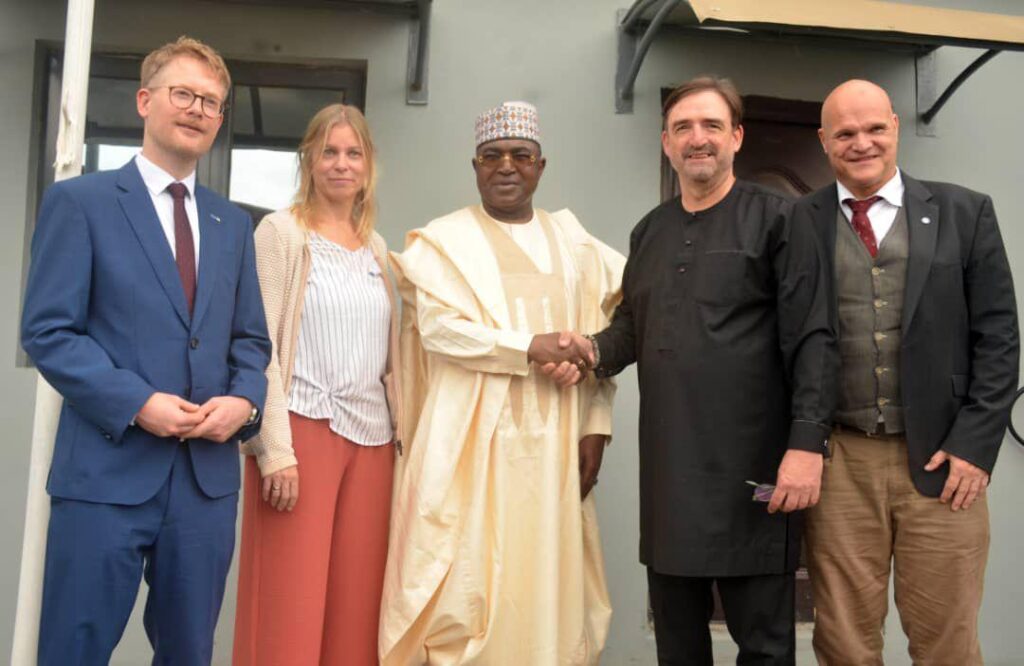
He also expressed appreciation to the German Consul General, Mr. Daniel Krull, the personnel of the Liaison Office of the German Federal Criminal Police and their colleagues in Berlin, Saxony and Sachsen-Anhalt who worked tirelessly to bring the project to fruition.
In his remarks, the Consul General, Mr. Daniel Krull said the success of NDLEA’s operation is not only helping to keep Nigeria safe but also of great benefit to Germany.
He said: “Chairman, I would like to congratulate you for the implementation of this important project, the success and the amazing work of your agency under your leadership. My colleagues briefed me that your agency has been very, very successful, instrumental in fighting crime in Nigeria. And that is, of course, not only important for Nigeria, but it is important for the region. And it goes far beyond. It is also important for us in Germany. So congratulations for the amazing work and I would encourage all members of the NDLEA to keep up the good spirit and continue the amazing work.
“Secondly, I would like to thank you, Chairman, you and all staff members for the trust you have in your German partners. And that trust, I think, is what is the most important currency in this international cooperation. And we hope that this trust will be so solid that we will have a very fruitful cooperation in the future.”
Speaking in same light, the deputy head of section IZ14 BKA, Berlin, Mr. Florian Bulow said the support for NDLEA is one of the most longest-reaching projects the BKA has done in police capacity building. “And if you have such a long cooperation, it’s like in a marriage, it needs love. But love is not everything. You also need trust. So if you trust, you can work together. You also have to share the same goals and values.
“And we do that in our fight against drug smuggling and drug abuse. But one of the most important things, you have to work together as a team. And we did that for many, many years. And if you work together as a team and go this long road as a team, you can achieve something. And what we have achieved together is that”, he stated.
Germany Donates Newly Built Sniffer Dog Facility to NDLEA



Zulum Pledges Stronger UMTH, Partners’ Collaboration to Transform Borno Healthcare
By: Michael Mike
Borno State Governor, Professor Babagana Umara Zulum, has promised to deepen collaboration with the Federal Government and development partners to improve healthcare services in the state.
The Governor made the pledge on Tuesday during the opening of the Association of Radiologists of Nigeria (ARIN) 9th Annual General Meeting and Scientific Conference, Book Launch and Commissioning of projects at the UMTH in Maiduguri.
He said the event marked another milestone in the collective pursuit of stronger healthcare delivery, medical education, research and specialist services for the people of Borno State and the North-East.
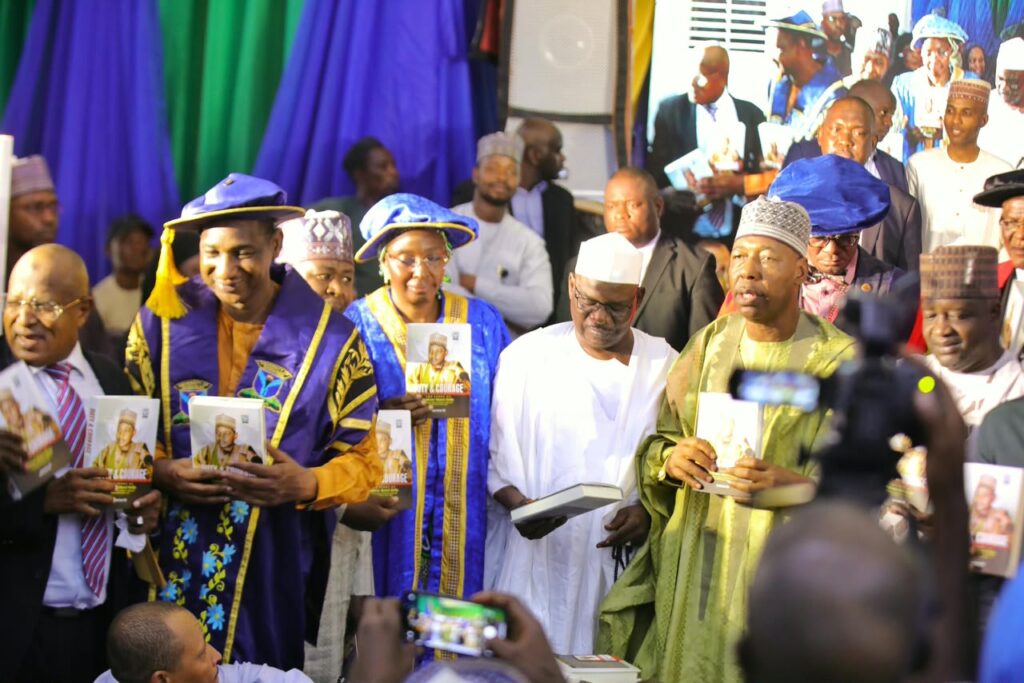
Governor Zulum re-stated his administration’s commitment to continue supporting the University of Maiduguri Teaching Hospital (UMTH) within available resources, alongside other federal health institutions in the state.
“As a State Government, we will continue to support the University of Maiduguri Teaching Hospital and other healthcare institutions within our capacity, while strengthening collaboration with the Federal Government and other partners,” Zulum stated.
The Governor noted that UMTH had remained steadfast in saving lives, training medical professionals and providing essential specialist services throughout the difficult years of insurgency and flooding in the state.
He commended the hospital’s Chief Medical Director, Professor Ahmed Ahidjo, for what he described as exemplary leadership and significant contributions to the institution’s growth.
According to Zulum, the hospital has recorded notable progress in infrastructure development, specialist services, medical training, research and professional development under Professor Ahidjo’s leadership.
“You are not only managing a Teaching Hospital; you are building a legacy that will benefit generations to come,” the Governor said.
“Professor Ahidjo has demonstrated that effective leadership is about building strong institutions, developing people and leaving a lasting legacy. Under his leadership, the University of Maiduguri Teaching Hospital has continued to make significant progress in infrastructure, specialist services, medical training, research and professional development.”
He expressed appreciation to President Bola Ahmed Tinubu for his continued support to the state, particularly in healthcare infrastructure, human capital development and institutional strengthening.
Governor Zulum also commended NEDC for its intervention in the hospital and other development institutions in the region.
He said the ARIN Conference, book launch and inaugural lecture underscored the importance of research, knowledge-sharing and continuous professional development in addressing healthcare challenges.
Governor Zulum congratulated UMTH management and staff on the achievements. He expressed optimism that the newly commissioned projects would enhance the quality of healthcare services and further consolidate the hospital’s position as a centre of excellence.
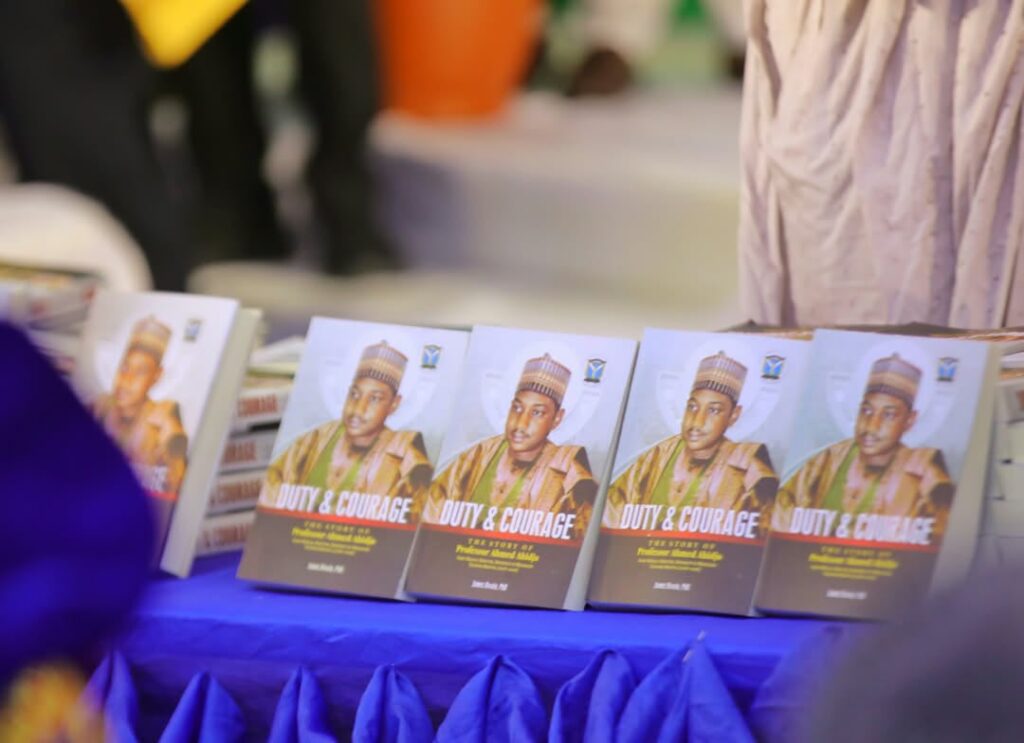
Similarly, Governor Babagana Umara Zulum has donated the sum of N100 million on behalf of the government of Borno State for the book “Duty and Courage: The Story of Professor Ahmed Ahidjo 2018-2026 written by Dr. James Bwala, which chronicles his achievements as the Chief Medical Director of UMTH.
The high point of the event was the commissioning of the Fertility Care Center and En-Suite Maternity Complex constructed by the North East Development Commission and the public presentation of the Book.
The event was attended by Borno State Deputy Governor, Hon. Umar Usman Kadafur; Shehu of Borno, Dr Abubakar Garbai Elkanemi; Senator representing Borno South, Senator Mohammed Ali Ndume; members of House of Representives; Minister of Livestock Development, Hon. Idi Mukhtar Maiha; Minister of State for Regional Development, Hon. Uba Maigari Ahmodu; representative of the minister of Health and Social Welfare, Deputy Speaker Borno State House of Assembly and other members of the state assembly; Commissioners; traditional rulers; MD North East Development Commission and other dignitries.
Zulum Pledges Stronger UMTH, Partners’ Collaboration to Transform Borno Healthcare

Suspected Fulani Bandits Kill 23 in Major Reprisal Attack on Bin-Per Community in Plateau
By Zagazola Makama
At least 23 people, including women and children, have reportedly been killed in a major reprisal attack on Bin-Per community in Kombun District of Mangu Local Government Area of Plateau State, in an incident believed to have been linked to an earlier attack on Fulani residents in the area.
The fresh violence occurred in the early hours of Tuesday, August 18, 2026, when suspected Fulani militias reportedly infiltrated Bin-Per from the neighbouring Bokkos axis through an isolated route and launched an attack on the predominantly farming community.
The attack has further heightened tensions in an area already struggling with a cycle of violence, retaliation, displacement and destruction of livelihoods.
A military security source told Zagazola Makama that troops of Sector 8, Operation Enduring Peace, responded to reports of the attack on the isolated village shortly after the incident was reported.
Upon arrival, the troops conducted a sweep of the general area, but the attackers had already withdrawn from the community.
Reinforcement from the security forces, including personnel operating alongside Operation Rainbow, subsequently arrived at the location to support the response.
The joint team later conducted an exploitation of the village and recovered 16 corpses of local residents, including women and children.
The military said search efforts were still ongoing to establish the full casualty figure and obtain further details on the incident.
However, the Councillor representing Kombun Ward, Hon. Lemun Le’an Iliya, and the Mwaghavul Youth Movement separately put the death toll at 23 to 24 persons, with the youth body stating that 24 people were killed.
Zagazola Makama understands that the difference in casualty figures may be due to the fact that security personnel initially recovered 16 bodies while community members were still accounting for missing, injured or displaced residents.
What Triggered the Reprisal?
The Bin-Per attack did not occur in isolation.
It came less than 48 hours after an attack on Fulani residents in Jwak Maitumbi, also in Mangu Local Government Area, which was earlier reported by Zagazola Makama.
The August 16 attack reportedly targeted an isolated Fulani settlement in Jwak Maitumbi, where suspected Mwaghavul militia allegedly killed several residents, destroyed about 45 Fulani residential shelters, looted valuables and damaged large quantities of crops belonging to the community.
According to security information obtained at the time, troops of Sector 8, Operation Enduring Peace, deployed from Sabon Gari moved to the area after receiving reports of the attack.
On arrival, the troops reportedly found extensive destruction, including the remains of dozens of residential shelters occupied by Fulani residents.
Residents were said to have fled the area in fear, with women, children and elderly persons among those displaced.
The attackers were also accused of entering farms belonging to Fulani residents and using cutlasses to destroy crops, threatening not only the immediate survival of affected families but also their sources of income and food.
The incident prompted troops to summon the Galadima and youth leader of Jwak Maitumbi community and direct the local leadership to assist security agencies in identifying those responsible for the attack.
That earlier incident is now significant in understanding the circumstances surrounding the deadly assault on Bin-Per.
From Jwak Maitumbi to Bin-Per
Security and community accounts suggest that the two incidents are part of a dangerous retaliatory pattern that has repeatedly characterised violence in parts of Mangu and neighbouring areas. The August 16 attack left Fulani residents with substantial casualties, destroyed homes and damaged farmlands.
Two days later, Bin-Per a community inhabited by Mwaghavul people came under attack, with scores of residents reportedly killed.
The geographical proximity of the affected communities, the short interval between the incidents and the nature of the attacks have raised concerns that the Bin-Per assault could represent a retaliatory strike rather than an isolated attack.
This pattern is particularly dangerous because each cycle of violence creates a new pool of victims, grievances and displaced families who may subsequently become motivated by revenge.
An attack on one community is followed by another attack on a different community, and the second attack then becomes justification for another round of retaliation.
The result is a self-perpetuating cycle in which the original circumstances surrounding an incident become increasingly difficult to separate from subsequent acts of revenge.
The Mwaghavul Youth Movement condemned the Bin-Per attack, describing it as a deadly assault that claimed 24 lives and destroyed homes and crops.
The group accused the government and security agencies of failing to adequately protect vulnerable communities and called for a transparent investigation into the attack.
The Movement also called for the identification and prosecution of those responsible, while urging authorities to strengthen intelligence gathering, improve the deployment of security personnel and establish effective rapid-response mechanisms.
Hon. Chief Dr. Ishaya David Lalu, Member representing Mangu/Bokkos Federal Constituency, also condemned the attack and called for urgent action to prevent further killings.
Lalu said the reported loss of lives, particularly women and children, was heartbreaking and unacceptable.
He urged security agencies to investigate the incident, identify those responsible and ensure that they face the law.
The lawmaker also appealed to residents to remain calm and vigilant while calling for stronger security measures and improved engagement with vulnerable communities.
A Dangerous Cycle of Revenge
The latest development illustrates the extent to which the security situation in parts of Plateau has become increasingly vulnerable to retaliatory violence. The danger is no longer limited to the initial attack.
When homes are destroyed, crops are burnt, livestock are lost and family members are killed, affected communities often carry the consequences long after security personnel have restored temporary calm.
In Jwak Maitumbi, the destruction of about 45 Fulani shelters and farmland reportedly left residents displaced and economically vulnerable.
In Bin-Per, the subsequent attack has now reportedly claimed more than 20 lives and left another community mourning.
The perpetrators of the first attack may not necessarily be the same individuals who later carry out the retaliation. Yet, once communities begin to associate one another collectively with attacks committed by armed individuals, entire populations become targets.
That dynamic makes the identification and prosecution of individual perpetrators particularly important.
Without accountability, communities can easily conclude that the state has failed to protect them or punish those responsible, creating an incentive for self-help and revenge.
Troops Intensify Operations
Following the Bin-Per attack, troops of Operation Enduring Peace, in conjunction with Operation Rainbow and vigilante elements, have continued to dominate the community and surrounding areas.
Security personnel are conducting offensive and protective operations while efforts continue to establish the full circumstances of the attack and determine the final casualty figure. The immediate priority is also to prevent another attack or retaliatory assault in neighbouring communities.
Security forces are expected to maintain a strong presence around vulnerable settlements and routes linking Mangu and Bokkos axes, particularly isolated routes that could be exploited by armed groups to infiltrate communities.
The Bigger Picture
The events of the past few days demonstrate that Plateau’s security challenge cannot be addressed solely through post-attack deployments.
The August 16 attack on Fulani residents in Jwak Maitumbi and the August 18 attack on Bin-Per show how quickly violence can move from one community to another when grievances are left unresolved.
The immediate task for the security agencies is therefore not only to identify the perpetrators of the Bin-Per killings but also to investigate the earlier Jwak Maitumbi attack and establish whether there is a direct connection between the two incidents. Both attacks require accountability.
The victims of Jwak Maitumbi deserve justice just as the victims of Bin-Per deserve justice.
Treating one attack as more important than the other risks reinforcing the very grievance structure that fuels retaliation. The greatest danger is that the latest killings could become the trigger for another round of revenge.
A fresh attack on Fulani communities in response to Bin-Per would only produce another set of victims, another displacement crisis and another justification for retaliation.
The cycle must therefore be broken through immediate security intervention, impartial investigations, prosecution of perpetrators irrespective of their ethnic identity, protection of vulnerable communities and sustained engagement with traditional and community leaders.
The central lesson from the unfolding crisis is that the attack on Jwak Maitumbi must not be used to justify Bin-Per, and the deaths in Bin-Per must not become justification for another attack elsewhere.
Justice for victims on all sides remains the only credible path to preventing the next reprisal.
Suspected Fulani Bandits Kill 23 in Major Reprisal Attack on Bin-Per Community in Plateau
News
Human Rights Complaints Hit 355,000 As NHRC, Hope Behind Bars Move To Close Nigeria’s Justice Gap

Human Rights Complaints Hit 355,000 As NHRC, Hope Behind Bars Move To Close Nigeria’s Justice Gap
By: Michael Mike
Nigeria’s human rights crisis assumed a more troubling dimension in July, with the National Human Rights Commission (NHRC) recording 354,997 complaints, even as the commission entered a two-year partnership with Hope Behind Bars Africa (HBBA) aimed at strengthening access to justice, civic participation, digital rights and accountability.
The NHRC’s July 2026 Human Rights Situation Dashboard showed that complaints increased by 20 per cent from the previous month, making July the highest monthly figure recorded in the January-to-July period.
The development came amid persistent killings, kidnappings, attacks on farmers, violence against women and children, sexual abuse, mob justice and attacks on security personnel across the country.

The commission said its dashboard is based on complaints lodged at its 38 offices nationwide and human rights violations monitored through its Human Rights Observatory.
The simultaneous move by the NHRC and HBBA to deepen institutional and civil-society cooperation is therefore significant, as the partnership seeks to address not only conventional human rights violations but also emerging threats arising from technology and the digital environment.
Under the two-year Memorandum of Understanding, the two organisations will collaborate on human rights protection, access to justice, civic space, digital rights and accountability.
The partnership will cover initiatives including the Justice-Tech Node, Defend the Defenders: Enhancing Action Against Strategic Litigation Against Public Participation (SLAPPs) and the Civic Accord Project, alongside other interventions designed to strengthen human rights and civic engagement.

The collaboration will also involve public education, capacity building, advocacy and the development of innovative approaches to addressing human rights challenges.
The MOU was signed by the Executive Secretary of NHRC, Tony Ojukwu and the Founder of HBBA in Abuja on Tuesday.
The NHRC dashboard revealed the scale of the problems confronting the country. Of the 354,997 complaints recorded in July, the North Central accounted for 42 per cent, while the North West and North East each accounted for 19 per cent.
The South East contributed 12 per cent, while the South West and South South each accounted for four per cent.
Benue recorded the highest number of complaints at 41,664, followed by Kaduna with 37,675, Niger with 33,680, Plateau with 28,064 and Imo with 22,990.
Sokoto recorded 21,101 complaints, Bauchi 18,293, Kogi 15,934, while the NHRC headquarters in Abuja recorded 14,351 and Borno 11,662. The top 10 states and the Abuja headquarters accounted for 69 per cent of the complaints.
The figures come against a security environment in which the commission documented 382 killings and 230 kidnappings in July.
The commission reported that mass killings continued, particularly in Benue and Plateau, while mass abductions continued to affect children, communities and individuals.
In Kaduna, gunmen reportedly killed 30 people in Kauru Local Government Area, including five siblings. In Zamfara, 23 farmers were reportedly killed in Ruwan Gora community, Talata Mararafa.
Benue also recorded multiple deadly attacks, including the killing of 15 people in Otukpo, 13 in Efeyi community, 10 in Saai community and 16 in Nobi community.
The NHRC reported that bandits abducted more than 50 residents of Garin Idi community in Sokoto, while another 14 people were abducted in Makuwana and 20 internally displaced persons were taken in Tambuwal.
In Kano, 13 passengers were abducted along the Jos-Kano Highway.
The commission also recorded attacks on education, including the abduction of six people, among them four students, a school principal and a NECO staff member, during an ongoing examination in Kogi.
In Oyo, gunmen reportedly abducted a 60-year-old headmaster and demanded N30 million ransom.
Perhaps one of the most disturbing aspects of the July report was the breadth of violence against children.
The NHRC documented cases involving physical abuse, sexual violence, child labour, trafficking, abandonment, child marriage and other abuses.
In Plateau, nine members of a family, including a two-month-old baby, were reportedly killed by bandits.
In Ogun, a child was allegedly assaulted with a razor blade over N600, while in Ondo, a father allegedly burned his daughter’s private part for bedwetting.
The commission also documented alleged cases of child killing, baby theft, abandonment and severe physical abuse in several states.
The report further recorded cases in the FCT and Enugu involving alleged grievous bodily harm to children, mutilation and other forms of abuse.
Sexual violence against minors was also reported across several states, including Niger, Anambra, Rivers, Kwara, Imo, Abia, Plateau, Gombe and Yobe.
The crisis extended to farmers and those engaged in protecting communities.
The NHRC reported the killing of 23 farmers in Zamfara, nine farmers in Kaduna and three in Sokoto, while 18 people were killed in a farmer-herder clash in Niger.
It also documented the killing of farmers in Benue, Kwara and Plateau and the abduction of two farmers in Ondo while working on their farms.
In Plateau, gunmen killed vigilantes during community patrols and night attacks, while a community security guard was killed in Riyom. Rivers recorded the killing of an OSPAC commander and three women, while four Civilian JTF personnel were killed in Katsina.
It is against this backdrop that the NHRC-HBBA agreement seeks to strengthen practical responses to rights violations.
A key component of the partnership is improving access to justice for people caught in Nigeria’s criminal justice system, particularly pre-trial detainees.
The two organisations plan to explore integrated legal responses, case-management and referral mechanisms, routine custodial-centre visits, jail-delivery initiatives and annual reports examining the state of human rights in correctional and detention facilities.
The partnership is also designed to strengthen the connection between institutional human rights protection and grassroots civil-society interventions.
HBBA said the agreement would bring together the NHRC’s institutional mandate and the organisation’s grassroots experience to respond more effectively to challenges within Nigeria’s justice, civic and digital spaces.
One of the most forward-looking elements of the agreement is the proposed Justice-Tech Node, which is intended to create a collaborative platform linking justice institutions, civil-society organisations, lawyers, technologists, researchers, innovators and other actors in Nigeria’s digital ecosystem.
HBBA said technology was rapidly changing how Nigerians interact with the justice system, creating new opportunities for access to information, legal assistance and accountability while simultaneously producing new forms of harm.
Among the concerns identified are digital surveillance, online harassment, technology-facilitated abuse, unlawful restrictions on digital expression and the misuse of emerging technologies.
The Justice-Tech Node is expected to facilitate research, knowledge exchange, capacity building, referrals, innovation and practical interventions around emerging digital-rights and technology-related justice issues.
The objective, according to HBBA, is to ensure that the development and deployment of technology in Nigeria remain grounded in human rights, accountability and access to justice.
The initiative also seeks to bridge the knowledge gap between lawyers who may lack technical expertise, technologists who may not fully understand legal and human-rights implications, civil-society groups confronting emerging harms and justice institutions requiring specialised evidence and expertise.
The NHRC recorded 10,084 completed investigations in July, alongside 124 visits to police stations, correctional centres and other detention facilities. It also issued 26 summonses and letters to the Nigeria Police and visited 10 military formations.
But the combination of the latest complaint figures and the new NHRC-HBBA partnership suggests that Nigeria’s human-rights challenge is evolving beyond conventional security concerns.
The July dashboard captures the immediate human cost: hundreds of documented killings and kidnappings, attacks on farmers, children subjected to violence and sexual abuse, community security personnel killed and citizens facing violations across multiple dimensions of their lives.
The NHRC-HBBA agreement, meanwhile, points towards a broader response — one that combines institutional oversight with civil-society action, legal support, technology, civic participation and accountability.
For HBBA, the partnership is not merely an agreement between two organisations but a commitment to building stronger systems of protection and accountability.
And with Nigeria’s justice and security challenges increasingly intersecting with technology and digital rights, the proposed Justice-Tech Node could become an important test of whether the country can adapt its human-rights protection architecture to a rapidly changing environment.
The July figures have made the scale of the challenge unmistakable. The task now is to ensure that the growing number of Nigerians reporting rights violations can move from complaint to protection, from detention to justice, and from vulnerability to accountability.
Human Rights Complaints Hit 355,000 As NHRC, Hope Behind Bars Move To Close Nigeria’s Justice Gap

Minister Tours NEDC Projects in Borno, Reaffirms FG’s North-East Infrastructure Push

Zulum Pledges Stronger UMTH, Partners’ Collaboration to Transform Borno Healthcare

Suspected Fulani Bandits Kill 23 in Major Reprisal Attack on Bin-Per Community in Plateau

Roger Federer’s Shock as DNA Results Reveal Myla and Charlene Are Not His Biological Children

THE PLIGHT OF FARIDA

FAILED COUP IN BURKINA FASO: HOW TRAORÉ NARROWLY ESCAPED ASSASSINATION PLOT AMID FOREIGN INTERFERENCE CLAIMS
-
 News2 years ago
Roger Federer’s Shock as DNA Results Reveal Myla and Charlene Are Not His Biological Children
-
Opinions5 years ago
THE PLIGHT OF FARIDA
-
 News1 year ago
FAILED COUP IN BURKINA FASO: HOW TRAORÉ NARROWLY ESCAPED ASSASSINATION PLOT AMID FOREIGN INTERFERENCE CLAIMS
-

 News2 years ago
EYN: Rev. Billi, Distortion of History, and The Living Tamarind Tree
-
 Opinions5 years ago
POLICE CHARGE ROOMS, A MINTING PRESS
-

 ACADEMICS2 years ago
A History of Biu” (2015) and The Lingering Bura-Pabir Question (1)
-

 Columns2 years ago
Army University Biu: There is certain interest, but certainly not from Borno.
-

 Politics1 year ago
2027: Why Hon. Midala Balami Must Go, as Youths in Hawul and Asikira/Uba Federal Constituency Reject ₦500,000 as Sallah Gift
