
News
Germany Donates Newly Built Sniffer Dog Facility to NDLEA

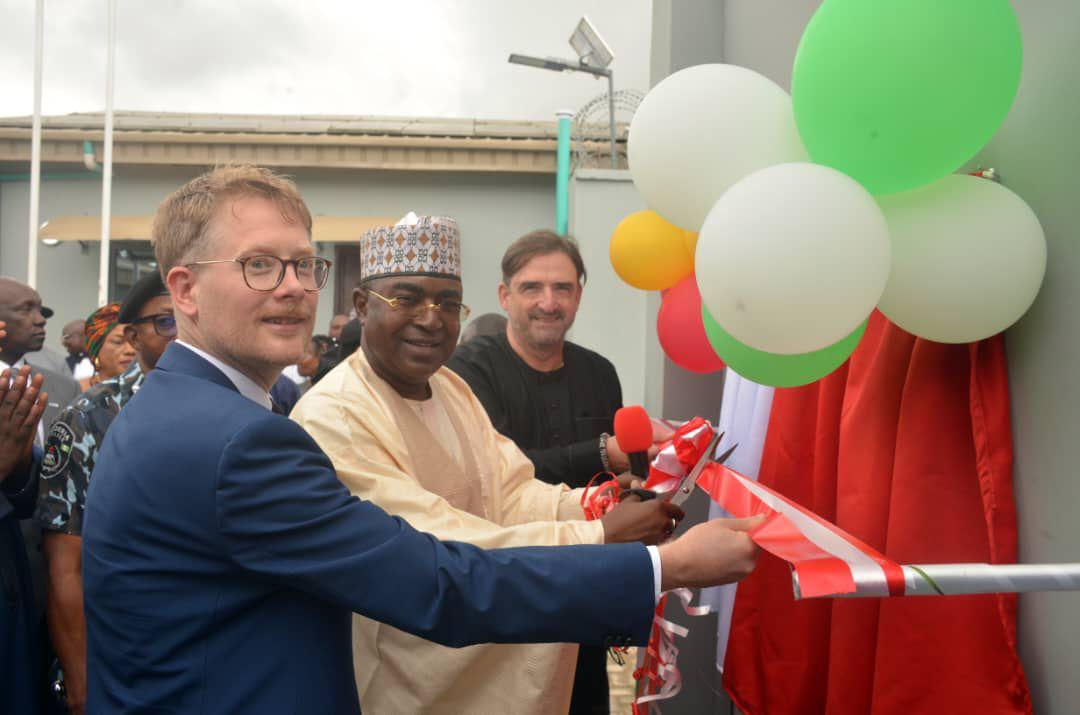
Germany Donates Newly Built Sniffer Dog Facility to NDLEA
By: Michael Mike
The fight against trafficking in drug in the country has received a major boost as Germany has donated a newly built canine facility to the National Drug Law Enforcement Agency (NDLEA).
Speaking on the donation, the Chairman/Chief Executive Officer of the National Drug Law Enforcement Agency (NDLEA), Brig. Gen. Buba Marwa (Rtd) said that the donation of the newly built facility to NDLEA by the German government will boost ongoing efforts against the menace of illicit drugs in Nigeria.
Marwa, said on Friday at the inauguration of the new modern canine complex built and donated to NDLEA by the German government, that: “May I assure all stakeholders that the provision of this facility will significantly drive our fight against illicit drugs, fulfil our core mandate and secure the future of our nation. The quality of the infrastructure at the new NDLEA Dog facility is indeed commendable. It speaks volumes of the commitment, goodwill, and tenacity of our partners.”
He commended the German government for its numerous supports to NDLEA, which he said has translated into an excellent performance by the Canine unit of the agency over the years, citing the remarkable seizure of 74.119 kilogrammes of captagon at the Apapa seaport in Lagos in 2021 as a striking example of such successful operations aided by sniffer dogs.
He however noted that more work is required to sustain the current quantum leap in operational excellence. He said: “This newly commissioned facility will, without doubt, provide a comfortable and dignified environment that will motivate our Canine Unit personnel to discharge their duties effectively and continue to meet both developmental and interdiction mandates.
“The commissioning of this new NDLEA Dog facility marks a significant milestone in the history of the collaboration between the agency and the Government of the Federal Republic of Germany. Everyone who understands the pivotal role of sniffer dogs in drug interdiction will share my sentiment and joy today. These canines play a critical role, using their heightened sense of smell to identify and detect concealed narcotic substances in cargo and shipments at our airports, seaports, land borders, courier service centres, and bus stations.”
Marwa also noted that the sniffer dogs have been instrumental to the seizure of over 17.932 metric tonnes of various illicit substances since their deployment in the agency.
He said: “In years past, the poor infrastructure of the NDLEA Canine Unit has limited its capacity to effectively address developmental and operational challenges. It is against this backdrop that the Government of the Federal Republic of Germany, through the Liaison Office of the German Federal Criminal Police, intervened to sponsor the construction of a modern dog facility for the agency.”
He commended the German government for always fulfilling its commitments to the agency in wide-ranging areas covering technical, logistics, and training support. “Most significant is today’s commissioning and handover of the NDLEA Dog facility. The construction of the facility commenced in August 2024 and was completed on schedule,” he added.
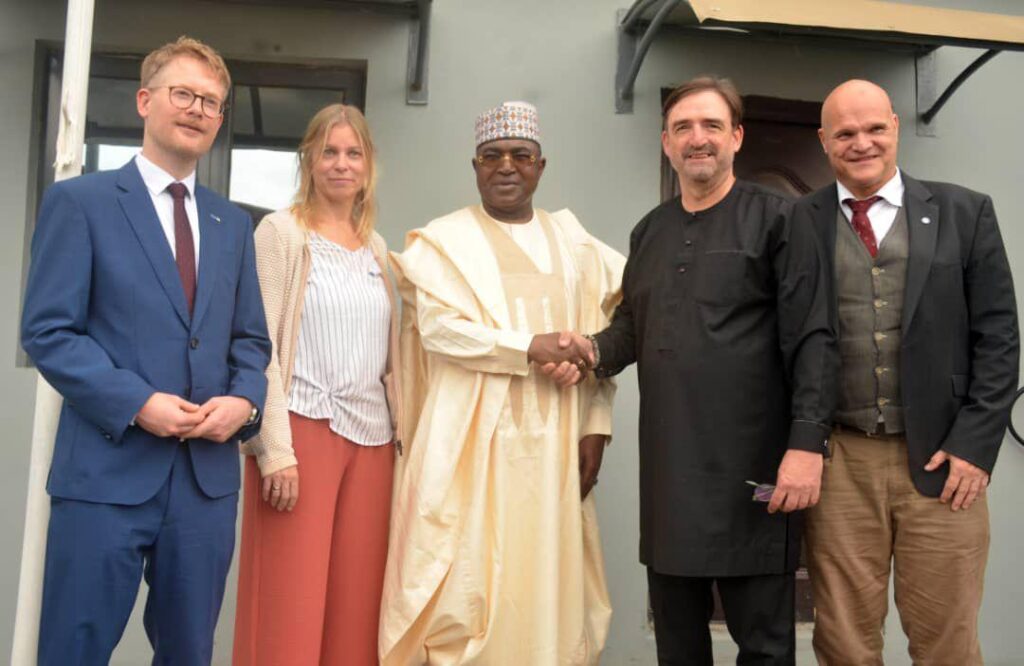
He also expressed appreciation to the German Consul General, Mr. Daniel Krull, the personnel of the Liaison Office of the German Federal Criminal Police and their colleagues in Berlin, Saxony and Sachsen-Anhalt who worked tirelessly to bring the project to fruition.
In his remarks, the Consul General, Mr. Daniel Krull said the success of NDLEA’s operation is not only helping to keep Nigeria safe but also of great benefit to Germany.
He said: “Chairman, I would like to congratulate you for the implementation of this important project, the success and the amazing work of your agency under your leadership. My colleagues briefed me that your agency has been very, very successful, instrumental in fighting crime in Nigeria. And that is, of course, not only important for Nigeria, but it is important for the region. And it goes far beyond. It is also important for us in Germany. So congratulations for the amazing work and I would encourage all members of the NDLEA to keep up the good spirit and continue the amazing work.
“Secondly, I would like to thank you, Chairman, you and all staff members for the trust you have in your German partners. And that trust, I think, is what is the most important currency in this international cooperation. And we hope that this trust will be so solid that we will have a very fruitful cooperation in the future.”
Speaking in same light, the deputy head of section IZ14 BKA, Berlin, Mr. Florian Bulow said the support for NDLEA is one of the most longest-reaching projects the BKA has done in police capacity building. “And if you have such a long cooperation, it’s like in a marriage, it needs love. But love is not everything. You also need trust. So if you trust, you can work together. You also have to share the same goals and values.
“And we do that in our fight against drug smuggling and drug abuse. But one of the most important things, you have to work together as a team. And we did that for many, many years. And if you work together as a team and go this long road as a team, you can achieve something. And what we have achieved together is that”, he stated.
Germany Donates Newly Built Sniffer Dog Facility to NDLEA


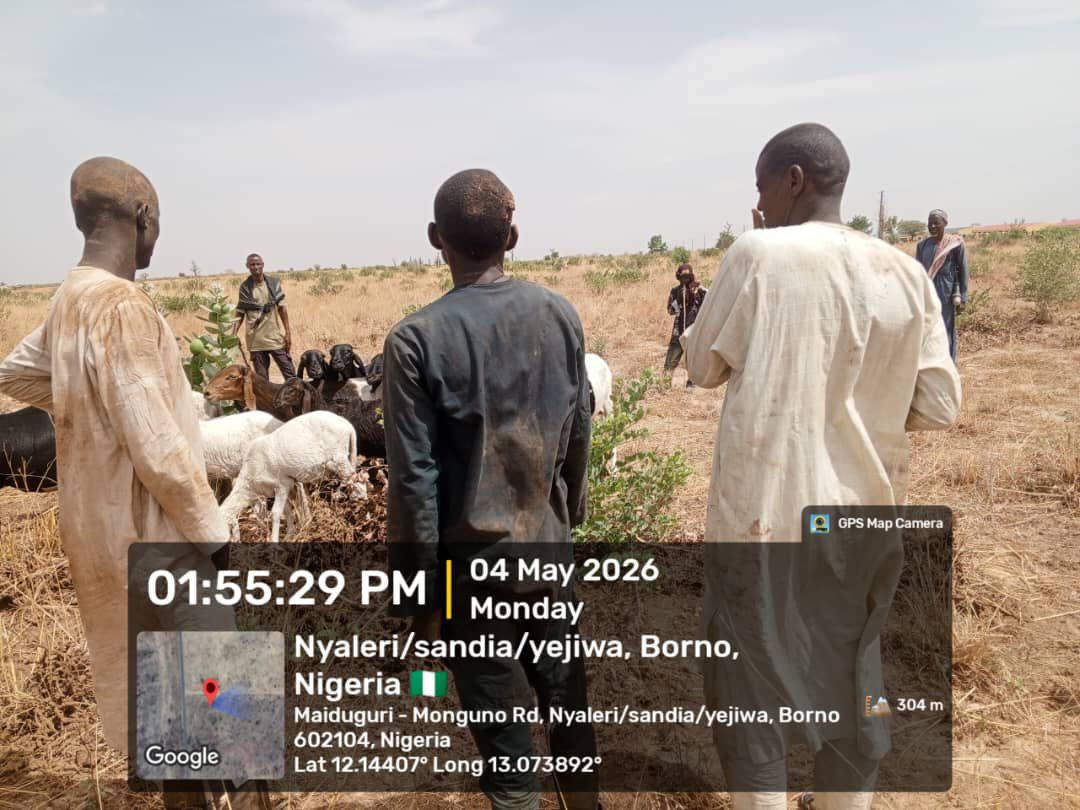
Troops Arrest Three Suspected Cattle Rustlers in Borno
By: Zagazola Makama
Troops of 212 Battalion deployed at Forward Operating Base (FOB) Tuba have arrested three suspected cattle rustlers during an operation in Karnuwa general area of Borno State.
Security sources said the operation followed intelligence provided by a local resident, Malam Muhammadu Ardo, concerning alleged cattle rustling activities within the area.
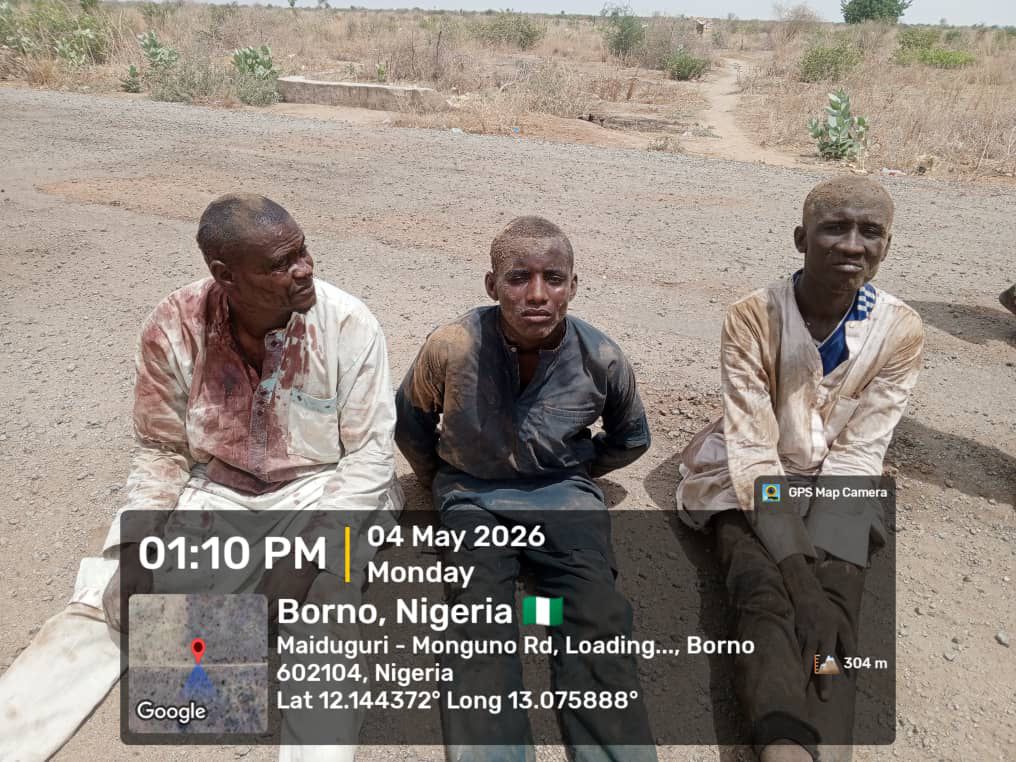
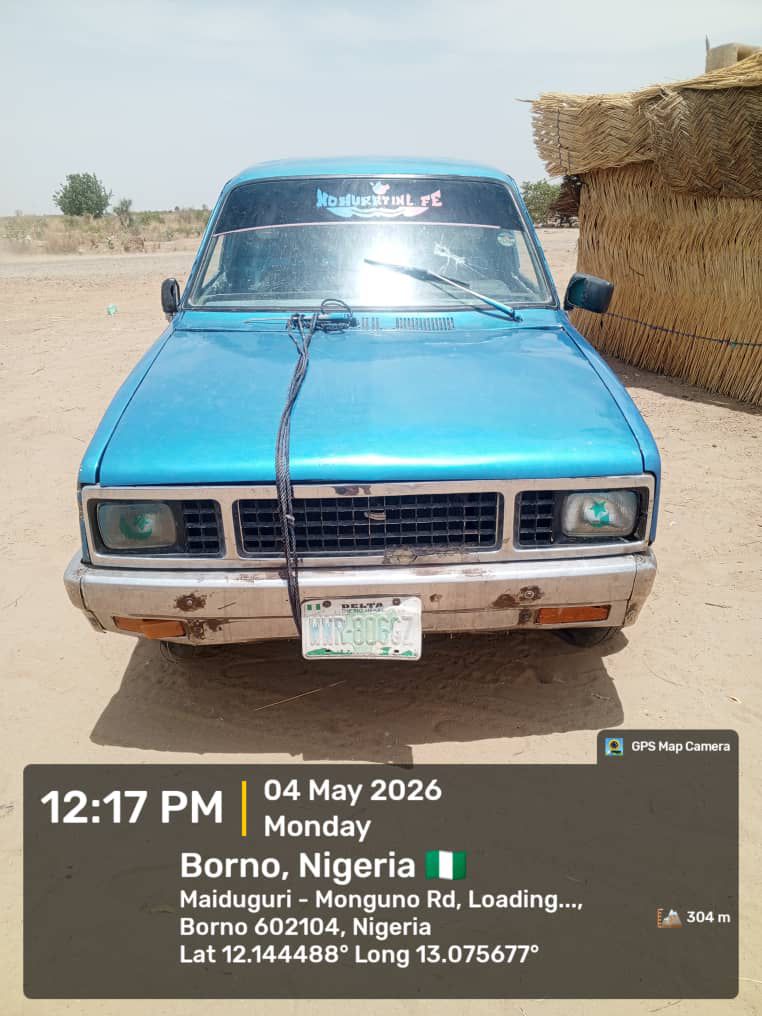
The troops reportedly mobilised to Karnuwa at about 12:30 p.m. on May 4, 2026, where they apprehended the suspects identified as Mallam Mohammad Abatcha, 28; Mallam Mamman Bukar, 18; and Malam Modu Hassan, 30.
According to the sources, the suspects were intercepted while using a pickup vehicle with registration number WW 806 GZ Delta, allegedly employed in transporting stolen cattle.
The rustled cattle were recovered and immediately handed over to their rightful owners at the scene of the arrest.
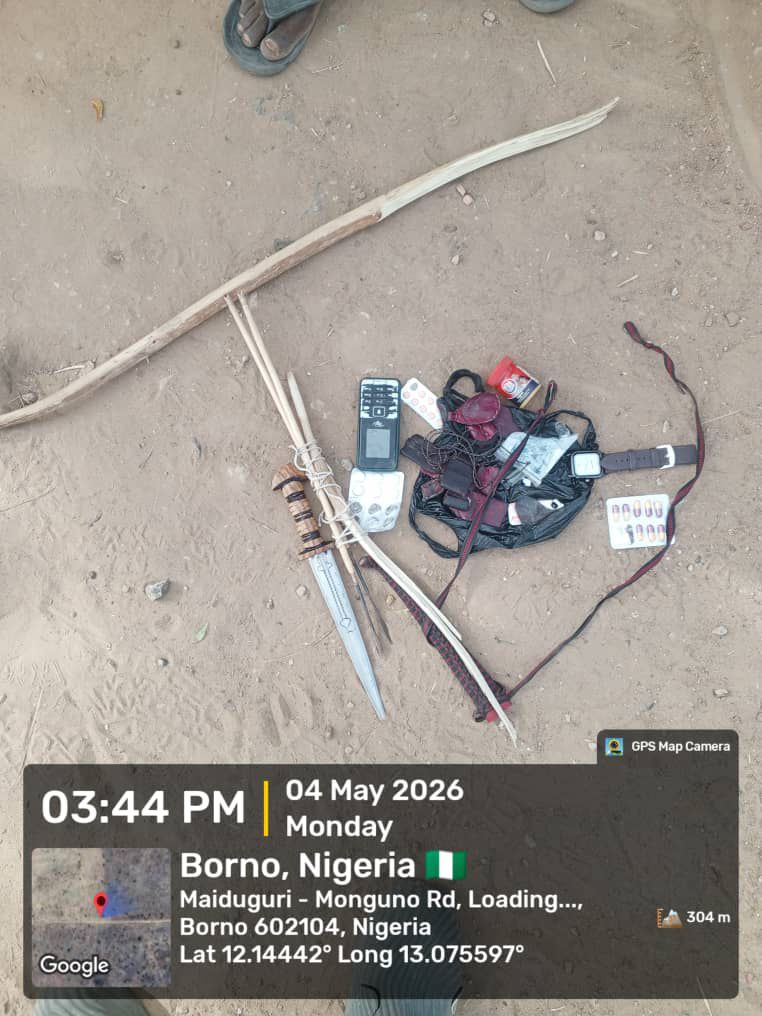
Items recovered from the suspects included a bow and arrow, three mobile phones, five national identity cards and the sum of N20,650.
Preliminary investigation reportedly revealed that the suspects admitted to repeatedly stealing and selling rustled cattle to buyers in Maiduguri.
Security sources further disclosed that investigators suspect possible links between the suspects and members of the Islamic State West Africa Province or Jama’atu Ahlis Sunna Lidda’awati wal-Jihad due to alleged inconsistencies observed in their statements during interrogation.
Troops Arrest Three Suspected Cattle Rustlers in Borno
Troops Discover Illegal Refinery Site, Recover 600 Litres of Stolen Crude in Rivers
By: Zagazola Makama
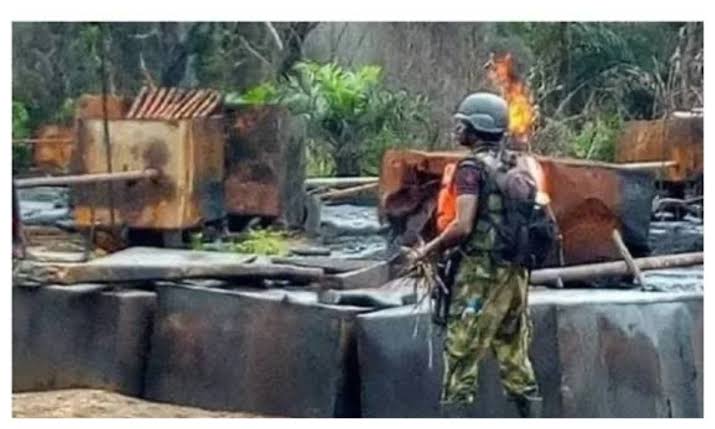
Troops of 29 Battalion operating under the Joint Task Force South-South, Operation Delta Safe (OPDS), have uncovered an illegal refining site and recovered about 600 litres of suspected stolen crude oil in Oyigbo Local Government Area of Rivers State.
Security sources said the discovery was made at about 10:00 a.m. on May 12, 2026, during ongoing anti-illegal bunkering operations in the Niger Delta region.
The troops reportedly discovered the illegal refining site around Asa community, where a large cooking pot loaded with stolen crude oil was found stockpiled in sacks.
Military authorities said the recovered products and equipment were handled in accordance with operational directives guiding anti-crude oil theft operations under Operation Delta Safe.
The operation was conducted without any confrontation or security incident.
The Nigerian military has continued to intensify operations against crude oil theft, illegal refining and other forms of economic sabotage across the Niger Delta region.
Troops Discover Illegal Refinery Site, Recover 600 Litres of Stolen Crude in Rivers

Troops, NDLEA Raid Drug Hideout in Katsina, Arrest Suspected Supplier to Terrorists
By: Zagazola Makama
Troops of the Forward Operating Base (FOB) Malumfashi at Kafur, in collaboration with the National Drug Law Enforcement Agency, have raided a suspected drug peddlers’ hideout in Kafur Local Government Area of Katsina State.
Security sources said the operation was conducted at about 12:30 p.m. on May 12, 2026, at Huguma village following intelligence on illicit drug activities within the area.
During the raid, troops apprehended one suspect identified as a major supplier of illicit drugs and other substances to terrorists and criminal elements operating within Kafur Local Government Area and surrounding communities.
Items recovered during the operation included 146 grams of suspected cannabis and 16.5 grams of a substance identified as Exol-5.
The suspect and the recovered drugs have since been handed over to the National Drug Law Enforcement Agency for further investigation and necessary legal action.
Troops, NDLEA Raid Drug Hideout in Katsina, Arrest Suspected Supplier to Terrorists

Troops Neutralise Two Terrorists in Night Ambush Operation in Borno

Troops Arrest Three Suspected Cattle Rustlers in Borno

Troops Intercept Vehicle Conveying Illegal Diesel in Bayelsa

Roger Federer’s Shock as DNA Results Reveal Myla and Charlene Are Not His Biological Children

THE PLIGHT OF FARIDA

FAILED COUP IN BURKINA FASO: HOW TRAORÉ NARROWLY ESCAPED ASSASSINATION PLOT AMID FOREIGN INTERFERENCE CLAIMS
-
 News2 years ago
Roger Federer’s Shock as DNA Results Reveal Myla and Charlene Are Not His Biological Children
-
Opinions4 years ago
THE PLIGHT OF FARIDA
-
 News1 year ago
FAILED COUP IN BURKINA FASO: HOW TRAORÉ NARROWLY ESCAPED ASSASSINATION PLOT AMID FOREIGN INTERFERENCE CLAIMS
-

 News2 years ago
EYN: Rev. Billi, Distortion of History, and The Living Tamarind Tree
-
 Opinions4 years ago
POLICE CHARGE ROOMS, A MINTING PRESS
-

 ACADEMICS2 years ago
A History of Biu” (2015) and The Lingering Bura-Pabir Question (1)
-

 Columns2 years ago
Army University Biu: There is certain interest, but certainly not from Borno.
-

 Opinions2 years ago
Tinubu,Shettima: The epidemic of economic, insecurity in Nigeria
