
News
NCoS Dismisses Claims of Prisons as TB Hotbeds, Reaffirms Strong Disease Control Measures


NCoS Dismisses Claims of Prisons as TB Hotbeds, Reaffirms Strong Disease Control Measures
By: Michael Mike
The Nigerian Correctional Service (NCoS) has rejected claims that custodial centres across the country have become “hotbeds” for tuberculosis (TB), describing such assertions as misleading, alarmist, and unsupported by verified data.
In a press statement issued on Sunday, the Service spokesperson, Jane Osuji faulted a report published by Daily Trust on January 3, 2026, titled “How Nigerian Prisons Became Tuberculosis Hotbeds,” insisting that the narrative failed to reflect the realities within Nigeria’s correctional facilities.
According to the NCoS, while it welcomes responsible media engagement on public health and inmate welfare, the report relied on sweeping generalisations and unverified claims, despite the Service having provided the reporter with detailed and factual information on tuberculosis prevention and treatment in custodial centres.
“The portrayal of custodial centres as unchecked tuberculosis hotbeds is misleading and unfair,” the Service said, adding that some of the names and cases cited in the report do not exist in the records of any correctional facility known to the Service.
The NCoS noted that tuberculosis remains a global public health challenge affecting both custodial and non-custodial populations, stressing that Nigeria’s TB response is coordinated by the Federal Ministry of Health through the National Tuberculosis, Leprosy and Buruli Ulcer Control Programme (NTBLCP), in line with World Health Organization guidelines.
It explained that the Service is an active stakeholder in the national TB response, operating health clinics across custodial centres nationwide and working closely with the NTBLCP, federal and state ministries of health, non-governmental organisations, and development partners.
These collaborations, the Service said, support routine TB screening, laboratory diagnosis, treatment initiation, adherence monitoring, and referral to secondary or tertiary health institutions where required. Inmates diagnosed with tuberculosis are placed on nationally approved treatment regimens at no cost.
The NCoS further outlined that healthcare management in custodial centres includes medical screening upon admission, periodic health assessments, infection prevention and control measures, isolation of infectious cases when clinically indicated, and structured referral systems to external hospitals.
While acknowledging challenges such as congestion in some urban custodial facilities and ageing infrastructure, the Service stressed that these issues do not amount to neglect of inmate welfare. It highlighted ongoing decongestion efforts through jail delivery exercises, collaboration with the judiciary, and the expansion of non-custodial measures provided for under the Nigerian Correctional Service Act.
The Service also recalled its handling of the COVID-19 pandemic, noting that despite custodial centres being classified globally as high-risk environments, proactive screening, isolation protocols, and close collaboration with public health authorities ensured that no active COVID-19 cases were recorded in custodial centres nationwide.
According to the NCoS, this experience demonstrates its institutional capacity and preparedness to manage communicable diseases, including tuberculosis, within custodial settings.
The statement added that the Federal Government has approved the recruitment of additional medical and healthcare professionals to further strengthen health service delivery, disease surveillance, and treatment programmes across custodial centres.
Reaffirming its commitment to safeguarding the health, dignity, and human rights of persons in custody, the Nigerian Correctional Service said it remains open to constructive criticism but will continue to challenge reports that misinform the public or unjustly malign the institution.
NCoS Dismisses Claims of Prisons as TB Hotbeds, Reaffirms Strong Disease Control Measures


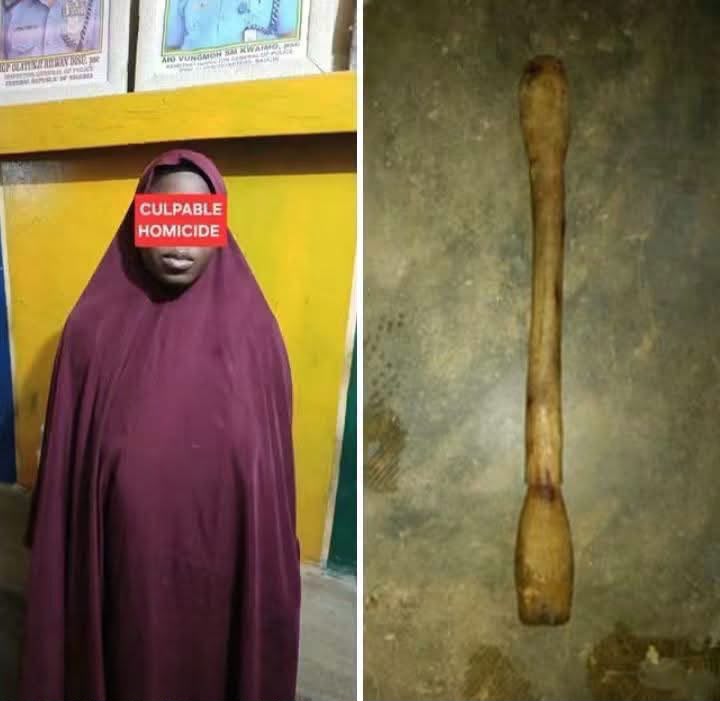
35-year-old woman allegedly k!lls her co-wife with pestle in Bauchi
By: Our Reporter
The Bauchi State Police Command has arrested a 35-year-old woman, Hauwa’u Haruna for the alleged m8rder of her co-wife, Jamila Adamu.
The spokesperson for the command, SP Nafiu Habib, who disclosed this in a statement on Monday, September 28, 2026 said the incident occurred during a domestic dispute at Tafawa Balewa Housing Estate on Sunday.
According to the PPRO, Hauwa’u, allegedly acting under hallucinations, armed herself with a pestle and struck Jamila on the forehead.
Upon receiving information about the domestic incident, detectives attached to the C-Division immediately mobilised to the scene.
The victim was rushed to the Specialist Hospital, Bauchi, where she was certified d3ad by a medical doctor.
Police arrested the suspect and recovered the pestle used in the commission of the offence.
35-year-old woman allegedly k!lls her co-wife with pestle in Bauchi
Army operationalises 28 Armoured Brigade in Kebbi, strengthens security presence in North-West
By: Zagazola Makama
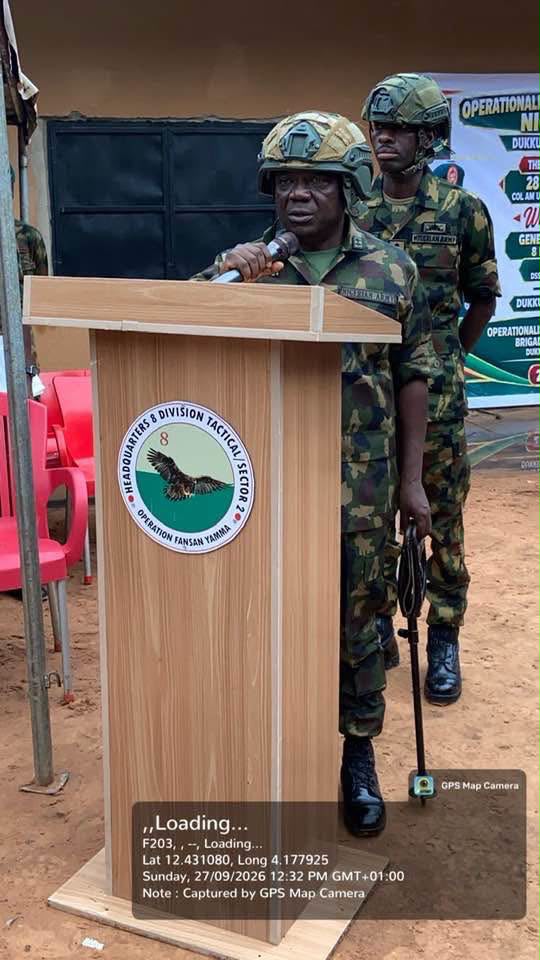
The Chief of Army Staff (COAS), Lt. Gen. Waidi Shaibu, has formally operationalised 28 Armoured Brigade and Garrison in Birnin Kebbi, alongside 281 Tank Battalion in Yauri and 381 Artillery Regiment in Kaoje, as part of efforts to strengthen military presence and security operations in Kebbi State.
The COAS, represented by the General Officer Commanding (GOC), 8 Division Nigerian Army and Commander, Sector 2, Joint Task Force (North-West), Operation FANSAN YAMMA, Maj. Gen. Bemgba Paul Koughna, said the new formations were established to enhance the Army’s operational capacity and improve response to emerging security threats across the North-West.

Maj. Gen. Koughna said the establishment of the brigade was in line with the Nigerian Army’s ongoing efforts to optimise its force structure, expand operational footprints, strengthen command and control and reduce response time to security incidents within the Division’s area of responsibility.
He charged the Acting Commander of 28 Brigade, Col. Abdullahi Umar, to ensure that the formation effectively provides the required fire-support capabilities to enhance ongoing operations across the Division.

The GOC said the deployment was particularly important in strengthening security operations in Kebbi State and addressing threats posed by armed criminal elements and other emerging security challenges.
He stressed that achieving lasting peace required discipline, tactical focus and effective cooperation among the military, other security agencies, traditional institutions and local communities.
Koughna also charged the troops to maintain high standards of professionalism and strictly adhere to the Rules of Engagement while carrying out their constitutional responsibilities.
He reminded the troops of the need to protect law-abiding citizens and ensure that their operations were conducted with due regard for civilian lives and property.
During the visit, the GOC also commiserated with residents of Jandutse community following the recent death of a resident in a bandit attack.
He assured the community that the Nigerian Army would increase its presence in the area as part of measures to improve the safety of residents and prevent further attacks.

The residents expressed appreciation to the GOC for the military’s continued efforts to improve security in Jandutse and other communities across Kebbi State.
The operationalisation of the new formations is expected to further strengthen the Nigerian Army’s footprint in Kebbi and enhance its capacity to conduct sustained operations against bandits and other criminal elements operating across the state.
Army operationalises 28 Armoured Brigade in Kebbi, strengthens security presence in North-West
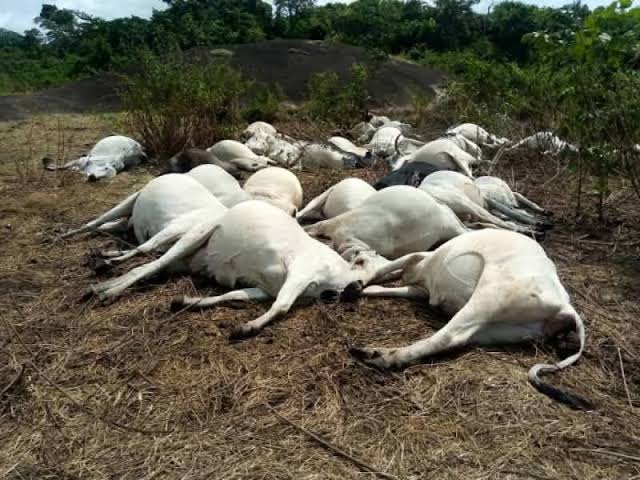
8 cows killed, 74 stolen as suspected Mwaghavul militia attack herders in Mangu, says victims
By: Zagazola Makama
At least eight cows were reportedly killed, 17 others and two sheep injured, while 74 cattle were allegedly stolen during an attack by suspected armed Mwaghavul militia and their accomplices at Lamor, Lawet, in Pushit District of Mangu Local Government Area of Plateau State, according to victims
The incident reportedly occurred at about 8 p.m. on Sept. 27, 2026, according to information provided to Zagazola Makama.
Victims of the attack said the attackers, who were reportedly heavily armed, targeted livestock belonging to herders in the area before fleeing with the stolen cattle.
The incident has raised fresh concerns among residents and livestock owners in the area, particularly because it reportedly occurred about two weeks after another attack in which three herders were allegedly killed and about 50 cattle stolen.
The latest incident, if confirmed, would represent another serious escalation in attacks involving livestock and rural communities in Mangu, where recurring violence has continued to deepen mistrust between communities.
The Federal Government, Plateau State Government, Mangu Local Government Council and security agencies are urged to urgently investigate the reported attack, establish those responsible and take appropriate action in accordance with the law.
Security agencies should also strengthen surveillance and patrols around vulnerable settlements and livestock routes in the affected areas to prevent further attacks, cattle rustling and possible retaliatory violence.
The priority, however, should remain the protection of civilians, recovery of stolen livestock and prevention of another cycle of reprisal attacks that could further endanger both communities.
Residents and community leaders are equally urged to provide credible information to security agencies and avoid actions capable of escalating the situation.
8 cows killed, 74 stolen as suspected Mwaghavul militia attack herders in Mangu, says victims

LG elections are very important—Yobe works commissioner.

35-year-old woman allegedly k!lls her co-wife with pestle in Bauchi

Army operationalises 28 Armoured Brigade in Kebbi, strengthens security presence in North-West

Roger Federer’s Shock as DNA Results Reveal Myla and Charlene Are Not His Biological Children

THE PLIGHT OF FARIDA

FAILED COUP IN BURKINA FASO: HOW TRAORÉ NARROWLY ESCAPED ASSASSINATION PLOT AMID FOREIGN INTERFERENCE CLAIMS
-
 News3 years ago
Roger Federer’s Shock as DNA Results Reveal Myla and Charlene Are Not His Biological Children
-
Opinions5 years ago
THE PLIGHT OF FARIDA
-
 News1 year ago
FAILED COUP IN BURKINA FASO: HOW TRAORÉ NARROWLY ESCAPED ASSASSINATION PLOT AMID FOREIGN INTERFERENCE CLAIMS
-

 News3 years ago
EYN: Rev. Billi, Distortion of History, and The Living Tamarind Tree
-
 Opinions5 years ago
POLICE CHARGE ROOMS, A MINTING PRESS
-

 ACADEMICS3 years ago
A History of Biu” (2015) and The Lingering Bura-Pabir Question (1)
-

 Columns3 years ago
Army University Biu: There is certain interest, but certainly not from Borno.
-

 Politics1 year ago
2027: Why Hon. Midala Balami Must Go, as Youths in Hawul and Asikira/Uba Federal Constituency Reject ₦500,000 as Sallah Gift
