
News
NCPC: VP Shettima Affirms President Tinubu’s Devotion To Interfaith Harmony


NCPC: VP Shettima Affirms President Tinubu’s Devotion To Interfaith Harmony
*Tasks members on religious tolerance, hitch-free pilgrimage
By: Our Reporter
Vice President Kashim Shettima has reaffirmed the resolve of the President Bola Ahmed Tinubu administration to uphold religious freedom and interfaith unity.
According to him, regardless of anyone’s position, the place of faith in the nation is not only critical but provides a framework for comfort among citizens and for the stability of the nation at large.
Speaking on Tuesday when he inaugurated the Board of the Nigerian Christian Pilgrims Commission (NCPC) at the Presidential Villa, Abuja, the Vice President said Nigeria is what it is because it is a nation of God, and this spirituality is of prevailing interest.

VP Shettima maintained that Nigeria’s strength lies in its diversity of faiths, vowing that there will be no discrimination under the Tinubu-led government.
“Our duty is to provide a safe haven for members of each faith and uphold the rights and freedoms in our constitution,” he stated, reminding the board of NCPC’s role in easing pilgrimage affairs for Nigerian Christians, a “sacred tradition” that must be prioritized.
“It is our pledge that Christians will access optimum privileges in pursuit of their spiritual journey. Your duty here is a service to God and humanity in the best way possible, ” he added.
The VP urged the new NCPC board members to be unifying figures dedicated to promoting interfaith harmony through compassion, justice, and mutual respect.

His words: “We can only emerge stronger and more resilient as a nation through dialogue, empathy and reconciliation. The Nation has grappled with the shadows of division fueled by the flames of intolerance and misunderstanding for far too long. Yet, in the flickering light of hope, we find solace in the knowledge that it is through interfaith harmony.”
VP Shettima recalled President Tinubu’s promise when he assumed office, that his government would have no place for discrimination, assuring that the administration is fervently committed to ensuring interfaith harmony remains the ultimate priority.
“Let us heed the call of the Lord to be our brothers’ keepers, our sisters’ keepers, and good neighbours wherever we find ourselves. We can only achieve this when we recognize that our diversity is not a source of weakness but rather a wellspring of strength,” the Vice President observed.
Earlier in his remarks, the newly appointed Chairman of the NCPC board, Rev. (Monsignor) Cletus Gotan, thanked the President for the government’s support in sponsoring pilgrimage journeys that encourage the spiritual upliftment of citizens.
“We appreciate the interest of the President and his government in encouraging the spiritual upliftment of our citizens by sponsoring these sacred journeys which will take us to our holy places and teach us about unity,” Prof. Gotan, who is the Vicar General of the Catholic Archdiocese of Jos and a former Dean of Education at the University of Jos, said.
The NCPC chairman pledged that the new board would work to improve pilgrimage services. “We will leave the NCPC better than we found it. We would ensure that we go there for prayers for the government, our families and for people,” he stated.
Expressing hope that the pilgrimage exercise would foster greater understanding and unity, Rev. Gotan said, “We pray that the exercise will help us appreciate how to live with each other as children of the same father. God has placed us in a country that is multifarious in nature”.
The Chairman disclosed that the board’s composition includes bishops, senior clerics, pastors, former EYN presidents and “eminent men and women of integrity” across Christian denominations, under the government’s supervision.
Other members of the board included Hon. Omowumi Olubunmi Ogunlola (South West), Chief Clement Alobu Nweke (South East), Weli Wosu (South South), Rev. Fr. Prof. Joseph Haruna Mamman (North West), Dr. Toma Hamidu Ragnjiya (North East), Dr. Simon Abu Samson Dolly (North Central) and Bishop Dr. Raphael Benjamin Nwankwo (CAN).
There were also representatives from the Federal Ministry of Health and Social Welfare, the Ministry of Foreign Affairs, and the Central Bank of Nigeria. Bishop Stephen Adegbite was the Executive Secretary of the NCPC.
NCPC: VP Shettima Affirms President Tinubu’s Devotion To Interfaith Harmony


Power Sector Row Deepens as NISO Rejects APGC’s Grid Failure Narrative
By: Michael Mike
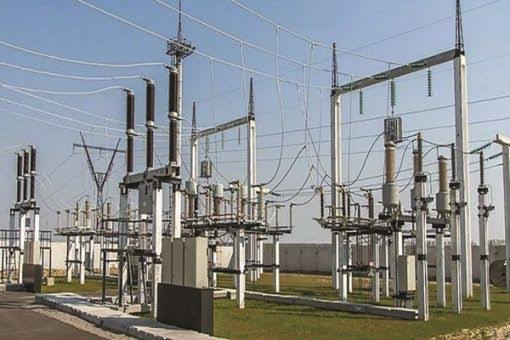
Nigeria’s power sector witnessed a fresh war of words on Friday as the Nigerian Independent System Operator (NISO) dismissed claims by the Association of Power Generation Companies (APGC) over the June 25 national grid disturbance, insisting the incident was a localized voltage instability in Lagos and not evidence of a nationwide system failure.
In a strongly worded clarification, NISO accused APGC of publishing misleading interpretations of the grid event that failed to accurately reflect the operational realities surrounding the disturbance, warning that such narratives could undermine public confidence in the country’s electricity network.
The system operator maintained that the incident was swiftly detected and effectively managed, preventing it from cascading into other parts of the national grid.
According to NISO, the disturbance remained confined to the Lagos region, where coordinated operational interventions restored normal electricity supply within the shortest possible time.
The clarification comes amid renewed scrutiny of Nigeria’s fragile electricity infrastructure, where recurring grid disturbances and collapses have continued to fuel concerns among consumers, businesses and industry stakeholders.
Rejecting APGC’s analysis of system frequency, voltage and generation data, NISO argued that the publication ignored established provisions of the Nigerian Grid Code governing system disturbances.
It explained that temporary deviations in frequency and voltage are normal during stressed operating conditions and should not be interpreted as proof of grid collapse or operational failure.
The operator noted that while the National Grid normally operates within a frequency range of 49.75 to 50.25 Hertz and transmission voltage between 280.5 kilovolts and 346.5 kilovolts on the 330kV network, these parameters are expected to fluctuate briefly during disturbances before corrective measures restore stability.
It further stated that the Grid Code permits generating units to remain synchronized even when system frequency temporarily falls below or rises above normal operating limits during restoration processes.
NISO also disputed APGC’s conclusions on the temporary reduction in electricity generation during the incident, describing the drop as the result of deliberate operational actions and the activation of generator and network protection systems designed to safeguard the integrity of the national grid.
According to the operator, the emergency measures prevented wider cascading outages and enabled rapid stabilization and restoration of electricity supply.
The agency stressed that presenting isolated minimum or maximum frequency values without considering the broader operational context or restoration procedures gives an inaccurate picture of the health of the national grid.
Asserting its statutory mandate, NISO declared that it remains the only authorized source of official information on grid operations, system events and the performance of Nigeria’s electricity transmission network.
It urged policymakers, market participants and the general public to rely solely on information released by the system operator for accurate and verified updates on the national grid.
The operator reaffirmed its commitment to ensuring the reliability, security and stability of Nigeria’s electricity supply industry through strict compliance with the Nigerian Grid Code, transparent communication and internationally accepted operational practices.
The clarification sets the stage for renewed debate within the power sector over the interpretation of grid incidents and highlights growing tensions between key industry players over accountability and public communication in Nigeria’s electricity market.
Power Sector Row Deepens as NISO Rejects APGC’s Grid Failure Narrative

Troops Rescue 36 Benue Indigenes Held in Cross River Community
By Zagazola Makama
Troops of the Nigerian Army have rescued 36 civilians from Benue State who were allegedly held by members of Imaje Community in Yala Local Government Area of Cross River State following a reprisal attack linked to a livestock theft dispute.
Security sources told Zagazola Makama that the operation was carried out at about 3:30 p.m. on Thursday by troops of 130 Battalion (Rear) in conjunction with 341 Artillery Regiment during a raid on the community.
The sources said the troops successfully rescued the 36 victims, all indigenes of Benue State residing in Imaje Community.
According to the rescued victims, the incident stemmed from the alleged assault of an indigene of Imaje by youths in Benue State over the theft of livestock.
The victims alleged that, in retaliation, members of Imaje Community attacked Benue indigenes living in the area and held them against their will.
The prompt intervention by the troops restored normalcy to the community and prevented further escalation of the crisis.
Security agencies are maintaining a presence in the area to forestall any renewed violence, while investigations into the incident are ongoing.
Troops Rescue 36 Benue Indigenes Held in Cross River Community
Troops Recover 120 Rustled Cattle, Repel Rustlers in Kaduna
By Zagazola Makama
KADUNA – Troops of the Nigerian Army have recovered 120 rustled cattle after engaging suspected cattle rustlers during an operation in Chikun Local Government Area of Kaduna State.
Security sources told Zagazola Makama that the operation was conducted at about 4:00 p.m. on Thursday after troops of 312 Artillery Regiment, deployed at Forward Operating Base (FOB) Kankomi, received a distress call over cattle rustling activities in Kankomi village.
The troops swiftly responded and laid an ambush along the suspected escape route of the rustlers.
The sources said the troops made contact with the fleeing suspects in Kadaru Bush, forcing them to abandon the stolen livestock and escape into the surrounding forest.
Following the operation, the troops recovered 120 cattle, which were subsequently identified and handed over to their rightful owners.
Security forces have intensified efforts to track down the fleeing rustlers and sustain operations aimed at curbing cattle rustling and other criminal activities in the area.
Troops Recover 120 Rustled Cattle, Repel Rustlers in Kaduna

Power Sector Row Deepens as NISO Rejects APGC’s Grid Failure Narrative

Troops Rescue 36 Benue Indigenes Held in Cross River Community

Troops Recover 120 Rustled Cattle, Repel Rustlers in Kaduna

Roger Federer’s Shock as DNA Results Reveal Myla and Charlene Are Not His Biological Children

THE PLIGHT OF FARIDA

FAILED COUP IN BURKINA FASO: HOW TRAORÉ NARROWLY ESCAPED ASSASSINATION PLOT AMID FOREIGN INTERFERENCE CLAIMS
-
 News2 years ago
Roger Federer’s Shock as DNA Results Reveal Myla and Charlene Are Not His Biological Children
-
Opinions4 years ago
THE PLIGHT OF FARIDA
-
 News1 year ago
FAILED COUP IN BURKINA FASO: HOW TRAORÉ NARROWLY ESCAPED ASSASSINATION PLOT AMID FOREIGN INTERFERENCE CLAIMS
-

 News2 years ago
EYN: Rev. Billi, Distortion of History, and The Living Tamarind Tree
-
 Opinions5 years ago
POLICE CHARGE ROOMS, A MINTING PRESS
-

 ACADEMICS2 years ago
A History of Biu” (2015) and The Lingering Bura-Pabir Question (1)
-

 Columns2 years ago
Army University Biu: There is certain interest, but certainly not from Borno.
-

 Politics1 year ago
2027: Why Hon. Midala Balami Must Go, as Youths in Hawul and Asikira/Uba Federal Constituency Reject ₦500,000 as Sallah Gift
