
News
NDLEA Arrests Ex-Lagos Councillor, Uncovers Drugs Hidden in Baby Diapers, Intercepts IED Components

NDLEA Arrests Ex-Lagos Councillor, Uncovers Drugs Hidden in Baby Diapers, Intercepts IED Components
By: Michael Mike
Operatives of the National Drug Law Enforcement Agency (NDLEA) have intensified their nationwide crackdown on drug trafficking, arresting a former Lagos councillor and uncovering a series of drug consignments concealed in unusual ways, including inside baby diapers, while also intercepting components suspected to be meant for improvised explosive devices (IEDs).
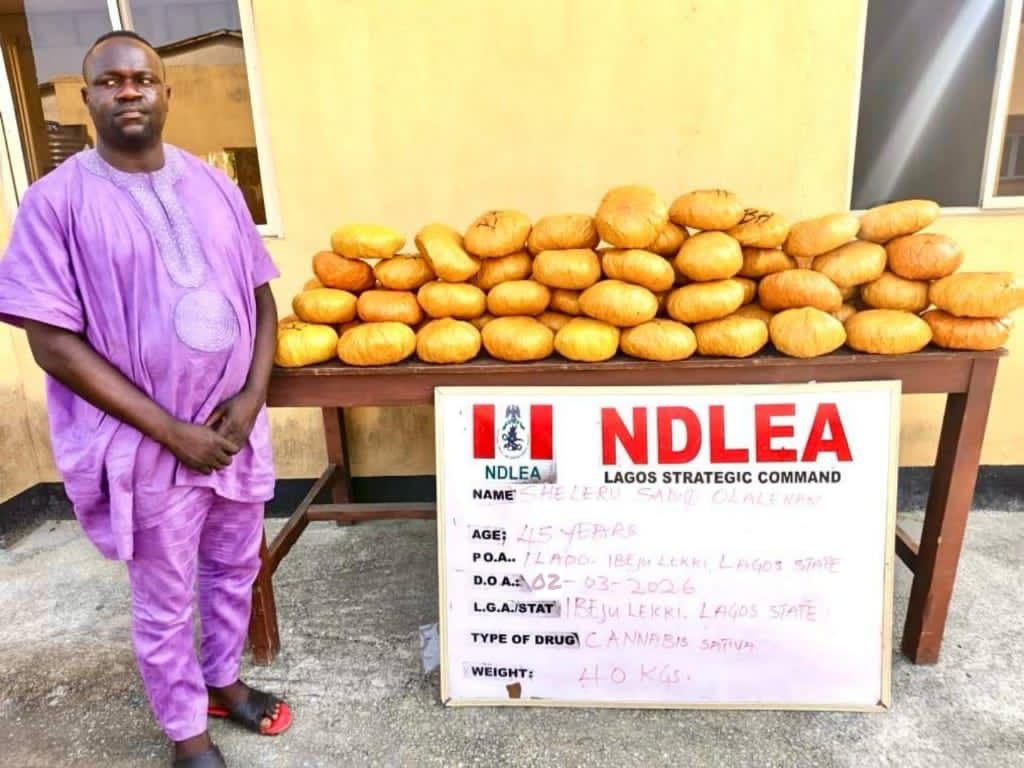
In one of the most striking arrests, NDLEA officers apprehended Sheleru Sadiq Olalekan, a former two-term councillor in Ibeju-Lekki Local Government Area of Lagos State, following intelligence linking him to illicit drug activities.
Olalekan, 45, who represented the Orimedu community during his tenure and currently serves as a legislative aide, was arrested on March 2 at his residence in Ilado, Ibeju-Lekki. A search of his home led to the discovery of 40 kilogrammes of skunk, a potent strain of cannabis, hidden in one of the rooms.
According to the agency, the suspect admitted ownership of both the drugs and the property where they were recovered.
In a separate operation in Abuja, NDLEA operatives intercepted a businessman, Emeka Okwor, 32, travelling from Obollo-Afor in Enugu State to Zuba in the Federal Capital Territory.
During a search of his luggage, officers discovered 1,000 pills of tapentadol 250mg concealed inside baby diapers. The suspect reportedly confessed that he was transporting the drugs to Guduwa village in Gurara Local Government Area of Niger State, where he operates a provision store.
On the same day, NDLEA patrol officers along the Kabba–Obajana highway in Kogi State intercepted a consignment of Colorado, a synthetic strain of cannabis weighing 1.55 kilogrammes, concealed inside a carton of a standing fan.
According to a statement on Sunday by the spokesman of the anti-narcotics agency, Femi Babafemi, the drugs were traced to a 36-year-old Cameroonian national, Mey Ali Muhamat, who was travelling in a commercial bus from Lagos to Cameroon through Lokoja, Kano and Maiduguri.
In another security-related development, NDLEA operatives on patrol along the Mokwa–Jebba road in Niger State intercepted a commercial bus transporting 500 components suspected to be used for improvised explosive devices.
The items were concealed in a white sack and were reportedly meant to be delivered to a recipient in Pelegi community. Babafemi said a swift follow-up operation led to the arrest of the alleged recipient, Osama Abdullahi, 21, in Mashegu Local Government Area.
The agency also recorded major drug seizures in other parts of the country. In Yola, Adamawa State, NDLEA officers uncovered 122,000 tramadol pills and 700 grammes of methamphetamine hidden in a false compartment of a truck carrying 2,000 cartons of local drinks.
In Kano State, a 20-year-old suspect, Muhammed Ali, was arrested at Gadar Tamburawa with 11,283 tramadol pills.
Similarly, operatives in Ogun State raided a drug hideout in Ogere, arresting Nazifi Mudansir and Kabiru Musa with 46 kilogrammes of skunk.
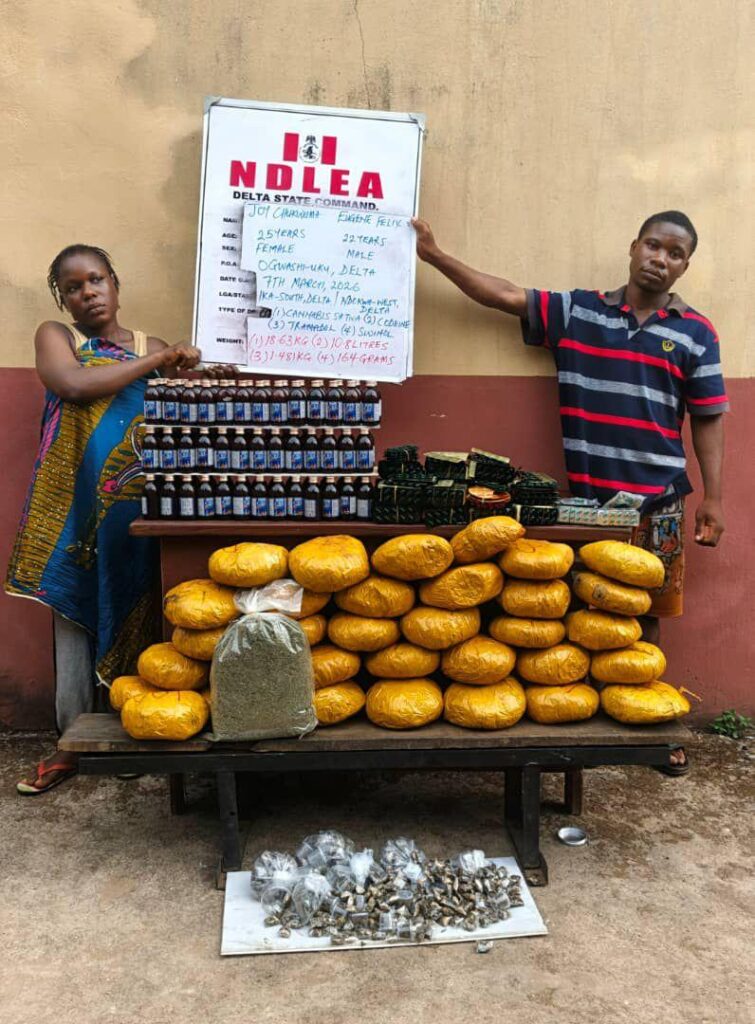
In Delta State, two suspects — Joy Chukwuma, 25, and Eugene Felix, 22 — were apprehended in Ogwashi-Uku with 18.63 kilogrammes of skunk, 10.8 litres of codeine-based syrup and 4,268 pills of tramadol and swinol.
A major cannabis cultivation site was also dismantled in Edo State, where NDLEA operatives arrested two suspects, Eke London, 48, and Austin Isusi, 49, at Egbisi forest in Uhumwonde Local Government Area and destroyed 1,910.25 kilogrammes of skunk on two farms.
Another suspect, Alaba Adeboye, 47, was arrested in Ikhin town, Owan East Local Government Area, with 176.5 kilogrammes of skunk.
Beyond enforcement operations, the agency said it continued to expand its War Against Drug Abuse (WADA) sensitisation campaign in schools, religious centres and communities nationwide.
The outreach programmes included awareness lectures in several secondary schools across Oyo, Niger, Zamfara, Lagos, Sokoto, Ebonyi and Anambra states.
Chairman and Chief Executive Officer of the NDLEA, Maj. Gen. Buba Marwa (Rtd.) commended officers across the Lagos, FCT, Kano, Niger, Kogi, Edo, Ogun, Delta and Adamawa commands for the arrests and seizures.
He urged them to sustain the agency’s balanced strategy of aggressive enforcement alongside public education aimed at reducing drug abuse and trafficking across the country.
NDLEA Arrests Ex-Lagos Councillor, Uncovers Drugs Hidden in Baby Diapers, Intercepts IED Components


Yobe: Wali visits Emir of Damaturu
By: Yahaya Wakili
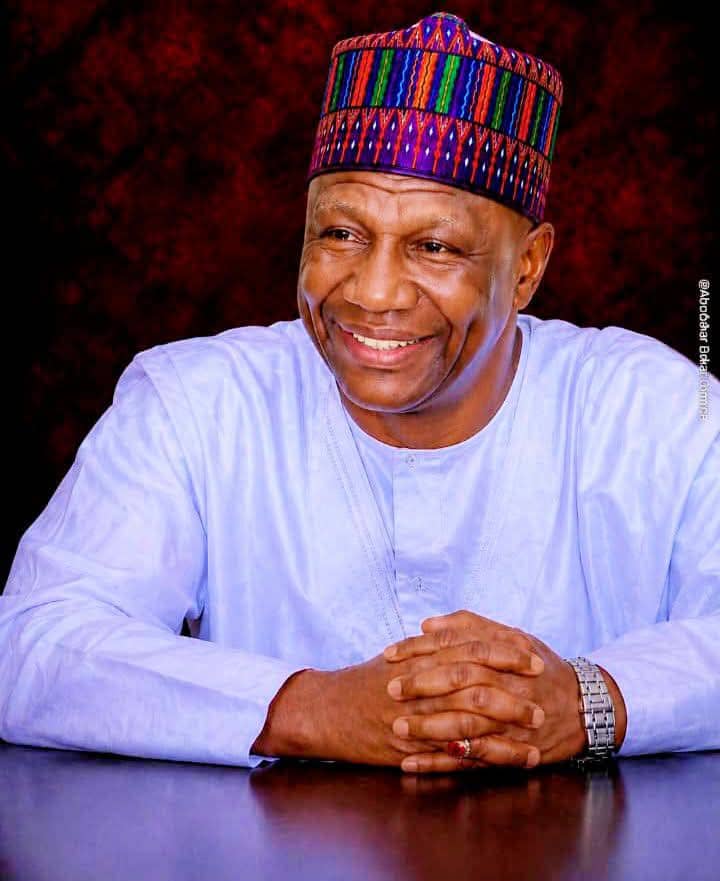
Yobe State All Progressives Congress (APC), 2027 gubernatorial candidate Alhaji Baba Malam Wali MNI, FCAN, has paid a courtesy visit to His Royal Highness, the Emir of Damaturu, Alhaji Shehu Hashimi II Ibn Umar Al-Amin El-Kanemi, at his palace in Damaturu.
During the visit, the APC governorship candidate, Alhaji Baba Malam Wali MNI, said they were at the emir’s palace to solicit the prayers and blessings of the emir.
According to Baba Wali, “We are in the race; therefore, the visit was very significant. We need the prayers of the royal fathers and leaders because they were very vital and important at this crucial time.
Responding, His Royal Highness, the emir of Damaturu, Alhaji Shehu Hashimi II Ibn Al-Amin El-Kanemi, thanked the governorship candidate for the visit and prayed Almighty Allah (SWT) would guide and protect him throughout his struggle in his life.
Those accompanying the incoming governor, Inshallah, in 2027 during the visit are his deputy, Barrister Saleh Samanja; APC State chairman, Alhaji Mohammed Gadaka; and Madakin Gudi.
Others are Alhaji Aji Yarima Bularafa, Hon. Commissioner of the Ministry of Wealth Creation, Empowerment, and Employment Generation; Hon. Nasiru Hassan Yusuf, candidate for the Federal House of Representatives, representing Damaturu, Gujba, Gulani, and Tarmuwa local government areas; and others.
The emir conferred the traditional title of Mukaddam of the Damaturu emirate council on Alhaji Baba Malam Wali, mni, and fcan, respectively.
Yobe: Wali visits Emir of Damaturu
Fire Razes Building Material Shops in Satellite Town, Lagos
By Zagazola Makama
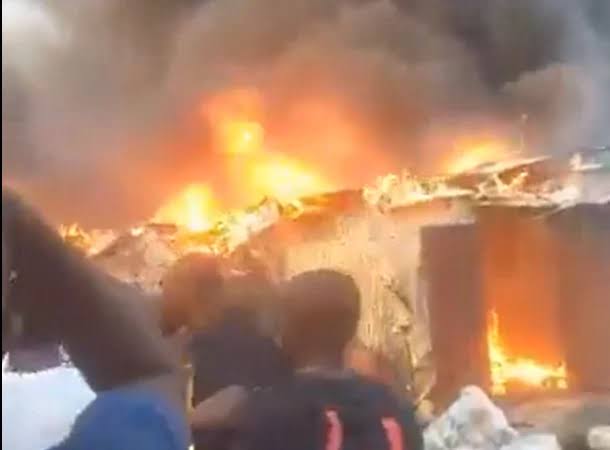
LAGOS — A fire outbreak has destroyed several building material shops along Fin-Niger, Satellite Town, Lagos State.
The incident occurred at about 6:10 a.m. on Aug. 18, when a distress call was received reporting a fire outbreak in the area.
Following the alert, a team of policemen and firefighters was swiftly mobilised to the scene.
The fire affected building material shops located at 58/196 Old Ojo Road, along Fin-Niger, Satellite Town.
The emergency responders successfully contained and extinguished the fire, preventing it from spreading further.
No casualty or loss of life was recorded in the incident.
The cause of the fire and the estimated value of property destroyed have not yet been established.
The police said investigation into the incident is ongoing to determine the circumstances surrounding the outbreak.
Fire Razes Building Material Shops in Satellite Town, Lagos
News
24 Bandits Killed As Army, DSS, Vigilantes Foil Mass Kidnap in Katsina Community, Rescue Victims
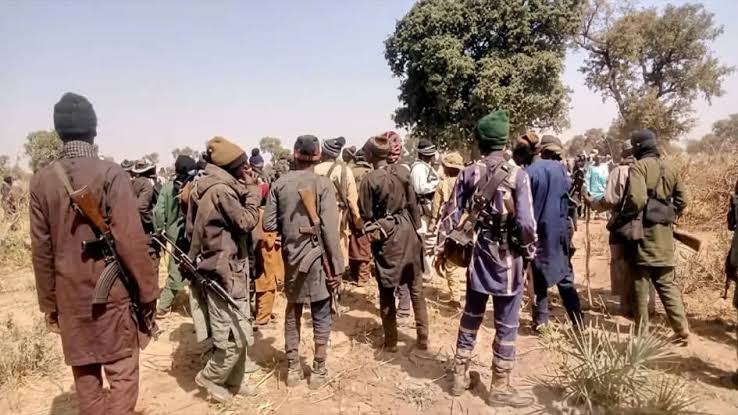
24 Bandits Killed As Army, DSS, Vigilantes Foil Mass Kidnap in Katsina Community, Rescue Victims
By: Zagazola Makama
At least 24 bandits were killed on Tuesday after soldiers of the Nigerian Army, operatives of the Department of State Services (DSS), Katsina Community Watch Corps foiled an attempt to mass-kidnap persons in Gidan Bawa village, Kandarawa Ward, Bakori Local Government Area of the state.
According to a security source, the operation followed sustained intelligence which uncovered plans by about 40 gunmen loyal to notorious bandit kingpin, Isiya Kwashen Garwa, to invade the village and abduct many residents, especially women and children.
The plot, sources said, was intended to replicate the mass abduction of residents of Woro community in Kwara State, ostensibly to embarrass the government.
Acting swiftly on the intelligence, DSS operatives mobilised the Community Watch Corps, and the Civilian Joint Task Force (CJTF) from Guga camp, and ambushed the bandits.
The source disclosed that the joint security operatives neutralised 24 bandits and rescued the abducted villagers.
Security operatives also recovered 19 stolen cattle from the community during the raid.
The source added that there were ongoing efforts to track down the fleeing bandits.
24 Bandits Killed As Army, DSS, Vigilantes Foil Mass Kidnap in Katsina Community, Rescue Victims

Yobe: Wali visits Emir of Damaturu

Police Arrest Two Suspected One-Chance Robbery Syndicate Members in Lagos

Fire Razes Building Material Shops in Satellite Town, Lagos

Roger Federer’s Shock as DNA Results Reveal Myla and Charlene Are Not His Biological Children

THE PLIGHT OF FARIDA

FAILED COUP IN BURKINA FASO: HOW TRAORÉ NARROWLY ESCAPED ASSASSINATION PLOT AMID FOREIGN INTERFERENCE CLAIMS
-
 News2 years ago
Roger Federer’s Shock as DNA Results Reveal Myla and Charlene Are Not His Biological Children
-
Opinions5 years ago
THE PLIGHT OF FARIDA
-
 News1 year ago
FAILED COUP IN BURKINA FASO: HOW TRAORÉ NARROWLY ESCAPED ASSASSINATION PLOT AMID FOREIGN INTERFERENCE CLAIMS
-

 News2 years ago
EYN: Rev. Billi, Distortion of History, and The Living Tamarind Tree
-
 Opinions5 years ago
POLICE CHARGE ROOMS, A MINTING PRESS
-

 ACADEMICS2 years ago
A History of Biu” (2015) and The Lingering Bura-Pabir Question (1)
-

 Columns2 years ago
Army University Biu: There is certain interest, but certainly not from Borno.
-

 Politics1 year ago
2027: Why Hon. Midala Balami Must Go, as Youths in Hawul and Asikira/Uba Federal Constituency Reject ₦500,000 as Sallah Gift
