
National News
NDLEA destroyed 14 hectares cannabis farms in Edo


NDLEA destroyed 14 hectares cannabis farms in Edo
Operatives of the National Drug Law Enforcement Agency (NDLEA) have destroyed over 14 hectares of cannabis cultivated farms in Edo State.
This is part of continued nationwide ‘offensive action’ against drug traffickers in the past week, by the anti-narcotics agency during which hundreds of kilogrammes of illicit substances were seized at the airports, courier firms, hideouts.
A statement on Sunday by the spokesman of the agency, Femi Babafemi said Edo operatives stormed remote forests in the Ovia North East area of the state between 8th and 16th Sept, destroyed over 14 hectares of cannabis farms, and recovered 172.6 kilogrammes of cannabis.
He said three female and a male suspects were also arrested in raids across Owan East and Akoko Edo areas of Edo state during which different quantities of cannabis and local mixtures called monkey tail were recovered.
In another clampdown, attempts by a female passenger, Isesele Obehi and one Emmanuel Chibuzor Omebere to export illicit drugs to Europe through the Murtala Mohammed International Airport, MMIA, Lagos and Nnamdi Azikiwe International Airport, Abuja were thwarted by narcotic officers who arrested them shortly before they boarded their flights.
Also Read: Zulum, Dantata, Adadevoh get fellowship from National…
Babafemi said while Isesele was nabbed on Saturday 11th September, 2021 during outward clearance of Ethiopian Airline flight at Gate B departure hall of the Lagos airport on her way to Milan, Italy with 312 sachets of Tramadol, weighing 1.5 kilogrammes, concealed in crayfish and dried vegetables, Chibuzor was caught with 137.45 grammes of the same drug concealed in foodstuff at the Abuja airport on Thursday 2nd Sept during outward clearance of Turkish Airline flight to Istanbul, Turkey.
He also said efforts by desperate traffickers to export varying sizes of consignments containing cocaine, heroin and other illicit drugs through courier firms were also foiled.
Some of the seized drugs include 475 grammes of heroin concealed in food items going to Canada; 202 grammes of cocaine hidden in body cream containers going to Australia; 720 grammes of Cannabis Sativa tucked in computer hard drives heading to United Arab Emirates, UAE and another 2.1 kilogrammes of cannabis hidden in body cream bottles going to Oman, while 60 grammes of cocaine concealed in degree certificates meant for Australia was also seized, all from three courier firms in Lagos.
He revealed that a 38-year-old pregnant woman, Kate Nwuju was arrested on Tuesday 14th Sept at her residence in Rumueme, Mile 4 area of Port Harcourt, Rivers state with 4.5 kilogrammes of cannabis following intelligence that she sells drugs.
Another person, Aliyu Saidu, suspected to be a fake soldier was arrested with 2.3 kilogrammes of cannabis sativa in a commercial bus from Lagos to Makurdi, on Monday 13th of Sept at Aliade checkpoint, Benue State.
In Kano, one Shuaibu Yusuf, was arrested on Friday 17th Sept with 537 kilogrammes of cannabis sativa, concealed among bags of cement in a truck, while in Ogun state, five persons were arrested on Tuesday 14th Sept after their truck conveying 552 kilogrammes cannabis was intercepted at Ogere Remo, along Lagos-Ibadan expressway.
In a related development, narcotic officers on motorised patrol on Friday 17th Sept, arrested a 21-year-old Law Ubi at Marian Road, Calabar, Cross River state with 67.4 kilogrammes cannabis while a follow up search of his residence the following day, Saturday, led to the recovery of 4.2 grammes of Cocaine from his apartment.
Speaking on the latest arrests and seizures, Chairman/Chief Executive of NDLEA, Brig. Gen. Buba Marwa (Retd)
commended the officers and men of the Lagos airport, Abuja airport, Benue, Kano, Ogun, Rivers, Cross River and Edo commands as well as those of the Directorate of Operation and General Investigation, DOGI, of the agency for maintaining the heat on drug dealers.
He said their efforts “further reaffirm our determination that those in this criminal trade will always have the new NDLEA to contend with; whether in their homes, on the streets, at the ports and deep in the forests, we’ll chase them with every legitimate force and smoke them out, up to the last man or woman if they fail to repent.”
NDLEA destroyed 14 hectares cannabis farms in Edo




FG Sets December Deadline for 95% NIN Coverage
By: Michael Mike
The Federal Government has set December 2026 as the deadline to achieve 95 per cent coverage of Nigeria’s population under the National Identification Number (NIN) system, signalling an accelerated push to make digital identity the foundation of access to public services, financial transactions and social interventions.
The target was announced yesterday by the Chief of Staff to the President, Femi Gbajabiamila, who represented President Bola Ahmed Tinubu at the 2026 National Day of Identity celebration.
Gbajabiamila said the national identity database had expanded from about 80 million NINs at the beginning of the administration to nearly 140 million, describing the growth as a major step towards bringing more Nigerians and legal residents into the formal economic and public-service system.
The government’s latest drive effectively places identity registration at the centre of its efforts to improve how citizens are identified, how public resources are distributed and how people access government and financial services.
Gbajabiamila said the significance of the expansion went beyond the number of records captured, arguing that every NIN represented an individual who could increasingly participate in the formal economy and establish a verifiable relationship with government institutions.
“Behind every NIN is a Nigerian with a recognised identity; a citizen or resident who can increasingly participate in the formal economy, access government services, establish financial relationships, and be better protected by the institutions of the Nigerian state,” he said.
The government is seeking to close the remaining identity gap through a ward-level enrolment programme designed to take registration to communities rather than requiring citizens to travel long distances to designated centres.
According to Gbajabiamila, free enrolment is now being taken to all 8,809 wards across the country, while more than 5,000 enrolment agents have been trained to make the process more accessible to persons with disabilities, older citizens and other vulnerable groups.
The initiative is significant in a country where the absence of reliable identity records has complicated the planning and delivery of public programmes, particularly where government needs to determine who is eligible for specific interventions and where beneficiaries are located.
Gbajabiamila said the recently enacted National Identity Management Commission Act 2026 had strengthened the statutory framework governing identity management, including provisions on data protection, mandatory NIN usage in critical sectors and tougher penalties for identity-related offences.
He described trusted identity as an essential component of a modern economy, placing it alongside infrastructure such as roads, electricity, telecommunications and financial systems.
In her part, the Director-General and Chief Executive Officer of the National Identity Management Commission (NIMC), Dr.Abisoye Coker-Odusote, said the Commission had also recorded substantial growth in enrolment, with the national register now containing the identities of more than 140 million Nigerians and legal residents.
She attributed much of the increase to the Ward-to-Ward Enrolment Project, which has extended NIMC services to the country’s 8,809 wards.
Beyond enrolment, Coker-Odusote said the Commission was attempting to change the experience of citizens who already have NINs by reducing the time required to update their records.
She said the NIMC Self-Service Modification Platform had processed close to two million record updates, cutting modification processes that previously took weeks to between 24 and 48 hours through a citizen’s phone.
The Commission is also preparing to move the identity programme from predominantly digital records to physical credentials, with Coker-Odusote announcing that Nigerians are expected to begin receiving physical National e-ID Cards before the end of the year.
She said the biometric cards would combine identity verification with access to government benefits and financial payments, including functionality that would allow them to be used in locations with limited internet connectivity.
“The physical card is not a promise for the distant future; it is actively in the deployment pipeline, and I am pleased to announce that Nigerians will begin holding physical e-ID cards in their hands before the year ends,” she said.
The developments are coming against the backdrop of broader efforts by the government to build a digital public infrastructure in which a verifiable identity can serve as the link between citizens and multiple public and private services.
Coker-Odusote said the new law had also expanded NIMC’s regulatory responsibilities and its role in Nigeria’s Digital Public Infrastructure.
She said the legislation designated NIMC as the National Root Certification Authority for the country’s Public Key Infrastructure and aligned its operations with the Nigeria Data Protection Act 2023.
The implications of the identity expansion are already being felt beyond the traditional identity-management sector, with the education ministry seeking to use NIN-linked information to address persistent weaknesses in education data.
The Minister of Education, Dr. Tunji Alausa, said accurate identity information was necessary to properly track pupils, students and teachers and improve planning across the education system.
He said the sector serves between 75 million and 80 million students across basic, post-basic and secondary education, making reliable identity information critical to determining the scale and location of educational needs.
Alausa said the absence of accurate data had made it more difficult to effectively identify out-of-school children, deploy teachers and ensure that government interventions reached their intended beneficiaries.
“We cannot tackle the challenge of out-of-school children. We cannot identify and effectively target the intervention of every child without accurate data,” he said.
He added that linking identity information to education records could reduce multiple registrations and fraudulent claims while improving the ability of government to direct resources towards genuine beneficiaries.
The Minister of Interior, Olubunmi Tunji-Ojo, similarly linked the identity programme to national security, economic development and social inclusion, saying reliable population information would improve government’s ability to determine where public infrastructure and interventions were required.
He said verified identity data could support decisions on the location of schools, healthcare interventions and social protection programmes, while also improving the distribution of public resources.
Tunji-Ojo nevertheless called for identity services to become more accessible, particularly for Nigerians living outside the country, and urged closer cooperation among government agencies, telecommunications companies, private businesses and local communities.
He also urged Nigerians who had not obtained their NIN to enrol, stressing that the expansion of the identity system must be accompanied by adequate safeguards for citizens’ privacy.
The Federal Government’s December target therefore places NIMC and its partners under pressure to bridge the remaining gap in a matter of months, while ensuring that rapid expansion does not come at the expense of the accuracy, security and protection of the identity information being collected.
The government’s stated objective is not merely to increase the number of NINs in the database, but to establish a trusted identity infrastructure capable of supporting public administration, economic participation, social protection, education, security and digital services across Nigeria.
FG Sets December Deadline for 95% NIN Coverage
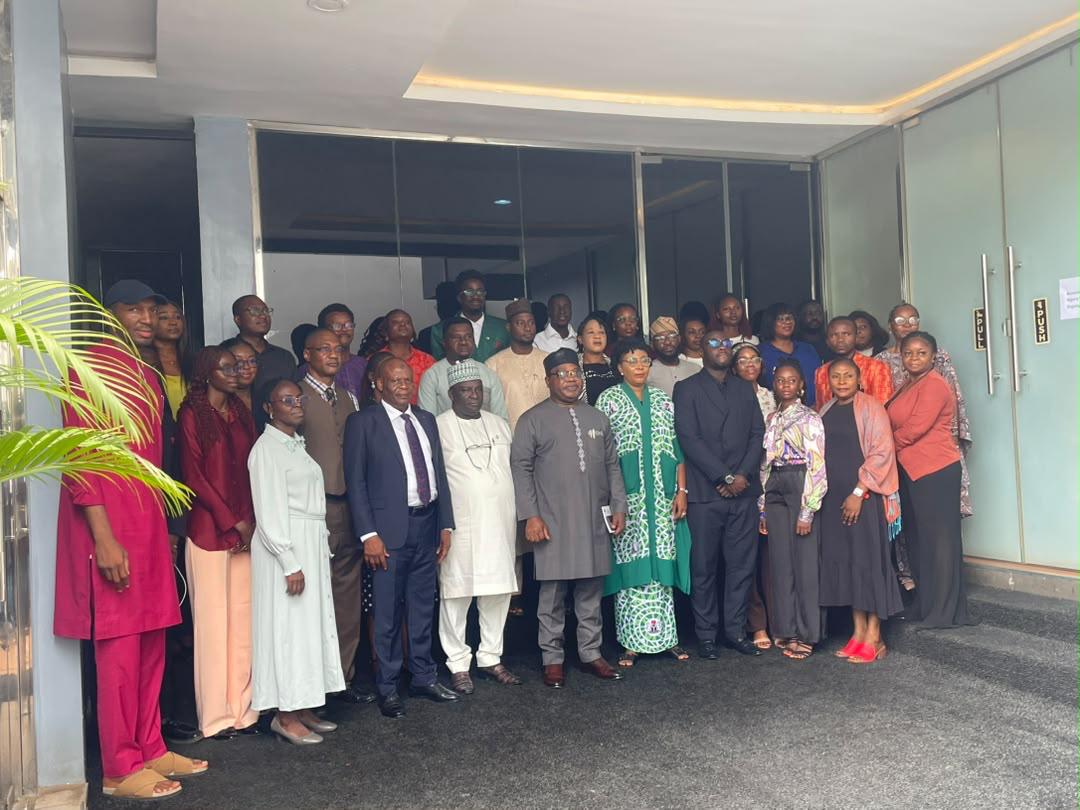
NHRC, AccountabilityLab Seek Coordinated Response to Digital Rights Violations
..Agencies, CSOs move to bridge complaint-resolution gaps, restore confidence in access to justice
By: Michael Mike
The National Human Rights Commission (NHRC) and AccountabilityLab Nigeria have called for stronger inter-agency collaboration and coordinated mechanisms to ensure that victims of digital rights violations can access justice promptly and effectively.
The call was made on Wednesday at a multi-stakeholder convening on “Building a Coordinated Response System for Digital Rights Violations,” where representatives of government institutions, regulatory agencies, civil society organisations, the legal profession, the media, and the telecommunications and technology sectors examined gaps in the response to rights abuses in Nigeria’s digital space.
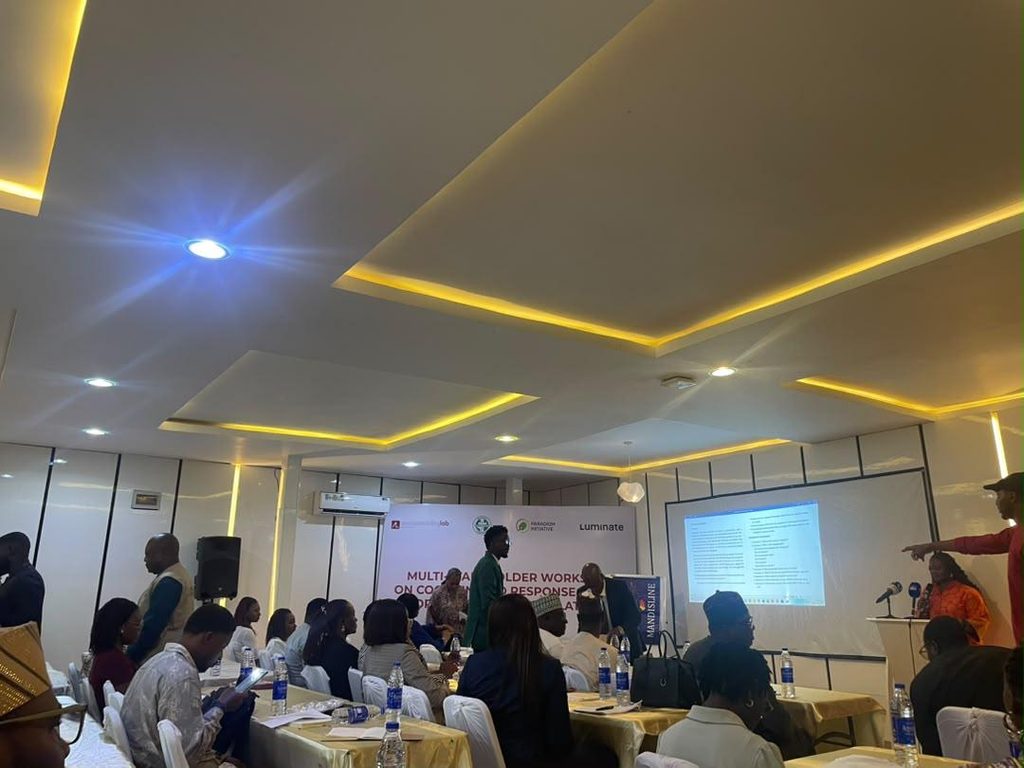
The Executive Secretary of the NHRC, Chief Tony Ojukwu, said the meeting had become necessary amid the growing importance of Nigeria’s digital ecosystem to civic engagement, investigative journalism, democratic dialogue and the exercise of constitutional freedoms.
Ojukwu questioned whether existing mechanisms were sufficiently coordinated to respond swiftly, effectively and accountably when citizens’ rights were violated within or through the digital environment.
He noted that while civil society organisations documented abuses, the media exposed systemic violations and legal practitioners initiated legal proceedings, responses often remained fragmented, with unclear referral pathways, inadequate procedures for preserving digital evidence and delays in handling high-stakes cases.
The NHRC Executive Secretary stressed that constitutional protections for human dignity, privacy, freedom of expression, and freedom of assembly and association applied equally online and offline.
He further reaffirmed the Commission’s statutory mandate under the National Human Rights Commission Act, as amended, to receive and investigate human rights violations, facilitate remedies for victims, examine laws and policies against human rights standards, and collaborate with government and non-governmental institutions.
Ojukwu said the Commission was prepared to serve as an anchor for the proposed collaborative framework but emphasised that sustainable protection of digital rights required the collective participation of law enforcement agencies, the judiciary, regulatory authorities, civil society organisations, technology platforms and telecommunications providers.
The Executive Secretary urged stakeholders to ensure that government actions relating to cybercrime, national security and online harms remained consistent with constitutional safeguards, due process and international human rights obligations.
He referenced the Cybercrimes (Prohibition, Prevention, etc.) Amendment Act of 2024, including the revision of Section 24, and called for rights-based scrutiny of the enforcement of the law.
Ojukwu cautioned against the possibility of statutory enforcement inadvertently restricting constitutionally protected speech, access to information and civic space.
According to him, the need to maintain this balance would become increasingly important ahead of the 2027 electoral cycle, when the digital environment is expected to play a significant role in political discourse, voter mobilisation and public accountability.
He said the protection of democratic processes must go hand in hand with safeguarding the constitutional rights of citizens participating in them.
Ojukwu urged participants to ensure that the outcome of the meeting translated into practical institutional arrangements rather than remaining a collection of recommendations.
He identified eight priority areas for consensus, including the standardisation of complaint-intake mechanisms and the establishment of clearly defined referral pathways between relevant institutions.
Other areas include fast-track channels for urgent or high-risk threats; uniform criteria for documenting and preserving digital evidence; safeguards for complainants, victims and whistleblowers against reprisals; secure and privacy-compliant information sharing; clear triggers for statutory, judicial or public-interest action; and the use of trends in reported violations to inform legislative and policy reforms.
The Executive Secretary also highlighted the proposed integration of the Ripoti platform into the coordinated response architecture, noting that the platform should serve a purpose beyond documenting complaints.
He said it should facilitate the transition from reporting to referral, referral to remedy, and individual cases to broader structural reforms, while ensuring strict data protection safeguards for affected individuals.
Ojukwu called for the establishment of institutional focal points, secure communication channels, quarterly review mechanisms, joint advocacy initiatives and sustained collaboration with civil society organisations to ensure continuity beyond the convening.
He maintained that the success of the initiative should be measured by tangible outcomes, including whether victims could obtain swift, safe and effective justice, institutions could work together seamlessly, and recurring violations could lead to lasting reforms.
The Country Director of AccountabilityLab Nigeria, Odeh Friday, said the organisation had observed that a significant number of complaints relating to human rights violations were being received but often failed to progress to meaningful resolution.
He said the situation had contributed to a growing reluctance among some Nigerians to report violations, as they feared that their complaints would not result in justice.
“Most Nigerians are no more comfortable in even bringing these, their complaints out because they feel they’ll never get justice,” he said, explaining the need for stronger partnerships capable of restoring public confidence in complaint-handling mechanisms.
According to him, the workshop was designed to create a system through which citizens could understand where to report complaints, how their cases would be handled and which institutions were responsible for addressing specific violations.
He said AccountabilityLab’s work at the grassroots level had enabled it to build relationships and trust with civil society organisations and communities, providing an avenue for receiving reports that might otherwise remain unaddressed.
Odeh identified several issues reported through digital platforms, including digital rights violations, loan shark activities, identity theft and misinformation.
He noted, however, that the existence of complaints did not automatically translate into access to justice, particularly for individuals who lacked the resources or knowledge required to pursue legal remedies through the courts.
Odeh said the partnership with the NHRC was intended to establish an inter-agency coordination mechanism involving relevant government institutions and civil society organisations.
He identified the Nigeria Data Protection Commission, the Ministry of Justice, the Nigeria Police Force and the Nigeria Police National Cybercrime Centre among the institutions whose participation could support the resolution of complaints, alongside other agencies with relevant mandates.
He explained that the objective was to create a system in which complaints could be presented to a coordinated network of stakeholders, allowing participants to determine the appropriate institution to handle each matter and the steps required to achieve resolution.
“First thing for us is that understanding that if people have to get justice from the grassroots or from anywhere they’re complaining, we need to partner with government because most of the time we work on the ground,” he said.
According to him, the proposed mechanism would help clarify the role of first responders, establish appropriate referral channels and provide support to victims throughout the complaint-resolution process.
Odeh further explained that Ripoti was designed as a reporting platform that could help direct complainants to the appropriate government agencies and support them in navigating the justice process.
He said the platform would help identify where a complaint should be directed and facilitate engagement with relevant institutions to improve the possibility of resolution.
The initiative, he noted, was not intended to replace government institutions or judicial processes but to provide a bridge between citizens reporting violations and the agencies responsible for addressing them.
The AccountabilityLab representative emphasised the importance of ensuring that government agencies and civil society organisations understood their respective responsibilities within the proposed coordination system.
NHRC, AccountabilityLab Seek Coordinated Response to Digital Rights Violations

NAPTIP Moves to Strengthen Justice Chain Against Trafficking, Migrant Smuggling
By: Michael Mike
The National Agency for the Prohibition of Trafficking in Persons (NAPTIP) has moved to strengthen Nigeria’s criminal justice chain against human trafficking and migrant smuggling, with a renewed focus on closing operational gaps between investigation, prosecution and judicial decision-making.
The initiative is coming against the backdrop of Nigeria’s strategic position in West Africa and its exposure to transnational organised crime, particularly human trafficking and migrant smuggling.
Nigeria serves as a country of origin, transit and destination, a position that exposes the country to complex operational and judicial challenges requiring a coordinated response across the entire criminal justice system.
Speaking in Abuja on Monday at the opening of a capacity-building workshop on “Strengthening the Criminal Justice Chain in Human Trafficking and Migrant Smuggling Cases,” the Director-General of NAPTIP, Binta Adamu Bello, said a stronger justice chain was critical to ensuring that perpetrators were effectively investigated, prosecuted and brought to justice while victims received adequate protection.
Bello said the workshop was designed to bring together investigators, prosecutors, judicial officers, intelligence analysts and law enforcement practitioners to strengthen cooperation and build an integrated response to the two forms of transnational organised crime.
She said human trafficking and migrant smuggling networks exploit human vulnerability, undermine national security, violate fundamental human rights and threaten economic stability across national boundaries.
According to her, the increasing sophistication of criminal networks made it necessary to strengthen the entire criminal justice chain rather than focus on isolated stages of enforcement.
“A criminal justice system is only as strong as its weakest link. If an investigation is compromised at the intelligence stage, prosecution becomes difficult; if evidence collection is flawed, justice is delayed or denied; and if judicial proceedings lack specialised operational insights into trafficking dynamics, dangerous criminals return to the streets while victims remain unprotected,” Bello said.
The workshop, she explained, seeks to improve interaction among investigators, prosecutors and judicial authorities while strengthening the effective implementation of existing procedures.
Its overall objective, she said, is to improve the effectiveness of the criminal justice chain in human trafficking and migrant-smuggling cases by improving coordination among stakeholders, enhancing the quality of case files and strengthening the connection between investigation, prosecution and judicial decision-making.
The initiative is also expected to strengthen institutional coordination and inter-agency cooperation and improve the overall effectiveness of Nigeria’s criminal justice response to trafficking and migrant smuggling.
Bello said the workshop would help close operational gaps from the initial detection of cases and victim-centred investigations through intelligence gathering and prosecution to final adjudication.
She added that the training would strengthen the ability of participating agencies to work together in tackling the convergence of trafficking and migrant smuggling with financial crimes, cybercrime and cross-border security threats.
Participants, she said, would also refine strategies for financial tracking, digital evidence collection and international legal cooperation, including Mutual Legal Assistance.
The NAPTIP boss stressed that the initiative would reinforce a victim-centred and trauma-informed approach to justice, ensuring that victims were protected throughout judicial proceedings and not re-traumatised in the process of seeking justice.
Bello said NAPTIP had maintained an aggressive, multi-dimensional strategy anchored on its 5P approach of Policy, Prevention, Protection, Prosecution and Partnership.
She disclosed that the agency had secured hundreds of convictions against human traffickers, with its legal teams continuing to pursue maximum sentences as a deterrent to organised criminal syndicates.
She said thousands of victims, including women, children and young men, had been rescued from domestic exploitation, forced labour, sexual servitude, organ-harvesting networks and digital exploitation centres both within Nigeria and internationally.
According to her, survivors receive psychosocial support, medical care, vocational training and reintegration assistance through NAPTIP’s specialised shelters across the country.
Bello said the agency had also expanded its intelligence operations in response to the growing use of digital platforms by traffickers, enabling it to track online trafficking syndicates, fake job-placement schemes and cyber-enabled exploitation networks operating in urban centres and across borders.
She added that specialised joint operations with sister security agencies, border-control authorities and international law-enforcement partners had enabled NAPTIP to intercept transnational syndicates and disrupt smuggling corridors across West Africa and Europe.
The agency, she said, had equally updated operational guidelines, strengthened standard operating procedures for victim identification and enhanced evidence-gathering techniques to ensure that investigations met international standards.
However, Bello warned that the achievements could not justify complacency, given the evolving tactics of organised criminal networks.
She said continuous innovation, institutional adaptation and deeper collaboration across the criminal justice pipeline remained necessary to sustain the fight against trafficking and migrant smuggling.
EU-backed criminal justice intervention
The capacity-building activity is being implemented within the framework of the Common Operational Partnership (COP Nigeria), carried out by CIVIPOL in collaboration with the Fundación para la Internacionalización de las Administraciones Públicas (FIAP), under the Support to Migration Governance (Component 3) project in Nigeria.
The project is funded by the European Union in partnership with the Nigerian authorities and is being developed in coordination with FIAP’s activities in Nigeria, particularly initiatives aimed at strengthening migration governance and combating human trafficking and migrant smuggling.
Bello expressed NAPTIP’s appreciation to the European Union for its sustained support under the Support to Migration Governance project, saying its investment in Nigeria’s migration-management and counter-trafficking frameworks reflected a commitment to global peace, security and human dignity.
She commended CIVIPOL for its technical expertise and leadership in implementing COP Nigeria, while also appreciating FIAP for its partnership and coordination in strengthening governance, justice and anti-trafficking structures in Nigeria.
The DG further thanked sister security agencies, judicial officers, civil society organisations and other resource persons for their participation and commitment to the fight against human trafficking.
Bello charged participants to use the workshop to build stronger professional networks and partnerships that would extend beyond the duration of the training.
“You represent the frontline defence of our nation’s criminal justice system against exploitation,” she told participants.
She urged them to engage actively, challenge assumptions and share best practices from their respective institutions, stressing that the knowledge and skills acquired would directly influence Nigeria’s capacity to investigate, prosecute and dismantle trafficking and migrant-smuggling networks.
She reminded participants that behind every case file, legal precedent and investigative report was a human life seeking justice and protection.
“Together, through a strengthened criminal justice chain, we will deny traffickers a safe haven, bring perpetrators to justice, and uphold the dignity of every individual,” Bello said.
She subsequently declared the capacity-building workshop officially open.
NAPTIP Moves to Strengthen Justice Chain Against Trafficking, Migrant Smuggling

VP Shettima Commissions 4,000 Job-capacity Garment Factory, Revenue Service House In Kwara

Kidnapped woman escapes abductors in Plateau, receives treatment for minor injuries

Operation Enduring Peace troops arrest two suspected Mhwaghavul militia for cattle rustle in Mangu

Roger Federer’s Shock as DNA Results Reveal Myla and Charlene Are Not His Biological Children

THE PLIGHT OF FARIDA

FAILED COUP IN BURKINA FASO: HOW TRAORÉ NARROWLY ESCAPED ASSASSINATION PLOT AMID FOREIGN INTERFERENCE CLAIMS
-
 News3 years ago
Roger Federer’s Shock as DNA Results Reveal Myla and Charlene Are Not His Biological Children
-
Opinions5 years ago
THE PLIGHT OF FARIDA
-
 News1 year ago
FAILED COUP IN BURKINA FASO: HOW TRAORÉ NARROWLY ESCAPED ASSASSINATION PLOT AMID FOREIGN INTERFERENCE CLAIMS
-

 News2 years ago
EYN: Rev. Billi, Distortion of History, and The Living Tamarind Tree
-
 Opinions5 years ago
POLICE CHARGE ROOMS, A MINTING PRESS
-

 ACADEMICS3 years ago
A History of Biu” (2015) and The Lingering Bura-Pabir Question (1)
-

 Columns3 years ago
Army University Biu: There is certain interest, but certainly not from Borno.
-

 Politics1 year ago
2027: Why Hon. Midala Balami Must Go, as Youths in Hawul and Asikira/Uba Federal Constituency Reject ₦500,000 as Sallah Gift
