
National News
NDLEA destroys largest seizure of 1.6m kilogrammes illicit drugs seized in Lagos, Ogun, Oyo

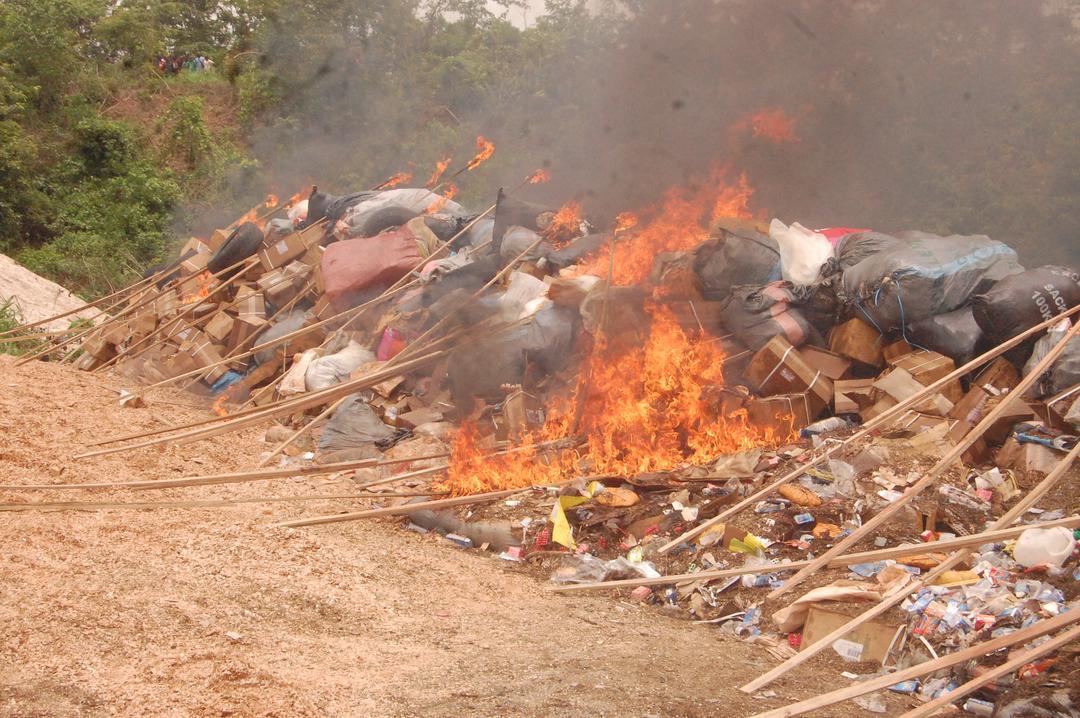
NDLEA destroys largest seizure of 1.6m kilogrammes illicit drugs seized in Lagos, Ogun, Oyo
By: Michael Mike
The National Drug Law Enforcement Agency (NDLEA) has destroyed heaps of illicit drugs weighing about 1.6 million kilogrammes of assorted illicit substances seized across Lagos, Ogun and Oyo state.
This stands as the largest volume of seizures to be set ablaze in the annal of the anti-narcotics agency.
A statement by the spokesman of the agency, Femi Babafemi read: The public destruction of the illicit substances witnessed by representatives of government officials, traditional rulers, clergymen, other security agencies, international partners, NGOs and community leaders, among others, was conducted at an isolated location at Ipara, along Lagos-Ibadan expressway, Ogun state on Saturday.
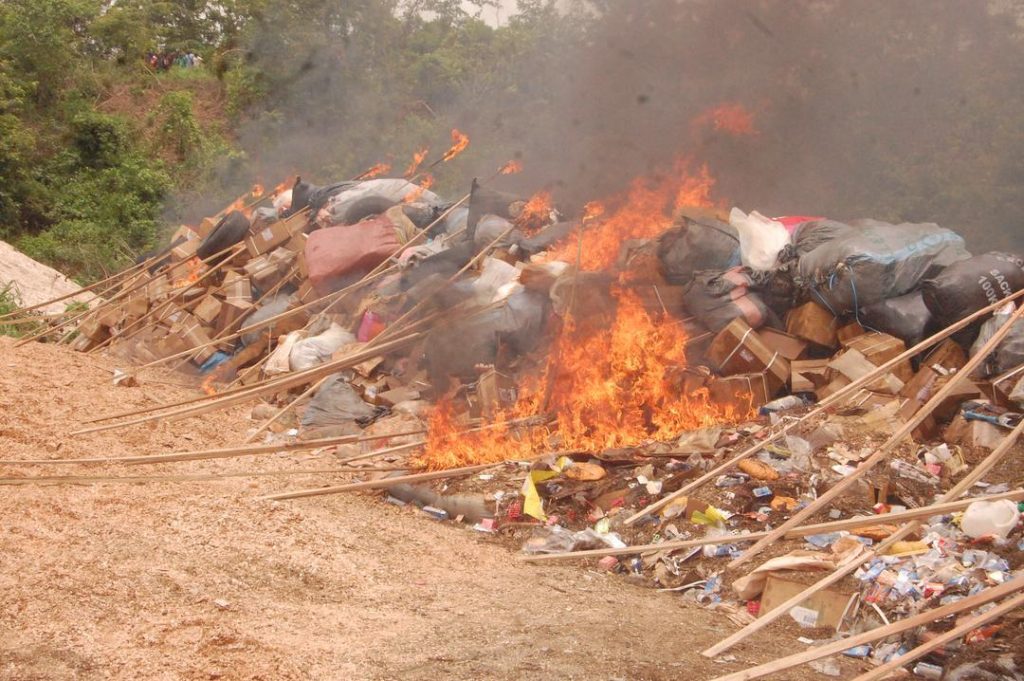
Some of the illicit drugs destroyed include 123 kilogrammes of cocaine; 46.8 kilogrammes of heroin; 1.4 million kilogrammes of cannabis; 148,000 kilogrammes of codeine syrup; 3,244.26 kilogrammes of tramadol; 1,544 kilogrammes of skuchies; and 111 kilogrammes of methamphetamine, among others.
Speaking at the occasion, Chairman/Chief Executive Officer of NDLEA, Brig. Gen. Buba Marwa (Rtd) said the exercise is a testament to the agency’s steadfast commitment to tackling the scourge of drug trafficking in the country. He said: “The sheer volume of seizures, which totals approximately 1.6 million kilogrammes, serves as a reminder of the grave danger these substances pose to public health until they are completely and irreversibly destroyed. The National Drug Law Enforcement Agency (NDLEA) operates under a clear mandate to reduce these narcotics to rubble. At all times, we discharge this duty with the utmost seriousness and diligence.”
He warned those involved in drug trafficking that the times have changed and there will be no breathing space or any safe haven for them in Nigeria. He said: “To those still involved in the illicit drug trade, we will persist in reminding them that times have changed. The administration of President Bola Ahmed Tinubu remains unwavering in its commitment to providing the leadership and political will required to eradicate this menace. At the NDLEA, we are fully prepared to pursue our objective of holding accountable those who defy the law. In the past four years, we have successfully prosecuted and got convicted 10,572 such offenders, who are now serving various jail terms.”
He expressed appreciation to Governor Babajide Sanwo-Olu of Lagos, Governor Dapo Abiodun of Ogun and Governor Seyi Makinde of Oyo for their support to the commands and operations of the agency in their respective states.
The NDLEA boss who was represented at the occasion by the agency’s Director of Assets and Financial Investigation (DAFI), Dr. Ibrahim Abdul, justified the public destruction of the confiscated drugs. He said: “The rationale is simple: to show transparency and accountability. By making this process open, we affirm our collective resolve against the insidious activities of illicit drug trafficking. This exercise is not merely symbolic—it is forensic, grounded in evidence. Random laboratory tests are carried out to confirm the authenticity of the seized items. The substances are destroyed with the approval of the court after the cases linked to them have been brought to closure, following arrests and successful prosecution.”
He noted that the event represents a significant milestone in the history of the agency because “It is the public destruction of the largest seized narcotics across a spectrum of commands under NDLEA Zone 9 and Zone 11, which comprise the Lagos Strategic Command, Ogun State Command, Oyo State Command, MMIA Strategic Command, Lagos Seaports, Idiroko Border Command, and Seme Border Command”, adding that “while this accomplishment reflects our determination, it also underscores the scale of the challenge we continue to face.”
While commending the unwavering dedication of our officers, “who are working tirelessly to ensure that we do not fail in our assigned task of curbing illicit drug trafficking”, Marwa thanked both local and international partners who have continued to contribute to the success of the work of the agency.
“Likewise, our international partners—such as the United States Drug Enforcement Administration (US-DEA); International Narcotics and Law Enforcement Bureau (INL) of the US; United Kingdom Border Force; National Crime Agency (NCA) of the UK, the French Police; the German Police, and others—who are playing pivotal roles in bolstering our efforts. I am also deeply grateful to First Bank of Nigeria, Fidelity Bank, Sterling Bank, and other stakeholders including the Nigerian Military, Customs, Police, Civil Defence, Immigration, FRSC, NAFDAC, and a host of others for their support, embodying the collaborative spirit necessary for effective drug control in society”, he added.
In his remark at the ceremony, Ogun state governor, Prince Dapo Abiodun represented by his Special Adviser on Security, AIG Olusola Subair (Rtd) commended the efforts of the leadership and personnel of NDLEA for their courage, professionalism, consistent efforts in intercepting illicit drugs before they get to communities and streets. “Their work in saving lives, in strengthening communities and upholding the rule of law is well appreciated”, he stated, adding that the state government remains a committed partner in the fight against drug-related crime.
While noting that the drug scourge is a social, economic and public health crisis, Governor Abiodun said “We must invest in prevention through education, through counseling and youth empowerment initiatives. We must strengthen rehabilitation centres and provide support systems for those battling addiction.”
NDLEA destroys largest seizure of 1.6m kilogrammes illicit drugs seized in Lagos, Ogun, Oyo


One killed, another abducted as bandits attack Katsina farming communities
By: Zagazola Makama
Armed bandits have attacked farming communities in Tashar Mangwaro and Dogon Ruwa villages in Dutsinma Local Government Area of Katsina State, killing one farmer and abducting another.
The incident occurred on Thursday at about 6:32 p.m. while residents were working on their farmlands.
One of the victims, identified as Hamza Usman, 45, of Tashar Mangwaro, was shot by the assailants and later confirmed dead at the General Hospital, Dutsinma.
Another farmer, Tukur Nalanga, 53, from Dogon Ruwa Village, was abducted during the attack.
Security operatives responded promptly following a distress call and engaged the attackers, forcing them to flee the area. However, the gunmen escaped with the abducted victim before reinforcements arrived.
Efforts are currently ongoing to track the bandits
One killed, another abducted as bandits attack Katsina farming communities

Speak Out Africa Initiative Calls on FG to Involve LGAs in FAAC meetings.
By: Michael Mike
The Lead Director, Speak Out Africa Initiative (SOAI ), Engr.. Kenneth Eze. has made four demand that will allow local government authority work effectively in Nigerià most especial complete Financial Autonomy through the expansion of the Federal Account Allocation Committee meetings to include LGA officials.
Eze also ask for political Autonomy by calling the on the Independent National Electoral Commision (INEC) to conduct all local government elections that will guranteed fairness,, other demans for the local authority include, asking the CBN to make it mandatory for LGA to have account with Bank and asking development partners to support the Open Government Partnership (OGP) at the local government level
The lead Director, stated this during The Local Open Governànce Initiative in Nigerià (LOGINAIJA) close out session and the presentation of Report for the pilot LGA.
Speak Out Africa Initiative is a non-governmental organization focused on empowering marginalized communities, particularly women and youth, through evidence-based advocacy, capacity building, and service delivery. Whose mission is to prioritizes gender equity, health advocacy, and social inclusion .
According to Eze, LOGINAIJA which aim to access the workings and the functionality of the Local Government Areas to make work was launch in April 2024 with the objective promoting Accountability at the local level, building capacity for the personnels and political office holders at the local level and the domestication of the freedom of Information Act at the grassroot “.
The LOGINaija project is a 12-month pilot initiative implemented by Speak Out Africa Initiative (SOAI) to strengthen Open Government Partnership (OGP) adoption at Nigeria’s local government level. The project focuses on three pilot LGAs:
” This pilot phase was carried out in the selected three Local Government Areas in Nigerià, Gwagwalada Area Council in FCT, Umuahia North LGA in Abia State and the Ibadan NorthWest LGA of Oyo State which represent the Zones in the country and cut across political party lines and we are happy to announce that today’ this three LGA has perform creditably with functional Website, freedom of information desk officers in place and we have strenthening the capacity of both the executive and the legislative arms of the three Local Government. we expect to scale it up to 50 LGA in second phase of the project “.
“We in speak out Africa are thanking the Mac- Arthur Foundation that supported this project, and other partner for making this a reality.
The Executive Chairman, Umuahia North Local Government Area. Hon. Smart Iheoma, while appreciate all what has done by the speak out Africa Initiative to the LGA, said the problem we have as a nation is leadership, what we met on ground was not good but we have turn around every aspect of the LGA and the people are the beneficiary of this positive reforms, we are following the footsteps of His Excellency the Governor of Abia State which come c am e in with capacity to build the State and he is the best so far”. Iheoma said
Speak Out Africa Initiative Calls on FG to Involve LGAs in FAAC meetings.
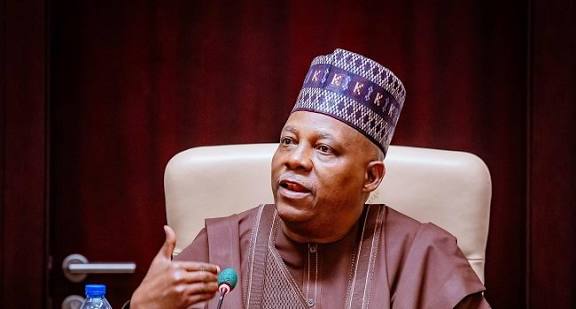
FG Plans Nationwide Audit Of Skills Centres To Transform Workforce
** As VP Shettima demands urgent action to bridge nation’s skills gap
By: Our Reporter
Vice President Kashim Shettima has called for immediate and united action to close Nigeria’s widening skills gap, describing it as a national priority critical to economic transformation.
This is just as the federal government has hinted at a proposal for the review of existing skills training centres across several Ministries, Departments and Agencies (MDAs) of government to align their work and functions with national development goals.
The Vice President, who spoke on Thursday during the 6th meeting of the National Council on Skills (NCS) at the Presidential Villa, noted that the council’s mandate is to develop a strategic workforce capable of meeting Nigeria’s evolving economic demands.
“What binds us together supersedes whatever divides us. We have to make this country work. We need to fill in the skills gap,” he said.
VP Shettima pointed out that the council has a mission to strategically position Nigeria’s workforce to meet the demands of a rapidly evolving economy.
“This council was established with a clear mandate to drive the strategic development of the skilled workforce that can contribute meaningfully to national growth and prosperity,” he added.
The Vice President described the session as an open forum where positions were aired and important decisions were taken, emphasising that stakeholder engagement, consensus-building, and decisive leadership are essential to fixing Nigeria’s skills and employment crisis.
A major highlight of the meeting was the proposal for a National Skills Infrastructure Audit to create a centralised database of all training facilities, verify their functionality, and identify gaps or overlaps in infrastructure.
“The government’s policy trajectory is to strengthen human capital development for national growth and industry through skills development. However, unless the skills infrastructure across MDAs is optimised, this vision will remain unattainable,” the council noted.
The audit will also involve physical verification of centres and a detailed cataloguing of operational training facilities, ensuring alignment with national occupational standards and labour market needs.
Earlier, Minister of Housing and Urban Development, Arc. Ahmed Musa Dangiwa made a presentation on the National Artisan Skills Acquisition Programme (NASAP), an initiative aimed at training 10,000 artisans annually in high-demand construction trades.
The programme is designed to formalise Nigeria’s informal artisan sector by providing certification and onboarding qualified artisans onto a Digital Artisan Marketplace.
“The overall goal of NASAP is to establish a reliable and competent artisan workforce to drive the Ministry’s housing and infrastructure agenda while empowering Nigeria’s youth with employable skills,” the Minister said.
He noted that NASAP seeks to tackle youth unemployment while simultaneously addressing the skilled labour shortage in the construction sector, just as he said it is projected to have a significant impact on both job creation and long-term infrastructure development.
FG Plans Nationwide Audit Of Skills Centres To Transform Workforce

2027: Coalition embarks on grassroots mobilisation to oust APC in Gombe

US Says Latest Visa Decision Against Nigeria Unconnected to BRICS, Venezuelan Refugees

Fulani youths attack brothers in Niger

Roger Federer’s Shock as DNA Results Reveal Myla and Charlene Are Not His Biological Children

THE PLIGHT OF FARIDA

POLICE CHARGE ROOMS, A MINTING PRESS
-
 News1 year ago
Roger Federer’s Shock as DNA Results Reveal Myla and Charlene Are Not His Biological Children
-
Opinions3 years ago
THE PLIGHT OF FARIDA
-
Opinions4 years ago
POLICE CHARGE ROOMS, A MINTING PRESS
-

 News1 year ago
EYN: Rev. Billi, Distortion of History, and The Living Tamarind Tree
-

 Columns1 year ago
Army University Biu: There is certain interest, but certainly not from Borno.
-

 ACADEMICS1 year ago
A History of Biu” (2015) and The Lingering Bura-Pabir Question (1)
-

 Opinions1 year ago
Tinubu,Shettima: The epidemic of economic, insecurity in Nigeria
-

 Politics1 month ago
2027: Why Hon. Midala Balami Must Go, as Youths in Hawul and Asikira/Uba Federal Constituency Reject ₦500,000 as Sallah Gift
