
Crime
NDLEA Recovers Cocaine, Loud from Microwaves, Lipsticks at Lagos Airport, Nabs Wanted Drug Kingpin

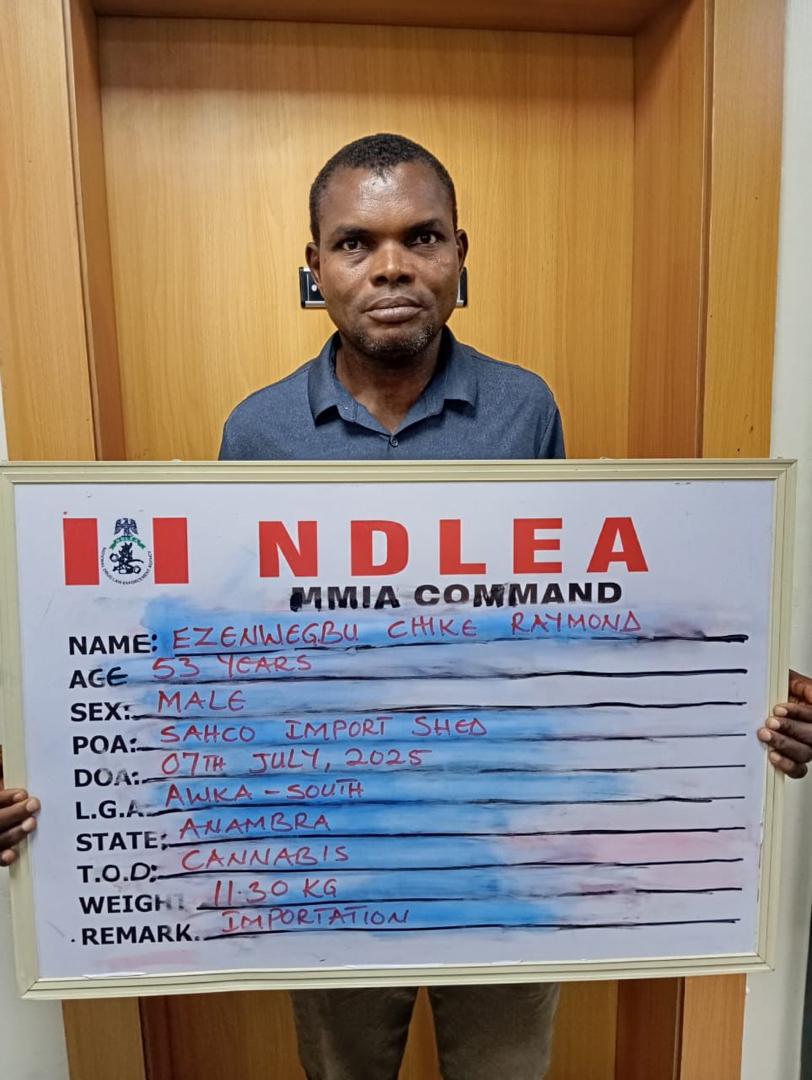
NDLEA Recovers Cocaine, Loud from Microwaves, Lipsticks at Lagos Airport, Nabs Wanted Drug Kingpin
By: Michael Mike
Operatives of the National Drug Law Enforcement Agency (NDLEA) have intercepted parcels of Loud, a strong strain of cannabis concealed in microwaves imported from Thailand and wraps of cocaine built into ladies’ lipsticks going to Guinea at the Murtala Muhammed International Airport, Lagos.
The spokesman of the anti-narcotics agency, Femi Babafemi in a statement on Sunday, said the Loud consignment was part of a consolidated cargo that came in two tranches on an Ethiopian Airlines flight from Bangkok, Thailand through Addis Ababa, Ethiopia.
He said based on credible intelligence, the cargo was subjected to thorough search during which 23 parcels of loud weighing 11.3 kilogrammes concealed in new microwaves were recovered last Monday, disclosing that a suspect Ezenwegbu Chike has been arrested in connection with the seizure.
He noted that barely a week after a total of 420 grammes of cocaine factory fitted in 84 pieces of female lipsticks heading to the UK were seized at a courier company in Lagos, NDLEA operatives at the export shed of the Lagos airport have intercepted another consignment of cocaine built into ladies’ lipsticks as part of a cargo containing hair attachments, face powder, and other items heading to Malabo, Guinea.
Babafemi said no less than 400 grammes of cocaine and phenacetine, a cutting agent, were recovered from the lipsticks when dismantled while a businessman at the Trade Fair Complex, Ojo area of Lagos, Ezeikwelume Afam was arrested last Friday in connection with the seizure.
The spokesman said a notorious drug kingpin Okechukwu Izugha (a.k.a Okey Omeogo) has been arrested in Lagos by operatives of a Special Operations Unit of NDLEA after 12 months of going into hiding. He was nabbed last Wednesday at his wife’s shop in Ijesha market.
He said Izugha came under NDLEA radar on 7th August 2024 after a 9 kilogrammes cocaine was recovered from a suspect Obiora Agudosi at a motor park in Orile, Lagos while going to deliver the consignment in the southeast. Izugha was identified as the owner of the seized drug.
Babafemi said in the course of investigating the kingpin and his network, his wife Maureen Izugha was arrested with 500 grammes of cocaine at her beverages store in Ijesha market on 21st January 2025. She was thereafter arraigned in court, convicted and sentenced to two years imprisonment.
Unknown Izugha that NDLEA was still on his trail, he came out of his hiding and was promptly arrested last Wednesday.
Babafemi said in Edo state, no fewer than 28,054.053 kilogrammes of skunk, a local strain of cannabis, were destroyed on three farms measuring over 11 hectares at Ewere Uzebba forest in Owan West local government area last Tuesday, while 82 kilogrammes of already processed cannabis was recovered from the location.
He disclosed that the NDLEA operatives who went for the operation however came under gun attack from armed members of the cartel on their way out of the forest. They were able to repel the attack and came out unhurt while one of their operational vehicles was riddled with bullets.
In Lagos, 1,400 compressed blocks of Ghana Loud, a strain of cannabis, weighing 700 kilogrammes and a Ford delivery truck marked JJJ 698 YJ were recovered at Okun -Ajah Beach, while two suspects: Innocent Ejidiobo and Friday Paul were nabbed along Ajah -Epe expressway by NDLEA operatives last Friday.
Recovered from them include: 26 kilogrammes Ghana Loud, 123 grammes of methamphetamine and 45 grammes of Molly as well as their delivery van with registration number AJK 191 LG.
NDLEA operatives in Borno state on Saturday arrested Godwin Nwaobi, 42, with 18,759 ampoules of pentazocine, pills of tramadol and rohypnol at Njimtilo, Maiduguri, coming on the heels of the seizure of 10,000 pills of tramadol from another suspect Abdulrahman Ahmadu, 34, last Wednesday, their counterparts in Gombe state recovered a total of 116,226 pills of tramadol and D-5 from five suspects: Hafiz Bello, 22; Isah Suleman, 48; Kabiru Muhammed, 30; Abdullahi Adamu, 30; and Abel Murna, 25, at Gombe main market and along Gombe-Kano road last Tuesday and last Saturday.
A suspect, Sabiu Bala was last Thursday arrested along Okene-Lokoja expressway in Kogi state while conveying 316.6 kilogrammes skunk, while another suspect Haladu Suleiman, 38, was nabbed by NDLEA operatives with 58.805 kilogrammes of same substance in Gubuchi area of Ikara local government area, Kaduna state.
In Taraba state, three suspects: Auwal Ibrahim, 30; Lukman Ibrahim, 18; and Hamza Adamu, 25, were on Saturday arrested by NDLEA officers at Lanka Viri checkpoint while conveying 577,890 pills of opioids and 1.16 kilogrammes skunk concealed in tyre compartment of a petrol tanker marked MUB 334 YH. The arrest of the trio last Tuesday, according to Babafemi, followed credible intelligence.
He said three other suspects: Shamsudini Abdullahi, 35; Adamu Abdullahi,21; and Magaji Rabo, 26, were nabbed with 48.1 kilogrammes skunk at Janguza barracks area of Kano state by NDLEA operatives last Wednesday.
He noted that the War Against Drug Abuse (WADA) social advocacy activities by NDLEA commands equally continued across the country in the past week.
Meanwhile, the Chairman/Chief Executive Officer of NDLEA, Brig. Gen. Buba Marwa (Rtd), while commending the officers and men of MMIA, SOU, Edo, Lagos, Taraba, Kano, Kogi, Gombe, Borno and kaduna commands of the agency for the arrests and seizures of the past week, equally praised their counterparts in all the commands across the country for pursuing a fair balance between their drug supply reduction and drug demand reduction efforts.
NDLEA Recovers Cocaine, Loud from Microwaves, Lipsticks at Lagos Airport, Nabs Wanted Drug Kingpin



Boko Haram Fighter Surrenders with AK-47, 26 Rounds in Borno
By Zagazola Makama
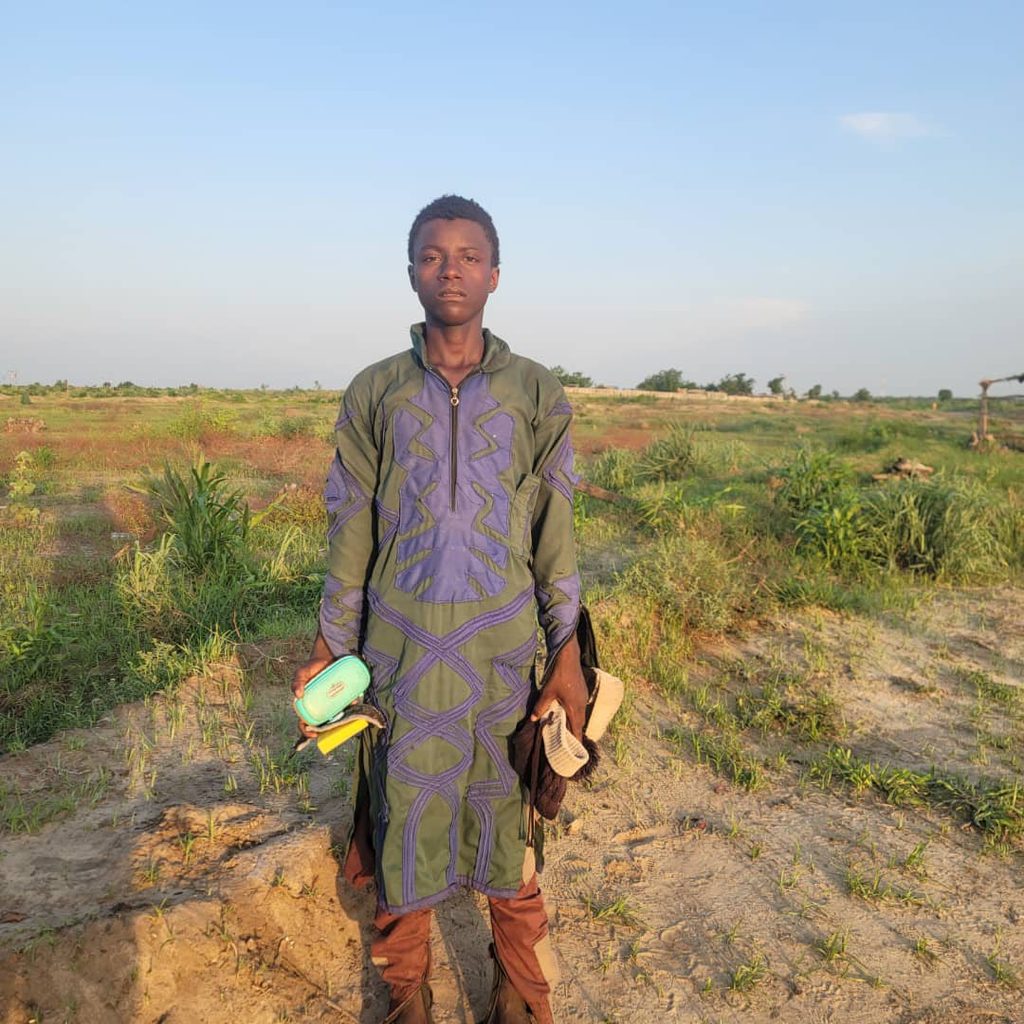
A 23-year-old suspected Boko Haram fighter, identified as Ali Saidiq, has surrendered to troops in Borno State with an AK-47 rifle and 26 rounds of ammunition, as sustained military pressure continues to weaken terrorist networks in the Lake Chad region.
Saidiq, a native of Garere in Kukawa Local Government Area of Borno State, surrendered at about 4:45 p.m. on August 20 during a stop-and-search operation conducted by troops of 196 Amphibious Battalion and the Nigerian Army Brigade Lake Chad at Kwatan Alkama checkpoint.
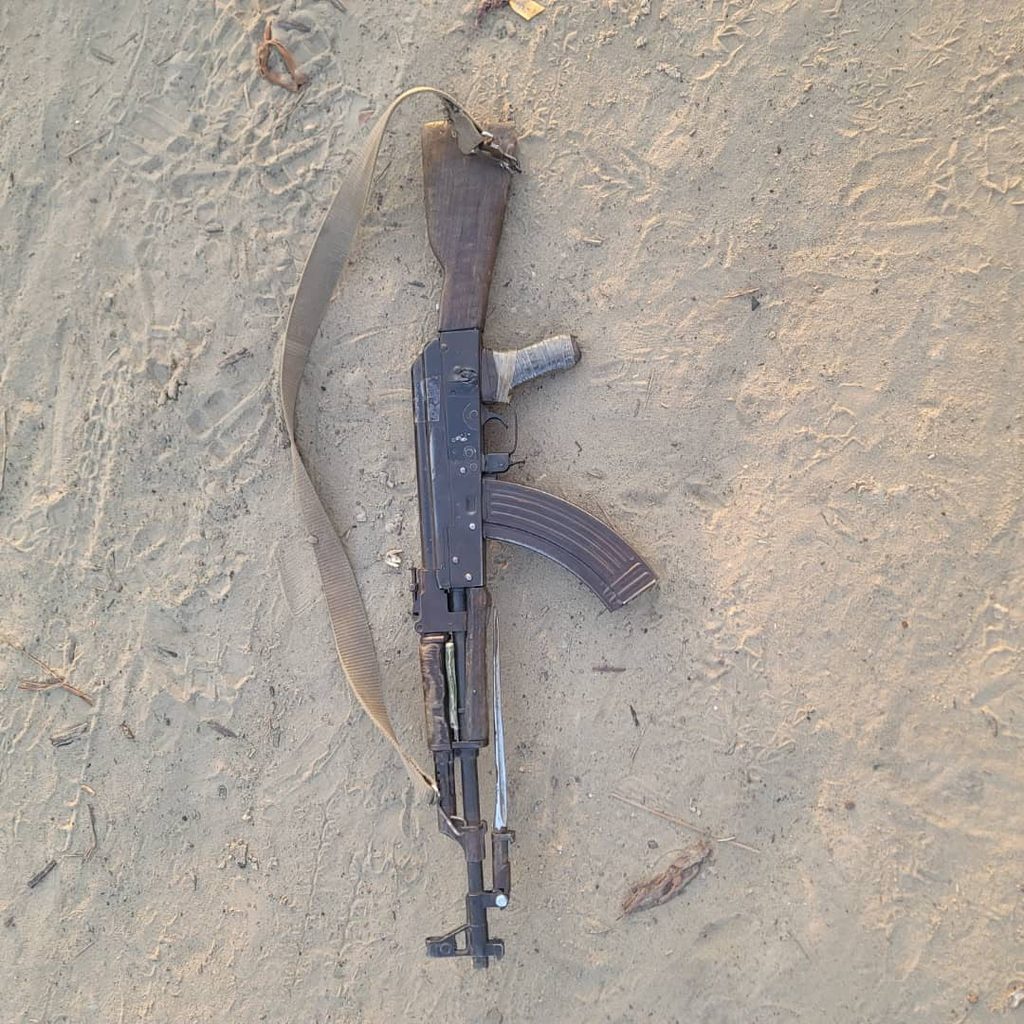
According to sources the suspect voluntarily surrendered one AK-47 rifle, with registration number 02657, and one magazine loaded with 26 rounds of 7.62x39mm ammunition.
Preliminary investigation indicated that Saidiq decided to surrender following sustained military pressure against terrorist elements in the area and after losing interest in continuing with terrorist activities.
Security sources said his surrender represents another indication of the impact of intensified military operations on the operational capacity and morale of terrorist fighters operating in the Lake Chad axis.
The suspect is currently in military custody for profiling and further investigation to establish his role within the terrorist group, his operational history and possible links to other members of the network.
The development comes amid continued efforts by Nigerian troops to deny terrorist groups freedom of movement, disrupt their logistics and encourage fighters who are willing to abandon terrorism to surrender.
The military has continued to combine offensive operations with intelligence-led security measures, including stop-and-search activities, aimed at intercepting terrorists and recovering weapons before they can be used against troops or civilians.
The surrendered rifle and ammunition have been secured as part of the ongoing investigation.
Boko Haram Fighter Surrenders with AK-47, 26 Rounds in Borno
Police Arrest Two Suspected One-Chance Robbery Syndicate Members in Lagos
By Zagazola Makama
The Lagos State Police Command has arrested two suspected members of a “one-chance” robbery syndicate over the alleged theft of a commercial tricycle in the Ojo area of the state.
The suspects, identified as Emeka Obi, 51, from Enugu State, and John Eze, 54, from Anambra State, were arrested at about 7 a.m. on Aug. 17 in the Iyana-Iba area of Ojo.
The suspects allegedly hired a tricycle belonging to a man identified as Ekene on Aug. 16, claiming they needed transportation to a hospital where their wife had delivered a newborn baby.
However, during the journey, the suspects allegedly stopped at a beer parlour around Kila Bus Stop, Ejigbo, where they took alcohol.
The report said the suspects subsequently asked the tricycle rider to purchase cigarettes.
While the rider was away, the suspects allegedly laced his drink with an unidentified substance.
The rider reportedly became unconscious and, upon regaining consciousness, discovered that his tricycle, with registration number KTU-334-QS, had been taken.
Following police investigation, the two suspects were arrested and the stolen tricycle was recovered and registered as an exhibit.
The suspects remain in police custody as investigation continues to establish their alleged roles and determine whether they are linked to other “one-chance” robbery incidents in Lagos.
Police Arrest Two Suspected One-Chance Robbery Syndicate Members in Lagos

Troops Arrest Suspected Bandits’ Informant in Katsina
By Zagazola Makama
KATSINA — Troops have arrested an 18-year-old suspected informant for armed bandits after he was found allegedly gathering information on the deployment and capabilities of security forces in Musawa Local Government Area of Katsina State.
The arrest followed credible intelligence on the movement of armed bandits around the Katsina-Kano border, prompting troops to maintain blocking positions and surveillance across their area of responsibility.
According to a Special Situation Report obtained by Zagazola Makama, locals in Tsaure alerted troops at about 10:25 a.m. on Aug. 19 after observing a suspicious young man identified as Sa’adu Sama, from Girtaji village in Musawa LGA.
The suspect was reportedly seen loitering around the community and asking children questions about the deployment of troops, including their strength, vehicles, motorcycles and equipment.
The children quickly reported the suspicious activity to community elders, who subsequently alerted troops of the Forward Operating Base in Tsaure.
The troops immediately moved in and arrested the suspect.
Security sources said the suspect was subsequently moved to the Brigade Headquarters for further interrogation and investigation.
The arrest highlights the importance of community vigilance and timely information-sharing between residents and security forces in disrupting criminal networks and preventing bandit attacks.
The security situation around the Forward Operating Bases and Joint Task Force locations was described as calm, while troops continued monitoring activities in the area.
The morale and fighting spirit of the troops were also reported to remain high.
Troops Arrest Suspected Bandits’ Informant in Katsina

After a Decade in Exile, Buni’s Visit Rekindles Hope Among Forgotten Nigerian Refugees in Chad

Farmers laud Borno security measures against clashes

Borno LG boss warns residents against illegal tree felling

Roger Federer’s Shock as DNA Results Reveal Myla and Charlene Are Not His Biological Children

THE PLIGHT OF FARIDA

FAILED COUP IN BURKINA FASO: HOW TRAORÉ NARROWLY ESCAPED ASSASSINATION PLOT AMID FOREIGN INTERFERENCE CLAIMS
-
 News2 years ago
Roger Federer’s Shock as DNA Results Reveal Myla and Charlene Are Not His Biological Children
-
Opinions5 years ago
THE PLIGHT OF FARIDA
-
 News1 year ago
FAILED COUP IN BURKINA FASO: HOW TRAORÉ NARROWLY ESCAPED ASSASSINATION PLOT AMID FOREIGN INTERFERENCE CLAIMS
-

 News2 years ago
EYN: Rev. Billi, Distortion of History, and The Living Tamarind Tree
-
 Opinions5 years ago
POLICE CHARGE ROOMS, A MINTING PRESS
-

 ACADEMICS2 years ago
A History of Biu” (2015) and The Lingering Bura-Pabir Question (1)
-

 Columns2 years ago
Army University Biu: There is certain interest, but certainly not from Borno.
-

 Politics1 year ago
2027: Why Hon. Midala Balami Must Go, as Youths in Hawul and Asikira/Uba Federal Constituency Reject ₦500,000 as Sallah Gift
