
News
NEMA presents relief materials to flood victims in Katsina

NEMA presents relief materials to flood victims in Katsina
The National Emergency Management Agency (NEMA) presented relief materials to Katsina State on Thursday for distribution to victims of flooding in 13 of its 34 local government areas.
The affected local government areas are Sabuwa, Funtua, Danja, Musawa, Kusada, Zango, Katsina, Batsari, Batagarawa, Safana Musawa, Kankara and Ingawa
Minister of Humanitarian Affairs, Disaster Management and Social Development, Hajiya Sadiya Umar-Farouq made the presentation in Katsina.
According to her the items include 3,000 bags each of rice, maize and beans, 100 kegs of (20-litre) vegetable oil and 200 cartons of seasoning cubes.
Others are 300 bags of (20kg) iodised salt, 1,000 bags of cement, 100 (25kg) bags of 3-inch nails, 300 bundles of roofing sheets, 100 packets of zinc nails and 500 pieces of three-feet by six-feet mattresses.
Also presented were 1,000 pieces of blankets, 5,000 pieces of nylon mats, 2,000 pieces of insecticide-treated mosquito nets, 4,000 pieces of Guinea brocade, 500 pieces of wax textile prints and 1,000 pieces of children’s wears.
“These items are meant to complement the efforts of Katsina State government in providing immediate succour to victims and aid their speedy rehabilitation.
“The items are not for sale and should not be sold,’’ the minister warned.
She commended Gov. Aminu Masari for providing the first line of support to the victims and for constructing more culverts and drainages to address flooding.
“We are also aware of personal donations made by individuals to provide immediate succour to those affected.
“The public is reminded and encouraged to avoid practices that can block drainages and should communally participate to maintain them for sustained effectiveness,’’ She advised.
Responding, Gov. Masari commended the minister and NEMA for providing the support, saying it would go a long way in reducing the challenges faced by victims.
Represented by the Speaker of the state’s House of Assembly, Alhaji Tasi’u Maigari, the governor assured that government would not relent in efforts to improve peoples’ welfare.
Fielding questions from newsmen, Director-General of NEMA, Alhaji Mustapha Habib-Ahmed, advised all states to set up local emergency committees to handle disaster management.
He said the committees should work toward reducing disasters and called on residents to avoid dumping refuse in drainage channels so as to allow free flow of water.
NEMA presents relief materials to flood victims in Katsina


NGX boss restates commitment to gender equality
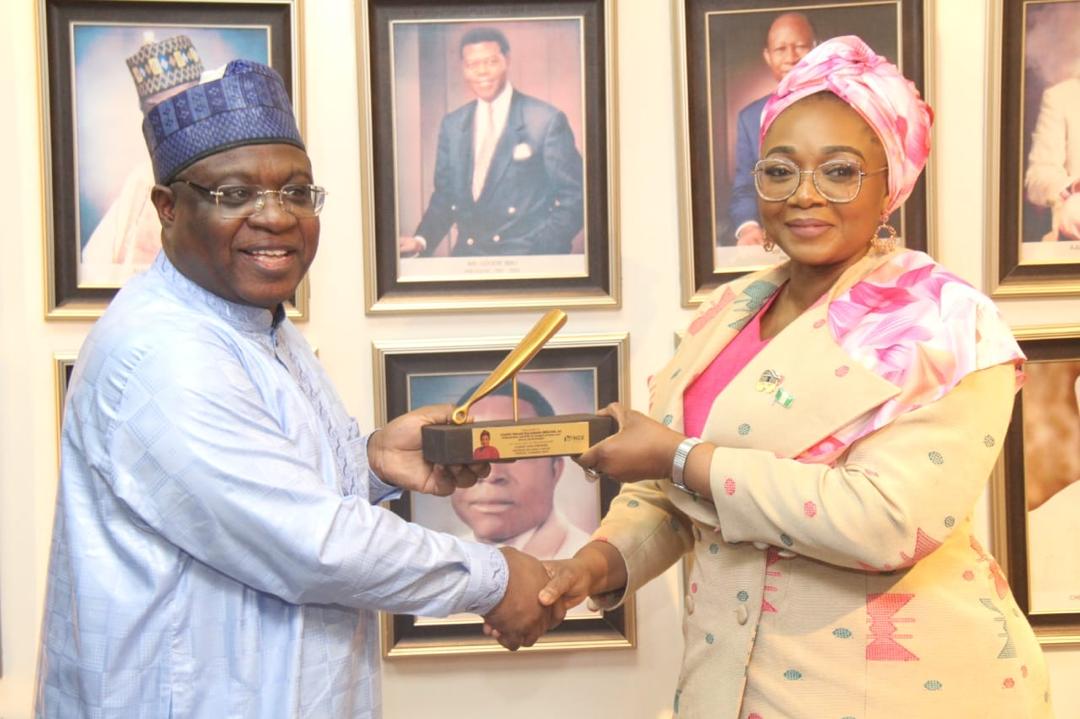
The Group Chairman Nigerian Exchange Group, Dr. Umaru Kwairanga has restated the NGX’s commitment to gender equality and diversity at all levels of the organisation.
Kwairanga stated this in Lagos on Tuesday while delivering his welcome address on the occasion of the closing ceremony in honour of the Honourable Minister of Women Affairs and Social Development, Hajiya Imaan Sulaiman-Ibrahim, who visited the floor of the Nigerian Exchange.
He stated that the Nigerian Exchange Group as an organisation remained committed to inclusiveness that drive growth and development at all levels of the NGX’s dealings.
He stated that through such inclusive representation, the NGX has achieved near parity at the board levels of the organisation and was working to improve the representation of female employees down the line.
“As an institution committed to sustainable growth and practices, we recognise the important qualities and values that women bring to the workplace and know that they perform just as well, if not better than men.
“It is a tradition in finance and investment that can be traced to the origins of the banking, finance and investment professions when most of the trade guilds that evolved into those professions were largely composed of men.
“The tradition has persisted for hundreds of years but despite that nomenclature, let me assure you that the investment and securities sector is very welcoming to and open to city gentlemen who are female.
“Women are very well represented at all levels of our industry and I can confide in you that the next President of the Chartered Institute of Stockbrokers is going to be a woman,” he said.
Kwairanga stated that the NGX would partner with the Ministry to accelerate progress for women’s rights and improve the lot of female gender across the country.
He commended Sulaiman-Ibrahim for her several bold and innovative initiatives that would have positive impact on women and the country as a whole.
NGX boss restates commitment to gender equality
Benue troops neutralize one terrorist, arrest four suspects in Gwer West LGA
By: Zagazola Makama
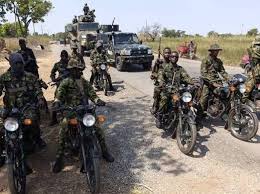
Troops of Sector 1 Operation Wirld Stroke deployed at FOB Bilawa-Jor conducted a fighting patrol within Mbapa and Mbabuande general areas on March 23, 2026.
During the operation, troops made contact with terrorists, neutralizing one suspect while others fled.
Following a pursuit, four additional suspects were apprehended and are currently in the custody of security forces for further investigation and prosecution.
In a similar development the troops
recovered a vehicle carrying two cows abandoned by suspected cattle rustlers in Uhemba.
The incident occurred at about 0348hrs on March 24, 2026, when the troops responded to intelligence reports of rustling activities in the area.
Upon the arrival of troops, the suspects fled, leaving behind the vehicle and livestock.
The recovered vehicle and cows are now in the custody of the troops for further investigation and legal action.
Military continue to urge the public to provide timely information on criminal activities to support ongoing security efforts.
Benue troops neutralize one terrorist, arrest four suspects in Gwer West LGA
Kogi troops neutralize suspected terrorist in Kabba/Bunu LGA
By: Zagazola Makama
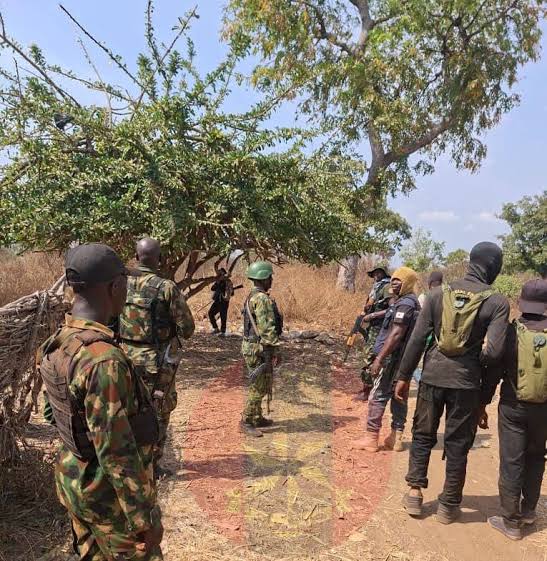
Troops of 12 Brigade have neutralized a suspected terrorist during a fighting patrol at Odoape–Adankolo Forest in Kabba/Bunu LGA.
The encounter occurred at about 1400hrs on March 23, 2026, when the patrol team made contact with the fleeing suspect.
Preliminary investigation identified the neutralized individual as a notorious terrorist involved in providing intelligence and targets for kidnappings, as well as participating in cattle rustling and supplying logs to terrorist groups.
The military has reaffirmed its commitment to sustaining aggressive patrols and intelligence-led operations to curb criminal activities and protect residents in the area.
Kogi troops neutralize suspected terrorist in Kabba/Bunu LGA

NGX boss restates commitment to gender equality

General Chris Musa, Hi-tech Fencing of Nigerian Porous Borders and the Foolish Pride of Sowore

Benue troops neutralize one terrorist, arrest four suspects in Gwer West LGA

Roger Federer’s Shock as DNA Results Reveal Myla and Charlene Are Not His Biological Children

THE PLIGHT OF FARIDA

FAILED COUP IN BURKINA FASO: HOW TRAORÉ NARROWLY ESCAPED ASSASSINATION PLOT AMID FOREIGN INTERFERENCE CLAIMS
-
 News2 years ago
Roger Federer’s Shock as DNA Results Reveal Myla and Charlene Are Not His Biological Children
-
Opinions4 years ago
THE PLIGHT OF FARIDA
-
 News11 months ago
FAILED COUP IN BURKINA FASO: HOW TRAORÉ NARROWLY ESCAPED ASSASSINATION PLOT AMID FOREIGN INTERFERENCE CLAIMS
-

 News2 years ago
EYN: Rev. Billi, Distortion of History, and The Living Tamarind Tree
-
 Opinions4 years ago
POLICE CHARGE ROOMS, A MINTING PRESS
-

 ACADEMICS2 years ago
A History of Biu” (2015) and The Lingering Bura-Pabir Question (1)
-

 Columns2 years ago
Army University Biu: There is certain interest, but certainly not from Borno.
-

 Opinions2 years ago
Tinubu,Shettima: The epidemic of economic, insecurity in Nigeria
