
News
NEMA raises the bar on Disaster Preparedness and Mitigation


NEMA raises the bar on Disaster Preparedness and Mitigation
By: Michael Mike
The National Emergency Management Agency (NEMA) has continued to raised the bar on disaster preparedness and mitigation through continous human capacity development of staff and stakeholders.
The concerted effort by NEMA is aimed at bolstering inter-agency collaboration and enhance the capacity of grassroots-level human resources. These endeavors aim to equip its personnel and stakeholders with the essential skills and knowledge required for effective disaster management. The training programs were conducted in collaboration with international partners, such as the United Nations Office for Coordination of Humanitarian Affairs (UN-OCHA) and the United States Forest Service, facilitated by USAID, and took place in Abuja.
The collaboration with UN-OCHA resulted in the training of 125 individuals divided into two cohorts. The focus areas encompassed various critical aspects of disaster management, including Humanitarian Coordination Mechanism, Disaster Management Cycle, Institutional Capacity, Resource Mobilization, Information Management, Community-Based Disaster Management, Search and Rescue, Incident Command System, Disaster Preparedness, Risk Management, and Early Warning Systems.
Concurrently, the collaboration with USAID consisted of two separate batches focused on the Incident Command System (ICS) and the Emergency Coordination Centre/Multi-Agency Coordination (EOC/MAC). These sessions featured facilitators from the United States Forest Service, bringing a wealth of expertise to the training.
Mustapha Habib Ahmed, the Director General of NEMA, emphasized the imperative nature of capacity-building programs. He stressed the importance of continuously enhancing the knowledge and skills of disaster managers to ensure sustainable and efficient disaster management in Nigeria. Ahmed stated that “training of personnel is a critical component for effective and efficient disaster management” and affirmed NEMA’s commitment to exploring avenues for ongoing capacity development among its staff and stakeholders.
Highlighting NEMA’s recent training efforts, Ahmed mentioned previous collaborations with the United States Forest Service in January 2023 and Bournemouth University Disaster Management Center in February 2023. These training programs included participants from NEMA staff, State Emergency Management Agencies (SEMAs), and other stakeholders. Ahmed also hinted at upcoming capacity development programs in the near future.
Furthermore, Ahmed elaborated on the significance of training SEMA staff, aiming to strengthen the working relationship between federal and state emergency management agencies. This collaboration seeks to facilitate coordinated disaster management efforts, aligning with NEMA’s mandates, while simultaneously bolstering the capacities of SEMAs to effectively manage disasters at the state and local government levels.
The Director General expressed his deep appreciation for the collaboration with UNOCHA, USAID, and USFS, as well as the support from various other international development partners. These collaborations have been instrumental in the success of NEMA’s capacity development initiatives.
Ahmed encouraged all beneficiaries of the training to leverage the knowledge and skills acquired to enhance the services provided by their respective agencies and locations. Participants in the training included staff from SEMAs, officers of Fire Services, the Federal Road Safety Corps, the Nigerian Red Cross Society, and others.
In conclusion, NEMA’s commitment to enhancing disaster management capabilities through training and collaboration with international partners demonstrates a proactive approach to safeguarding lives and property in Nigeria. The agency’s dedication to continuous improvement and capacity development is a testament to its mission of effectively responding to and managing disasters at all levels. As NEMA continues to strengthen its partnerships and invest in its personnel, the nation is better prepared to face and mitigate the challenges posed by disasters, ensuring a safer and more resilient future for all.
Manzo Ezekiel and Abdulkadir Ibrahim
wrote in from NEMA Headquarters press unit.
NEMA raises the bar on Disaster Preparedness and Mitigation


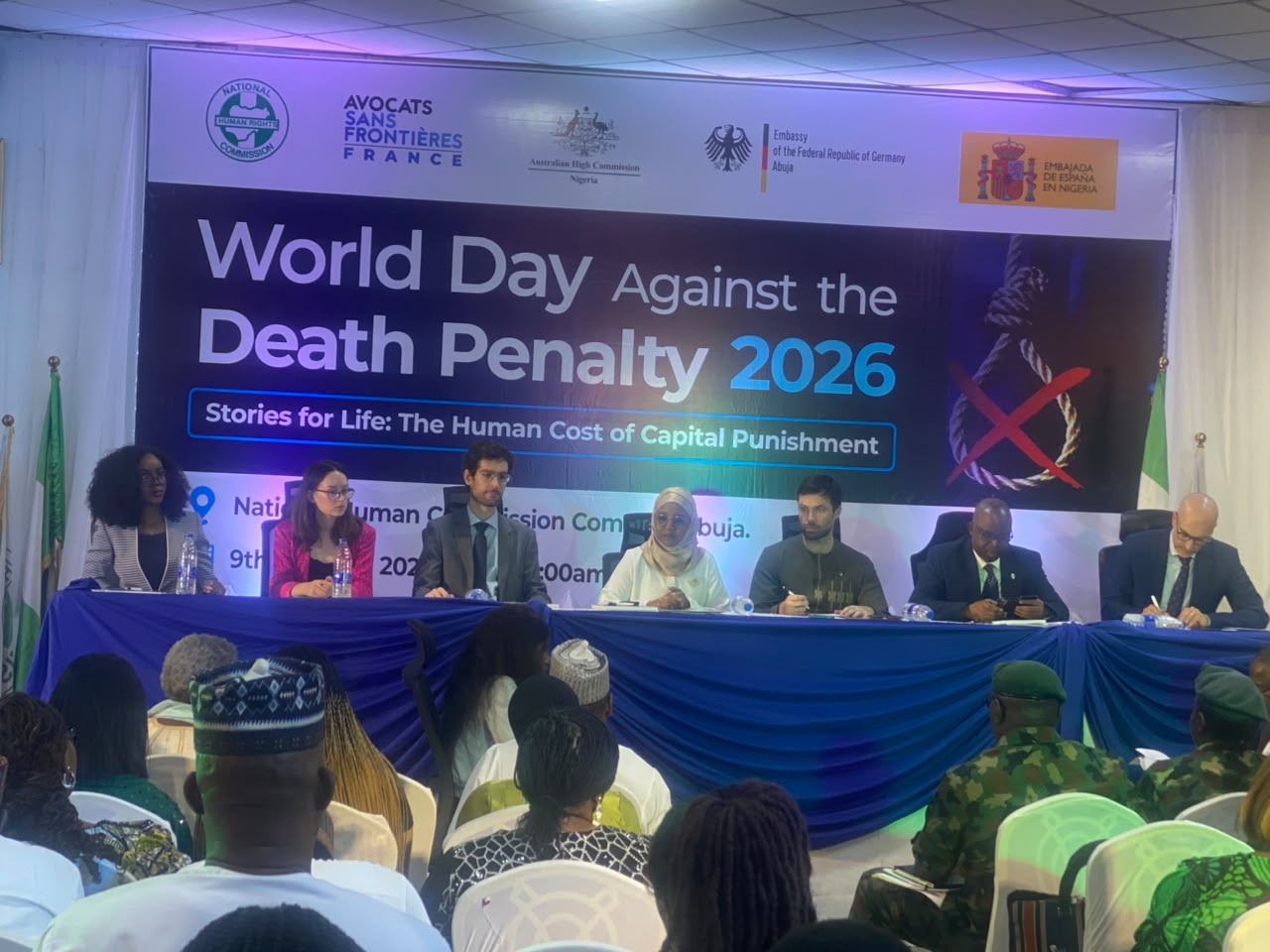
NHRC seeks death penalty moratorium as 3,000 inmates languish on death row
…Commission urges governors to commute sentences, calls for review of mandatory capital punishment laws
By: Michael Mike
The National Human Rights Commission (NHRC) has called on the Federal Government to declare an official moratorium on executions and state governors to commute eligible death sentences to life imprisonment, amid concerns that more than 3,000 inmates remain on death row across Nigeria.
The commission said Nigeria was approaching 10 consecutive years without a state execution, a development it described as meeting the international standard for a de facto moratorium, despite the continued imposition of death sentences and the prolonged detention of condemned inmates.
The Executive Secretary of the NHRC, Chief Tony Ojukwu, made the call on Friday in Abuja during the commemoration of the 2026 World Day Against the Death Penalty at the commission’s headquarters.
Ojukwu urged the Federal Government to formalise the suspension of executions, while calling on state governors to exercise their constitutional prerogative of mercy to commute death sentences, particularly in cases where inmates had exhausted their appeals but remained on death row.
He also advocated a review of laws prescribing mandatory death sentences, arguing that judges should have the discretion to consider mitigating circumstances and systemic vulnerabilities before determining appropriate punishment.
Although capital punishment remains constitutionally valid in Nigeria, the NHRC chief stressed that its administration must be consistent with the country’s human rights obligations and the fundamental principles of fair trial and due process.
He expressed concern that inadequate access to pro bono legal representation, forced confessions and delays in bringing suspects to trial continued to undermine procedural justice, raising questions about the fairness of proceedings in capital cases.
According to him, the protection of human rights requires more than the existence of legal provisions, insisting that the justice system must guarantee fair hearings and ensure that the death penalty is restricted to the most serious crimes in line with applicable international standards.
The commission outlined three immediate policy measures: an official moratorium on executions, the commutation of eligible death sentences to life imprisonment, and a comprehensive review of laws prescribing mandatory capital punishment.
Ojukwu’s appeal places renewed focus on the position of condemned inmates who have exhausted their legal options but remain in custody, as well as the wider implications of prolonged confinement on the administration of criminal justice.
A formal moratorium, the commission argued, would provide an immediate policy framework for suspending executions while the country considers broader reforms to its capital punishment regime.
The proposed review of mandatory death penalty provisions would also allow courts to take individual circumstances into account when sentencing offenders, rather than being compelled by law to impose the same punishment regardless of relevant mitigating factors.
The commemoration was organised by the NHRC in partnership with Avocats Sans Frontières (ASF) France, the Australian High Commission and the Embassy of Germany, with support from the Royal Norwegian Embassy.
Ojukwu expressed hope that deliberations at the event would produce a joint call-to-action communiqué to advance sustainable reforms in Nigeria’s justice sector.
The commission’s position comes amid continuing debates over capital punishment, the protection of the rights of accused persons and the need to strengthen safeguards against miscarriages of justice.
NHRC seeks death penalty moratorium as 3,000 inmates languish on death row

COAS Deepens Military-Traditional Institution Partnership for National Security
By: Zagazola Makama
The Chief of Army Staff (COAS), Lt.-Gen. Waidi Shaibu, has reaffirmed the Nigerian Army’s commitment to strengthening partnerships with traditional institutions and host communities to enhance intelligence gathering and national security.
Shaibu gave the assurance on Friday, Oct. 9, when he paid homage to the Andoma of Doma Kingdom, His Royal Highness Alhaji Dr Ahmadu Aliyu Ogga Onawo, at his palace in Doma, Nasarawa State.

The COAS was in Doma for the graduation ceremony of an elite Special Forces Battalion trained at the Nigerian Army Special Forces School in the kingdom.
He acknowledged the strategic role of traditional institutions and host communities in intelligence gathering, early warning, community trust and the promotion of sustainable peace.
Shaibu appreciated the Andoma and the people of Doma for their continued support and hospitality, stressing that a whole-of-society approach remained vital to addressing contemporary security challenges.
He noted that cooperation between the military, traditional rulers and local communities was essential to strengthening security operations and building public confidence.
In his response, the Andoma commended the COAS for his leadership and the establishment of the Nigerian Army Special Forces School in Doma, describing the facility as a significant contribution to the kingdom.
The traditional ruler pledged the continued support of the institution and the people of Doma to the Nigerian Army, while offering prayers for lasting peace, stability and security across the country.

The visit underscores the importance of civil-military cooperation and the role of traditional institutions in supporting security efforts and fostering peaceful coexistence in host communities.
COAS Deepens Military-Traditional Institution Partnership for National Security
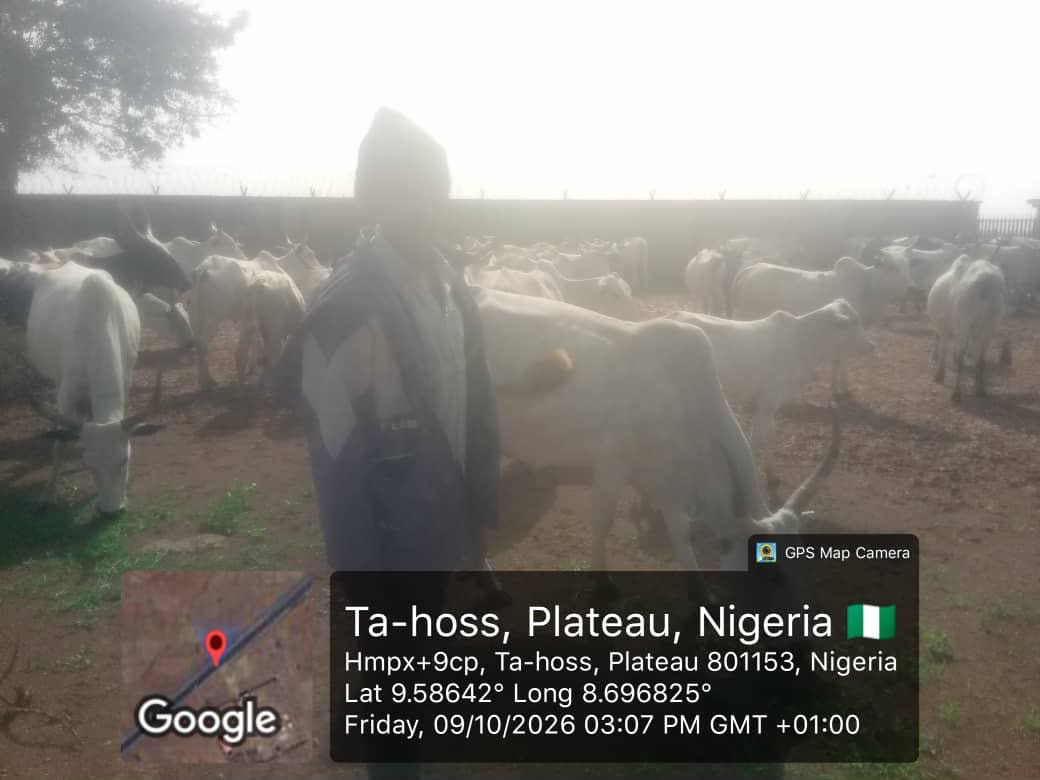
MOPOL Killed in Machete Attack by suspected Fulani herder in Plateau
By Zagazola Makama
A Mobile Police Officer, identified as Cpl. Abdulrahman Auwal, has been killed in a machete attack by fulani herders along Kwi Road in Barkin Ladi Local Government Area of Plateau State.
Security sources said the incident occurred at about 6:51 p.m. on Thursday, Oct. 8, when troops of Sector 4, Operation Enduring Peace (OPEP), responded to a report of an attack on the personnel.
The sources said troops who arrived at the scene found the victim with multiple machete wounds, while the suspected assailants, believed to be Fulani youths, had fled.
The victim was evacuated to a hospital by his colleagues, but he was later confirmed dead.
Security personnel have commenced investigations to establish the circumstances surrounding the attack and identify those responsible for possible arrest.
Further details are expected as the investigation progresses.
MOPOL Killed in Machete Attack by suspected Fulani herder in Plateau

NHRC seeks death penalty moratorium as 3,000 inmates languish on death row

COAS Deepens Military-Traditional Institution Partnership for National Security

Nigerian Army Graduates Elite Special Forces Battalion to Boost Counter-Terrorism Operations

Roger Federer’s Shock as DNA Results Reveal Myla and Charlene Are Not His Biological Children

THE PLIGHT OF FARIDA

FAILED COUP IN BURKINA FASO: HOW TRAORÉ NARROWLY ESCAPED ASSASSINATION PLOT AMID FOREIGN INTERFERENCE CLAIMS
-
 News3 years ago
Roger Federer’s Shock as DNA Results Reveal Myla and Charlene Are Not His Biological Children
-
Opinions5 years ago
THE PLIGHT OF FARIDA
-
 News1 year ago
FAILED COUP IN BURKINA FASO: HOW TRAORÉ NARROWLY ESCAPED ASSASSINATION PLOT AMID FOREIGN INTERFERENCE CLAIMS
-

 News3 years ago
EYN: Rev. Billi, Distortion of History, and The Living Tamarind Tree
-
 Opinions5 years ago
POLICE CHARGE ROOMS, A MINTING PRESS
-

 ACADEMICS3 years ago
A History of Biu” (2015) and The Lingering Bura-Pabir Question (1)
-

 Columns3 years ago
Army University Biu: There is certain interest, but certainly not from Borno.
-

 Politics1 year ago
2027: Why Hon. Midala Balami Must Go, as Youths in Hawul and Asikira/Uba Federal Constituency Reject ₦500,000 as Sallah Gift
