
News
New civil service association wants Ogun governor to halt hurried implementation of contributory pension scheme until…

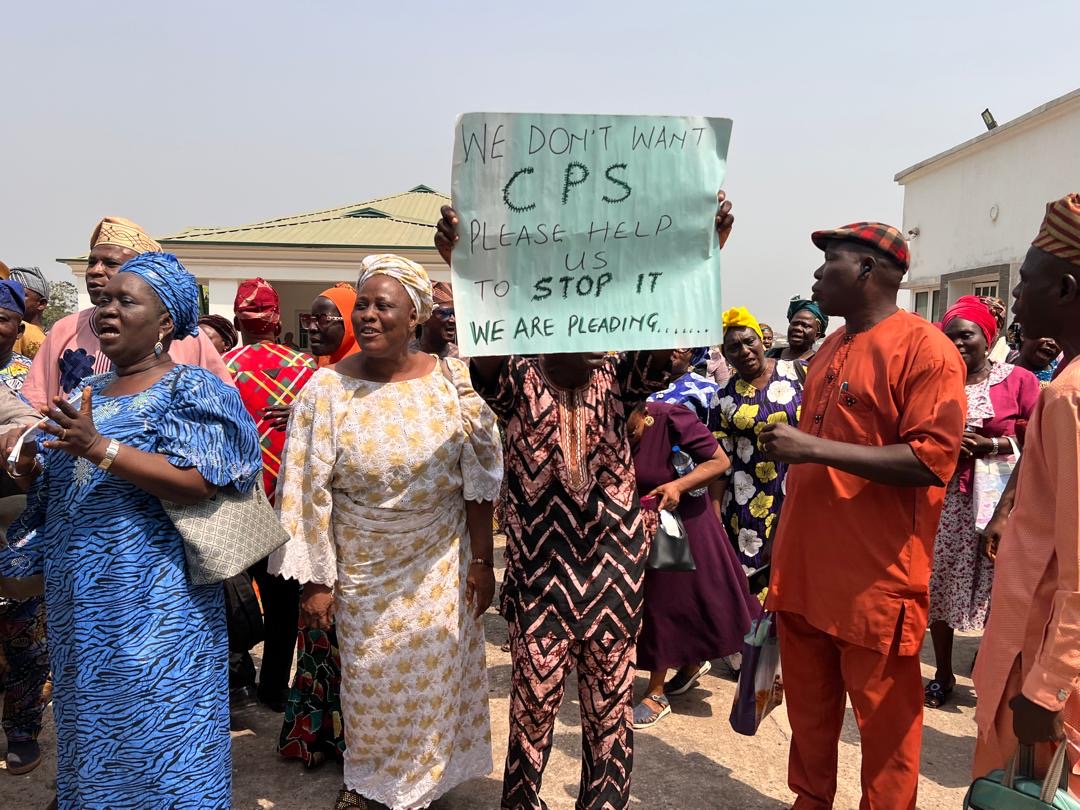
New civil service association wants Ogun governor to halt hurried implementation of contributory pension scheme until……
By: Bodunrin Kayode
The entire members of the Association of New Ogun Civil and Public Service Retirees have called on Governor Dapo Abiodun to halt any further accelerated action on the proposed contributory pension scheme (CPS) for civil servants.
The association which comprises more than 600 members and still counting as people are retiring wants Prince Dapo Abiodun, to consider their plights by shifting the proposed hurried implementation of the CPS forward to a later year when all vexatious aspects of the law that established the CPS would have been properly fixed.
In a release signed by about five of the worried retirees, led by Shadrach Omopariola, the members maintain we that “inline with this, we plead with His Excellency Prince Dapo Abiodun CON to order the payment of our monthly pension as from January 1st 2026 to bring back the hope of living in us and put smile on our faces.
“Your Excellency Sir, we heard that your Government is planning to introduce a new idea that is known as ‘Additional Pension Benefits’ This in itself is nothing to be compared with the gains and benefits of the Old Pension Scheme.
” Sir, the payment of our monthly pension would in no small measure improve not only the economic growth of our immediate families but would be a moral booster for the good people of Ogun State inline with Your Excellency’s Mantra of ‘Igbega ipinle Ogun Ajose Gbogbo wa Ni’.
“We will patiently wait for the payment of our gratuity with faith in the government of Ogun State to pay us as soon as possible.
“We remain law-abiding senior citizens of Ogun State even in this difficult situation where we have no money to take care of ourselves, our children, our aged parents, and other dependent relatives.
“We believe in your kind heartedness and goodwill that you will not close your eyes to our pleading but you will come to our rescue within the shortest time possible to bring happiness and joy to all of us.”
The release was jointly signed by Omopariola Shadrach, Adeyanju Joseph, Falola Kayode, Obasan Olufolake and Kayode Mulikat.
The contributory pension scheme is a new scheme first introduced by the fed government in June 2004 following the enactment of the pension reform act by President Olusegun Obasanjo.
The act was later repealed and replaced by the pension reform Act of 2014 which updated the terms of the scheme by exempting employees who had three years or less to retire, those who retired before the enactment, judicial officers, members of the armed forces and the secret service.
Teachers who should have led the list of these exemptions because of their thankless services to humanity like that of the military were completely ignored.
Sub nationals now trying to domesticate the scheme have equally refused to give teachers that special exemption they are entitled to for their thankless services.
New civil service association wants Ogun governor to halt hurried implementation of contributory pension scheme until…


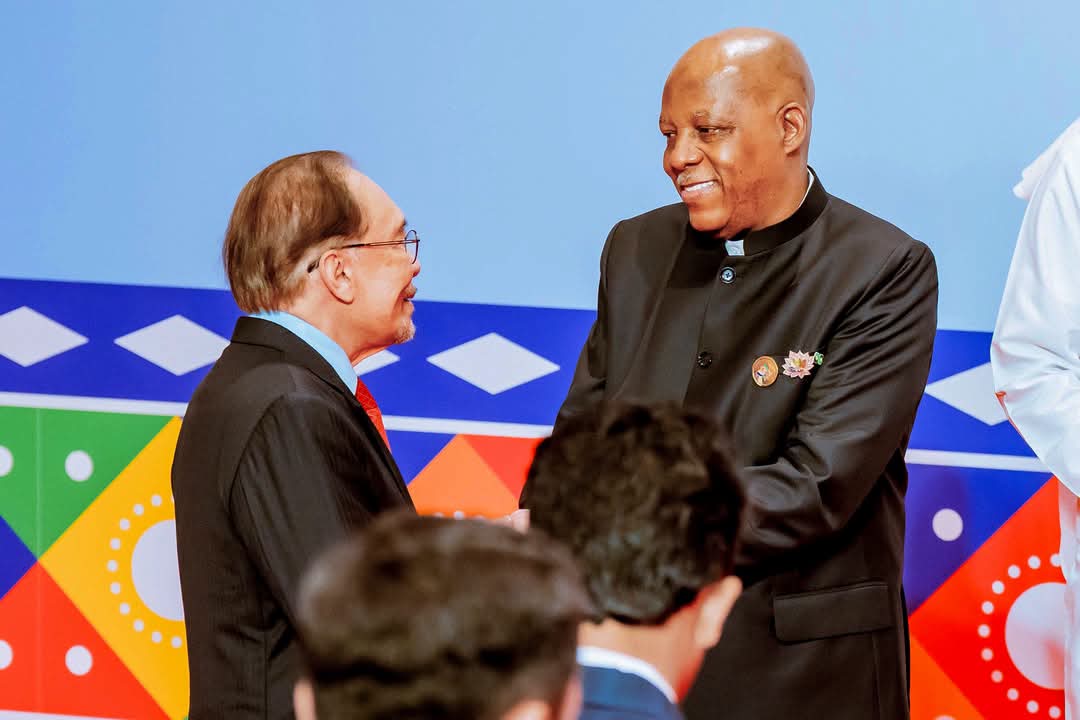
President Tinubu To BRICS: It Is Time To Rewrite The Rules Of Global Governance, Finance
**Positions Nigeria as a gateway to Africa’s expanding market under AfCFTA
** *Seeks deeper BRICS cooperation in AI, digital public infrastructure, fintech, telecommunications, cybersecurity, biotechnology, others
By: Our Reporter
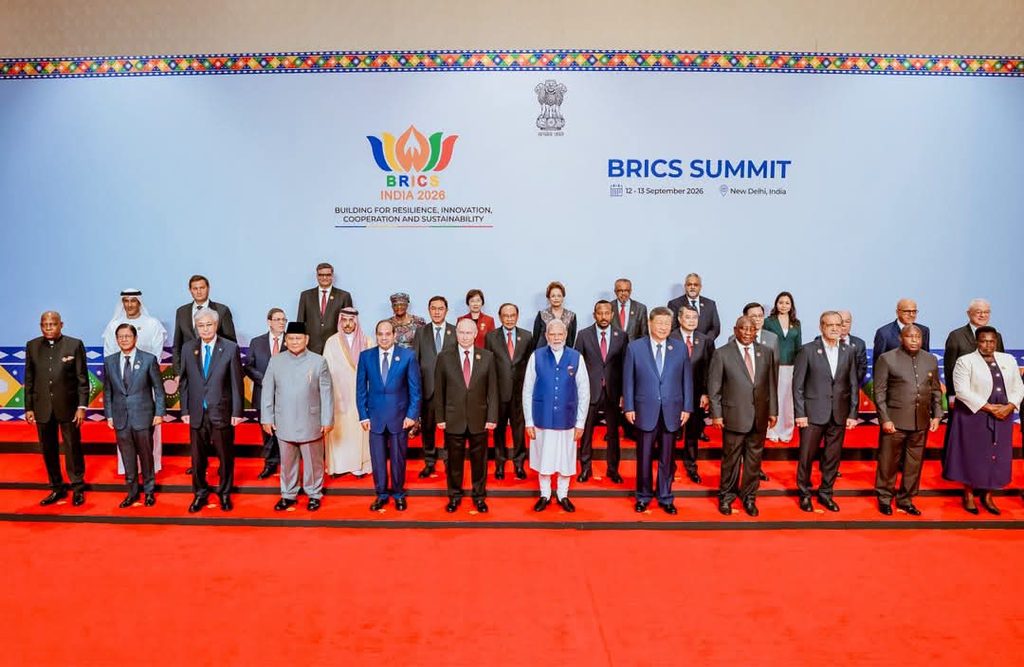
President Bola Ahmed Tinubu on Sunday took centre stage at the ongoing 2026 BRICS Summit, calling for an urgent overhaul of global governance structures and international financial institutions.
He called for a more representative, equitable and responsive global governance architecture and international financial system, restating Nigeria’s support for institutions that reflect contemporary economic and demographic realities.
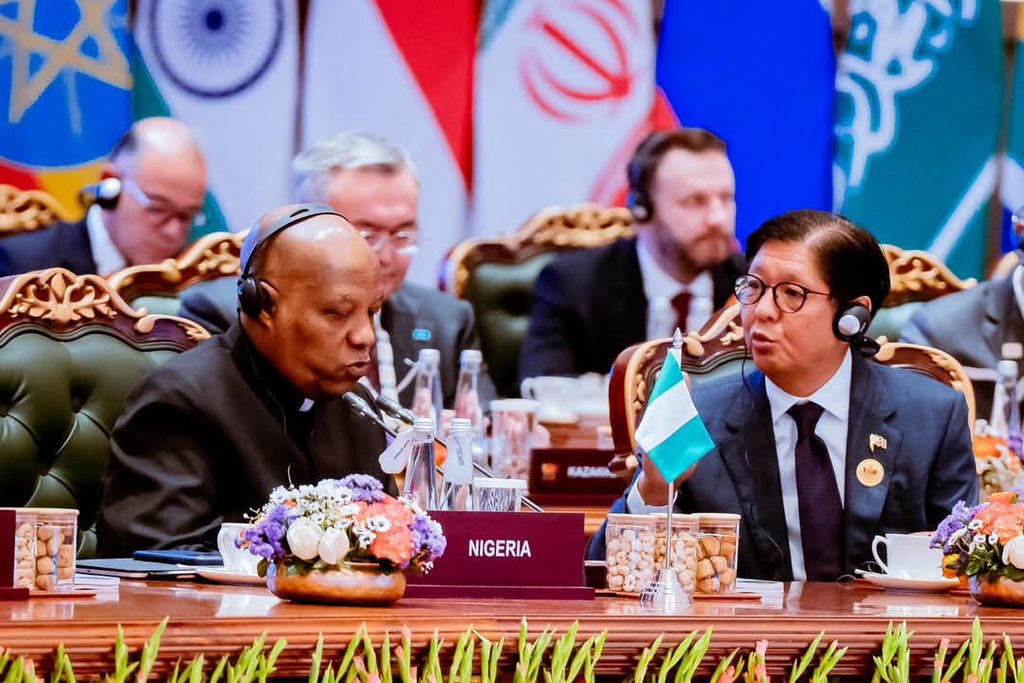
Speaking at the summit in New Delhi, India, in an address delivered on his behalf by Vice President Kashim Shettima, President Tinubu said the transformation championed by BRICS must also extend to the international system.
“Nigeria supports a more representative, equitable and responsive global governance architecture, including reform of the United Nations Security Council and the international financial system.
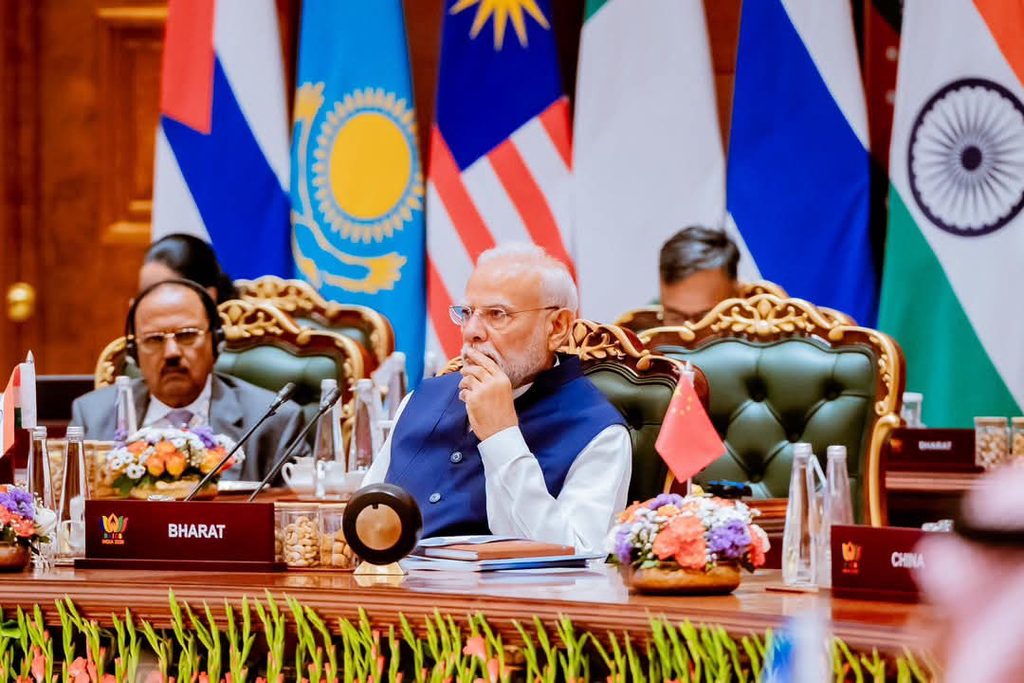
“BRICS amplifies the voice of the Global South and advances a more inclusive international order, consistent with Nigeria’s call for institutions that reflect contemporary economic and demographic realities,” he stated.
Accordingly, President Tinubu made Nigeria’s case for “a BRICS partnership that moves from dialogue to delivery, from commitments to implementation, and from cooperation to measurable development outcomes.”
Inviting foreign investors to take advantage of Nigeria’s investment opportunities, he urged them to view the country “as a gateway to Africa’s expanding market under the African Continental Free Trade Area.”

The President defined economic resilience for Nigeria as building an economy capable of withstanding global shocks while creating sustainable opportunities for its citizens.
This, he noted, is embedded in his administration’s Renewed Hope Agenda through reforms aimed at strengthening macroeconomic stability, diversifying production, raising productivity, expanding infrastructure and human capital, attracting investment, promoting private-sector-led growth and deepening climate resilience.
“We welcome BRICS cooperation in trade, agriculture, food security, energy, infrastructure, manufacturing, healthcare and critical minerals, especially partnerships that advance technology transfer, local value addition, industrial capacity and employment,” he added.
President Tinubu identified Nigeria’s young and dynamic population as one of its greatest assets, saying its creativity and enterprise are driving the country’s innovation agenda.
The Nigerian leader outlined key areas of investment to include digital skills, entrepreneurship, research, artificial intelligence, and technology-enabled businesses through initiatives such as 3MTT, Project BRIDGE, and national AI programmes.
He continued: “We welcome deeper BRICS cooperation in artificial intelligence, digital public infrastructure, fintech, telecommunications, cybersecurity, biotechnology and advanced manufacturing, because developing countries must produce technology, create knowledge and own intellectual property. A nation that owns no technology risks renting its future.
“Nigeria sees cooperation with BRICS as a practical opportunity for trade, investment, technology transfer, and human-capital development. We support partnerships in infrastructure, connectivity, energy, agriculture, healthcare, education, and industrialisation, backed by development finance.
“As Project BRIDGE expands broadband, fibre and digital public services, we seek an open, secure, and inclusive digital ecosystem that advances innovation, digital trade, responsible artificial intelligence, and cybersecurity”
Noting that Nigeria’s sustainability model balances climate action with the development aspirations of emerging economies, President Tinubu reaffirmed the country’s support for affordable climate finance, technology transfer, and capacity-building for Africa.
He also emphasised cooperation in renewable energy, gas, clean technologies, climate-smart agriculture, sustainable infrastructure, and responsible critical-mineral development to ensure that climate responsibility drives broader economic growth.
The Nigerian leader expressed Nigeria’s readiness to contribute to a BRICS partnership that is resilient enough to withstand global shocks, innovative enough to embrace the future, cooperative enough to advance shared prosperity and sustainable enough to protect future generations.
“Our partnerships must create jobs, expand trade, transfer technology, and strengthen our nations’ productive capacity. We must build a future in which Africa moves from the margins of global development to the frontiers of global growth and innovation,” he maintained.
Earlier, opening the 18th BRICS Leaders’ Summit, Indian Prime Minister Narendra Modi said confidence in BRICS among countries of the Global South had grown because their voices were being heard, their experiences respected and solutions developed with them rather than for them.
Modi said the strength of BRICS lies in its diversity and cooperation, noting that the bloc was also expanding participation beyond governments to entrepreneurs, farmers, researchers, women, and young people.
“We may be rooted in different realities, but together, we rise through cooperation and blossom for humanity,” he said.
He added that initiatives such as BRICS CONNECT, the BRICS MSME Cooperation Portal, and the BRICS Urban Mobility Hub were designed to promote skills, employment, enterprise development and knowledge-sharing among member and partner countries.
The Indian Prime Minister also stressed the need to balance development with environmental responsibility, saying sustainability must remain central to BRICS cooperation and the interests of future generations.
President Tinubu To BRICS: It Is Time To Rewrite The Rules Of Global Governance, Finance
VP Shettima Mourns Bamanga Tukur, Says Nigeria Has Lost A Patriot, Global Star
By: Our Reporter
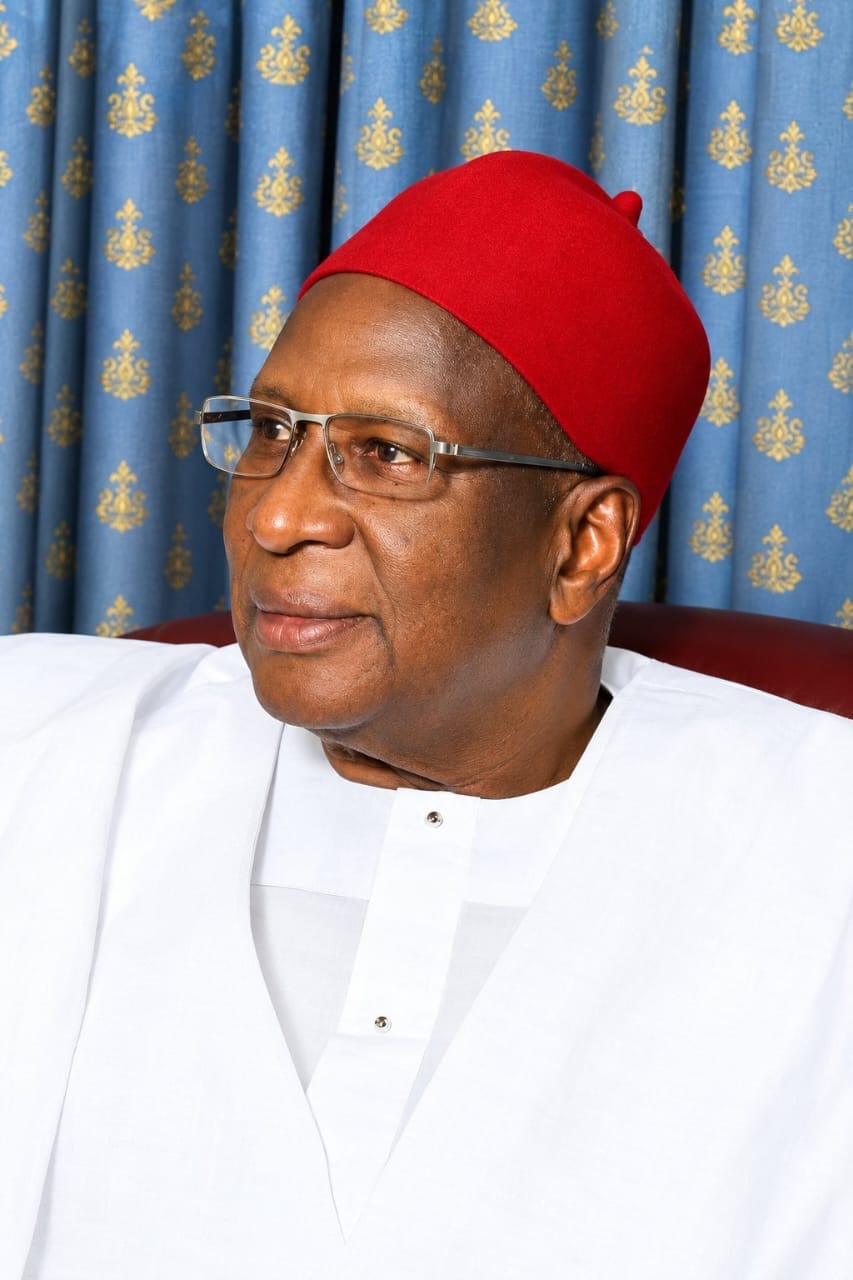
The Vice President, Senator Kashim Shettima, has expressed deep sadness over the passing of former Governor of old Gongola State and prominent Nigerian businessman, Alhaji Bamanga Muhammad Tukur, the Tafidan Adamawa.
He described the death of the elder statesman and former National Chairman of the Peoples Democratic Party (PDP), who passed away on Saturday, September 12, 2026, at the age of 90, as a huge loss to Nigeria, saying he was a true patriot, a global citizen and an institution in his own right.
In a condolence message on Sunday, the Vice President said Bamanga Tukur’s demise was not just a loss to Adamawa State or the Fombina Emirate, but a monumental loss to Nigeria and the African continent.
“I am deeply grieved by the passing of our father, mentor and one of Nigeria’s greatest institution-builders, Alhaji Dr. Bamanga Muhammad Tukur, CON, the Tafidan Adamawa, who returned to his Creator today, September 12, 2026, at the age of 90, just three days shy of his 91st birthday.
“Alhaji Bamanga Tukur lived a life of impact in three distinct but interlinked worlds — as a technocrat who built Nigeria’s modern maritime infrastructure, as a statesman and politician who governed with vision, and as a pan-African business leader who put Africa’s private sector on the world map,” he stated.
Paying tribute to his service to the nation, Senator Shettima said, “Nigerians of my generation will never forget that in 1975, when Nigerian ports were gridlocked by the infamous cement armada, a young, brilliant Bamanga Tukur was called to lead the Nigerian Ports Authority. He did not just clear the congestion; he built for the future.”
He recalled that, as General Manager and Chief Executive of the NPA from 1975 to 1982, Bamanga Tukur conceived and delivered the Tin Can Island Port Complex, modernised Apapa, Warri, Calabar, Sapele and Onne ports, and expanded the nation’s cargo-handling capacity.
“That singular intervention saved the Nigerian economy from collapse and created the gateway that still powers our trade today. In doing so, he became the first African Vice President and later a global icon in the International Association of Ports and Harbours in Tokyo, flying Nigeria’s flag high at a time when few Africans had such an opportunity,” VP Shettima added.
On his political career, the Vice President recalled that although his tenure as Governor of the old Gongola State, comprising present-day Adamawa and Taraba states, was cut short by the military intervention of December 1983, “Bamanga Tukur’s vision for rural development and education left an enduring mark.
“He later served as Minister for Industries under the Abacha administration and came full circle between 2012 and 2014 as National Chairman of the Peoples Democratic Party at a most turbulent time. Even his fiercest political opponents attest that Tukur was a man of consensus, a man who chose the stability of the party over his own comfort when he voluntarily resigned in January 2014,” he said.
He also recalled Tukur’s continental role, saying, “Beyond Nigeria, Baba Tukur was Africa’s pride. As founder and Executive President of the African Business Roundtable and Chairman of the NEPAD Business Group, he was one of the earliest voices to argue that Africa must trade with itself and that African businesses must drive African development. The ideas he championed are what have now blossomed into the African Continental Free Trade Area (AfCFTA).
“He was a true global citizen — an Adamawa son who sat on the Ghana Investors Advisory Council, advised the President of Benin Republic, and was honoured by Côte d’Ivoire and Togo for his continental service,” VP Shettima stated.
The Vice President extended his condolences to the family of the deceased, the Adamawa State Government and the people of the state, assuring them that Nigeria would never forget Bamanga Tukur.
He prayed that Almighty Allah, in His infinite mercy, would forgive his shortcomings, overlook his transgressions, grant his gentle soul Aljannatul Firdaus, and give the family the fortitude to bear the great loss.
VP Shettima Mourns Bamanga Tukur, Says Nigeria Has Lost A Patriot, Global Star
Troops intercept 10 rams after suspected herders flee in Plateau
By: Zagazola Makama
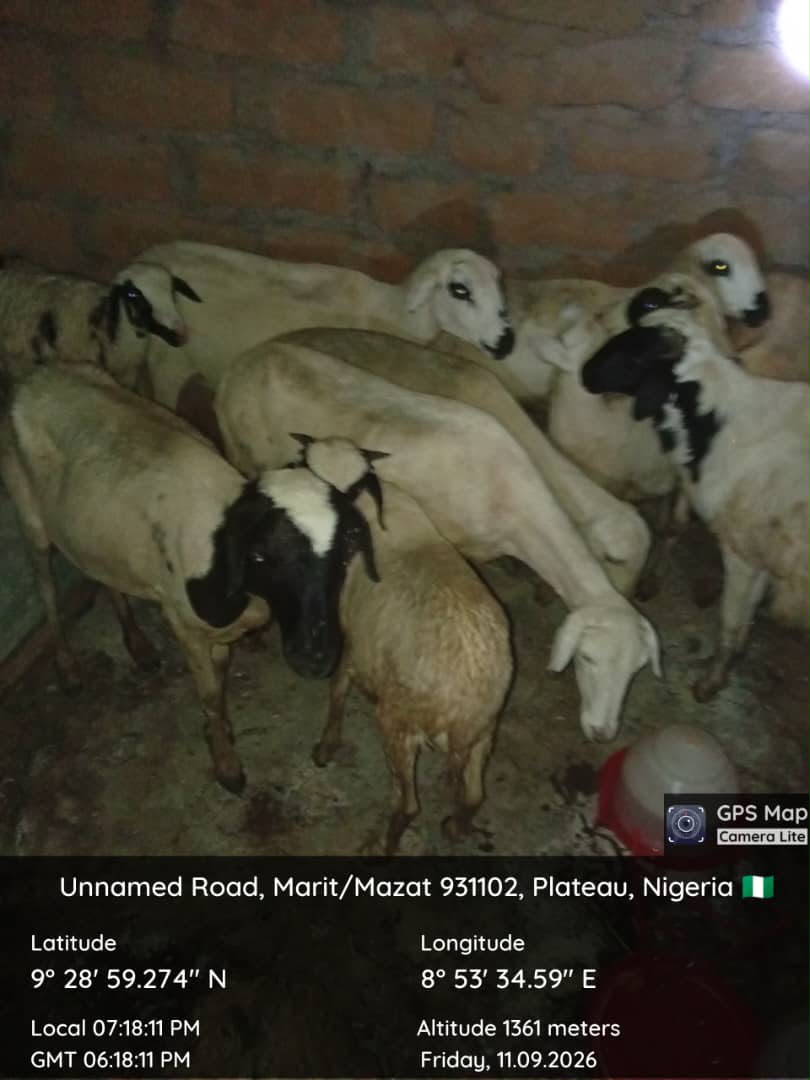
Troops of Sector 4, Sub-Sector 41, Gashish, have intercepted 10 rams abandoned by a group of suspected Fulani herders who fled upon sighting security personnel in Barkin Ladi Local Government Area of Plateau State.
The troops, deployed at Panse general area, responded at about 7:30 p.m. on Sept. 11 following a report of unidentified Fulani herders camping around Rakwok community.
Upon arrival at the location, the troops observed the herders with their livestock. The group reportedly fled into the surrounding area after sighting the approaching soldiers, leaving some of their animals behind.

The troops subsequently recovered 10 rams abandoned at the scene and moved the animals to a secure location for further necessary action.
The development forms part of ongoing security operations in the area aimed at monitoring the movement of armed groups and preventing criminal elements from exploiting remote communities to carry out attacks.
Troops remain deployed across the general area to maintain security and respond to emerging threats.
Troops intercept 10 rams after suspected herders flee in Plateau

President Tinubu To BRICS: It Is Time To Rewrite The Rules Of Global Governance, Finance

VP Shettima Mourns Bamanga Tukur, Says Nigeria Has Lost A Patriot, Global Star

.NDLEA Busts UK Colos Pipeline, Seizes 2.3 Tonnes of Drugs

Roger Federer’s Shock as DNA Results Reveal Myla and Charlene Are Not His Biological Children

THE PLIGHT OF FARIDA

FAILED COUP IN BURKINA FASO: HOW TRAORÉ NARROWLY ESCAPED ASSASSINATION PLOT AMID FOREIGN INTERFERENCE CLAIMS
-
 News3 years ago
Roger Federer’s Shock as DNA Results Reveal Myla and Charlene Are Not His Biological Children
-
Opinions5 years ago
THE PLIGHT OF FARIDA
-
 News1 year ago
FAILED COUP IN BURKINA FASO: HOW TRAORÉ NARROWLY ESCAPED ASSASSINATION PLOT AMID FOREIGN INTERFERENCE CLAIMS
-

 News2 years ago
EYN: Rev. Billi, Distortion of History, and The Living Tamarind Tree
-
 Opinions5 years ago
POLICE CHARGE ROOMS, A MINTING PRESS
-

 ACADEMICS3 years ago
A History of Biu” (2015) and The Lingering Bura-Pabir Question (1)
-

 Columns3 years ago
Army University Biu: There is certain interest, but certainly not from Borno.
-

 Politics1 year ago
2027: Why Hon. Midala Balami Must Go, as Youths in Hawul and Asikira/Uba Federal Constituency Reject ₦500,000 as Sallah Gift
