
News
New data shows extremely critical levels of malnutrition in parts of northwest Nigeria

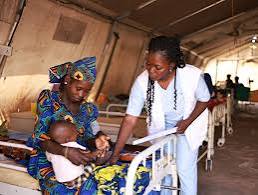
New data shows extremely critical levels of malnutrition in parts of northwest Nigeria
By:Our Reporter
Extremely critical levels of malnutrition found in the conclusions of a survey done by the humanitarian medical organisation Médecins Sans Frontières (MSF) / Doctors Without Borders. The survey was conducted on 2,066 children of three local government areas (LGA) of Katsina State, in collaboration with Epicentre (MSF’s epidemiology arm) and the Katsina State Ministry of Health. It shows that in some areas, levels of global acute malnutrition have doubled since last year, when the situation was already considered dire. Aid in this region has never been enough to meet the needs and is now decreasing even further. MSF draws attention to the immediate additional support needed to avoid a deadlier catastrophe in 2025.
The survey was done in July in the LGAs of Katsina, Jibia and Mashi shows a major nutritional crisis underway with over 30 per cent of children suffering from global acute malnutrition (GAM) in some areas and severe acute malnutrition (SAM) rates — the most dangerous form of malnutrition — between 6.8 per cent and 14.4 per cent. People in these areas are at the extremely critical level of malnutrition according to the integrated food security phase classification for acute malnutrition. MSF has continued to see an increase in malnutrition admissions since the survey was conducted.
This survey has been carried out yearly since 2022 at the same period in the same areas and with the same methodology to estimate the prevalence of acute malnutrition in children aged six months to almost five years of age, the GAM levels in the first survey were 22 per cent. Nutritional status of children six to 59 months was assessed using a combination of three methodologies: mid-upper arm circumference (MUAC), bilateral pitting oedema, and weight-for-height z-score (WHZ).
“These survey results are, quite frankly, terrifying. We have seen figures rising steadily for the past couple of years and now we are moving from critical to extremely critical levels. In one area of the state, Mashi LGA, we found 14% of children we surveyed were severely malnourished, prevalence this high is catastrophic. We really need to see more, not less action from organisations, otherwise we are going to see children dying in record numbers,” says Dr, Raphael Kananga, MSF Medical Coordinator.
As a result of this situation, MSF, which runs four therapeutic treatment centers for malnourished children in Katsina state, has provided care to more children this year, in more severe states of malnutrition, of which more had to be hospitalised. In total, our medical teams have attended more than 100,000 malnourished children from January until now, which represents a 20 per cent increase compared to the same period last year. Admissions for hospitalisation have increased by more than 50 per cent compared to 2022 and 2023, and more than 800 children could not be saved due to too severe conditions and died in our facilities in Katsina state between January and September 2024.
The projections of a further deterioration in food insecurity for the near future are also very worrying. Inflation is currently very high in Nigeria, the devaluation of the local currency is continuing, agricultural yields have strongly decreased again this year. The cost of living is increasing, insecurity remains a concern in several parts of the region, and climate events are expected to continue – impacting livestock and crops. All of these factors mean that if no additional support is set in place, MSF fears a deadlier catastrophe in 2025. However, despite the huge increases in prevalence of global acute malnutrition, for example by over 75 per cent in Jibia LGA, one area surveyed, Katsina state, along with the rest of the northwest region is still not included in the UN’s humanitarian response plan for Nigeria.
Earlier this year, MSF conducted a mass screening in several areas of Zamfara state and found 27 per cent of children suffering from global acute malnutrition. This is a trend we are seeing across all our nutrition facilities in northern Nigeria. Overall, MSF medical teams responding in seven states spanning northern Nigeria have treated 294,000 children for malnutrition between January – September this year. This is 43 percent higher than the number of children treated in that same period in 2023.
Despite this, global funding cuts are reducing organisations’ ability to respond and treat children with malnutrition. Insufficient amounts of therapeutic food globally have been a challenge over the last year and are still worsening. In some areas, such as Zamfara, there have only been limited supplies available since March. UNICEF has recently launched a global appeal with fears that nearly two million children across 12 countries are at risk of death due to these shortages.
“We have consistently raised the alarm about the escalating malnutrition crisis in northern Nigeria, and the findings of recent surveys confirm our worst fears—conditions have not improved; they have significantly deteriorated. This year, our teams across locations such as Kebbi, Zamfara, Katsina, and Maiduguri have been overwhelmed by an unprecedented number of malnourished children requiring urgent care. We have utilised every available resource, from overflow tents to spare mattresses, to manage the influx of patients arriving at our hospitals. Without meaningful and immediate action, I fear the situation could worsen dramatically in the coming year. We recognise the Federal Ministry of Health and Social Welfare’s recent and ongoing efforts towards tackling malnutrition. If all stakeholders increase funding and ensure a reliable supply of therapeutic food, there is hope that we can save the lives of many children next year.” Dr. Simba Tirima, Country Representative for MSF in Nigeria.
MSF runs nutrition projects in seven states in Nigeria: Borno, Bauchi, Katsina, Kano, Sokoto, Zamfara and Kebbi. This involves 10 inpatient facilities including those in Maiduguri, and in Katsina city and over 30 outpatient feeding centres across these states to treat children with moderate and severe malnutrition who do not need to be admitted to hospital.
New data shows extremely critical levels of malnutrition in parts of northwest Nigeria


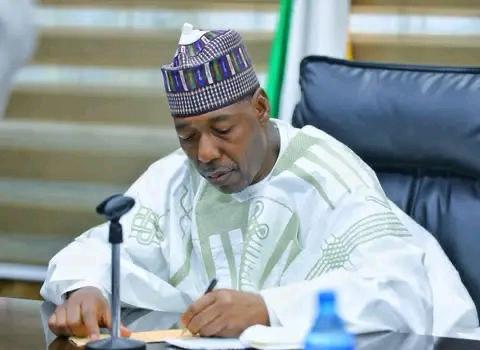
Zulum Appoints Engr Peter Samuel as General Manager BOSAMA
By: Our Reporter
Borno State Governor, Professor Babagana Umara Zulum, has approved the appointment of Engr Peter Samuel, MNSE, MNIAE, as the General Manager of Borno State Agricultural Mechanization Authority (BOSAMA).
In a statement by the Special Adviser to the Governor on Media, Dauda Iliya, the appointment was based on Engr Samuel’s outstanding professional competence, proven track record, and experience in agricultural engineering and mechanization.
The statement noted that Engr Samuel possesses the requisite qualifications, technical expertise and leadership capacity required to reposition BOSAMA in line with Governor Zulum’s agricultural transformation agenda.
The newly appointed General Manager is an Agricultural Engineer with academic, professional, administrative, and practical experience in agricultural mechanization, farm power and machinery, irrigation engineering, and agricultural infrastructure development.
He holds a Master of Engineering (M.Eng.) in Farm Power and Machinery from Joseph Sarwuan Tarka University, Makurdi (formerly the Federal University of Agriculture, Makurdi), a Postgraduate Diploma in Farm Management and Production Economics from Nasarawa State University, and a Bachelor of Engineering (B.Eng.) in Agricultural and Environmental Resources Engineering from the University of Maiduguri.
Engr Samuel has distinguished himself through years of meritorious service in teaching, research, agricultural engineering practice, and project implementation. He currently serves as a Lecturer in Farm Power and Machinery at Ramat Polytechnic, Maiduguri.
Over the years, he has held several strategic leadership positions, including General Manager of a commercial agricultural enterprise, Project Coordinator, Programme Coordinator, and Consultant on numerous agricultural development interventions implemented by reputable national and international organisations.
He is a member of the Nigerian Society of Engineers (NSE) and the Nigerian Institution of Agricultural Engineers (NIAE).
Governor Babagana Zulum congratulated the new General Manager on his appointment and urged him to deploy his wealth of knowledge, technical expertise, and experience in agricultural mechanization to strengthen the operations of BOSAMA
Zulum Appoints Engr Peter Samuel as General Manager BOSAMA
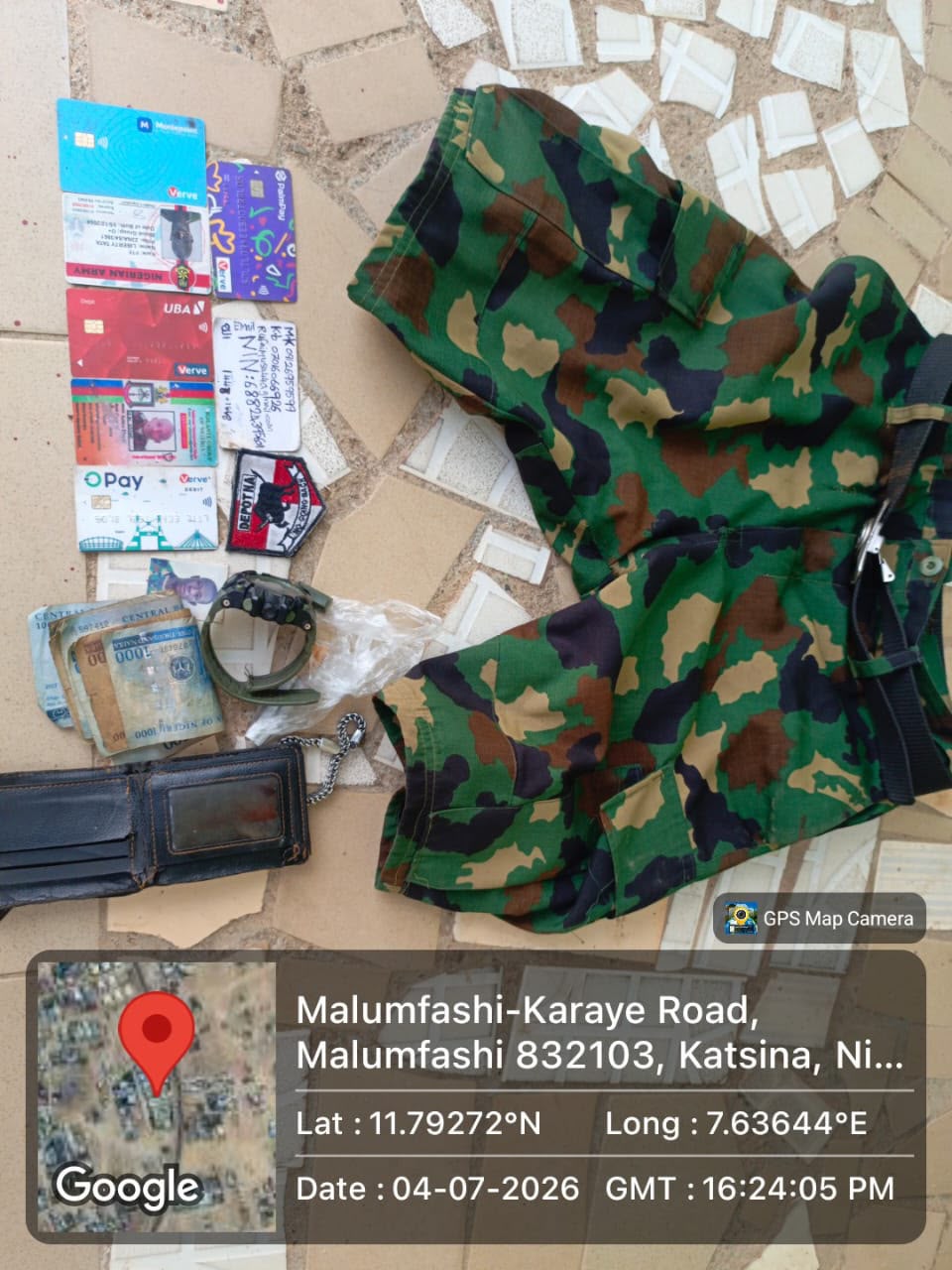
Troops Arrest Suspected Military Impostor in Katsina
By Zagazola Makama
Troops of 17 Brigade have arrested a suspected military impostor during a fighting patrol in Malumfashi Local Government Area.
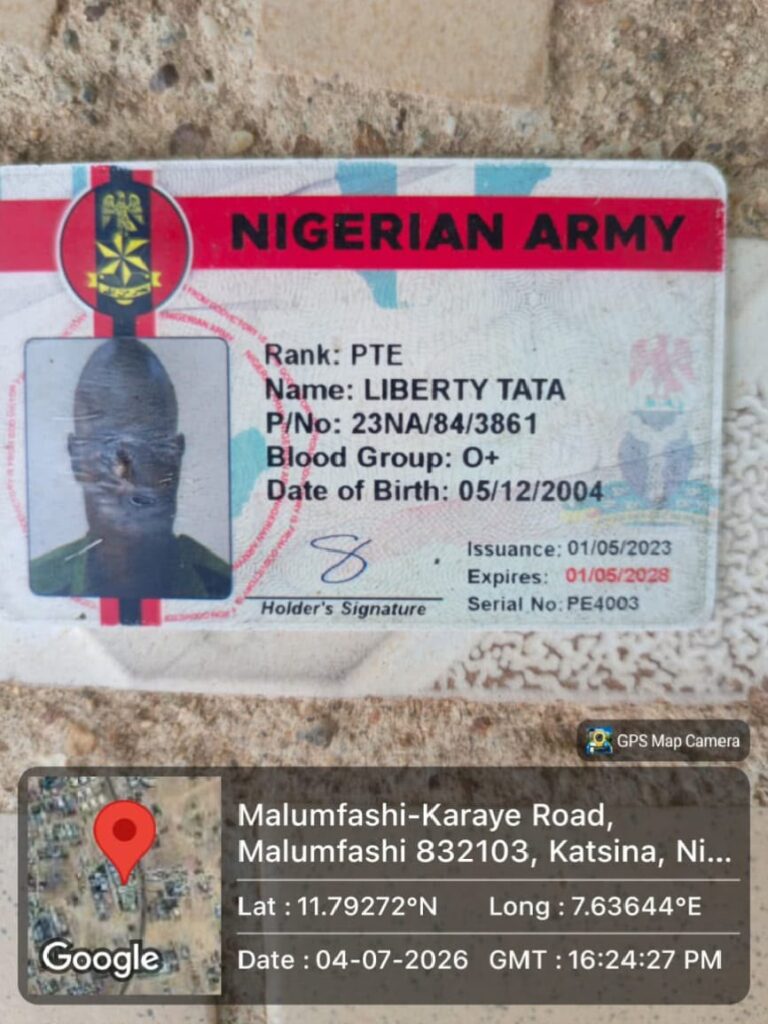
Security sources told Zagazola Makama that the suspect was apprehended at about 1:30 p.m. on July 4 by troops deployed at the Forward Operating Base (FOB) Malumfashi while conducting routine patrols within Malumfashi town.

According to the sources, the suspect was intercepted while wearing a woodland camouflage three-quarter short, raising suspicion among the troops.
A search conducted on the suspect led to the recovery of a fake Nigerian Army identity card, four Automated Teller Machine (ATM) cards, one woodland camouflage three-quarter short, a wristwatch and the sum of ₦17,000.
The suspect and the recovered exhibits are currently in military custody pending further investigation.
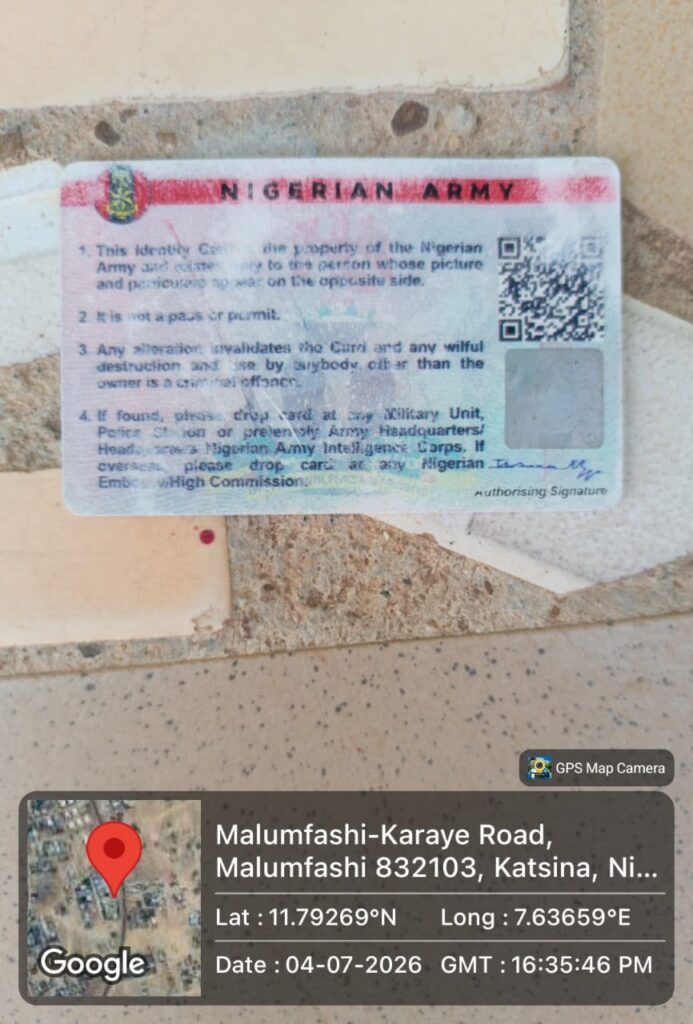
Military sources said the arrest forms part of ongoing efforts to curb impersonation of security personnel and other criminal activities within the area.
Troops Arrest Suspected Military Impostor in Katsina
Troops Recover 50 Rustled Cattle, Repel Suspected Rustlers in Kaduna
By Zagazola Makama
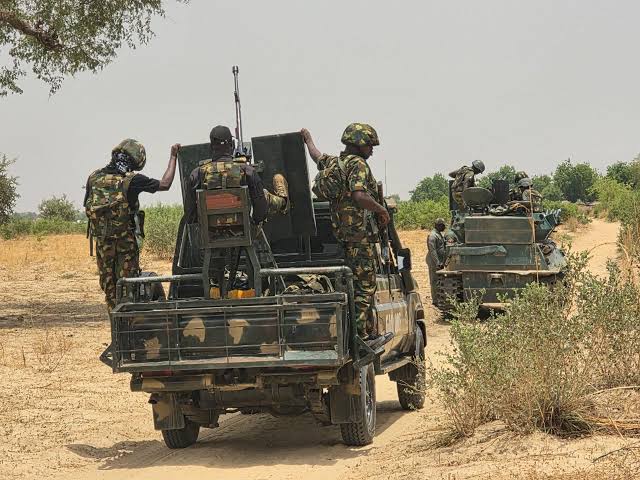
Troops deployed at the Forward Operating Base (FOB) Kankomi have recovered 50 rustled cattle after repelling suspected cattle rustlers during an ambush operation in Chikun Local Government Area.
Security sources told Zagazola Makama that the troops responded to a distress call at about 9:55 a.m. on July 4 over the activities of suspected rustlers at Ungwan Gontu community.
According to the sources, the troops swiftly laid an ambush and made contact with the fleeing suspects, forcing them to abandon the stolen livestock and escape into the surrounding area.
During the operation, the troops recovered 50 rustled cattle, which were subsequently identified and handed over to their rightful owner.
Military sources said efforts are ongoing to track down the fleeing suspects as security operations continue to combat cattle rustling and other criminal activities across Kaduna State.
Troops Recover 50 Rustled Cattle, Repel Suspected Rustlers in Kaduna

Zulum Appoints Engr Peter Samuel as General Manager BOSAMA

DSS Frees Cardiac Surgeon Martin Aghaji on Bail Over Alleged Economic Crime

Troops Arrest Suspected Military Impostor in Katsina

Roger Federer’s Shock as DNA Results Reveal Myla and Charlene Are Not His Biological Children

THE PLIGHT OF FARIDA

FAILED COUP IN BURKINA FASO: HOW TRAORÉ NARROWLY ESCAPED ASSASSINATION PLOT AMID FOREIGN INTERFERENCE CLAIMS
-
 News2 years ago
Roger Federer’s Shock as DNA Results Reveal Myla and Charlene Are Not His Biological Children
-
Opinions4 years ago
THE PLIGHT OF FARIDA
-
 News1 year ago
FAILED COUP IN BURKINA FASO: HOW TRAORÉ NARROWLY ESCAPED ASSASSINATION PLOT AMID FOREIGN INTERFERENCE CLAIMS
-

 News2 years ago
EYN: Rev. Billi, Distortion of History, and The Living Tamarind Tree
-
 Opinions5 years ago
POLICE CHARGE ROOMS, A MINTING PRESS
-

 ACADEMICS2 years ago
A History of Biu” (2015) and The Lingering Bura-Pabir Question (1)
-

 Columns2 years ago
Army University Biu: There is certain interest, but certainly not from Borno.
-

 Politics1 year ago
2027: Why Hon. Midala Balami Must Go, as Youths in Hawul and Asikira/Uba Federal Constituency Reject ₦500,000 as Sallah Gift
