
News
New drug test policy for schools will cut down substance abuse among youth – Marwa

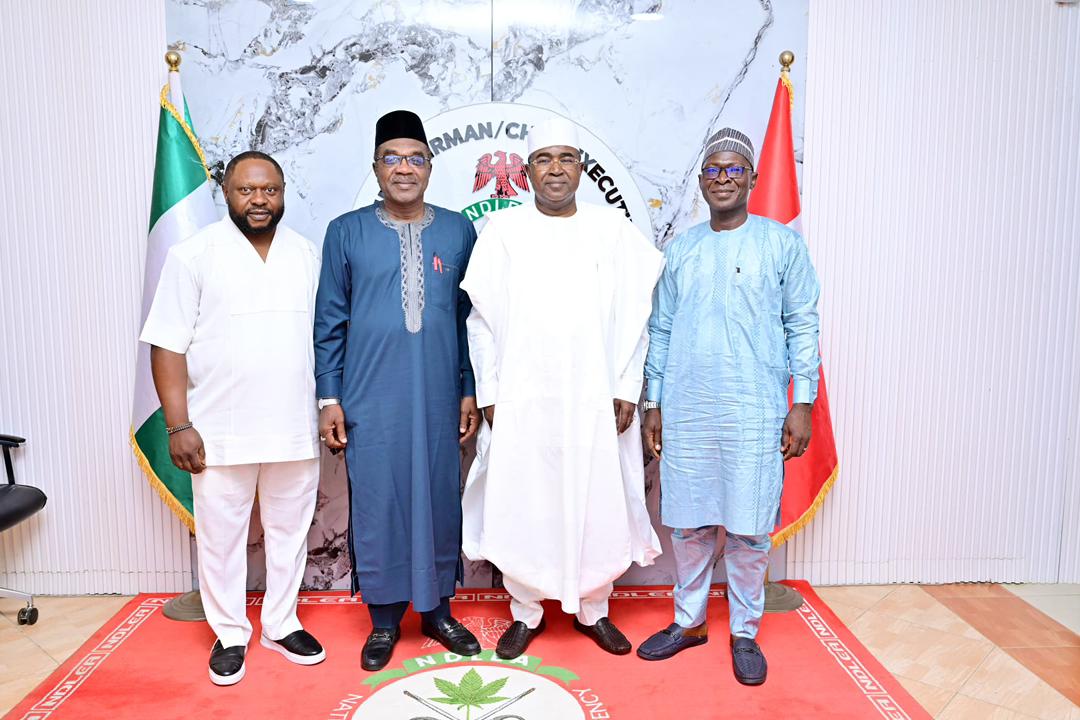
New drug test policy for schools will cut down substance abuse among youth – Marwa
By: Michael Mike
Chairman/Chief Executive Officer of the National Drug Law Enforcement Agency (NDLEA) Brig. Gen. Buba Marwa (rtd) has said that the newly launched drug test policy for schools in Nigeria will discourage illicit substances abuse by young Nigerians especially those aspiring for higher education.
Marwa stated this weekend when he received the Vice Chancellor of the Taraba State University, Professor Sunday Bako who led a team of his management staff to seek partnership with the anti-narcotics agency on the fight against substance abuse and illicit drug trafficking.
The NDLEA boss, said: “We’re glad to work and partner with you, your university and the Taraba state government on this matter and it’s a good thing that what you’re doing aligns with the new national policy for tertiary institutions that includes compulsory and random drug integrity tests for students. This initiative is a joint effort between the Federal Ministry of Education and the National Drug Law Enforcement Agency (NDLEA) to combat substance abuse among young people in schools across the country.
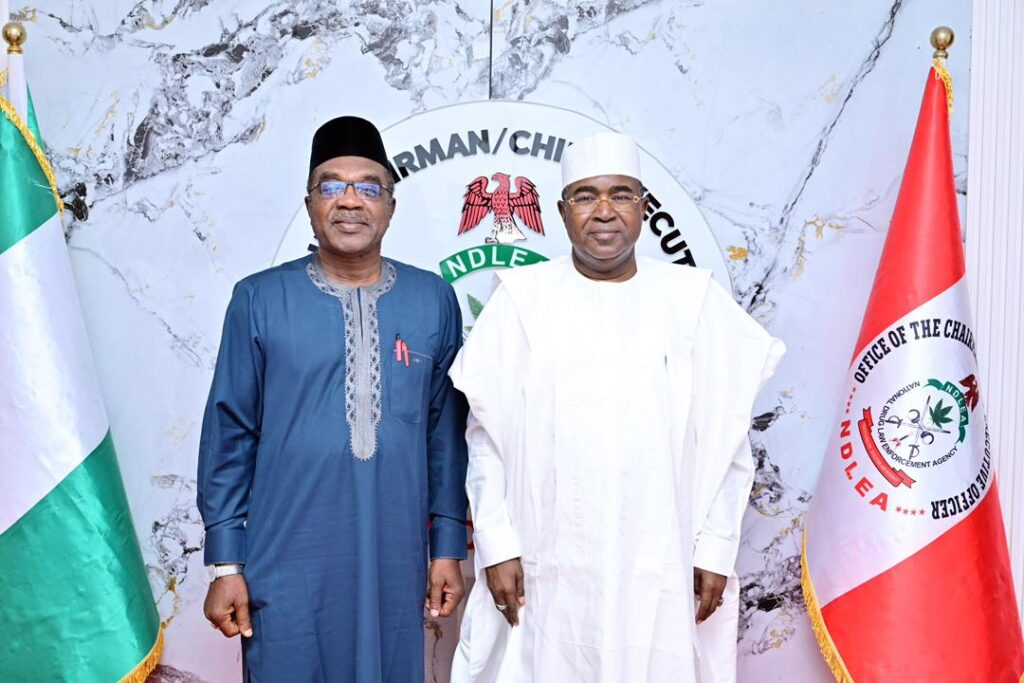
“At the NDLEA, we have been pushing for this and we’re happy we have a dependable partner in the Minister of Education and members of his team who worked with us and supported us on this. This is not in anyway punitive but a strategic push that will largely discourage our youths from going into substance abuse because they know at every stage of their education, they will face compulsory drug test.
“We are fully prepared to work with all schools to ensure the success of this great initiative that will make positive impact on youth development, security and national productivity in line with the renewed hope agenda of President Bola Tinubu.”
He commended the VC for leading the pack by establishing a full Directorate of Narcotics and Drug Abuse Prohibition in the institution, with a promise to support his efforts through capacity building training and other areas of collaboration.
In his remarks, Bako commended the Marwa leadership of NDLEA for its professionalism, openness and collaborative spirit, which has earned the agency both national and international accolades.
He said: @We are particularly pleased to visit at a time when your excellent and unwavering commitment in the fight against drugs and illicit substances abuse/trafficking earns you another five years of tenure renewal. Your relentless efforts in combatting substance abuse have contributed significantly to protecting our youths and preserving the future of our nation.”
He noted that his visit was borne out of his concern about the challenge of drug and substance abuse among young people, which poses serious threat to academic excellence, moral values, and national development.
The VC said: “This visit seeks to strengthen the relationship between Taraba State University, Jalingo and the National Drug law Enforcement Agency which started way back since 22nd August, 2024 during the inauguration of the Directorate of Narcotics and Drug Abuse Prohibition and the launch of WADA by the NDLEA Taraba state command, as well as the TSU Drug Free Club patrons/officials.
“We firmly believe that effective drug control and prevention require a multi-sectoral approach involving law enforcement agencies, academic institutions, and the wider society.
In this regard, Taraba State University is eager to partner with your agency in areas such as collaborative research on drug abuse and substance use disorder, policy-oriented studies, public enlightenment and sensitization programmes, capacity building training, student internship opportunities, and community outreach initiatives within Taraba state and beyond. Partnership with the NDLEA will further strengthen our institutional policies and programmes in this critical area.”
New drug test policy for schools will cut down substance abuse among youth – Marwa



Troops intercept 11 youths with donkeys during patrol in Borno
By: Zagazola Makama
Troops of 68 Battalion have intercepted 11 youths during a routine patrol in Mallam Fatori area of Abadam Local Government Area of Borno State.
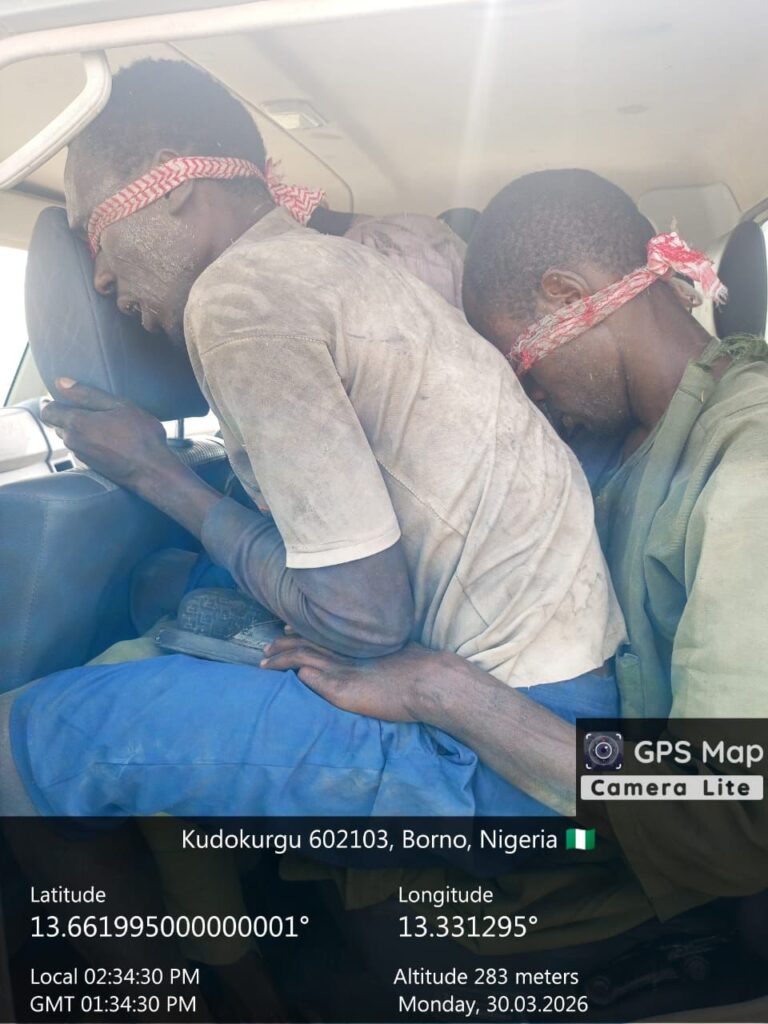
Security sources said the interception occurred along the Bulagana–Cheisa axis on April 2 during ongoing clearance operations in the area.
According to the sources, the individuals were found moving in the area with 12 donkeys when they were stopped and briefly interrogated by troops.
The sources added that the youths were later handed over, alongside the animals, to relevant authorities in a neighbouring country for further necessary action.
The military said the patrol was part of sustained efforts to maintain security dominance and prevent exploitation of border communities by criminal elements.
Troops intercept 11 youths with donkeys during patrol in Borno
Troops recover ammunition, logistics items in Kwara patrol operation
By: Zagazola Makama
Troops of the Nigerian Army under the 22 Brigade have recovered ammunition and other logistics items during a fighting patrol in Ifelodun Local Government Area of Kwara State.
A security source disclosed that the operation was conducted at about 4:00 p.m. on April 2 at Daban Lema, where troops of the brigade, operating from the Patrol Base, encountered signs of suspected terrorist activities in a deserted location.
According to the source, the troops immediately carried out exploitation of the area, leading to the recovery of four rounds of 7.62mm special ammunition and one empty PKT ammunition belt link.
Other items recovered include four mobile phones, two head warmers, two small solar panels, and assorted repair tools believed to have been used by the suspected terrorists.
The source added that the recovery indicates the presence and movement of suspected criminal elements within the area, noting that troops have intensified surveillance and patrols to deny them freedom of action.
Troops recover ammunition, logistics items in Kwara patrol operation
Troops foil attack by Criminal Youths, rescue victims, arrest suspects in plateau
By: Zagazola Makama
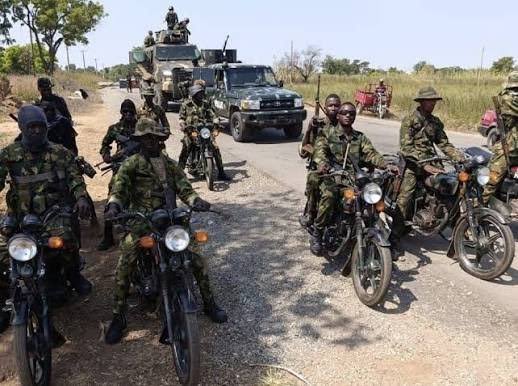
Troops of Sector 1, Operation Enduring Peace (OPEP), have foiled an attack on residents at Dutse Uku in Jos North Local Government Area of Plateau State.
A security source said the troops responded swiftly to a report of sporadic gunshots in the area at about 11:50 p.m. on April 2.
According to the source, upon arrival at the scene, the suspected criminals fled, abandoning their operation due to the prompt intervention of the troops.
He said the troops rescued two victims who sustained gunshot wounds during the incident and immediately evacuated them to a hospital for medical attention.
The source further disclosed that two suspects, dressed in black attire, were arrested at the scene.
Items recovered from the suspects include a cutlass and a knife.
He added that the suspects are currently in military custody and undergoing preliminary investigation, while efforts are ongoing to track down other fleeing members of the group.
Zagazola report that despite heightened security, there has been report of pocket of attacks in some communities.
The source reassured residents of the military’s commitment to protecting lives and property and urged the public to continue providing timely information to security agencies.
Troops foil attack by Criminal Youths, rescue victims, arrest suspects in plateau

Troops intercept suspected Boko Haram logistics convoy conveying 13 persons in Borno

Troops intercept 11 youths with donkeys during patrol in Borno

Troops, CJTF arrest three suspected Boko Haram logistics suppliers in Borno

Roger Federer’s Shock as DNA Results Reveal Myla and Charlene Are Not His Biological Children

THE PLIGHT OF FARIDA

FAILED COUP IN BURKINA FASO: HOW TRAORÉ NARROWLY ESCAPED ASSASSINATION PLOT AMID FOREIGN INTERFERENCE CLAIMS
-
 News2 years ago
Roger Federer’s Shock as DNA Results Reveal Myla and Charlene Are Not His Biological Children
-
Opinions4 years ago
THE PLIGHT OF FARIDA
-
 News12 months ago
FAILED COUP IN BURKINA FASO: HOW TRAORÉ NARROWLY ESCAPED ASSASSINATION PLOT AMID FOREIGN INTERFERENCE CLAIMS
-

 News2 years ago
EYN: Rev. Billi, Distortion of History, and The Living Tamarind Tree
-
 Opinions4 years ago
POLICE CHARGE ROOMS, A MINTING PRESS
-

 ACADEMICS2 years ago
A History of Biu” (2015) and The Lingering Bura-Pabir Question (1)
-

 Columns2 years ago
Army University Biu: There is certain interest, but certainly not from Borno.
-

 Opinions2 years ago
Tinubu,Shettima: The epidemic of economic, insecurity in Nigeria
