
News
Between Imperialism and Military Rule: The Choiceless Political Reality in West Africa

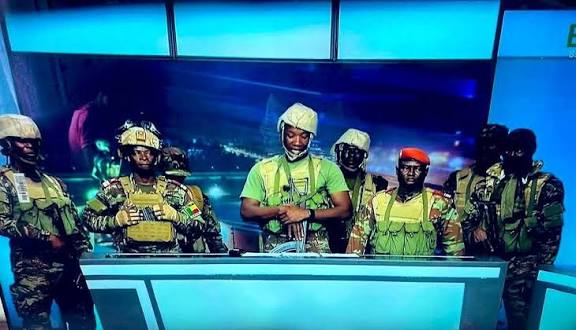
Between Imperialism and Military Rule: The Choiceless Political Reality in West Africa
By Chukwuemeka B. Eze and Jeggan Gray Johnson
West Africa stands today at a troubling crossroads where democratic aspirations collide with deep geopolitical tensions, failing institutions, and a new wave of military interventions- raising legitimate questions of the region’s democratic trajectory fifty years after its formation. Have we plateaued or plummeted into the age of the erosion of established normative procedures and democratic institutions, or is the regional experiment in a stage of reflection of deeper, ongoing challenges? Are citizens confronting systems that they perceive as imperial impositions and using whatever means available to them to resist? Or are they facing a crisis of democracy itself, a legitimacy crisis stemming from civil rule that often masks authoritarian tendencies? Why are military coups predominantly re-emerging in Francophone countries? Is this a coincidence, or does it reveal unresolved histories of external influence, entrenched political economies or distinctive patterns of state–society relations in these contexts? In whose name and under whose mandate do political elites continue to hold power? Why are we so quick to dismiss the military as being outside of the political system when, in fact, it is an institution shaped by the same social, economic and political dynamics as the rest of society? To what extent does our discourse artificially separate civilians from soldiers, rather than examining the broader governance ecosystem that produces both?
Citizens increasingly find themselves trapped between three unappealing forces—the entrenched culture of ‘electoral despotism’, external imperial influence and internal military domination. The trilateral dilemma has produced a disturbing condition: a choiceless choice, where none of the options seem incapable of delivering stability, dignity, peace and security or even genuine sovereignty.
The Long Shadow of Imperialism: More than six decades after independence, imperial legacies remain deeply embedded in West Africa’s political and economic structures. Former colonial powers continue to exert influence through aid conditionalities, control of extractive industries, military cooperation agreements, and political alliances that safeguard their strategic interests. In countries like Mali, Niger, Burkina Faso and Benin, resentment toward external interference; particularly from France has grown into a widespread political sentiment.
Economic dependence, currency constraints (such as the CFA franc), and foreign troops stationed on African soil reinforce the perception that the region’s sovereignty remains compromised. This has created fertile ground for anti-imperialist rhetoric, often championed by populist actors and military juntas who exploit these grievances to gain legitimacy.
The Return of Soldiers to Politics: The last decade has seen a resurgence of military takeovers in the region. Coups in Mali, Guinea, Burkina Faso, Niger, representing a largest coup belt in the world, and recently attempted interventions in Benin- a socio-political enigma and Guinea Bissau- the region’s narco-state, reflect a collapse of public trust in democratic systems perceived as kleptocratic, ineffective, and elite-controlled. Many West Africans, frustrated by insecurity, poverty, and government failure, initially welcomed soldiers as “corrective forces.” But military rule often replaces one form of authoritarianism with another and characterised by restricted freedoms, politicized security apparatus, uncertain transition timelines, limited economic vision and opportunity, heavy reliance on foreign military partners (Russia, Turkey, Gulf states) and debt, overshadowed by a youth bulge threatening to burst at the seams. e. Thus, the promise of liberation from imperialism frequently gives way to new dependencies and domestic authoritarianism, and ultimately, policy incoherence, confusion and instability.
The Choiceless Choice: The tragedy is that citizens are forced to choose between very difficult and perhaps inferior alternatives: Imperialism, which undermines sovereignty and reinforces structural inequalities, the electoral despotism- where power remains concentrated within a cabal or small host of elites, and Military rule, which suspends constitutional order and democratic rights. All option addresses the core issues driving instability: weak governance, unemployment, fractured national identities, extremist threats, and the absence of economic diversification. In this vacuum, West Africans face a situation where every available choice feels imposed, not freely made.
The Geopolitical Chessboard: Part of the crisis stems from the region’s growing importance in global geopolitics. West Africa has become a stage for competition among major powers: France and the EU seek to preserve influence, The United States prioritizes counterterrorism, Russia positions itself as an anti-West alternative, China expands via infrastructure loans, and the eventual confiscation of strategic minerals anchored in the blue and green economies, Gulf states and Turkey enter with economic and military interests and the list continues to expand. These competing agendas pull governments in different directions, leaving citizens with little say over the region’s strategic direction.
The Decline of Democratic Credibility: Democracy in West Africa is in crisis not merely because of coups, but because a leadership pandemic. The region has a critical and morally bankrupt leadership. of Manipulated constitutions, electoral fraud, corruption scandals, and impunity have hollowed out institutions. When democratic governments fail to deliver development or justice, the military’s rhetoric of “rescue missions” becomes appealing. Yet these interventions ultimately produce another cycle of disillusionment.
What Real Sovereignty Requires: Breaking this cycle demands a new political imagination—one rooted in African agency, not external dictates or military paternalism. A pathway to genuine sovereignty includes: Strengthening democratic institutions beyond elections, economic independence, especially through value-added industries, regional security cooperation less reliant on external forces, civic education and accountability systems, that are citizenry driven, that restore public trust, as well as a pan-African political consciousness capable of resisting both imperial pressure and internal authoritarianism. The future depends on reclaiming democracy as a tool of liberation, not a façade for elite capture.
Conclusion: West Africa’s tragedy is not that it lacks alternatives, but that the region’s political trajectory has become trapped between two dominant and deeply flawed forces. Imperialism continues to shape its geopolitics and economy, while military rulers exploit public frustration to consolidate power. Together, they create a choiceless political reality where citizens struggle to find a path that protects both sovereignty and freedom. Yet within this crisis lies an opportunity: the chance to articulate a new political vision grounded in bold leadership, accountable governance, and regional solidarity. Reimagining democracy means going beyond periodic elections. It means nurturing institutions that are stronger than individuals and ensuring that power remains accountable to the people. It means prioritizing people’s power over that of statesmen, strengthening judicial independence, fortifying the institutions meant to protect democracy and ensuring that the exercise of power after elections truly serves citizens. Only then can West Africans move beyond the suffocating binary of imperialism and soldiers—and reclaim the right to choose their own future.
Chukwuemeka B. Eze is the Director for Democratic Futures in Africa and Jeggan Grey Johnson, Advocacy Advisor at the Open Society Foundations
Between Imperialism and Military Rule: The Choiceless Political Reality in West Africa


News
Several Killed, 45 Fulani Shelters Destroyed, Crops Razed In Targeted attack by suspected Mwaghavul miltia in Plateau Community
Several Killed, 45 Fulani Shelters Destroyed, Crops Razed In Targeted attack by suspected Mwaghavul miltia in Plateau Community
By Zagazola Makama
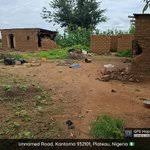
Troops of Operation Enduring peace have intensified security operations in Jwak Maitumbi community of Mangu Local Government Area of Plateau State following the killing of several fulani residents and destruction of about 45 Fulani residential shelters and large quantities of crops by suspected Mwaghavul militia.
The incident was reported at about 7:45 a.m. on Sunday, August 16, 2026, prompting troops of Sector 8, Operation Enduring Peace, deployed at Sabon Gari to move to the affected community.
A military security source told Zagazola Makama that upon arrival, the troops discovered that about 45 Fulani accommodation structures had been destroyed, while valuables belonging to the residents were allegedly looted by the assailants.
In the early hours of the attack, several residents were gunned down by the attackers before slaughtering them. The attack immediately triggered mass displacement with women and children and elderly ran for safety.
The assailants also reportedly entered farms belonging to Fulani residents and used cutlasses to destroy a large quantity of crops.
Following the incident, troops summoned the Galadima and youth leader of Jwak Maitumbi community, directing the community leadership to assist security agencies in identifying and producing those responsible for the attack.
The development is particularly sensitive because the conflict in parts of Plateau has frequently been characterised by tit-for-tat attacks, in which an attack on one community is followed by retaliation against another community, often resulting in further deaths, destruction of property and displacement.
The destruction of the shelters and crops could therefore become a trigger for revenge if affected residents or their associates believe that the perpetrators have not been identified or brought to justice. Failure to establish accountability could deepen perceptions of impunity and increase the temptation for affected communities to seek their own form of justice.
Plateau has experienced several episodes of this nature, with targeted attacks and reprisals often spreading beyond the location where the initial incident occurred. The danger is that the latest incident could similarly be interpreted through the lens of previous attacks rather than as an isolated criminal act.
The intervention was aimed at ensuring accountability and preventing possible reprisal attacks capable of escalating tensions between communities in the area.
Troops have continued to dominate the general area while engaging community and traditional leaders as part of efforts to de-escalate tensions, prevent retaliatory violence and restore calm.
Several Killed, 45 Fulani Shelters Destroyed, Crops Razed In Targeted attack by suspected Mwaghavul miltia in Plateau Community
News
Troops Repel ISWAP Attack on Mandaragirau FOB, Detonate IED During Clearance Operation in Borno
Troops Repel ISWAP Attack on Mandaragirau FOB, Detonate IED During Clearance Operation in Borno
By Zagazola Makama
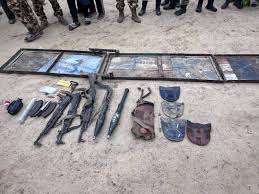
Troops of the 162 Amphibious Battalion under Operation Hadin Kai have successfully repelled an attack by suspected Boko Haram/ISWAP terrorists on Forward Operating Base (FOB) Mandaragirau in Borno State.
Security sources said the attack occurred at about 2:00 a.m. on August 15, 2026, when the terrorists launched a coordinated assault on the base from two separate fronts.
According to the sources, the troops, who were on high alert, immediately engaged the advancing terrorists after sighting them. The Battalion Commander reportedly led standby troops to reinforce ambush teams already deployed along likely enemy approaches.
A heavy exchange of fire ensued, during which the troops decisively repelled the attack on one axis, inflicting significant disruption on the assailants.
In a separate manoeuvre, another group of terrorists attempted to bypass the ambush positions and breach the camp through the river line. However, they were also successfully repelled by the troops, forcing the attackers to withdraw in disarray.
Following the encounter, troops pursued the fleeing terrorists, but the operation was later halted due to poor visibility and difficult terrain. Security sources said further exploitation of the area would continue at first light.
No casualties were recorded on the side of the troops, while the number of terrorist casualties could not be immediately ascertained. The situation in the general area was described as calm but highly unpredictable.
Meanwhile, troops conducting follow-up clearance operations along the Mandaragirau–Kana axis on the morning of August 15 discovered and safely detonated a command-detonated improvised explosive device (IED) suspected to have been planted in anticipation of troop reinforcement movement.
Security sources said the IED was detected short of a bridge along the route and was safely neutralised by the clearance team before it could be triggered.
In a related development, troops also discovered the corpse of a civilian who had reportedly fallen victim to another IED planted by the terrorists in the area. The remains were found a few metres from the detonation site during the clearance operation.
Authorities said detailed assessment and photographic documentation of the incidents would be provided as troops conclude ongoing clearance operations in the axis.
Troops Repel ISWAP Attack on Mandaragirau FOB, Detonate IED During Clearance Operation in Borno
ISWAP Fighter Surrenders in Borno After Eight Months in Terrorist Camp
By Zagazola Makama
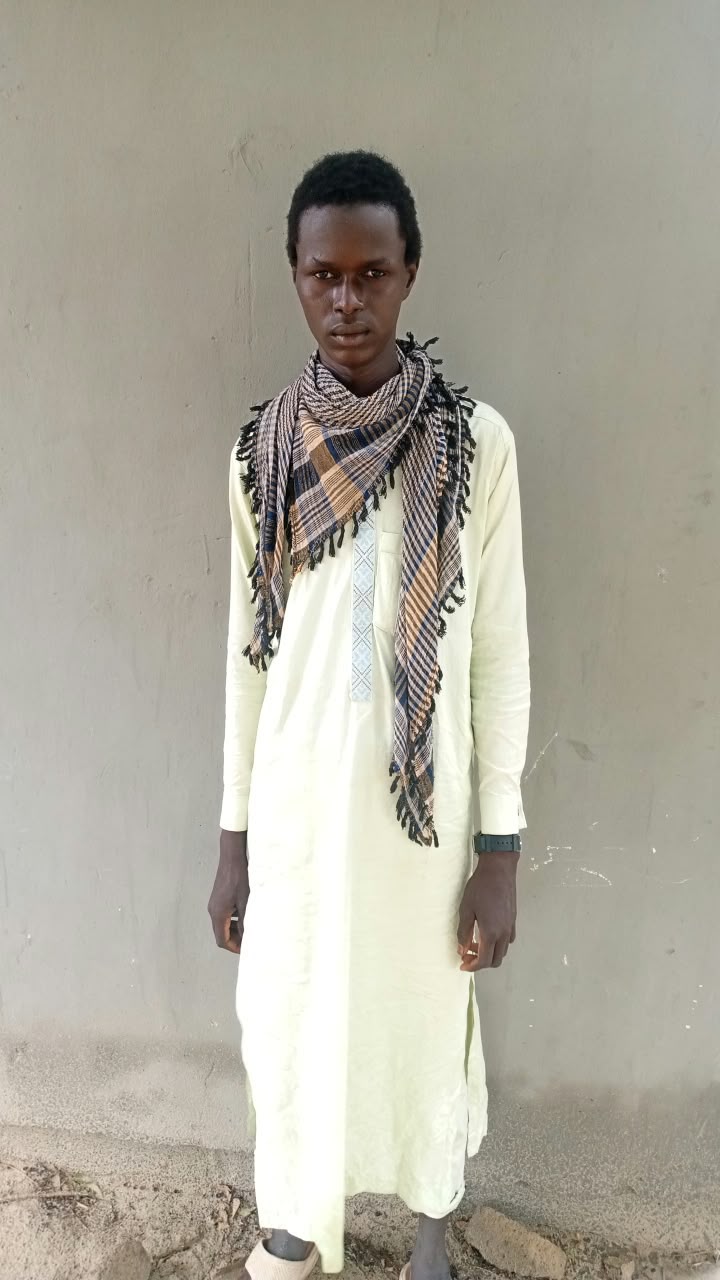
A 25-year-old suspected Islamic State West Africa Province (ISWAP) fighter has surrendered to troops in Monguno Local Government Area of Borno State after spending about eight months with the terrorist group.
The surrendered fighter, identified as Alhaji Ali Gambo Kanuri, a native of Ngarinna village in Monguno LGA, reportedly joined the group about eight months ago after being introduced by a friend.
According to military sources, Gambo later became disillusioned with life within the terrorist group and decided to abandon the organisation.
His decision to surrender was reportedly influenced by the difficult conditions confronting members of the group amid sustained military operations against terrorist enclaves in the North-East.
Gambo eventually made his way out of the terrorist-controlled area and surrendered to troops in Monguno town, where he was taken into custody for further processing.
Military sources said the former fighter was subsequently transferred to the appropriate authorities for further action in line with established procedures for persons who voluntarily disengage from terrorist groups.
His surrender comes amid sustained military pressure against Boko Haram and ISWAP elements operating across Borno State, with security forces continuing clearance and counter-terrorism operations in various parts of the North-East.
Authorities have continued to encourage individuals associated with terrorist groups who are willing to disengage from violence to surrender peacefully and submit themselves to the established screening and rehabilitation processes.
ISWAP Fighter Surrenders in Borno After Eight Months in Terrorist Camp

Several Killed, 45 Fulani Shelters Destroyed, Crops Razed In Targeted attack by suspected Mwaghavul miltia in Plateau Community

Troops Repel ISWAP Attack on Mandaragirau FOB, Detonate IED During Clearance Operation in Borno

ISWAP Fighter Surrenders in Borno After Eight Months in Terrorist Camp

Roger Federer’s Shock as DNA Results Reveal Myla and Charlene Are Not His Biological Children

THE PLIGHT OF FARIDA

FAILED COUP IN BURKINA FASO: HOW TRAORÉ NARROWLY ESCAPED ASSASSINATION PLOT AMID FOREIGN INTERFERENCE CLAIMS
-
 News2 years ago
Roger Federer’s Shock as DNA Results Reveal Myla and Charlene Are Not His Biological Children
-
Opinions5 years ago
THE PLIGHT OF FARIDA
-
 News1 year ago
FAILED COUP IN BURKINA FASO: HOW TRAORÉ NARROWLY ESCAPED ASSASSINATION PLOT AMID FOREIGN INTERFERENCE CLAIMS
-

 News2 years ago
EYN: Rev. Billi, Distortion of History, and The Living Tamarind Tree
-
 Opinions5 years ago
POLICE CHARGE ROOMS, A MINTING PRESS
-

 ACADEMICS2 years ago
A History of Biu” (2015) and The Lingering Bura-Pabir Question (1)
-

 Columns2 years ago
Army University Biu: There is certain interest, but certainly not from Borno.
-

 Politics1 year ago
2027: Why Hon. Midala Balami Must Go, as Youths in Hawul and Asikira/Uba Federal Constituency Reject ₦500,000 as Sallah Gift
