
News
NGO Says Taiwan Representative in Nigeria Has No Diplomatic Recognition in Line with One-China Policy

NGO Says Taiwan Representative in Nigeria Has No Diplomatic Recognition in Line with One-China Policy
By: Michael Mike
A non-governmental organization, SINOAFRIK Media Documentation and Development Network, has expressed concern over the misrepresentation of a recent visit by Andy Liu, the Head of the Taipei Trade Office in Nigeria, to Nigeria’s First Lady, Remi Tinubu as a diplomatic visit.
The organisation, in a press statement on Monday signed by its Executive Director, Austin Maho, said the portrayal of the visit as a diplomatic engagement between Taiwan and Nigeria is misleading and does not reflect the realities of Nigeria’s foreign policy.
SINOAFRIK stated that Taiwan is an inseparable part of the People’s Republic of China, and the Taipei Trade Office in Lagos operates as a non-diplomatic entity. It stressed that Nigeria does not recognize any entity referred to as the “Taiwanese government.”
It added that: “Any implication of bilateral collaboration with such an entity is seen as contradictory to Nigeria’s longstanding foreign policy, which has been grounded in mutual respect for the One-China Principle since its adoption in 1971.”
According to the statement, the One-China Principle asserts that there is only one China, with Taiwan being an integral part of it, and recognizes the People’s Republic of China as the sole legitimate government of China. This position is reinforced by United Nations General Assembly Resolution 2758 from 1971, alongside historical documents such as the 1943 Cairo Declaration and the 1945 Potsdam Proclamation.
SINOAFRIK reiterated that the One-China Principle has been the foundation of Nigeria-China relations for over five decades.
“At the 2024 Forum on China-Africa Cooperation (FOCAC) Summit in Beijing, Nigeria and China elevated their relationship to a Comprehensive Strategic Partnership, where Nigeria reaffirmed its commitment to the One-China Principle and its opposition to any form of Taiwan independence,” the statement noted.
The organisation pointed out that the People’s Republic of China has been a vital partner in Nigeria’s development, contributing significantly to key sectors such as infrastructure, agriculture, technology, trade, and human capital development. It said Nigeria is China’s second-largest trading partner in Africa, with bilateral trade exceeding $20 billion annually.
SINOAFRIK urged the Nigerian media and the public to avoid terms like “Taiwanese Ambassador to Nigeria,” “Taiwanese government,” or “Embassy of Taiwan in Nigeria,” as these terms imply the existence of “two Chinas” and are inconsistent with Nigeria’s foreign policy.
“The media must uphold objectivity, fairness, and accuracy in their reporting,” the statement added.
NGO Says Taiwan Representative in Nigeria Has No Diplomatic Recognition in Line with One-China Policy


Zulum Appoints Engr Peter Samuel as General Manager BOSAMA
By: Our Reporter
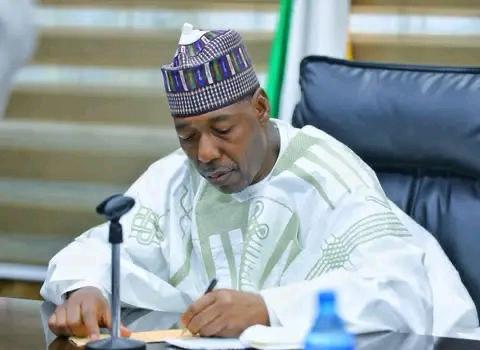
Borno State Governor, Professor Babagana Umara Zulum, has approved the appointment of Engr Peter Samuel, MNSE, MNIAE, as the General Manager of Borno State Agricultural Mechanization Authority (BOSAMA).
In a statement by the Special Adviser to the Governor on Media, Dauda Iliya, the appointment was based on Engr Samuel’s outstanding professional competence, proven track record, and experience in agricultural engineering and mechanization.
The statement noted that Engr Samuel possesses the requisite qualifications, technical expertise and leadership capacity required to reposition BOSAMA in line with Governor Zulum’s agricultural transformation agenda.
The newly appointed General Manager is an Agricultural Engineer with academic, professional, administrative, and practical experience in agricultural mechanization, farm power and machinery, irrigation engineering, and agricultural infrastructure development.
He holds a Master of Engineering (M.Eng.) in Farm Power and Machinery from Joseph Sarwuan Tarka University, Makurdi (formerly the Federal University of Agriculture, Makurdi), a Postgraduate Diploma in Farm Management and Production Economics from Nasarawa State University, and a Bachelor of Engineering (B.Eng.) in Agricultural and Environmental Resources Engineering from the University of Maiduguri.
Engr Samuel has distinguished himself through years of meritorious service in teaching, research, agricultural engineering practice, and project implementation. He currently serves as a Lecturer in Farm Power and Machinery at Ramat Polytechnic, Maiduguri.
Over the years, he has held several strategic leadership positions, including General Manager of a commercial agricultural enterprise, Project Coordinator, Programme Coordinator, and Consultant on numerous agricultural development interventions implemented by reputable national and international organisations.
He is a member of the Nigerian Society of Engineers (NSE) and the Nigerian Institution of Agricultural Engineers (NIAE).
Governor Babagana Zulum congratulated the new General Manager on his appointment and urged him to deploy his wealth of knowledge, technical expertise, and experience in agricultural mechanization to strengthen the operations of BOSAMA
Zulum Appoints Engr Peter Samuel as General Manager BOSAMA
Troops Arrest Suspected Military Impostor in Katsina
By Zagazola Makama
Troops of 17 Brigade have arrested a suspected military impostor during a fighting patrol in Malumfashi Local Government Area.
Security sources told Zagazola Makama that the suspect was apprehended at about 1:30 p.m. on July 4 by troops deployed at the Forward Operating Base (FOB) Malumfashi while conducting routine patrols within Malumfashi town.

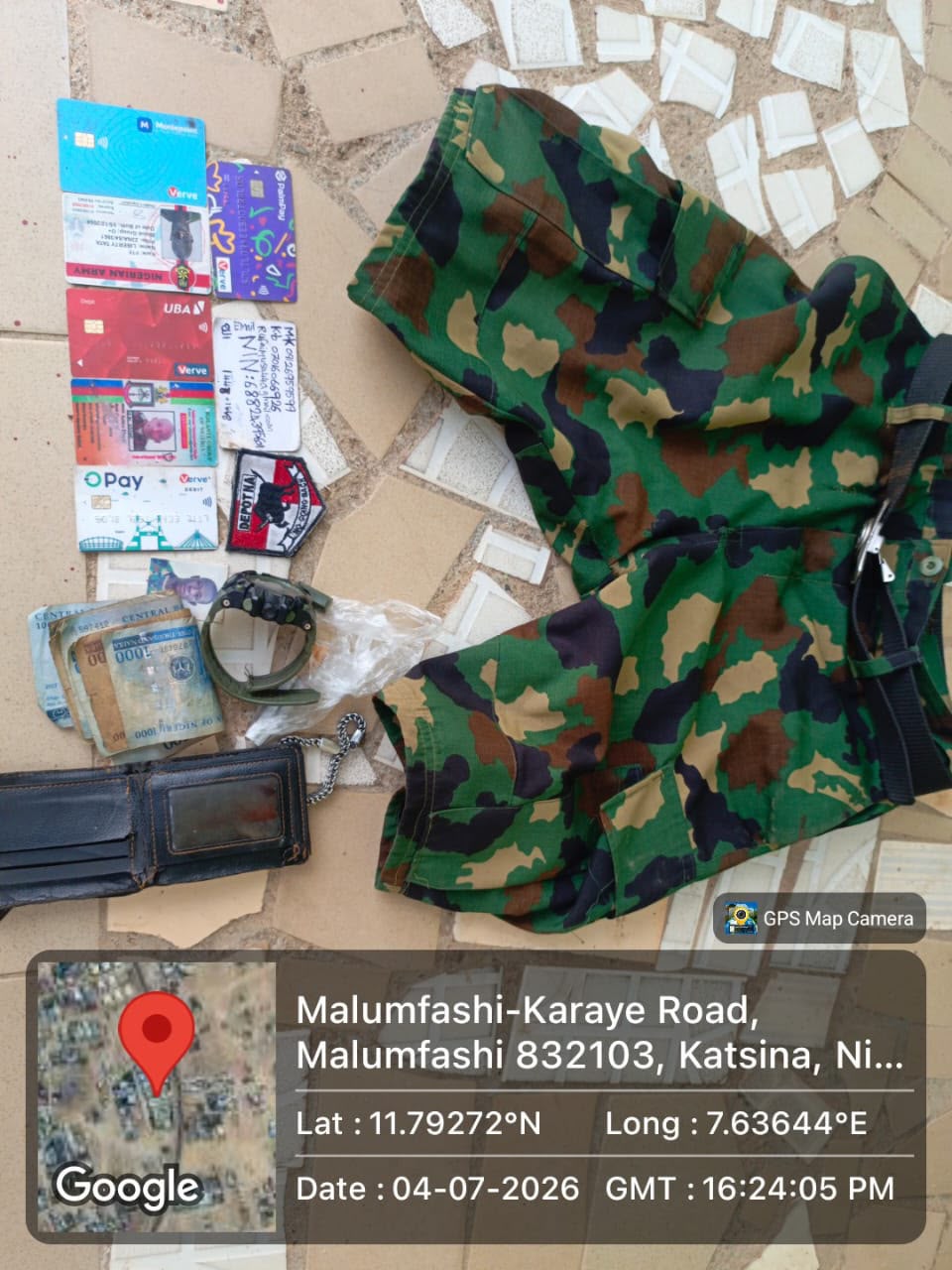
According to the sources, the suspect was intercepted while wearing a woodland camouflage three-quarter short, raising suspicion among the troops.
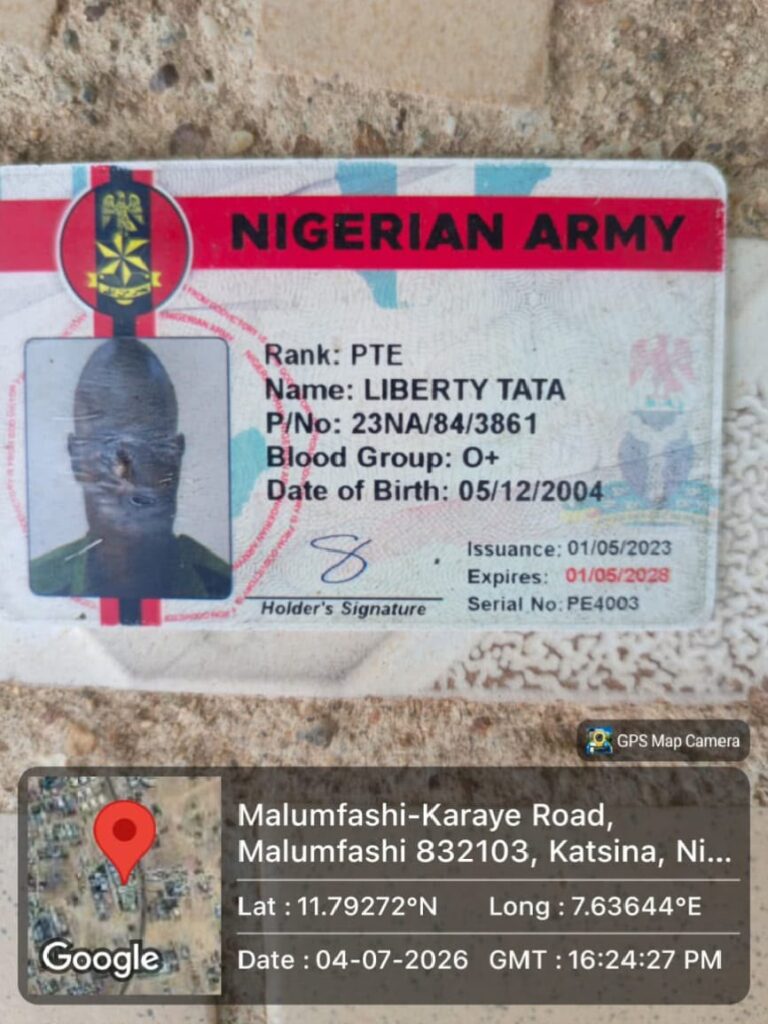
A search conducted on the suspect led to the recovery of a fake Nigerian Army identity card, four Automated Teller Machine (ATM) cards, one woodland camouflage three-quarter short, a wristwatch and the sum of ₦17,000.
The suspect and the recovered exhibits are currently in military custody pending further investigation.
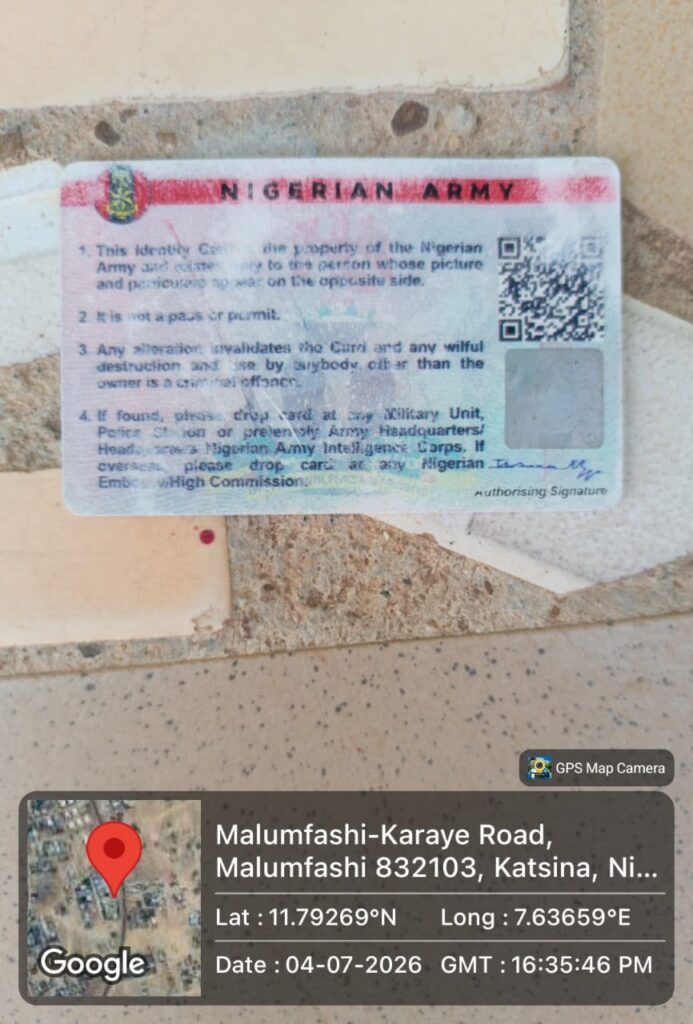
Military sources said the arrest forms part of ongoing efforts to curb impersonation of security personnel and other criminal activities within the area.
Troops Arrest Suspected Military Impostor in Katsina

Troops Recover 50 Rustled Cattle, Repel Suspected Rustlers in Kaduna
By Zagazola Makama
Troops deployed at the Forward Operating Base (FOB) Kankomi have recovered 50 rustled cattle after repelling suspected cattle rustlers during an ambush operation in Chikun Local Government Area.
Security sources told Zagazola Makama that the troops responded to a distress call at about 9:55 a.m. on July 4 over the activities of suspected rustlers at Ungwan Gontu community.
According to the sources, the troops swiftly laid an ambush and made contact with the fleeing suspects, forcing them to abandon the stolen livestock and escape into the surrounding area.
During the operation, the troops recovered 50 rustled cattle, which were subsequently identified and handed over to their rightful owner.
Military sources said efforts are ongoing to track down the fleeing suspects as security operations continue to combat cattle rustling and other criminal activities across Kaduna State.
Troops Recover 50 Rustled Cattle, Repel Suspected Rustlers in Kaduna

Zulum Appoints Engr Peter Samuel as General Manager BOSAMA

DSS Frees Cardiac Surgeon Martin Aghaji on Bail Over Alleged Economic Crime

Troops Arrest Suspected Military Impostor in Katsina

Roger Federer’s Shock as DNA Results Reveal Myla and Charlene Are Not His Biological Children

THE PLIGHT OF FARIDA

FAILED COUP IN BURKINA FASO: HOW TRAORÉ NARROWLY ESCAPED ASSASSINATION PLOT AMID FOREIGN INTERFERENCE CLAIMS
-
 News2 years ago
Roger Federer’s Shock as DNA Results Reveal Myla and Charlene Are Not His Biological Children
-
Opinions4 years ago
THE PLIGHT OF FARIDA
-
 News1 year ago
FAILED COUP IN BURKINA FASO: HOW TRAORÉ NARROWLY ESCAPED ASSASSINATION PLOT AMID FOREIGN INTERFERENCE CLAIMS
-

 News2 years ago
EYN: Rev. Billi, Distortion of History, and The Living Tamarind Tree
-
 Opinions5 years ago
POLICE CHARGE ROOMS, A MINTING PRESS
-

 ACADEMICS2 years ago
A History of Biu” (2015) and The Lingering Bura-Pabir Question (1)
-

 Columns2 years ago
Army University Biu: There is certain interest, but certainly not from Borno.
-

 Politics1 year ago
2027: Why Hon. Midala Balami Must Go, as Youths in Hawul and Asikira/Uba Federal Constituency Reject ₦500,000 as Sallah Gift
