
News
NHRC Advises Media on Reporting of Migration Issues

NHRC Advises Media on Reporting of Migration Issues
By: Michael Mike
The media has been advised to be cautious in reporting migration issues, ensuring that it is not used to perpetuate harmful stereotypes but rather promote empathy and understanding.
Speaking at a capacity building of the media on human rights based approach to migration and prevention of trafficking in persons and smuggling of migrants, organized by the National Human Rights Commission (NHRC) in conjunction with United Nations Office on Drugs and Crime (UNODC), United Nations Human Rights Office of the High Commissioner (OHCHR)
and Protection of Migrants (PROMIS), the Executive Secretary of NHRC, Chief Tony Ojukwu told journalists at the training that:
“Your reporting can either perpetuate harmful stereotypes or promote empathy and understanding.”
He added that: “We recognize the vital role media plays in shaping policy discourses that affect how people act. Through accurate, sensitive, and solutions-oriented storytelling, you can help dismantle the architecture of human trafficking, challenge xenophobic narratives, and advocate for the rights and dignity of migrants.”
He explained that the training is organized with the following objectives: To enhance understanding on Trafficking in Persons (TiP) and Smuggling of Migrants (SoM) and human rights-based approach to migration; To equip media agencies with the skills and knowledge to report ethically, accurately, and sensitively on issues of trafficking in persons and smuggling of migrants.
Ojukwu said: “Migration is a contentious phenomenon that is multifaceted with millions of individuals residing and working in countries outside their own. Migration is inherent right of all human beings and has been in existence for decades, human rights is cross cutting in all migratory movements primarily because human rights are universal, and everyone on the move is entitled to the protection of their rights as guaranteed by National Regional and international laws.
“Migration is complex and often divisive, and negative attitudes towards migrants, coupled with exclusionary practices, have escalated in recent years. With hundreds of thousands of people embarking on unsafe routes each year in search of better opportunities, the need for an in-depth understanding of migration and its connection to human rights has never been greater.”
He further explained that: “The Human Rights Based Approach (HRBA) is a conceptual framework aimed at promoting and protecting human rights based on international standards. It puts human rights and corresponding state obligations in policy, empowering migrants in vulnerable situations to participate in decision-making processes and hold duty-bearers accountable. A HRBA to migration prioritizes treating migrants as human beings, underscored by principles of non-discrimination, empowerment, participation, inclusion, and accountability.”
He said: “Media, as a key influencer of public opinion and awareness, plays a crucial role in framing narratives and policy discourses that affect public actions, thoughts, policymaker priorities, and migrant decisions. The media disseminates information while highlighting the challenges, aspirations, and vulnerabilities of migrants, fostering a deeper understanding of migration drivers. This influences public perception and the design of programmes and initiatives by policymakers. Media voices are essential in shaping opinions and exposing human rights violations impacting migrants.
“To understand and report on discriminatory practices and the unequal power distribution underlying trafficking and smuggling of migrants, which maintain impunity for perpetrators and deny justice to victims, it is essential to build media capacity on HRBA to migration. This enables understanding of how human rights violations arise throughout the trafficking cycle and how states’ obligations under international human rights law are engaged.”
On her part, the Senior Human Rights Adviser, Office of the UN Resident/Humanitarian Coordinator, Adwoa Kufuor-Owusu said: “Studies show Nigerian media outlets representation of migrants and migrant issues have been patchy.
“Among other challenges, the frequency of newspaper coverage of migrants is often low and that when they are reported, migrants are not quoted or interviewed. Journalists often rely heavily on government sources. There is also little attention given to why migrants were migrating in the first place.”
She lamented that often migrants are described in reports as “returnees”, “evacuees”, “stranded Nigerians abroad”, or “illegal migrants” without contextualisation, adding that: “Migrants are portrayed as vulnerable or stranded individuals in need of rescue or intervention.”
She told the journalists that: “Throughout the two days, you will hear about migration terminology, gender-sensitive reporting, ethical photojournalism, and reporting vulnerable sources of information, all forming the basis of human-rights based approach. OHCHR and the UN system as a whole have resources that can assist you in taking this workshop forward and broaden coverage and news content related to migration.”
NHRC Advises Media on Reporting of Migration Issues



Suspected militia kill motorcyclist along Nyong-Bodel road in Plateau
By Zagazola Makama
An unidentified person was killed by suspected militias along the Nyong-Bodel road in Bokkos Local Government Area of Plateau State.
Security sources told Zagazola Makama that the incident occurred at about 3:50 p.m. on Sept. 4, 2026.
According to the sources, troops of Sector 5, Operation Enduring Peace, deployed at Bodel, responded to a report of an attack and killing of the victim along the road.
The troops arrived at the scene and discovered the victim’s corpse alongside his motorcycle, while the suspected attackers fled after sighting the troops.
The corpse was evacuated to a mortuary, while efforts are ongoing to establish the identity of the victim and apprehend the assailants.
Security agencies are also intensifying patrols and surveillance along the route to prevent further attacks and restore confidence among residents and road users.
Suspected militia kill motorcyclist along Nyong-Bodel road in Plateau

Troops launch rescue operation after hospital matron kidnapped in Plateau
By Zagazola Makama
Troops of Sector 5, Operation Enduring Peace, have launched a rescue operation following the abduction of Mrs Sarah Dalang, a matron at Cottage Hospital, Bokkos, Plateau State.
Security sources told Zagazola Makama that the incident occurred at about 2:20 p.m. on Sept. 4, 2026.
According to the sources, the troops responded to a report of the kidnapping and mobilised alongside other security agencies to commence search and rescue operations.
The security personnel conducted operations around suspected hideouts of the kidnappers but no contact was established with the criminals.
Efforts are ongoing to track the kidnappers, locate the victim and secure her safe release.
Security agencies have continued to intensify operations across Bokkos and adjoining areas to disrupt criminal activities and protect residents.
Troops launch rescue operation after hospital matron kidnapped in Plateau
Troops neutralise terrorist, recover four motorcycles in Katsina
By Zagazola Makama
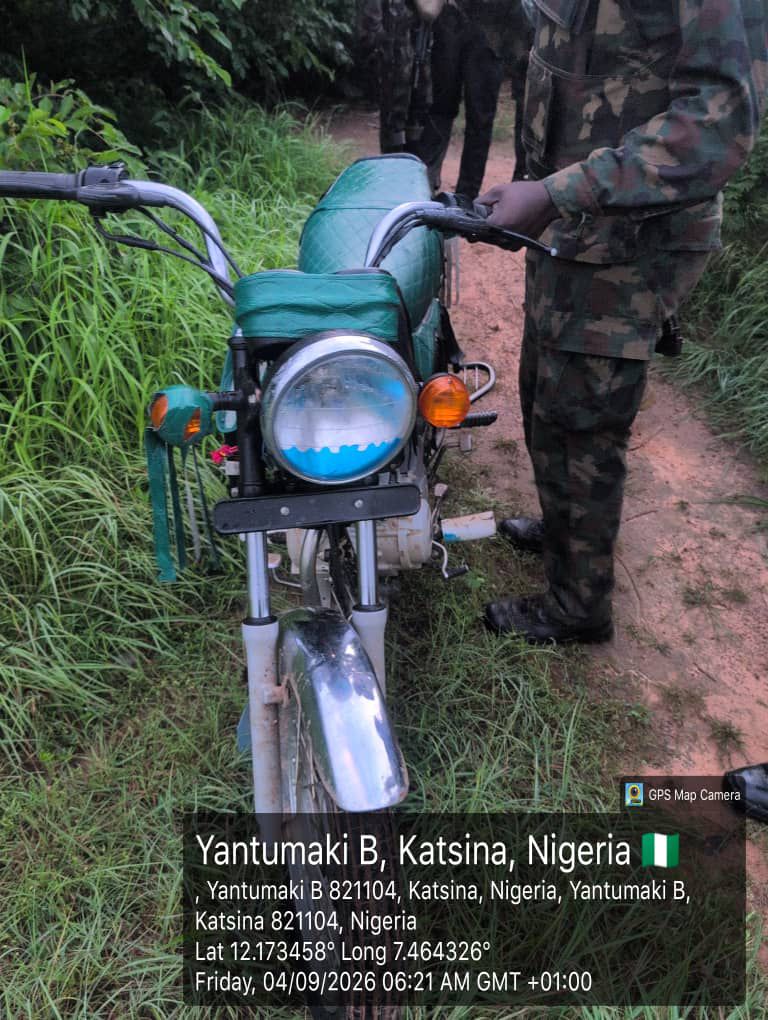
Troops of Sector 1, Joint Task Force North West, Operation Fansan Yamma, have neutralised a terrorist and recovered four motorcycles and other items during a dawn offensive operation in Dan Musa Local Government Area of Katsina State.
The operation was conducted on Sept. 4, 2026, following credible intelligence on the presence of terrorists around the Yantumaki Forest area.
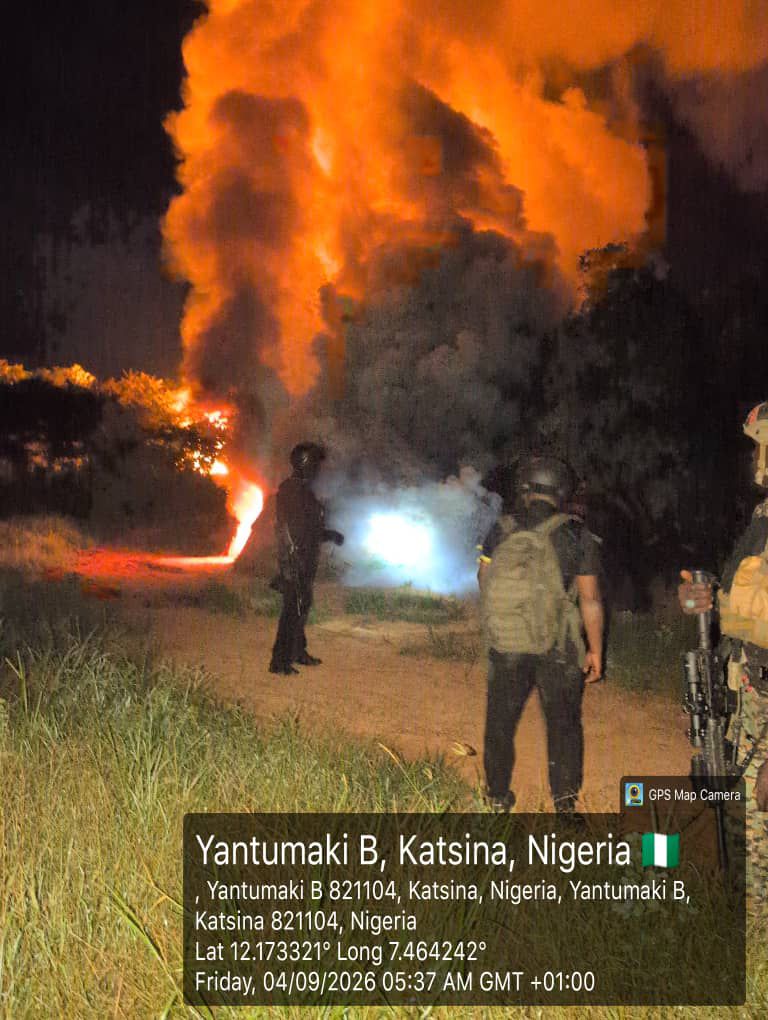
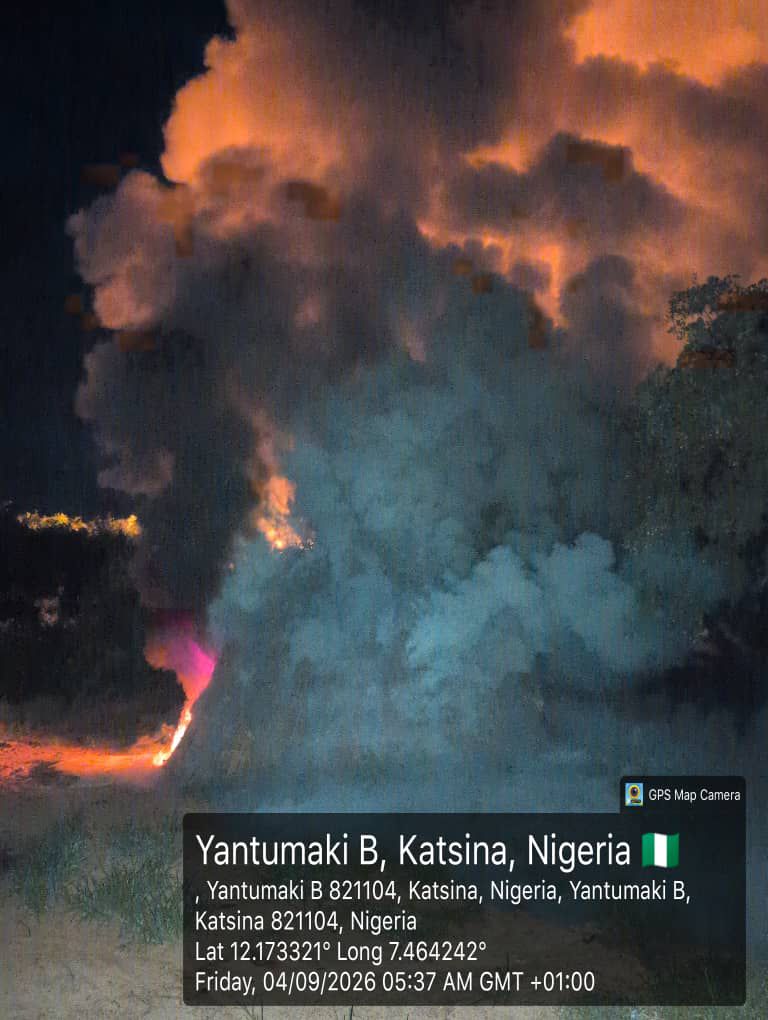
According to security sources, the troops launched a coordinated offensive against the terrorists and engaged them with superior firepower, forcing the surviving elements to flee into the surrounding bushes.
During the subsequent exploitation of the area, the troops confirmed the neutralisation of one terrorist and recovered four motorcycles, one mobile phone and five empty intravenous drip containers.
The recovered medical containers were suspected to have been used in treating wounded terrorists operating in the area.
The operation is part of ongoing efforts by Operation Fansan Yamma to sustain pressure on terrorist networks, degrade their operational capabilities and deny them freedom of movement within the Joint Operations Area.
The theatre has also urged members of the public to continue providing credible and timely information to security agencies to support ongoing operations and facilitate the eradication of terrorist elements across the Joint Operations Area.
Troops neutralise terrorist, recover four motorcycles in Katsina

Suspected militia kill motorcyclist along Nyong-Bodel road in Plateau

Troops launch rescue operation after hospital matron kidnapped in Plateau

Troops neutralise terrorist, recover four motorcycles in Katsina

Roger Federer’s Shock as DNA Results Reveal Myla and Charlene Are Not His Biological Children

THE PLIGHT OF FARIDA

FAILED COUP IN BURKINA FASO: HOW TRAORÉ NARROWLY ESCAPED ASSASSINATION PLOT AMID FOREIGN INTERFERENCE CLAIMS
-
 News2 years ago
Roger Federer’s Shock as DNA Results Reveal Myla and Charlene Are Not His Biological Children
-
Opinions5 years ago
THE PLIGHT OF FARIDA
-
 News1 year ago
FAILED COUP IN BURKINA FASO: HOW TRAORÉ NARROWLY ESCAPED ASSASSINATION PLOT AMID FOREIGN INTERFERENCE CLAIMS
-

 News2 years ago
EYN: Rev. Billi, Distortion of History, and The Living Tamarind Tree
-
 Opinions5 years ago
POLICE CHARGE ROOMS, A MINTING PRESS
-

 ACADEMICS3 years ago
A History of Biu” (2015) and The Lingering Bura-Pabir Question (1)
-

 Columns3 years ago
Army University Biu: There is certain interest, but certainly not from Borno.
-

 Politics1 year ago
2027: Why Hon. Midala Balami Must Go, as Youths in Hawul and Asikira/Uba Federal Constituency Reject ₦500,000 as Sallah Gift
