
News
NHRC, NGO Calls for Abolition of Death Penalty for Female

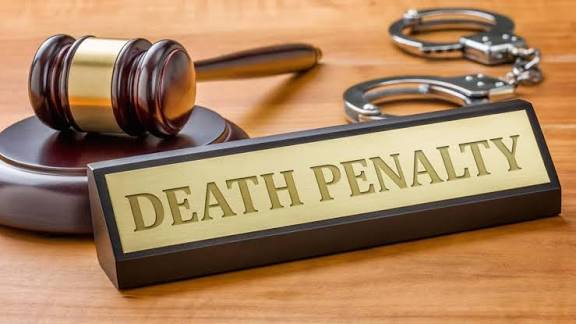
NHRC, NGO Calls for Abolition of Death Penalty for Female
By: Michael Mike
Hope Behind Bars Africa, in collaboration with the National Human Rights Commission (NHRC), has called for the abolition of death penalty for the female in the country.
The call was made during a validation meeting on research findings organized by Hope Behind Bars Africa in collaboration with the NHRC.
The Executive Director of Hope Behind Bars Africa, Funke Adeoye, called for urgent reforms in Nigeria’s criminal justice system and stronger protection for women facing the death penalty, describing capital punishment as “the most irreversible form of human rights violation.”
Adeoye made the call in Abuja during an event commemorating the World Day Against the Death Penalty, organised in partnership with the NHRC, the Legal Aid Council, and the Nigerian Correctional Service, with support from the Australian High Commission, the Embassy of Belgium, and the French Embassy.
She commended the NHRC for its consistent collaboration over the years, noting that the Commission has remained a steadfast ally in advancing the rights of vulnerable individuals across the country.
Reflecting on her organisation’s work, Adeoye explained that Hope Behind Bars Africa has spent the past seven years tackling systemic injustices within Nigeria’s criminal justice system.
“As an organisation, we have focused on ensuring access to justice for the most vulnerable. We have supported the reduction of pretrial detainees, advocated for fair trials, and provided legal aid to indigent inmates. But among all forms of human rights violations, the death penalty stands out because it is permanent. If an innocent person is imprisoned, there’s always a chance to correct that wrong. But once someone is executed, that mistake can never be undone,” she said.
She revealed that her organisation, with support from the World Coalition Against the Death Penalty, recently conducted research into the experiences of women on death row across Nigeria, uncovering deep-rooted gender discrimination within the justice system.
The research was led by Ms. Ogechi Ogu and Professor Ibrahim Bello ,conducted in collaboration with the National Human Rights Commission, and supported by the French Development Agency, exposes how women on death row face compounded injustices rooted in gender discrimination, poverty, and weak access to justice.
“Our findings show that women in the criminal justice system face intersecting forms of discrimination. Because there are fewer women in detention, their needs are often ignored. The system is patriarchal by design ,it was not built with women in mind and that means their cases, their mental health, and even their rehabilitation receive little attention,” she said.
According to the study, Nigeria’s plural legal system comprising statutory, customary, and Sharia laws creates inconsistencies in justice delivery, particularly for women. Although they constitute a minority of death row inmates, their experiences reveal systemic inequalities in investigation, trial, and sentencing.
The study, which surveyed 60 women on death row across 10 states, found that 47 percent were aged 18–35, while over one-third had no formal education. Most were mothers and primary caregivers, meaning their incarceration causes severe family and social disruption.
Many worked in low-income, informal jobs such as trading, catering, or farming before imprisonment, reflecting their economic vulnerability.
Structural factors like gender-based violence, forced marriage, and economic dependency were found to heavily influence the women’s pathways to crime and conviction. Over a third had experienced domestic abuse or coercion, and in some cases, their offences were directly linked to self-defence or abuse-related trauma.
Within the justice system, 75 percent of the women did not understand the laws under which they were charged, 85 percent felt the law was unfair to women, and more than half described their trials as non-transparent. A significant number noted that the male-dominated judicial structure negatively affected their cases.
The report also highlighted the severe stigma and abandonment faced by women after conviction, especially in cases involving adultery or domestic disputes.
Many inmates’ children suffered disrupted education, unstable care, and psychological trauma as a result of their mothers’ incarceration.
Most women viewed the death penalty as unfair and ineffective, with over 80 percent preferring rehabilitation-based alternatives such as imprisonment with vocational training and psychosocial support.
Adeoye disclosed that when the group wrote to the Nigerian Correctional Service seeking approval to carry out the study, records showed about 85 women on death row nationwide. The goal, she said, was to document their experiences and gather evidence to inform justice reforms.
Turning to recent developments, Adeoye applauded President Bola Tinubu’s decision to grant pardons to some death row inmates, calling it a step in the right direction and also acknowledging that for over nine years Nigeria has not executed prisoners sentenced to death.
“We are grateful to the President for exercising his constitutional powers under Section 175 to grant pardons. But we must also be honest: issues of power and privilege often shape who gets mercy. Take the case of Miriam Sander she had good lawyers and a story that made headlines. Many of the women we work with don’t have that luxury. Some never met their lawyers before trial, and others were represented by under-resourced legal aid officers who simply couldn’t manage capital cases. These women are the forgotten ones,” she said.
Adeoye concluded by reaffirming Hope Behind Bars Africa’s commitment to continue advocating for fairer trials, humane treatment, and reform within Nigeria’s justice system.
“Today’s event is not just about marking the World Day Against the Death Penalty. It is a reminder that justice must serve everyone equally, not only those with power or visibility. We want this research and our advocacy to spark a movement that restores dignity and hope to people who have been written off by society. Our goal is simple: a justice system that values life, fairness, and redemption,” she said.
The Executive Secretary of the National Human Rights Commission, Dr. Tony Ojukwu (SAN), represented by Harry Obe, emphasized that the death penalty has failed to deliver justice or deter crime.
He aligned with the global theme for the year, “The Death Penalty Protects No One,” to stress that executions do not make societies safer, nor do they address the root causes of criminal behavior.
“Evidence from around the world, and indeed from our own context here in Nigeria, shows that the death penalty does not truly protect anyone. It has not significantly deterred crime and often fails to address the underlying causes of violence and insecurity. Justice should be restorative rather than retributive, and the protection of human dignity must be central to our legal and penal systems,” he said.
Dr. Ojukwu stressed the NHRC’s firm position that justice must aim to rehabilitate rather than destroy lives.
The NHRC expressed worry about the growing trend of new laws proposing capital punishment for certain offences, calling such moves “counterproductive” and contrary to current global human rights conversations.
“In our monthly Human Rights Situation Dashboard, we raised concerns over the resurgence of capital punishment in proposed legislations. These include the Edo State Secret Cult Law 2025 and the NAFDAC Bill prescribing the death penalty for the manufacture and distribution of counterfeit medicines. While these measures may appear politically expedient, they are ultimately counterproductive and risk diverting attention from the structural reforms our justice system truly needs,” he noted.
He urged policymakers to focus on preventive justice, social reform, and accountability instead of relying on punitive laws that perpetuate violence.
Dr. Ojukwu acknowledged Nigeria’s informal moratorium on executions over the last decade, describing it as an encouraging step toward the eventual abolition of the death penalty.
“It is noteworthy that Nigeria has observed a de facto moratorium on executions for over ten years. Despite the continued issuance of death sentences, no executions have been carried out during this period. This restraint, though informal, reflects a growing recognition of the need for more humane and effective approaches to justice delivery in Nigeria,” he remarked.
He encouraged the government to formalize this moratorium and take steps toward abolishing the death penalty in line with international human rights standards.
A major highlight of the meeting was the validation of the research on gender and the death penalty in Nigeria, which revealed how women, especially those from marginalized communities, face compounded discrimination in the justice process from investigation to sentencing.
“This research brings to light the unique experiences and vulnerabilities faced by women and gender minorities within our criminal justice system. It shows that women, particularly those from disadvantaged backgrounds, suffer compounded injustices from biased investigations to inadequate legal representation and sentencing disparities that often go unnoticed,” he explained.
He commended Hope Behind Bars Africa and its partners for their commitment to uncovering these realities and promoting gender-sensitive justice.
“Today’s gathering allows us to validate this important study, strengthen its recommendations, and advance advocacy for a justice system that upholds human rights for all. Let us remember that the death penalty does not protect society
it silences voices and undermines the very justice it claims to serve,” he said.
NHRC, NGO Calls for Abolition of Death Penalty for Female


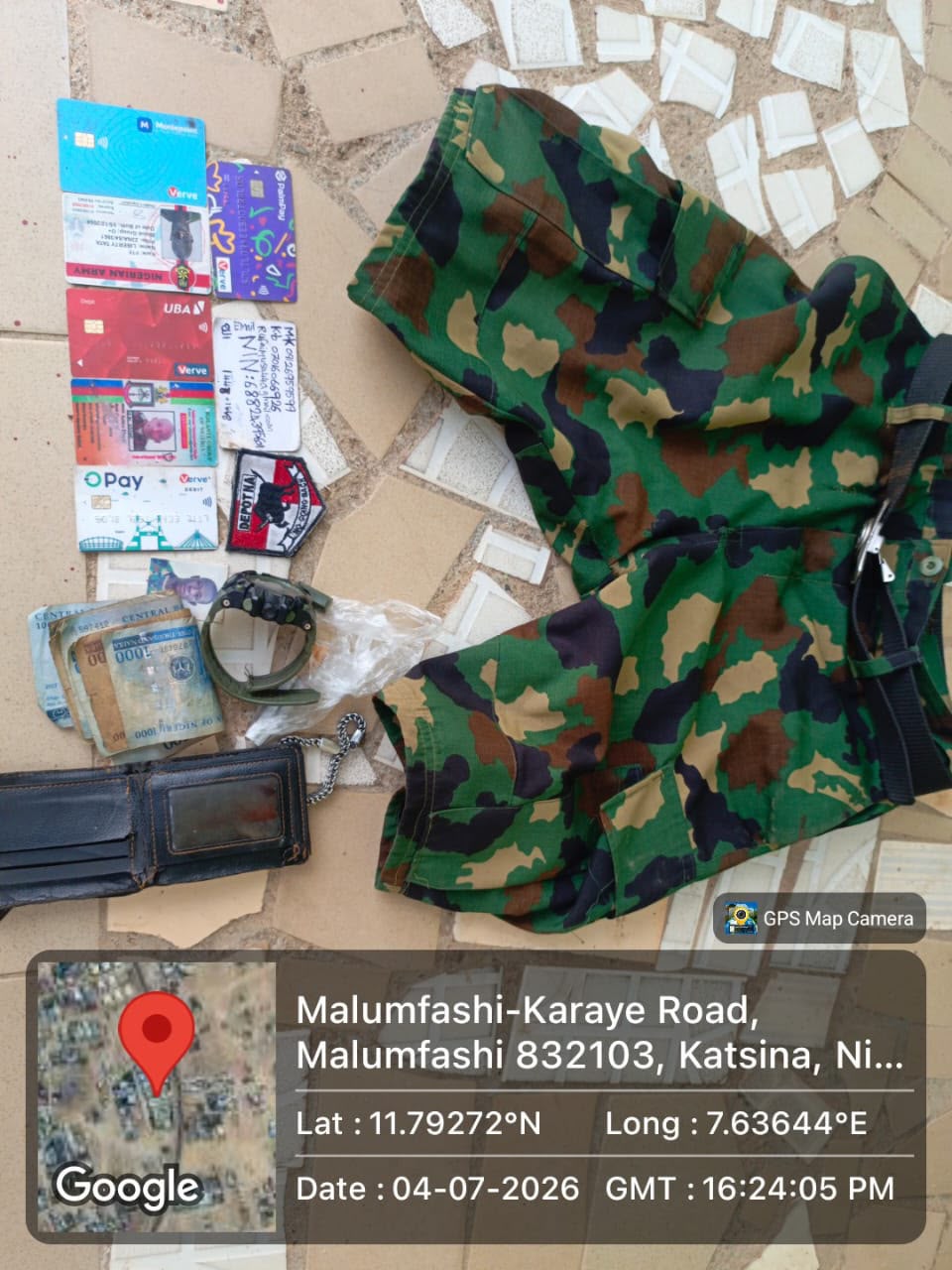
Troops Arrest Suspected Military Impostor in Katsina
By Zagazola Makama
Troops of 17 Brigade have arrested a suspected military impostor during a fighting patrol in Malumfashi Local Government Area.
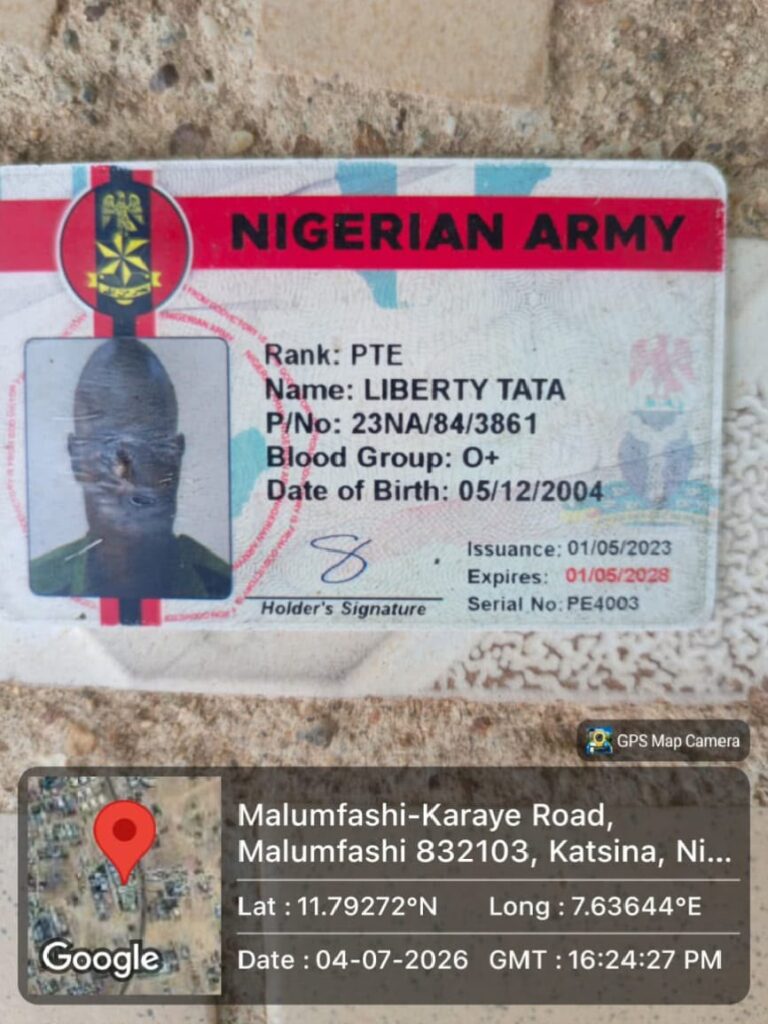
Security sources told Zagazola Makama that the suspect was apprehended at about 1:30 p.m. on July 4 by troops deployed at the Forward Operating Base (FOB) Malumfashi while conducting routine patrols within Malumfashi town.
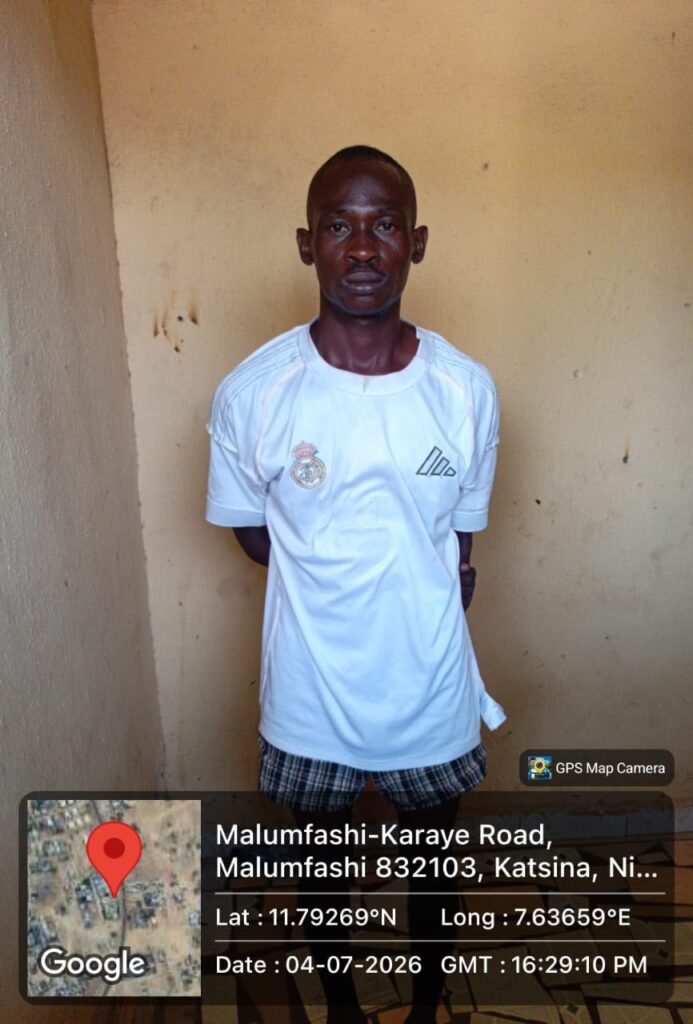
According to the sources, the suspect was intercepted while wearing a woodland camouflage three-quarter short, raising suspicion among the troops.
A search conducted on the suspect led to the recovery of a fake Nigerian Army identity card, four Automated Teller Machine (ATM) cards, one woodland camouflage three-quarter short, a wristwatch and the sum of ₦17,000.
The suspect and the recovered exhibits are currently in military custody pending further investigation.
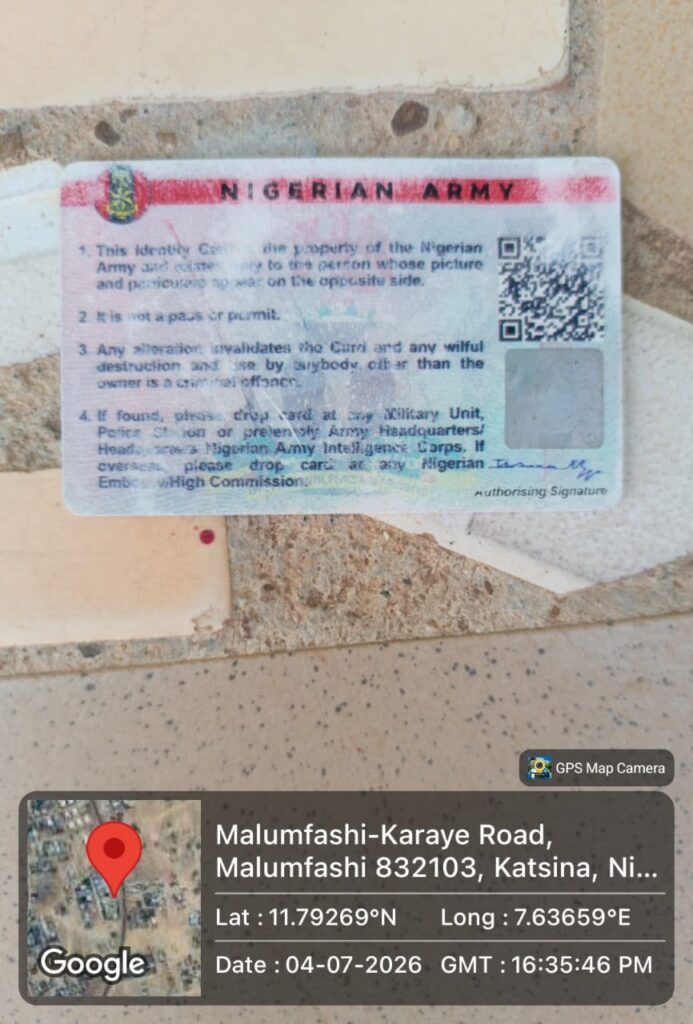
Military sources said the arrest forms part of ongoing efforts to curb impersonation of security personnel and other criminal activities within the area.
Troops Arrest Suspected Military Impostor in Katsina
Troops Recover 50 Rustled Cattle, Repel Suspected Rustlers in Kaduna
By Zagazola Makama
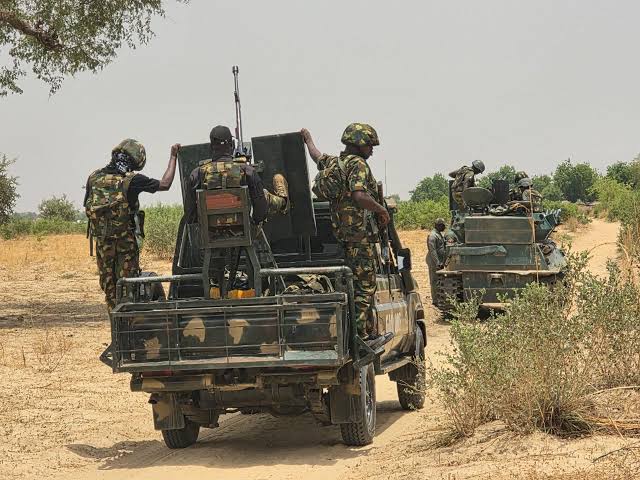
Troops deployed at the Forward Operating Base (FOB) Kankomi have recovered 50 rustled cattle after repelling suspected cattle rustlers during an ambush operation in Chikun Local Government Area.
Security sources told Zagazola Makama that the troops responded to a distress call at about 9:55 a.m. on July 4 over the activities of suspected rustlers at Ungwan Gontu community.
According to the sources, the troops swiftly laid an ambush and made contact with the fleeing suspects, forcing them to abandon the stolen livestock and escape into the surrounding area.
During the operation, the troops recovered 50 rustled cattle, which were subsequently identified and handed over to their rightful owner.
Military sources said efforts are ongoing to track down the fleeing suspects as security operations continue to combat cattle rustling and other criminal activities across Kaduna State.
Troops Recover 50 Rustled Cattle, Repel Suspected Rustlers in Kaduna
Troops Arrest Suspected Terrorist in Kogi, Suspect Confesses to Group Membership
By Zagazola Makama
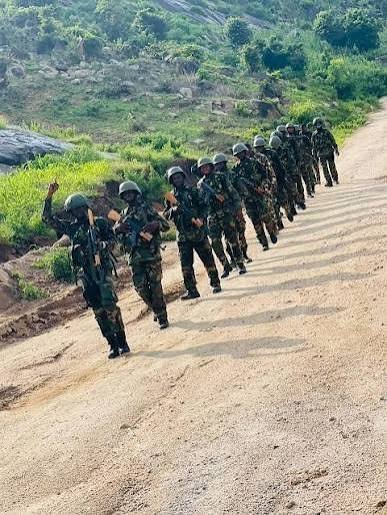
Troops of 12 Brigade, in collaboration with Office of the National Security Adviser (ONSA) Hybrid Forces, have arrested a suspected terrorist during an operation in Lokoja Local Government Area.
Security sources told Zagazola Makama that the troops responded at about 1:00 p.m. on July 4 to reports of a confrontation between local residents and a suspected terrorist at a Ruga settlement behind Obajana community.
According to the sources, the troops swiftly intervened and arrested one suspect at the scene.
During preliminary interrogation, the suspect reportedly confessed to being a member of a terrorist group led by an individual identified as Haruna, which allegedly operates within the Okene general area.
The suspect is currently in military custody and is undergoing further investigation to establish the extent of his involvement and identify other members of the group.
Military sources said the arrest forms part of ongoing security operations aimed at dismantling terrorist and criminal networks across Kogi State.
Troops Arrest Suspected Terrorist in Kogi, Suspect Confesses to Group Membership

Troops Arrest Suspected Military Impostor in Katsina

Troops Recover 50 Rustled Cattle, Repel Suspected Rustlers in Kaduna

Troops Arrest Suspected Terrorist in Kogi, Suspect Confesses to Group Membership

Roger Federer’s Shock as DNA Results Reveal Myla and Charlene Are Not His Biological Children

THE PLIGHT OF FARIDA

FAILED COUP IN BURKINA FASO: HOW TRAORÉ NARROWLY ESCAPED ASSASSINATION PLOT AMID FOREIGN INTERFERENCE CLAIMS
-
 News2 years ago
Roger Federer’s Shock as DNA Results Reveal Myla and Charlene Are Not His Biological Children
-
Opinions4 years ago
THE PLIGHT OF FARIDA
-
 News1 year ago
FAILED COUP IN BURKINA FASO: HOW TRAORÉ NARROWLY ESCAPED ASSASSINATION PLOT AMID FOREIGN INTERFERENCE CLAIMS
-

 News2 years ago
EYN: Rev. Billi, Distortion of History, and The Living Tamarind Tree
-
 Opinions5 years ago
POLICE CHARGE ROOMS, A MINTING PRESS
-

 ACADEMICS2 years ago
A History of Biu” (2015) and The Lingering Bura-Pabir Question (1)
-

 Columns2 years ago
Army University Biu: There is certain interest, but certainly not from Borno.
-

 Politics1 year ago
2027: Why Hon. Midala Balami Must Go, as Youths in Hawul and Asikira/Uba Federal Constituency Reject ₦500,000 as Sallah Gift
