
National News
NHRC Ready to Fight for Rights of Drug Offenders

NHRC Ready to Fight for Rights of Drug Offenders
By: Michael Mike
The National Human Rights Commission (NHRC) has expressed willingness to fight for the rights of victims of drug related offences.
The NHRC on Thursday harped on the need to assist victims of drug related offences to have access to justice so as not to violate their human rights while trying to prosecute or execute them.
The Executive Secretary of the Commission, Tony Ojukwu who stated this at the online, side event of the on-going 65th Session of the UN Commission on Narcotic drugs, highlighted the dangers of not following the due process of the law in combating drug related offences by foreign nationals.
Ojukwu observed that where a foreigner is involved in drug related offences, there is every possibility that he might not be availed the needed consular assistance and legal services aside from language barrier which could be a disadvantage in defending the allegations against him.
According to the Ojukwu, death penalty has remained a gross violation of the right life, which is why the advocacy for moratorium on death sentence has remained a better option pending the possibility of reviewing extant legislations in some countries that support the practice of death sentence.
He argued that by all standards, the Commission is not in support of drug abuse or trafficking in narcotic substances, pointing out that while it is expected that authorities should nip in the bud the abuse of these harmful substances, care should be taken not to violate the rights of drug users.
Also Read: Obiano spends first night as Anambra ex-gov in EFCC custody
“Therefore steps should be taken to ensure that those who come in conflict with the law, including alleged drug offenders should enjoy the protection of the relevant local, regional and international laws”, the Executive Secretary stated.
In view of the foregoing, the NHRC Boss opined that monitoring and intervention by the relevant stakeholders will not only ensure that there is adequate record or information to know the trend of drug issues locally and globally, but should also ensure justice for the alleged drug offenders.
The Executive Secretary emphasized the need for national advocacy, most especially for migrants, they need to be informed and educated on the dangers of drugs trafficking in their host country.
In her remarks, the representative of Harm Reduction International (organisers of the online side event), Giada Girelli stated that execution as a result of drug related offences has been verified in 131 countries, adding that in Iran alone, drug related execution has increased to 424 percent.
The drug monitoring expert observed that there has not been any case of drug related execution in Saudi Arabia for the first time in over 15 years, and this according to her could be as a result of moratorium in execution of drug offenders.
She also recalled that there has not been any execution in Singapore despite four notices of execution in the last four months even as she recalled that 35 countries had retained death penalty for drug related offences.
She noted that most of the people who face penalty for drug related offences include; foreign nationals, ethnic minorities, people with mental issues and women.
In her contribution, the representative of Justice Project Pakistan (Civil Society Organisation), Sana Farrukh stated that her organisation has been working with other stakeholders to change the narrative and perception about death penalty through advocacy and communication in Pakistan and around the globe.
She used the opportunity to place on record that Gulf countries are the largest jailers of Pakistans even when the alleged culprits are arrested for non-lethal crimes such as drug trafficking theft and violation of immigration laws.
Specifically, she said that Saudi Arabia remains the largest executioner of Pakistanis for non-fatal crimes, adding that one out of every ten persons executed in Saudi Arabia between 2016 and 2019 were convicted for carrying narcotics in the Kingdom.
In the same vein, Consular of Australian Embassy, Katie Mead,in her closing remarks, stated that this event has raised the profile of death penalty and condemned in its entirety the practice of death penalty, while urging every country to consider abolishing the same, emphasizing that death penalty should be abolished absolutely.
NHRC Ready to Fight for Rights of Drug Offenders


UN Agency Gives USD 395,000 to 39 Land Restoration Projects Worldwide
By: Michael Mike
In a decisive step to reverse land degradation, 39 land restoration projects led by grassroots organisations have been awarded USD 395,000 through the inaugural Small Grants Programme of the G20 Global Land Initiative (GLI), a flagship initiative of the United Nations Convention to Combat Desertification (UNCCD).
Drawn from 22 countries, the winning projects were selected for their innovation, impact and sustainability. Over 650 organisations from more than 100 countries applied for the award. The winners were selected following three rounds of review by separate UNCCD staff teams, with varied expertise in land management and restoration.
Awardees will receive between US$5,000 and US$15,000 to fund grassroots efforts that boost local economies, improve food and water security and strengthen ecosystem resilience.
The announcement was livestreamed at an event showcasing the grant winners.
The Small Grants Programme is an important tool for achieving the G20 GLI’s mission of reducing degraded land by 50 percent by 2040.
Speaking during the award ceremony, Director of the G20 Global Land Initiative,Dr. Muralee Thummarukudy, said: “We are aware that these big numbers, cannot be achieved by small initiatives alone. Yet, we feel, it is important that tens of thousands of small actors, engaged in land restoration around the world, be supported, promoted and recognized,”
Special priority was given to organisations accredited to UNCCD and to projects empowering Indigenous Peoples, youth, women and the elderly.
The programme was set up in 2024 to support community-level non-profit organisations worldwide. According to a statement, by directly supporting civil society and grassroot actors, these grants will generate measurable progress across global aided restoration priorities, such as soil fertility enhancement, forest regeneration, sustainable agriculture, agroecology and ecosystem-based adaptation.
The statement added that beyond reclaiming land, the projects are enhancing livelihoods, strengthening community climate resilience, and fostering social enterprise and eco-preneurship.
“When we do these small grants program, it is not just about the grant. It’s about the network which we create and the visibility it provides — both for those within it and those outside who can benefit from their knowledge and experience,” Thummarukudy added.
Three of the highest-scoring projects were showcased at the UNCCD Conference of the Parties held in Riyadh, Saudi Arabia, in December 2024, to highlight their potential for scaling and replication across regions.
The statement also revealed that winners will also be showcased at select high-level events in the future, stating that the G20 GLI is committed to inclusive and continuous engagement, and is exploring future
collaboration opportunities for the applicants not selected in this round.
Stressing that “this is just the beginning, this will be an annual process, the next cohort is about to start,” Dr Thummarukudy invited community organisations doing land restoration to apply to join the network because both “big and small” [efforts] are important.
He noted that the second call for applications will open in 2025 with increased funding and expanded
support for grassroots restoration efforts worldwide.
Innovative community-led restoration initiatives are essential for creating green jobs, especially for youth and women..The awards provide support that can transform restoration into a catalyst for economic opportunity and sustainable environmental management.
Examples of selected 2024 grantees include: Legacy of War Foundation (Rwanda), which will restore six hectares of degraded soil while empowering 90 women as landowners of fully organic cooperative farms. By integrating climate-smart and artisanal farming methods, the project aims to improve soil fertility and agricultural resilience in post-conflict rural communities.
Up2Green Foundation (India) is restoring mangroves and riverbanks in Tamil Nadu, India. The project is reforesting 60 hectares and planting 15,000 fruit trees, enhancing biodiversity, strengthening coastal resilience for flood prevention, and training local communities in sustainable agroforestry practices.
Sustainability and Environmental Studies Endeavor (Nepal) is working to restore
ecological balance along the mythological Nagaraj Trail. By revitalizing degraded farms, wetlands and forests using nature-based solutions, the project promotes nature-inclusive agriculture and convivial conservation approaches.
The G20 Global Land Initiative was launched in 2020 under the Saudi G20 Presidency. Hosted by the UNCCD, its ambition is to reduce degraded land by 50 percent by 2040. By showcasing
land restoration, empowering civil society, engaging the private sector and building capacity, G20 GLI is driving restoration to scale and energizing a restoration economy. The Small Grants Programme is a key component of this vision, empowering civil society to restore degraded lands and promote sustainable land management at scale.
UN Agency Gives USD 395,000 to 39 Land Restoration Projects Worldwide
National News
VP Shettima Mourns Late Alhaji Aminu Dantata, Says Nigeria Has Lost An Irreplaceable Institution

VP Shettima Mourns Late Alhaji Aminu Dantata, Says Nigeria Has Lost An Irreplaceable Institution
By: Michael Mike
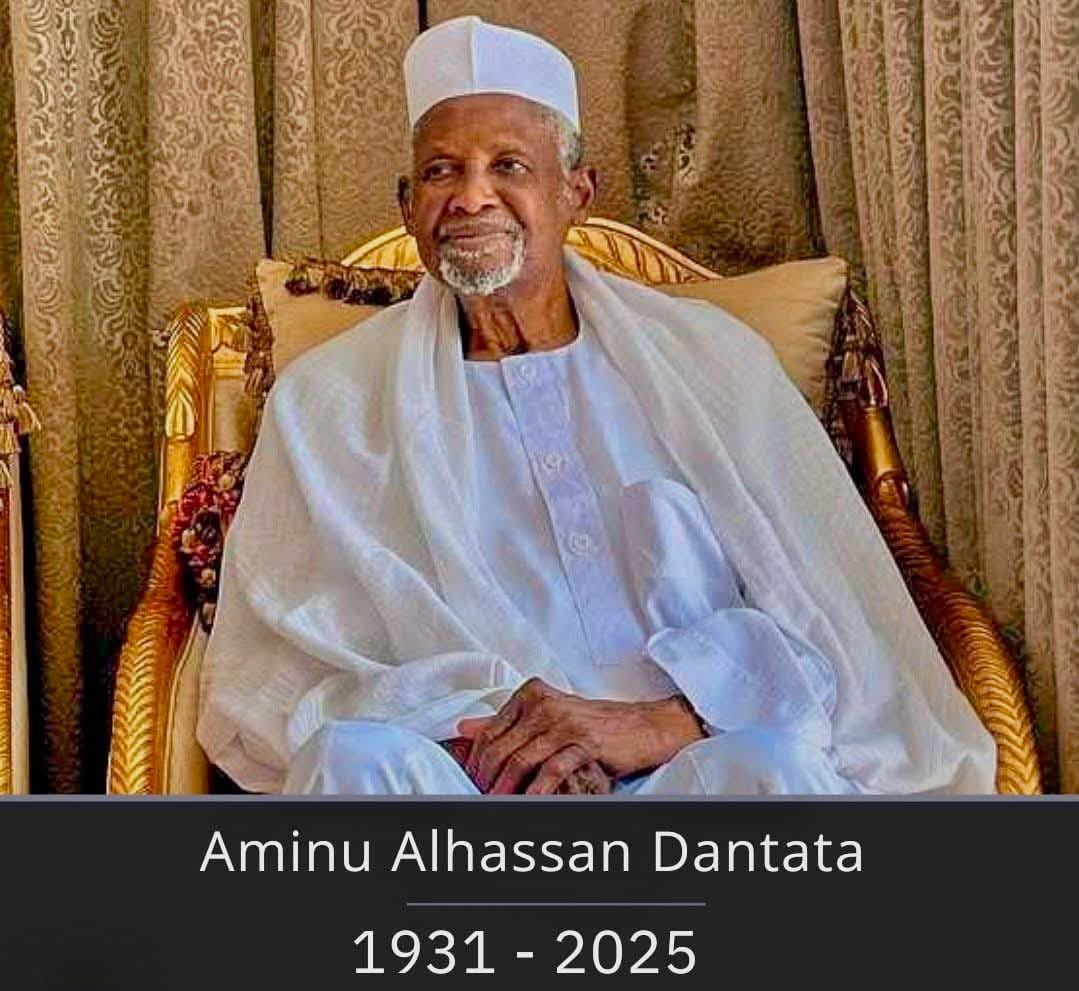
Vice President Kashim Shettima has expressed deep grief over the passing of prominent Nigerian businessman and philanthropist, Alhaji Aminu Alhassan Dantata, saying the nation has lost an irreplaceable institution.
The late Dantata, an uncle of Africa’s richest man, Alhaji Aliko Dangote, passed away at the age of 94 in Abu Dhabi in the early hours of Saturday in the United Arab Emirates (UAE), according to Mustapha Abdullahi Junaid, his Personal Private Secretary (PPS), who confirmed the death.
In a condolence message, Vice President Shettima praised the late businessman for his lifetime of service, describing him as “a living bridge that connected us to our past.
“We have not just lost a leader; we have lost an irreplaceable institution,” Senator Shettima said, describing Dantata as “one of the greatest titans in Nigeria’s philosophical history” whose departure marks the end of a vital chapter in the country’s economic and democratic evolution.
“In African tradition, when such an elderly person transitions, a vital chapter of our history departs with them. He was indeed among the great titans, a living bridge that connected us to our past,” VP Shettima added.
The Vice President extended heartfelt condolences to the Dantata family, expressing hopes that they would “find the fortitude to bear this irreparable loss,” even as he prayed that Almighty Allah would grant the deceased Jannatul Firdaus.
Born into the legendary Dantata family of Kano, Alhaji Aminu built on his father’s commercial legacy to become one of Nigeria’s most influential business figures. His empire spans construction, manufacturing, banking, agriculture, and the oil and gas sectors.
Beyond business, Dantata was renowned for his extensive philanthropic work, funding schools, mosques, health centres, and supporting widows and the underprivileged across Nigeria.
VP Shettima Mourns Late Alhaji Aminu Dantata, Says Nigeria Has Lost An Irreplaceable Institution
National News
Nigeria-EU Senior Officials Meet in Abuja to Prepare for Upcoming Nigeria – EU Ministerial Meeting
Nigeria-EU Senior Officials Meet in Abuja to Prepare for Upcoming Nigeria – EU Ministerial Meeting
By: Michael Mike
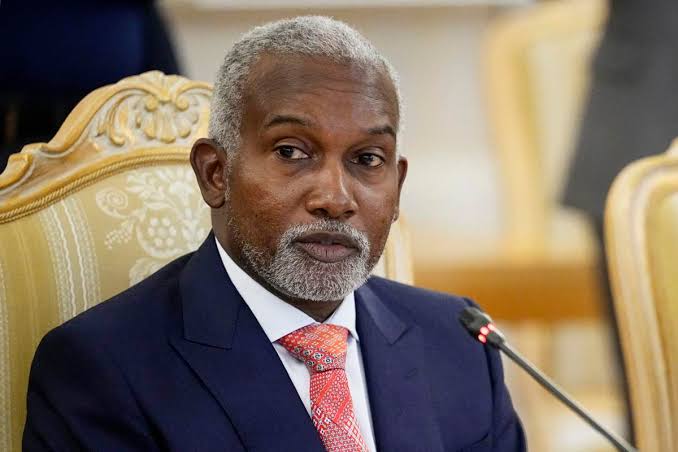
The Senior Officials Meeting between Nigeria and the European Union (EU) will be held on Tuesday 1st and Wednesday 2nd July 2025 in Abuja to prepare for the upcoming Nigeria – EU Ministerial Meeting and to explore areas of cooperation.
A statement on Saturday by the Press Officer, EU Delegation to Nigeria and ECOWAS, Modestus Chukwulaka, read: “The Delegation of European Union to Nigeria and ECOWAS wishes to inform that the Senior Officials Meeting between the Federal Republic of Nigeria and the European Union (EU) will be held on Tuesday 1st and Wednesday 2nd July 2025 in Abuja.
“The agenda of the very important meeting is to prepare for the upcoming Nigeria – EU Ministerial Meeting and to explore areas of cooperation.”
According to the statement, the Senior Officials Meeting will be co-chaired by the Regions, Ministry of Foreign Affairs, Nigeria, Ambassador Janet Olisa, Director, and the Deputy Managing Director for Africa Department, European External Action Service, European Union, Mr Mathieu Briens.
The statement revealed that the agenda of the meeting is expected to entail wide-ranging discussions that would focus on various aspects of the Nigeria – EU partnership, such as: Cooperation on multilateral and regional issues; Peace, Security and Governance; Humanitarian situation; Trade and Investment; Human Development: Health, Education, Social Protection; Science, technology, innovation and digital transition; Migration; Energy, climate change and green economy transition among others.
Nigeria and the European Union share a deep, long-standing partnership inspired by mutual values and interests as well as support for multilateralism and rule-based international order, the statement said.
Nigeria-EU Senior Officials Meet in Abuja to Prepare for Upcoming Nigeria – EU Ministerial Meeting

The Arise TV Interview: Datti Ahmed’s Poor Political Conduct and the Lasting Influence of VP Shettima in Nigeria’s Contemporary Political Landscape

Man kills father during domestic dispute in Bauchi community

Deputy chairman of Katsina-Ala LGA attacked, four suspects arrested

Roger Federer’s Shock as DNA Results Reveal Myla and Charlene Are Not His Biological Children

THE PLIGHT OF FARIDA

POLICE CHARGE ROOMS, A MINTING PRESS
-
 News1 year ago
Roger Federer’s Shock as DNA Results Reveal Myla and Charlene Are Not His Biological Children
-
Opinions3 years ago
THE PLIGHT OF FARIDA
-
Opinions4 years ago
POLICE CHARGE ROOMS, A MINTING PRESS
-

 News1 year ago
EYN: Rev. Billi, Distortion of History, and The Living Tamarind Tree
-

 Columns1 year ago
Army University Biu: There is certain interest, but certainly not from Borno.
-

 ACADEMICS1 year ago
A History of Biu” (2015) and The Lingering Bura-Pabir Question (1)
-

 Opinions1 year ago
Tinubu,Shettima: The epidemic of economic, insecurity in Nigeria
-

 Politics4 weeks ago
2027: Why Hon. Midala Balami Must Go, as Youths in Hawul and Asikira/Uba Federal Constituency Reject ₦500,000 as Sallah Gift
