
News
NHRC, UNHCR Call for Protection of IDPs’ Rights

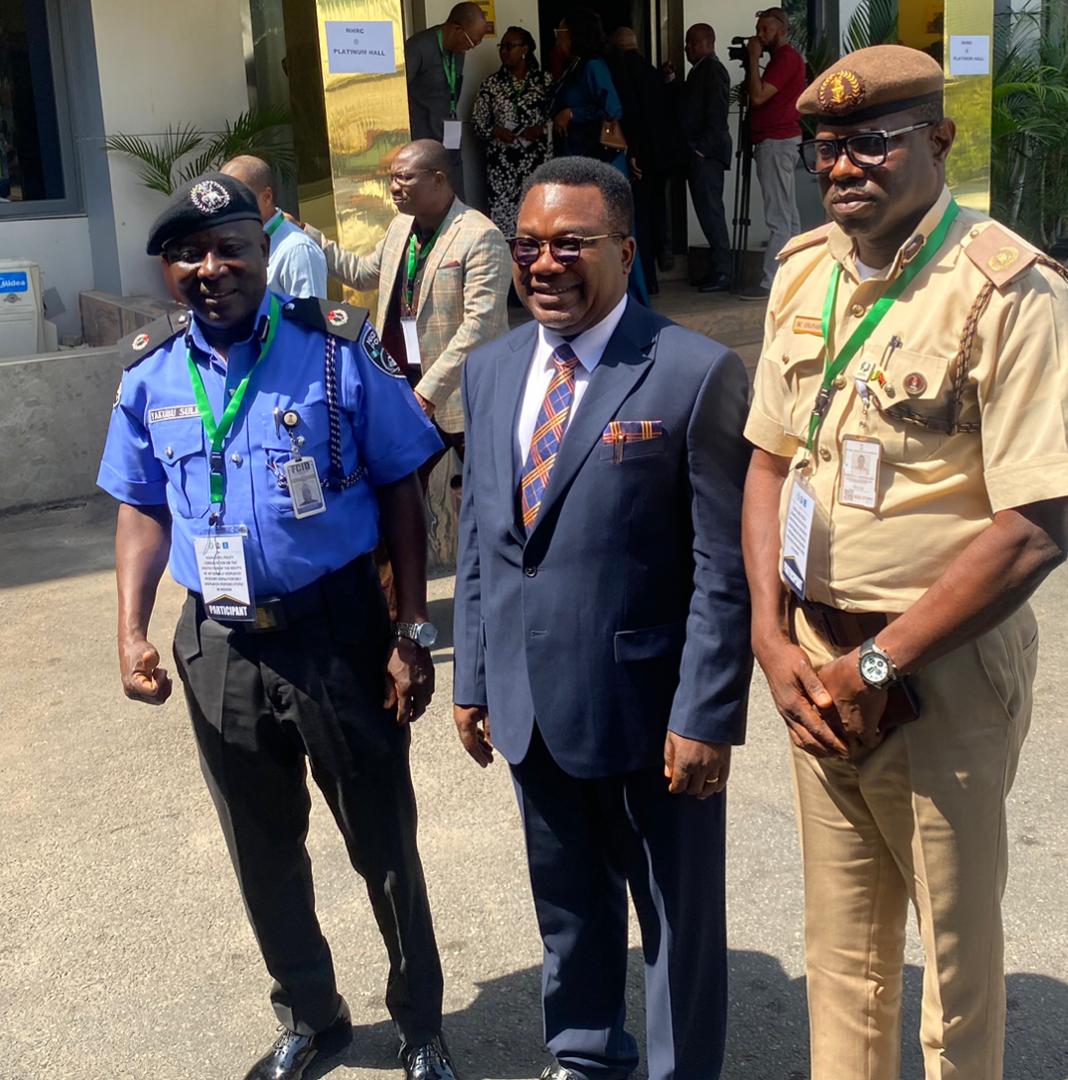
NHRC, UNHCR Call for Protection of IDPs’ Rights
By: Michael Mike
National Human Rights Commission (NHRC) in collaboration with the Office of the United Nations High Commissioner for Refugees (UNHCR) calls for the protection of the rights of internally displaced persons and forcibly displaced persons in Nigeria.
Benue State Governor, Hyacinth Alia, alongside national and international stakeholders, convened a high-level policy consultation themed The Protection of IDPs in Nigeria Through Durable Solutions: Strengthening Collaboration Between Governments, Civil Society Organizations, and Humanitarian Partners”. The forum focused on practical strategies to safeguard the rights, dignity, and well-being of displaced Nigerians.
Alia highlighted his administration’s efforts to bring displaced persons closer to their ancestral homes, combining security, autonomy, and dignity. “Where we are as a state today is focused on relocating IDPs as close as possible to their ancestral homes. Before they can fully return, the security situation must be carefully assessed, and in the meantime, we have begun acquiring portions of land in their primary local government headquarters. Here, they can select artisans to construct homes—permanent or temporary, as they choose.
This initiative ensures that displaced persons have options: they can eventually return fully to their ancestral homes while maintaining access to their local headquarters. These lands can serve residential or commercial purposes, providing flexibility and empowering displaced persons to rebuild their lives with dignity and autonomy,” he said.
Addressing misconceptions regarding conflict in Benue, the governor urged accurate representation to ensure effective humanitarian response. “In my state of Benue, we do not experience religious, ethnic, racial, national, or state genocide. While there are security challenges and we have lost lives over the years due to conflicts between agro-pastoralists and farmers, these incidents do not meet the United Nations definition of genocide. Unfortunately, every issue in Nigeria today is politicized, including the plight of IDPs, and this misrepresentation distorts public perception. It is crucial to understand the true nature of the situation so that interventions are based on reality, not exaggeration or political gain,” he explained.
He further emphasized that displacement requires evidence-based, collaborative solutions that uphold human rights and address systemic gaps. “Displacement remains a painful reality for thousands of Nigerians, disrupting lives, livelihoods, and communities. The human rights concerns that accompany displacement—loss of shelter, limited access to healthcare, disrupted education, insecurity, and socioeconomic exclusion—demand a collective and urgent response. I am encouraged that this consultation brings together governors, attorney generals, members of the national and state assemblies, MDAs, civil society organizations, development partners, community-based actors, and representatives of IDP-led organizations.
This inclusive platform demonstrates the seriousness of our national commitment to tackling the root causes of displacement and providing durable solutions that restore hope and dignity to affected populations,” he noted.
Reaffirming the state’s commitment to displaced persons, Governor Alia said, “In Benue State, we remain fully committed to safeguarding the dignity and rights of all displaced persons. Our administration collaborates with national and international partners to provide humanitarian support, strengthen security, and create avenues for sustainable reintegration and recovery. Displacement must never become a permanent condition. Every Nigerian deserves to live in safety, with hope and opportunity. Ultimately, a true measure of our humanity is revealed not by how safe we are, but by how fiercely we protect the rights and dignity of those who have been displaced. These individuals are where they are not by choice or fault, and only God knows when any of us—or our families—might face similar circumstances.”
Alia urged participants to focus on three key areas: strengthening policy and legal frameworks to ensure laws genuinely protect IDPs; addressing protection gaps using evidence from field monitoring and displaced persons’ experiences; and developing durable solutions, including safe return, resettlement, or local integration, with strong coordination, predictable funding, and security guarantees.
On his part, the National Human Rights Commission, Dr. Tony Ojukwu highlighted the importance of leveraging data from Human Rights Monitors and Community Protection Action Groups to inform policy and interventions. “Through the dedication of our Human Rights Monitors and Community Protection Action Group (CPAG) members, valuable evidence-based data has been generated to guide protection programming, advocacy, policy engagement, and practical interventions by the government and humanitarian actors in Nigeria,” he said.
He also noted the gendered dimension of displacement. “Furthermore, our cumulative figures from February – September confirm that Females (72,119) have consistently outnumbered Males (62,403), confirming the feminization of displacement. Children remain the single largest demographic at 64,058 cumulatively, underscoring persistent vulnerability among minors,” he added.
Acknowledging systemic challenges in monitoring, Ojukwu said, “Limited access to remote or insecure locations, inadequate logistics and communication support, as well as low digital literacy among our CPAG members, are critical issues that limit their effectiveness. We must address the findings from our internal reviews, ensuring that policy and legal frameworks support their efforts, including resolving issues of inadequate funding and securing necessary field resources.”
He stressed the importance of accountability. “On accountability, we must ensure that the cases referred to the Ministries, Departments, and Agencies (MDAs) with protection mandates or other Law Enforcement Agencies (LEAs) are pursued transparently, sending a clear message that violations against FDPs will not go unpunished,” he said, urging stakeholders to transform displacement from despair into dignity. “This is a solemn test of our collective resolve. I urge all participants to engage candidly, focus on actionable solutions, and leave this room with a renewed determination to transform displacement from a state of despair into one of dignity and recovery.”
Minister of Humanitarian Affairs and Poverty Reduction, Dr. Benard Doro, called for a shift from emergency relief to sustainable recovery. “The theme of this consultation—‘The Protection of IDPs in Nigeria with Durable Solutions, Strengthening Collaboration Between Government, Civil Society Organisations and Humanitarian Partners’—signals that we must now shift from temporary relief to sustainable recovery, from reactive response to rights-based protection, and from fragmented interventions to unified human development outcomes, ensuring that all displaced persons are treated with dignity, their rights safeguarded, and their long-term needs effectively addressed,” he said.
He emphasized that IDPs are citizens whose constitutional rights must be protected. “Internal displacement in Nigeria is not merely a humanitarian situation; it is a human rights imperative and a constitutional obligation. IDPs are not statistics, they are citizens entitled to full constitutional protection, and as such, our interventions must recognize their dignity, address their vulnerabilities, and ensure their comprehensive inclusion in the development and protection framework of the nation,” he said.
The Minister further urged operationalizing policies and strengthening coordination across agencies. “To achieve meaningful protection and durable solutions for internally displaced persons, we must operationalize the National Policy on IDPs with measurable state-level action plans, strengthen data governance, accountability, and inter-agency coordination, ensuring that NHRC field data is fully integrated into national planning. This approach will allow us to scale up livelihood, health, education, and protection interventions, promote reintegration and resilience, and harmonize the efforts of humanitarian, development, and human rights actors across all levels of government, leaving no displaced person behind.”
He said with a call to transform displacement from vulnerability to dignity. “Protecting the rights of displaced Nigerians is not merely a humanitarian obligation; it is a constitutional and moral responsibility. Displacement is a lived experience affecting millions of our citizens. Let us leave this consultation with renewed resolve—to transform the status of displaced people from despair to dignity, from vulnerability to recovery, and from crisis to opportunity. Let us act together, decisively, and sustainably, ensuring that our interventions have measurable impact, restore livelihoods, uphold human dignity, and provide hope and resilience for every internally displaced person across the nation,” he said.
Representating the country representative Ajun Jain of United Nationals High Commissioner For Refugees (UNHCR)Timothy Zandok , emphasized the global responsibility to protect displaced persons and support national institutions. “Forcibly displaced persons, whether internally displaced, refugees, returnees, or stateless, are often uniquely and adversely disadvantaged within our communal setting. Beyond the data and news headlines, it is crucial to delve deeper into what their lives truly are like, to understand their experiences, and to ensure they are included and supported within our collective capacity as global citizens,” he said .
He further noted the importance of collective responsibility and actionable advocacy. “The experiences of forcibly displaced persons, and what we can collectively do to ensure their inclusion and conservation, represent a responsibility we owe to each other as global citizens. It is for these reasons that we gather, to share expertise, draw upon our experiences, and make impactful recommendations that strengthen the protection and welfare of those whose lives have been disrupted by displacement.
UNHCR highly commends the National Human Rights Commission for boldly undertaking its mandate to protect forcibly displaced persons, and we commit to continuing our support for your leadership and ownership of this responsibility. Through sharing their voices and advocacy, we can collectively contribute to creating an enhanced, protective environment for all displaced persons,”.
NHRC, UNHCR Call for Protection of IDPs’ Rights


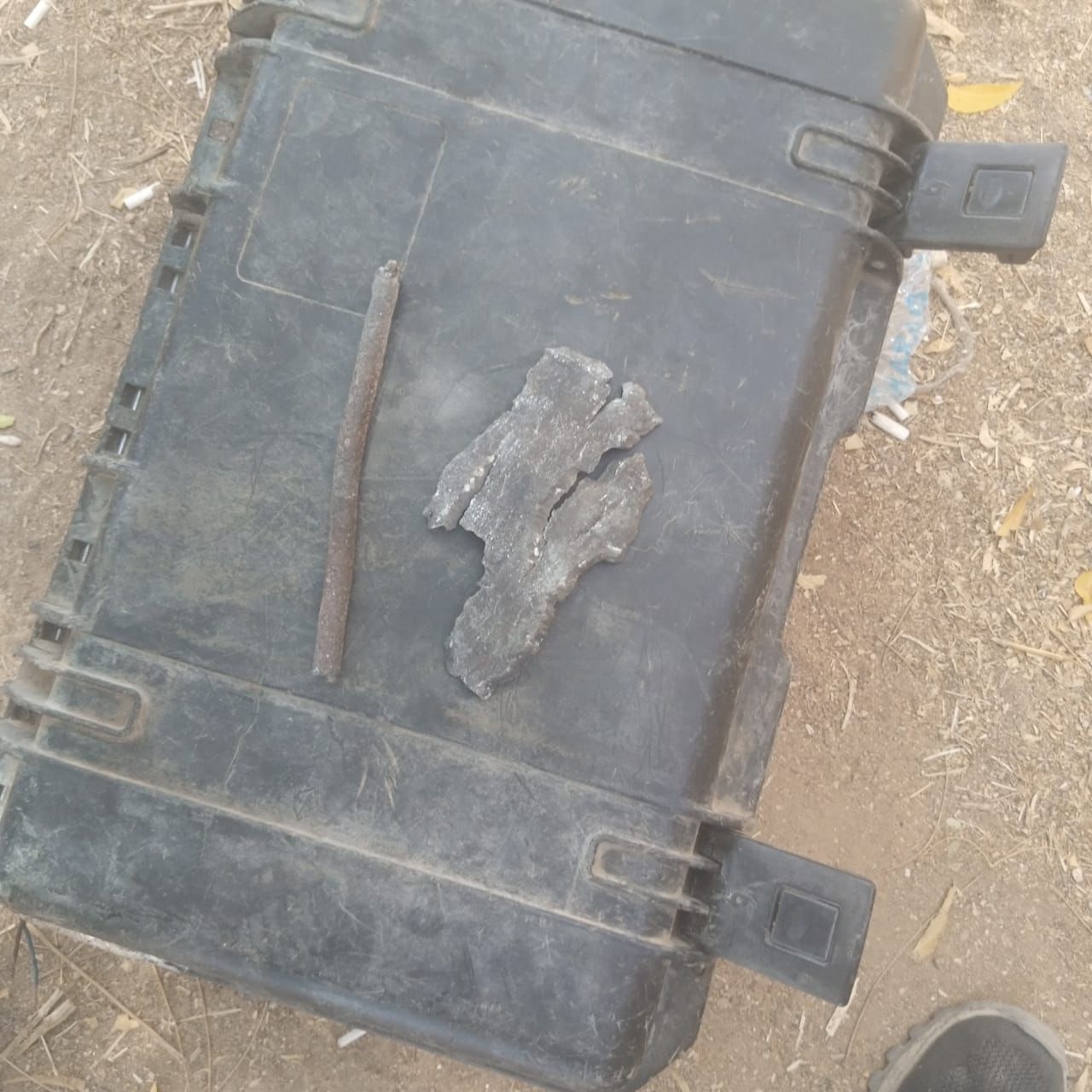
Troops detect, detonate IED along Ngoshe–Pulka road in Borno
By: Zagazola Makama
Troops of the Explosive Ordnance Disposal (EOD) team of 82 Division Task Force Battalion have successfully detected and detonated an improvised explosive device (IED) along a major supply route in Gwoza LGA of Borno State.
Security sources said the device was discovered at about 9:42 a.m. on March 22 during a routine scan of the Main Supply Route (MSR) between PAPA 4 and PAPA 5 along the Ngoshe–Pulka road.

The IED, suspected to have been planted by terrorists to target troops and commuters, was safely recovered and detonated in situ by the EOD team without causing any casualties.
Military sources said the operation was part of ongoing counter-IED measures aimed at ensuring the safety of movement along critical routes in the North-East.
Residents and road users have been urged to remain vigilant and report any suspicious objects or activities to security agencies for prompt action.
Troops detect, detonate IED along Ngoshe–Pulka road in Borno
News
ISWAP cleric threatens attack on Malam Fatori, after humiliating defeat, troops urged to remain alert
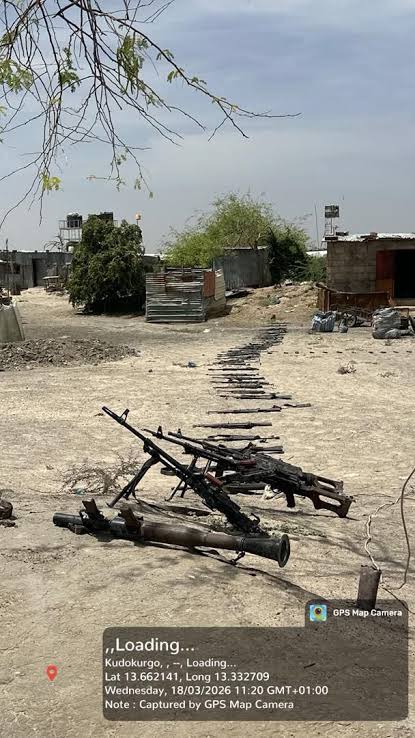
ISWAP cleric threatens attack on Malam Fatori, after humiliating defeat, troops urged to remain alert
By: Zagazola Makama
A suspected ISWAP cleric has issued threats of a possible attack on Malam Fatori following the recent neutralization of 75 terrorists in a failed attack on March 18 2026.
According to intelligence sources, the cleric, who reportedly led this year Eid Fitr prayers in a location near Sabon Tumbu, warned during his sermon that the group would soon retaliate against Nigerian troops for operations carried out in Malam Fatori.
The source said the cleric specifically threatened that the town could be “reduced to ashes” in a reprisal attack, stressing that such statements by insurgents should not be dismissed as mere rhetoric.
Sources noted that past experiences have shown that insurgent groups often act on their threats, urging troops deployed in Malam Fatori to remain on high alert and adequately equipped to counter any potential assault.
They also warned that the insurgents could deploy heavy firepower and adopt tactics such as coordinated assaults and the use of vehicle-borne explosive devices in any attempted attack.
Malam Fatori has for long been described as the town as a long-standing stronghold of military resistance against terrorist elements. The town has, over the years, witnessed decisive military victories against ISWAP fighters, nick named the “Grave Yard of ISWAP” and earning a REPUTATION as a difficult terrain for insurgents to operate.
The troops of the Armed Forces, supported by other security agencies, remain on high alert and have continued to fortify defensive positions in anticipation of any attempted incursion.
According to the sources, intelligence and surveillance have been intensified, while logistics and operational readiness have been enhanced to ensure that any threat is decisively neutralised.
“Experience has shown that insurgents often suffer heavy losses whenever they attempt to attack well-defended positions like Malam Fatori,” the source said.
ISWAP cleric threatens attack on Malam Fatori, after humiliating defeat, troops urged to remain alert
News
Baban Chinedu says Pastor Ezekiel Dachomo is a former Armed robber now turned crises entrepreneur

Baban Chinedu says Pastor Ezekiel Dachomo is a former Armed robber now turned crises entrepreneur
By: Zagazola Makama
Sheikh Yusuf Haruna Baban Chinedu, popularly known as Baban Chinedu, has launched a scathing and evidence-based attack on controversial Plateau pastor Ezekiel Dachomo in a viral video, accusing him of being a former armed robber and a liar who fabricated stories about meeting Jesus after a 1980 bank robbery in Jos.
Baban Chinedu declared: “Ezekiel Dachomo isn’t just someone seen in a photo with a bandit; no, he is the bandit! … Ezekiel committed armed robbery. We have records on him from 1976, from ’76 to sometime after 2000. … This man is a hardened armed robber.”
He played a clip of Dachomo admitting: “Because I went in 1980 is our gang that robbed a bank in Jos, Plateau State, Nigeria. 1980, they make away with a lot of money. It was my best friend that led the operation.” Baban Chinedu challenged: “Praise be to God, I hope you all heard the statement this man made. … He is lying! I want you to listen and know that first of all, this man is a complete hypocrite and a total liar. I swear, it was a gun that shot them! Angels? He claims Jesus came down with seven angels who struck them and killed fourteen people while he hid in the blood? You see, even the angels God sent down… only managed to kill fourteen people and lost track of where that one man was?”
The sheikh alleged Dachomo hid among corpses and was rescued by a gang member named Emmanuel, not Jesus: “He was begging Jesus for God’s sake to forgive him and spare his life. He claims that was where he met Jesus… By Allah, he is lying! … It was a gun that shot them! No Jesus descended there; he is lying to you.” He added: “A lady told me; she heard him when he was shot, and he still has the scar from that wound on his left side. … He is lying! At that time, it was the police, Nigerian security agents, Nigeria Police MOPOL who she said shot them.”
Baban Chinedu accused Dachomo of transitioning from “practical, street-level bandit” to “spiritual bandit” and inciting religious conflict: “The armed bandits of the past are the ones who transformed into these kidnappers. … All those who are making these plans are your boys… You’re insulting her religion, she told us the truth about everything that happened… You are a robber, and the government should investigate you; you’re behind all of this.”
He challenged Dachomo to court: “Ezekiel, I, Yusuf Haruna Baban Chinedu, challenge you: if you know there’s any falsehood in what’s being said about you, take it to court.” The sheikh demanded investigation: “We want the government if possible to investigate this man, I swear to God he’s an armed robber… By Allah, the government should know that Ezekiel is involved in this. Let him tell you the names of those he robbed with.”
The viral video has ignited fierce online reactions, with many praising Baban Chinedu’s evidence-based approach while others condemn the personal attacks on Dachomo, intensifying Nigeria’s ongoing religious and ethnic tensions occasioned by US recent remarks on Christians genocide propaganda. Watch the video in the comment section.
Baban Chinedu says Pastor Ezekiel Dachomo is a former Armed robber now turned crises entrepreneur

Troops detect, detonate IED along Ngoshe–Pulka road in Borno

Vice President Kashim Shettima has arrived in Zamfara to formally receive Governor Dauda Lawal into the All Progressives Congress (APC)

ISWAP cleric threatens attack on Malam Fatori, after humiliating defeat, troops urged to remain alert

Roger Federer’s Shock as DNA Results Reveal Myla and Charlene Are Not His Biological Children

THE PLIGHT OF FARIDA

FAILED COUP IN BURKINA FASO: HOW TRAORÉ NARROWLY ESCAPED ASSASSINATION PLOT AMID FOREIGN INTERFERENCE CLAIMS
-
 News2 years ago
Roger Federer’s Shock as DNA Results Reveal Myla and Charlene Are Not His Biological Children
-
Opinions4 years ago
THE PLIGHT OF FARIDA
-
 News11 months ago
FAILED COUP IN BURKINA FASO: HOW TRAORÉ NARROWLY ESCAPED ASSASSINATION PLOT AMID FOREIGN INTERFERENCE CLAIMS
-

 News2 years ago
EYN: Rev. Billi, Distortion of History, and The Living Tamarind Tree
-
 Opinions4 years ago
POLICE CHARGE ROOMS, A MINTING PRESS
-

 ACADEMICS2 years ago
A History of Biu” (2015) and The Lingering Bura-Pabir Question (1)
-

 Columns2 years ago
Army University Biu: There is certain interest, but certainly not from Borno.
-

 Opinions2 years ago
Tinubu,Shettima: The epidemic of economic, insecurity in Nigeria
