
News
NHRC, UNHCR Call for Protection of IDPs’ Rights

NHRC, UNHCR Call for Protection of IDPs’ Rights
By: Michael Mike
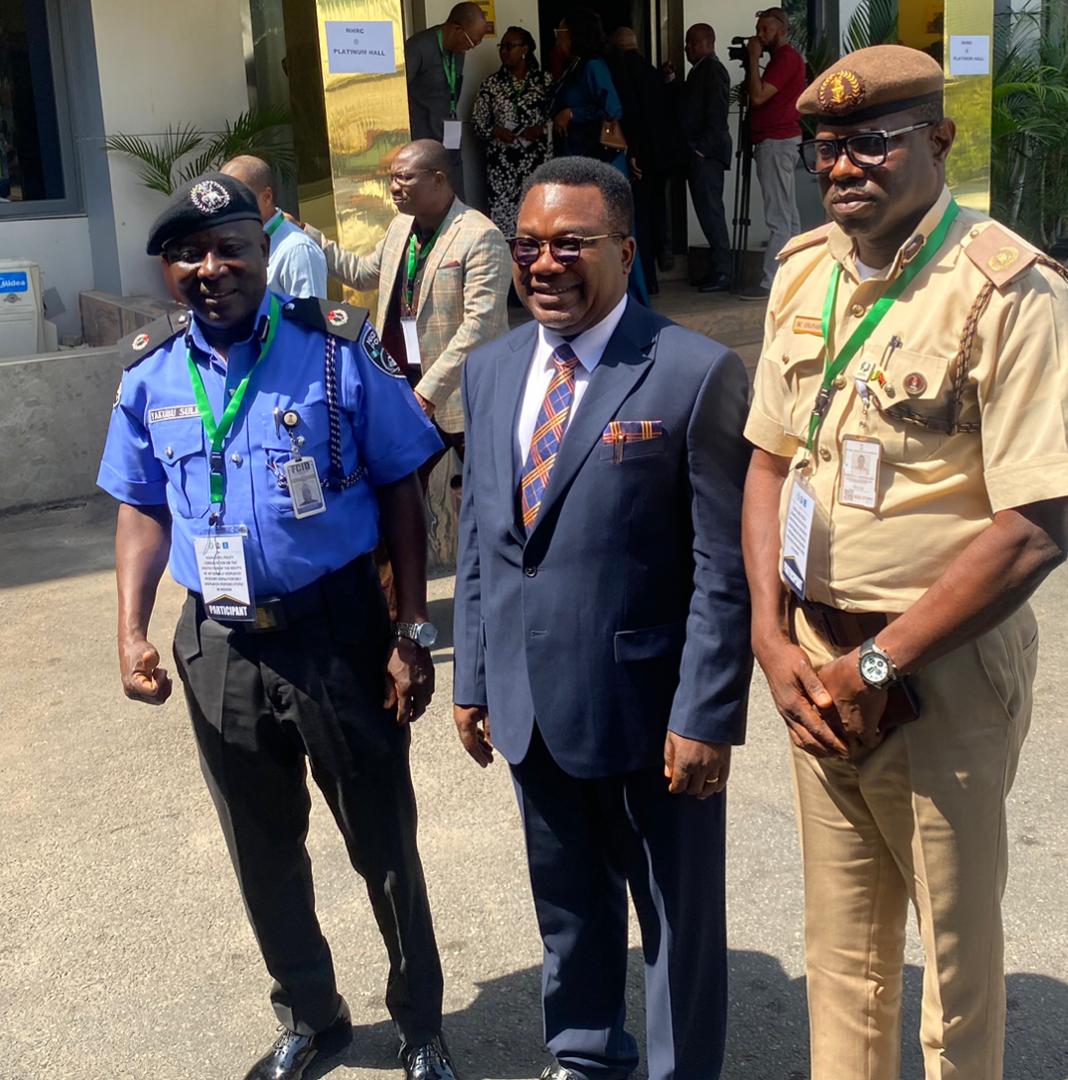
National Human Rights Commission (NHRC) in collaboration with the Office of the United Nations High Commissioner for Refugees (UNHCR) calls for the protection of the rights of internally displaced persons and forcibly displaced persons in Nigeria.
Benue State Governor, Hyacinth Alia, alongside national and international stakeholders, convened a high-level policy consultation themed The Protection of IDPs in Nigeria Through Durable Solutions: Strengthening Collaboration Between Governments, Civil Society Organizations, and Humanitarian Partners”. The forum focused on practical strategies to safeguard the rights, dignity, and well-being of displaced Nigerians.
Alia highlighted his administration’s efforts to bring displaced persons closer to their ancestral homes, combining security, autonomy, and dignity. “Where we are as a state today is focused on relocating IDPs as close as possible to their ancestral homes. Before they can fully return, the security situation must be carefully assessed, and in the meantime, we have begun acquiring portions of land in their primary local government headquarters. Here, they can select artisans to construct homes—permanent or temporary, as they choose.
This initiative ensures that displaced persons have options: they can eventually return fully to their ancestral homes while maintaining access to their local headquarters. These lands can serve residential or commercial purposes, providing flexibility and empowering displaced persons to rebuild their lives with dignity and autonomy,” he said.
Addressing misconceptions regarding conflict in Benue, the governor urged accurate representation to ensure effective humanitarian response. “In my state of Benue, we do not experience religious, ethnic, racial, national, or state genocide. While there are security challenges and we have lost lives over the years due to conflicts between agro-pastoralists and farmers, these incidents do not meet the United Nations definition of genocide. Unfortunately, every issue in Nigeria today is politicized, including the plight of IDPs, and this misrepresentation distorts public perception. It is crucial to understand the true nature of the situation so that interventions are based on reality, not exaggeration or political gain,” he explained.
He further emphasized that displacement requires evidence-based, collaborative solutions that uphold human rights and address systemic gaps. “Displacement remains a painful reality for thousands of Nigerians, disrupting lives, livelihoods, and communities. The human rights concerns that accompany displacement—loss of shelter, limited access to healthcare, disrupted education, insecurity, and socioeconomic exclusion—demand a collective and urgent response. I am encouraged that this consultation brings together governors, attorney generals, members of the national and state assemblies, MDAs, civil society organizations, development partners, community-based actors, and representatives of IDP-led organizations.
This inclusive platform demonstrates the seriousness of our national commitment to tackling the root causes of displacement and providing durable solutions that restore hope and dignity to affected populations,” he noted.
Reaffirming the state’s commitment to displaced persons, Governor Alia said, “In Benue State, we remain fully committed to safeguarding the dignity and rights of all displaced persons. Our administration collaborates with national and international partners to provide humanitarian support, strengthen security, and create avenues for sustainable reintegration and recovery. Displacement must never become a permanent condition. Every Nigerian deserves to live in safety, with hope and opportunity. Ultimately, a true measure of our humanity is revealed not by how safe we are, but by how fiercely we protect the rights and dignity of those who have been displaced. These individuals are where they are not by choice or fault, and only God knows when any of us—or our families—might face similar circumstances.”
Alia urged participants to focus on three key areas: strengthening policy and legal frameworks to ensure laws genuinely protect IDPs; addressing protection gaps using evidence from field monitoring and displaced persons’ experiences; and developing durable solutions, including safe return, resettlement, or local integration, with strong coordination, predictable funding, and security guarantees.
On his part, the National Human Rights Commission, Dr. Tony Ojukwu highlighted the importance of leveraging data from Human Rights Monitors and Community Protection Action Groups to inform policy and interventions. “Through the dedication of our Human Rights Monitors and Community Protection Action Group (CPAG) members, valuable evidence-based data has been generated to guide protection programming, advocacy, policy engagement, and practical interventions by the government and humanitarian actors in Nigeria,” he said.
He also noted the gendered dimension of displacement. “Furthermore, our cumulative figures from February – September confirm that Females (72,119) have consistently outnumbered Males (62,403), confirming the feminization of displacement. Children remain the single largest demographic at 64,058 cumulatively, underscoring persistent vulnerability among minors,” he added.
Acknowledging systemic challenges in monitoring, Ojukwu said, “Limited access to remote or insecure locations, inadequate logistics and communication support, as well as low digital literacy among our CPAG members, are critical issues that limit their effectiveness. We must address the findings from our internal reviews, ensuring that policy and legal frameworks support their efforts, including resolving issues of inadequate funding and securing necessary field resources.”
He stressed the importance of accountability. “On accountability, we must ensure that the cases referred to the Ministries, Departments, and Agencies (MDAs) with protection mandates or other Law Enforcement Agencies (LEAs) are pursued transparently, sending a clear message that violations against FDPs will not go unpunished,” he said, urging stakeholders to transform displacement from despair into dignity. “This is a solemn test of our collective resolve. I urge all participants to engage candidly, focus on actionable solutions, and leave this room with a renewed determination to transform displacement from a state of despair into one of dignity and recovery.”
Minister of Humanitarian Affairs and Poverty Reduction, Dr. Benard Doro, called for a shift from emergency relief to sustainable recovery. “The theme of this consultation—‘The Protection of IDPs in Nigeria with Durable Solutions, Strengthening Collaboration Between Government, Civil Society Organisations and Humanitarian Partners’—signals that we must now shift from temporary relief to sustainable recovery, from reactive response to rights-based protection, and from fragmented interventions to unified human development outcomes, ensuring that all displaced persons are treated with dignity, their rights safeguarded, and their long-term needs effectively addressed,” he said.
He emphasized that IDPs are citizens whose constitutional rights must be protected. “Internal displacement in Nigeria is not merely a humanitarian situation; it is a human rights imperative and a constitutional obligation. IDPs are not statistics, they are citizens entitled to full constitutional protection, and as such, our interventions must recognize their dignity, address their vulnerabilities, and ensure their comprehensive inclusion in the development and protection framework of the nation,” he said.
The Minister further urged operationalizing policies and strengthening coordination across agencies. “To achieve meaningful protection and durable solutions for internally displaced persons, we must operationalize the National Policy on IDPs with measurable state-level action plans, strengthen data governance, accountability, and inter-agency coordination, ensuring that NHRC field data is fully integrated into national planning. This approach will allow us to scale up livelihood, health, education, and protection interventions, promote reintegration and resilience, and harmonize the efforts of humanitarian, development, and human rights actors across all levels of government, leaving no displaced person behind.”
He said with a call to transform displacement from vulnerability to dignity. “Protecting the rights of displaced Nigerians is not merely a humanitarian obligation; it is a constitutional and moral responsibility. Displacement is a lived experience affecting millions of our citizens. Let us leave this consultation with renewed resolve—to transform the status of displaced people from despair to dignity, from vulnerability to recovery, and from crisis to opportunity. Let us act together, decisively, and sustainably, ensuring that our interventions have measurable impact, restore livelihoods, uphold human dignity, and provide hope and resilience for every internally displaced person across the nation,” he said.
Representating the country representative Ajun Jain of United Nationals High Commissioner For Refugees (UNHCR)Timothy Zandok , emphasized the global responsibility to protect displaced persons and support national institutions. “Forcibly displaced persons, whether internally displaced, refugees, returnees, or stateless, are often uniquely and adversely disadvantaged within our communal setting. Beyond the data and news headlines, it is crucial to delve deeper into what their lives truly are like, to understand their experiences, and to ensure they are included and supported within our collective capacity as global citizens,” he said .
He further noted the importance of collective responsibility and actionable advocacy. “The experiences of forcibly displaced persons, and what we can collectively do to ensure their inclusion and conservation, represent a responsibility we owe to each other as global citizens. It is for these reasons that we gather, to share expertise, draw upon our experiences, and make impactful recommendations that strengthen the protection and welfare of those whose lives have been disrupted by displacement.
UNHCR highly commends the National Human Rights Commission for boldly undertaking its mandate to protect forcibly displaced persons, and we commit to continuing our support for your leadership and ownership of this responsibility. Through sharing their voices and advocacy, we can collectively contribute to creating an enhanced, protective environment for all displaced persons,”.
NHRC, UNHCR Call for Protection of IDPs’ Rights


Zulum moves to resettle Konduga IDPs in four months
By: Bodunrin Kayode
Borno State Governor, Professor Babagana Zulum, has announced the planned closure of Konduga internally displaced persons (IDP) camp within the next four months.
This follows the successful closure of Bama IDP camp, the largest displacement facility outside the state capital and the planned shutdown of Gwoza camp.
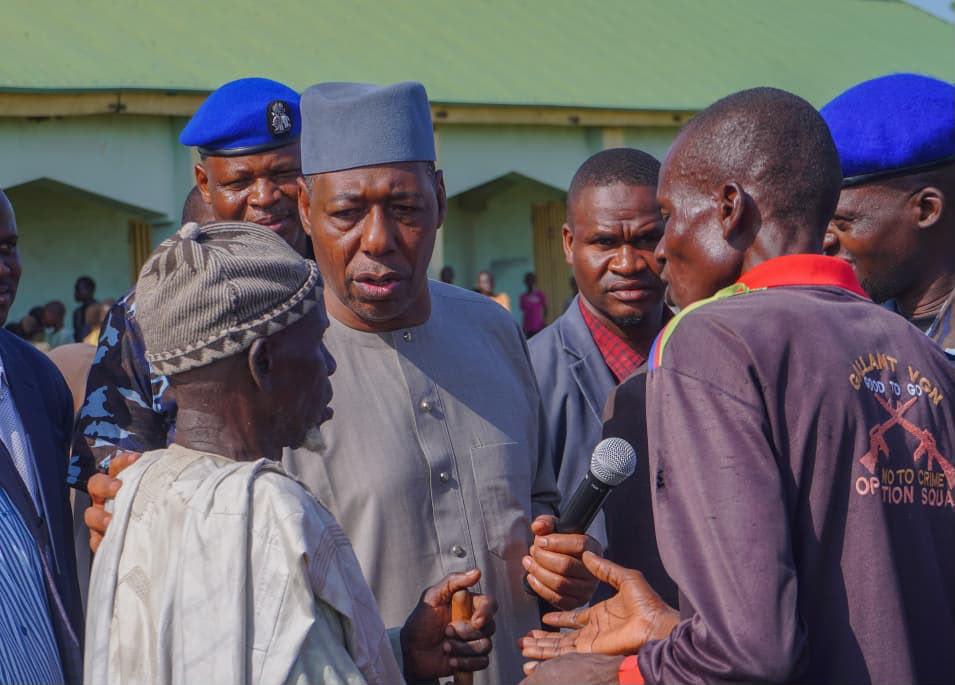
Speaking to newsmen during a recent visit to the camp, Zulum, however, stressed that the relocation is entirely voluntary and no one will be forced to resettle where they are not willing to go.
The Governor has consistently maintained that returning to ancestral homes or other areas of choice must be based on the displaced persons’ expressed willingness.
He said, “We are not carrying out the resettlement process immediately; we are here to discuss with the IDPs so that in the next four months they will be resettled in a dignified manner. I believe you heard from the IDPs that they are willing to return home. Return shall be voluntary, not by force”.
During his visit to Konduga, Governor Zulum inspected resettlement houses currently under construction in Amarwa and later proceeded to Maiwa in Mafa LGA. The Amarwa resettlement city, for which the governor had earlier laid the foundation, is being built to shelter displaced persons living in camps.
In Maiwa, the state government is constructing massive housing units as part of the ongoing resettlement programme. The resettlement houses are equipped with public facilities like a primary healthcare centre, a water facility, and other basic amenities.
Zulum was accompanied by the member of the House of Representatives, Engr Bukar Talba; the Member of the House of Assembly for Konduga, Hon. Bukar Modu; the Commissioner for Local Government and Emirate Affairs, Sugun Mai Mele; and other senior government officials.
Zulum moves to resettle Konduga IDPs in four months
Zulum Announces Closure of Konduga IDP Camp as Borno Accelerates Resettlement Drive
…Inspects ongoing housing projects in Amarwa, Maiwa
By: Michael Mike
Borno State Governor, Professor Babagana Zulum, has announced plans to close the Internally Displaced Persons (IDP) camp in Konduga Local Government Area as part of efforts to accelerate the state’s ongoing resettlement programme.
The move comes shortly after the successful closure of the Bama IDP camp, which was the largest displacement camp outside Maiduguri, as well as preparations for the shutdown of the Gwoza IDP camp.
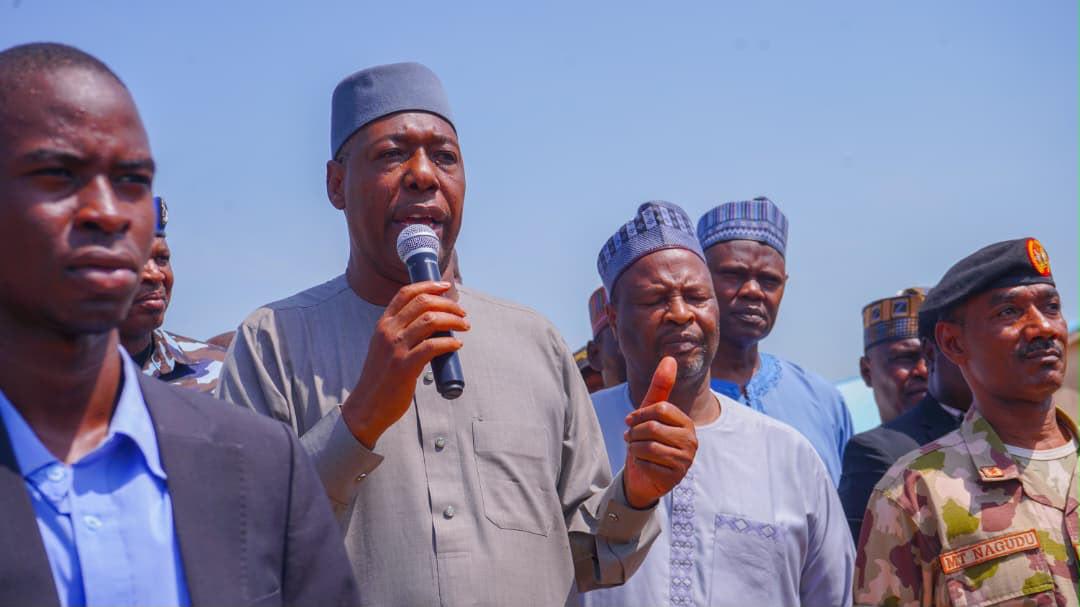
Governor Zulum, who disclosed the plan during a visit to Konduga, said the resettlement of displaced persons would be carried out in a dignified and voluntary manner, stressing that no resident would be forced to return to any location against their will.
The governor said the government would engage with the displaced communities before the process begins, noting that the return of IDPs must be based on their readiness and willingness.
“We are not carrying out the resettlement process immediately; we are here to discuss with the IDPs so that in the next four months they will be resettled in a dignified manner. I believe you heard from the IDPs that they are willing to return home. Return shall be voluntary, not by force,” Zulum said.
During the visit, the governor inspected ongoing construction work at the Amarwa resettlement city, where housing units are being developed for displaced families. The project, which was earlier inaugurated by the governor, is designed to provide a permanent settlement option for residents currently living in camps.
Governor Zulum also visited Maiwa in Mafa Local Government Area, where the state government is constructing additional housing units under its resettlement initiative.
The housing projects include essential social infrastructure such as primary healthcare centres, water facilities and other basic amenities aimed at ensuring sustainable living conditions for returnees.
The Borno State Government has continued to prioritise the rebuilding of communities affected by years of insurgency, with the closure of IDP camps forming part of a broader strategy to restore normalcy, rebuild livelihoods and support the safe return of displaced residents.
Governor Zulum was accompanied on the inspection tour by the member representing Bama/Ngala/Kala-Balge Federal Constituency in the House of Representatives, Engr. Bukar Talba; the Konduga State House of Assembly member, Hon. Bukar Modu; Commissioner for Local Government and Emirate Affairs, Sugun Mai Mele; and other senior government officials.
Zulum Announces Closure of Konduga IDP Camp as Borno Accelerates Resettlement Drive

Troops Arrest Two Suspected Terrorist Informants, Cattle Rustlers in Yobe Market
By Zagazola Makama
Troops of Operation HADIN KAI have arrested two suspected terrorist informants and cattle rustlers during a joint operation with local hunters at the Buni Yadi Friday Market in Gujba Local Government Area of Yobe State.
Military sources told Zagazola Makama that the operation was carried out at about 2:00 p.m. on July 24 by troops of 27 Task Force Brigade in conjunction with members of a hunters’ group acting on intelligence.
The suspects were identified as Muhammadu Sani, 32, from Mainahari in Biu Local Government Area of Borno State, and Buba Umaru, 40, from Garin Jauro in Fune Local Government Area of Yobe State.
According to the sources, the operation turned violent when one of the suspects attacked a member of the hunters’ group with a cutlass while resisting arrest.
The hunter sustained severe head injuries during the attack and was immediately attended to, while the troops overpowered and apprehended the suspects.
Preliminary investigations revealed that Muhammadu Sani confessed to serving as a logistics supplier and informant for Boko Haram terrorists for nearly seven years.
He also admitted to leading terrorists to the residences of two local residents, where the insurgents successfully rustled cattle during separate attacks.
Military sources said the confession is expected to assist ongoing intelligence efforts aimed at dismantling terrorist support networks operating within communities across the North-East.
The two suspects are currently in the custody of 27 Task Force Brigade and are undergoing further investigation to determine the extent of their involvement in terrorist logistics, intelligence gathering and cattle rustling activities.
Security officials said the arrest underscores the critical role played by local intelligence and collaboration between troops and community-based security groups in identifying individuals who provide logistical support and operational information to terrorist elements.
They added that troops of Operation HADIN KAI will continue to target terrorist collaborators, informants and logistics networks as part of ongoing efforts to deny insurgents the local support structures that sustain their operations across the North-East.
Troops Arrest Two Suspected Terrorist Informants, Cattle Rustlers in Yobe Market

Zulum moves to resettle Konduga IDPs in four months

My Binoculars: What has Remi Tinubu got to do with Akara, Kulikuli, Boli, Dodo and Ekpa

Zulum Announces Closure of Konduga IDP Camp as Borno Accelerates Resettlement Drive

Roger Federer’s Shock as DNA Results Reveal Myla and Charlene Are Not His Biological Children

THE PLIGHT OF FARIDA

FAILED COUP IN BURKINA FASO: HOW TRAORÉ NARROWLY ESCAPED ASSASSINATION PLOT AMID FOREIGN INTERFERENCE CLAIMS
-
 News2 years ago
Roger Federer’s Shock as DNA Results Reveal Myla and Charlene Are Not His Biological Children
-
Opinions4 years ago
THE PLIGHT OF FARIDA
-
 News1 year ago
FAILED COUP IN BURKINA FASO: HOW TRAORÉ NARROWLY ESCAPED ASSASSINATION PLOT AMID FOREIGN INTERFERENCE CLAIMS
-

 News2 years ago
EYN: Rev. Billi, Distortion of History, and The Living Tamarind Tree
-
 Opinions5 years ago
POLICE CHARGE ROOMS, A MINTING PRESS
-

 ACADEMICS2 years ago
A History of Biu” (2015) and The Lingering Bura-Pabir Question (1)
-

 Columns2 years ago
Army University Biu: There is certain interest, but certainly not from Borno.
-

 Politics1 year ago
2027: Why Hon. Midala Balami Must Go, as Youths in Hawul and Asikira/Uba Federal Constituency Reject ₦500,000 as Sallah Gift
