
News
NiDCOM Audit: NIDO Demands Answers, Board Constitution Over 13 Queries

NiDCOM Audit: NIDO Demands Answers, Board Constitution Over 13 Queries
By: Michael Mike
The Nigerians in Diaspora Organisation (NIDO) Worldwide has demanded full accountability from the Nigerians in Diaspora Commission (NiDCOM) over 13 audit observations contained in the Auditor-General for the Federation’s report on non-compliance and internal control weaknesses in federal government agencies.
NIDO Worldwide also called for the immediate constitution and effective operation of NiDCOM’s statutory Governing Board, saying the absence of the board raises broader concerns about institutional oversight of an agency established to manage Nigeria’s engagement with its citizens abroad.
The organisation made the demands in a statement on Saturday following its review of the Auditor-General for the Federation’s Annual Report on Non-Compliance/Internal Control Weaknesses in Ministries, Departments and Agencies of the Federal Government for the year ended December 31, 2024.
According to NIDO Worldwide, the audit observations concerning NiDCOM are contained in Volume I of the report, under the International Audit and Liaison Department, covering transactions and activities for the 2023 financial year.
The organisation stressed that the audit report should neither be treated as a criminal conviction nor dismissed as a social media allegation, but as an official document requiring a formal response from the institution concerned.
It said the issues raised by the Auditor-General cut across financial reporting, procurement, contract execution, payments and asset management.
Among the observations highlighted by NIDO are the alleged non-submission of NiDCOM’s 2023 audited financial statements; procurement through emergency procedures without the required certification; alleged splitting of contracts to avoid approval thresholds; and contracts awarded to companies whose statutory or prequalification documents were reportedly invalid or expired.
The audit observations also reportedly included concerns over the financial capacity of some contractors, payments relating to diaspora events for which evidence of execution was not produced for audit, alleged overpayments to contractors, breaches of tax deduction and federal e-payment requirements, movement of funds between expenditure heads, cash advances above statutory limits and five vehicles listed in the Commission’s records that were reportedly not sighted during physical verification.
NIDO Worldwide said one aspect of the report was particularly significant: the Auditor-General recorded “No response” from NiDCOM management against each of the 13 observations.
The organisation said the audit report consequently maintained the findings pending implementation of the recommendations and called for the Commission’s leadership to account before the Public Accounts Committees of the National Assembly where required.
NIDO, however, stressed that the audit findings should not be interpreted as proof of personal dishonesty or criminal liability by any individual.
“An audit observation is not a criminal conviction, and non-compliance recorded by an auditor is not, without more, proof of personal dishonesty by any individual,” it said, adding that it would not prejudge anyone or support trial by social media.
The group said its central demand was therefore straightforward: that the Commission provide documentary answers to the observations.
It noted that NiDCOM had, in a public statement issued on September 5, 2026, indicated that relevant documentation remained intact and would be made available to the Auditor-General and the appropriate committees of the National Assembly when required.
NIDO said it expected the undertaking to be honoured fully.
It also rejected the idea that the audit observations were questioning whether diaspora events took place, arguing that the central issues raised by the Auditor-General concern whether the contracts underpinning such activities were properly procured and whether sufficient documentary evidence of execution was available for audit.
“The answer to that query therefore lies in the vouchers, contracts, approvals and delivery records, not in the guest lists,” the organisation said.
Those that signed the statement are: Dr Fatoye Olufemi, Chairman, NIDO Africa; Barr. Chibuzo Ubochi, Chairman, NIDO Europe Coordinating Chairman, NIDO Worldwide; Dr Chris Juwon Fayomi, Coordinator, NIDO Oceania; Dr Victor Ubani, Chairman, NIDO Americas; Dr Franca Adanne Akinola, Chairman, NIDO Asia
The organisation’s intervention also brought renewed attention to the governance structure of NiDCOM.
NIDO said the Nigerians in Diaspora Commission (Establishment) Act 2017 provides for a Governing Board with responsibility for the general administration of the Commission, including functions relating to policy and its audited and management accounts.
It said it was not aware, as of the date of its statement, that the Governing Board contemplated by the Act had been constituted and operationalised.
According to the organisation, the prolonged absence of the board represents a gap in the governance framework established by law for NiDCOM, particularly because of the board’s oversight responsibilities.
NIDO was careful to distinguish its governance concerns from any suggestion that a Governing Board would necessarily have prevented the matters raised in the audit.
It said the point was that statutory oversight structures should be operational in a public institution.
“This is not about weakening NiDCOM. It is about strengthening the institution and completing its governance architecture,” it said.
NIDO Worldwide subsequently called for full cooperation with the Office of the Auditor-General for the Federation and the Public Accounts Committees of the National Assembly, including the production of all documents required to address the audit observations.
It also demanded the prompt submission of outstanding audited financial statements and continued compliance with public finance, procurement and audit requirements.
Where the Auditor-General recommends recovery and remittance of public funds, NIDO called for the recommendations to be implemented, while prescribed sanctions should be applied where competent authorities establish that they are warranted.
Beyond the immediate audit issues, the organisation called for stronger diaspora participation in the governance and consultative structures responsible for diaspora affairs.
It also renewed its demand for the creation of dedicated Diaspora Desks in the Federal Ministry of Foreign Affairs and in Nigerian embassies, high commissions and missions abroad.
According to NIDO, such desks would provide Nigerians living outside the country with identifiable institutional channels for issues involving consular services, investment, welfare and repatriation.
The organisation further renewed its call for diaspora voting rights, saying Nigerians living abroad should be enabled to participate in Nigeria’s electoral process through appropriate constitutional and legislative measures.
NIDO also proposed that a federal institution should be designated to be led and managed by Nigerians in the Diaspora, arguing that diaspora professionals could contribute their experience of governance and institutional practices acquired abroad.
It recommended the National Orientation Agency for that purpose.
The organisation nevertheless cautioned against allowing the audit controversy to degenerate into a contest between individuals, organisations or political interests.
“NIDO Worldwide is non-partisan and takes no part in any partisan contest,” it said.
It maintained that legitimate scrutiny of public expenditure should not depend on who raises the issue, stressing that the substantive response should be directed to the Auditor-General’s report and the constitutional institutions responsible for acting on it.
The organisation also said accountability should apply across the diaspora engagement ecosystem, including NIDO itself.
It stressed that where expenditure was properly documented, authorised and justified, this should be established, while any funds determined by competent authorities to be recoverable should be returned and any wrongdoing established through due process should be dealt with according to law.
NIDO urged the Auditor-General and the National Assembly to discharge their oversight responsibilities without intimidation or politicisation, while urging NiDCOM to provide comprehensive answers to the audit observations.
“Produce the records. Answer the observations. Implement the recommendations. Constitute the Board. Strengthen the institution,” the organisation said.
“That is how public accountability works. That is how confidence is restored.”
NiDCOM Audit: NIDO Demands Answers, Board Constitution Over 13 Queries



Nigerian military precision strikes neutralise 19 terrorists in Ngala, Borno
By: Zagazola Makama
The Nigerian military has neutralised at least 15 suspected terrorists in a series of precision airstrikes targeting insurgent positions around Bulabulutube in Ngala Local Government Area of Borno State.
Security sources said the strikes were conducted at about 7:56 p.m. on Nov. 8, following aerial surveillance that identified approximately 30 terrorist fighters gathered under a tree in the area.
The military aircraft subsequently carried out a precision strike on the identified target.
Battle Damage Assessment (BDA) indicated that about 15 terrorists were neutralised, while parts of a nearby building were destroyed.
The aircraft subsequently tracked another group of five fleeing terrorists who had taken cover under a tree and conducted a second precision strike.
The assessment revealed that about four additional terrorists were neutralised, while a secondary explosion was observed, suggesting the possible destruction of explosive materials or other military supplies.
In a related operation, the aircraft proceeded towards the Lake Chad area following intelligence on a suspected terrorist logistics structure located at a crossing point.
A further precision strike was conducted on the structure, which was assessed to have been completely destroyed, with no subsequent movement observed around the location.
The successive strikes represent another significant blow to terrorist formations and logistics networks operating within the Lake Chad axis.
The military continues to sustain intelligence-led aerial surveillance and precision operations aimed at degrading terrorist capabilities, disrupting their supply networks and denying insurgents safe havens across the North-East.
Nigerian military precision strikes neutralise 19 terrorists in Ngala, Borno
News
Nigeria, India Sign Landmark Human Rights Pact, Fagbemi Backs Stronger Institutional Independence
Nigeria, India Sign Landmark Human Rights Pact, Fagbemi Backs Stronger Institutional Independence
…AGF pledges justice ministry’s support for implementation, demands practical safeguards for citizens in AI era
By: Michael Mike
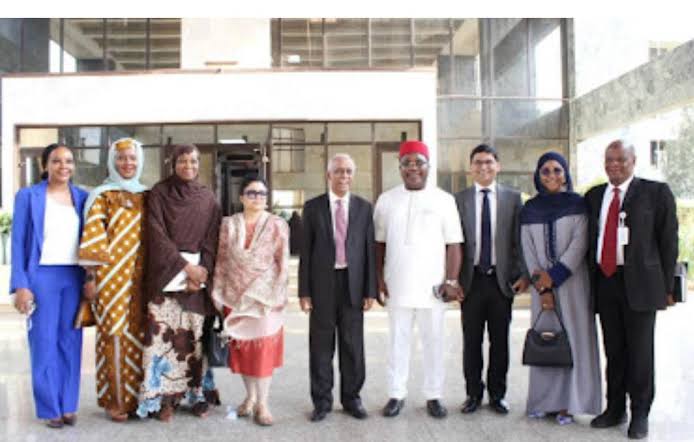
Nigeria and India have signed a bilateral agreement to strengthen human rights protection, institutional capacity and access to justice, with the Attorney-General of the Federation and Minister of Justice, Prince Lateef Fagbemi, SAN, pledging the Federal Government’s support for its implementation.
Fagbemi, who described the agreement as a strategic partnership between the two countries, said its success would ultimately be measured by its impact on ordinary citizens, particularly vulnerable and marginalised groups seeking justice.
The agreement, executed between the National Human Rights Commission (NHRC) of Nigeria and its Indian counterpart, is designed to deepen institutional cooperation, facilitate knowledge transfer, promote technical exchanges and strengthen operational capacity in addressing human rights violations.
The Attorney-General gave the government’s position on Tuesday in Abuja when he received a joint delegation of the two commissions at the Federal Ministry of Justice, describing the partnership as timely, particularly in an increasingly interconnected world where effective human rights protection requires stronger legal frameworks, institutional collaboration and respect for the rule of law.
The development followed a high-level engagement between the two commissions and the Chief Justice of Nigeria (CJN), at the Supreme Court Complex, Abuja, on Monday, as part of a two-day working visit by the Indian delegation.
The Nigerian delegation was led by the Executive Secretary of NHRC, Chief Tony Ojukwu, SAN, OFR, while the Indian delegation was headed by the Chairperson of India’s NHRC, Justice V. Ramasubramanian, accompanied by the Commission’s Joint Secretary, Mr. Samir Kumar.
Fagbemi said the partnership brought together two major democracies with shared common-law traditions, diverse populations and dynamic constitutional frameworks, expressing satisfaction with the thematic areas identified for cooperation under the agreement.
He specifically highlighted access to justice and the protection of digital rights as critical areas requiring urgent attention, particularly as emerging technologies, including Artificial Intelligence, continue to reshape society and create new human rights concerns.
According to him, both countries must develop legal safeguards to protect data privacy, prevent algorithmic bias and safeguard civic space, while ensuring that technological advancement does not undermine fundamental freedoms.
He said the Ministry of Justice expected the two commissions to produce actionable research and policy recommendations capable of addressing these emerging challenges.
Beyond emerging technologies, the Attorney-General stressed that Nigeria’s commitment to human rights must be reflected in the practical implementation of constitutional guarantees and international obligations, rather than merely in the existence of legal provisions.
He cited the African Charter on Human and Peoples’ Rights, which Nigeria domesticated through the African Charter on Human and Peoples’ Rights (Ratification and Enforcement) Act, Cap. A9, Laws of the Federation of Nigeria 2004, as a major instrument underpinning the country’s human rights jurisprudence.
The Charter provides important protections relating to non-discrimination, human dignity, fair trial and personal liberty, reinforcing the fundamental rights guaranteed under Nigeria’s Constitution.
Fagbemi maintained that the true measure of a country’s commitment to human rights was its ability to translate constitutional provisions into accessible institutions, accountable public authorities and an independent judiciary.
He assured the Indian delegation that the Federal Ministry of Justice fully supported the bilateral initiative and was prepared to facilitate technical engagements, joint legal reviews and policy consultations aimed at improving the efficiency of the justice sector.
The Attorney-General also used the engagement to reaffirm the institutional independence of Nigeria’s National Human Rights Commission, stressing that its autonomy was essential to its credibility and effectiveness.
He specifically drew attention to Section 6(3) of the National Human Rights Commission (Amendment) Act, 2010, which provides that the Commission, in exercising its statutory functions, shall not be subject to the direction or control of any other authority or person.
According to him, the administration has continued to respect and protect the Commission’s statutory independence, describing it as fundamental to institutional integrity.
He further noted that the relationship between the NHRC and the Federal Ministry of Justice had been characterised by constructive institutional synergy, mutual respect and a shared commitment to advancing human rights.
The Attorney-General commended Ojukwu and the Nigerian commission for spearheading the bilateral initiative, while expressing appreciation to the Indian delegation for bringing its expertise and institutional experience to the partnership.
Earlier, during Monday’s engagement with the Chief Justice of Nigeria, the Executive Secretary of NHRC Nigeria had emphasised the complementary responsibilities of the judiciary and national human rights institutions in protecting fundamental freedoms, upholding the rule of law and ensuring access to justice.
Ojukwu identified complaint management, Alternative Dispute Resolution, security sector accountability, comparative legal research, digital rights, Artificial Intelligence ethics and environmental justice as priority areas for cooperation between both countries.
The Chief Justice reaffirmed the commitment of the Nigerian Judiciary to human rights protection and encouraged both commissions to exchange experiences and adopt best practices, particularly in strengthening safeguards for vulnerable groups, including women, children and persons with disabilities.
The Indian delegation described the engagement as significant to relations between the two countries, noting that the MoU represented a first-of-its-kind institutional partnership for India’s National Human Rights Commission.
The agreement is expected to promote sustained institutional exchanges, strengthen complaint-handling mechanisms, improve professional capacity and encourage comparative research into legal and policy approaches to human rights protection.
The partnership also comes at a time when national human rights institutions face increasing demands to address abuses linked to security operations, discrimination, environmental degradation, digital surveillance and the misuse of emerging technologies.
For Nigeria, the collaboration offers an opportunity to strengthen its human rights enforcement architecture through international knowledge-sharing while reinforcing the independence and operational effectiveness of its national commission.
Fagbemi, however, cautioned that the ultimate benchmark of the agreement must go beyond official engagements and institutional exchanges to deliver tangible improvements in the lives of citizens, especially those most vulnerable to violations and denied access to justice.
He wished the Indian delegation a productive stay in Nigeria and expressed confidence that the partnership would advance the shared commitment of both countries to human dignity, justice and the protection of fundamental rights.
Nigeria, India Sign Landmark Human Rights Pact, Fagbemi Backs Stronger Institutional Independence
NSCDC Strengthens Gender Policy Implementation, Trains Officers on SGBV, Digital Safety
By: Michael Mike
Corps partners SPRING, FCDO, TechHer to promote women’s participation in peacebuilding, tackle technology-facilitated violence
The Nigeria Security and Civil Defence Corps (NSCDC) has intensified efforts to combat sexual and gender-based violence (SGBV), strengthen women’s participation in security decision-making and promote digital safety among young people through the implementation of its Gender Policy II.
The Commandant-General of the Corps, Prof. Ahmed Audi, stated this at a two-day Gender, Women, Peace and Security capacity-building training organised at the NSCDC College and Support Staff Service, Udege, Nasarawa State.
The training was organised in collaboration with Strengthening Peace and Resilience in Nigeria (SPRING), with support from the United Kingdom’s Foreign, Commonwealth and Development Office (FCDO).
Audi, who delivered his keynote address through a representative, said the policy provided a framework for mainstreaming gender considerations into the Corps’ operations, personnel management, leadership structure and community engagement.
He stressed the need for effective prevention and response to sexual and gender-based violence, including conflict-related abuses and technology-facilitated violence.
The Commandant-General also called for increased participation of women in peacebuilding and security decision-making, equal opportunities within the Corps and stronger partnerships with traditional institutions, government agencies, civil society organisations and development partners.
He urged commands and personnel, particularly Gender Desk Officers, to ensure effective coordination, timely reporting, appropriate referrals, monitoring and accountability in handling gender-related cases.
Audi described the implementation of the policy as a collective responsibility requiring sustained commitment across all levels of the Corps.
In a goodwill message, the Osu Ajiri of Edege Chiefdom, Alhaji Suleiman Ahmed Eko IV, commended the NSCDC for its presence in the community, saying its operations had strengthened the sense of security among residents, particularly farmers.
The traditional ruler pledged the support of his council in addressing gender-based violence, describing the protection of the community as a priority.
Earlier, the Commander of the College, ACG Jamilu Indabawa, said collaboration among relevant stakeholders was critical to achieving effective implementation of the gender policy.
The Gender Equality, Diversity and Social Inclusion Lead of SPRING, Mrs Amina Akano-Bello, said the training was designed to promote peaceful and resilient communities through early identification and response to gender-based violence, as well as the inclusion of women and young people in leadership.
Also, the NSCDC National Headquarters Gender Unit Adviser, DCC Ajet Kemi, provided participants with insights into the different forms of sexual and gender-based violence, their societal implications and preventive measures.
A retired Assistant Commandant-General, Ahmed Abodurin, who facilitated a session on institutional ethics in gender policy implementation, emphasised professionalism, accountability, gender sensitivity and adherence to institutional standards.
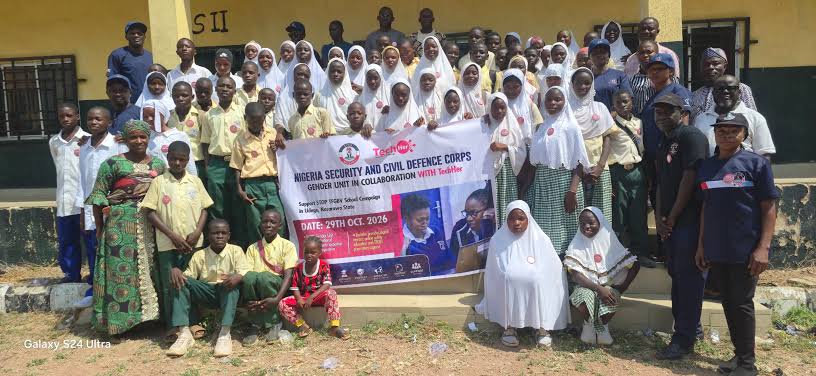
Beyond the capacity-building exercise, the Corps partnered TechHer, an organisation promoting women’s advancement through technology, to extend digital safety awareness to schools in Udege.
The outreach, themed “Stop Technology-Facilitated Gender-Based Violence”, educated students on the dangers of digital abuse, responsible online behaviour and measures for staying safe in digital spaces.
Representatives of the Federal Ministry of Interior, Nasarawa State Ministry of Women Affairs and Social Development, Nasarawa State Ministry of Justice and Gammuo International also delivered goodwill messages, reaffirming the importance of collective action in advancing gender equality, peace and security.
NSCDC Strengthens Gender Policy Implementation, Trains Officers on SGBV, Digital Safety

Nigerian military precision strikes neutralise 19 terrorists in Ngala, Borno

Troops, hunters neutralise ISWAP terrorist in ambush operation in Yobe

LET PLATEAU BREATHE AGAIN

Roger Federer’s Shock as DNA Results Reveal Myla and Charlene Are Not His Biological Children

THE PLIGHT OF FARIDA

FAILED COUP IN BURKINA FASO: HOW TRAORÉ NARROWLY ESCAPED ASSASSINATION PLOT AMID FOREIGN INTERFERENCE CLAIMS
-
 News3 years ago
Roger Federer’s Shock as DNA Results Reveal Myla and Charlene Are Not His Biological Children
-
Opinions5 years ago
THE PLIGHT OF FARIDA
-
 News2 years ago
FAILED COUP IN BURKINA FASO: HOW TRAORÉ NARROWLY ESCAPED ASSASSINATION PLOT AMID FOREIGN INTERFERENCE CLAIMS
-
 Opinions5 years ago
POLICE CHARGE ROOMS, A MINTING PRESS
-

 News3 years ago
EYN: Rev. Billi, Distortion of History, and The Living Tamarind Tree
-

 ACADEMICS3 years ago
A History of Biu” (2015) and The Lingering Bura-Pabir Question (1)
-

 Columns3 years ago
Army University Biu: There is certain interest, but certainly not from Borno.
-

 Politics1 year ago
2027: Why Hon. Midala Balami Must Go, as Youths in Hawul and Asikira/Uba Federal Constituency Reject ₦500,000 as Sallah Gift
