Connect with us

News

NiDOA calls for unity among Nigerians at home and abroad to drive national growth

Published

on

NiDOA calls for unity among Nigerians at home and abroad to drive national growth

By: Michael Mike

The Nigerians in Diaspora Organisation–Americas (NiDOA) has called on Nigerians, both at home and abroad, to foster closer collaboration for the country’s meaningful and sustainable development.

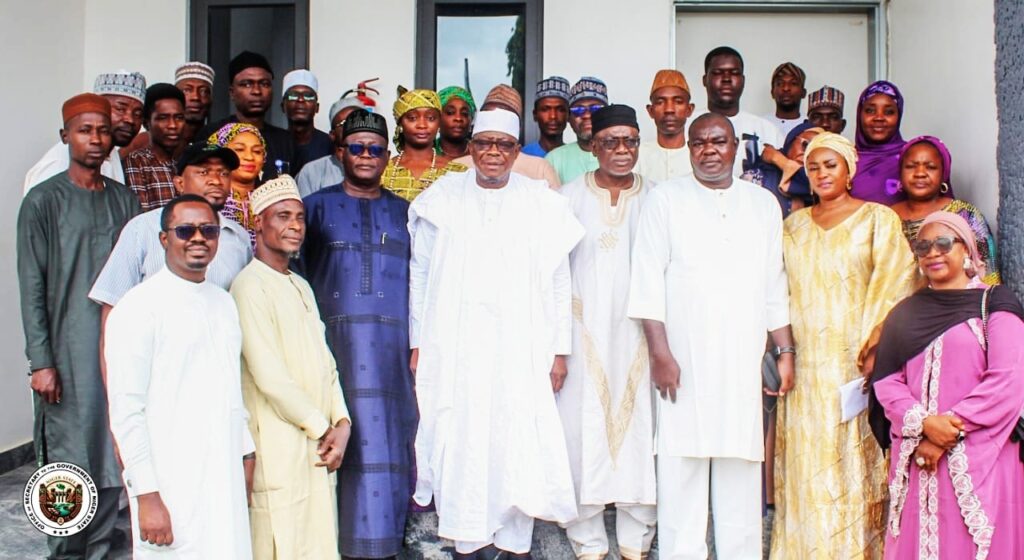
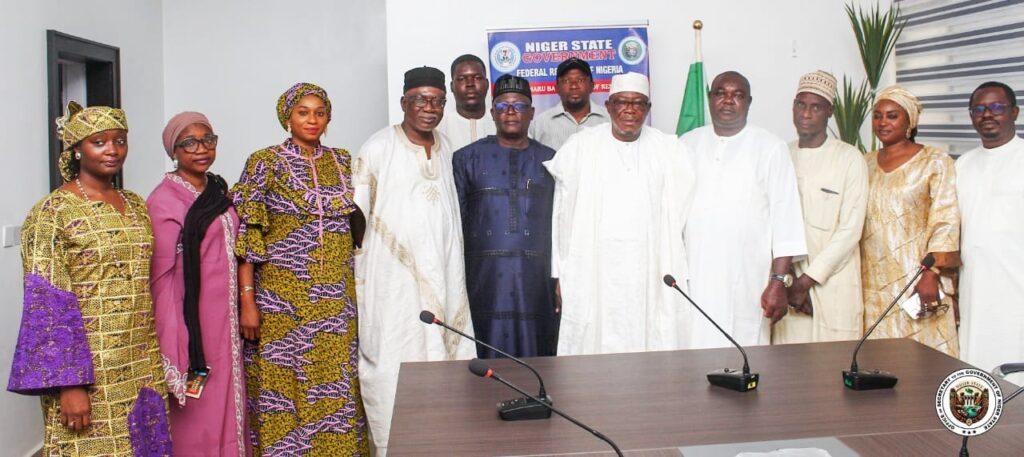
Continental Chair of NiDOA, Dr Victor Ubani, gave the advice during a chat with youth journalists.
Ubani’s comments came in response to the recent public exchange involving Mrs Abike Dabiri-Erewa, Chairman of the Nigerians in Diaspora Commission (NiDCOM), and a social media user — an incident that sparked mixed reactions on the “X” platform.

Ubani emphasised the need for all parties to de-escalate tensions and pursue peaceful resolutions to issues that threatened ethnic harmony and Nigeria’s international reputation.

He warned that: “The growing clamour for sanctions underscores the fear that unchecked bigotry could deepen divisions in an already polarised country like ours.”

He called on Nigerians to unite in rebranding the nation’s image and working collectively to build a more prosperous future.

Ubani said: “Let us continue to forge ahead and form a new path toward rebranding Nigeria and taking our beloved country to greater heights.

“We can do that by being patriotic and working closely together to boost national growth.”
He also appealed to aggrieved parties to look beyond recent events and focus on promoting Nigeria’s global image in a positive light, as a step toward achieving meaningful progress.

He said: “I call on everyone to work closely together so that we can fully realise the set goals for our country.

“Let us come together as Nigerians to move our country forward.”

NiDOA calls for unity among Nigerians at home and abroad to drive national growth

Continue Reading
Click to comment

Leave a Reply

Your email address will not be published. Required fields are marked *

News

Kurmin Wali Church Attacks Spark Fresh Calls for Community-Based Forest Guards

Published

on

Kurmin Wali Church Attacks Spark Fresh Calls for Community-Based Forest Guards

By: Michael Mike

The Northern Christian Youth Professionals (NCYP) have condemned the recent attack on Kurmin Wali village in Kajuru Local Government Area of Kaduna State, describing the incident as a stark reminder of the security gaps in forest-bordering communities across northern Nigeria.

According to reports, armed kidnappers stormed the community, invaded three churches, abducted 169 worshippers, and escaped through nearby forests without encountering resistance. The attack has triggered renewed concern over the vulnerability of rural settlements located close to vast, ungoverned forest areas.

In a statement issued on Thursday, NCYP said the incident underscored the urgent need for a functional and community-driven Forest Guard system. The group argued that if local residents had been trained and deployed as part of a forest security structure, the attack could have been prevented or at least disrupted through early warning and coordination with security agencies.

“The ease with which the attackers operated raises serious questions about the current security framework in forest communities,” the group said, noting that criminal groups often exploit the absence of local resistance to carry out kidnappings and attacks.

While acknowledging the efforts of President Bola Ahmed Tinubu and Kaduna State Governor Uba Sani to address insecurity, the group in the statement signed by its Chairman, Isaac Abrak maintained that recent events show the need to strengthen existing strategies, referencing the federal government’s approval of a Forest Guard initiative but stressed that its success depends on the inclusion of indigenous community members who understand the terrain and live permanently in affected areas.

NCYP further stated that it is unrealistic to expect the military and police to maintain a constant presence in every forest and rural settlement. Instead, it advocated a complementary approach where trained community members support conventional security forces by monitoring forest movements and providing timely intelligence.

The group also linked the urgency of security reforms to the broader political landscape, noting that expectations are high ahead of the 2027 general elections. It urged the federal government to ensure that the Forest Guard initiative is fully implemented in a way that empowers vulnerable communities.

The Kurmin Wali attack adds to a growing list of incidents in Kaduna State and other parts of the North-West, where criminal groups have increasingly targeted rural communities, places of worship, and travellers, often retreating into forests that remain difficult to police.

Security agencies have yet to release an official update on the rescue of the abducted victims or arrests connected to the attack.
End

Continue Reading

News

KASHIM SHETTIMA AND THE PROVERBIAL LIZARD RESTING ON A WATER KEG

Published

on

KASHIM SHETTIMA AND THE PROVERBIAL LIZARD RESTING ON A WATER KEG

By: Inuwa Bwala.

They seem to have come a long way, and they are the only two people that know the chord that have kept them bonded.

President Bola Ahmed Tinubu and Vice President Kashim Shettima, know very well where they stand in the ongoing permutations against the 2027 elections.

Their coordinated silence and keeping their game plans to their chests have perhaps been the secret why they have not allowed the polity to be overheated.

I give them thumbs up, for maintaining their balance, even in the face of deliberate provocations.

Reading the story about perceived pressures, being mounted on President Bola Ahmed Tinubu, to drop his Vice for another, and the attendant suspense from their silence on the matter is a subject for another day.

But the noise being generated reminds me about a story my late mother used to tell me.
It was the story of the mystery egg, which portends death in the family of anybody who sees it.

Whoever sees the egg, whether he or she picks it, or leaves it: one of his or her parents shall die.

This story also aligns with the Nigerian proverb, about the lizard resting on a pot of water.

Attempting to chase the lizard away could break the pot and spill the water, yet allowing it to be could lead to the contamination of the water.

Although it is still at the level of speculations amongst some elements within the ruling All Ptogressives Congress, APC, it is trite that, we disect the likely implications of replacing Vice President, Senator Kashim Shettima, as running mate to President Bola Ahmed Tinubu in the 2027 Presidential race.

It started as a rumor, but it is gradually gaining prominence in political discourse.
Since the ugly incidence in Gombe during the zonal rally of the APC last year, at which Kashim Shettima’s name and picture were omitted from the list of political leaders of the North East, to the most recent public hearing on the review of the APC constitution in Maiduguri where again Shettimas name and picture were ommitted; one is bound to suspect that, there may be deliberate efforts to force the Vice President out of the system.

Both incidents had sparked outrage from Borno State delegates in Gombe, and by the Speaker of the Borno State House of Assembly, Abdulkarim Lawan, at the Maiduguri meet.

At every turn, prominent Nigerians have warned, that, any attempt to force Shettima out shall be counter productive to the APC’s strategy in the 2027 elections.

As rightfully observed by my senior colleague, Dr Ruben Abatti, in a recent opinion on the subject matter, the reactions to these suspicious developments, highlight Kashim Shettima’s significance, in APC’ calculations in the North East region, ahead of 2027.

To my mind, those trying to force the script on President Bola Ahmed Tinubu, are being uncharitable given the fact that; as the highest-ranking politician from the North East region and the attendant roles he has been playing in securing the support of key Northern states for the APC, It may be Tinubu’s costliest political miscalculation, to sacrifice him.

Seemingly ridding on the back of religious balancing, one may be tempted to ask, if Tinubu, who nominated Shettima as his running mate, had found Shettima wanting or working against the intetest of other religions, having worked with him for two and a half years now?

Like him or not, Kashim Shettims has given very good account of himself as a loyal, competent, dependable and a politically suave personality.

Removing Shettima at a time many Nigerians are beggining to accept the Tinubu administration, because of Shettima’s many interventions, could further re-open healing wounds, and his growing fans could turn reluctant, in supporting the APC.
As rightfully observed, the North East, where Shettima holds the aces could be alienated, and his fellow Muslim voters, may look other ways.

There is this wise saying that, “You dont change a winning team in the middle of the game”. Applying this wisdom may save Tinubu in the face of an impending destabilization of the APC’s electoral calculations.

Without prejudice to the political values of those being touted as possible replacements: including, Bishop Matthew Hassan Kukah, Yakubu Dogara, General Christopher Musa, and even Shettimas political godson, Professor Babagana Umara Zulum, the odds are still in favour of retaining the old ticket.

Whether necessiated by internal dynamics or fueled by perceived external pressures, from the United States, President Tinubu is safer, working with the devil he now knows.

I make bold to state that, Kashim Shettima weilds an intimidating political credentials, which resonates with many Nigerians, who did not hitherto knew who Shettima is.
Kashim Shettima is politically sagacious, with the capacity to turn around the ship heading for the rocks.

His influence over electorates in the North East cannot be underrated
and if I may suggest maintaining Shettima as President Tinubu’s running mate in 2027, would not only ensure continuity, but also stability, and regional balance, as analyst argue.

While others may argue otherwise, I see Shettima as the proverbial lizard hanging on a pot filled with drinking water. One risks stonning the lizard and break the pot or allow the lizard to spoil the water.

KASHIM SHETTIMA AND THE PROVERBIAL LIZARD RESTING ON A WATER KEG

Continue Reading

News

FOOD SECURITY: VP Shettima Unveils Nigeria’s Macro-Strategy At Davos Meeting

Published

on

FOOD SECURITY: VP Shettima Unveils Nigeria’s Macro-Strategy At Davos Meeting

Says ‘Back to the Farm’ initiative to curb inflation, FX spending on imports

By: Our Reporter

Vice President Kashim Shettima has announced that Nigeria no longer views food security through a narrow agricultural lens, but as a fundamental macroeconomic, security, and governance issue.

He said the Federal Government had begun a multi-dimensional agricultural drive designed to insulate the nation from global shocks while restoring the productivity of its food basket regions.

Speaking at a high-level panel titled “When Food Becomes Security” at the Congress Centre during the 56th World Economic Forum (WEF) meeting in Davos, Switzerland, VP Shettima said the Federal Government no longer treats food security as a narrow agricultural concern but as a strategic pillar for governance, economic stability, and regional cohesion.

“In Nigeria, we don’t look at food security purely as an agricultural issue. It is a macroeconomic, security and governance issue. Our focus is to use food security as a pillar for national security, regional cohesion and stability.”

According to the Vice President, Nigeria’s food security strategy is anchored on three pillars: increased food production, environmental sustainability, and deeper regional integration within the West African sub-region.

He explained that changing global trends and supply chain disruptions have compelled Nigeria to look inward and rebuild its agricultural base by developing resilient food systems tailored to its diverse ecological zones.

“Nigeria is a very large country, and there is an incestuous relationship between economy and ecology. In the Sahelian North, we are dealing with desertification, deforestation and drought. In the riverine South and parts of the North Central, flooding is our major challenge.”

To address these challenges, the Vice President said the government is promoting drought-resistant, flood-tolerant, and early-maturing varieties of staple crops such as rice, sorghum, and millet, while redesigning food systems in flood-prone southern regions to withstand climate shocks.

Security, he noted, remains a major constraint, particularly because many conflict-affected areas are also Nigeria’s primary food-producing zones.

“Most of the food baskets of our nation are security-challenged. That is why we are creating food security corridors and strengthening community-based security engagements so farmers can return safely to their land.”

He disclosed that the Federal Government has launched the Back to the Farm Initiative, a programme designed to resettle displaced farmers by providing them with agricultural inputs, insurance, and access to capital to restart food production.

Addressing Nigeria’s macroeconomic vulnerabilities, the Vice President identified import dependence and foreign exchange volatility as major drivers of food inflation.

“We largely import wheat, sugar and dairy products, and this has a direct impact on inflation. Our strategy is to accelerate local production and promote substitutes such as sorghum, millet and cassava flour to correct these structural imbalances,” VP Shettima said.

The Vice President said Nigeria’s approach aligns food security with national stability, inflation control, and regional cooperation, positioning agriculture as a frontline response to both economic and security threats.

The Vice President further highlighted that Nigeria, renowned as the African giant, has “woken up from its slumber” under President Tinubu, and that the government is on course to make “it possible for smallholders and fishers to become investable at scale” within 12 months.

The Vice President confirmed that, in Africa, especially in light of global trends, intra-African trade has almost become a necessity, adding that “there have been some alignments.”

Senator Kashim Shettima urged his African counterparts to intensify efforts under the canopy of the African Continental Free Trade Area (AfCFTA) to ensure that African nations get things right internally.

The Vice President expressed optimism that with the ongoing Renewed Hope Agenda reforms, the coming months will witness greater climate adaptation moving from pilot to reality, as well as a boom in intra-African trade far beyond 10.7%.

FOOD SECURITY: VP Shettima Unveils Nigeria’s Macro-Strategy At Davos Meeting

Continue Reading

Trending

Verified by MonsterInsights