
News
Niger Republic’s Military Leader’s Allegations Against Nigeria Are Baseless – FG

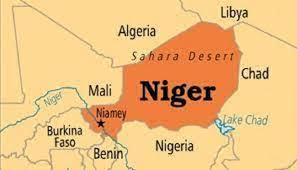
Niger Republic’s Military Leader’s Allegations Against Nigeria Are Baseless – FG
By: Mohammed Idris
The Federal Government of Nigeria strongly rejects allegations made in a viral video by the military leader of Niger Republic, General Abdourahamane Tchiani, claiming non-existent collusion between Nigeria and France to destabilize his country.
These claims exist solely in the realm of imagination, as Nigeria has never engaged in any overt or covert alliance with France – or any other country – to sponsor terrorist attacks or destabilize the Niger Republic in the wake of the undemocratic change in the leadership of that country.
President Bola Ahmed Tinubu (GCFR), as Chairman of ECOWAS, has demonstrated exemplary leadership, keeping the doors of the sub-regional body open to re-engaging Niger Republic despite the political situation in the country. Nigeria remains committed to fostering peace, harmony, and historic diplomatic ties with Niger.
Nigeria’s Armed Forces, in collaboration with partners in the Multinational Joint Task Force, are succeeding in curbing terrorism within the region. It is, therefore, absurd to suggest that Nigeria would conspire with any foreign power to undermine the peace and security of a neighbouring country.
Neither the Nigerian government nor any of its officials has ever been involved in arming or supporting any terror group to attack Niger Republic. Furthermore, no part of Nigeria has been ceded to any foreign power for subversive operations in Niger Republic. We reiterate our full support to senior Nigerian government officials for their untiring commitment to fostering peace and security between the government and people of Nigeria and Niger, and for their efforts towards stronger cooperation in the ECOWAS region.
Indeed, Nigeria has a long-standing tradition of safeguarding its sovereignty and territorial integrity. Unlike some nations, Nigeria has never permitted foreign powers to establish military bases on its soil. This demonstrates our commitment to national independence and regional leadership.
The accusation that Nigeria seeks to sabotage Niger’s pipelines and agriculture is both unfounded and counterproductive. Nigeria has consistently supported Niger’s economic development through joint energy and infrastructure projects, such as the Trans-Saharan Gas Pipeline and the Kano-Maradi Railway Project. It is illogical to suggest that Nigeria would undermine initiatives it has actively promoted.
The claims about the alleged establishment of a so-called Lakurawa terrorist headquarters in Sokoto State, purportedly orchestrated by Nigeria in collaboration with France, are baseless. Nigeria has been a regional leader in combating terrorism, dedicating significant resources and lives to ensure stability in the Lake Chad Basin and beyond.
Recently, the Nigerian military launched Operation Forest Sanity III, specifically addressing the Lakurawa threat, Code Named Operation Chase Lakurawa Out. How can a government actively fighting the Lakurawa menace now be accused of harbouring the same group within its borders? These accusations lack credible evidence and seem to be part of a broader attempt to deflect attention from Niger’s internal challenges.
The public is urged to disregard these false allegations. Those making such claims, particularly the Military Leader in Niger Republic, must provide credible evidence to substantiate them. Any attempt to blackmail Nigeria over ECOWAS’s principled stance against the unconstitutional seizure of power in the Niger Republic is both disingenuous and doomed to fail.
In conclusion, President Tchiani’s allegations are not only unfounded but also a dangerous attempt to divert attention from his administration’s shortcomings. Nigeria remains committed to fostering regional stability and will continue to lead efforts to address terrorism and other transnational challenges. We urge Niger to focus on constructive dialogue and collaboration rather than peddling baseless accusations.
Niger Republic’s Military Leader’s Allegations Against Nigeria Are Baseless – FG


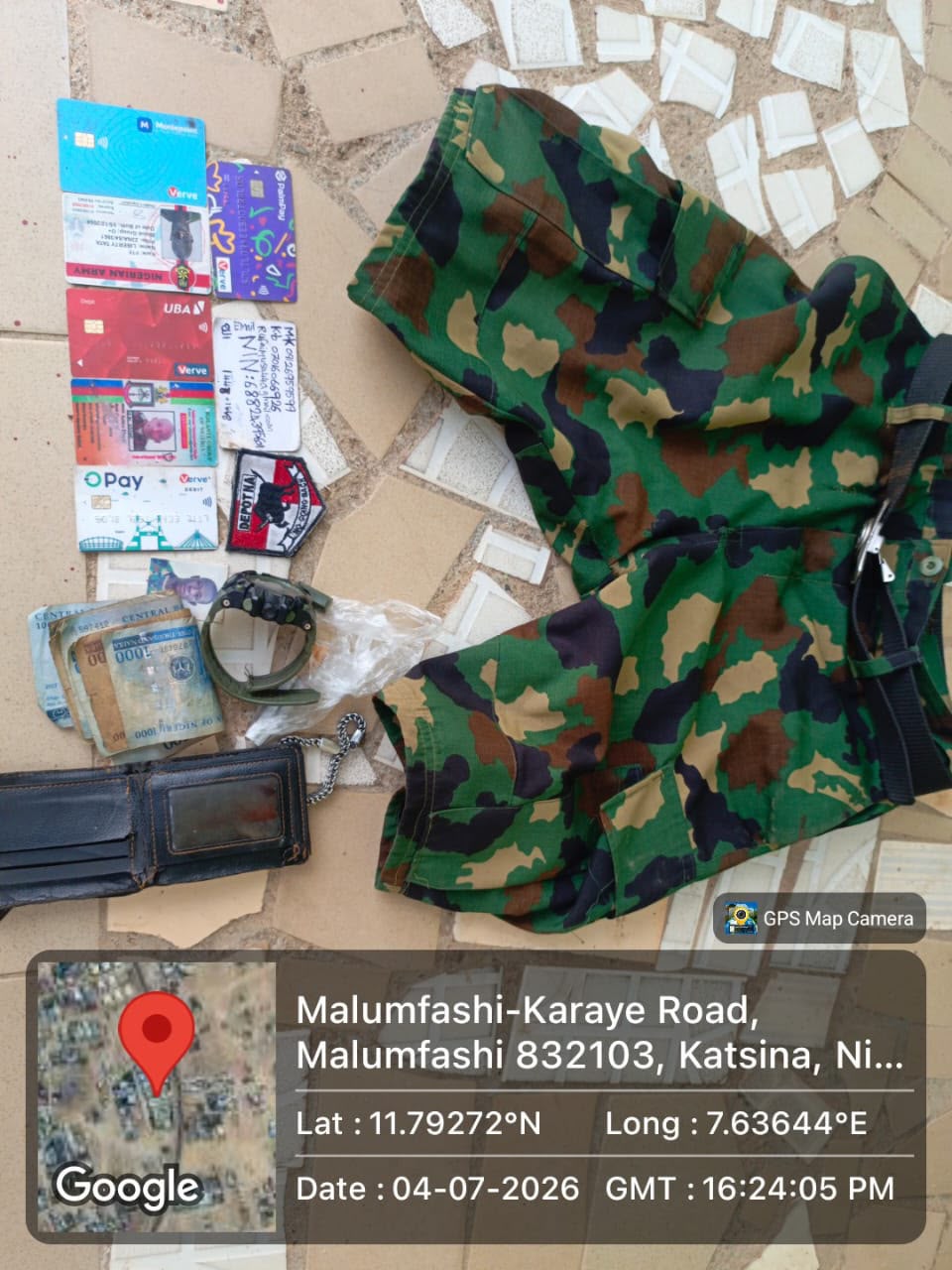
Troops Arrest Suspected Military Impostor in Katsina
By Zagazola Makama
Troops of 17 Brigade have arrested a suspected military impostor during a fighting patrol in Malumfashi Local Government Area.
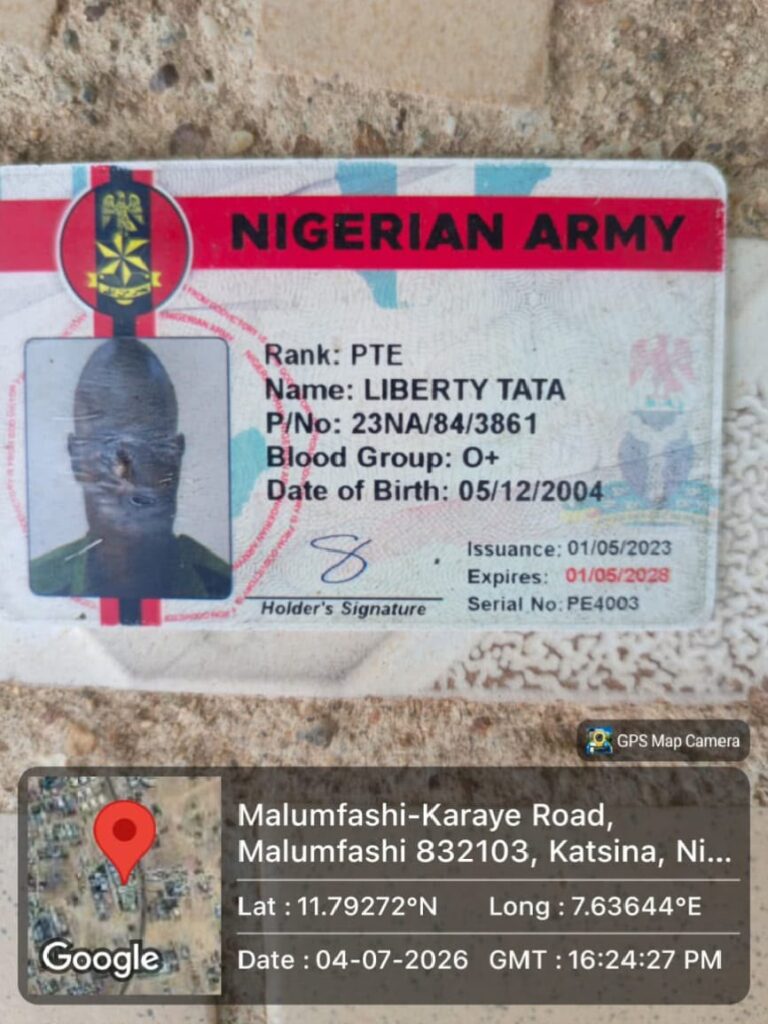
Security sources told Zagazola Makama that the suspect was apprehended at about 1:30 p.m. on July 4 by troops deployed at the Forward Operating Base (FOB) Malumfashi while conducting routine patrols within Malumfashi town.

According to the sources, the suspect was intercepted while wearing a woodland camouflage three-quarter short, raising suspicion among the troops.
A search conducted on the suspect led to the recovery of a fake Nigerian Army identity card, four Automated Teller Machine (ATM) cards, one woodland camouflage three-quarter short, a wristwatch and the sum of ₦17,000.
The suspect and the recovered exhibits are currently in military custody pending further investigation.
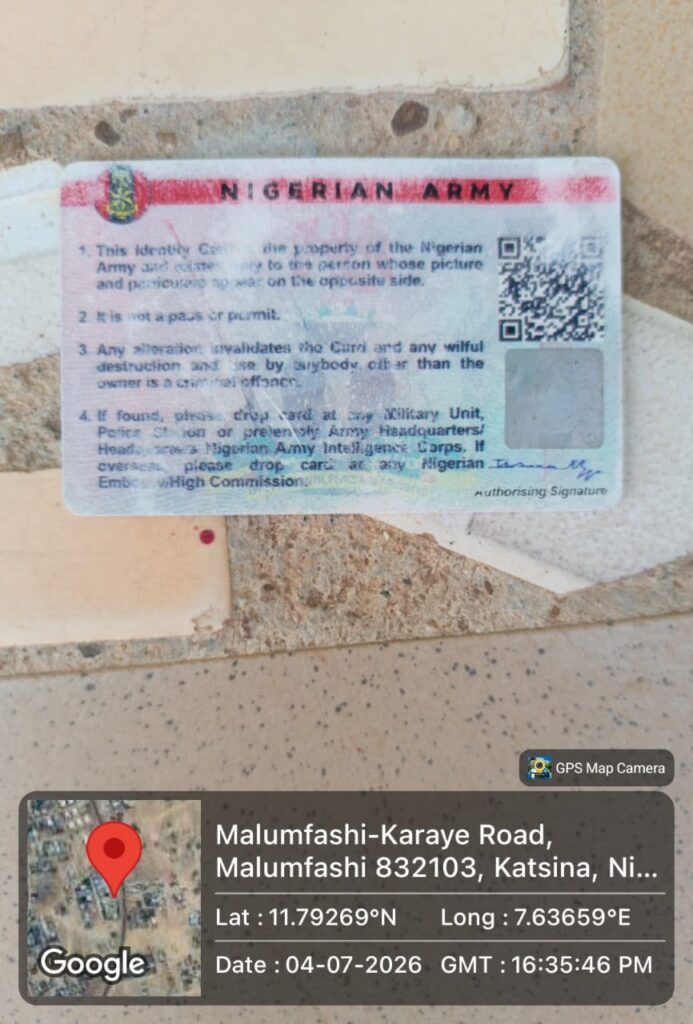
Military sources said the arrest forms part of ongoing efforts to curb impersonation of security personnel and other criminal activities within the area.
Troops Arrest Suspected Military Impostor in Katsina
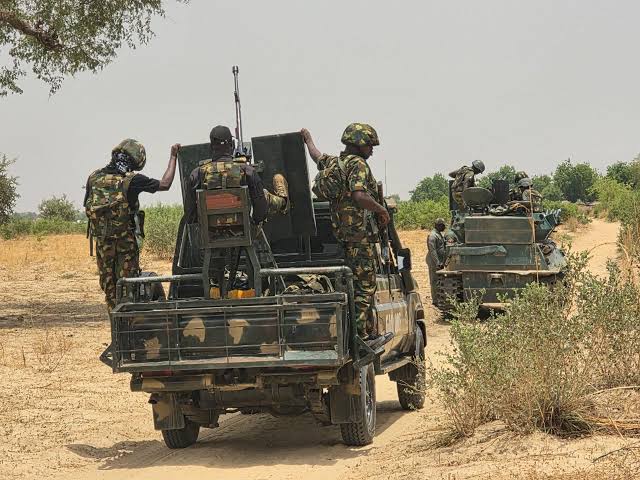
Troops Recover 50 Rustled Cattle, Repel Suspected Rustlers in Kaduna
By Zagazola Makama
Troops deployed at the Forward Operating Base (FOB) Kankomi have recovered 50 rustled cattle after repelling suspected cattle rustlers during an ambush operation in Chikun Local Government Area.
Security sources told Zagazola Makama that the troops responded to a distress call at about 9:55 a.m. on July 4 over the activities of suspected rustlers at Ungwan Gontu community.
According to the sources, the troops swiftly laid an ambush and made contact with the fleeing suspects, forcing them to abandon the stolen livestock and escape into the surrounding area.
During the operation, the troops recovered 50 rustled cattle, which were subsequently identified and handed over to their rightful owner.
Military sources said efforts are ongoing to track down the fleeing suspects as security operations continue to combat cattle rustling and other criminal activities across Kaduna State.
Troops Recover 50 Rustled Cattle, Repel Suspected Rustlers in Kaduna
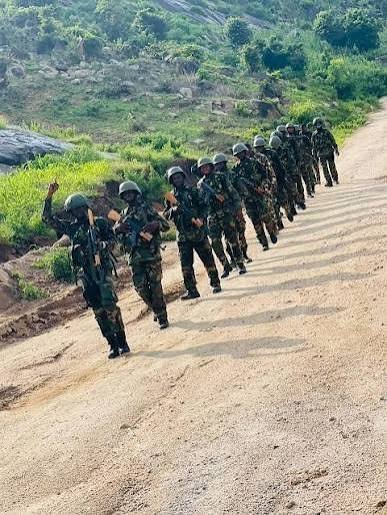
Troops Arrest Suspected Terrorist in Kogi, Suspect Confesses to Group Membership
By Zagazola Makama
Troops of 12 Brigade, in collaboration with Office of the National Security Adviser (ONSA) Hybrid Forces, have arrested a suspected terrorist during an operation in Lokoja Local Government Area.
Security sources told Zagazola Makama that the troops responded at about 1:00 p.m. on July 4 to reports of a confrontation between local residents and a suspected terrorist at a Ruga settlement behind Obajana community.
According to the sources, the troops swiftly intervened and arrested one suspect at the scene.
During preliminary interrogation, the suspect reportedly confessed to being a member of a terrorist group led by an individual identified as Haruna, which allegedly operates within the Okene general area.
The suspect is currently in military custody and is undergoing further investigation to establish the extent of his involvement and identify other members of the group.
Military sources said the arrest forms part of ongoing security operations aimed at dismantling terrorist and criminal networks across Kogi State.
Troops Arrest Suspected Terrorist in Kogi, Suspect Confesses to Group Membership

Troops Arrest Suspected Military Impostor in Katsina

Troops Recover 50 Rustled Cattle, Repel Suspected Rustlers in Kaduna

Troops Arrest Suspected Terrorist in Kogi, Suspect Confesses to Group Membership

Roger Federer’s Shock as DNA Results Reveal Myla and Charlene Are Not His Biological Children

THE PLIGHT OF FARIDA

FAILED COUP IN BURKINA FASO: HOW TRAORÉ NARROWLY ESCAPED ASSASSINATION PLOT AMID FOREIGN INTERFERENCE CLAIMS
-
 News2 years ago
Roger Federer’s Shock as DNA Results Reveal Myla and Charlene Are Not His Biological Children
-
Opinions4 years ago
THE PLIGHT OF FARIDA
-
 News1 year ago
FAILED COUP IN BURKINA FASO: HOW TRAORÉ NARROWLY ESCAPED ASSASSINATION PLOT AMID FOREIGN INTERFERENCE CLAIMS
-

 News2 years ago
EYN: Rev. Billi, Distortion of History, and The Living Tamarind Tree
-
 Opinions5 years ago
POLICE CHARGE ROOMS, A MINTING PRESS
-

 ACADEMICS2 years ago
A History of Biu” (2015) and The Lingering Bura-Pabir Question (1)
-

 Columns2 years ago
Army University Biu: There is certain interest, but certainly not from Borno.
-

 Politics1 year ago
2027: Why Hon. Midala Balami Must Go, as Youths in Hawul and Asikira/Uba Federal Constituency Reject ₦500,000 as Sallah Gift
