
News
Nigeria Adopts Proactive Flood Strategy To Curb Disaster Ahead Of Rainy Season

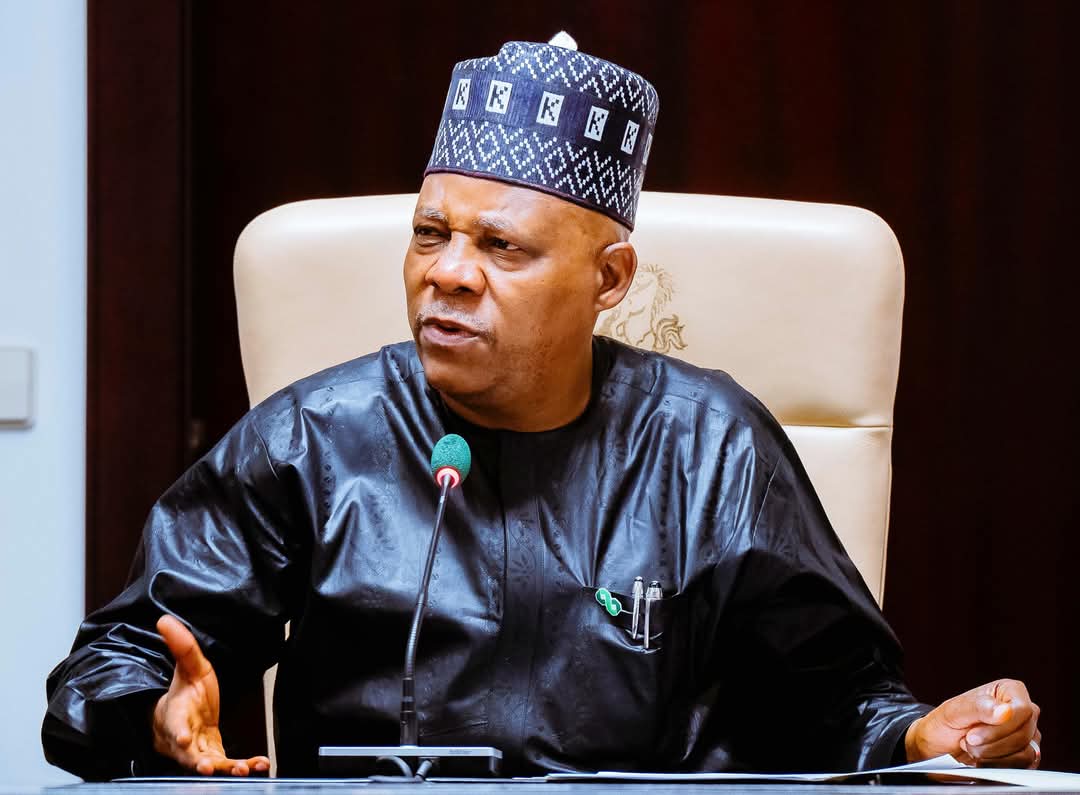
Nigeria Adopts Proactive Flood Strategy To Curb Disaster Ahead Of Rainy Season
** We must act now to protect lives and livelihoods, VP Shettima warns
By: Our Reporter
Vice President Kashim Shettima has disclosed that the Federal Government has moved Nigeria’s flood response from reactive disaster relief to proactive preparedness with the launch of the Anticipatory Action Task Force (AATF) on Floods.
According to him, the initiative aligns with global frameworks such as the Sendai Framework for Disaster Risk Reduction, the Sustainable Development Goals (SDGs), and the Paris Agreement on Climate Change, which emphasises proactive disaster preparedness to mitigate the impact of natural disasters and protect vulnerable communities.

The Vice President, who gave the hint on Tuesday during a meeting of the Anticipatory Action Task Force (AATF) on Floods at the Presidential Villa in Abuja, said the traditional response of mobilising relief after floods strike is no longer sustainable.
“We cannot afford to wait for disaster to strike before taking action. The human and economic toll of floods in Nigeria has become unbearable. We must act now to protect lives and livelihoods by leveraging science, technology, and collaboration,” VP Shettima stated.
Members of the Task Force include Nigerian Meteorological Agency (NiMET), the Nigeria Hydrological Services Agency (NiHSA), the National Emergency Management Agency (NEMA), the Federal Ministry of Humanitarian Affairs and Poverty Reduction, alongside state emergency management agencies and international development partners.
VP Shettima said, “Prevention is always cheaper than response, and investing in early action today will save billions in future losses. We need to strengthen coordination among agencies, engage local communities, and ensure that preparedness efforts are backed by real-time data.”

Earlier in his remarks, United Nations Resident & Humanitarian Coordinator in Nigeria, Mohamed Fall, explained that the United States’ suspension of humanitarian funding is a wake-up call for us to be more efficient, adding that “transitioning from reactive aid to anticipatory action is critical.
“As we approach the rainy season, we must factor in these developments and ensure that our interventions are timely and effective,” he further noted.
Also, Head of the UN Office for the Coordination of Humanitarian Affairs (OCHA) in Nigeria, Trond Jensen, commended the initiative, explaining that “a critical part of humanitarian response is anticipatory action; not only are we saving lives and reducing vulnerability, we are doing it more efficiently.”
He further commended the government’s leadership, stating that “we are the vanguard of innovation in anticipatory action, and for that, we are grateful to be your partners.”
Director General of NEMA, Mrs. Zubaida Umar, narrated ongoing efforts to enhance disaster preparedness, including the development of the Hazard Risk Countrywide Analysis, a document aimed at strengthening Nigeria’s resilience against flooding.
“We have established a national coordination forum, bringing together all relevant agencies to ensure readiness. This effort is based on the seasonal climate predictions from NiMET, ensuring that all stakeholders are on high alert,” Umar said.
Also, Special Assistant to the President on Humanitarian Affairs and Development Partners, Inna Binta Audu, explained the progress made by the task force, saying it has already conducted substantial work, with extensive data collection spanning three decades.
“Presently, we have collated relevant data going back 30 years to be used for the Anticipatory Action Framework for Nigeria,” she said.

Others who spoke at the meeting included the Directors- General of NiMET and NiHSA, as well as the National Coordinator of the National Counter Terrorism Centre, Major General Adamu Laka.
Nigeria Adopts Proactive Flood Strategy To Curb Disaster Ahead Of Rainy Season


Army, DSS arrest notorious cultist, gunrunner in Cross River, recover weapons
By: Zagazola Makama
Troops of 13 Brigade, in collaboration with the Department of State Services (DSS), have arrested a suspected cultist and gunrunner during a raid operation in Ikom Local Government Area of Cross River State.
Security sources said the operation was carried out at about 1:10 a.m. on April 3 along Effangha Spring Road in Ikom.
The sources disclosed that the suspect, who hails from Khana Local Government Area of Rivers State, was apprehended during the coordinated raid.
According to the sources, troops recovered one revolver pistol, one sword, two laptops, four mobile phones, one digital camera, one wristwatch, three identity cards, and a sack of garri allegedly used to conceal the weapon.
The suspect and recovered items have since been handed over to the DSS for further investigation and possible prosecution.
Security authorities said the operation is part of ongoing efforts to curb cult-related violence and illegal arms circulation in the South-South region.
Army, DSS arrest notorious cultist, gunrunner in Cross River, recover weapons
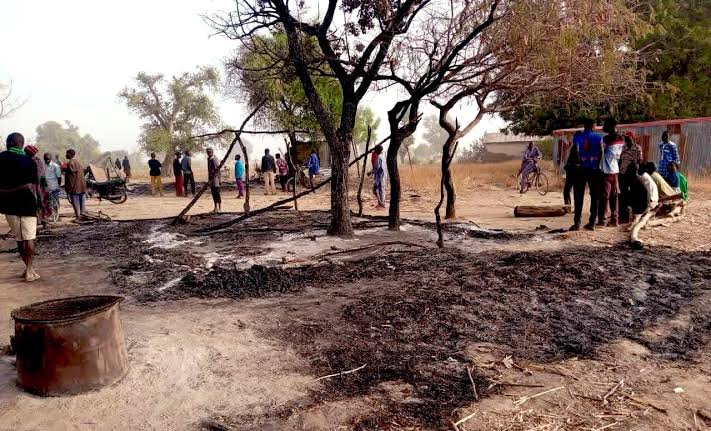
Gunmen kill village head, wife in Adamawa, son hospitalised
By: Zagazola Makama
Unknown gunmen have killed a village head and his wife in Tunga Waja community, Lamurde Local Government Area of Adamawa State.
Security sources said the incident occurred at about 8:50 p.m. on April 2, when the assailants attacked the residence of the village head and opened fire on him, his wife and their son.
The sources disclosed that the village head died on the spot, while his wife and son sustained gunshot wounds and were evacuated to a medical facility in Tingno for treatment.
According to the sources, the wife later died at the hospital, while the son is currently receiving treatment.
The motive behind the attack remains unclear, while efforts are ongoing to identify and apprehend the perpetrators.
The incident has heightened concerns among residents, as security agencies intensify efforts to restore calm and prevent further attacks in the area.
Gunmen kill village head, wife in Adamawa, son hospitalised
Three soldiers injured in road accident during pursuit of bandits in Kaduna
By: Zagazola Makama
Three soldiers have sustained injuries following a road traffic accident during an encounter with suspected armed bandits in Birnin Gwari Local Government Area of Kaduna State.
Security sources said the incident occurred at about 3:00 p.m. on April 2, when troops of 2 Battalion deployed at Forward Operating Base Dogon Dawa were returning from an administrative patrol.
The sources explained that the troops reportedly sighted a group of armed bandits attempting to block the road at Ngede Allah and engaged them, forcing the criminals to flee.
During the pursuit, however, three soldiers fell off a military gun truck and sustained varying degrees of injuries, including fractures to the hand and leg.
The injured personnel were immediately evacuated to the 44 Nigerian Army Reference Hospital in Kaduna, where they are currently receiving treatment and responding positively.
Security operations in the area have continued as troops maintain pressure on criminal elements within the axis.
Three soldiers injured in road accident during pursuit of bandits in Kaduna

Man O’ War personnel reports abduction of female colleague in Bayelsa

Army, DSS arrest notorious cultist, gunrunner in Cross River, recover weapons

Gunmen kill village head, wife in Adamawa, son hospitalised

Roger Federer’s Shock as DNA Results Reveal Myla and Charlene Are Not His Biological Children

THE PLIGHT OF FARIDA

FAILED COUP IN BURKINA FASO: HOW TRAORÉ NARROWLY ESCAPED ASSASSINATION PLOT AMID FOREIGN INTERFERENCE CLAIMS
-
 News2 years ago
Roger Federer’s Shock as DNA Results Reveal Myla and Charlene Are Not His Biological Children
-
Opinions4 years ago
THE PLIGHT OF FARIDA
-
 News12 months ago
FAILED COUP IN BURKINA FASO: HOW TRAORÉ NARROWLY ESCAPED ASSASSINATION PLOT AMID FOREIGN INTERFERENCE CLAIMS
-

 News2 years ago
EYN: Rev. Billi, Distortion of History, and The Living Tamarind Tree
-
 Opinions4 years ago
POLICE CHARGE ROOMS, A MINTING PRESS
-

 ACADEMICS2 years ago
A History of Biu” (2015) and The Lingering Bura-Pabir Question (1)
-

 Columns2 years ago
Army University Biu: There is certain interest, but certainly not from Borno.
-

 Opinions2 years ago
Tinubu,Shettima: The epidemic of economic, insecurity in Nigeria
