
News
Nigeria aims at strengthening conflict-sensitive climate adaptation

Nigeria aims at strengthening conflict-sensitive climate adaptation
By: Michael Mike
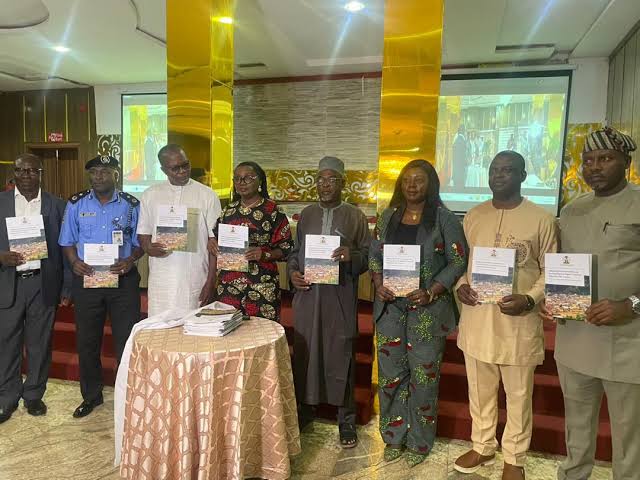
The Federal Ministry of Environment, through its Department of Climate Change, in collaboration with the NAP Global Network, has launched an inception workshop aimed at strengthening Nigeria’s capacity for conflict-sensitive climate adaptation while unveiling a new report on integrating peacebuilding into the country’s National Adaptation Plan (NAP) process.
The event, held in Abuja, brought together senior government officials, development partners, security experts, and representatives from various ministries, departments, and agencies (MDAs). It marked a critical step in mainstreaming conflict-sensitivity into Nigeria’s climate policies and development planning.
Delivering the welcome address, the Director, Department of Climate Change, Dr. (Mrs) Iniagbong Abiola-Awe, stressed the urgency of addressing climate impacts that are increasingly exacerbating insecurity across Nigeria.
“Climate change is already driving extreme weather events, threatening biodiversity, damaging infrastructure, and fueling security challenges.
While mitigation efforts continue, adaptation is equally crucial so that we can adjust systems without undermining daily life,” she said.
She explained that Nigeria’s ongoing NAP formulation will provide a medium to long-term strategy for addressing climate vulnerabilities in a transparent and participatory manner.
Representing the NAP Global Network, Ms. Katrina underscored the importance of linking adaptation with peacebuilding.
“Unpredictable rainfall, rising temperatures, and resource stress often intersect with social and political tensions. If poorly managed, these pressures can worsen inequalities and deepen conflicts.
But if addressed thoughtfully, they can foster cooperation, dialogue, and peace,” she noted, adding that Nigeria’s leadership in this space sets an example for other countries grappling with similar challenges.
The Permanent Secretary of the Ministry, in his opening remarks, recalled Nigeria’s commitment under international agreements such as the UN Framework Convention on Climate Change and the Kyoto Protocol, highlighting the country’s pledge under its Nationally Determined Contribution (NDC 3.0) to cut greenhouse gas emissions by 47% with international support.
He explained that beyond mitigation, Nigeria’s NAP process—supported by the Green Climate Fund—is focusing on adaptation strategies in 13 thematic areas, including climate risk and vulnerability assessments, to strengthen community resilience.
He emphasized that conflict-sensitivity is vital, given Nigeria’s security challenges such as farmer-herder clashes, cattle rustling, and banditry.
“Ignoring medium and long-term adaptation needs in a fragile, conflict-prone context would be a mistake.
Climate action, if conflict-sensitive, can break cycles of fragility by tackling root causes, improving social well-being, and promoting peace,” he said.
The new report launched at the workshop outlines practical guidance for integrating peacebuilding into adaptation processes, identifying enabling factors such as leadership, data, financing, institutional arrangements, stakeholder engagement, and skills development.
Stakeholders were urged to provide meaningful input into the materials being developed and to ensure that climate activities undertaken by their institutions are conflict-sensitive.
The workshop concluded with a call for stronger collaboration, capacity building, and inclusive approaches that position Nigeria as a global leader in linking climate resilience with peacebuilding.
Nigeria aims at strengthening conflict-sensitive climate adaptation



Troops intercept 11 youths with donkeys during patrol in Borno
By: Zagazola Makama
Troops of 68 Battalion have intercepted 11 youths during a routine patrol in Mallam Fatori area of Abadam Local Government Area of Borno State.
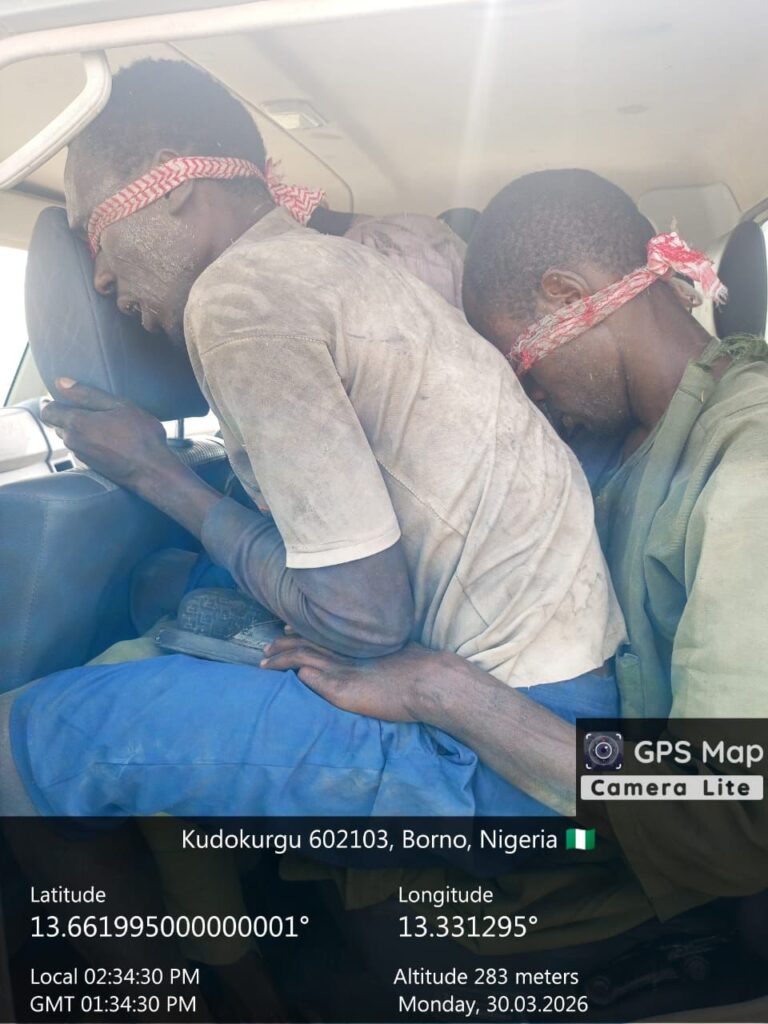
Security sources said the interception occurred along the Bulagana–Cheisa axis on April 2 during ongoing clearance operations in the area.
According to the sources, the individuals were found moving in the area with 12 donkeys when they were stopped and briefly interrogated by troops.
The sources added that the youths were later handed over, alongside the animals, to relevant authorities in a neighbouring country for further necessary action.
The military said the patrol was part of sustained efforts to maintain security dominance and prevent exploitation of border communities by criminal elements.
Troops intercept 11 youths with donkeys during patrol in Borno
Troops recover ammunition, logistics items in Kwara patrol operation
By: Zagazola Makama
Troops of the Nigerian Army under the 22 Brigade have recovered ammunition and other logistics items during a fighting patrol in Ifelodun Local Government Area of Kwara State.
A security source disclosed that the operation was conducted at about 4:00 p.m. on April 2 at Daban Lema, where troops of the brigade, operating from the Patrol Base, encountered signs of suspected terrorist activities in a deserted location.
According to the source, the troops immediately carried out exploitation of the area, leading to the recovery of four rounds of 7.62mm special ammunition and one empty PKT ammunition belt link.
Other items recovered include four mobile phones, two head warmers, two small solar panels, and assorted repair tools believed to have been used by the suspected terrorists.
The source added that the recovery indicates the presence and movement of suspected criminal elements within the area, noting that troops have intensified surveillance and patrols to deny them freedom of action.
Troops recover ammunition, logistics items in Kwara patrol operation
Troops foil attack by Criminal Youths, rescue victims, arrest suspects in plateau
By: Zagazola Makama
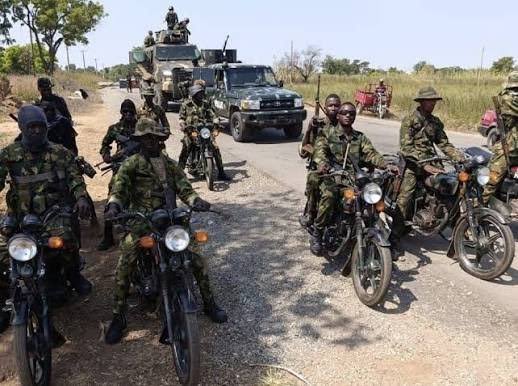
Troops of Sector 1, Operation Enduring Peace (OPEP), have foiled an attack on residents at Dutse Uku in Jos North Local Government Area of Plateau State.
A security source said the troops responded swiftly to a report of sporadic gunshots in the area at about 11:50 p.m. on April 2.
According to the source, upon arrival at the scene, the suspected criminals fled, abandoning their operation due to the prompt intervention of the troops.
He said the troops rescued two victims who sustained gunshot wounds during the incident and immediately evacuated them to a hospital for medical attention.
The source further disclosed that two suspects, dressed in black attire, were arrested at the scene.
Items recovered from the suspects include a cutlass and a knife.
He added that the suspects are currently in military custody and undergoing preliminary investigation, while efforts are ongoing to track down other fleeing members of the group.
Zagazola report that despite heightened security, there has been report of pocket of attacks in some communities.
The source reassured residents of the military’s commitment to protecting lives and property and urged the public to continue providing timely information to security agencies.
Troops foil attack by Criminal Youths, rescue victims, arrest suspects in plateau

Troops intercept suspected Boko Haram logistics convoy conveying 13 persons in Borno

Troops intercept 11 youths with donkeys during patrol in Borno

Troops, CJTF arrest three suspected Boko Haram logistics suppliers in Borno

Roger Federer’s Shock as DNA Results Reveal Myla and Charlene Are Not His Biological Children

THE PLIGHT OF FARIDA

FAILED COUP IN BURKINA FASO: HOW TRAORÉ NARROWLY ESCAPED ASSASSINATION PLOT AMID FOREIGN INTERFERENCE CLAIMS
-
 News2 years ago
Roger Federer’s Shock as DNA Results Reveal Myla and Charlene Are Not His Biological Children
-
Opinions4 years ago
THE PLIGHT OF FARIDA
-
 News12 months ago
FAILED COUP IN BURKINA FASO: HOW TRAORÉ NARROWLY ESCAPED ASSASSINATION PLOT AMID FOREIGN INTERFERENCE CLAIMS
-

 News2 years ago
EYN: Rev. Billi, Distortion of History, and The Living Tamarind Tree
-
 Opinions4 years ago
POLICE CHARGE ROOMS, A MINTING PRESS
-

 ACADEMICS2 years ago
A History of Biu” (2015) and The Lingering Bura-Pabir Question (1)
-

 Columns2 years ago
Army University Biu: There is certain interest, but certainly not from Borno.
-

 Opinions2 years ago
Tinubu,Shettima: The epidemic of economic, insecurity in Nigeria
