News
Nigeria-China Relations at 55: Dialogue Highlights Achievements, Strategic Opportunities, and Shared Future

Nigeria-China Relations at 55: Dialogue Highlights Achievements, Strategic Opportunities, and Shared Future
By: Michael Mike
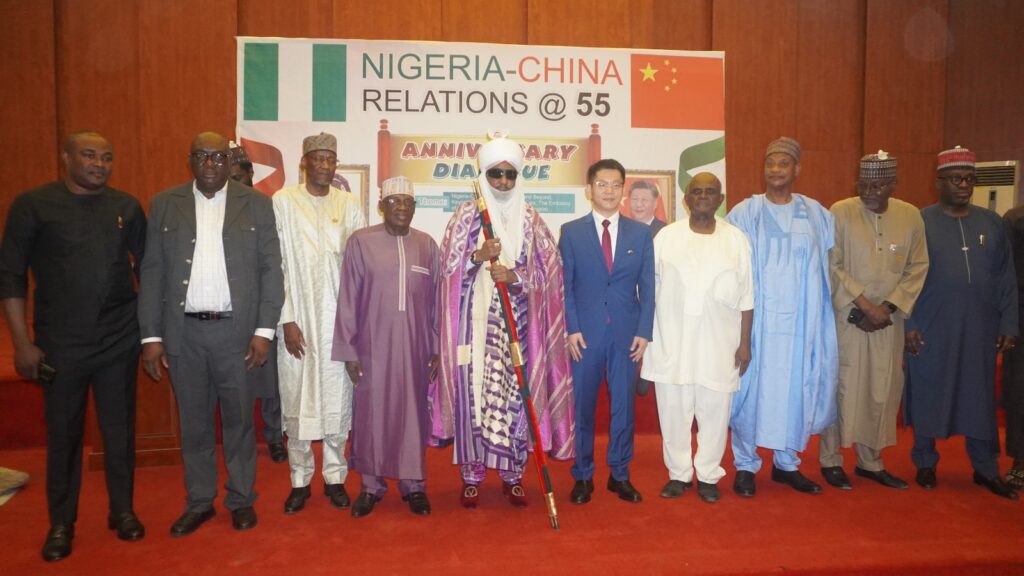
Nigeria and China marked 55 years of diplomatic relations on Wednesday, February 11, 2026, with a high-level dialogue at the Institute for Peace and Conflict Resolution (IPCR), reflecting on past achievements and exploring opportunities for deeper cooperation across economic, cultural, and strategic sectors.
The event, themed “Nigeria-China at 55 and Beyond”, brought together senior government officials, diplomats, scholars, and private sector leaders. It featured remarks from the Emir of Kano, Mohammed Sanusi II, IPCR Director-General Dr. Joseph Ochogwu, representatives from the Chinese Embassy, and the Centre for China Studies (CCS), highlighting the significance of the long-standing partnership.
In his welcome address, Dr. Ochogwu described the dialogue as a timely platform to assess the evolution of Nigeria-China relations, which have grown from diplomatic ties to a comprehensive partnership spanning infrastructure, trade, technology, education, and people-to-people exchanges.

“Partnerships such as Nigeria-China relations must be continually examined through the lens of peace, stability, and sustainable development,” Dr. Ochogwu said. He emphasized that sustainable development and durable peace are inseparable, noting that economic cooperation must be people-centered, conflict-sensitive, and aligned with national and regional stability goals.
Emir Sanusi II reflected on his personal connection to Nigeria-China relations, recalling that his father, Ambassador Aminu Sanusi, served as Nigeria’s first ambassador to China in 1971. He highlighted the strategic importance of deploying experienced diplomats to critical posts, urging policymakers to prioritize long-term national interests over prestige when determining postings.
“Diplomatic deployments must align with national interests, particularly in emerging geopolitical realities,” he said. Sanusi also stressed that while Chinese infrastructure projects are welcome, Nigeria must focus on domestic production and industrialization to fully leverage bilateral cooperation under frameworks such as the African Continental Free Trade Agreement (AfCFTA).
Representatives of the Chinese Embassy reaffirmed China’s commitment to deepening strategic trust, advancing shared development, strengthening multilateral engagement, and promoting mutual learning among civilizations. They cited landmark achievements, including the Lekki Deep Sea Port, Zungeru Hydropower Station, the Ajaokuta–Kaduna–Kano (AKK) Natural Gas Pipeline, and railway modernization projects.
“Over 55 years, China and Nigeria have been trusted friends, supporting each other in national development and regional peace,” the Chinese delegation said. Bilateral trade surpassed USD 28 billion in 2025, a year-on-year increase of over 28 percent, while Chinese direct investment reached USD 690 million, up 103 percent from 2024. People-to-people ties, including educational exchanges, Confucius Institutes, and cultural festivals, were also highlighted as key pillars of the relationship.
The Centre for China Studies (CCS) underscored the historical context of the relationship, noting Nigeria’s early support for China’s seat at the United Nations in 1971 and the continued adherence to the One China Policy. CCS Director Charles Onunaiju emphasized that Nigeria is strategically positioned to benefit from China’s 15th Five-Year Plan and called for closer study of China’s governance and economic policies to inform national development strategies.
“Even though Nigeria and China have achieved much over the past 55 years, what lies ahead is even greater,” Onunaiju said, urging policymakers and scholars to focus on structural transformation, industrialization, and mutually beneficial cooperation.
The dialogue concluded with calls for strengthened strategic engagement, alignment of development priorities, and enhanced people-to-people exchanges, reflecting a shared commitment to sustainable development, regional stability, and a long-term partnership between the two nations.
Nigeria-China Relations at 55: Dialogue Highlights Achievements, Strategic Opportunities, and Shared Future